Common Law Requirements In Canada
Description

Get your form ready online
Our built-in tools help you complete, sign, share, and store your documents in one place.
Make edits, fill in missing information, and update formatting in US Legal Forms—just like you would in MS Word.
Download a copy, print it, send it by email, or mail it via USPS—whatever works best for your next step.
Sign and collect signatures with our SignNow integration. Send to multiple recipients, set reminders, and more. Go Premium to unlock E-Sign.
If this form requires notarization, complete it online through a secure video call—no need to meet a notary in person or wait for an appointment.
We protect your documents and personal data by following strict security and privacy standards.

Make edits, fill in missing information, and update formatting in US Legal Forms—just like you would in MS Word.

Download a copy, print it, send it by email, or mail it via USPS—whatever works best for your next step.

Sign and collect signatures with our SignNow integration. Send to multiple recipients, set reminders, and more. Go Premium to unlock E-Sign.

If this form requires notarization, complete it online through a secure video call—no need to meet a notary in person or wait for an appointment.

We protect your documents and personal data by following strict security and privacy standards.
Looking for another form?







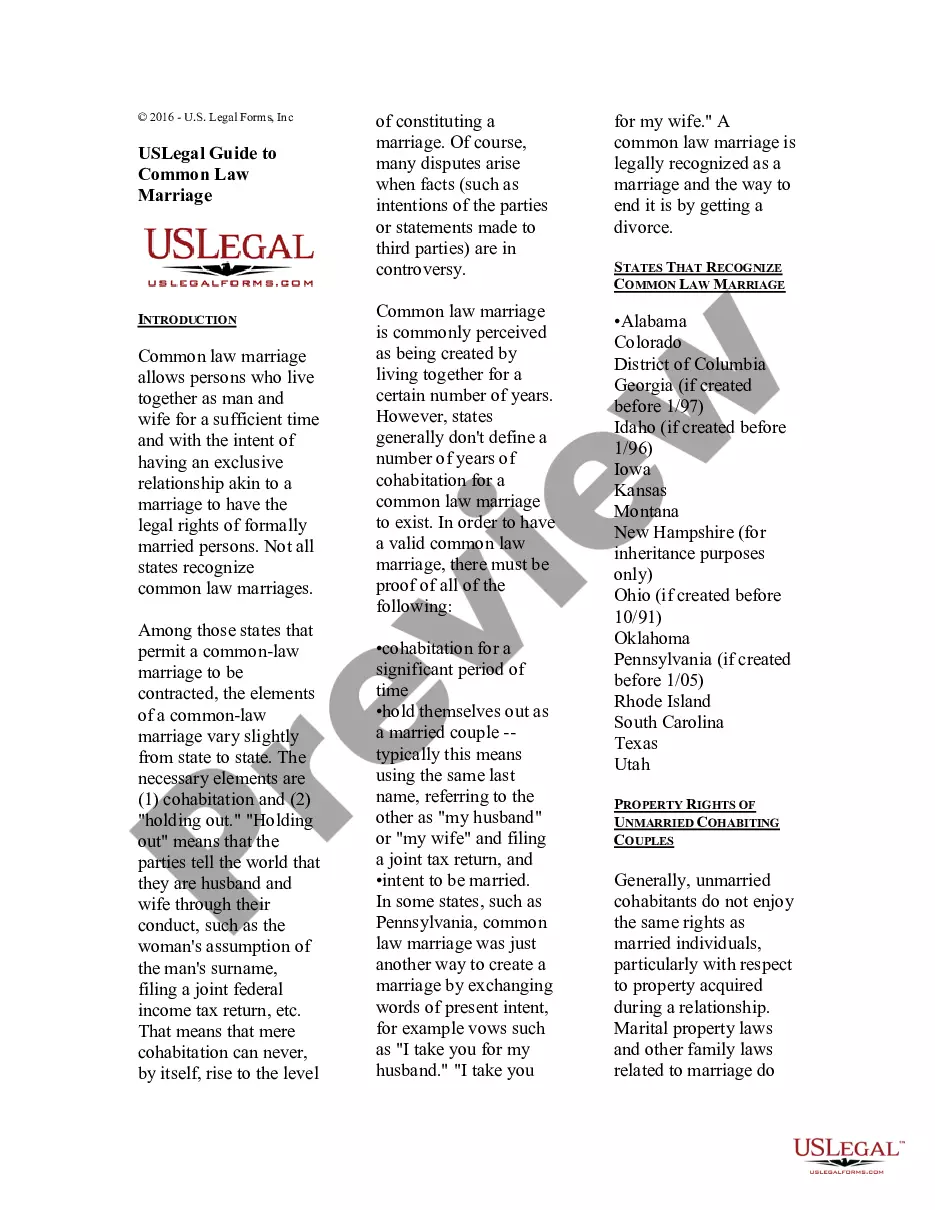
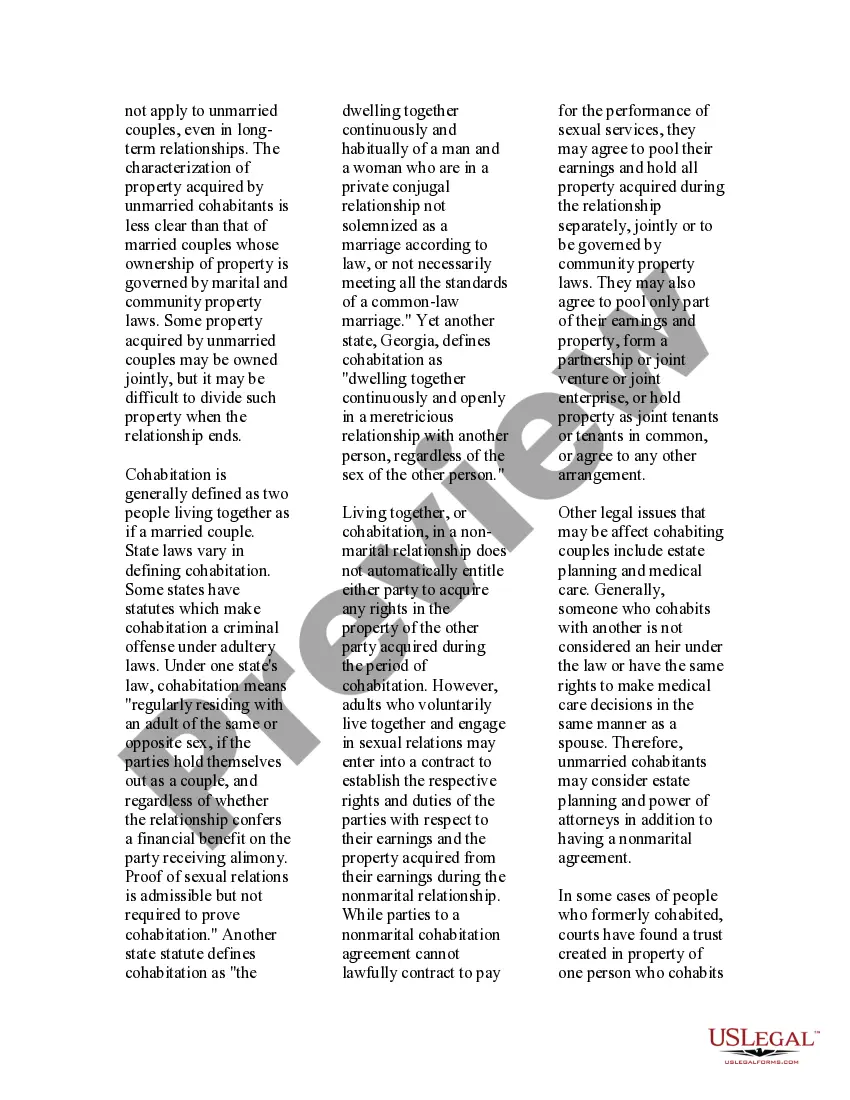
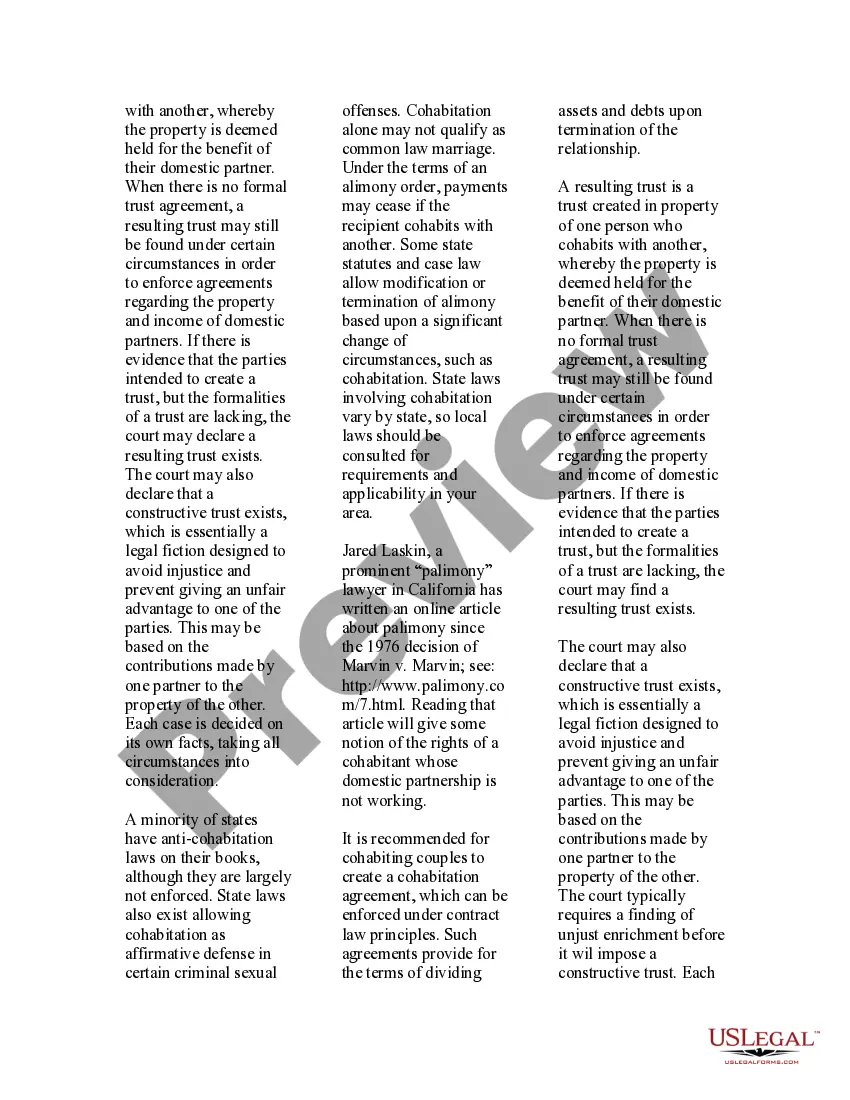
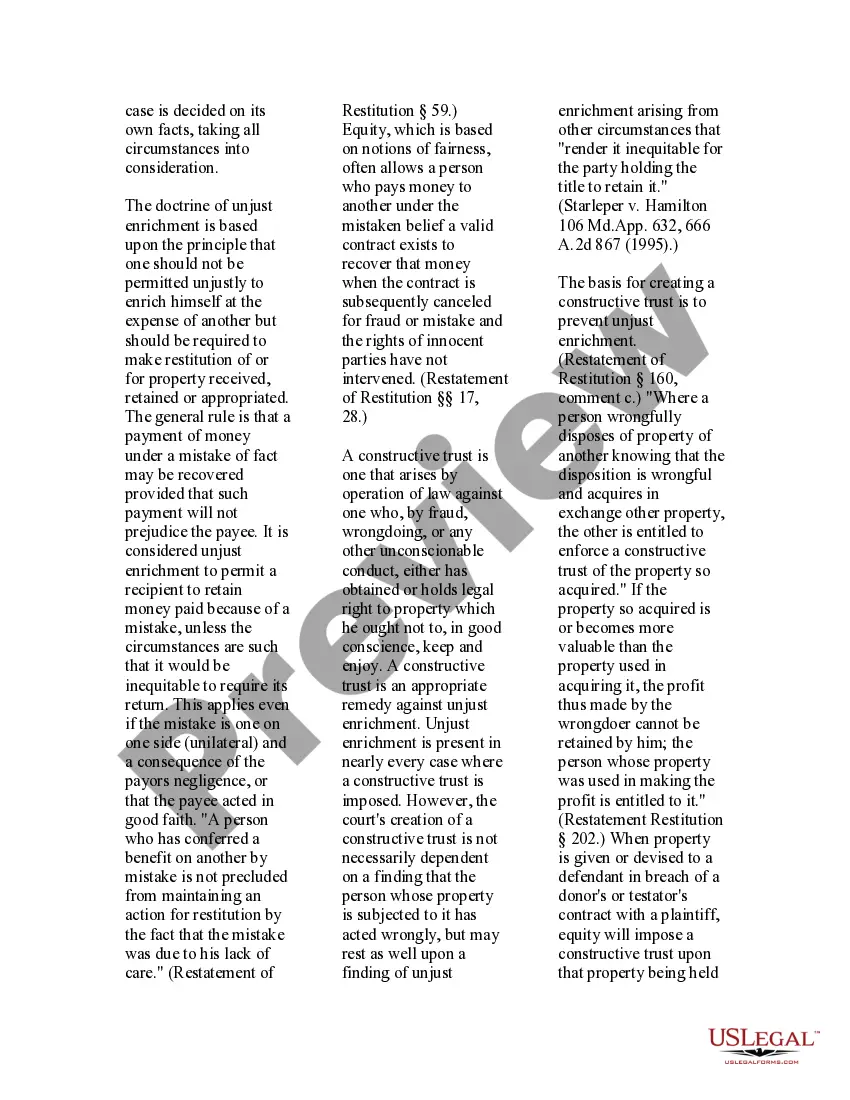
How to fill out USLegal Guide To Common Law Marriage?
Whether for corporate objectives or personal matters, everyone will eventually confront legal circumstances in their lifetime.
Completing legal documents necessitates meticulous attention, starting from selecting the appropriate form model.
Choose your payment method: utilize a credit card or PayPal account. Select the file format you desire and download the Common Law Prerequisites In Canada. Once downloaded, you can fill out the form using editing software or print it and complete it manually. With a vast US Legal Forms catalog available, you never need to waste time searching for the suitable sample online. Take advantage of the library’s simple navigation to find the correct template for any situation.
- For instance, if you select an incorrect version of a Common Law Prerequisites In Canada, it will be declined when you file it.
- Hence, it is vital to obtain a trustworthy source of legal documents such as US Legal Forms.
- If you wish to acquire a Common Law Prerequisites In Canada template, follow these simple steps.
- Retrieve the sample you require using the search box or catalog navigation.
- Review the form’s description to ensure it corresponds with your situation, state, and county.
- Click on the form’s preview to view it.
- If it is the wrong form, go back to the search function to locate the Common Law Prerequisites In Canada template you require.
- Download the file if it aligns with your needs.
- If you possess a US Legal Forms account, simply click Log in to access previously saved templates in My documents.
- In case you don't have an account yet, you can download the form by clicking Buy now.
- Select the appropriate pricing option.
- Complete the account registration form.
Form popularity
FAQ
Being together for seven years does not automatically classify you as married under Canadian law. Instead, you may fall under the common law requirements in Canada, which provide specific legal rights and responsibilities akin to marriage. However, the definition of common law varies by province, so it is crucial to know the laws where you live. For comprehensive guidance, consider using platforms like uslegalforms to understand your rights.
Whether your girlfriend can claim half your house depends on your relationship status under the common law requirements in Canada. If you have lived together in a conjugal relationship for a significant period, she might have a claim to share property. However, the specifics can vary based on provincial laws and the nature of your relationship. Consulting with a legal expert can help you navigate these complexities.
In Canada, living together for seven years does not automatically make you legally married. Instead, you may meet the common law requirements in Canada, which can grant you certain rights similar to marriage. These rights include property division and spousal support upon separation. It is essential to understand your specific province's laws to ensure you are protected.
There is no specific common-law form for Canada, but you will need to disclose your status on your tax return. You must provide information about your partner to reflect your relationship accurately. Familiarizing yourself with common law requirements in Canada can help you understand what information to include in your filings.
You are required to file as common-law if you meet the criteria set by the CRA. This includes living together for a specified period and sharing responsibilities. To comply with common law requirements in Canada, consult the CRA's resources or seek help from platforms like USLegalForms for accurate filing.
In Canada, you typically need to live together for at least one year to qualify as common-law partners. However, some provinces may have specific guidelines that vary. Understanding the common law requirements in Canada is crucial for ensuring your relationship is recognized legally.
Applying for common law status in Canada does not require a formal application process. Instead, you must demonstrate that you meet the common law requirements in Canada, which generally include living together for at least one year and sharing a domestic life. If you need assistance, platforms like USLegalForms can guide you through the necessary steps.
Filing as a common-law couple in Canada involves indicating your status on your tax return. You will need to provide details about your partner, including their income, to calculate your combined tax obligations. It's important to understand the common law requirements in Canada to maximize any potential tax benefits.
The Canada Revenue Agency (CRA) determines common-law status based on several factors. These include how long you and your partner have lived together, if you share financial responsibilities, and if you present yourselves as a couple to the public. To ensure compliance with common law requirements in Canada, it's essential to keep documentation that reflects your relationship.
To qualify for common law in Canada, you must live together in a conjugal relationship for a specified period, usually 12 months. Additionally, your relationship should resemble a marriage in terms of emotional and financial interdependence. Familiarizing yourself with the common law requirements in Canada can help clarify your legal standing.