Uslegal Disabled With Disabilities
Description


Get your form ready online
Our built-in tools help you complete, sign, share, and store your documents in one place.
Make edits, fill in missing information, and update formatting in US Legal Forms—just like you would in MS Word.
Download a copy, print it, send it by email, or mail it via USPS—whatever works best for your next step.
Sign and collect signatures with our SignNow integration. Send to multiple recipients, set reminders, and more. Go Premium to unlock E-Sign.
If this form requires notarization, complete it online through a secure video call—no need to meet a notary in person or wait for an appointment.
We protect your documents and personal data by following strict security and privacy standards.

Make edits, fill in missing information, and update formatting in US Legal Forms—just like you would in MS Word.

Download a copy, print it, send it by email, or mail it via USPS—whatever works best for your next step.

Sign and collect signatures with our SignNow integration. Send to multiple recipients, set reminders, and more. Go Premium to unlock E-Sign.

If this form requires notarization, complete it online through a secure video call—no need to meet a notary in person or wait for an appointment.

We protect your documents and personal data by following strict security and privacy standards.
Looking for another form?








How to fill out USLegal Guide To Disabled Adults?
- Log into your account if you're a returning user; simply click on the Login button to access your form templates. Ensure that your subscription remains active.
- For first-time users, start by exploring the preview mode and descriptions of various forms. Confirm that the selected form aligns with your specific requirements and local regulations.
- If the chosen form doesn’t meet your needs, use the search feature to locate another template that fits your criteria.
- After selecting the right document, click on the Buy Now option and choose a subscription plan that best fits your needs. You'll need to create an account to access the forms library.
- Proceed to complete your purchase by entering your payment details—this can be through a credit card or PayPal.
- Finally, download your completed form onto your device for easy access and editing. You can also find it anytime in the My Forms section of your account.
By following these straightforward steps, users can effectively utilize US Legal Forms to obtain and manage legal documents, ensuring a hassle-free experience.
Don't wait—empower yourself today with the comprehensive legal resources at US Legal Forms!
Form popularity
FAQ
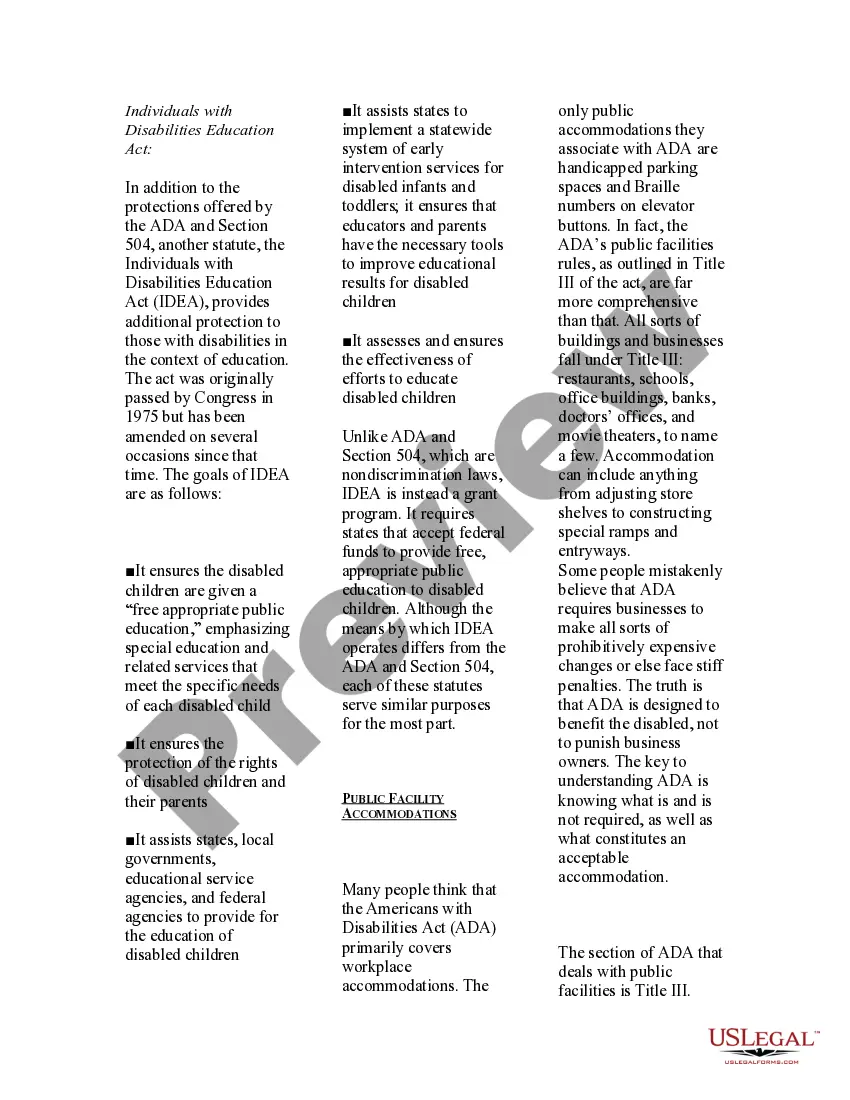
Schedule A encompasses specific disabilities considered for federal employment, including intellectual disabilities, psychiatric disabilities, and severe physical impairments. These categories facilitate hiring practices for individuals who fall under Uslegal disabled with disabilities. Understanding this can help applicants navigate the employment process more effectively.
Examples of legal disabilities include conditions like blindness, major depression, and epilepsy. Each of these conditions can significantly impact a person’s daily life. Recognizing these disabilities ensures that those eligible for assistance under Uslegal disabled with disabilities gain access to necessary resources.
Individuals who may be recognized as having legal disabilities include those with physical disabilities, mental health disorders, or developmental delays. Each case is unique, and it is essential to have all relevant information documented. Uslegal disabled with disabilities provides resources that can clarify who qualifies for legal disability status.
It's crucial to avoid ambiguous or misleading statements on disability forms. For instance, don’t exaggerate your symptoms or downplay your limitations. Staying honest and clear enhances your chances of qualifying under Uslegal disabled with disabilities, ensuring your application reflects your true condition.
Legal disabilities include conditions that limit a person's ability to perform major life activities. Examples range from psychiatric disorders, mobility impairments, to chronic illnesses. Understanding these distinctions is important for identifying if you qualify for assistance under Uslegal disabled with disabilities.
Filling out disability forms can be straightforward if you follow specific steps. First, gather all necessary documents, such as medical records and identification. Then, be sure to answer all questions truthfully and completely, as this ensures that your Uslegal disabled with disabilities status is accurately represented.
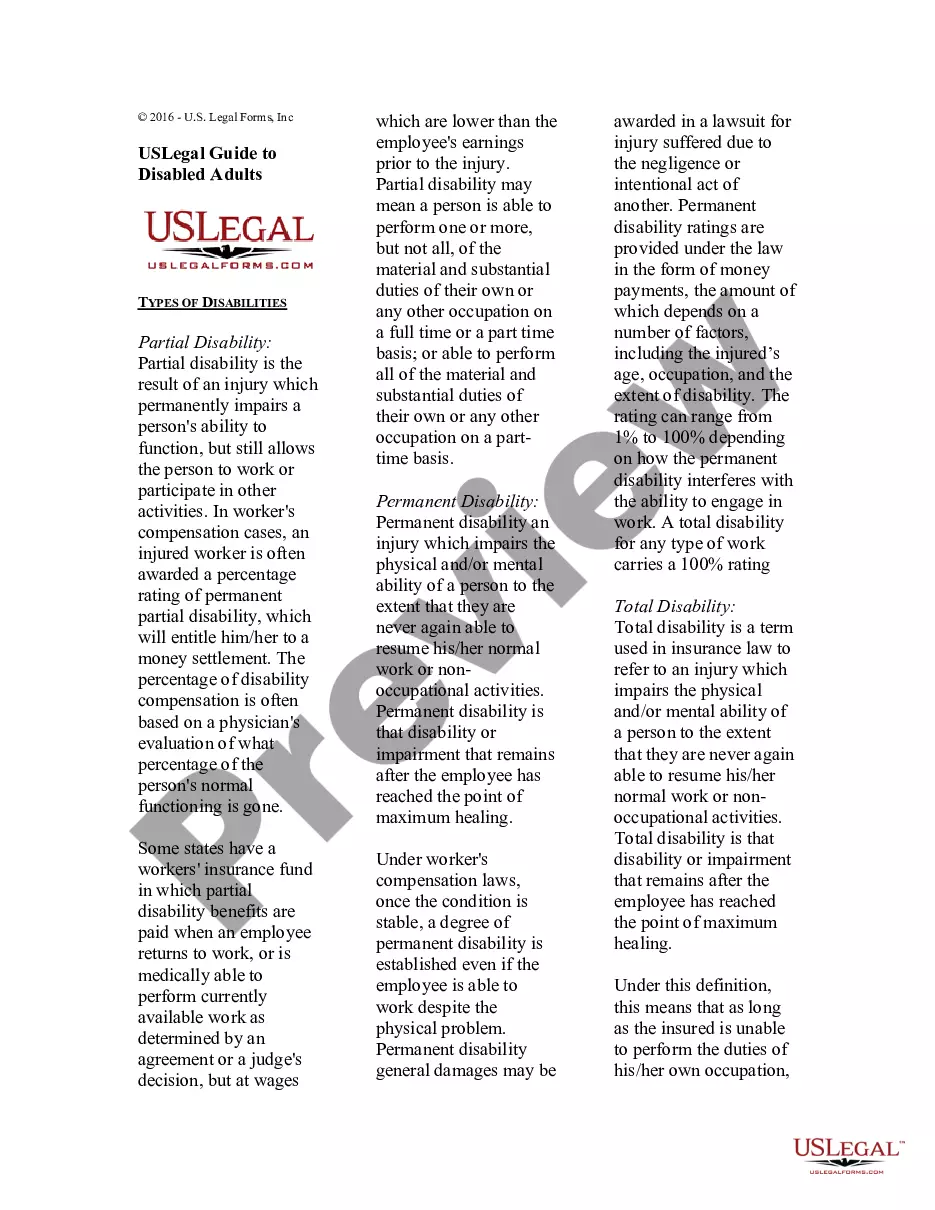
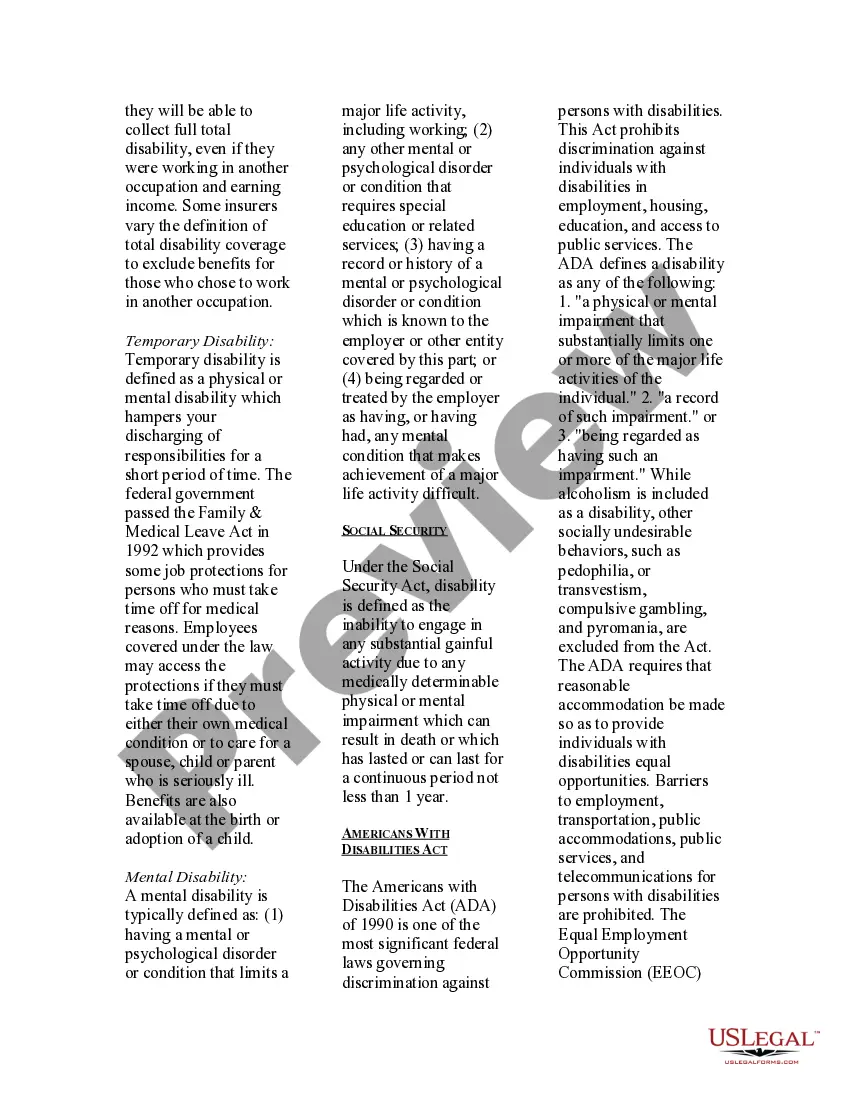
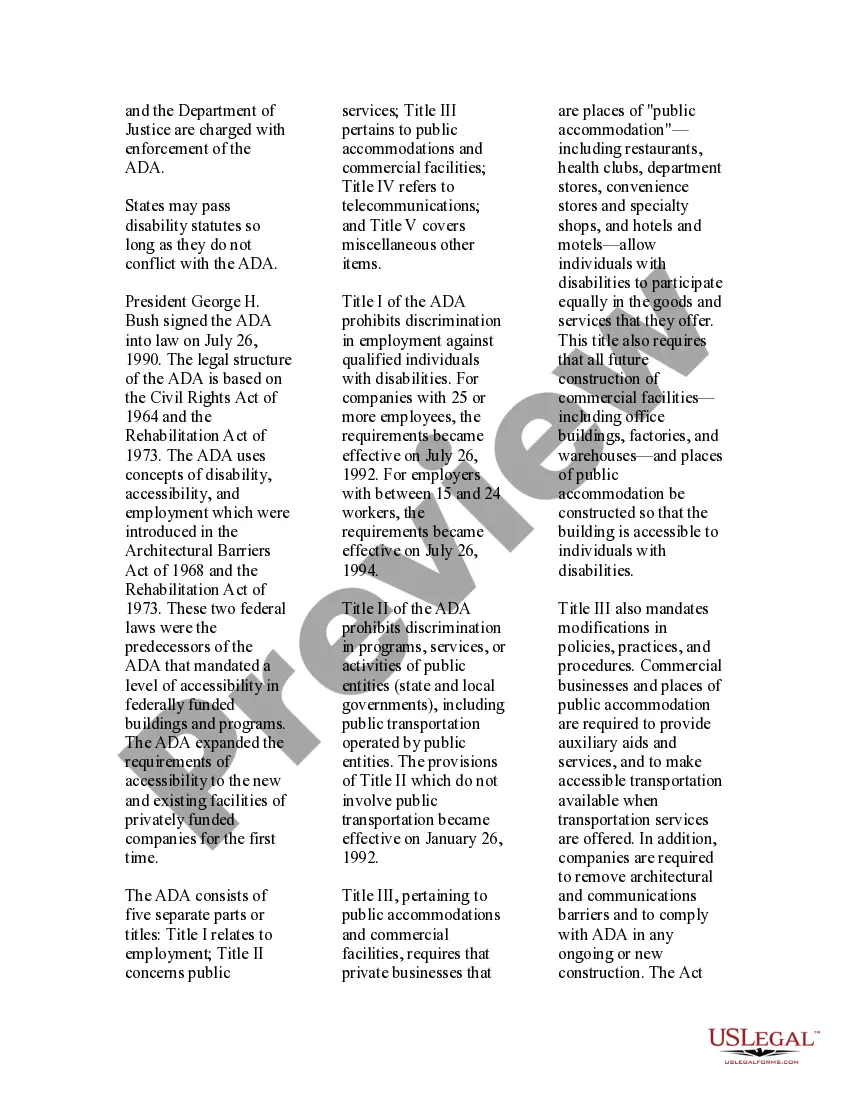
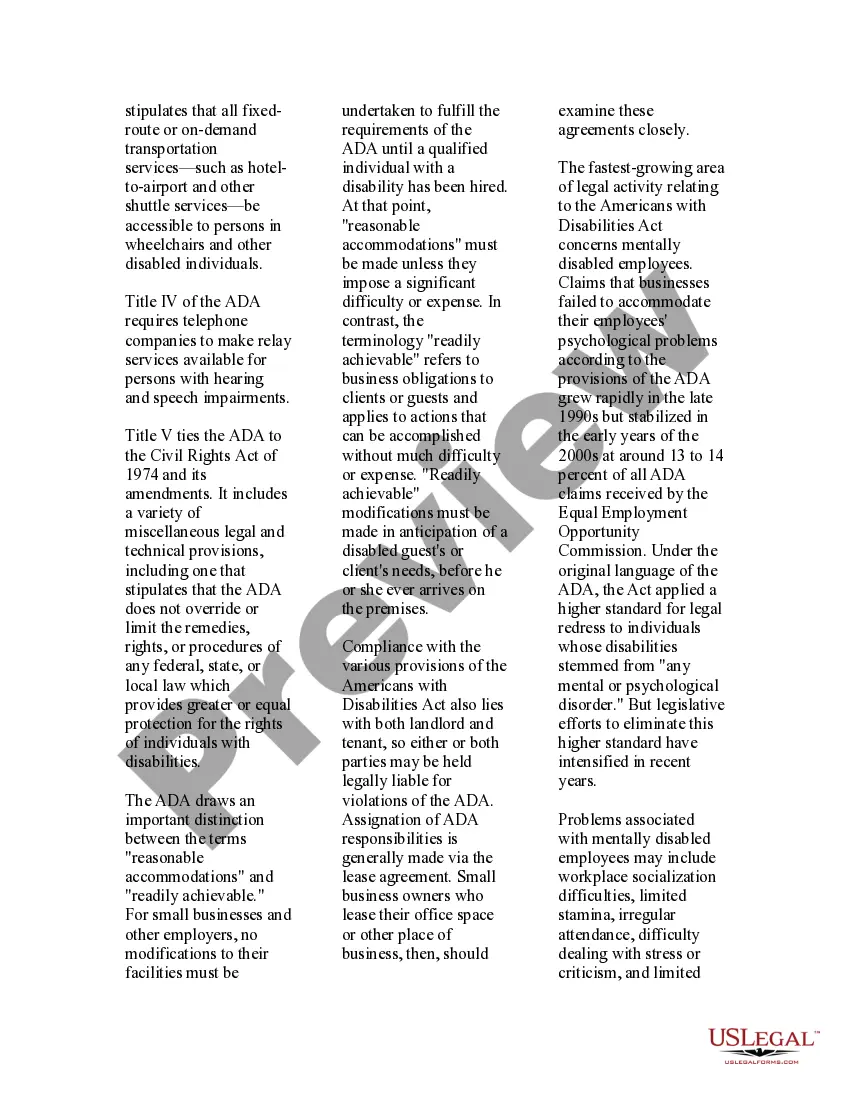
The Americans with Disabilities Act (ADA) covers several critical areas, including employment rights, public accommodations, transportation accessibility, telecommunications, and access to government services. It ensures individuals with disabilities can participate fully in society. The principles upheld by Uslegal disabled with disabilities emphasize the importance of these protections, making it crucial for individuals to be aware of their rights. Knowledge of these rights can lead to better advocacy and accessibility.
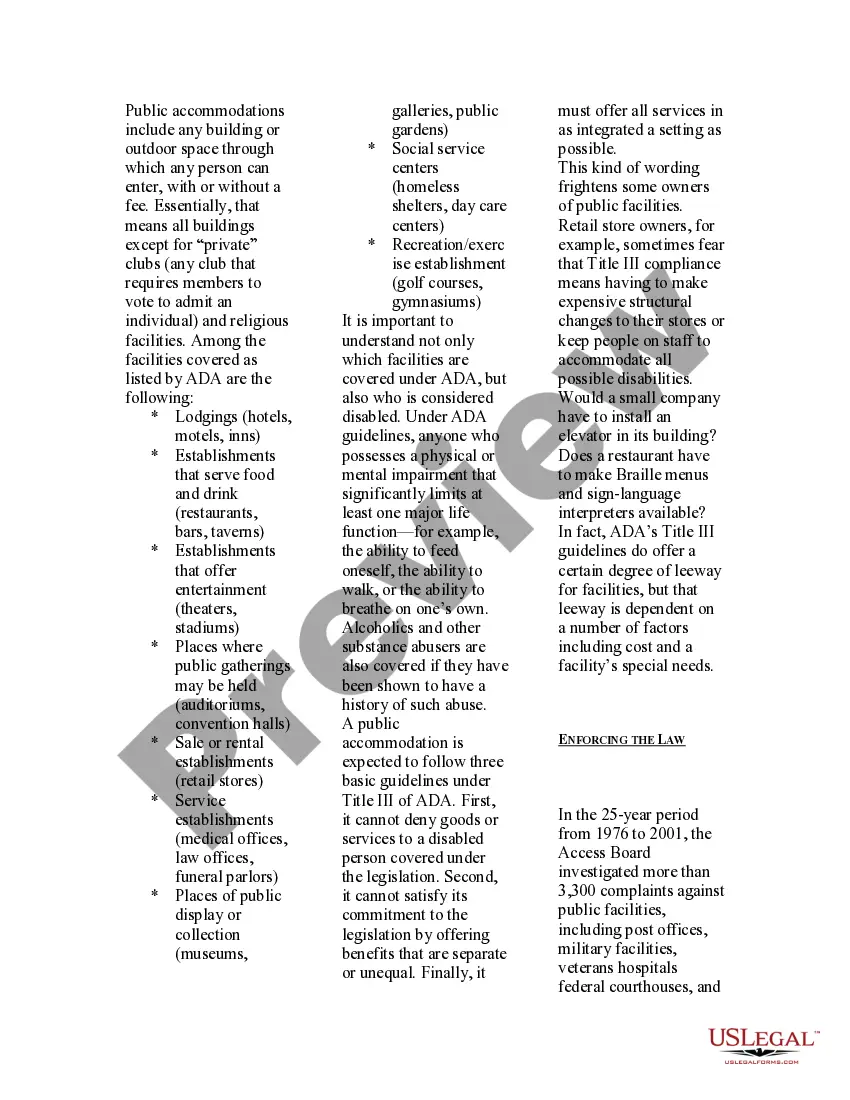
While the Americans with Disabilities Act (ADA) offers protection for many disabilities, not all conditions qualify. For instance, temporary impairments, like a broken leg, are generally excluded. Additionally, conditions related to current illegal drug use are not covered. Understanding these exclusions under Uslegal disabled with disabilities can guide individuals in seeking appropriate resources and support.
To qualify as legally disabled, an individual’s impairment must substantially limit their ability to perform major life activities. This includes physical limitations, as well as mental health conditions that disrupt everyday functions. The Uslegal disabled with disabilities guidelines outline necessary criteria, ensuring fair assessment. Knowing what qualifies can ease the process of obtaining the help you deserve.
Examples of individuals with a legal disability vary widely and can include someone with a visual impairment, a person living with chronic pain, or an individual diagnosed with a serious mental health disorder. Each case reflects different challenges and experiences under the Uslegal disabled with disabilities classification. By recognizing these differences, we can foster a more inclusive environment for all. Each story contributes to a broader understanding of disability.