American Disability Act For Work
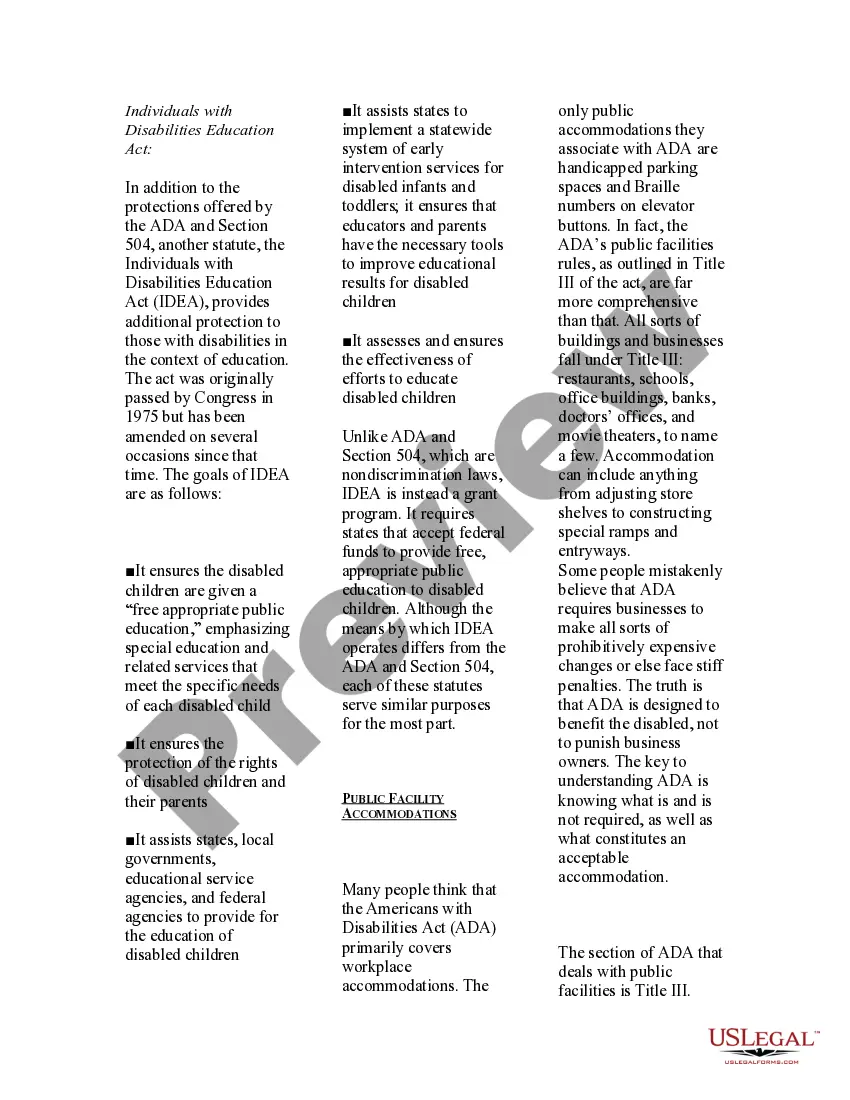
Description


Get your form ready online
Our built-in tools help you complete, sign, share, and store your documents in one place.
Make edits, fill in missing information, and update formatting in US Legal Forms—just like you would in MS Word.
Download a copy, print it, send it by email, or mail it via USPS—whatever works best for your next step.
Sign and collect signatures with our SignNow integration. Send to multiple recipients, set reminders, and more. Go Premium to unlock E-Sign.
If this form requires notarization, complete it online through a secure video call—no need to meet a notary in person or wait for an appointment.
We protect your documents and personal data by following strict security and privacy standards.

Make edits, fill in missing information, and update formatting in US Legal Forms—just like you would in MS Word.

Download a copy, print it, send it by email, or mail it via USPS—whatever works best for your next step.

Sign and collect signatures with our SignNow integration. Send to multiple recipients, set reminders, and more. Go Premium to unlock E-Sign.

If this form requires notarization, complete it online through a secure video call—no need to meet a notary in person or wait for an appointment.

We protect your documents and personal data by following strict security and privacy standards.
Looking for another form?



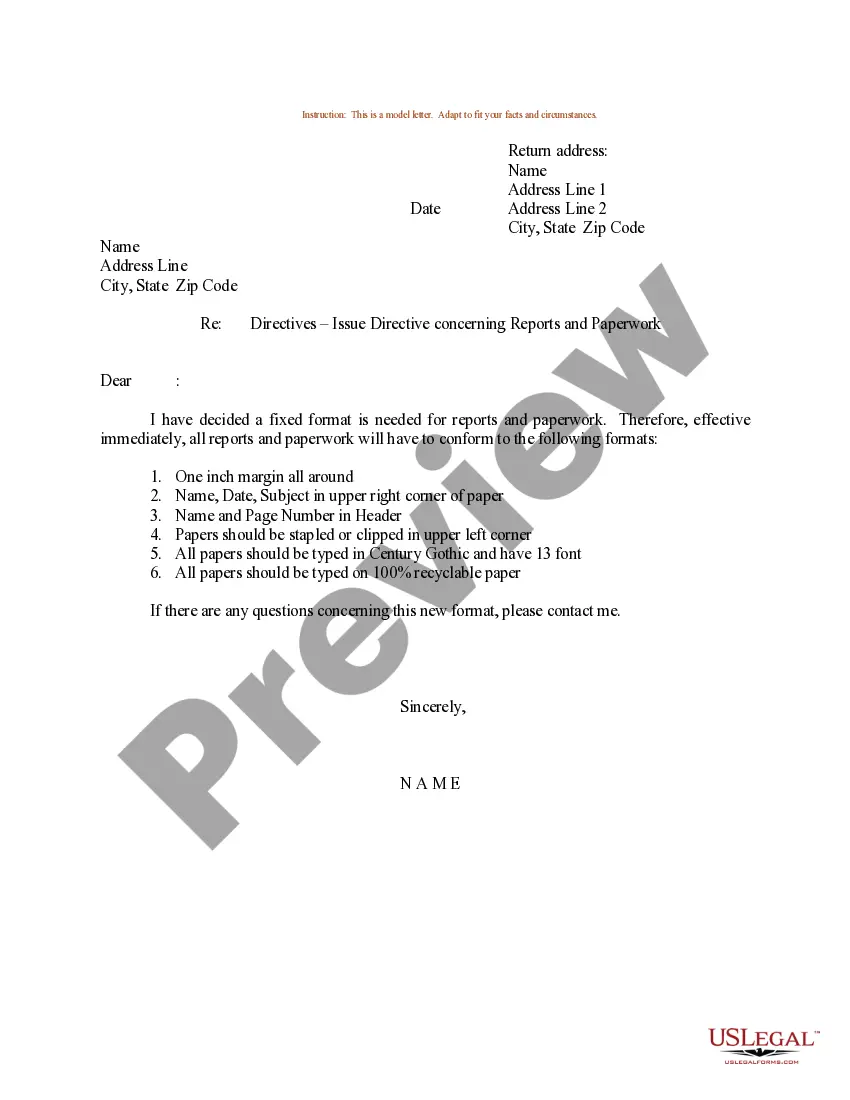
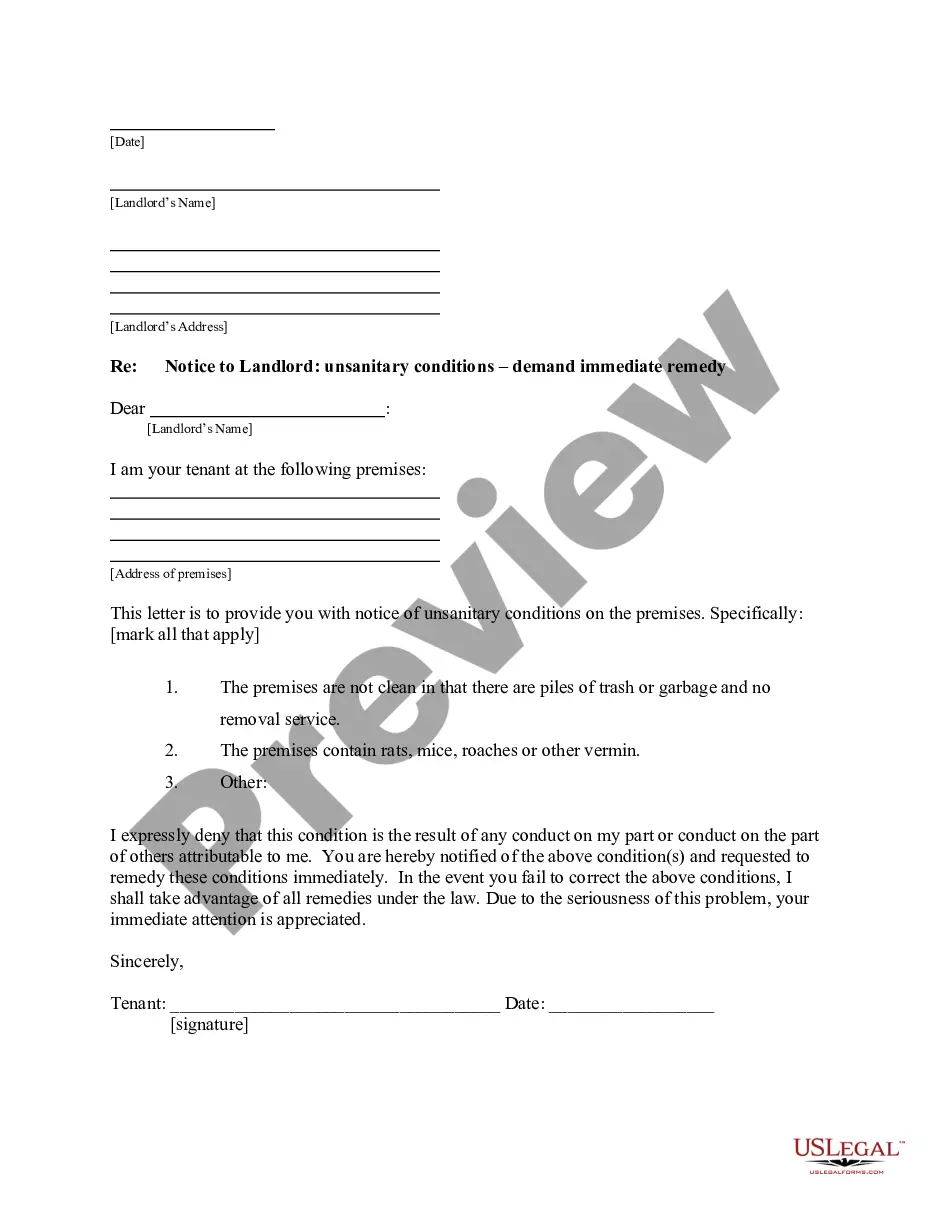
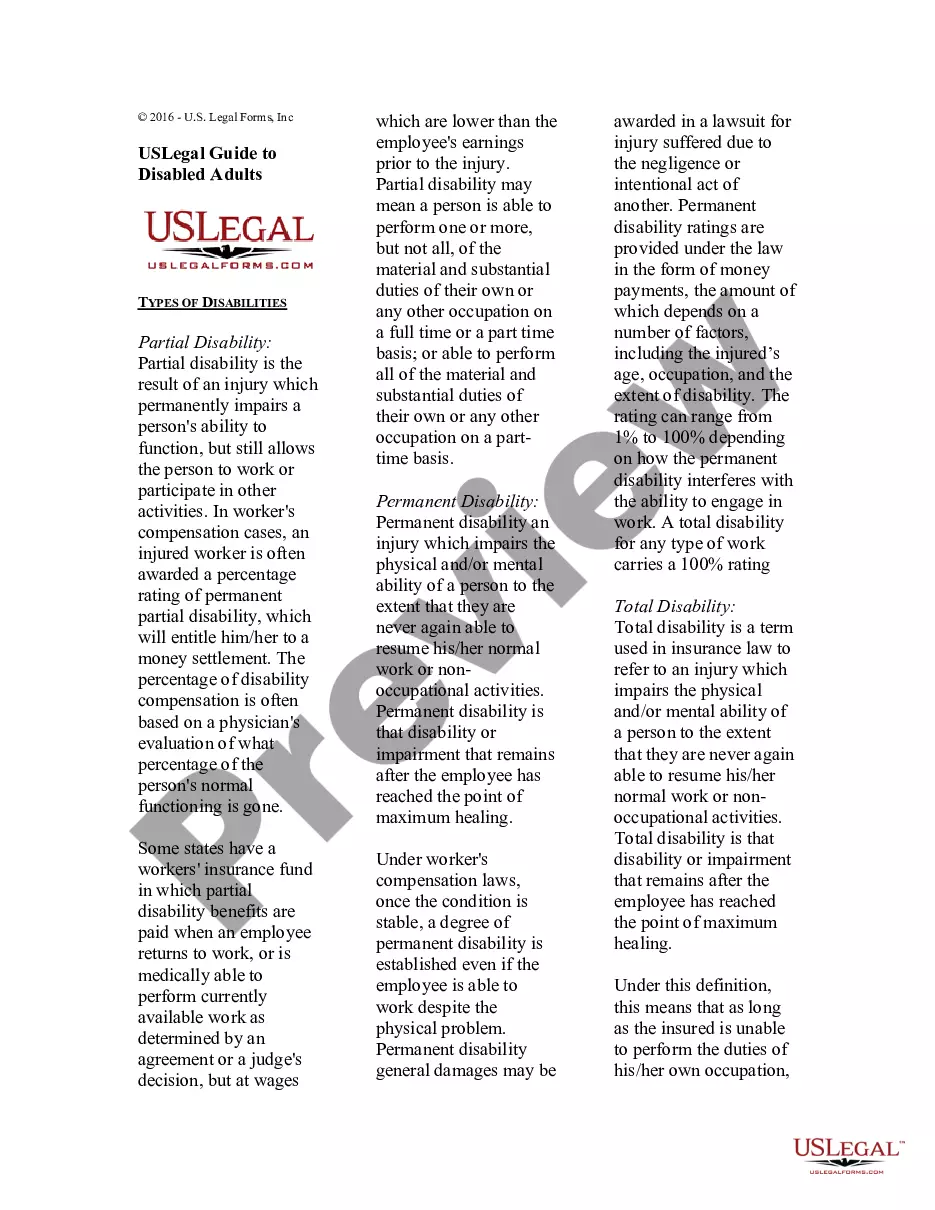
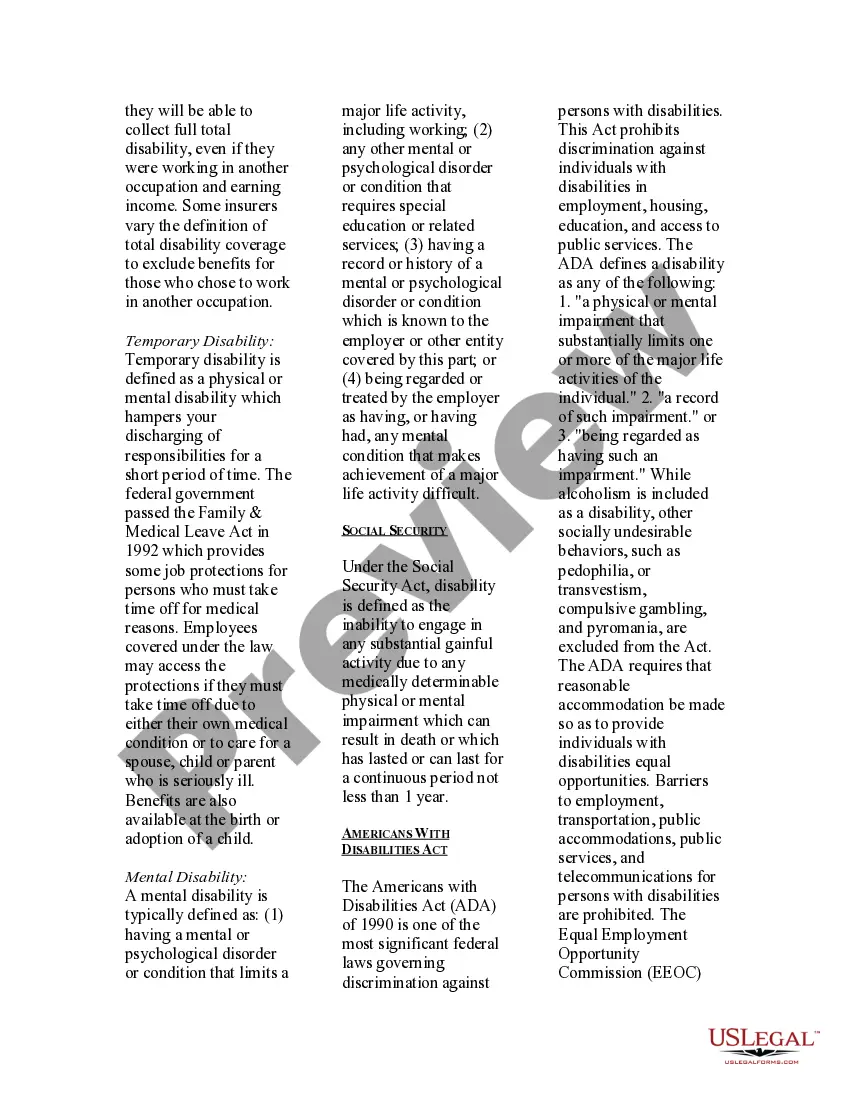
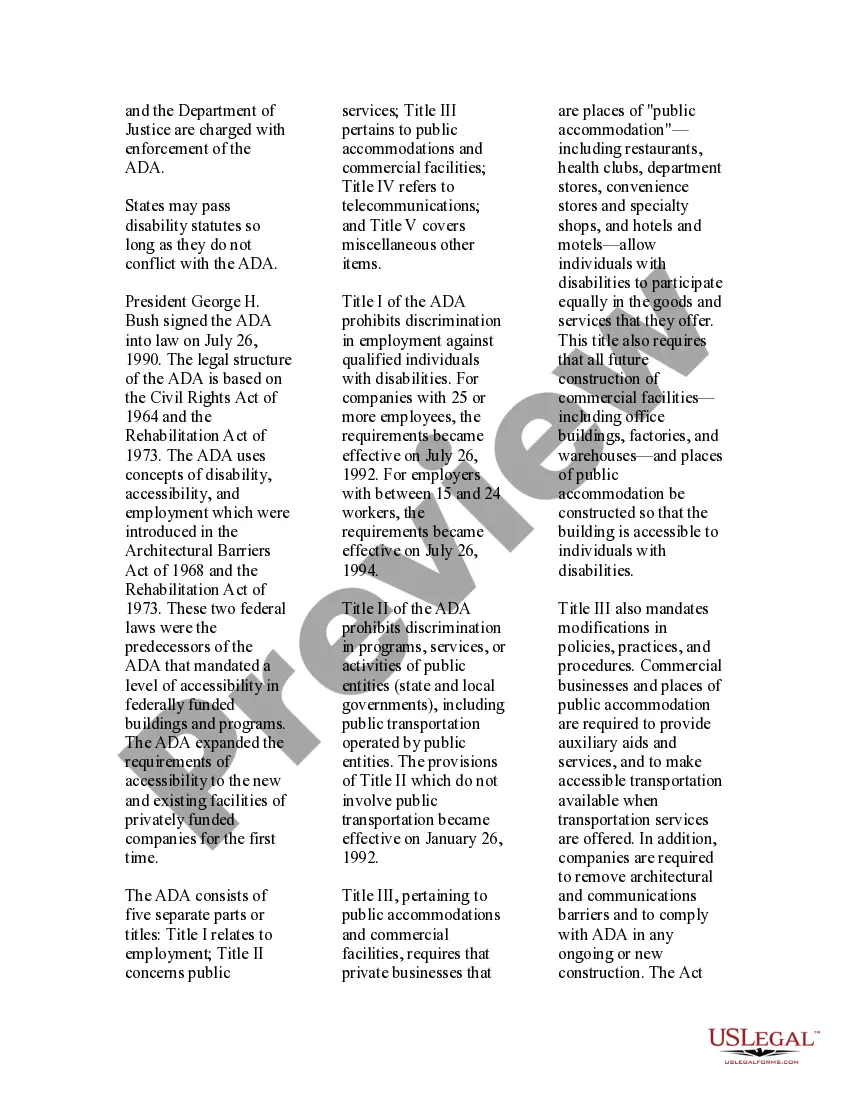
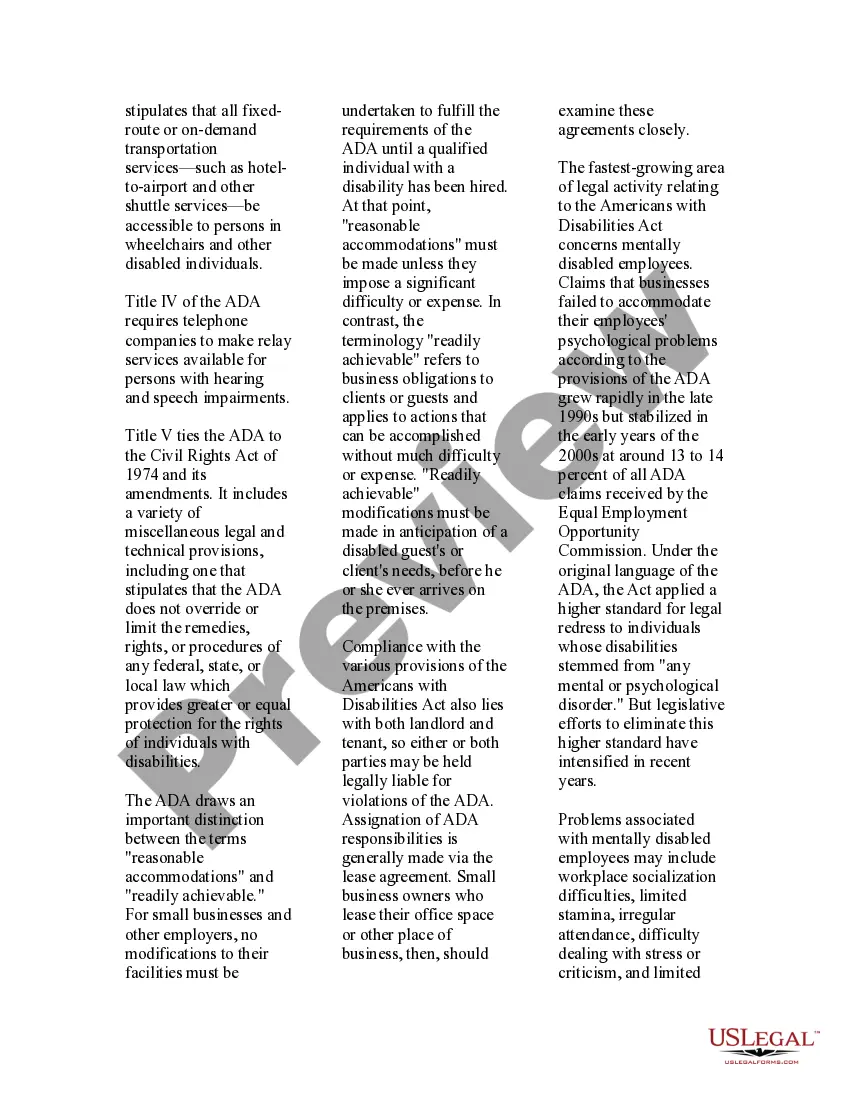
How to fill out USLegal Guide To Disabled Adults?
- If you're a returning user, log into your account and select the appropriate form template for download. Ensure your subscription remains active; if it's expired, follow up with a renewal as per your plan.
- For first-time users, begin by examining the form descriptions in Preview mode. Confirm that the selected document aligns with your needs and adheres to your local jurisdiction.
- If adjustments are needed, utilize the Search tab to find alternative templates that are more suitable.
- Once you find the right form, click the Buy Now button and choose your preferred subscription plan. Registration is required to unlock the document library.
- Complete the payment process by entering your credit card details or utilizing your PayPal account for a seamless transaction.
- After your purchase, download the form to your device. You can access it later via the My Forms section of your profile.
By utilizing US Legal Forms, you gain access to a vast library of over 85,000 editable legal forms, empowering both individuals and attorneys to create precise documents efficiently.
Take control of your legal needs today and experience the convenience of US Legal Forms for all your documentation related to the American Disability Act for work.
Form popularity
FAQ
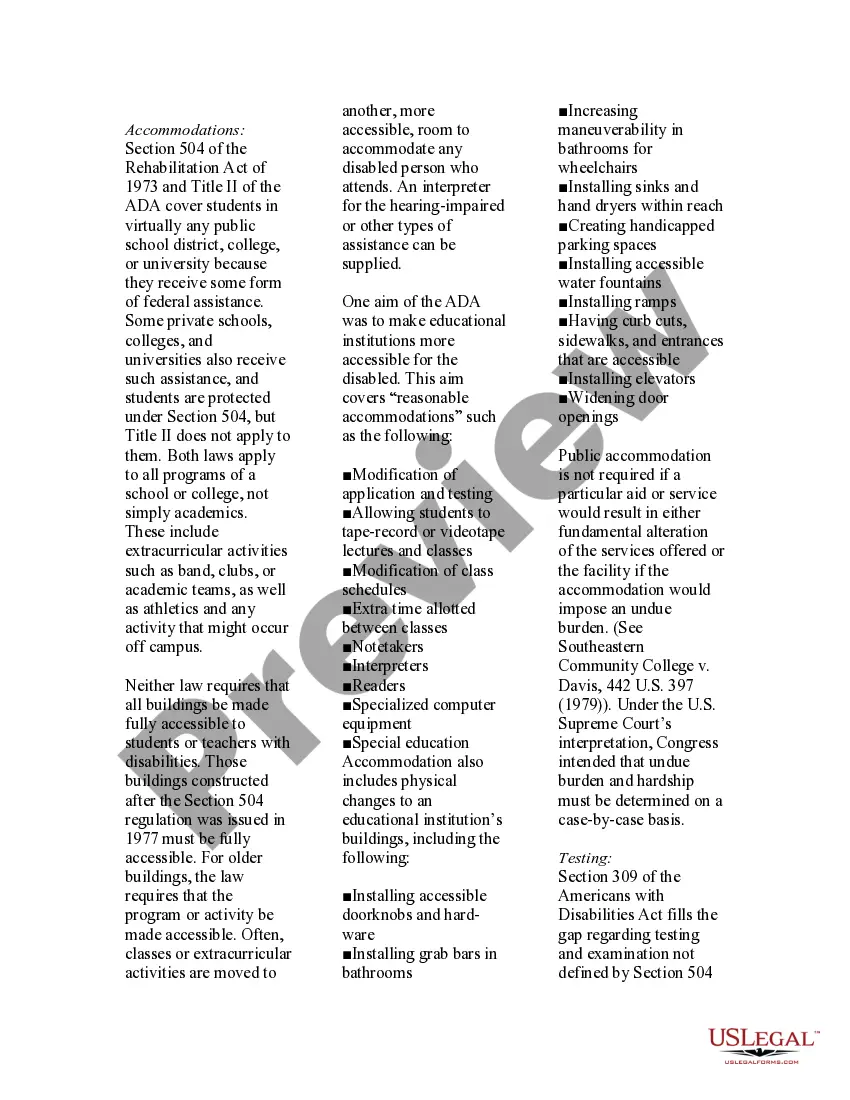
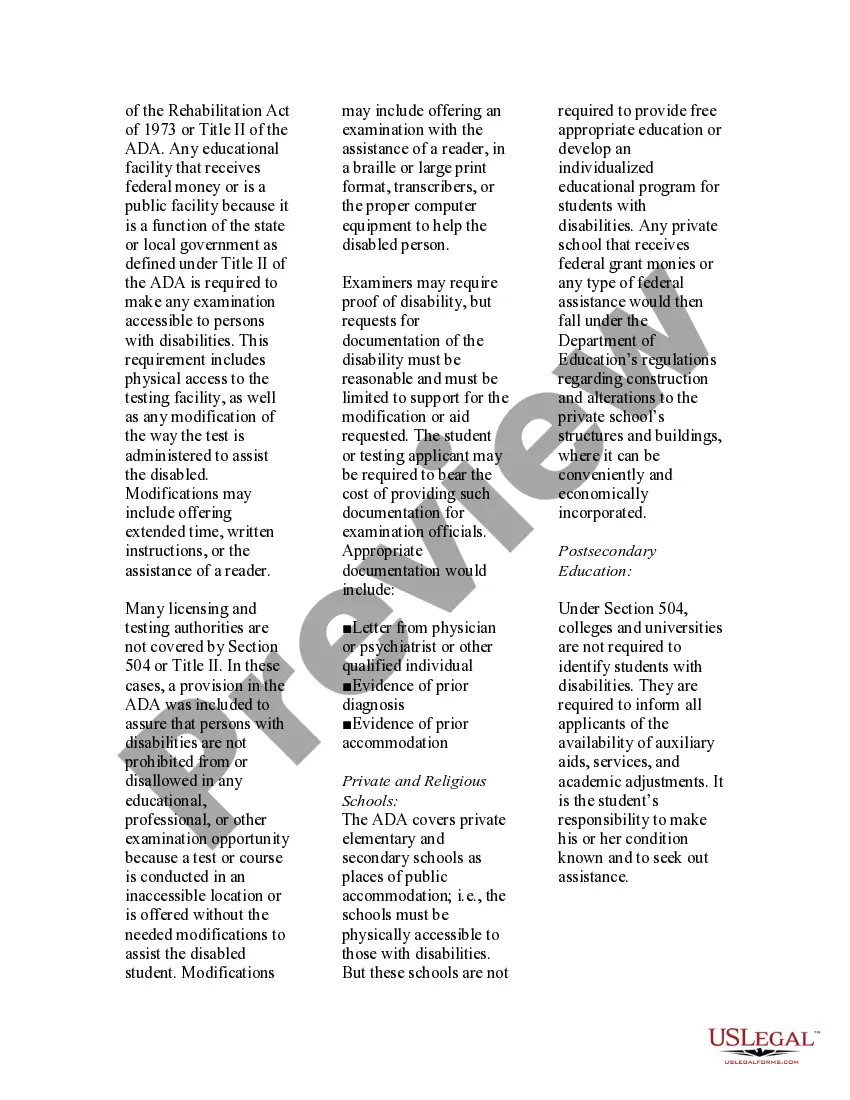
To secure ADA accommodations, you might need various documents such as medical certifications, a formal request for accommodations, and any relevant job descriptions. The American Disability Act for work emphasizes clear communication between employees and employers, making documentation essential for successful accommodations. By gathering the necessary documents, you enhance the likelihood of a fair evaluation of your situation. Platforms like uslegalforms offer customizable templates to streamline this process.
Yes, the American Disability Act for work requires certain documentation to demonstrate compliance within the workplace. This may include medical records, requests for reasonable accommodations, and other relevant paperwork that supports the need for adjustments. Maintaining proper documentation helps protect both employers and employees, ensuring that everyone understands their rights and responsibilities. Turning to uslegalforms can provide templates and guidance to create accurate and necessary documentation.
ADA compliant documents refer to materials that meet the standards set by the American Disability Act for work. This includes any documents that ensure accessibility for individuals with disabilities, such as employee handbooks, policy statements, and training materials. By creating ADA compliant documents, you create a more inclusive workplace that respects the rights of all employees. Utilizing services like uslegalforms can help ensure that your documents adhere to these important guidelines.
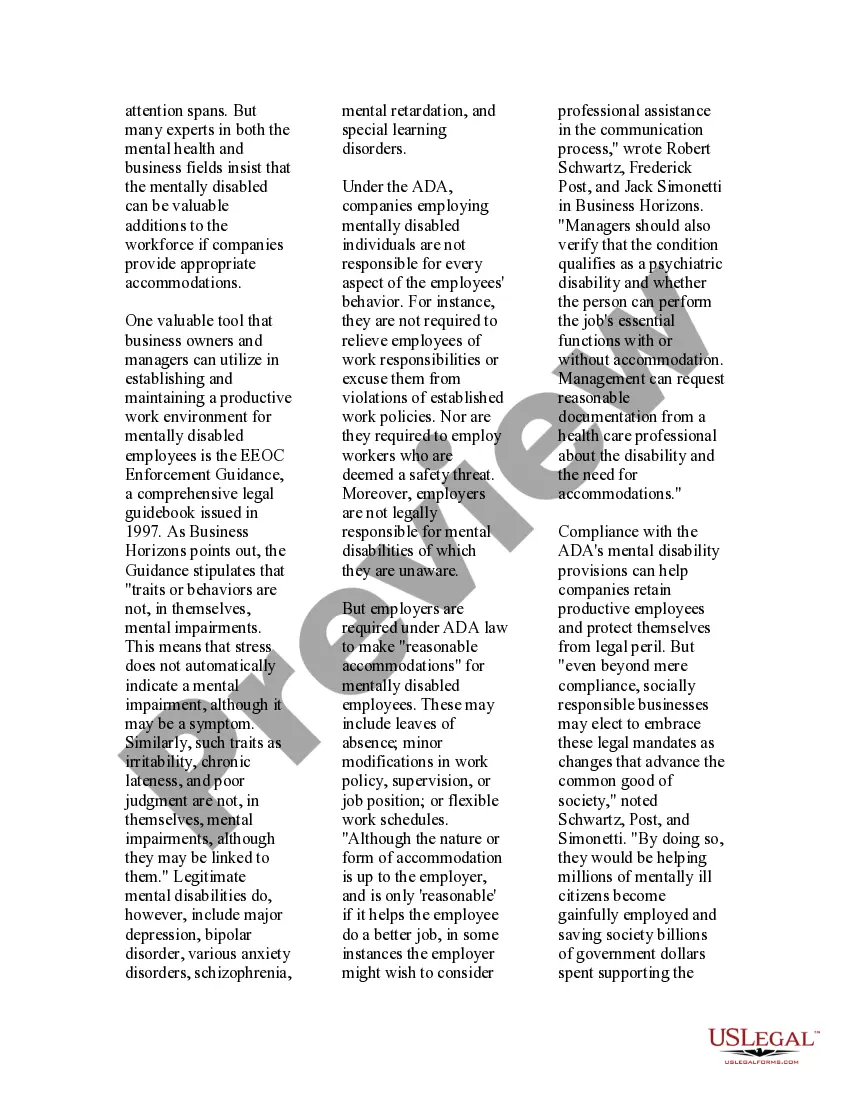
To qualify an employee under the American Disability Act for work, they must demonstrate a recognized disability affecting major life activities. Additionally, the employee must be capable of performing their job's essential functions, with or without reasonable accommodations. If you need assistance, consider using resources like US Legal Forms to navigate the qualification process properly.
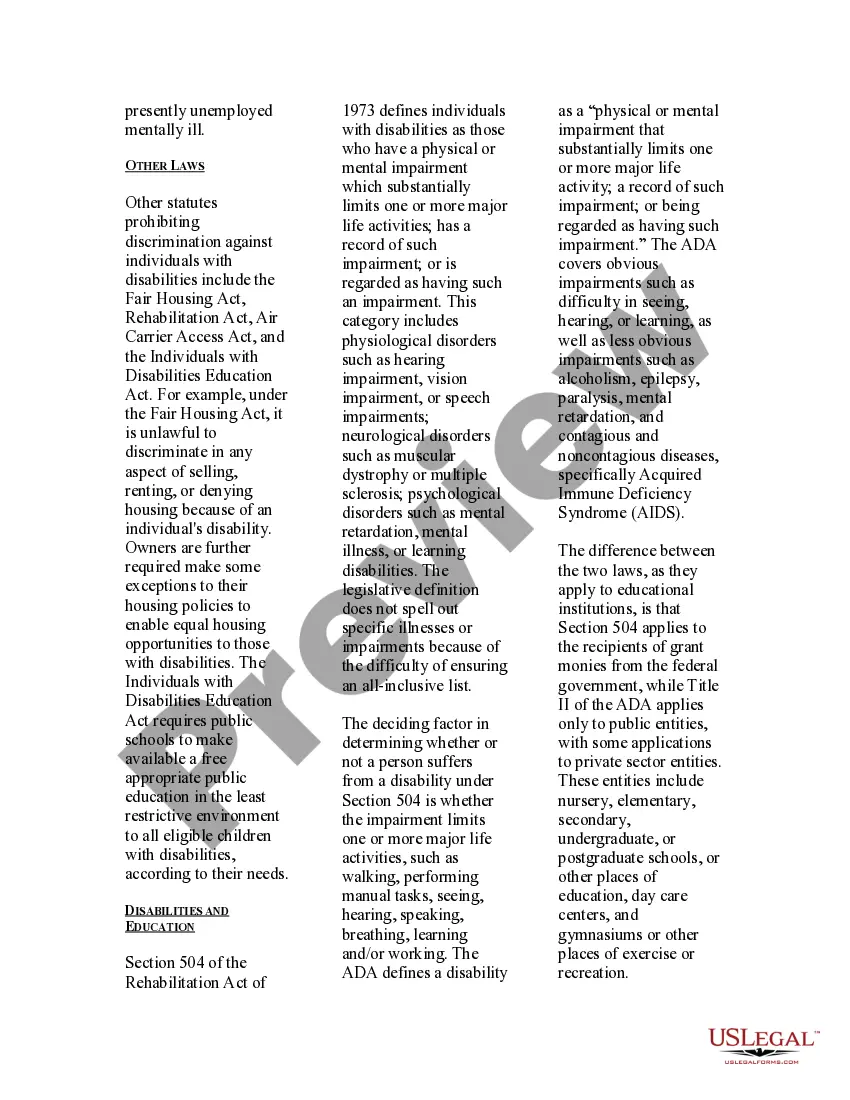
A range of diagnoses can qualify for the American Disability Act for work, including physical conditions like arthritis, mental health issues such as depression, and developmental disabilities like autism. The key factor is whether the condition substantially limits the individual in performing major life activities. It is advisable for individuals to gather supporting documentation for clarity.
The most common ADA violation in the workplace involves failing to provide reasonable accommodations for employees with disabilities. Employers may overlook the need to modify workspaces, policies, or schedules, which can hinder an employee's performance. Understanding these requirements helps create a more compliant and inclusive work environment.
Several conditions qualify for the American Disabilities Act for work, provided they substantially limit major life activities. This includes conditions such as diabetes, epilepsy, and significant mental health disorders. Qualification often depends on individual circumstances and may require documentation from healthcare providers.
An ADA disability list includes a range of physical and mental impairments that substantially limit one or more major life activities. Common examples are mobility impairments, visual and hearing impairments, and mental health conditions. If you are uncertain whether your condition qualifies, it may be helpful to consult with a legal expert or the resources available through US Legal Forms.
The basic requirements of the American Disability Act for work include prohibiting discrimination against qualified individuals with disabilities. Employers must provide reasonable accommodations to enable employees to perform their job tasks. Additionally, the ADA requires that employers maintain confidentiality regarding employees' disabilities while ensuring equality in hiring and promotions.
To qualify for ADA protections at work, an individual must have a disability as defined by the American Disability Act for work. This includes having a physical or mental impairment that substantially limits one or more major life activities. Additionally, individuals must be able to perform the essential functions of their job with or without reasonable accommodations.