Sample Slander Of Title Complaint
Description
Get your form ready online
Our built-in tools help you complete, sign, share, and store your documents in one place.
Make edits, fill in missing information, and update formatting in US Legal Forms—just like you would in MS Word.
Download a copy, print it, send it by email, or mail it via USPS—whatever works best for your next step.
Sign and collect signatures with our SignNow integration. Send to multiple recipients, set reminders, and more. Go Premium to unlock E-Sign.
If this form requires notarization, complete it online through a secure video call—no need to meet a notary in person or wait for an appointment.
We protect your documents and personal data by following strict security and privacy standards.

Make edits, fill in missing information, and update formatting in US Legal Forms—just like you would in MS Word.

Download a copy, print it, send it by email, or mail it via USPS—whatever works best for your next step.

Sign and collect signatures with our SignNow integration. Send to multiple recipients, set reminders, and more. Go Premium to unlock E-Sign.

If this form requires notarization, complete it online through a secure video call—no need to meet a notary in person or wait for an appointment.

We protect your documents and personal data by following strict security and privacy standards.
Looking for another form?
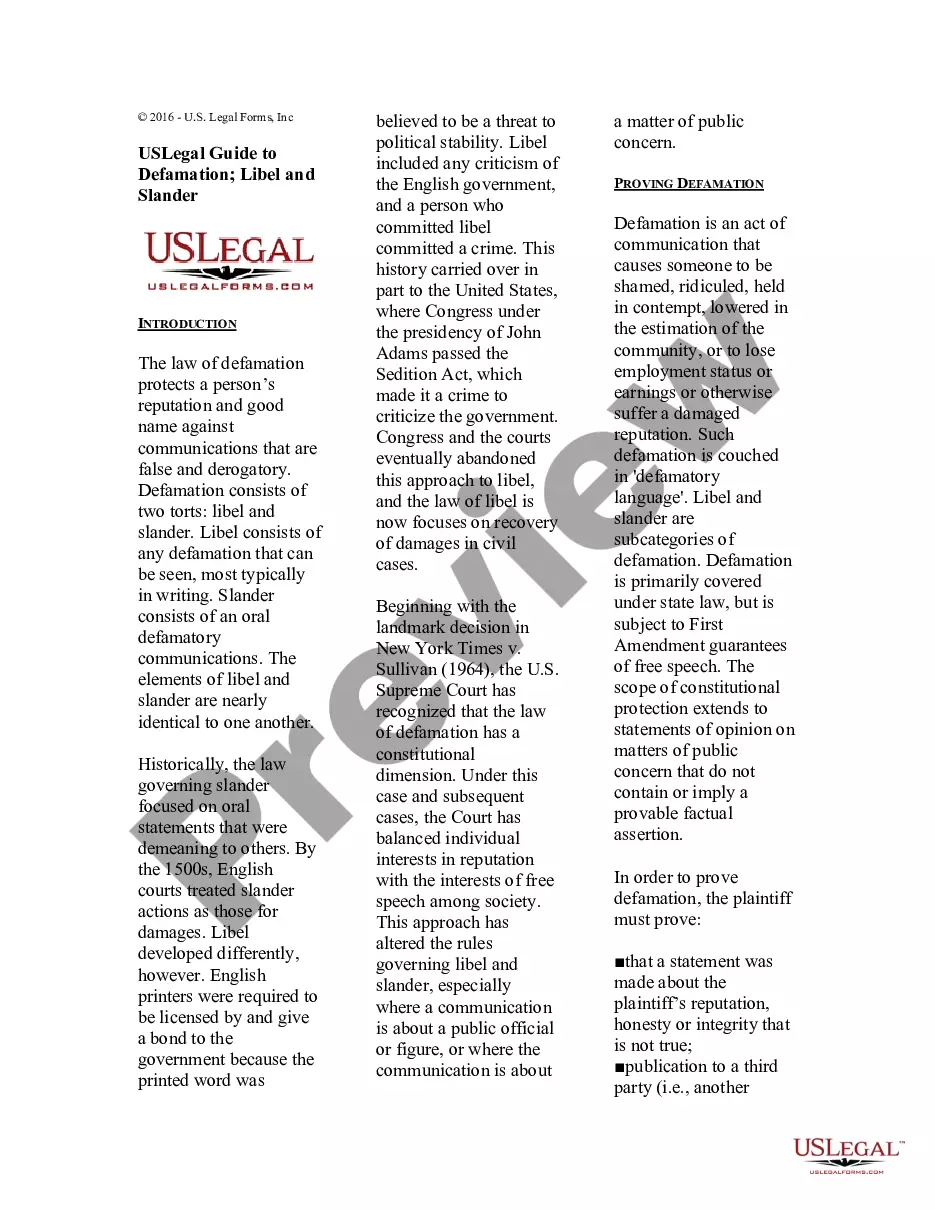
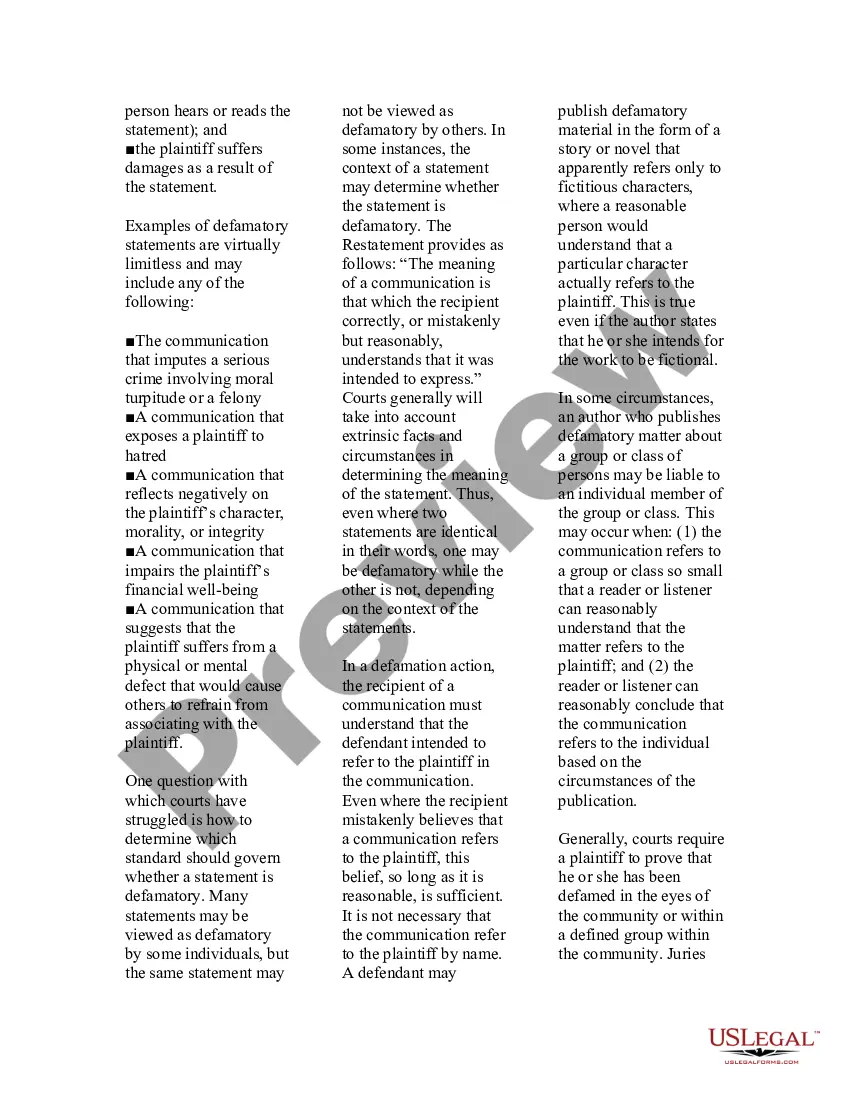
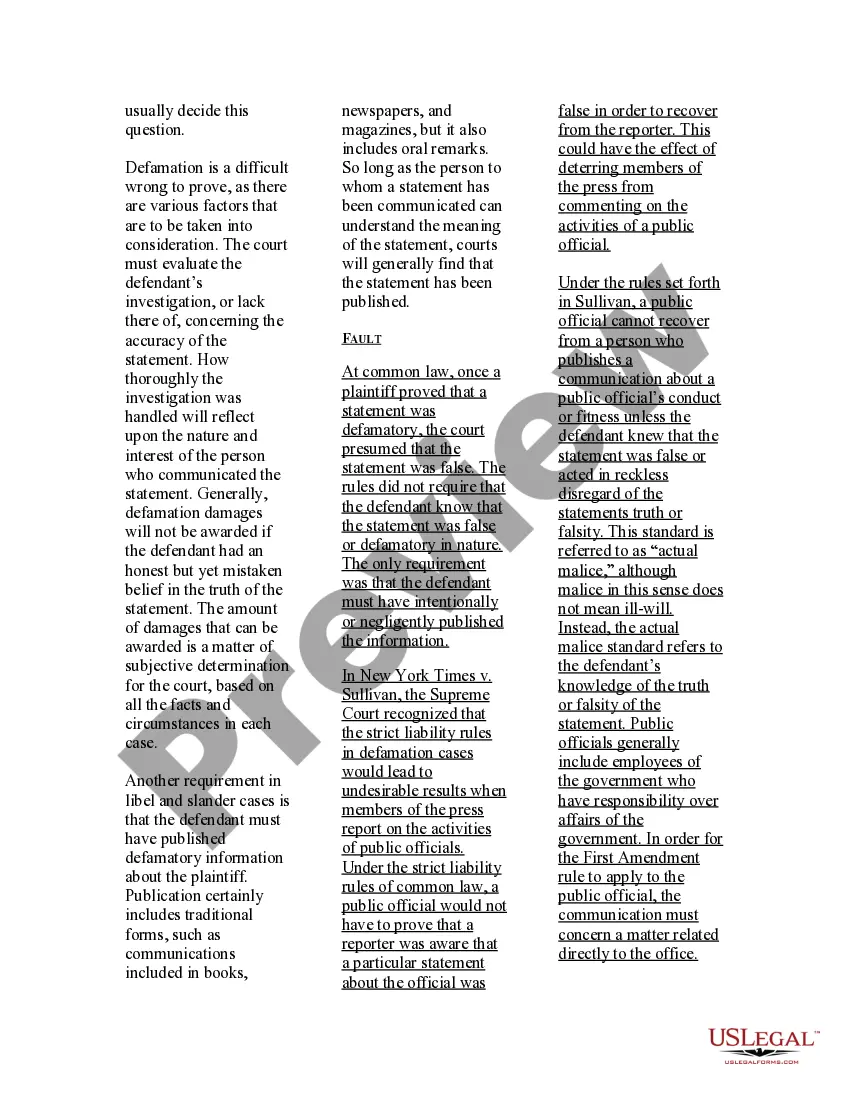
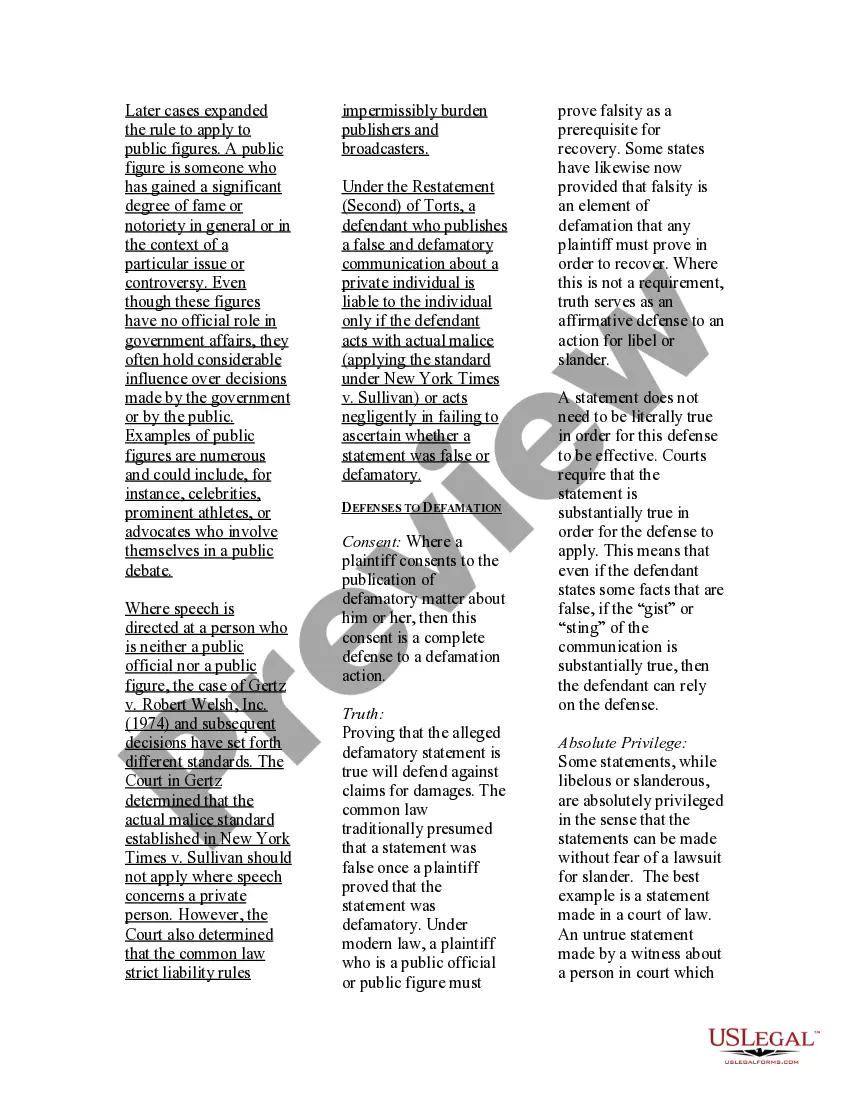
How to fill out USLegal Guide To Defamation; Libel And Slander?
Regardless of whether it pertains to business reasons or personal matters, everyone must confront legal issues at some point in their lives. Filling out legal paperwork necessitates meticulous care, starting with selecting the correct form template. For example, if you select an incorrect version of a Sample Slander Of Title Complaint, it will be rejected upon submission. Thus, it is vital to have a reliable source of legal documents like US Legal Forms.
If you need to acquire a Sample Slander Of Title Complaint template, follow these straightforward steps.
With a vast US Legal Forms catalog available, you do not have to waste time searching for the correct template online. Utilize the library’s user-friendly navigation to find the right template for any circumstance.
- Locate the template you require by utilizing the search bar or catalog navigation.
- Examine the form’s details to confirm it aligns with your situation, state, and county.
- Click on the form’s preview to view it.
- If it is the wrong form, return to the search function to locate the Sample Slander Of Title Complaint template you require.
- Obtain the template once it fulfills your needs.
- If you have a US Legal Forms account, simply click Log in to access previously saved documents in My documents.
- If you do not yet have an account, you may acquire the form by clicking Buy now.
- Select the suitable pricing option.
- Complete the account registration form.
- Choose your payment method: use a credit card or PayPal account.
- Select the document format you desire and download the Sample Slander Of Title Complaint.
- Once it is saved, you can fill out the form using editing software or print it and complete it manually.
Form popularity
FAQ
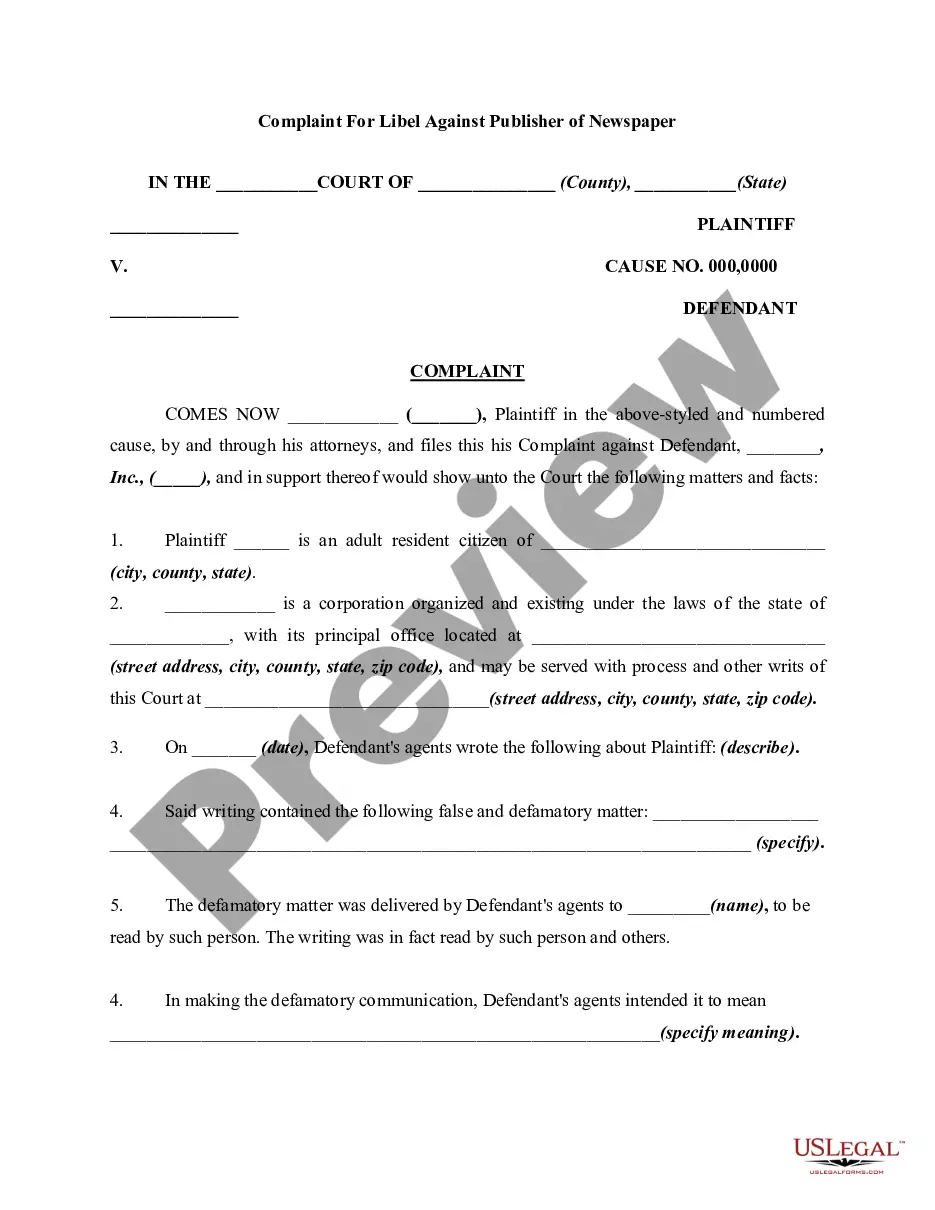
E. Count V: Slander of Title To prove slander of title, a plaintiff must show that ?(1) the defendant made a false statement, (2) which was published with malice, and (3) caused injury to the plaintiff.? George v. Teare, No. CA994102, 12 Mass.
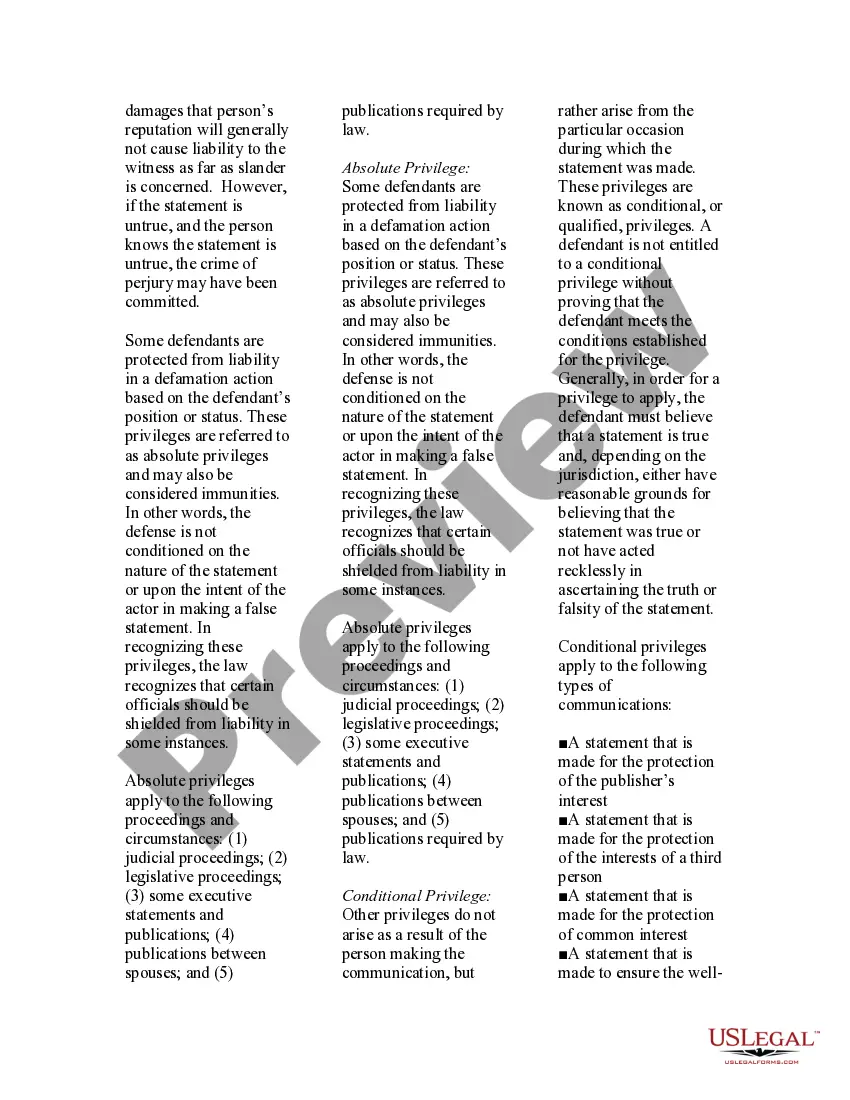
The most common examples of slander per se are: Accusing the plaintiff of criminal actions. Stating that the plaintiff has certain infectious diseases. Making harmful statements about the plaintiff's business or occupation.
: a false and malicious written or spoken public statement disparaging a person's title to property that causes harm for which special damages may be awarded. called also defamation of title, disparagement of property, disparagement of title.
In Texas, to prevail on a slander of title claim, the plaintiff must allege and prove: "(1) the utterings and publishing of disparaging words; (2) that they were false; (3) that they were malicious; (4) that special damages were sustained thereby; and (5) that the plaintiff possessed an estate or interest in the ...
Alternatively, it is casting aspersion on someone else's property, business or goods, e.g., claiming a house is infested with termites (when it is not), or falsely claiming ownership of another's copyright (what allegedly occurred in the SCO v. Novell case). Slander of title is a form of jactitation.