Trust Callco Form For A Field
Description

Get your form ready online
Our built-in tools help you complete, sign, share, and store your documents in one place.
Make edits, fill in missing information, and update formatting in US Legal Forms—just like you would in MS Word.
Download a copy, print it, send it by email, or mail it via USPS—whatever works best for your next step.
Sign and collect signatures with our SignNow integration. Send to multiple recipients, set reminders, and more. Go Premium to unlock E-Sign.
If this form requires notarization, complete it online through a secure video call—no need to meet a notary in person or wait for an appointment.
We protect your documents and personal data by following strict security and privacy standards.

Make edits, fill in missing information, and update formatting in US Legal Forms—just like you would in MS Word.

Download a copy, print it, send it by email, or mail it via USPS—whatever works best for your next step.

Sign and collect signatures with our SignNow integration. Send to multiple recipients, set reminders, and more. Go Premium to unlock E-Sign.

If this form requires notarization, complete it online through a secure video call—no need to meet a notary in person or wait for an appointment.

We protect your documents and personal data by following strict security and privacy standards.
Looking for another form?








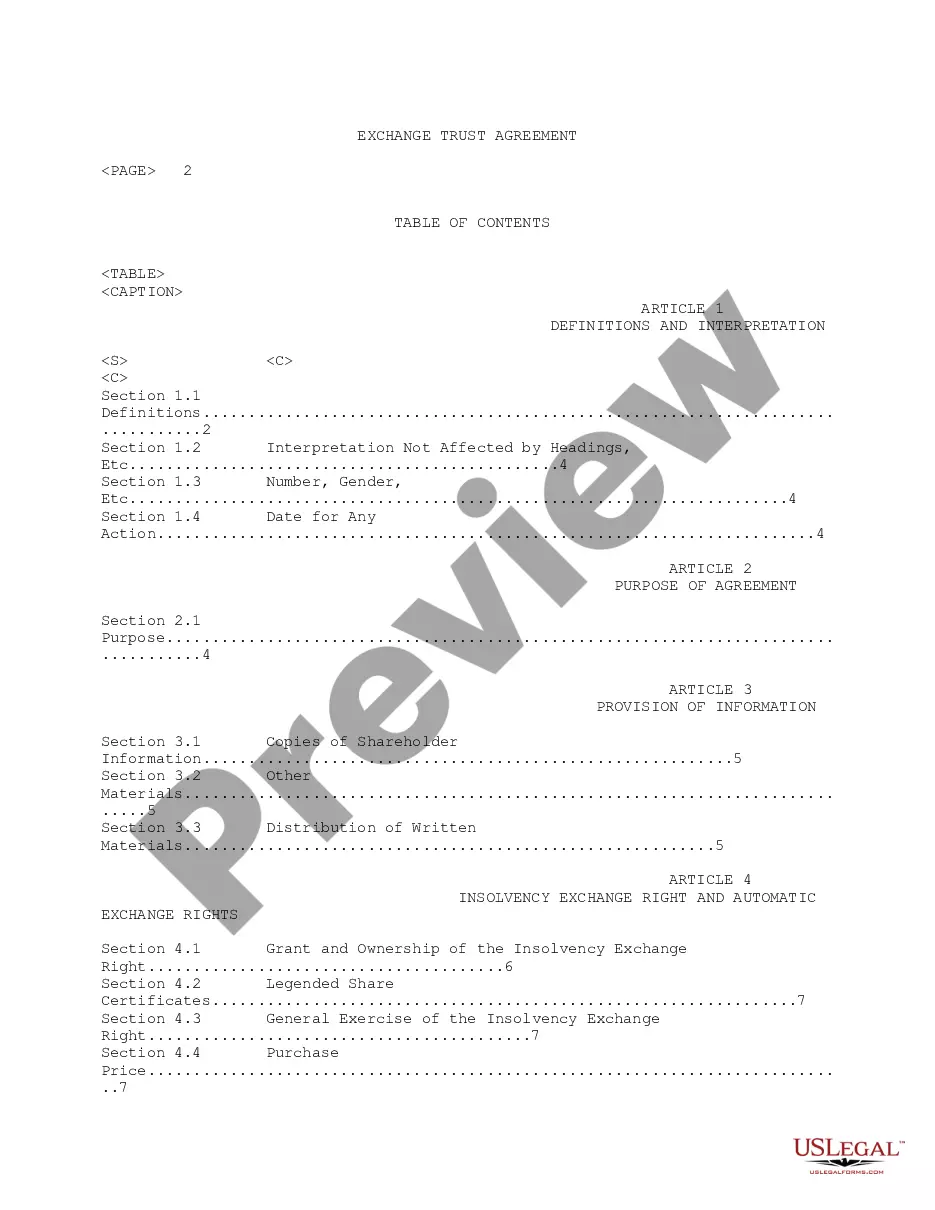
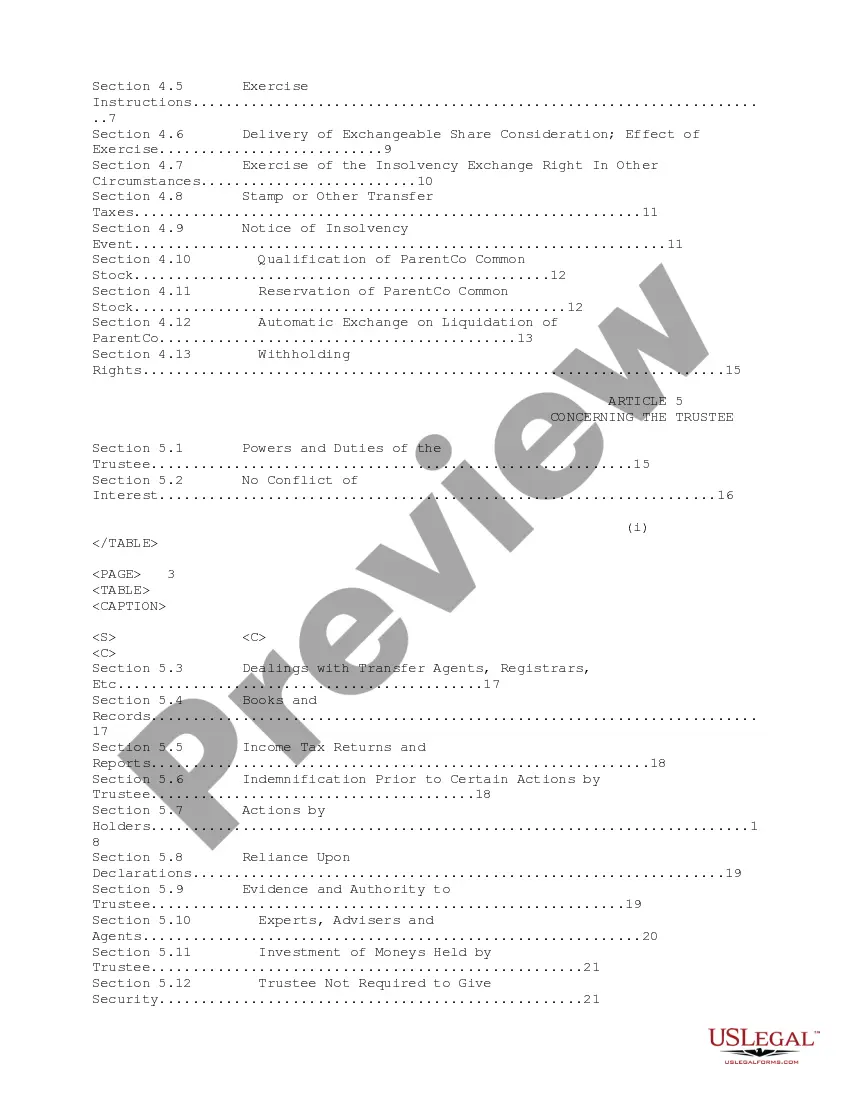
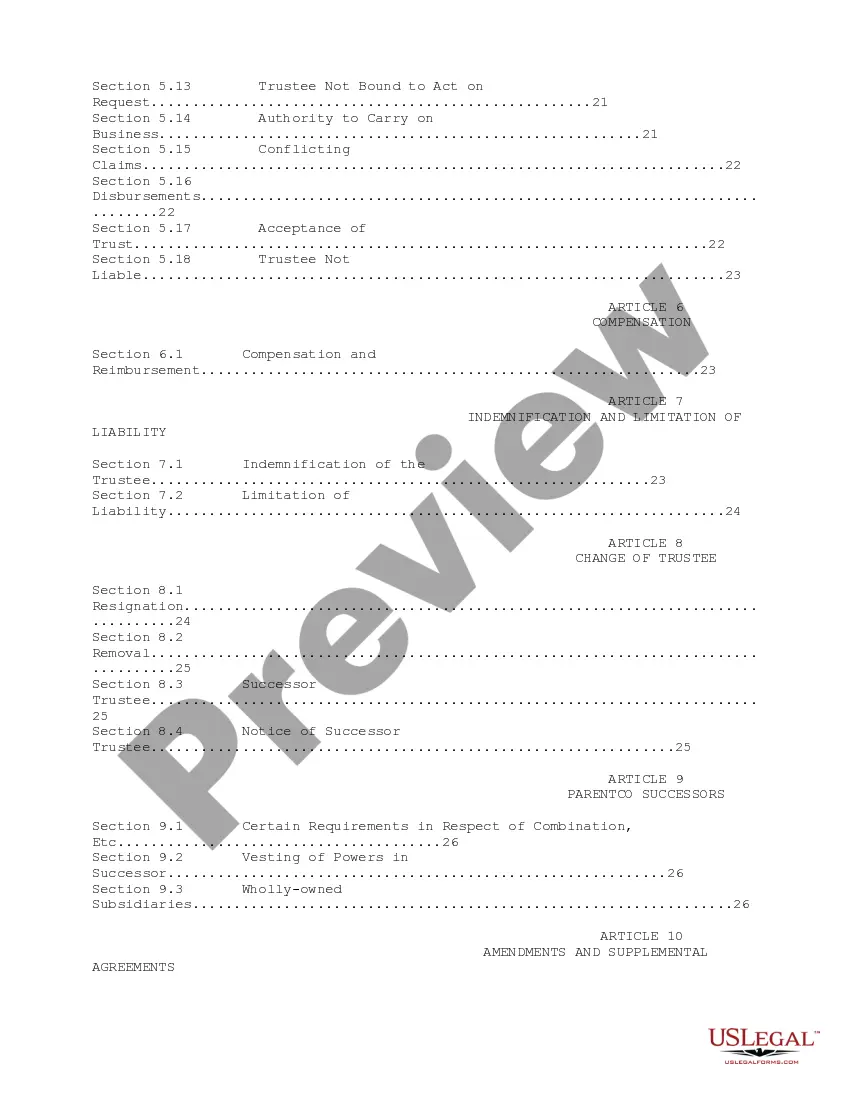
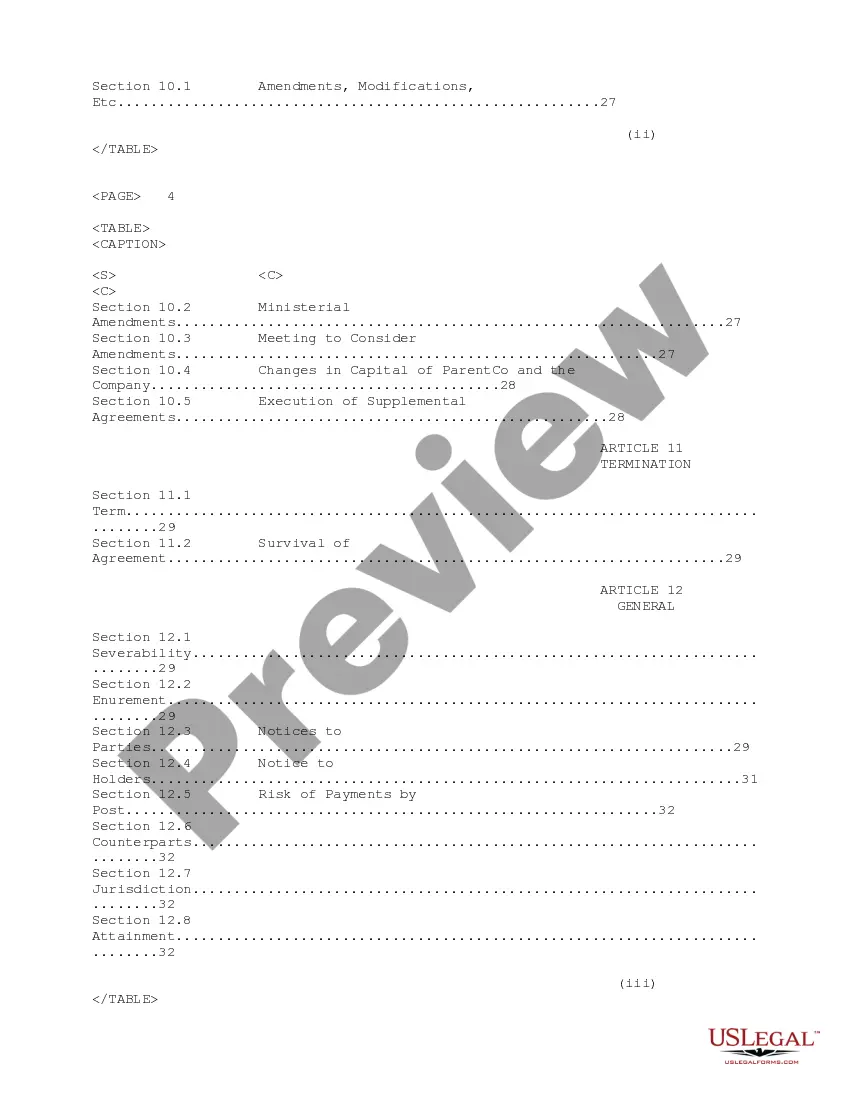
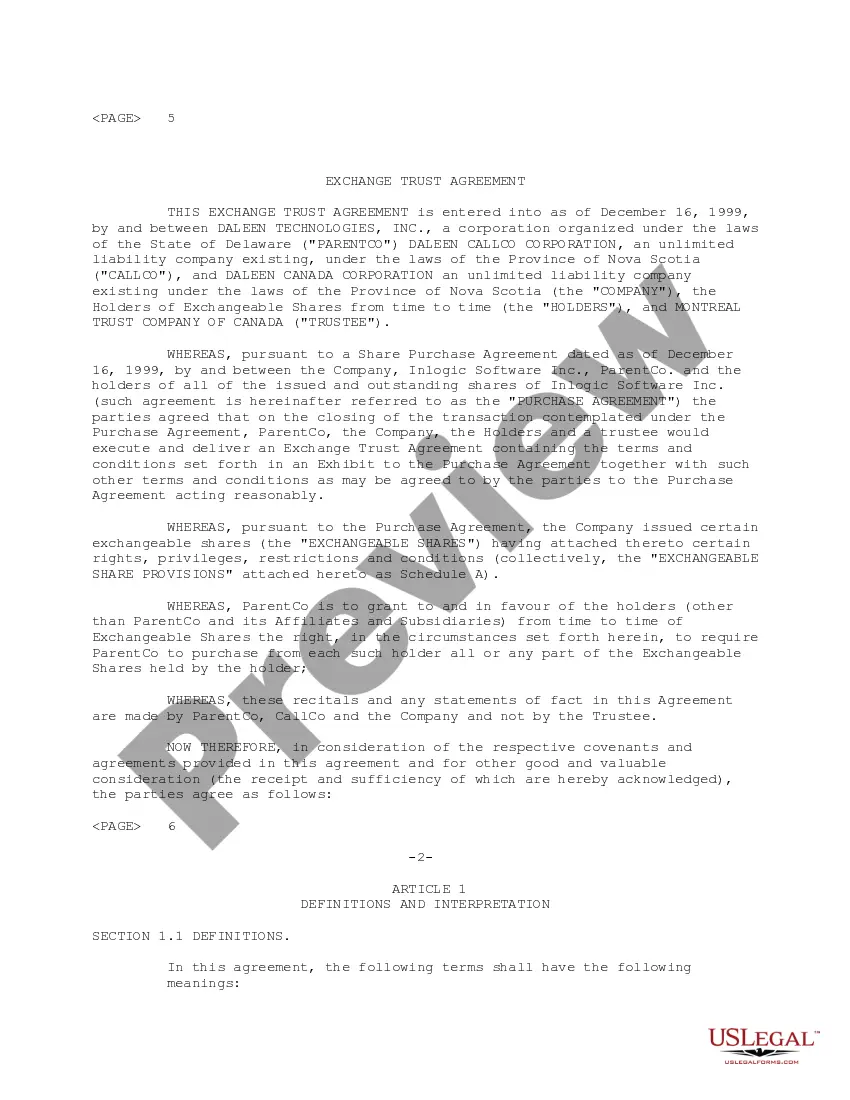
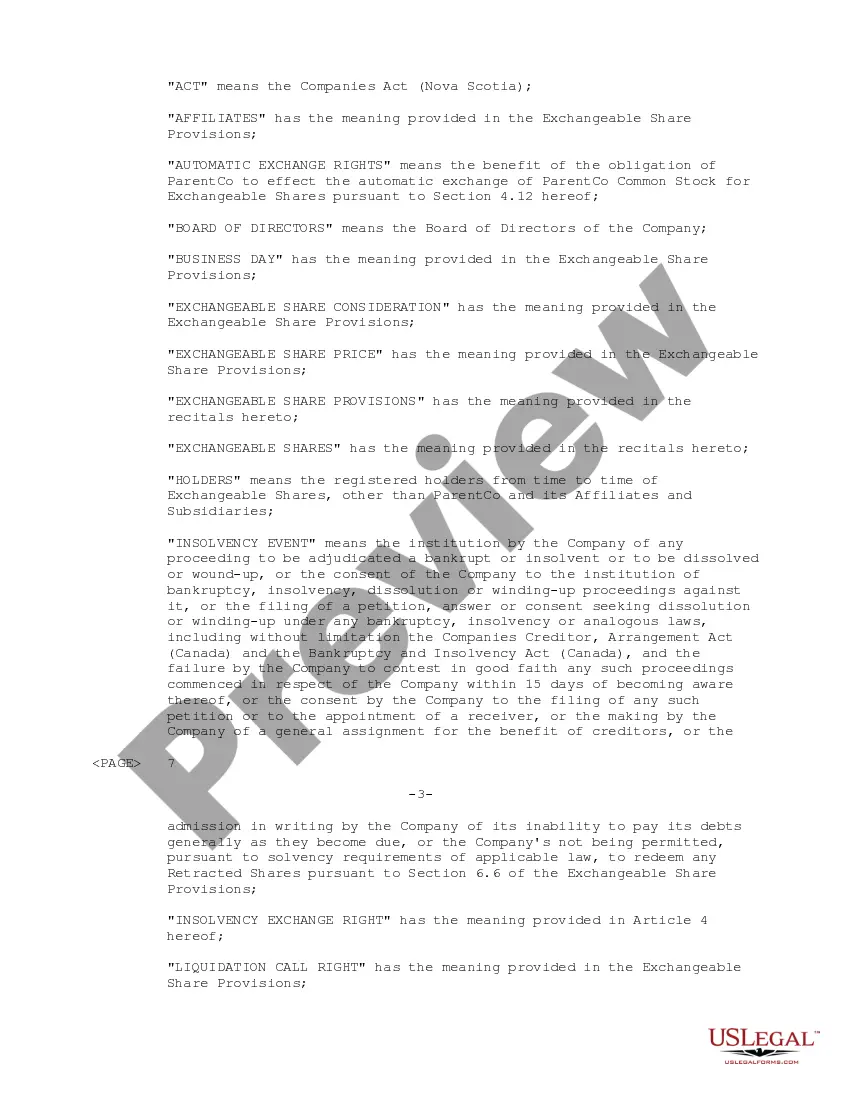
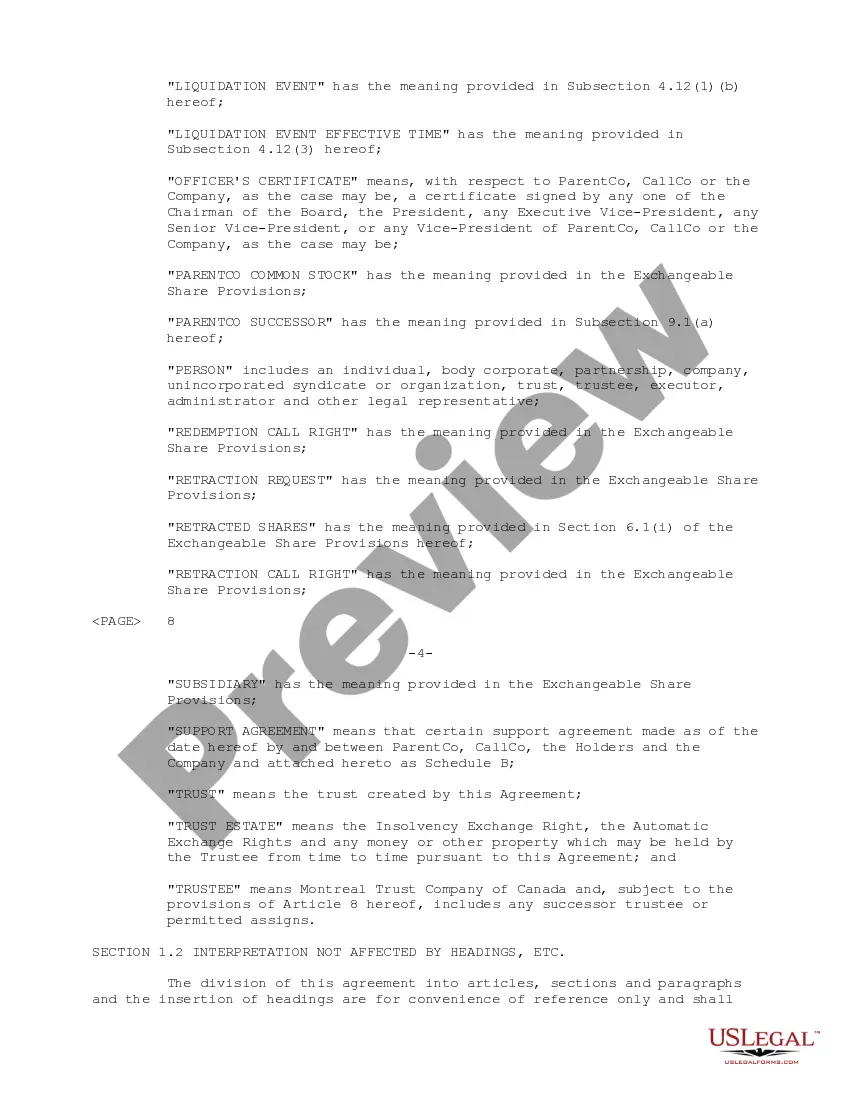
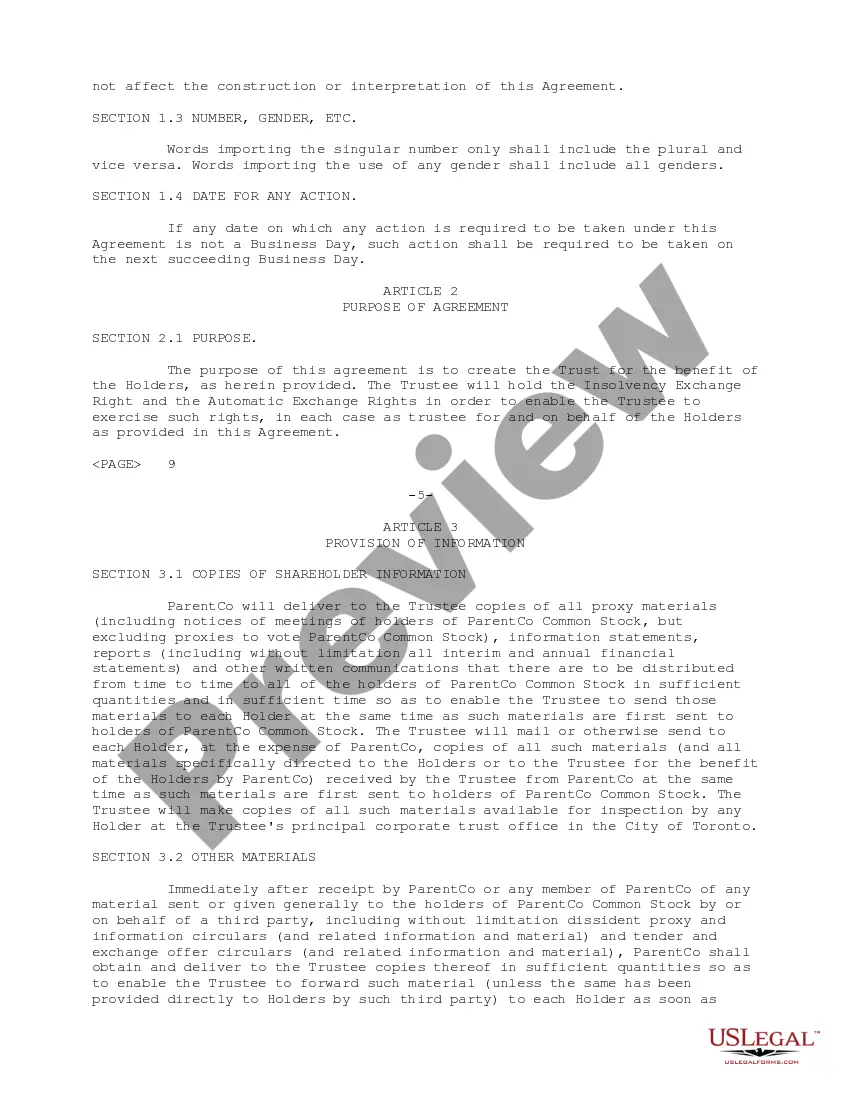
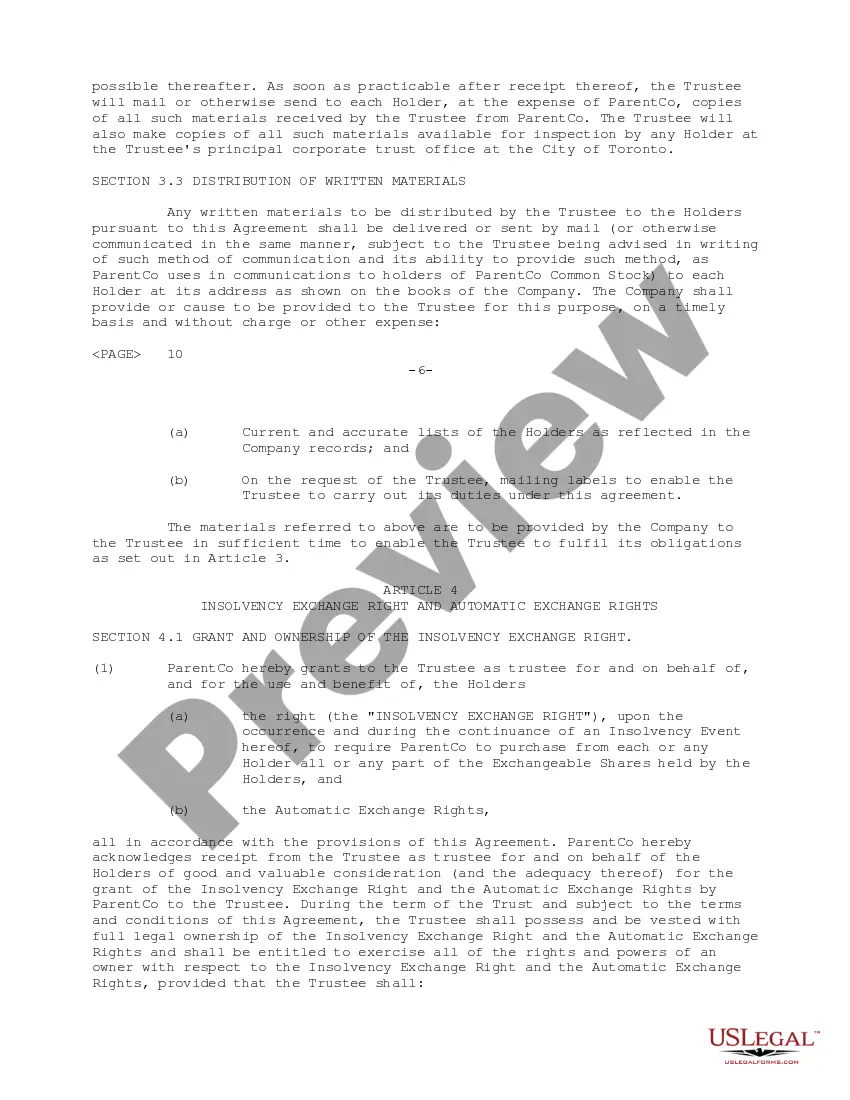
How to fill out Exchange Trust Agreement Between Daleen Technologies, Inc., Daleen CallCo Corp., Daleen Canada Corp., Exchangeable Shares Holders And Montreal Trust Co.?
- Log into your account if you're a returning user and ensure your subscription is active. Click on the Download button to save the form template you need.
- If you're new to the service, start by reviewing the Preview mode and form description to select the document that best fits your needs and complies with local jurisdiction.
- If the form isn't satisfactory, use the Search tab to find an alternative template that ensures all requirements are met. Once confirmed, proceed to the next step.
- Select the preferred subscription plan by clicking the Buy Now button. You'll need to register for an account to gain access to the diverse resources available.
- Complete your purchase by entering payment details via credit card or your PayPal account to confirm your subscription.
- Download the form directly to your device and access it anytime through the My Forms section of your profile. This allows for easy completion and retrieval whenever necessary.
In conclusion, US Legal Forms simplifies the process of obtaining and managing legal documents. With a vast collection and expert assistance at your fingertips, you're equipped to handle your legal matters with confidence. Don't hesitate; start today to explore the myriad of forms available!
Visit US Legal Forms to expedite your legal documentation process now.
Form popularity
FAQ
To record a certificate of trust, begin by completing the document with the necessary information about the trust. Once finalized, submit it to your local recorder's office or the appropriate government agency. The Trust callco form for a field can help ensure your certificate includes all pertinent details needed for recording. Making sure it is properly recorded will strengthen the trust's legal standing.
Yes, you can create your own certificate of trust as long as it complies with your state’s requirements. Use the Trust callco form for a field to guide you through the necessary sections. This approach provides a clear template, making it easier to include all essential information. Just remember to follow the required legal framework to ensure validity.
Drafting a trust document involves outlining the trust's purpose, assets, and the roles of beneficiaries and trustees. You can start by using the Trust callco form for a field to help structure your document. This form provides essential sections to cover, ensuring you address all critical components. After drafting, consider having a legal professional review it to ensure it meets legal requirements.
To form a trust in Colorado, begin by determining the type of trust that meets your needs. Next, draft a trust document detailing the terms and conditions, including the trustee's responsibilities. Utilize the Trust callco form for a field to simplify this process. Finally, make sure to review state regulations and consult a legal professional to ensure compliance.
Filling out a trust certification involves providing specific information about the trust, including its name, date of creation, and trustees. Complete the Trust callco form for a field to ensure you have all relevant details included. This form simplifies the process and ensures compliance with legal standards. Once filled out, you may need to sign and notarize the document.
To fill out a trust fund, you first need to gather the necessary information about the assets involved and the beneficiaries. Then, complete the Trust callco form for a field, ensuring each section accurately reflects the details of your trust. Providing clear and precise information helps prevent misunderstandings. After you complete the form, review it carefully before finalizing.
Certifying a trust means creating an official document that verifies the existence and terms of the trust. This document outlines the trust's purpose, beneficiaries, and the trustee's powers. It provides legal protection and clarity regarding the trust's authority. You can use the Trust callco form for a field to streamline this certification process.
Yes, a successor trustee must file Form 56 to inform the IRS of their new role overseeing the trust. This ensures that any tax obligations and communications with the IRS are properly managed. Completing this form is essential for any changes in fiduciary duty concerning the trust. If you need assistance with the filing process, consider leveraging the tools offered by USLegalForms.
For a trust, you typically need to file Form 1041 with the IRS, which is the U.S. Income Tax Return for Estates and Trusts. This form reflects the income and deductions associated with the trust. Filing accurately is critical for managing tax responsibilities. If you find the process daunting, platforms like USLegalForms offer templates and resources to simplify your experience.
Form 56 is used to notify the IRS of the creation or change of a fiduciary for a trust, while Form 56-F is specifically for foreign trusts. In essence, Form 56 applies to domestic situations, whereas Form 56-F addresses international obligations. Each form serves specific purposes in trust administration, and knowing the differences is vital for compliance. If you're unsure about which form to use, USLegalForms can guide you through the process.