Corporation Intellectual Property With Ai
Description
Get your form ready online
Our built-in tools help you complete, sign, share, and store your documents in one place.
Make edits, fill in missing information, and update formatting in US Legal Forms—just like you would in MS Word.
Download a copy, print it, send it by email, or mail it via USPS—whatever works best for your next step.
Sign and collect signatures with our SignNow integration. Send to multiple recipients, set reminders, and more. Go Premium to unlock E-Sign.
If this form requires notarization, complete it online through a secure video call—no need to meet a notary in person or wait for an appointment.
We protect your documents and personal data by following strict security and privacy standards.

Make edits, fill in missing information, and update formatting in US Legal Forms—just like you would in MS Word.

Download a copy, print it, send it by email, or mail it via USPS—whatever works best for your next step.

Sign and collect signatures with our SignNow integration. Send to multiple recipients, set reminders, and more. Go Premium to unlock E-Sign.

If this form requires notarization, complete it online through a secure video call—no need to meet a notary in person or wait for an appointment.

We protect your documents and personal data by following strict security and privacy standards.
Looking for another form?







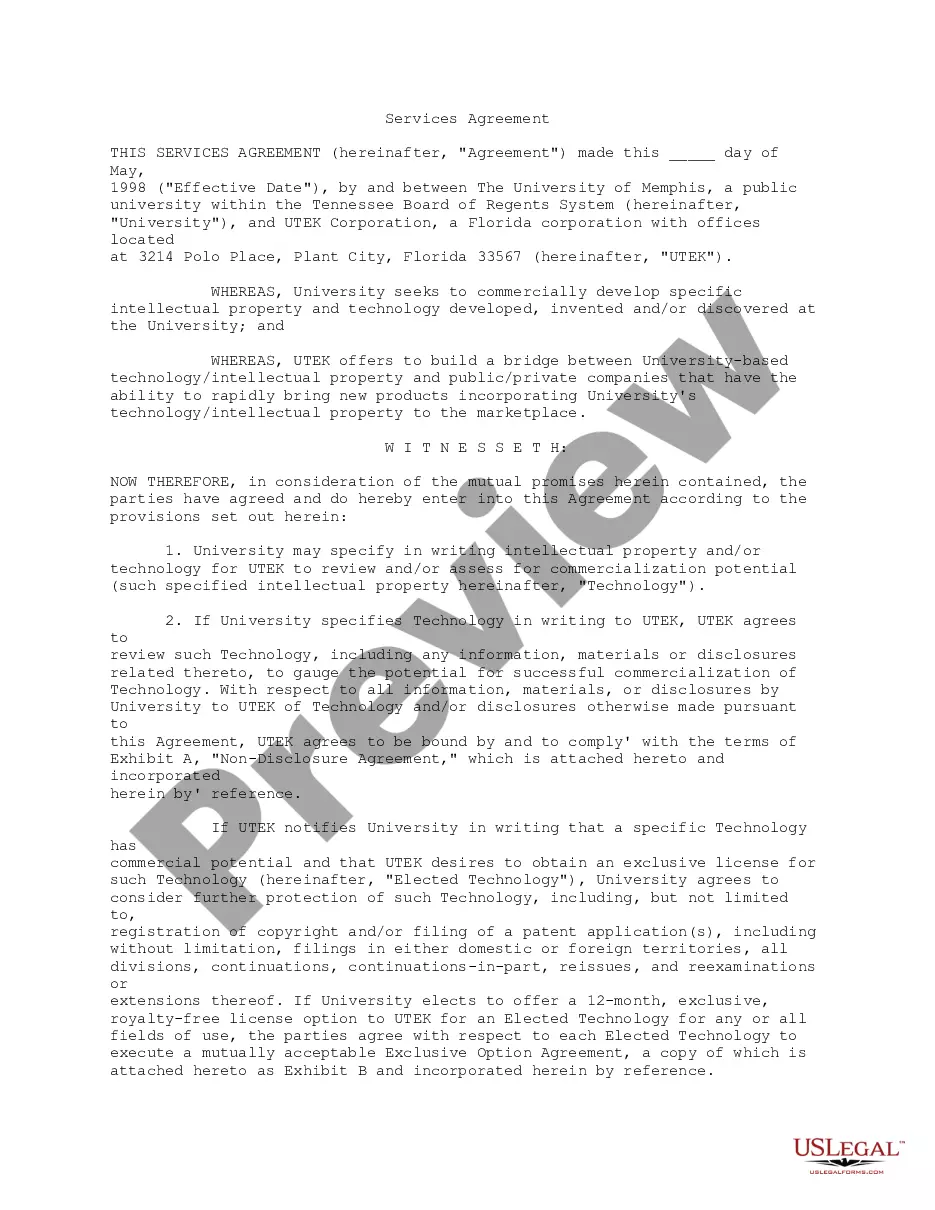
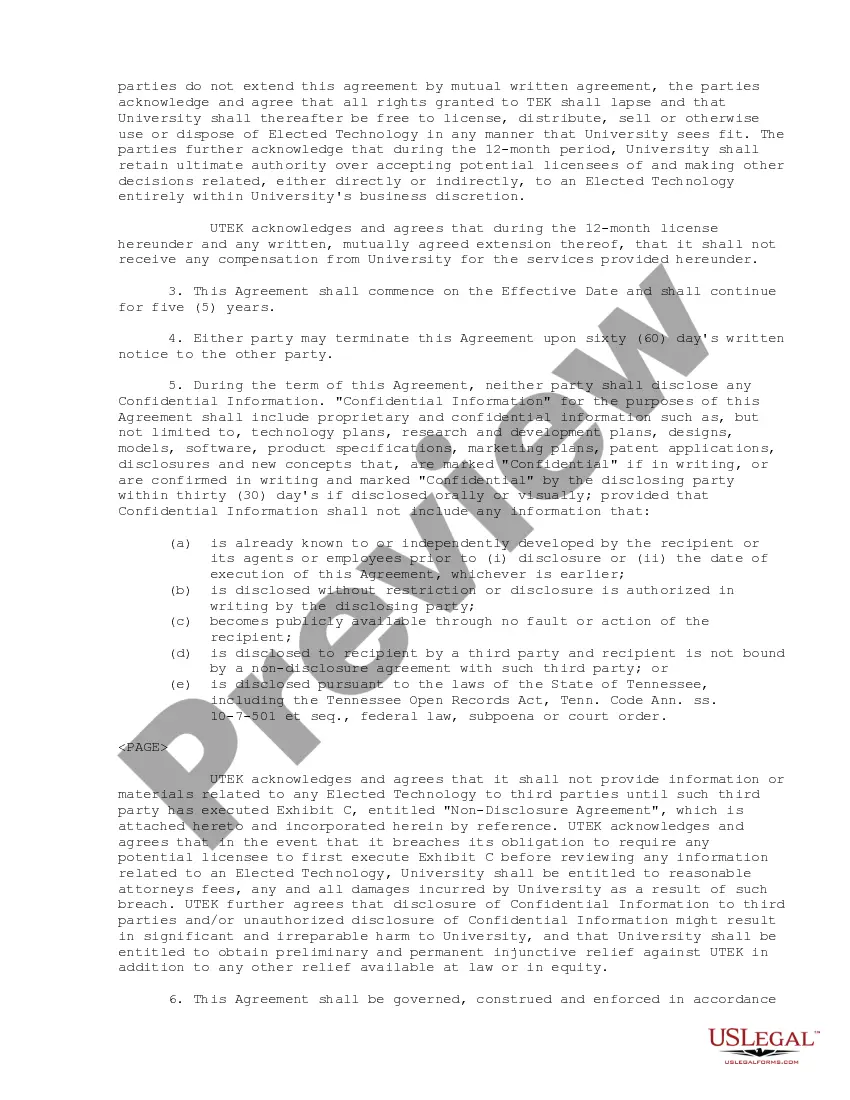
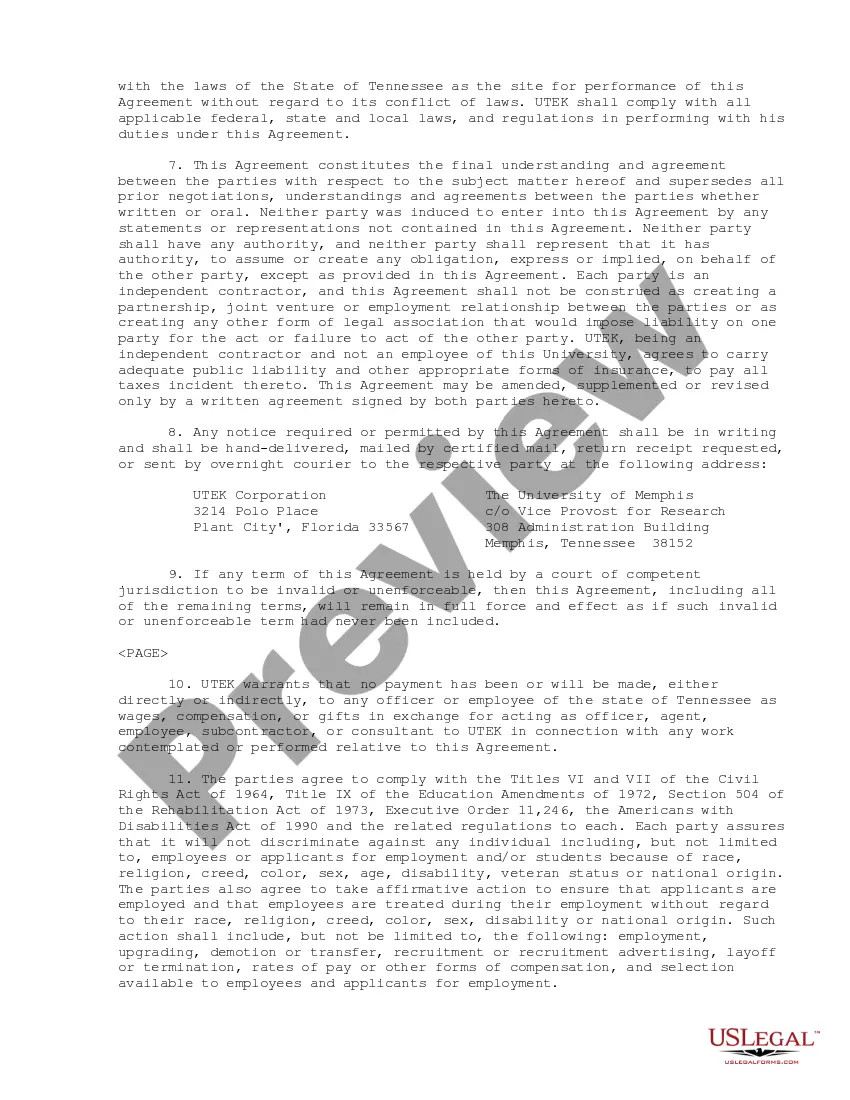
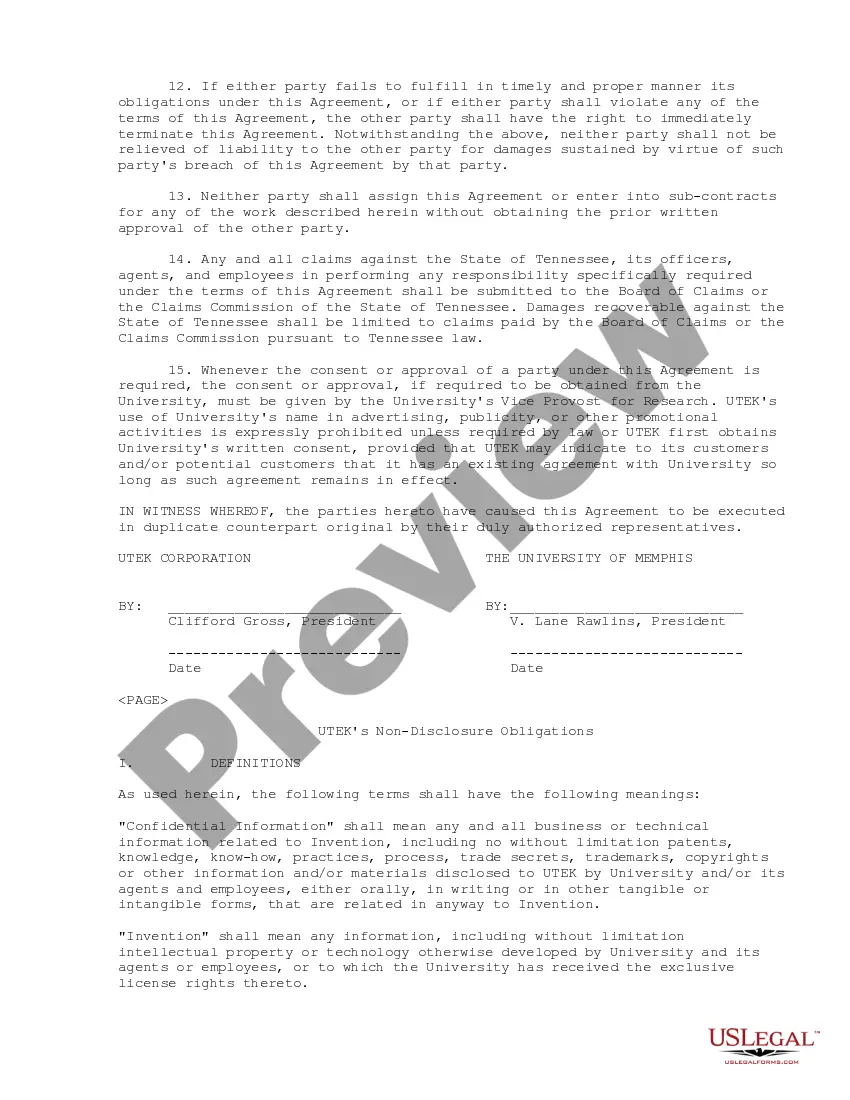
How to fill out Services Agreement Between The University Of Memphis And UTEK Corp. Regarding Commercial Development Of Specific Intellectual Property And Technology?
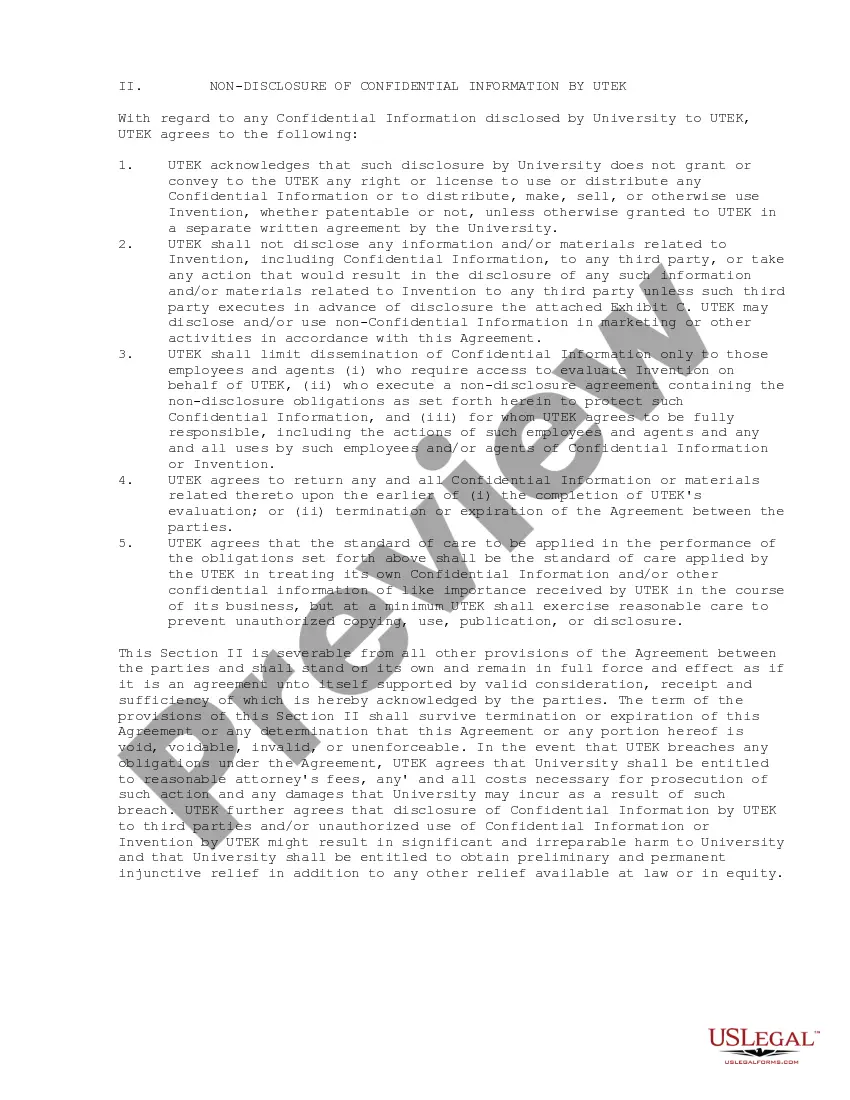
Locating a reliable source for obtaining the most up-to-date and pertinent legal templates is a significant part of dealing with bureaucracy. Selecting the appropriate legal documents requires precision and carefulness, which is why it is essential to acquire samples of Corporation Intellectual Property With Ai solely from credible sources, such as US Legal Forms. An incorrect template will squander your time and hinder your current situation. With US Legal Forms, you have minimal concerns. You can access and review all the details pertaining to the document’s application and relevance for your circumstances and in your state or region.
Follow these steps to complete your Corporation Intellectual Property With Ai.
Eliminate the hassle that comes with your legal paperwork. Explore the extensive US Legal Forms collection to discover legal templates, assess their applicability to your situation, and download them instantly.
- Utilize the catalog navigation or search bar to locate your sample.
- Open the form’s details to verify if it aligns with the requirements of your state and locality.
- View the form preview, if available, to ensure the form is indeed the one you need.
- Return to the search and find the suitable template if the Corporation Intellectual Property With Ai does not meet your requirements.
- If you are confident about the form’s applicability, download it.
- As an authorized user, click Log in to verify and access your selected templates in My documents.
- If you do not possess an account yet, click Buy now to purchase the template.
- Select the pricing plan that suits your needs.
- Proceed to the registration to finalize your acquisition.
- Complete your purchase by choosing a payment method (credit card or PayPal).
- Select the document format for downloading Corporation Intellectual Property With Ai.
- Once you have the form on your device, you may modify it using the editor or print it and fill it out manually.
Form popularity
FAQ
Based on current law, using a copyrighted work to train an AI system is unlikely to constitute copyright infringement, especially if that system has not retained a copy of the original work after completing the training process.
The European Patent Office has noted that although an AI cannot be named as an inventor, nothing prevents its user or owner from listing themselves instead and disclosing that an invention is AI-generated.
AI systems can also generate new works protectable by copyright, such as creating new artwork or music. However, most copyright statutes do not yet not clearly define who owns machine-generated works.
On the basis that only legal persons can own assets such as IP rights, an AI cannot own the rights in any artistic work or invention it is said to have created.
To obtain a patent in the U.S., the inventor must file a patent application with the United States Patent and Trademark Office (USPTO), which includes (1) a written document comprising a description and claims, (2) drawings when necessary, (3) an oath or declaration, and (4) filing, search, and examination fees.