Trust Administrative Investment For The Future
Description

Get your form ready online
Our built-in tools help you complete, sign, share, and store your documents in one place.
Make edits, fill in missing information, and update formatting in US Legal Forms—just like you would in MS Word.
Download a copy, print it, send it by email, or mail it via USPS—whatever works best for your next step.
Sign and collect signatures with our SignNow integration. Send to multiple recipients, set reminders, and more. Go Premium to unlock E-Sign.
If this form requires notarization, complete it online through a secure video call—no need to meet a notary in person or wait for an appointment.
We protect your documents and personal data by following strict security and privacy standards.

Make edits, fill in missing information, and update formatting in US Legal Forms—just like you would in MS Word.

Download a copy, print it, send it by email, or mail it via USPS—whatever works best for your next step.

Sign and collect signatures with our SignNow integration. Send to multiple recipients, set reminders, and more. Go Premium to unlock E-Sign.

If this form requires notarization, complete it online through a secure video call—no need to meet a notary in person or wait for an appointment.

We protect your documents and personal data by following strict security and privacy standards.
Looking for another form?








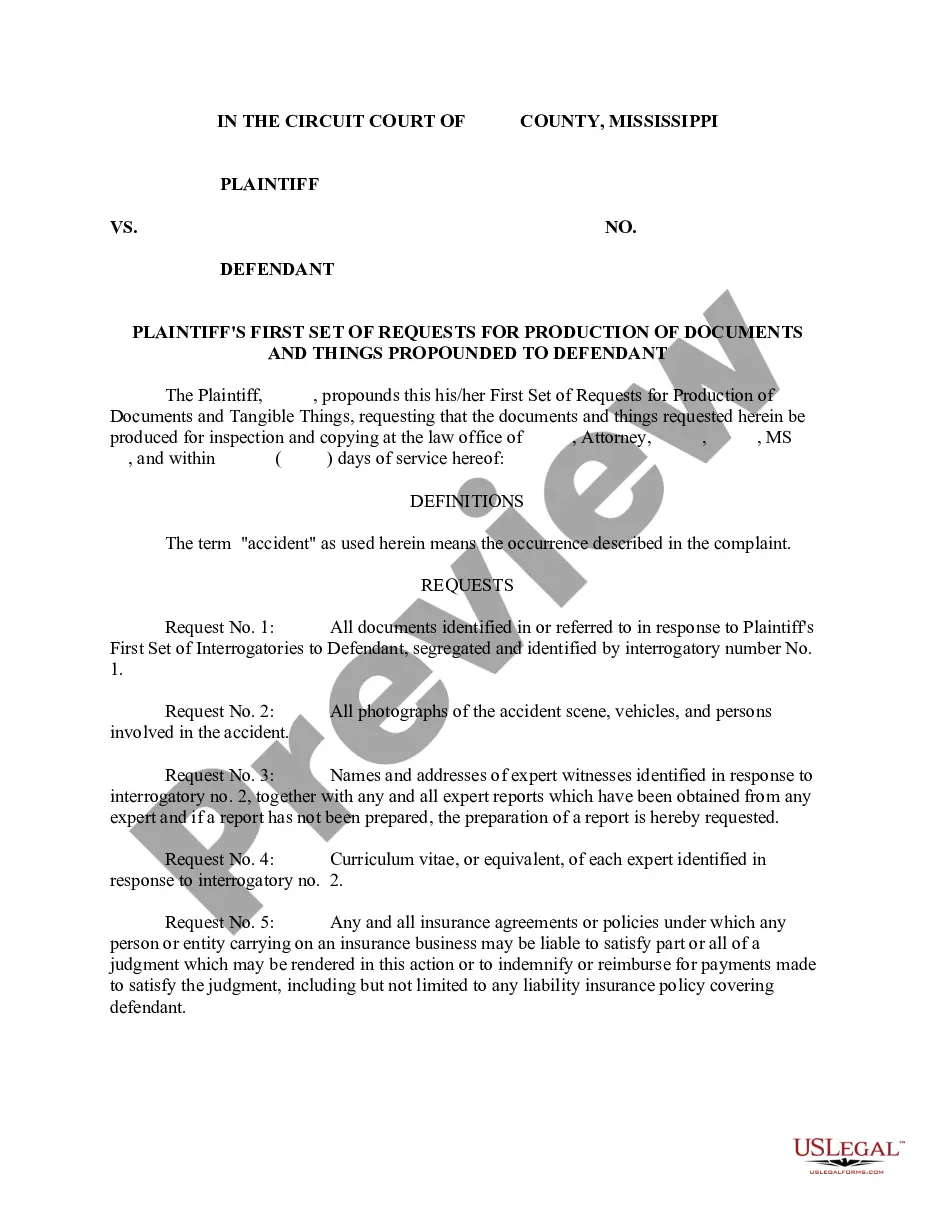
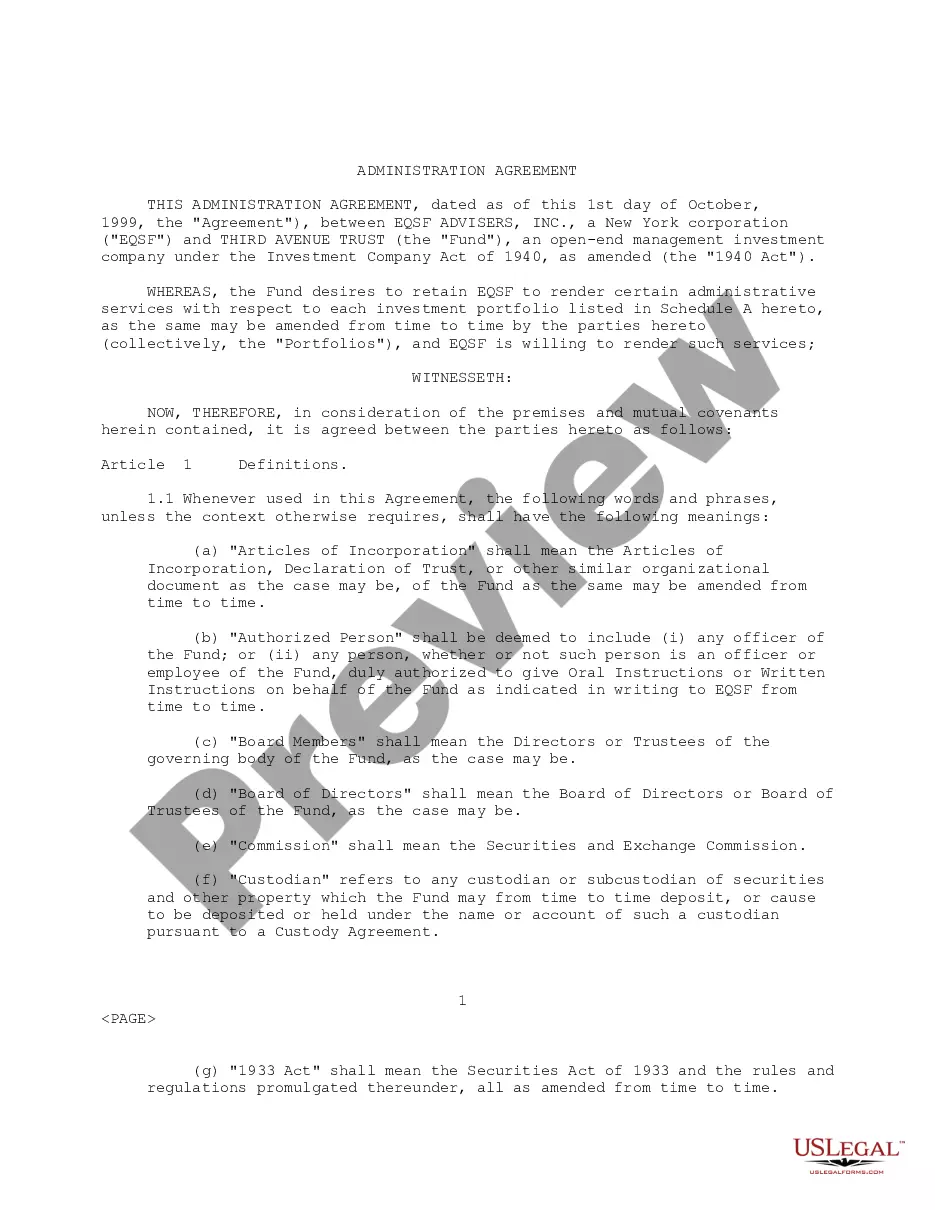
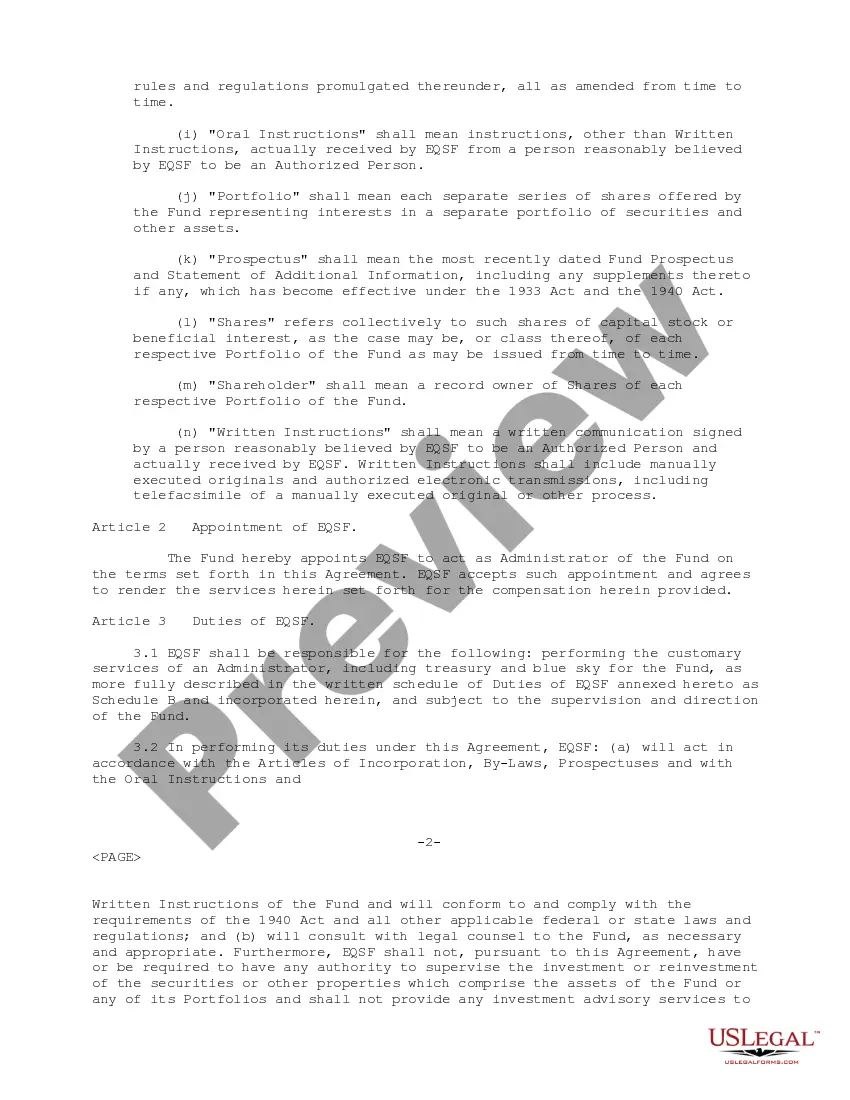
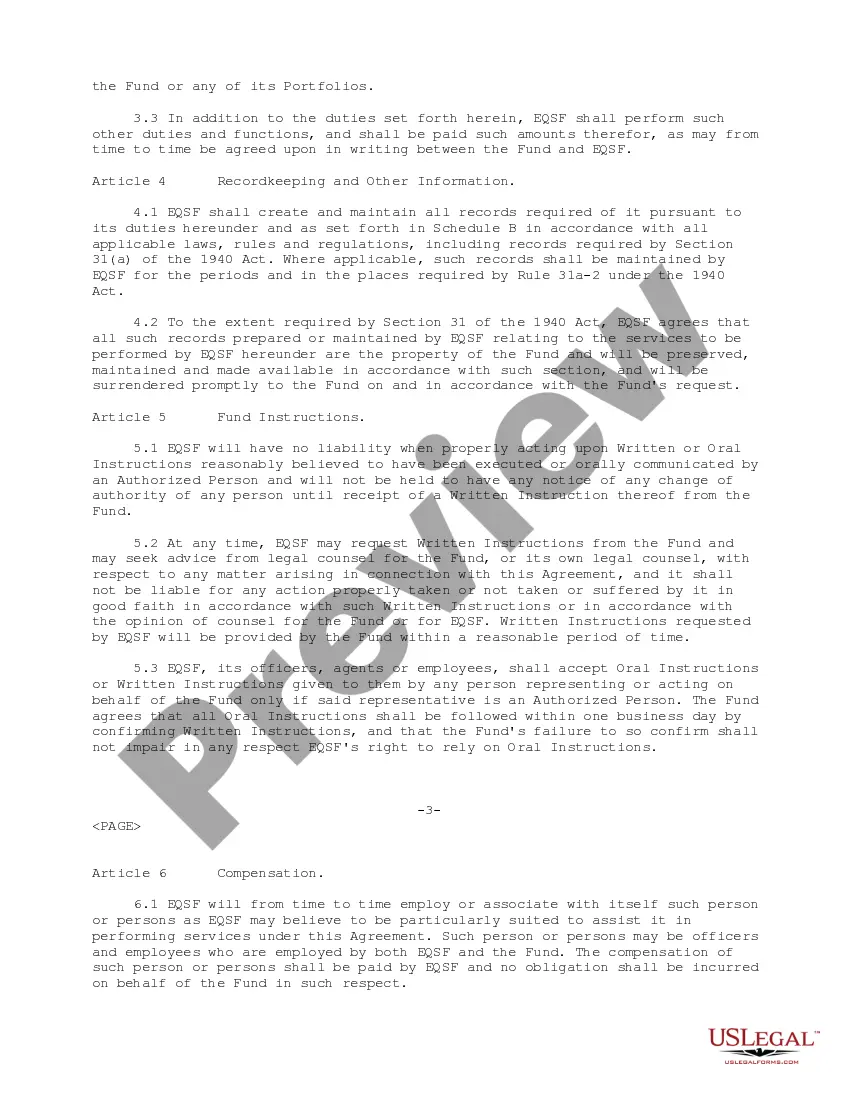
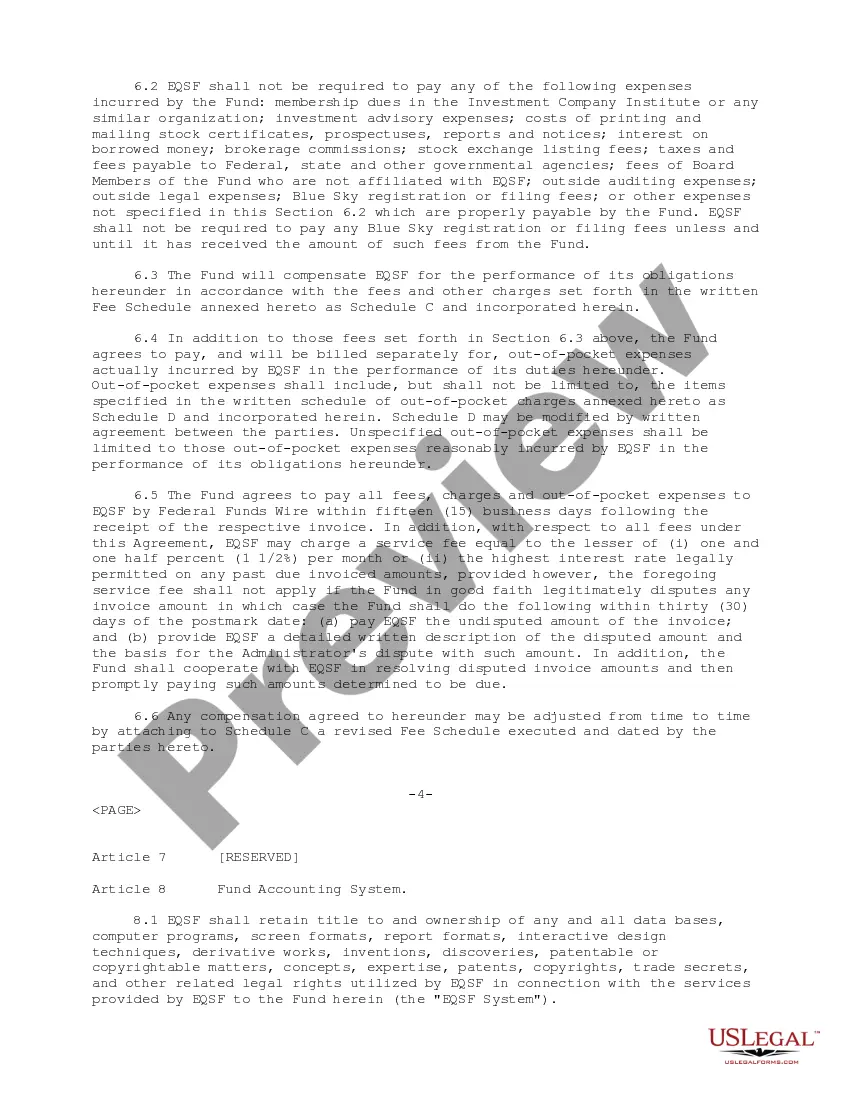
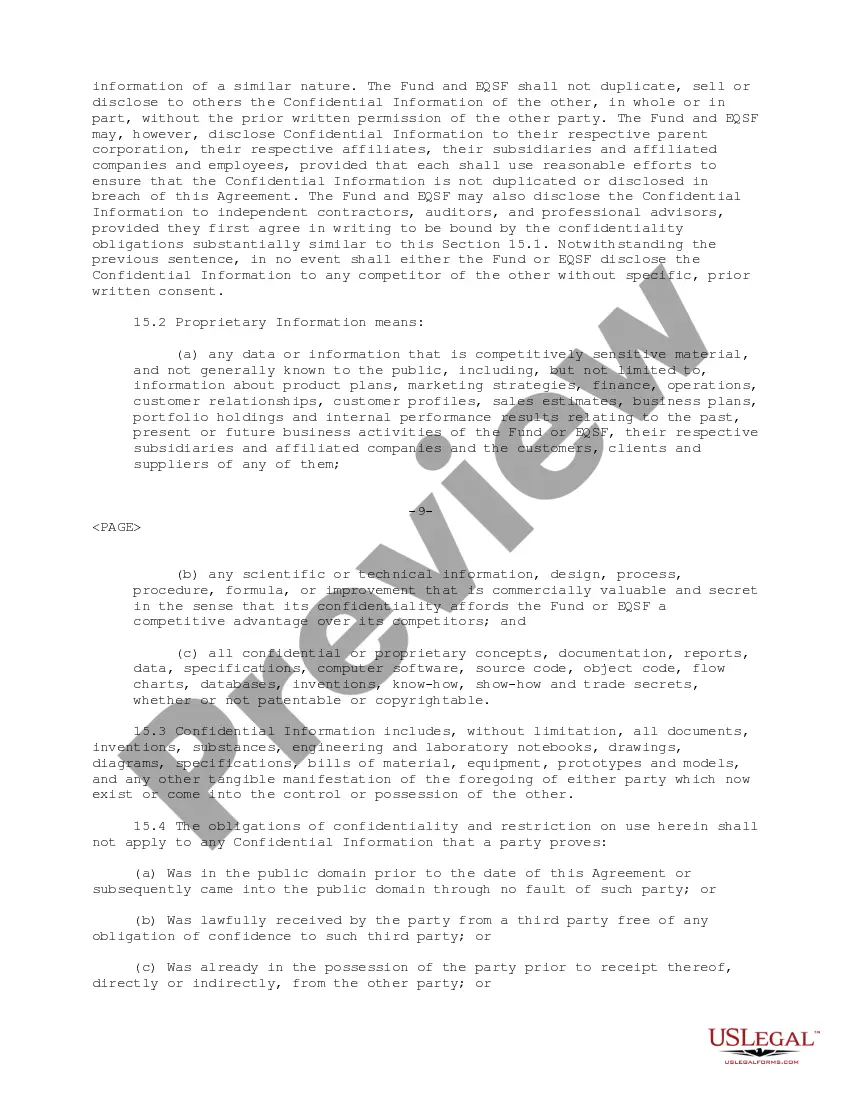
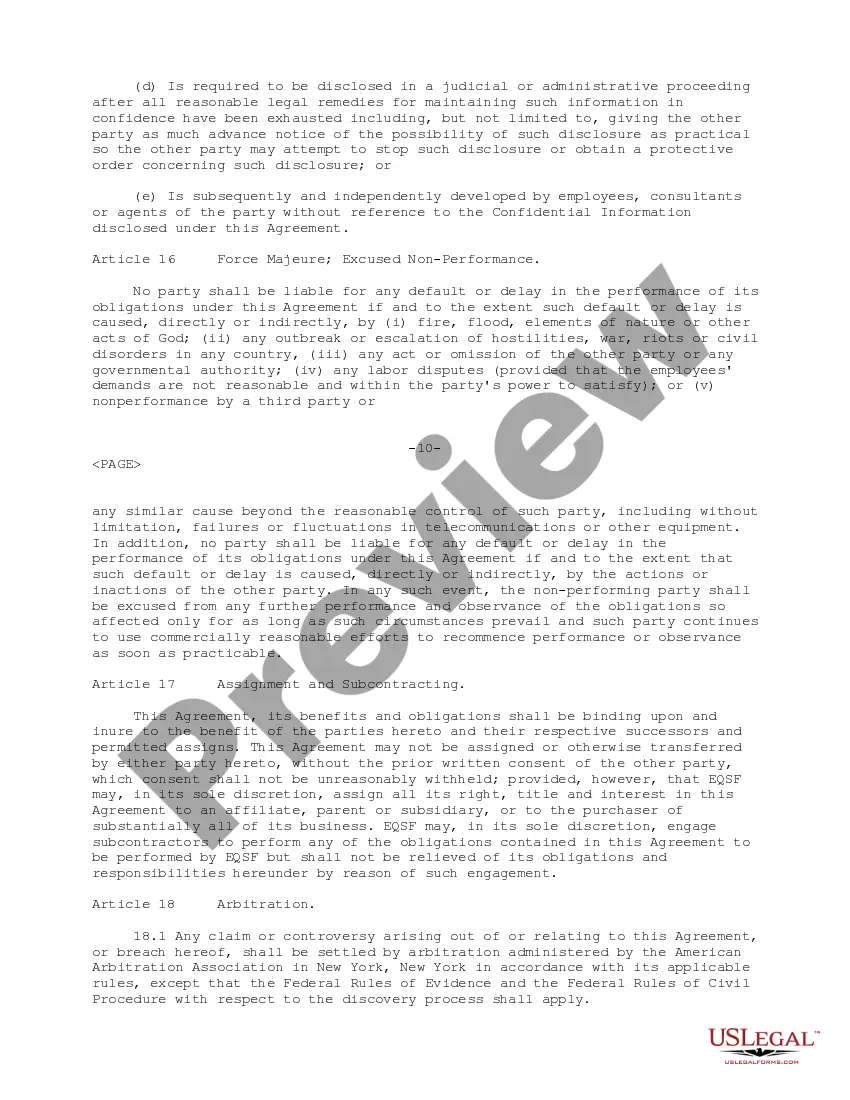
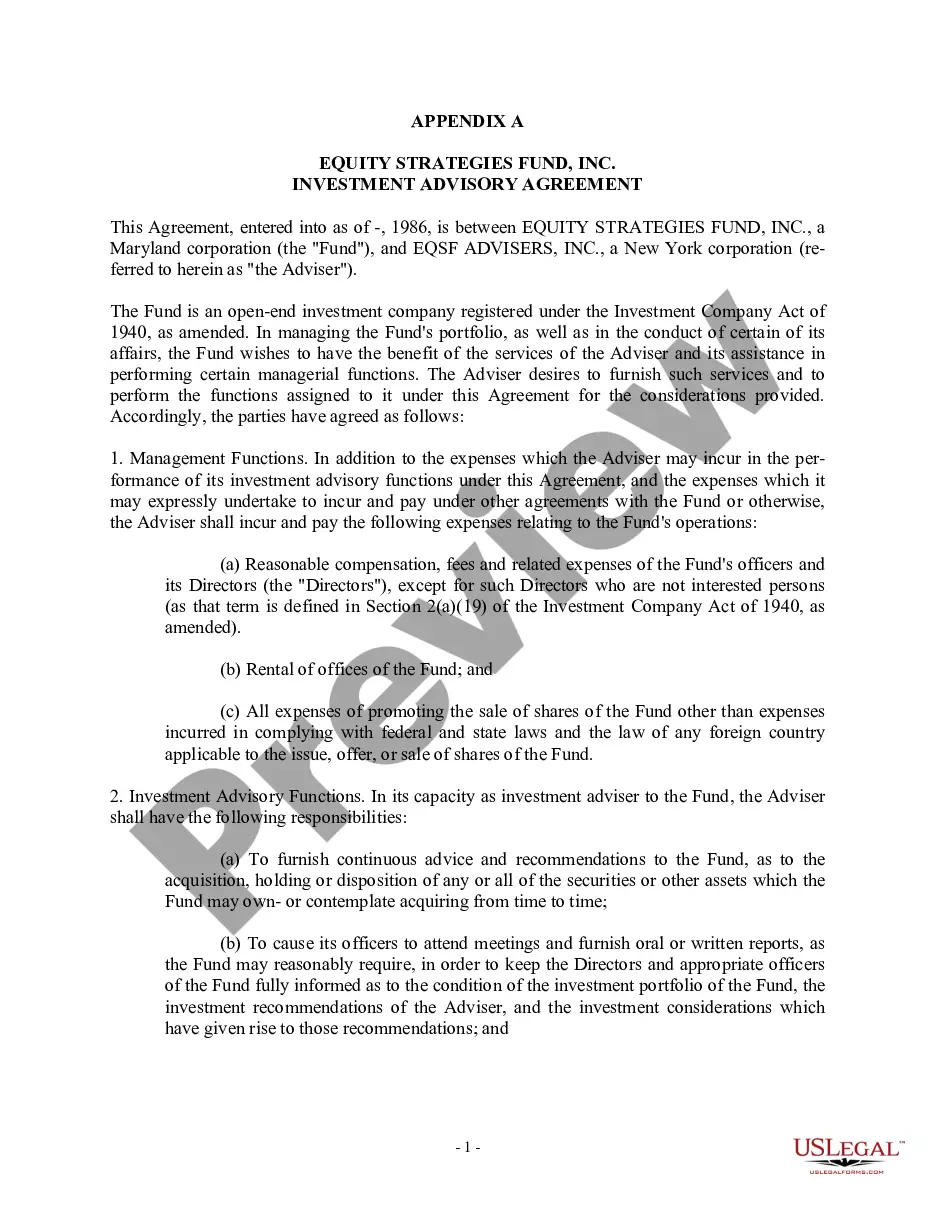
How to fill out Administration Agreement Between EQSF Advisors, Inc. And Third Avenue Trust Regarding Retaining EQSF To Render Administrative Services With Respect To Investment?
- If you are a returning user, log in to your account and select the required form template by clicking the Download button. Ensure your subscription is active; if not, renew it according to your payment plan.
- For first-time users, start by previewing the form and reading its description. Confirm that it fits your needs and complies with your local jurisdiction standards.
- If you need a different template, use the Search tab to find alternatives. Ensure it meets your requirements before proceeding.
- Purchase the desired document by clicking on the Buy Now button, and select your preferred subscription plan. You will need to create an account to access the extensive library.
- Complete your transaction by entering your payment details or using your PayPal account to finalize your subscription.
- Once your purchase is successful, download your form to your device for easy completion. You can also find it under the My Forms section in your profile whenever you need it.
In conclusion, US Legal Forms enhances your ability to navigate legal documentation efficiently, providing access to more forms than competitors at a similar price. This not only saves you time but also secures legal soundness with assistance from premium experts.
Start your journey today, and trust US Legal Forms as your administrative investment for the future!
Form popularity
FAQ
The major disadvantage of a trust often lies in its complexity and the need for ongoing management. Setting up a trust requires careful planning and can involve legal expenses. Furthermore, heirs may have limited access to funds until specific conditions are fulfilled, creating a barrier for immediate financial needs. To navigate these challenges, consider using platforms like US Legal Forms, which can simplify your trust administrative investment for the future.
Trust funds, while beneficial in many ways, also pose potential dangers. Mismanagement by the trustee can lead to loss of assets or failure to fulfill the grantor's intentions. Moreover, if the trust is not updated to reflect changes in laws or family dynamics, it might create legal complications. Thus, thorough planning when making a trust administrative investment for the future is essential.
Trust funds can have downsides that potential holders should recognize. They often come with administrative fees that may accumulate over time, reducing the funds available to beneficiaries. Additionally, trust funds might limit beneficiaries' access to assets until certain conditions are met, which can lead to dissatisfaction. Therefore, being an informed investor in a trust administrative investment for the future is crucial.
An administrative trust serves to manage and protect assets on behalf of the beneficiaries. Its primary goal is to ensure that the assets are distributed according to the grantor’s wishes. It provides a structured approach to asset management, which can greatly benefit those looking to make a trust administrative investment for the future.
While trusts provide several benefits, they can have certain downfalls. One significant issue is the complexity involved in setting up and managing a trust, which may lead to ongoing administrative costs. Additionally, if not properly structured, a trust can lead to tax implications. Ultimately, individuals must weigh these factors and consider a trust administrative investment for the future.
One downside of transferring assets to a trust involves the potential loss of control, as the trust becomes the legal owner of the assets. While this can enhance a trust's ability for administrative investment for the future, it also means that initial control over those assets is ceded to the trust structure. In addition, certain trusts can incur fees and require ongoing management. It's crucial to understand these implications when considering a trust.
Your parents might find it beneficial to put their assets in a trust, especially if they seek to protect those assets for future generations. Utilizing a trust can simplify the transfer of assets and ensure proper management, becoming a strategic trust administrative investment for the future. However, it's essential to consider their specific financial situation and family dynamics. Consulting with a professional can provide clarity and help make an informed decision.
Yes, there is a Schedule B for Form 1041, which is used for reporting interest, dividends, and other income. This schedule is essential for trust administrative investment for the future because it ensures accurate reporting of income generated by trust assets. By properly completing Schedule B, you can help the trust meet its tax obligations effectively. For assistance with Form 1041 and its schedules, you can explore uslegalforms for detailed guidance.
When it comes to asset protection, several states, notably Nevada and Delaware, stand out. They offer strong laws that protect trust assets from creditors and legal challenges. Establishing your trust in one of these states can significantly enhance your trust administrative investment for the future.
Setting up an administrative trust starts with defining your goals and identifying the assets you want to include. It’s essential to work with professionals who can guide you through the legal paperwork and compliance requirements. Using a platform like uslegalforms can streamline this process, ensuring your trust administrative investment for the future is properly structured.