Eqsf Investment Blank With A
Description






Get your form ready online
Our built-in tools help you complete, sign, share, and store your documents in one place.
Make edits, fill in missing information, and update formatting in US Legal Forms—just like you would in MS Word.
Download a copy, print it, send it by email, or mail it via USPS—whatever works best for your next step.
Sign and collect signatures with our SignNow integration. Send to multiple recipients, set reminders, and more. Go Premium to unlock E-Sign.
If this form requires notarization, complete it online through a secure video call—no need to meet a notary in person or wait for an appointment.
We protect your documents and personal data by following strict security and privacy standards.

Make edits, fill in missing information, and update formatting in US Legal Forms—just like you would in MS Word.

Download a copy, print it, send it by email, or mail it via USPS—whatever works best for your next step.

Sign and collect signatures with our SignNow integration. Send to multiple recipients, set reminders, and more. Go Premium to unlock E-Sign.

If this form requires notarization, complete it online through a secure video call—no need to meet a notary in person or wait for an appointment.

We protect your documents and personal data by following strict security and privacy standards.
Looking for another form?









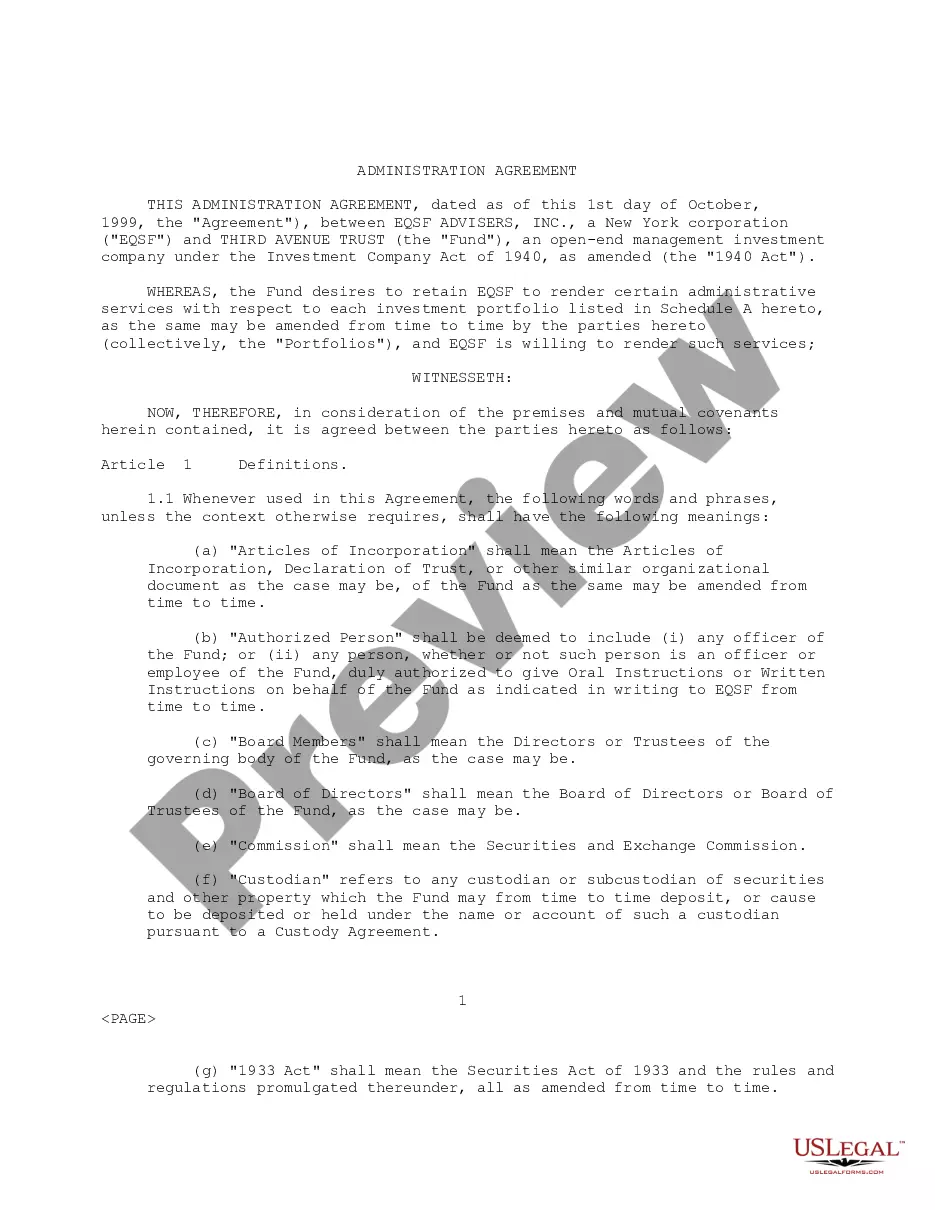
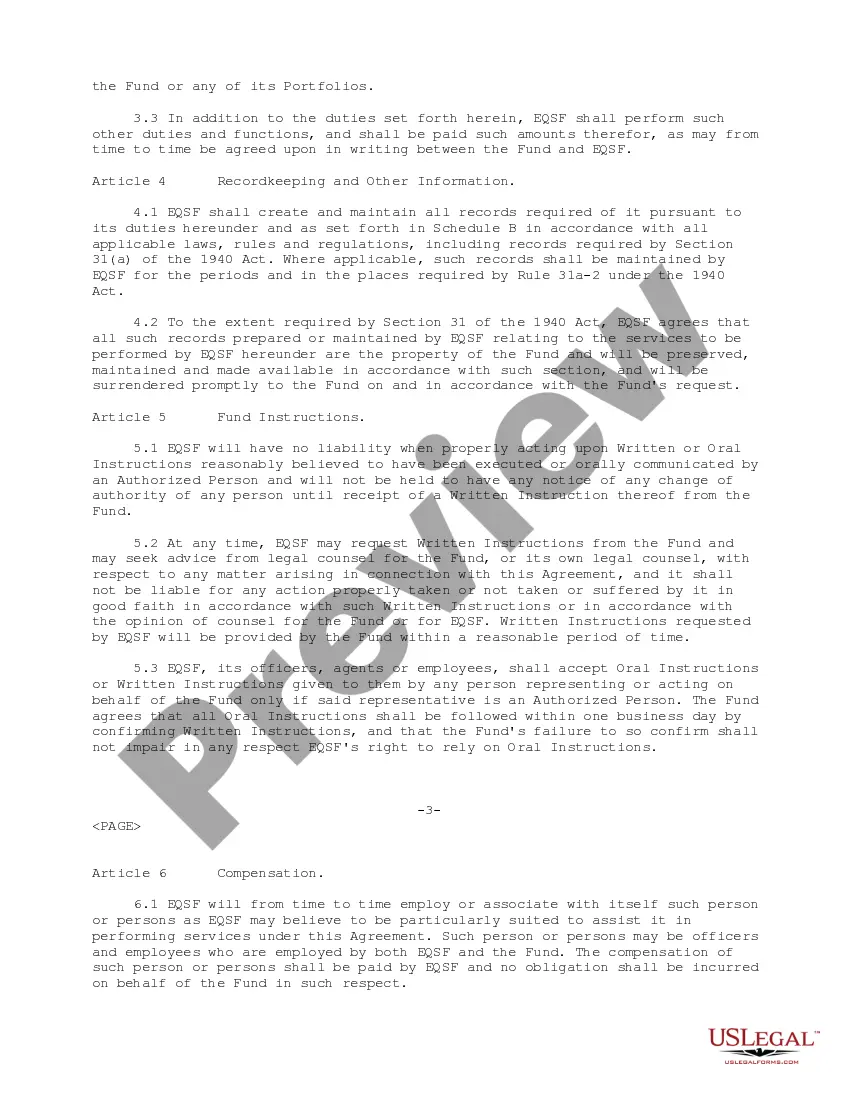
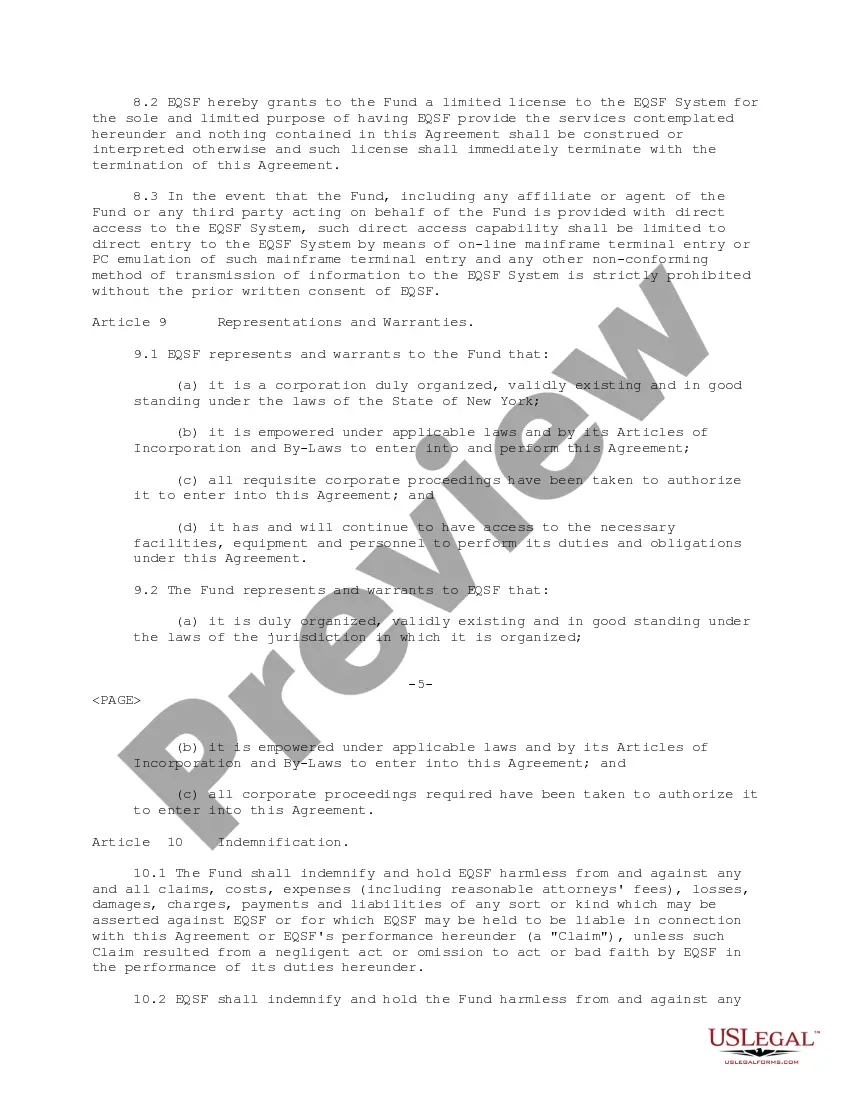
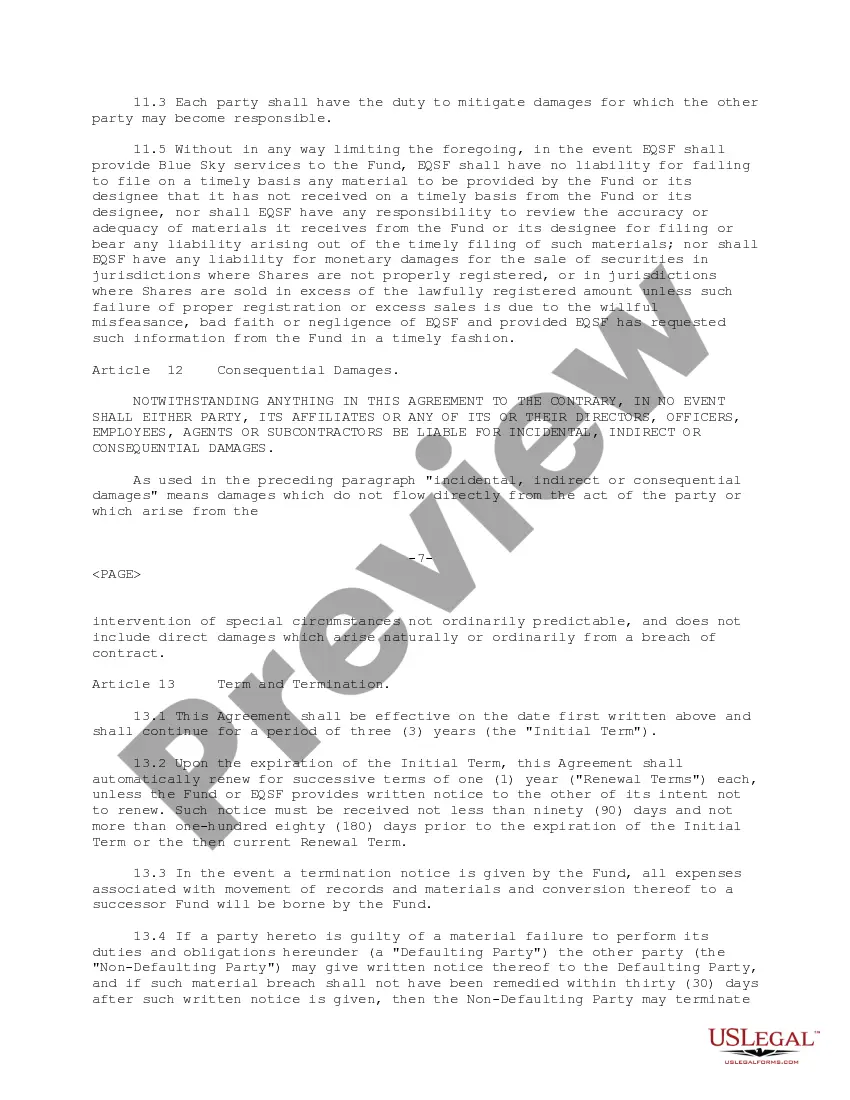
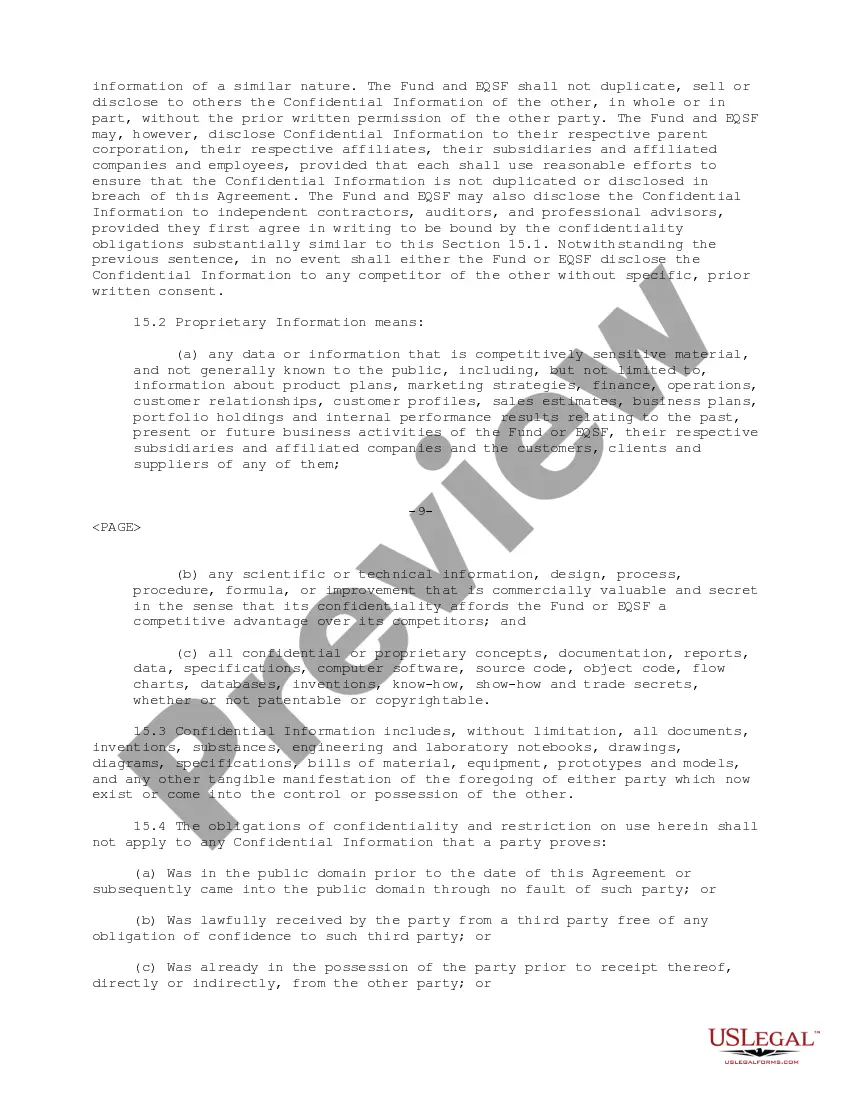
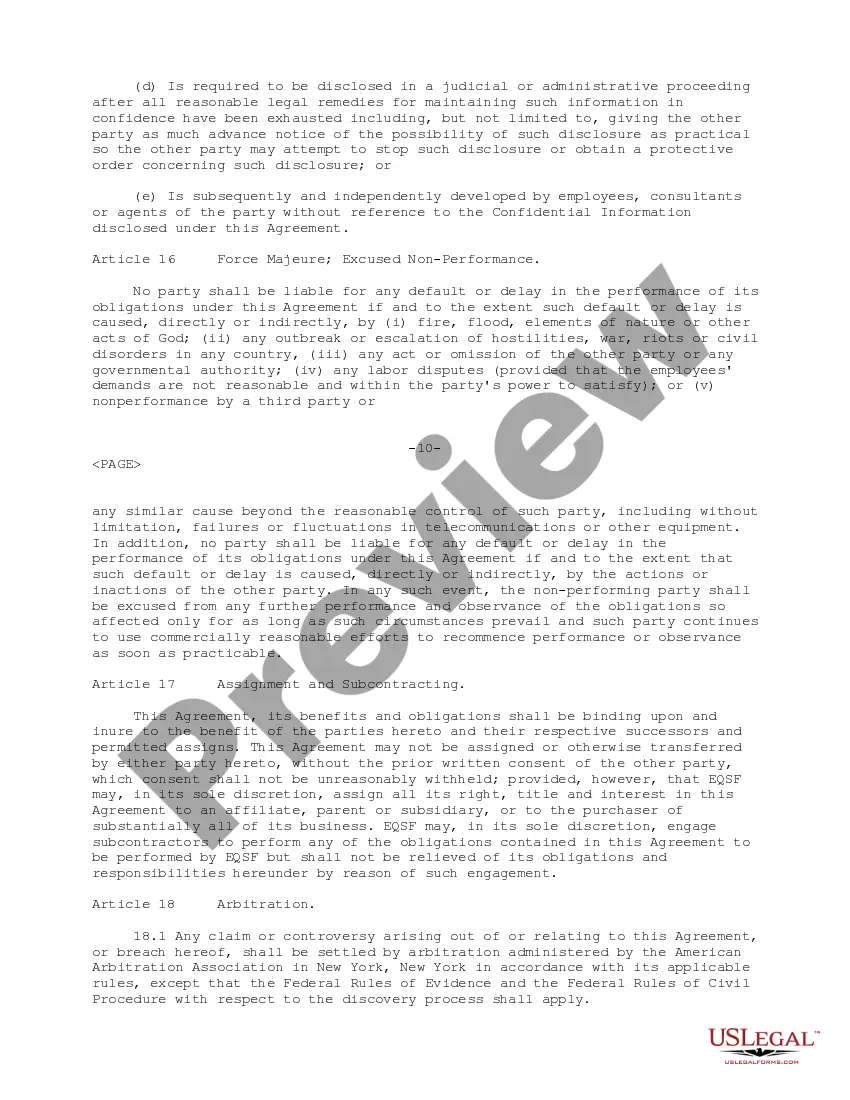
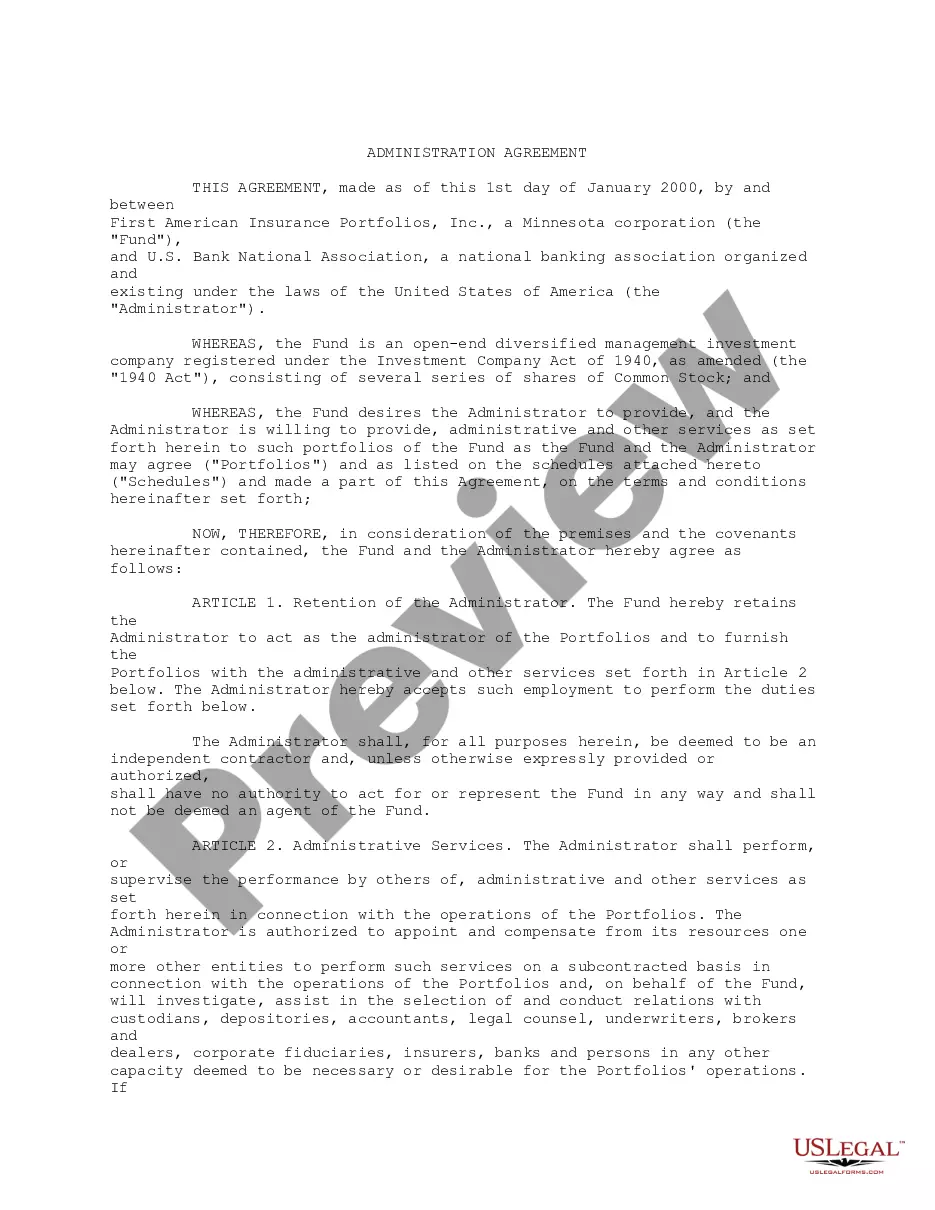
How to fill out Administration Agreement Between EQSF Advisors, Inc. And Third Avenue Trust Regarding Retaining EQSF To Render Administrative Services With Respect To Investment?
- If you're already a user, log in to your account and check if your subscription is still active. If not, renew it according to your payment plan.
- For first-time users, begin by exploring the Preview mode to review form descriptions. Ensure the selected form aligns with your specific requirements and local jurisdiction.
- If you encounter any inconsistencies, use the Search tab to find alternative templates that fit your needs.
- Once you find the right document, click the Buy Now button and select your preferred subscription plan. You'll need to create an account to access the library.
- Proceed to make your payment using a credit card or PayPal to complete your purchase.
- Finally, download the form and save it on your device. You can access it anytime in the My Forms section of your account.
Using US Legal Forms not only provides you with a vast library of over 85,000 fillable legal forms but also allows access to premium experts for form assistance. This ensures that your documents are accurate and legally sound.
Don’t let legal paperwork overwhelm you. Start using US Legal Forms today and experience the ease of finding your necessary legal documents.
Form popularity
FAQ
The IRS defines investment income as income generated from various sources like interest, dividends, and capital gains from selling assets. It's crucial to understand this definition to ensure accurate tax reporting and compliance. Different types of investment income may be taxed at different rates, which can impact your overall tax strategy. By utilizing Eqsf investment blank with a, you can efficiently categorize and report your investment income for IRS requirements.
Proof of investment income can be demonstrated through statements from your brokerage accounts and tax documents like 1099s. These documents provide a comprehensive overview of your earnings from various investments. Additionally, maintaining records that support your investment history can be beneficial. Consider using Eqsf investment blank with a to keep these documents organized effortlessly.
To show investment income, you should present it on your tax returns and have the supporting documents organized, such as 1099 forms. This income can also be highlighted when discussing your financial situation with lenders or during investment evaluations. With tools like Eqsf investment blank with a, you can easily compile and present this information, making it clear and accessible.
When reporting investments on your taxes, you need to identify the type of investment income you earned, such as capital gains or dividends. Each type has specific reporting requirements and forms. It is essential to be thorough, and using Eqsf investment blank with a can guide you step-by-step, ensuring you don't overlook any necessary details for your tax filing.
To report income from investments, you will need to include the details from your 1099 forms on your tax return. The IRS requires you to list investment earnings on Schedule B and potentially other forms depending on your situation. If you are using Eqsf investment blank with a, it simplifies this process significantly, enabling you to gather and report your investment income efficiently.
Yes, you typically receive a 1099 form for any investment income you earn. This form details the earnings from your investments, such as dividends and interest. It's important to keep this document since the IRS requires this information when you file your taxes. Utilizing Eqsf investment blank with a can help you stay organized for tax reporting.
You can typically deduct up to $3000 of capital losses against your ordinary income on your tax return. If your losses exceed this amount, you may carry the losses forward to future tax years. The Eqsf investment blank with a can provide clarity on how to apply these deductions, ensuring you stay informed and compliant.
The $3000 loss rule allows taxpayers to deduct up to $3000 of net capital losses against ordinary income each year. If your losses exceed this amount, you can carry over the excess losses to future years. The Eqsf investment blank with a resource can guide you through this process, helping you maximize your deductions efficiently.
Investment income is typically reported on Schedule B of your tax return. This includes interest, dividends, and other earnings from your investments. Using the Eqsf investment blank with a can assist you in accurately capturing and reporting this income, minimizing the risk of overlooking important details.
To report investment losses on taxes, you include them on Schedule D of your tax return. This form requires you to list each loss along with information about each investment. The Eqsf investment blank with a can help by organizing this information effectively, making the reporting process less cumbersome and more straightforward.