Limited Business
Description

Get your form ready online
Our built-in tools help you complete, sign, share, and store your documents in one place.
Make edits, fill in missing information, and update formatting in US Legal Forms—just like you would in MS Word.
Download a copy, print it, send it by email, or mail it via USPS—whatever works best for your next step.
Sign and collect signatures with our SignNow integration. Send to multiple recipients, set reminders, and more. Go Premium to unlock E-Sign.
If this form requires notarization, complete it online through a secure video call—no need to meet a notary in person or wait for an appointment.
We protect your documents and personal data by following strict security and privacy standards.

Make edits, fill in missing information, and update formatting in US Legal Forms—just like you would in MS Word.

Download a copy, print it, send it by email, or mail it via USPS—whatever works best for your next step.

Sign and collect signatures with our SignNow integration. Send to multiple recipients, set reminders, and more. Go Premium to unlock E-Sign.

If this form requires notarization, complete it online through a secure video call—no need to meet a notary in person or wait for an appointment.

We protect your documents and personal data by following strict security and privacy standards.
Looking for another form?








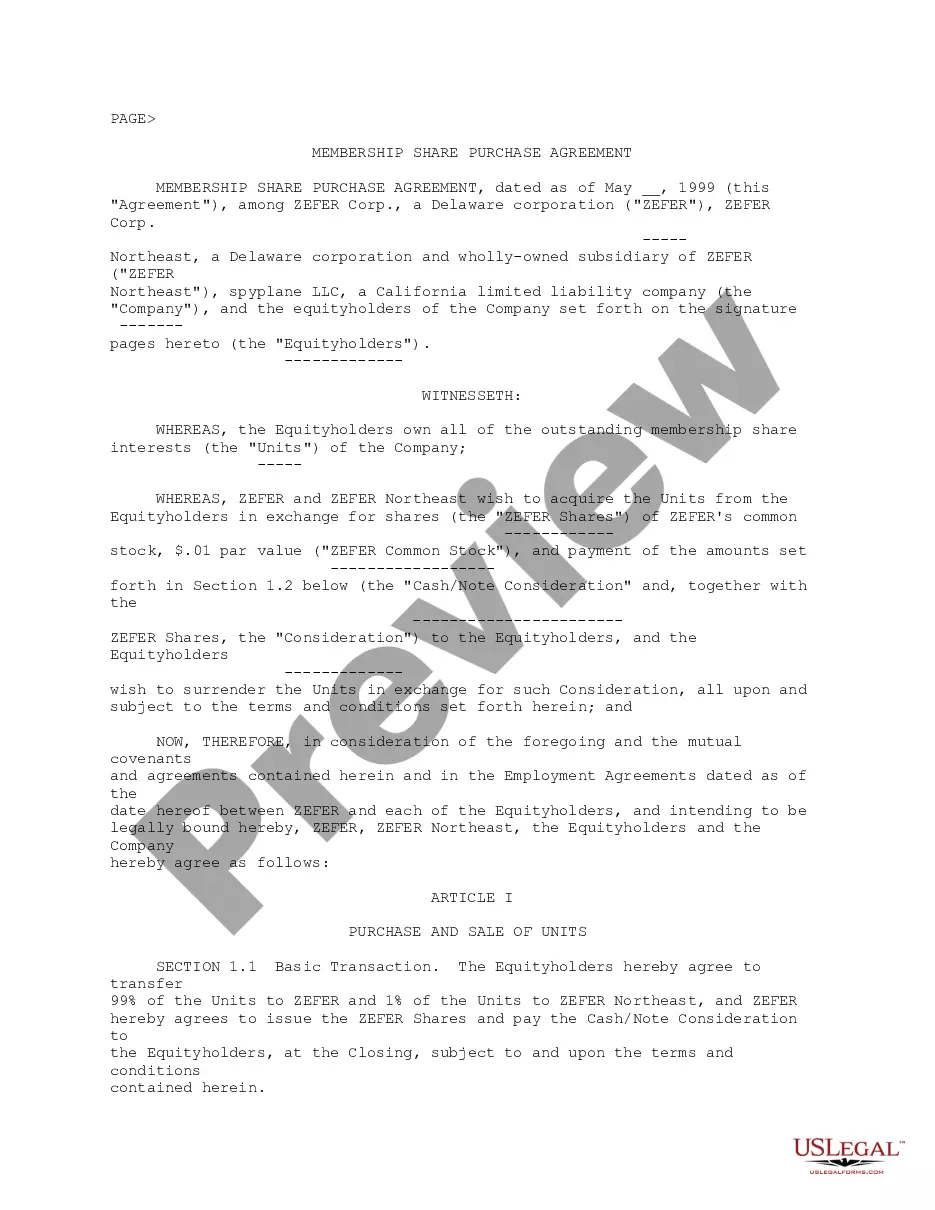
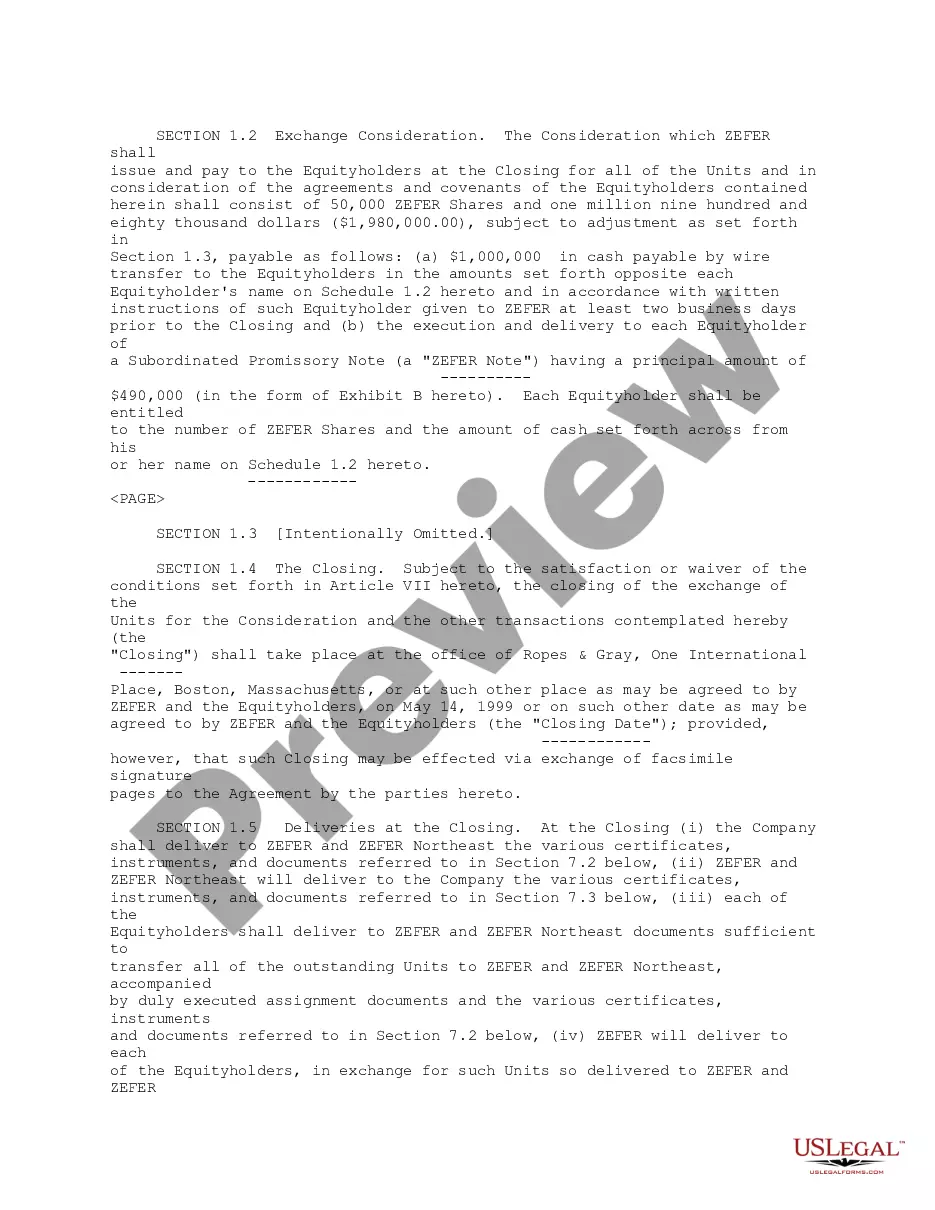
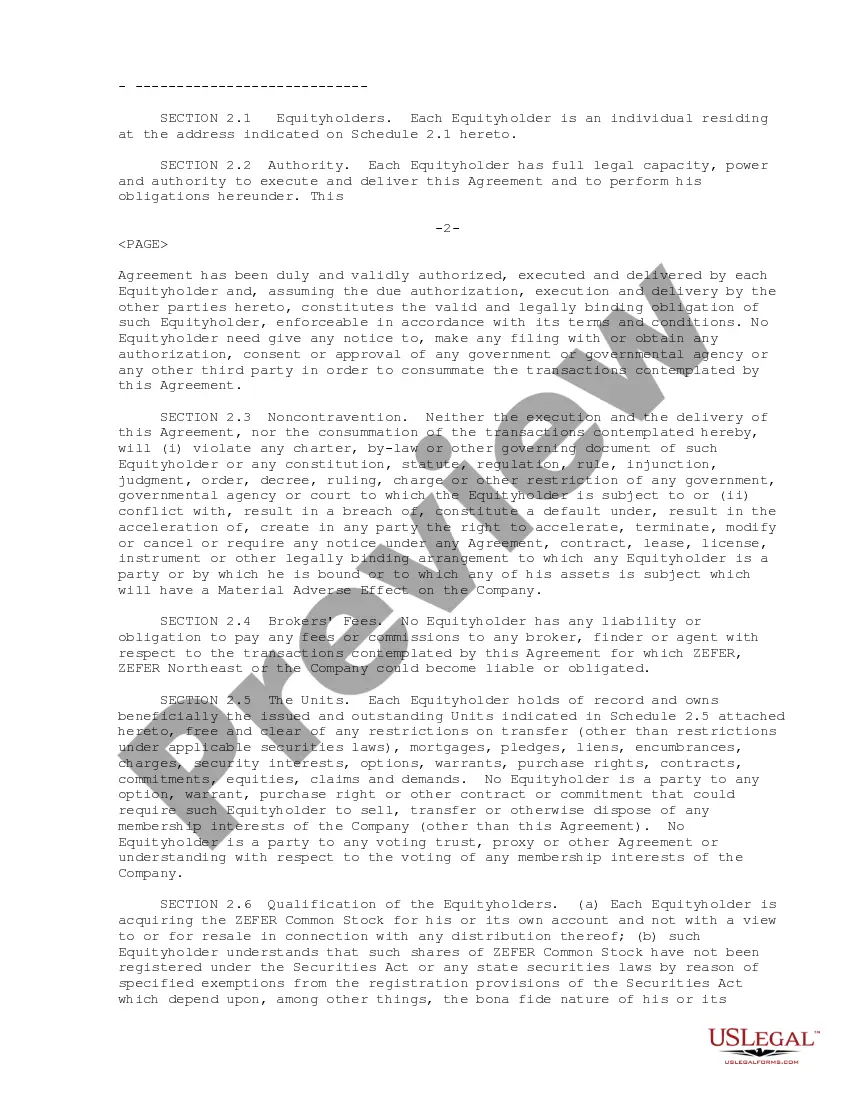
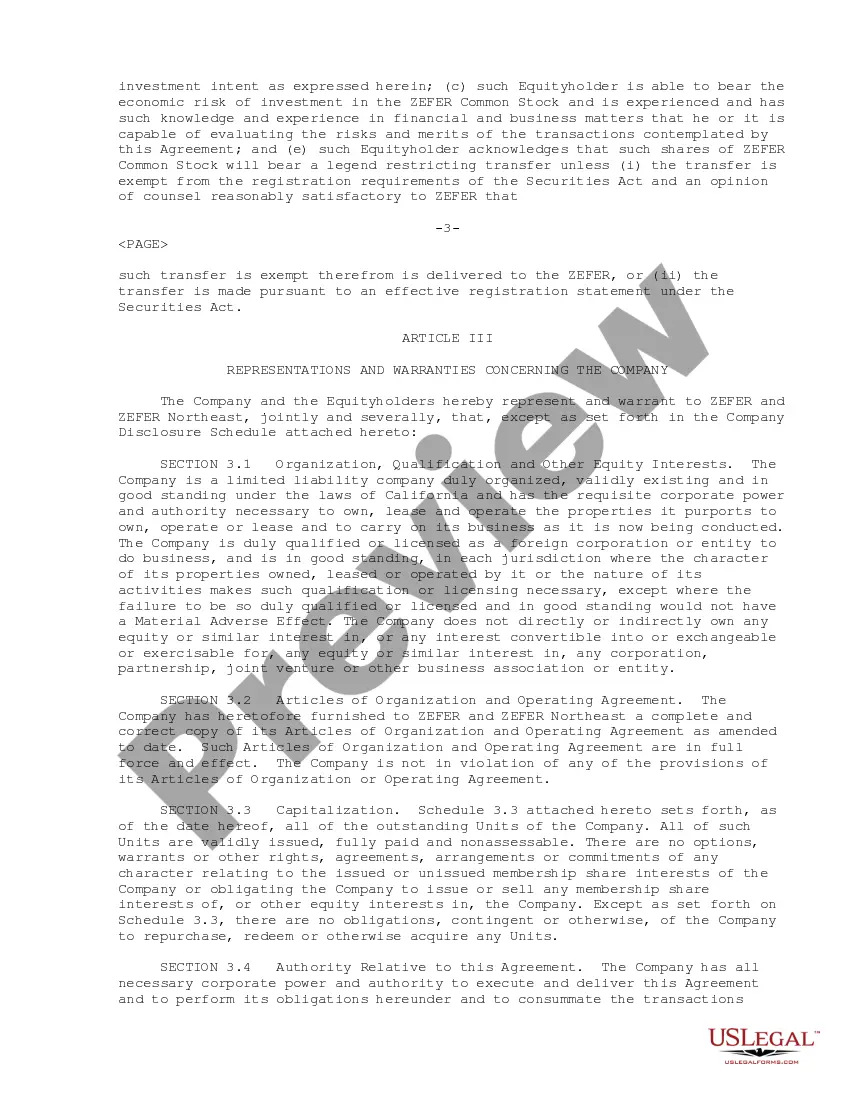
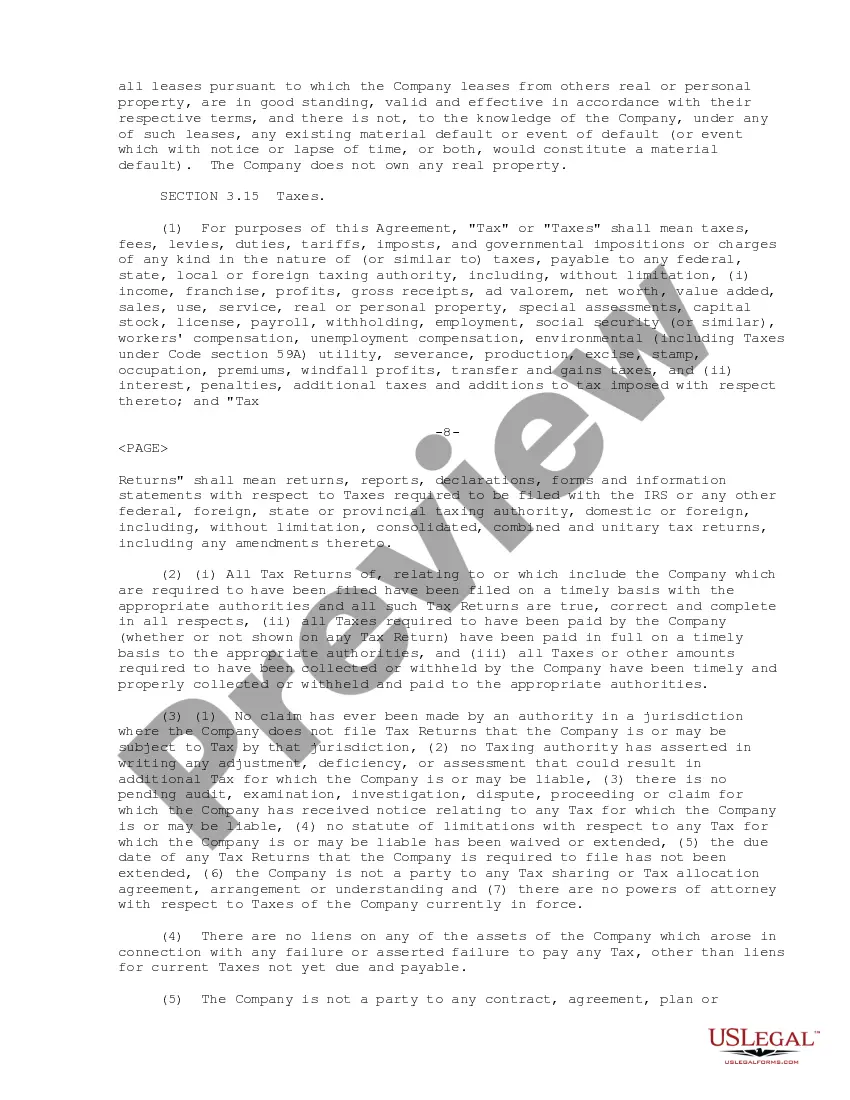
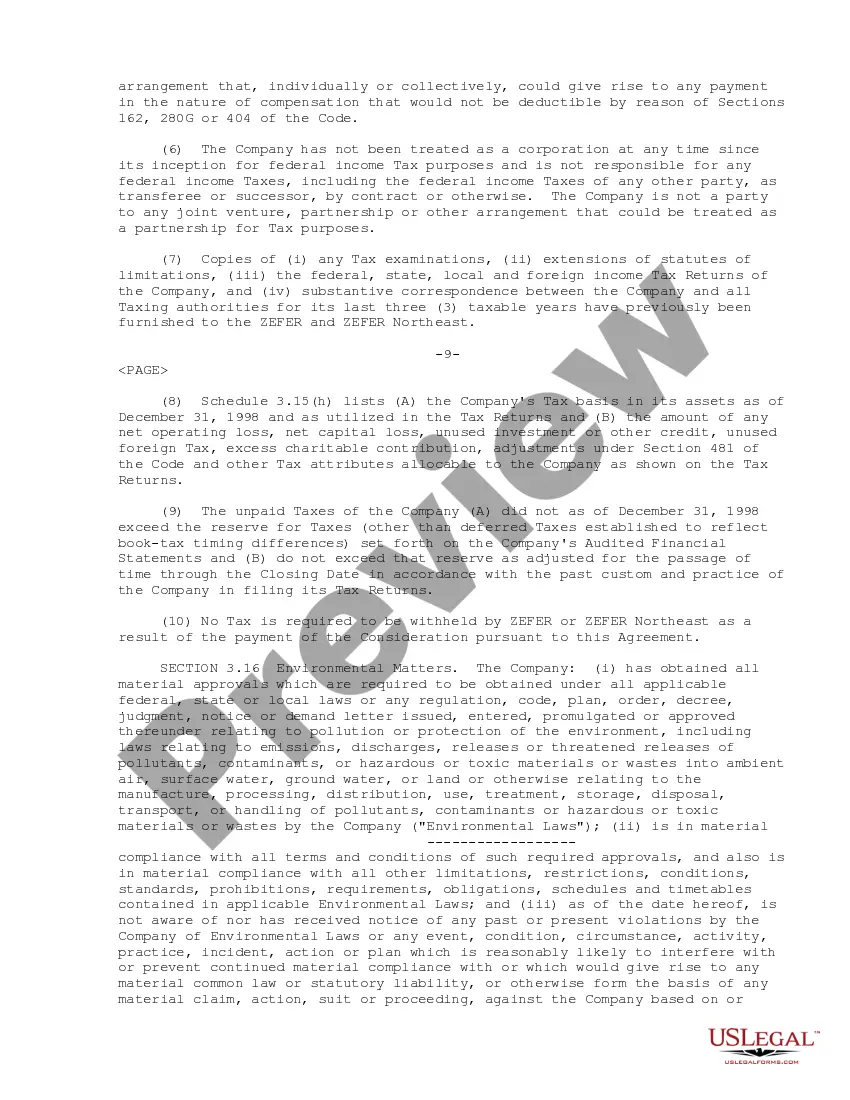
How to fill out Sample Purchase Agreement Between Zefer Corporation, Zefer Northeast, Spyplane, LLC And Equityholders?
- If you're a returning user, log in to your account. Ensure your subscription is active, and simply click the Download button to save the required form template to your device.
- For first-time users, start by checking the Preview mode and description of the form. Confirm that it's the correct document that meets your specific needs and adheres to your local regulations.
- If you need a different template, utilize the Search tab to find the appropriate one. Once you identify a suitable option, proceed to the next step.
- Select your document by clicking the Buy Now button. Choose a subscription plan that fits your needs, and create an account to gain access to the extensive library.
- Complete your purchase by entering your credit card information or using your PayPal account for payment.
- After purchase, download the form to your device. You can access it later through the My Forms section of your profile.
By utilizing US Legal Forms, limited businesses can efficiently create and manage legal documentation with confidence. The platform’s extensive library and expert assistance ensure that you have what you need to stay compliant.
Start simplifying your legal processes today by visiting US Legal Forms and exploring the wealth of resources available!
Form popularity
FAQ
Choosing a limited partnership can be beneficial for certain investment structures and allows for passive investors. Unlike an LLC, where all members can participate in management, a limited partnership restricts involvement, protecting limited partners from liability. Evaluating your limited business's goals and investor roles can help determine the best structure.
A private limited company and an LLC share similarities in limiting personal liability, but they differ in structure and regulation. A private limited company is a common term outside the US, while LLC is specific to American legal systems. Understanding these nuances is vital for any limited business owner to make informed decisions.
Choosing between LTD and LLC depends on your business goals and structure. An LTD is typically used in the UK, while LLC is more common in the US and often offers more flexible management options. Both offer limited liability, but the choice ultimately relates to the specific needs of your limited business.
You can choose to use 'limited' in your business name, but it does not substitute for LLC. Both terms imply different legal entity types, and using 'limited' might not fulfill state requirements for LLCs. It's advisable to consult the specific regulations in your state to ensure compliance and proper structure for your limited business.
Yes, you can use the term 'limited' in business naming, but it does not replace LLC. A limited business and an LLC serve different legal structures, and using 'limited' may not provide the same protection and benefits as an LLC. It's essential to understand the differences and ensure your business is properly formed.
If you operate a single-member LLC, you typically report your business income and expenses on your personal tax return, effectively filing both together. However, if your LLC has multiple members or is taxed as a corporation, you may need a separate tax filing. It's wise to consult a tax professional to understand the best approach for your specific situation.
Yes, you should report earnings even if they are less than $500, especially in a limited business. The IRS expects all income to be reported, and documenting your earnings provides clarity in your financial statements. Keeping accurate records helps maintain compliance and can prove beneficial in the long run.
Even if you make a small amount, if you're in a limited business, you must file taxes. If you have net earnings of $400 or more from self-employment, you need to file a tax return. Moreover, maintaining good financial records will help you stay compliant with tax regulations.
Absolutely, business income under $600 must be reported when filing your taxes, especially for a limited business. The IRS requires all income to be reported, even if a 1099 form is not issued by your clients. Reporting all earnings can safeguard you against potential audits and penalties from the IRS.
You do not necessarily need an LLC to operate a small business, including a limited business; however, forming one has advantages. An LLC can protect your personal assets from business liabilities and offers flexibility in how you file taxes. It's a worthwhile consideration if you want to establish a formal business structure.