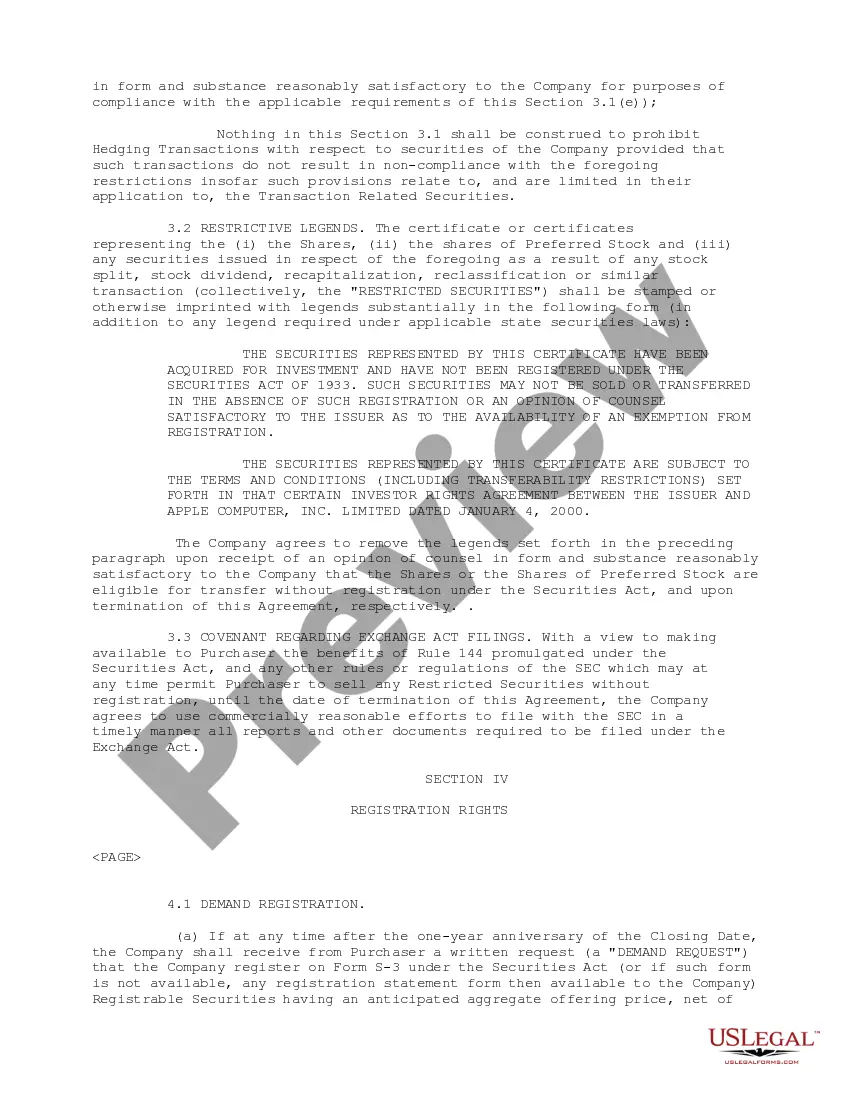
Rights Regarding Shares Withheld
Description

Get your form ready online
Our built-in tools help you complete, sign, share, and store your documents in one place.
Make edits, fill in missing information, and update formatting in US Legal Forms—just like you would in MS Word.
Download a copy, print it, send it by email, or mail it via USPS—whatever works best for your next step.
Sign and collect signatures with our SignNow integration. Send to multiple recipients, set reminders, and more. Go Premium to unlock E-Sign.
If this form requires notarization, complete it online through a secure video call—no need to meet a notary in person or wait for an appointment.
We protect your documents and personal data by following strict security and privacy standards.

Make edits, fill in missing information, and update formatting in US Legal Forms—just like you would in MS Word.

Download a copy, print it, send it by email, or mail it via USPS—whatever works best for your next step.

Sign and collect signatures with our SignNow integration. Send to multiple recipients, set reminders, and more. Go Premium to unlock E-Sign.

If this form requires notarization, complete it online through a secure video call—no need to meet a notary in person or wait for an appointment.

We protect your documents and personal data by following strict security and privacy standards.
Looking for another form?



How to fill out Investor Rights Agreement Regarding The Purchase Of Series C Preferred Stock Shares?
Whether for commercial objectives or for personal concerns, everyone must confront legal matters at some stage in their lives.
Completing legal documents requires meticulous care, beginning with choosing the appropriate form template. For instance, if you select an incorrect version of the Rights Regarding Shares Withheld, it will be rejected upon submission.
After saving it, you can complete the form using editing software or print it out and finish it manually. With an extensive US Legal Forms library available, you never need to waste time searching for the right template across the internet. Use the library’s straightforward navigation to obtain the correct template for any circumstance.
- Obtain the example you require by using the search bar or catalog browsing.
- Review the description of the form to ensure it corresponds with your circumstance, state, and county.
- Click on the form’s preview to examine it.
- If it is the incorrect document, return to the search feature to find the Rights Regarding Shares Withheld example you require.
- Download the template if it fulfills your requirements.
- If you possess a US Legal Forms account, simply click Log in to access previously saved documents in My documents.
- If you haven’t created an account yet, you can acquire the form by clicking Buy now.
- Select the suitable pricing choice.
- Complete the account registration form.
- Choose your payment method: you can utilize a credit card or PayPal account.
- Select the file format you prefer and download the Rights Regarding Shares Withheld.
Form popularity
FAQ
Shares withheld refer to the portion of an employee's stock compensation that is retained by the employer to cover certain obligations, such as taxes. This withholding often occurs in the case of Restricted Stock Units (RSUs) when shares mature. Understanding your rights regarding shares withheld is crucial, especially if you seek to maximize your benefits in the stock plan. By knowing how this process works, you can make informed decisions about your compensation.
Withholding Shares means shares of Company Common Stock paid by option holders to the Company to satisfy Tax withholding obligations resulting from the exercise of a stock options subsequent to the date of the Initial Agreement other than the 858 shares withheld as described in the last sentence of Section 8.02(c).
Withholding Shares means shares of Company Common Stock paid by option holders to the Company to satisfy Tax withholding obligations resulting from the exercise of a stock options subsequent to the date of the Initial Agreement other than the 858 shares withheld as described in the last sentence of Section 8.02(c).
RSUs are taxed as income to you when they vest. If you sell your shares immediately, there is no capital gain tax, and you only pay ordinary income taxes. If instead, the shares are held beyond the vesting date, any gain (or loss) is taxed as a capital gain (or loss).
Withholding Tax for RSUs RSUs are considered supplemental income, and as such, the income you receive from them is subject to withholding taxes. The IRS requires a federal withholding rate of 22% for supplemental income up to $1 million, and 37% for income exceeding that amount.
Shares are sold to pay your taxes and any commissions or fees. If net share withholding is used, 55 shares are withheld for taxes. The employee will then have 195 shares left from the 250 initial shares deposited into their account. In this example, this amounts to $1,950.