Difference Between Agreement For Sale And Deed Of Conveyance
Description
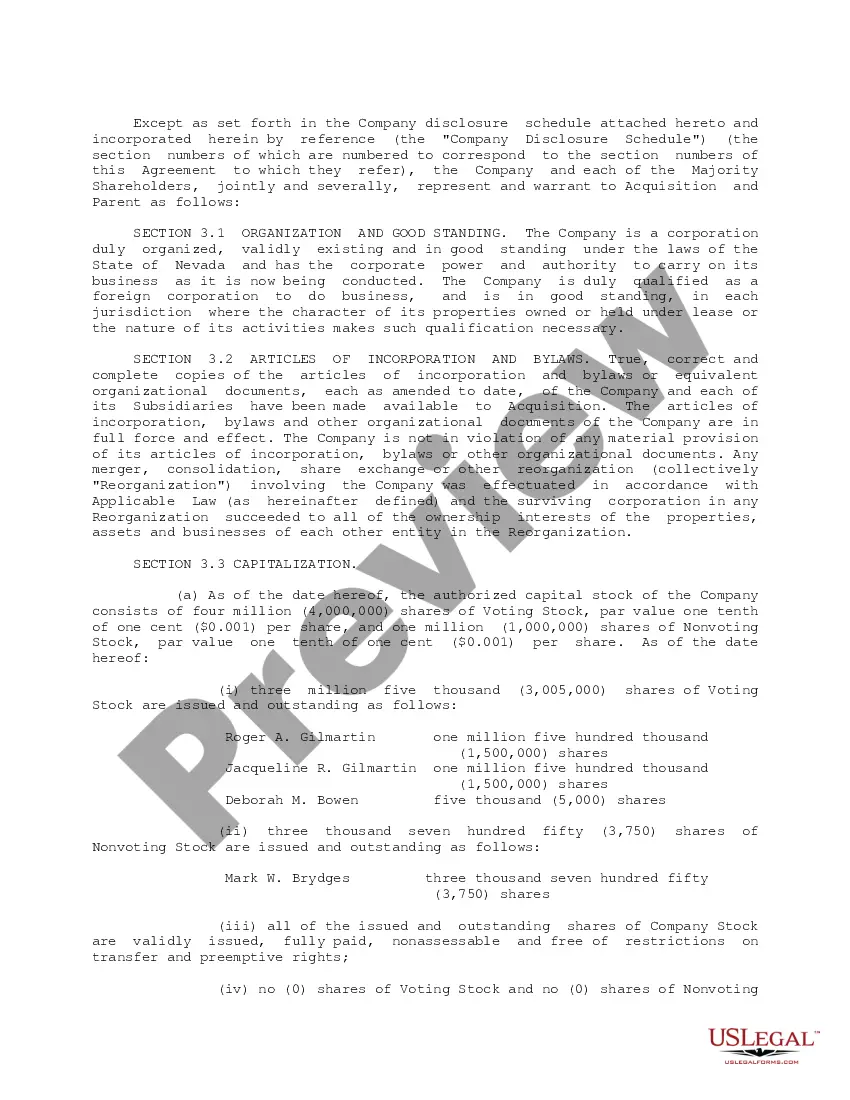

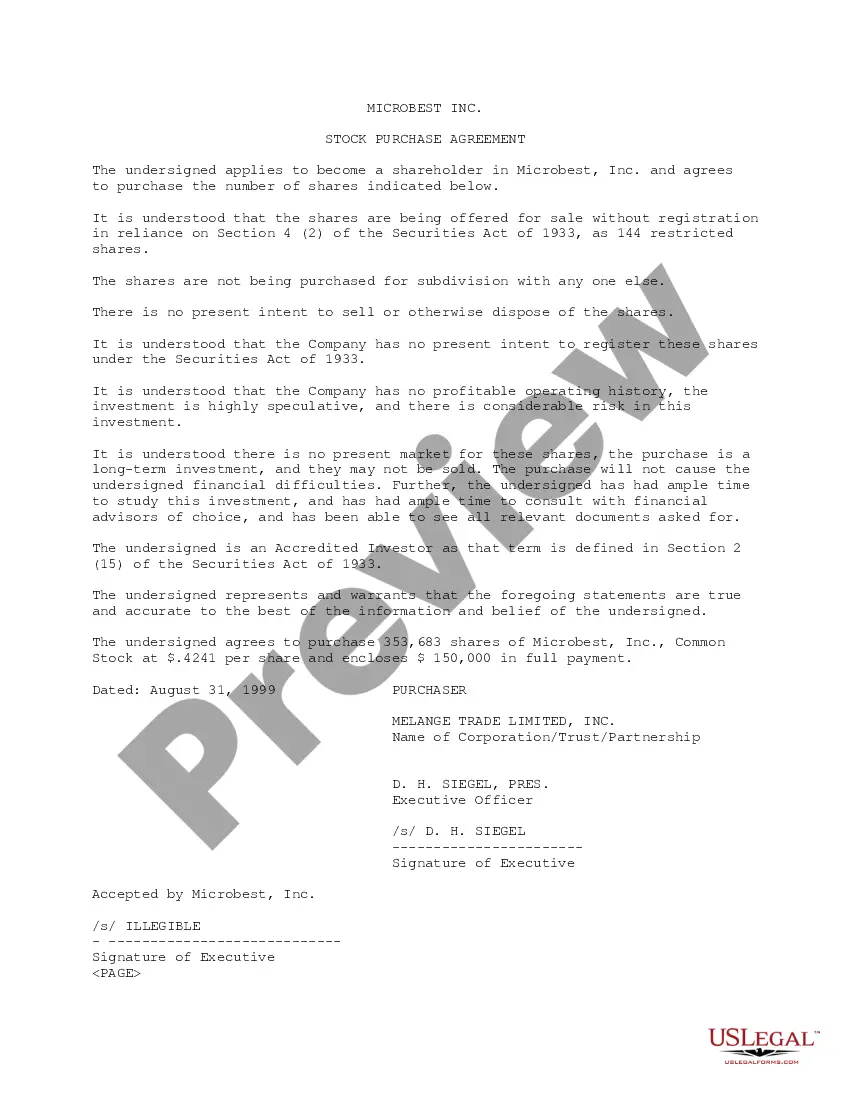
Get your form ready online
Our built-in tools help you complete, sign, share, and store your documents in one place.
Make edits, fill in missing information, and update formatting in US Legal Forms—just like you would in MS Word.
Download a copy, print it, send it by email, or mail it via USPS—whatever works best for your next step.
Sign and collect signatures with our SignNow integration. Send to multiple recipients, set reminders, and more. Go Premium to unlock E-Sign.
If this form requires notarization, complete it online through a secure video call—no need to meet a notary in person or wait for an appointment.
We protect your documents and personal data by following strict security and privacy standards.

Make edits, fill in missing information, and update formatting in US Legal Forms—just like you would in MS Word.

Download a copy, print it, send it by email, or mail it via USPS—whatever works best for your next step.

Sign and collect signatures with our SignNow integration. Send to multiple recipients, set reminders, and more. Go Premium to unlock E-Sign.

If this form requires notarization, complete it online through a secure video call—no need to meet a notary in person or wait for an appointment.

We protect your documents and personal data by following strict security and privacy standards.
Looking for another form?

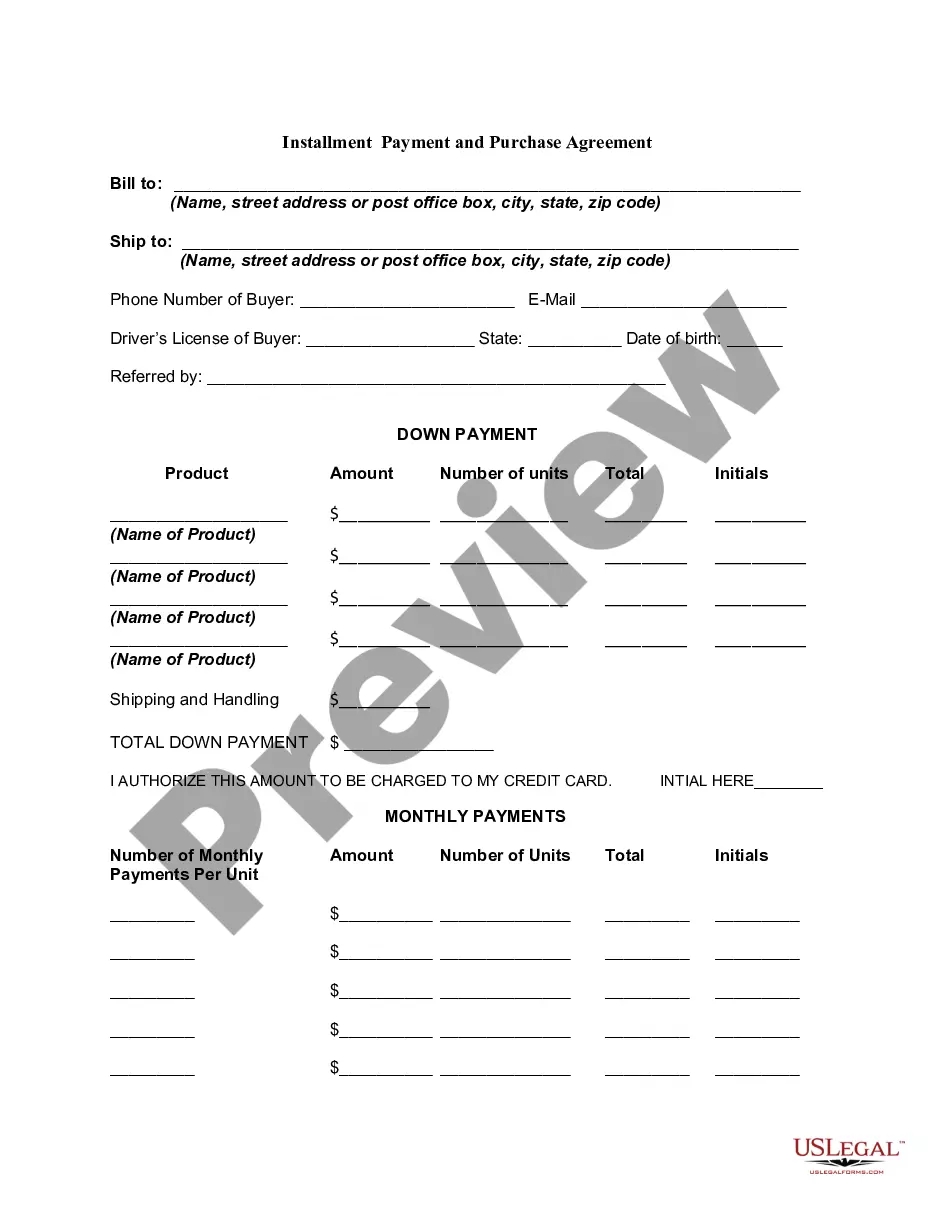


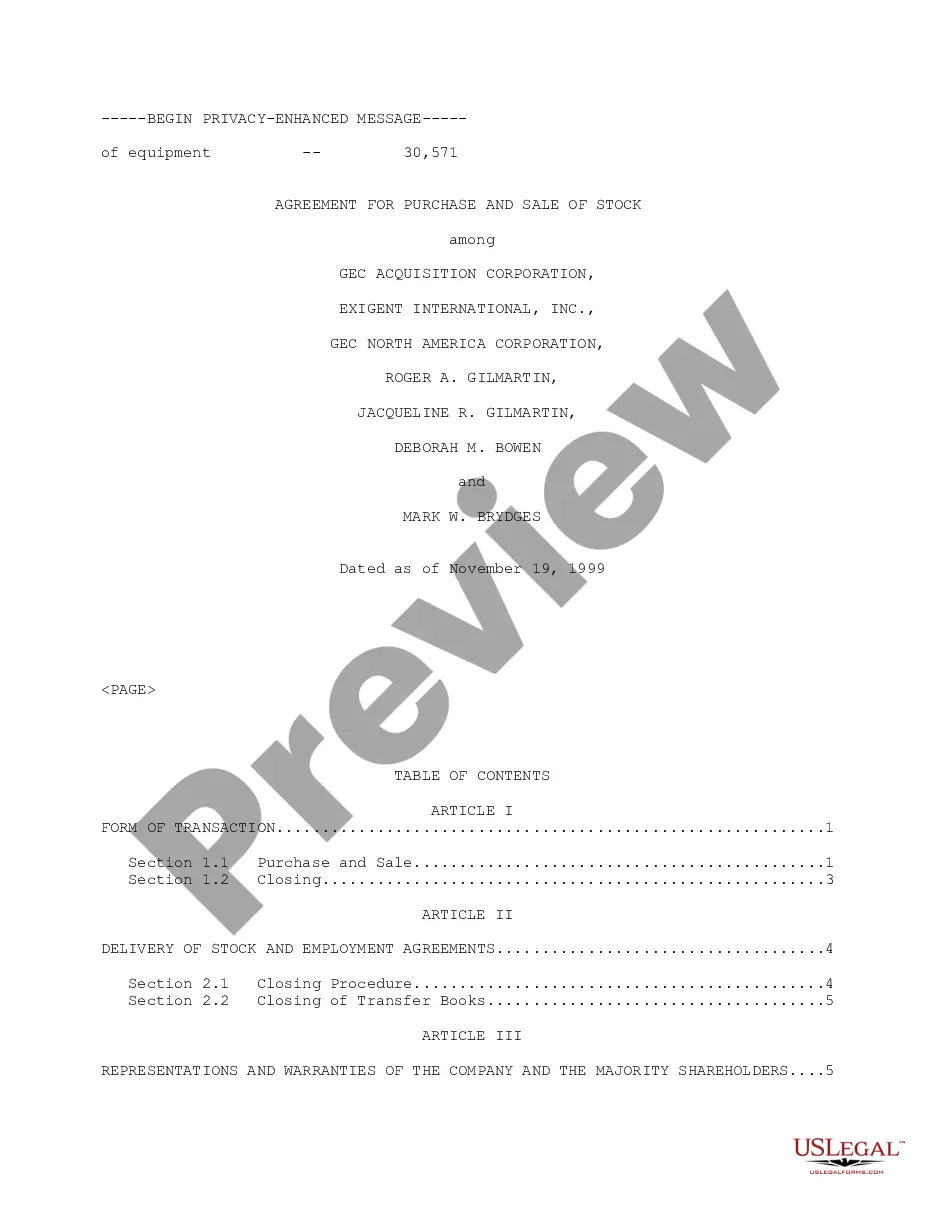
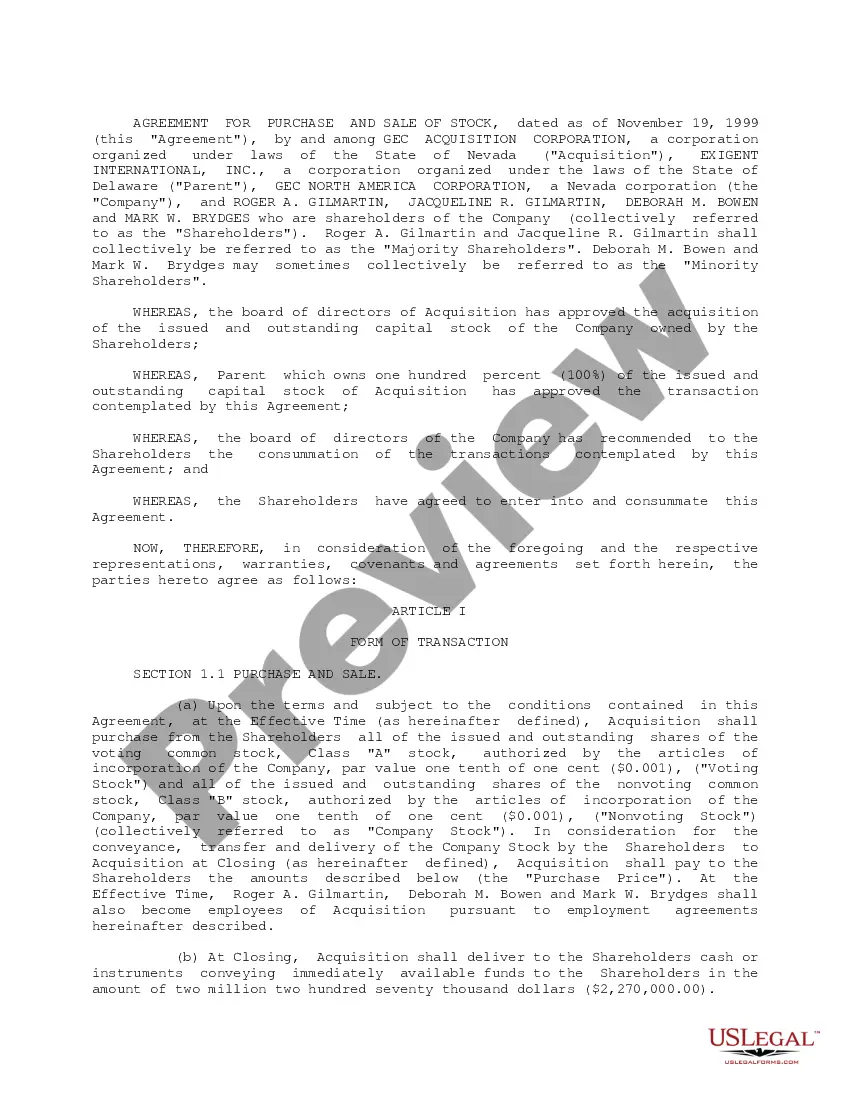
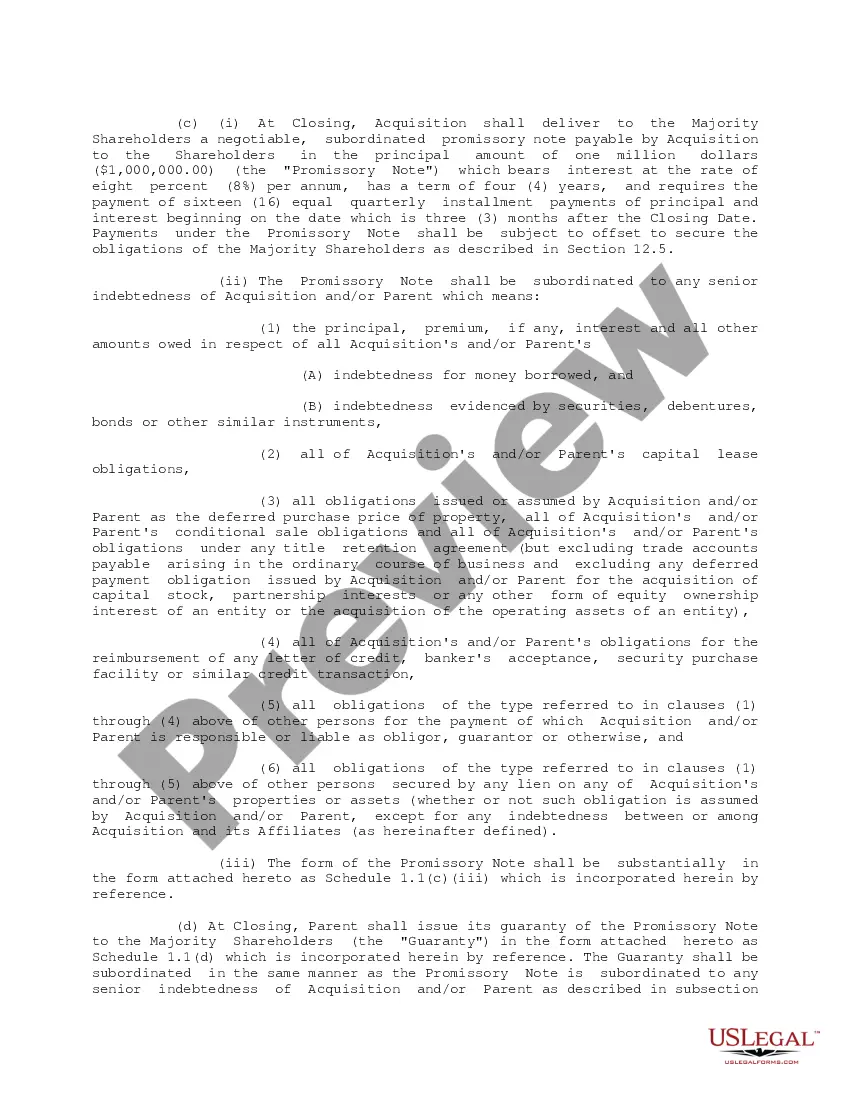
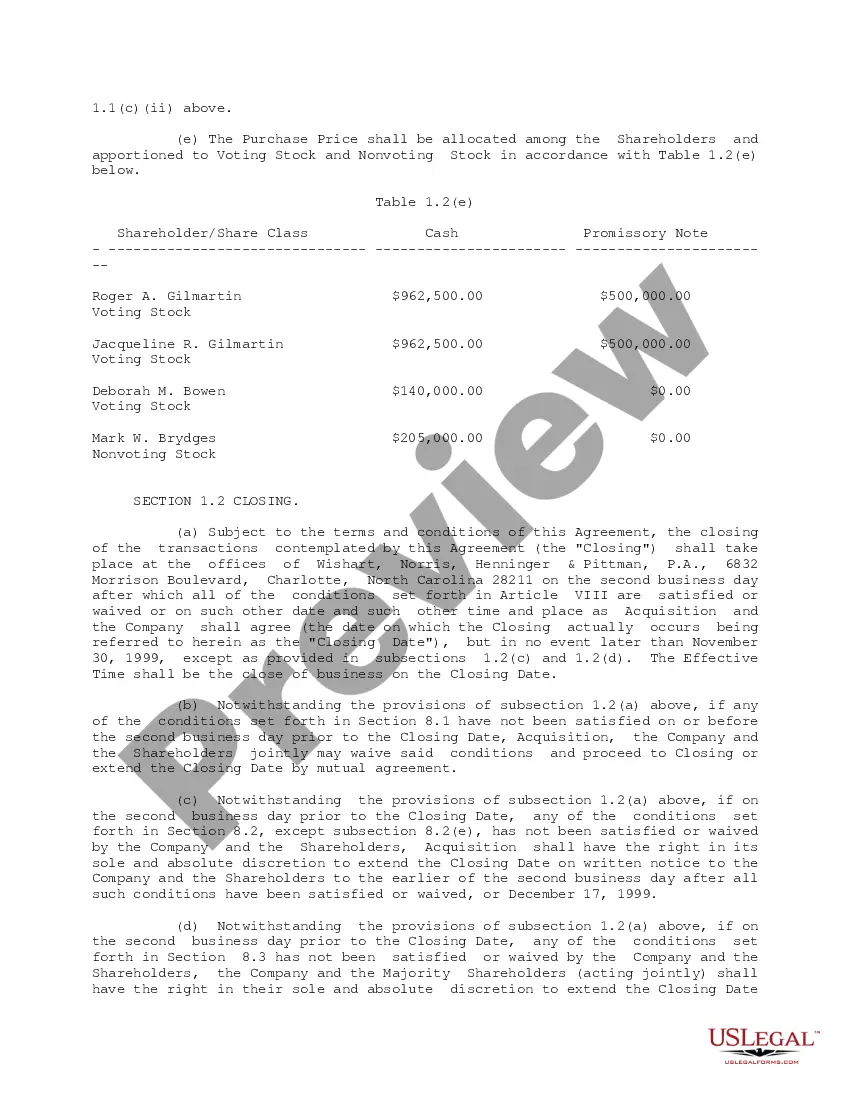
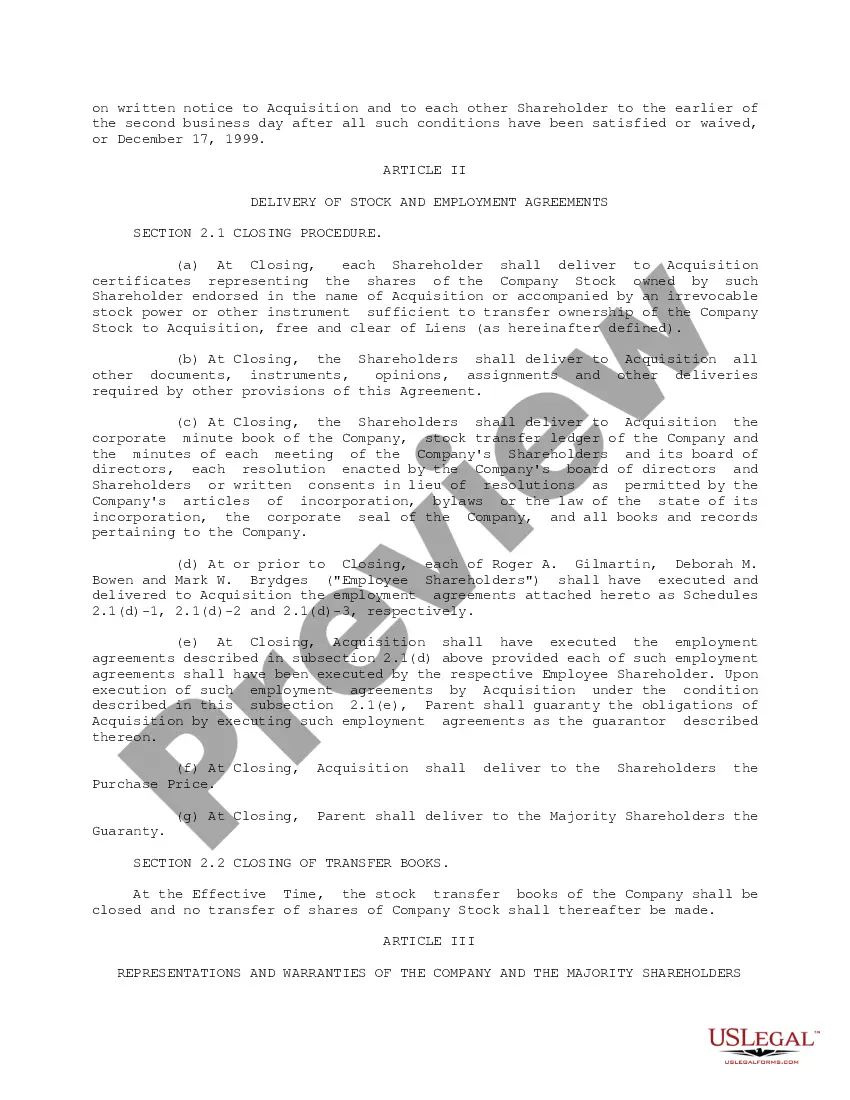
How to fill out Sample Purchase And Sale Agreement Purchase And Sale Of Stock Between GEC Acquisition Corp., Exigent International, Inc., GEC North America Corp.?
- If you're a returning user, simply log in to access and download your required form by clicking the Download button. Ensure your subscription remains valid; renew as necessary based on your plan.
- For new users, start by exploring the Preview mode and form descriptions to find the template that meets your specific needs and adheres to local requirements.
- If the initial template does not meet your expectations, utilize the Search tab at the top to find alternative forms that may suit your purpose better.
- Once you’ve selected the appropriate document, proceed to click the Buy Now button and select your preferred subscription plan. You need to create an account to unlock full access to the legal library.
- Complete your purchase by entering your credit card details or selecting PayPal for a secure transaction.
- Lastly, download your document to your device for easy access and completion later. You can find it at any time in the My Forms section of your profile.
US Legal Forms provides a powerful platform for individuals and legal professionals alike, with more forms available than many competitors at a similar cost. Their extensive library includes over 85,000 fillable and editable legal forms.
Moreover, users benefit from access to premium experts who offer guidance on completing forms accurately, ensuring that your documents are legally sound. Start your legal journey effortlessly with US Legal Forms today!
Form popularity
FAQ
Understanding the difference between agreement for sale and deed of conveyance also applies to the transfer of title. In a contract for sale, the title transfers to the buyer upon completion of the transaction. In contrast, a contract to sell retains the title with the seller until the payment is fulfilled. This distinction is vital for both buyers and sellers. To navigate these complexities, the US Legal Forms platform offers tools and templates to assist you in drafting accurate legal documents.
The words 'sale' and 'sell' might seem similar, but they serve different purposes in legal contexts. 'Sale' refers to the transaction itself, where ownership changes hands, whereas 'sell' is the action taken by the seller. Understanding this distinction can help prevent confusion in contracts. By exploring resources on platforms like US Legal Forms, you can gain a clearer understanding of these terms and ensure your documents reflect the correct usage.
The difference between agreement for sale and deed of conveyance is crucial in understanding property transactions. A contract to sell outlines the seller's promise to transfer ownership at a future date, while a contract of sale transfers immediate ownership to the buyer. In simpler terms, a contract to sell sets the stage for the sale, whereas a contract of sale completes the transaction. For anyone navigating these legal concepts, platforms like US Legal Forms provide the necessary resources to clarify and facilitate these agreements.
A deed represents a legal document that transfers ownership of property, while a contract of sale outlines the terms under which that transfer will take place. Essentially, the deed is the final document needed to complete the ownership process, while the contract of sale serves as a promise leading to that completion. To navigate the difference between agreement for sale and deed of conveyance, one must recognize the distinct roles each plays in property transactions.
Contracts for deed can pose several disadvantages for buyers, including potential risks of losing the property in case of payment default. Additionally, buyers may have limited rights regarding the property until full payment is made. This arrangement may complicate the understanding of the difference between agreement for sale and deed of conveyance, as it alters expectations regarding ownership.
A contract for deed allows the buyer to make payments for the property while the seller retains the title until the full payment is complete. In contrast, a contract for sale typically results in an immediate transfer of title once the sale is finalized. Therefore, knowing the difference between agreement for sale and deed of conveyance can significantly impact ownership rights and responsibilities.
The general warranty deed is often seen as the highest form of conveyance. This is because it provides the broadest protection to the buyer, including guarantees against any defects in title. In essence, this type of deed ensures that the seller is committed to defending the title against any claims. Understanding the difference between agreement for sale and deed of conveyance is crucial for making informed decisions.
Typically, a contract for deed can be drafted by either party, but it's wise for both buyers and sellers to involve legal professionals to ensure compliance with local laws. This cooperation helps clarify terms and protections for both sides. For added assurance, access resources like uslegalforms to learn about the difference between agreement for sale and deed of conveyance and to obtain reliable templates.
A contract for deed can be advantageous for sellers as it allows them to retain property title until the buyer completes payments, securing their investment. However, sellers should also consider potential risks, such as buyer defaults. Understanding the difference between agreement for sale and deed of conveyance will help sellers make informed choices.
Filling out a contract agreement involves writing the names of the parties, specifying the nature of the agreement, and outlining key terms. Make sure to include the rights and responsibilities of both parties clearly. If you're unsure about the specifics, using templates from uslegalforms can guide you through the process and clarify the difference between agreement for sale and deed of conveyance.