Property Lines And Easements Fort Worth
Description
Get your form ready online
Our built-in tools help you complete, sign, share, and store your documents in one place.
Make edits, fill in missing information, and update formatting in US Legal Forms—just like you would in MS Word.
Download a copy, print it, send it by email, or mail it via USPS—whatever works best for your next step.
Sign and collect signatures with our SignNow integration. Send to multiple recipients, set reminders, and more. Go Premium to unlock E-Sign.
If this form requires notarization, complete it online through a secure video call—no need to meet a notary in person or wait for an appointment.
We protect your documents and personal data by following strict security and privacy standards.

Make edits, fill in missing information, and update formatting in US Legal Forms—just like you would in MS Word.

Download a copy, print it, send it by email, or mail it via USPS—whatever works best for your next step.

Sign and collect signatures with our SignNow integration. Send to multiple recipients, set reminders, and more. Go Premium to unlock E-Sign.

If this form requires notarization, complete it online through a secure video call—no need to meet a notary in person or wait for an appointment.

We protect your documents and personal data by following strict security and privacy standards.
Looking for another form?

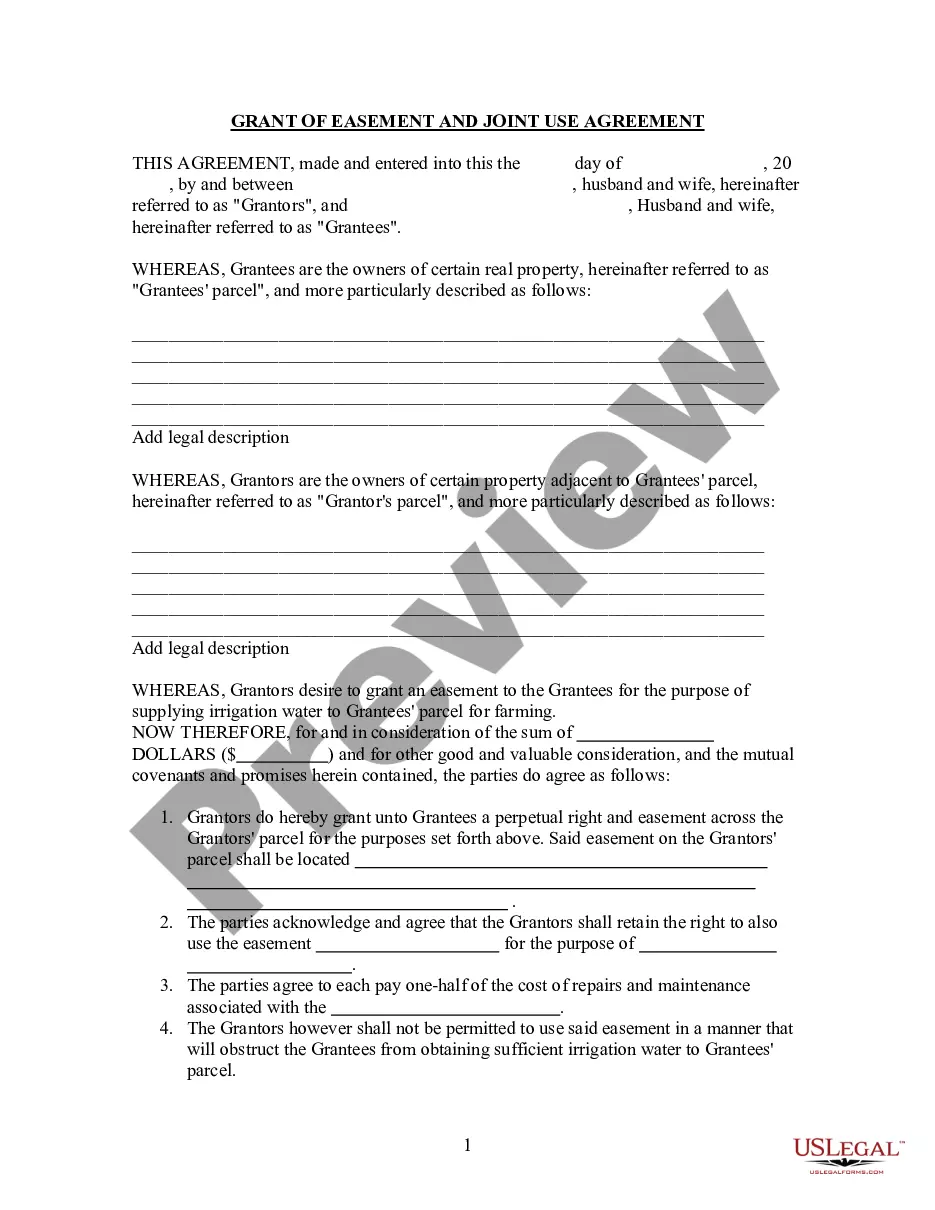
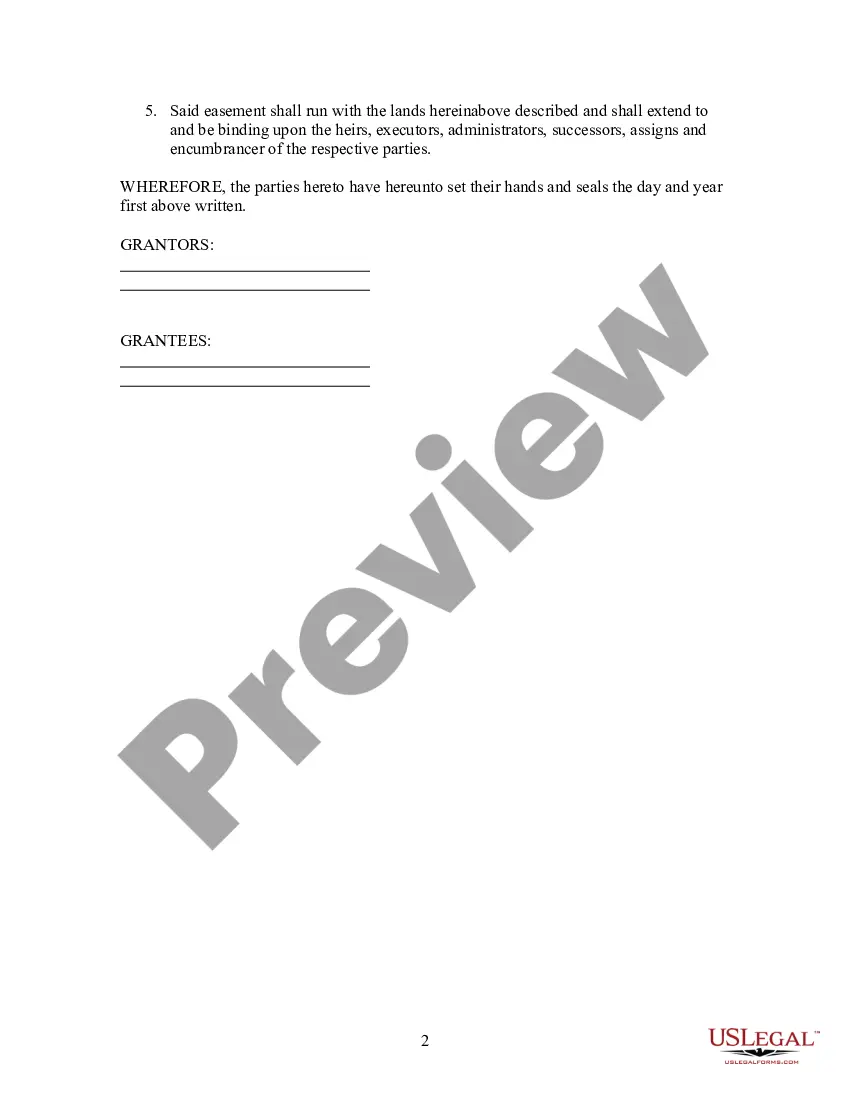
How to fill out Grant Of Easement And Joint Use Agreement?
It’s clear that you cannot transform into a legal expert instantly, nor can you quickly learn how to prepare Property Lines And Easements Fort Worth without possessing a specific skill set.
Assembling legal documents is a lengthy endeavor that necessitates particular training and expertise. So why not entrust the creation of the Property Lines And Easements Fort Worth to the professionals.
With US Legal Forms, one of the most comprehensive legal template repositories, you can locate everything from court documents to templates for internal corporate communication.
If you require any other form, restart your search.
Create a free account and choose a subscription plan to purchase the form.
- We understand how vital compliance and adherence to federal and state regulations are.
- That’s why, on our website, all templates are tailored to specific locations and are current.
- Here’s how to get started with our platform and obtain the form you need in just minutes.
- Find the document you require using the search bar at the top of the page.
- Preview it (if this option is available) and read the accompanying description to determine if Property Lines And Easements Fort Worth is what you need.
Form popularity
FAQ
Fences/Retaining Walls Building permits are required for solid fences with a height above 7 feet and for open fences with a height above 8 feet. Retaining walls greater than 4-feet tall from the bottom of the footing to the top of the wall require a permit.
Good Neighbor Fence Laws However, when a fence is built on the boundary line between two properties, it is considered a ?good neighbor fence.? In such cases, the cost of building and maintaining the fence is shared between the property owners.
As a general rule in the Greater Dallas Fort-Worth Metro, when adding any kind of outdoor structure, including a fence, obtaining a permit from the city or county pending on your location is required before construction can begin.
Fences: Fences in the front yard and projected front yard can be no more than 4 feet tall and open design with 50 percent density, such as wrought iron or picket style. Chain link is prohibited in the front yard and projected front yard. Fences may require additional approval if the property is in a historic district.
5. What are my setbacks? Setbacks are based on the Zoning District in which your property is located and adjacent districts. Buildings located next to residential districts have a twenty (20) foot side or rear supplemental setback on the side adjacent to the residential area.