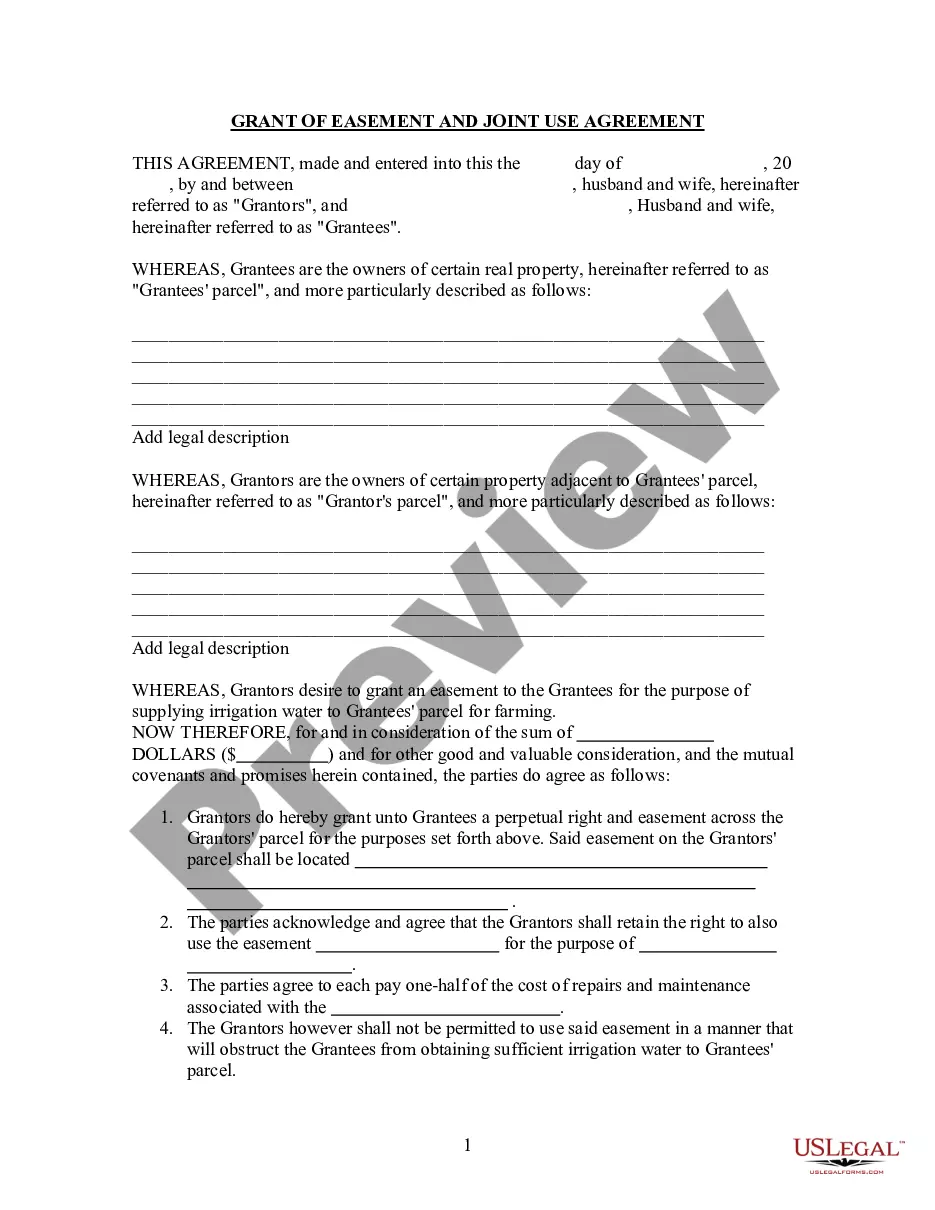
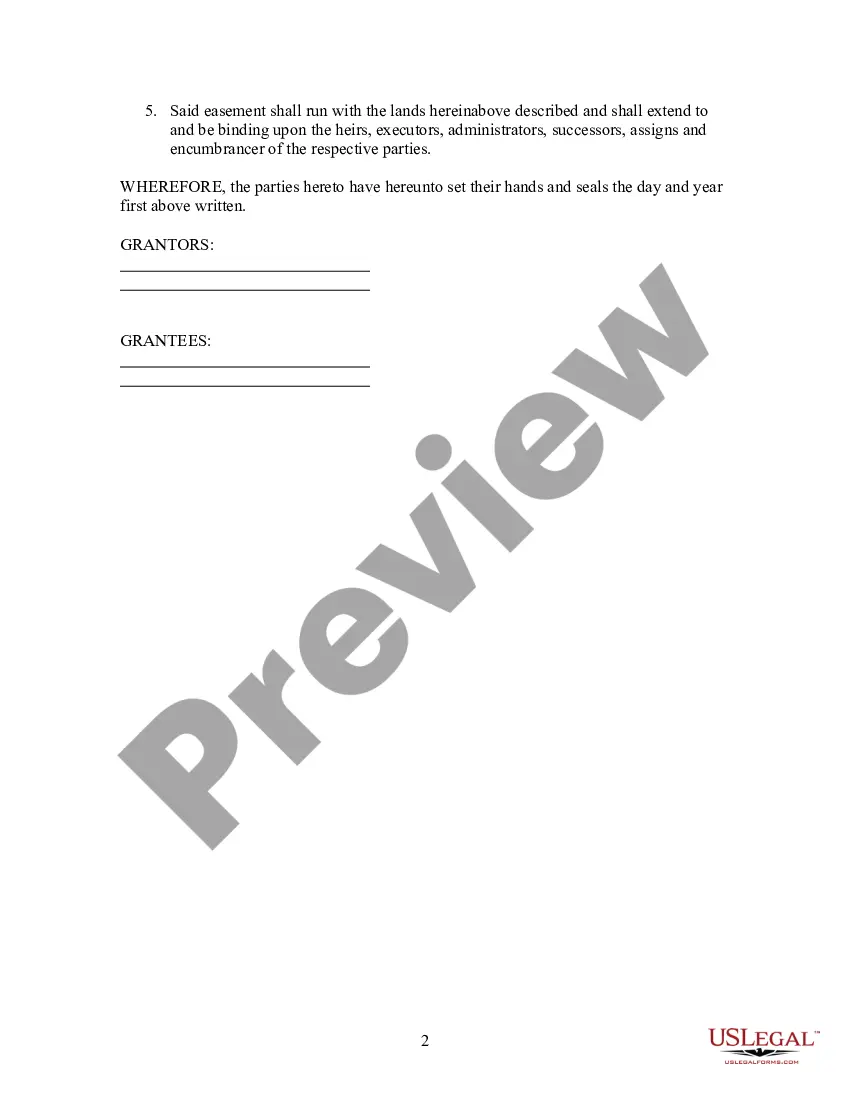
Grant Of Easement Form Without Transfer
Description
Get your form ready online
Our built-in tools help you complete, sign, share, and store your documents in one place.
Make edits, fill in missing information, and update formatting in US Legal Forms—just like you would in MS Word.
Download a copy, print it, send it by email, or mail it via USPS—whatever works best for your next step.
Sign and collect signatures with our SignNow integration. Send to multiple recipients, set reminders, and more. Go Premium to unlock E-Sign.
If this form requires notarization, complete it online through a secure video call—no need to meet a notary in person or wait for an appointment.
We protect your documents and personal data by following strict security and privacy standards.

Make edits, fill in missing information, and update formatting in US Legal Forms—just like you would in MS Word.

Download a copy, print it, send it by email, or mail it via USPS—whatever works best for your next step.

Sign and collect signatures with our SignNow integration. Send to multiple recipients, set reminders, and more. Go Premium to unlock E-Sign.

If this form requires notarization, complete it online through a secure video call—no need to meet a notary in person or wait for an appointment.

We protect your documents and personal data by following strict security and privacy standards.
Looking for another form?









How to fill out Grant Of Easement And Joint Use Agreement?
Managing legal documents can be overwhelming, even for the most experienced experts.
If you need a Grant Of Easement Form Without Transfer and cannot find the time to search for the right and current version, the process can be challenging. A comprehensive online form repository may revolutionize how anyone handles these matters efficiently.
Access a collection of articles, guides, and resources related to your needs and situation.
Save time and effort searching for the necessary paperwork, and take advantage of US Legal Forms’ advanced search and Review feature to locate the Grant Of Easement Form Without Transfer and obtain it.
Choose a monthly subscription plan, find the format you need, and Download, fill out, eSign, print, and send your document. Take advantage of the US Legal Forms online library, backed by 25 years of experience and trustworthiness. Transform your everyday document management into a simple and user-friendly process today.
- If you have a membership, Log In to your US Legal Forms account, search for the form, and obtain it.
- Check your My documents tab to view the documents you have previously saved and manage your folders as needed.
- If this is your first experience with US Legal Forms, create a free account for unlimited access to all platform benefits.
- Once you have the desired form, confirm it is the correct one by previewing it and reviewing its details.
- Make sure the template is accepted in your state or county, then select Buy Now when you are ready.
- Gain access to state- or county-specific legal and business documents.
- US Legal Forms accommodates any needs you may have, from personal to commercial paperwork, all in one location.
- Utilize sophisticated tools to complete and manage your Grant Of Easement Form Without Transfer.
Form popularity
FAQ
Appurtenant refers to rights or restrictions that run with the land. The term is generally used in the context of easements or covenants, and is distinguished from rights or restrictions in gross, which only benefit or burden a particular person.
The servient estate is the estate that allows the easement, while the dominant estate is the one that benefits from the easement. An easement in appurtenant could be something like a shortcut to a public park, access to a utility or a right of way to the street.
Appurtenant commonly refers to easements or covenants, and also refers to permanent additions or improvements to the land. Appurtenant rights and restrictions pass to new owners as the land is sold or transferred. Most frequently, a house, garage, or swimming pool would be considered appurtenant property examples.
An appurtenance (something that is transferred with or "runs with" the land) is a right or privilege associated with the property, although not necessarily a physical part of it. Typical appurtenances include parking spaces in multiunit buildings, easements, water rights, and other improvements.
Examples of appurtenances include in-ground swimming pools, a fence, or shed that are all fixed to the land. Appurtenances include rights to natural resources found in the land, such as minerals or oil, as well as improvements to the property and easements.