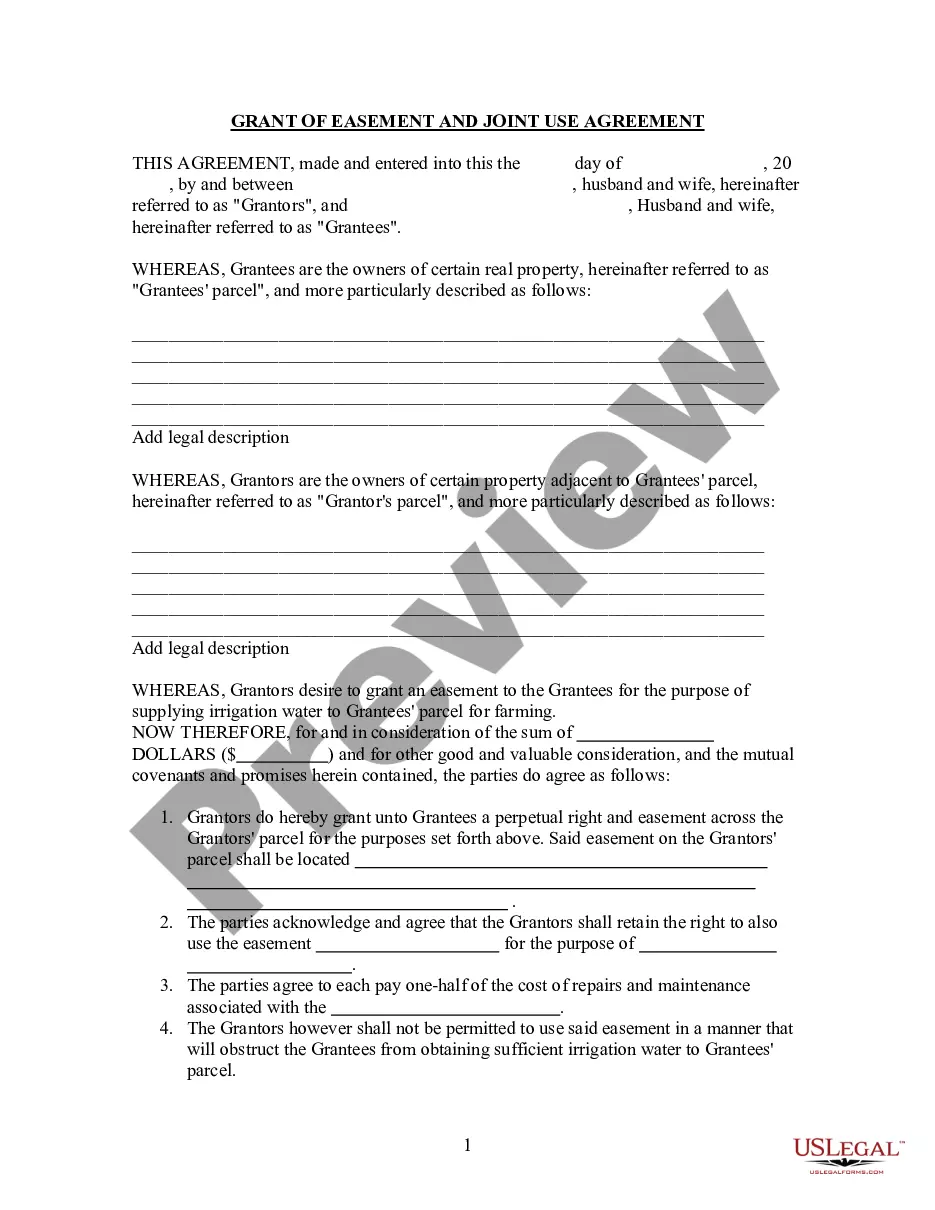
Grant Easement Form Without Transfer
Description
Get your form ready online
Our built-in tools help you complete, sign, share, and store your documents in one place.
Make edits, fill in missing information, and update formatting in US Legal Forms—just like you would in MS Word.
Download a copy, print it, send it by email, or mail it via USPS—whatever works best for your next step.
Sign and collect signatures with our SignNow integration. Send to multiple recipients, set reminders, and more. Go Premium to unlock E-Sign.
If this form requires notarization, complete it online through a secure video call—no need to meet a notary in person or wait for an appointment.
We protect your documents and personal data by following strict security and privacy standards.

Make edits, fill in missing information, and update formatting in US Legal Forms—just like you would in MS Word.

Download a copy, print it, send it by email, or mail it via USPS—whatever works best for your next step.

Sign and collect signatures with our SignNow integration. Send to multiple recipients, set reminders, and more. Go Premium to unlock E-Sign.

If this form requires notarization, complete it online through a secure video call—no need to meet a notary in person or wait for an appointment.

We protect your documents and personal data by following strict security and privacy standards.
Looking for another form?



How to fill out Grant Of Easement And Joint Use Agreement?
Regardless of whether it's for corporate needs or personal issues, everyone must confront legal matters eventually in their lifetime.
Completing legal documents necessitates meticulous care, beginning with selecting the suitable form template.
With an extensive US Legal Forms collection available, you won’t have to waste time searching for the correct template online. Utilize the library’s straightforward navigation to find the right form for any occasion.
- Locate the template you require using the search bar or catalog browsing.
- Review the form’s description to ensure it aligns with your situation, state, and county.
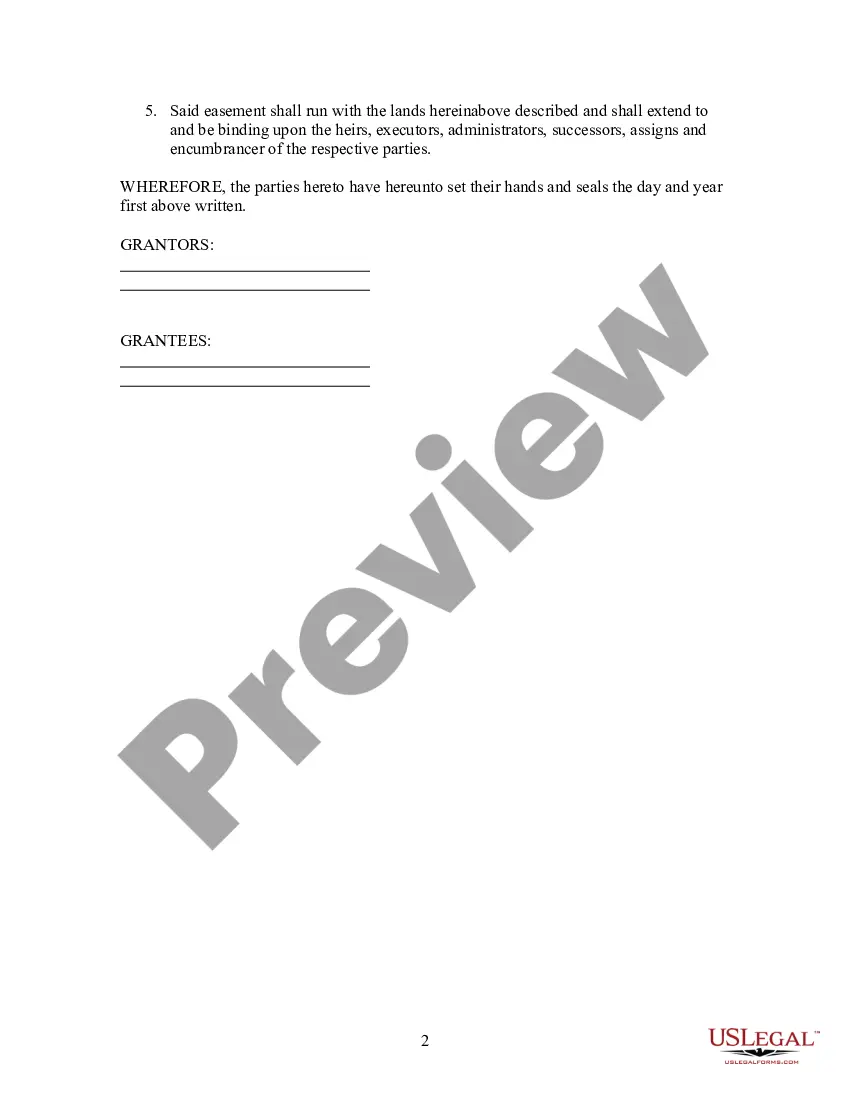
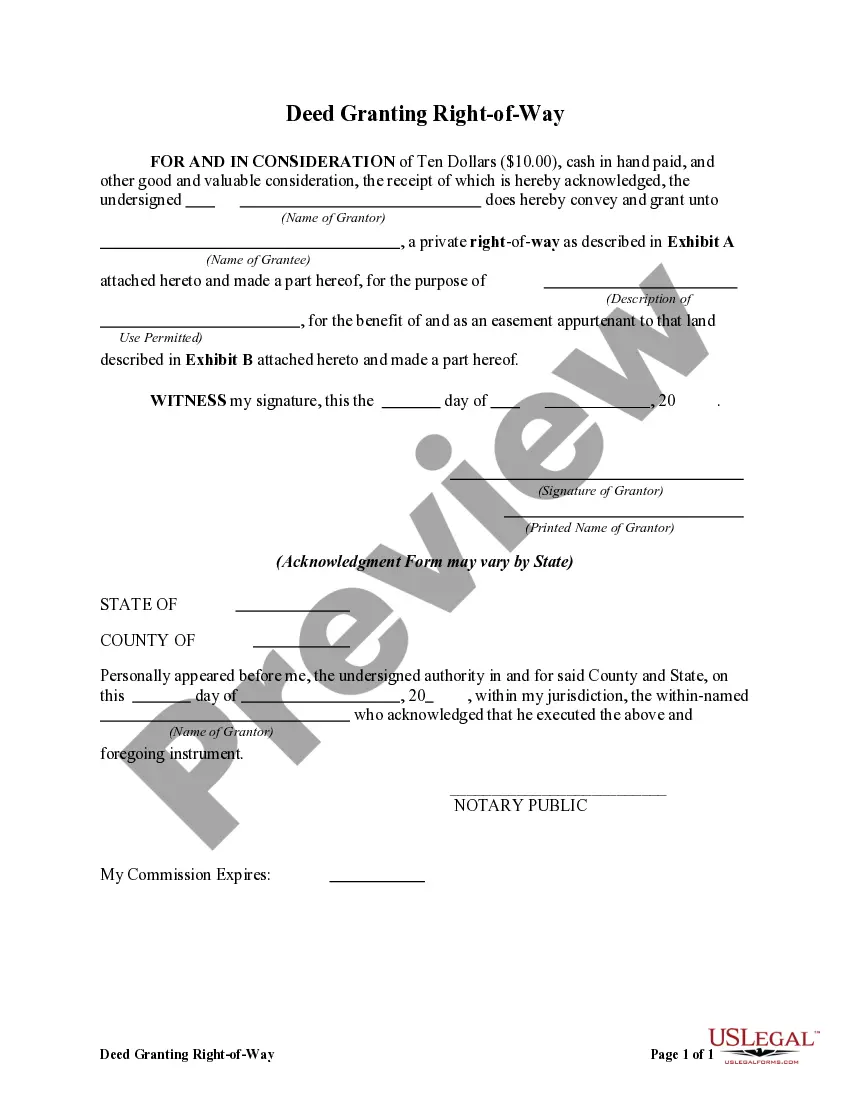
- Click on the form’s preview to examine it.
- If it is the incorrect form, return to the search tool to find the Grant Easement Form Without Transfer example you need.
- Download the document if it satisfies your criteria.
- If you possess a US Legal Forms account, click Log in to access previously stored documents in My documents.
- In case you do not have an account yet, you may obtain the form by clicking Buy now.
- Choose the appropriate pricing option.
- Complete the account registration form.
- Select your payment method: you can utilize a credit card or PayPal account.
- Pick the file format you prefer and download the Grant Easement Form Without Transfer.
- Once downloaded, you can complete the form using editing software or print it out and finish it by hand.
Form popularity
FAQ
In California, easement laws require that easements be created in writing if they are to last longer than a year. The state recognizes both express and implied easements, along with easements by necessity. Landowners are expected to honor the terms of the easement as specified in the documents. To ensure compliance, consider using a grant easement form without transfer, which can serve as a clear record of your rights and responsibilities.
The three main types of easements are appurtenant, in gross, and prescriptive. An appurtenant easement benefits a specific parcel of land and transfers with the land when sold. In gross easements benefit individuals rather than land, often for utilities or access. Prescriptive easements arise from long-term use without permission. Using a grant easement form without transfer helps formalize these arrangements effectively.
In Georgia, easements are governed by common law, which recognizes both express and implied easements. Express easements must be in writing to be enforceable, while implied easements can arise from the circumstances of the property. Georgia law allows for easements to be created through conveyance, necessity, or prescription. If you're considering your options, a grant easement form without transfer can provide clarity and legal standing.
Easements can be created in four main ways: express grant, express reservation, by necessity, and by prescription. An express grant occurs when a property owner provides a written easement to another party. Express reservation happens when a seller retains an easement when selling property. Additionally, easements by necessity arise when landlocked properties require access, while prescriptive easements develop through continuous use over time, which may not be initially authorized. To document any of these types, you may utilize a grant easement form without transfer.
Drafting an easement involves outlining the intended use, the involved parties, and the specifics of the property affected. It is crucial to be clear and precise to avoid misunderstandings. Consider using a Grant Easement Form without Transfer as a template, which can help guide you through the necessary elements. You might also want to seek legal advice to ensure compliance with local laws.
Easements can typically be created through mutual agreement between the property owner and the party wishing to use the property. This agreement should be documented in writing to ensure clarity and legality. When using a Grant Easement Form without Transfer, you ensure that all terms are acknowledged and legally binding. This approach minimizes complications in the future.
The most straightforward way to create an easement is by using a written agreement between the property owner and the easement holder. This agreement should clearly outline the terms, including the easement's purpose and duration. A well-prepared Grant Easement Form without Transfer can simplify this process, making it easier for both parties to reach an understanding.
Obtaining an easement by necessity can be challenging, as it requires proving that the easement is essential for accessing your property. Often, this type of easement arises when there is no other legal access to the land. It is advisable to gather relevant supporting documents and evidence showing the necessity of such an easement. Utilizing a Grant Easement Form without Transfer can help formalize this process.
To grant an easement, you typically need to complete a Grant Easement Form without Transfer. This form should clearly define the easement's purpose, the parties involved, and the specific area of land affected. It is important to ensure that both parties understand the terms and conditions before signing. You may also want to consult a legal professional to make sure everything is in order.
Easements come with specific rules that vary by state and situation. Generally, an easement creates a legal right of use for one party on another's property. It's important to note that a grant easement form without transfer does not require changing ownership, but it does establish clear usage terms to protect all parties. Understanding these rules can help you avoid legal issues down the line.