False Imprisonment With Violence
Description
Get your form ready online
Our built-in tools help you complete, sign, share, and store your documents in one place.
Make edits, fill in missing information, and update formatting in US Legal Forms—just like you would in MS Word.
Download a copy, print it, send it by email, or mail it via USPS—whatever works best for your next step.
Sign and collect signatures with our SignNow integration. Send to multiple recipients, set reminders, and more. Go Premium to unlock E-Sign.
If this form requires notarization, complete it online through a secure video call—no need to meet a notary in person or wait for an appointment.
We protect your documents and personal data by following strict security and privacy standards.

Make edits, fill in missing information, and update formatting in US Legal Forms—just like you would in MS Word.

Download a copy, print it, send it by email, or mail it via USPS—whatever works best for your next step.

Sign and collect signatures with our SignNow integration. Send to multiple recipients, set reminders, and more. Go Premium to unlock E-Sign.

If this form requires notarization, complete it online through a secure video call—no need to meet a notary in person or wait for an appointment.

We protect your documents and personal data by following strict security and privacy standards.
Looking for another form?

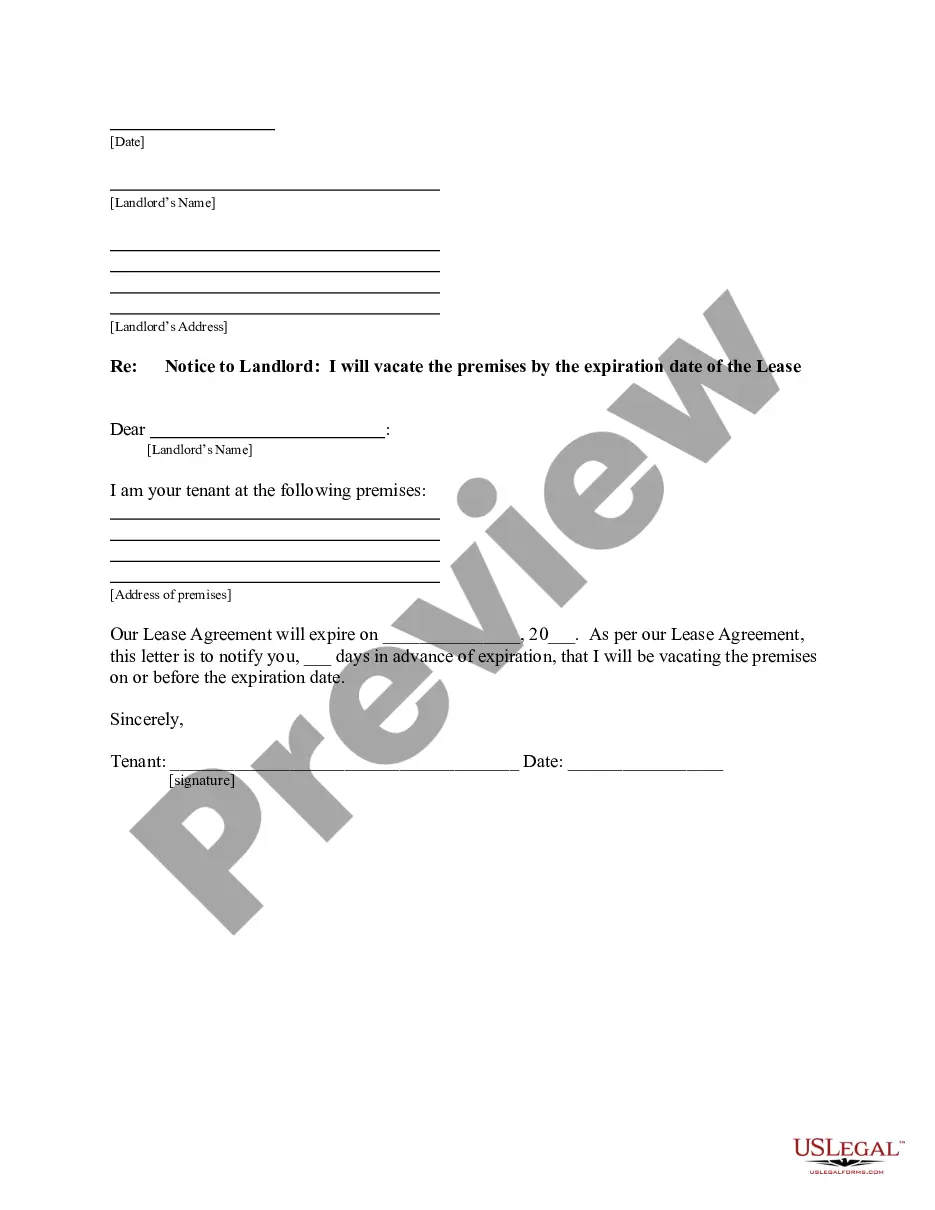




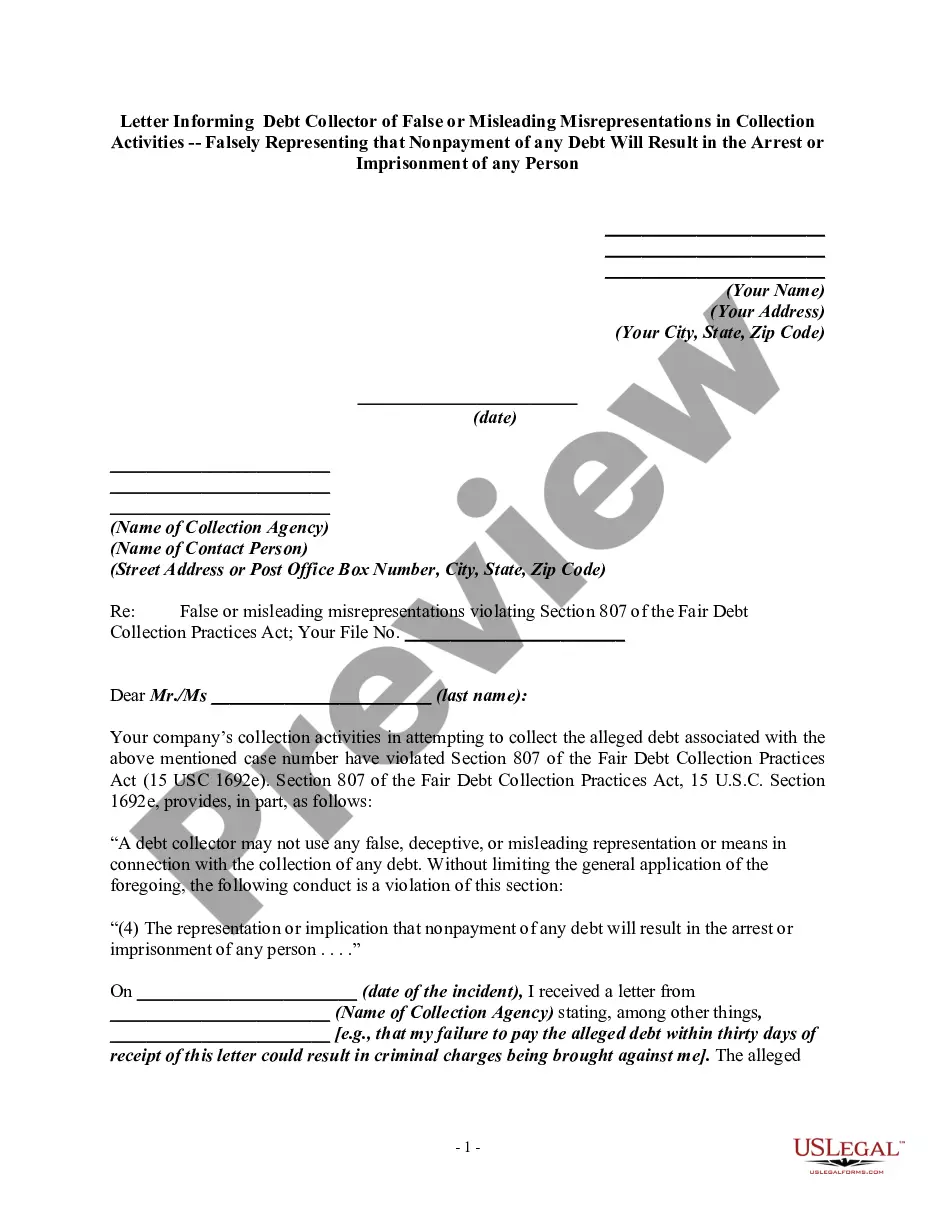
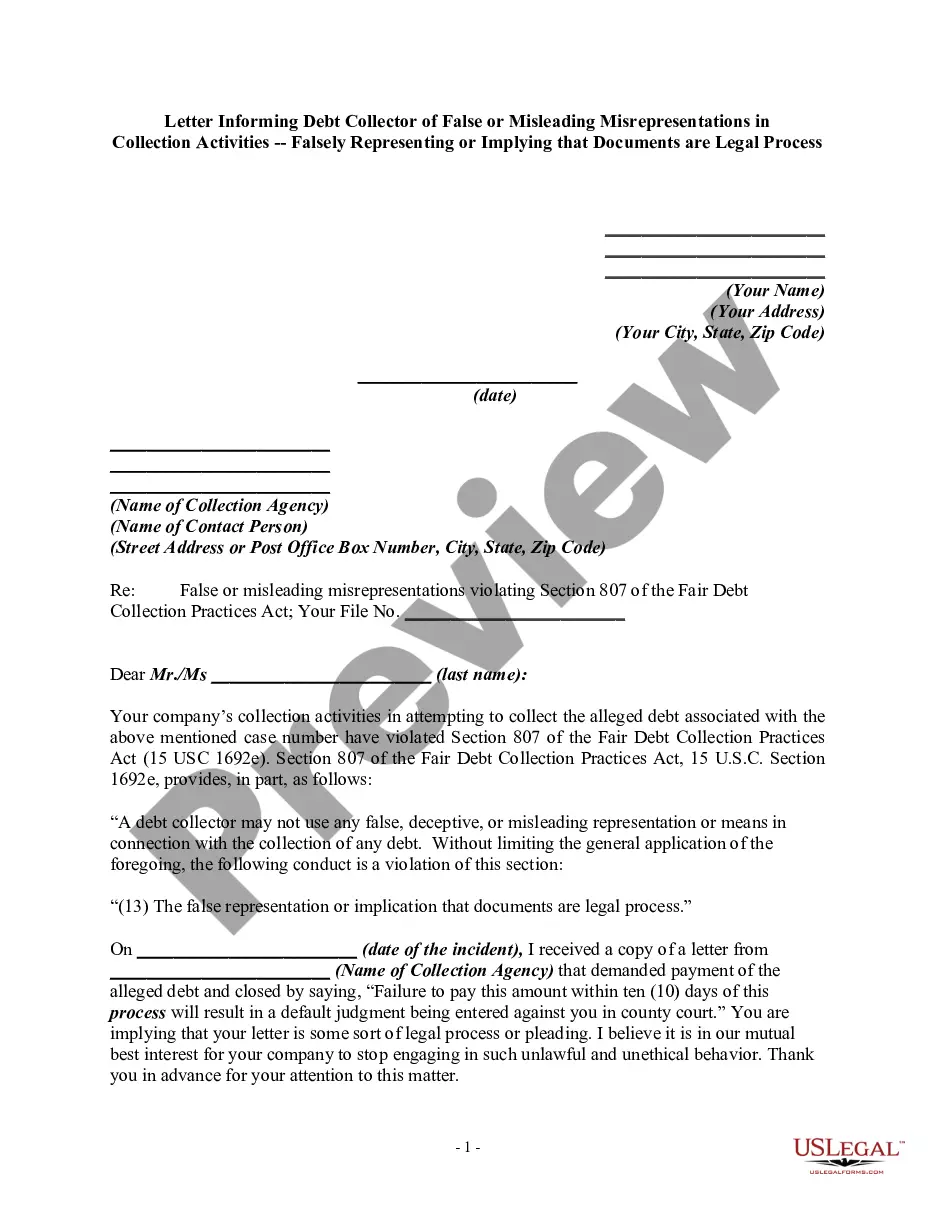
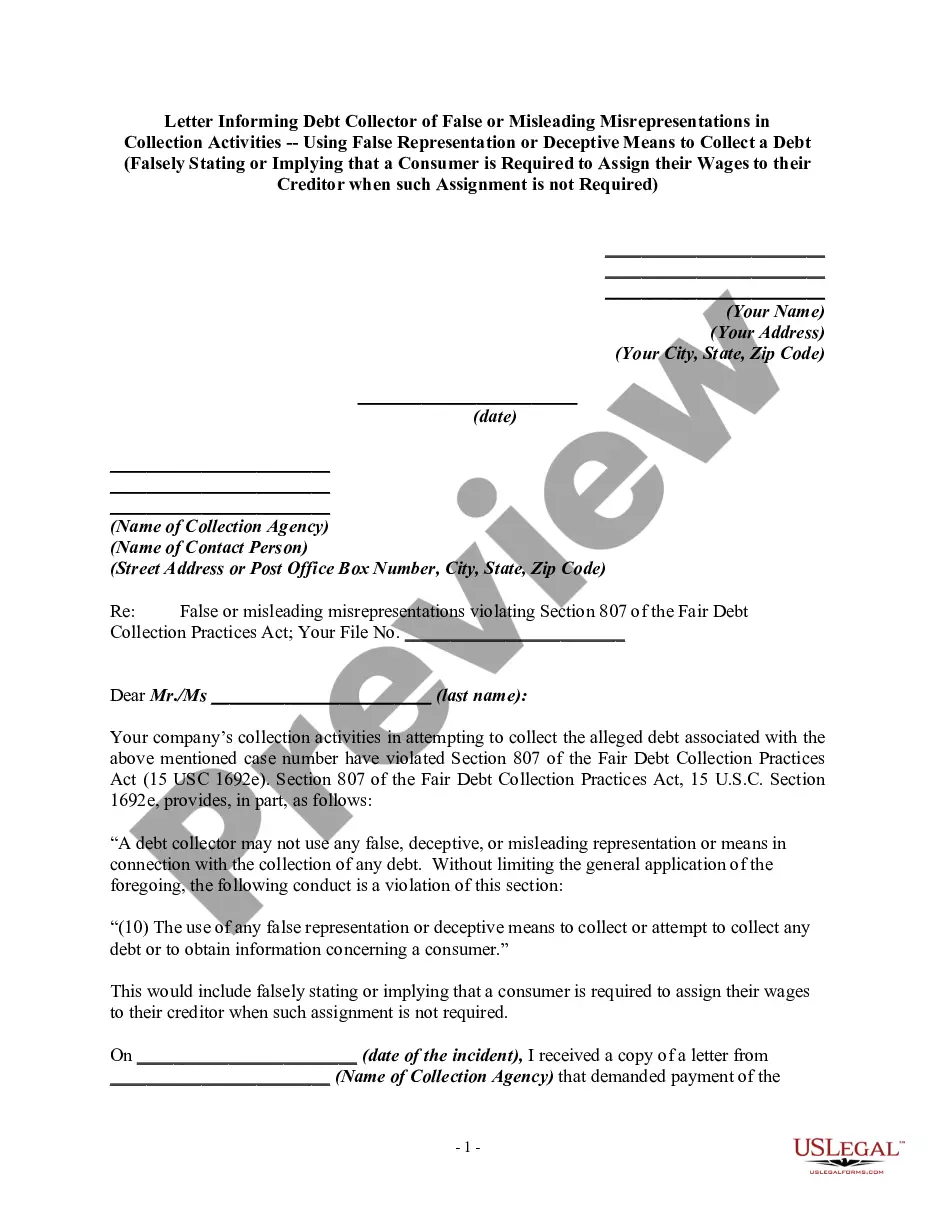
How to fill out Letter Informing Debt Collector Of False Or Misleading Misrepresentations In Collection Activities - Falsely Representing That Nonpayment Of Any Debt Will Result In The Arrest Or Imprisonment Of Any Person?
Creating legal documents from the ground up can occasionally feel quite daunting.
Certain situations may require extensive research and significant expenses.
If you’re looking for a simpler and more cost-effective method of preparing False Imprisonment With Violence or any other documentation without unnecessary complications, US Legal Forms is always readily available.
Our online library of over 85,000 current legal documents encompasses nearly every aspect of your financial, legal, and personal matters.
Examine the form preview and descriptions to confirm that you are on the correct form. Ensure the template you select meets the criteria of your state and county. Choose the most appropriate subscription plan to obtain the False Imprisonment With Violence. Download the document, then complete, validate, and print it. US Legal Forms has an impeccable reputation and over 25 years of experience. Join us today and make document completion a straightforward and efficient process!
- With just a few clicks, you can quickly access state- and county-specific forms meticulously prepared for you by our legal professionals.
- Utilize our website whenever you require dependable services through which you can effortlessly find and download the False Imprisonment With Violence.
- If you’re familiar with our services and have previously registered with us, simply Log In to your account, choose the template, and download it or re-download it at any time from the My documents section.
- Don’t have an account? No problem. It takes only a few minutes to set it up and browse the catalog.
- But before diving straight into downloading False Imprisonment With Violence, follow these suggestions.
Form popularity
FAQ
False imprisonment with violence refers to the unlawful confinement of an individual, accompanied by the use of force or threats of force. This situation goes beyond mere restriction of freedom, as it includes aggressive behavior that can cause physical harm. If you find yourself dealing with such a case, it is vital to seek legal assistance to understand your rights and options. The US Legal Forms platform can provide you with valuable resources and documents to help you navigate issues related to false imprisonment with violence.
Proving intent in cases of false imprisonment with violence requires demonstrating that the perpetrator acted with the purpose of causing confinement or was aware that their actions would likely result in confinement. This means showing that the individual consciously chose to restrict another person's freedom. If you face such a situation, gathering evidence such as witness testimonies and any relevant documentation can strengthen your case. Understanding intent is crucial for effectively addressing false imprisonment with violence.
To establish false imprisonment with violence, three key elements must be present: first, there must be an intentional act by one person that confines another; second, the confinement must occur without legal justification; and third, the person must be aware of the confinement or suffer harm as a result. It is essential to understand that even a brief confinement can qualify as false imprisonment if it meets these criteria. By recognizing these elements, you can better navigate legal situations surrounding false imprisonment with violence.
Yes, false imprisonment with violence requires intent on the part of the perpetrator. The individual must intend to confine another person unlawfully, which distinguishes it from other offenses. If you find yourself a victim of false imprisonment, platforms like USLegalForms can help you understand your rights and navigate legal proceedings to seek justice.
The sentence for false imprisonment with violence can vary based on several factors, including the severity of the act and any resulting injuries. Typically, it can lead to both civil and criminal penalties, which may include fines or imprisonment. Those affected by false imprisonment should seek legal counsel to navigate the complexities of their case effectively.
To establish false imprisonment with violence, the perpetrator must have the intent to confine another person. This means the person must act purposefully or knowingly to restrict someone's freedom, regardless of whether they intended to cause harm. Understanding this legal intent is crucial for individuals seeking justice in false imprisonment cases.
Assault involves the threat or attempt to cause harm to another person, while false imprisonment with violence focuses on the unlawful restriction of an individual's freedom of movement. In simpler terms, assault creates fear of immediate harm, whereas false imprisonment physically confines someone without their consent. Both offenses can lead to serious legal consequences, underscoring the need for awareness and protection.
An example of false imprisonment occurs when someone physically restrains another person against their will. For instance, if a security guard detains a customer in a store without probable cause or legal justification, it can be considered false imprisonment with violence if force is used. This situation highlights the importance of understanding the legal boundaries surrounding personal freedom.
False imprisonment by violence refers to the unlawful restraint of an individual that involves the use of force or threats. This legal term highlights the act of detaining someone against their will while employing violence or the threat of violence. Understanding this concept is important, as it carries significant legal implications. If you find yourself facing such allegations, consulting with professionals can help clarify your situation and potential defenses.
When someone presses charges against you for fighting, it initiates a legal process that can lead to criminal charges. If false imprisonment with violence is involved, you could face serious legal consequences, including fines and possible imprisonment. It is crucial to seek legal advice immediately to understand your rights and options. A strong defense can be vital in navigating these charges.