False Imprisonment With Case Law
Description
Get your form ready online
Our built-in tools help you complete, sign, share, and store your documents in one place.
Make edits, fill in missing information, and update formatting in US Legal Forms—just like you would in MS Word.
Download a copy, print it, send it by email, or mail it via USPS—whatever works best for your next step.
Sign and collect signatures with our SignNow integration. Send to multiple recipients, set reminders, and more. Go Premium to unlock E-Sign.
If this form requires notarization, complete it online through a secure video call—no need to meet a notary in person or wait for an appointment.
We protect your documents and personal data by following strict security and privacy standards.

Make edits, fill in missing information, and update formatting in US Legal Forms—just like you would in MS Word.

Download a copy, print it, send it by email, or mail it via USPS—whatever works best for your next step.

Sign and collect signatures with our SignNow integration. Send to multiple recipients, set reminders, and more. Go Premium to unlock E-Sign.

If this form requires notarization, complete it online through a secure video call—no need to meet a notary in person or wait for an appointment.

We protect your documents and personal data by following strict security and privacy standards.
Looking for another form?
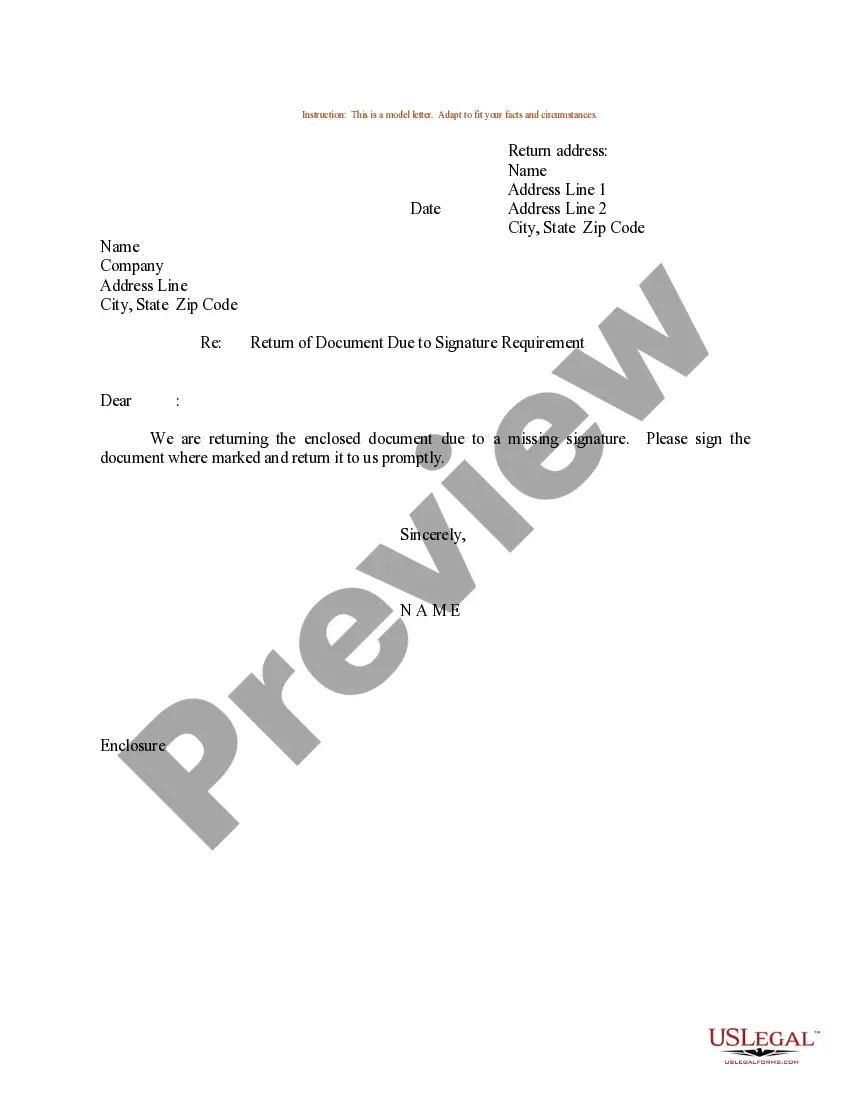


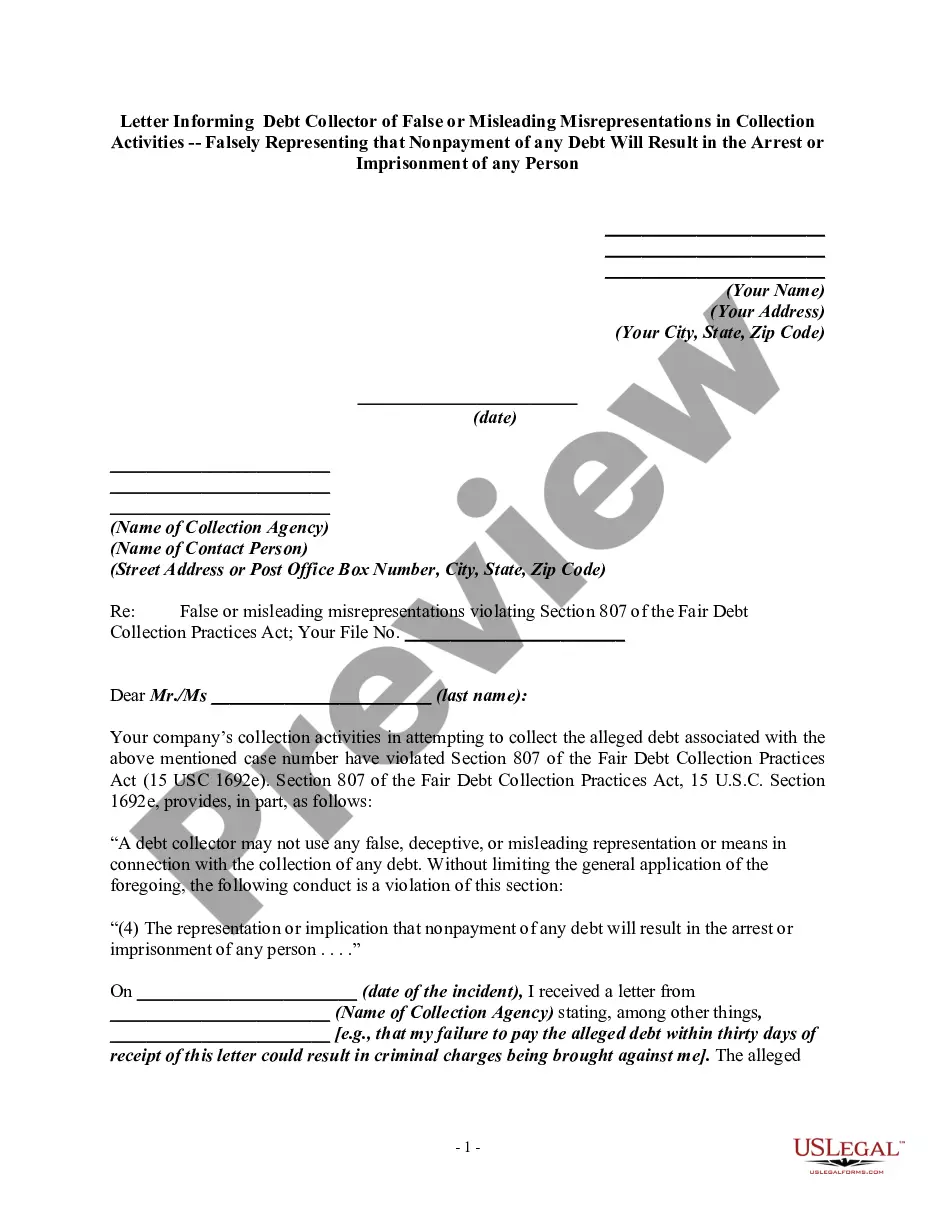
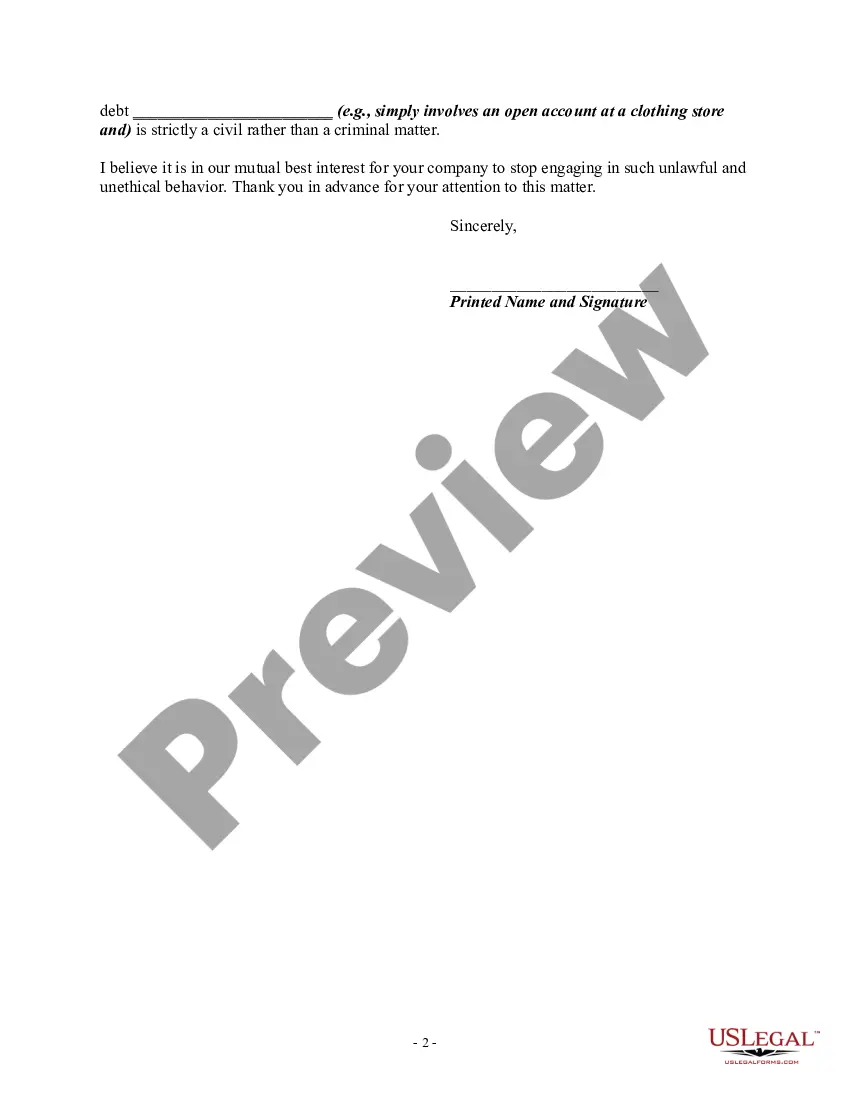
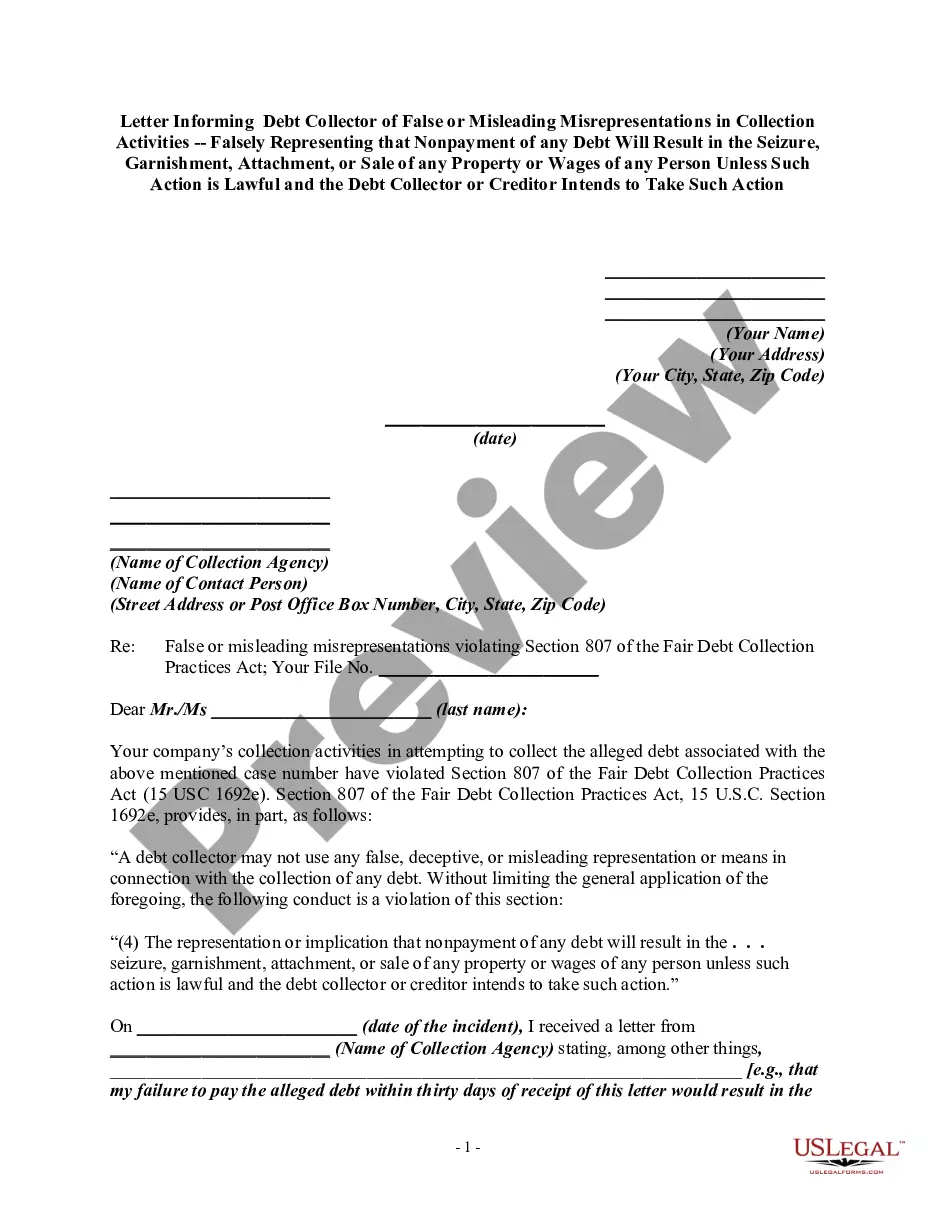
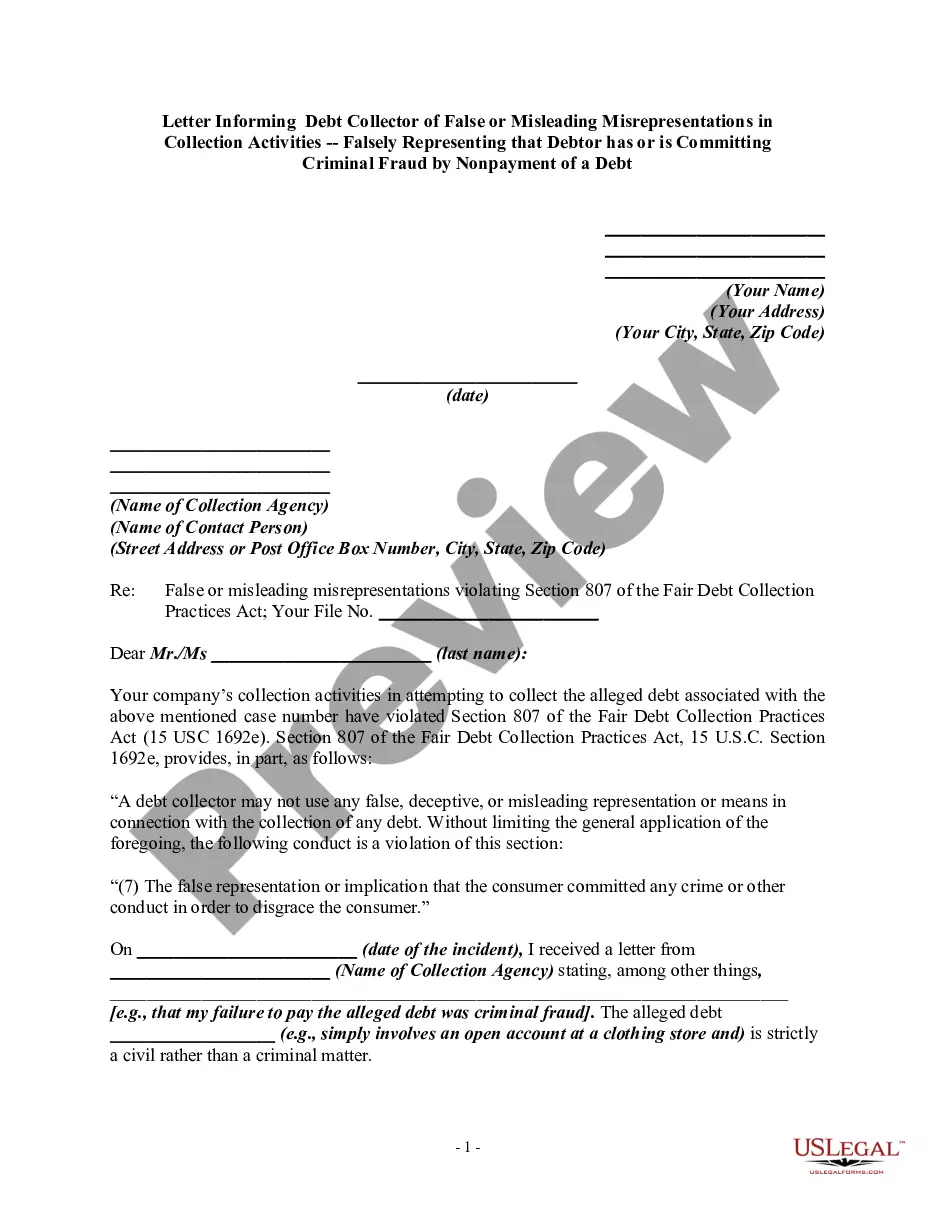
How to fill out Letter Informing Debt Collector Of False Or Misleading Misrepresentations In Collection Activities - Falsely Representing That Nonpayment Of Any Debt Will Result In The Arrest Or Imprisonment Of Any Person?
Creating legal documents from the ground up can occasionally be overwhelming.
Certain situations may necessitate extensive research and considerable expenses.
If you're seeking a more straightforward and cost-effective method for preparing False Imprisonment With Case Law or any other documents without unnecessary hurdles, US Legal Forms is always accessible to you.
Our online repository of over 85,000 current legal documents encompasses nearly every facet of your financial, legal, and personal matters.
Examine the form preview and descriptions to confirm that you are on the correct form. Ensure the template you select adheres to the regulations of your state and county. Choose the most appropriate subscription option to obtain the False Imprisonment With Case Law. Download the form, then complete, sign, and print it. US Legal Forms enjoys an impeccable reputation and over 25 years of expertise. Join us today and make form completion simple and efficient!
- With just a few clicks, you can swiftly acquire state- and county-compliant forms carefully assembled for you by our legal experts.
- Utilize our website whenever you require dependable and trustworthy services to effortlessly locate and download the False Imprisonment With Case Law.
- If you're familiar with our services and have previously registered an account with us, simply Log In to your account, select the template, and download it or re-download it at any time in the My documents section.
- Don't possess an account? No problem. It only takes a few minutes to sign up and browse the library.
- But before you proceed directly to downloading False Imprisonment With Case Law, follow these suggestions.
Form popularity
FAQ
The essential element to proving a case of false imprisonment is demonstrating that the confinement was intentional and without legal justification. You must establish that the defendant acted purposefully to restrict your freedom, which can be supported by examples from false imprisonment with case law. Gathering comprehensive documentation and evidence will strengthen your case. Utilizing platforms like US Legal Forms can assist you in compiling necessary resources for your claim.
A common defense to false imprisonment includes the assertion of lawful authority. Defendants may argue that they had a legal right to detain the individual, such as in situations involving law enforcement or contractual obligations. Understanding the nuances of false imprisonment with case law can help clarify when such defenses are applicable. Consulting resources like US Legal Forms can provide guidance on these legal intricacies.
The three elements of false imprisonment are intent, confinement, and lack of lawful privilege. First, the defendant must have intended to confine the plaintiff. Second, the plaintiff must have experienced actual confinement, which can be physical or psychological. Lastly, the confinement must occur without legal justification, which is critical in cases involving false imprisonment with case law.
To win a false imprisonment lawsuit, it is crucial to demonstrate that you were confined against your will without legal justification. You must provide evidence showing the absence of consent and that the confinement was intentional. Familiarity with false imprisonment with case law will aid in understanding legal precedents that support your claim. Using resources like US Legal Forms can help you navigate the legal process effectively.
A threat of force, a threat of arrest, and a belief that a person's personal liberty will be violated are sufficient to constitute an offense of false imprisonment. People v.
Examples of false imprisonment may include: A person locking another person in a room without their permission. A person grabbing onto another person without their consent, and holding them so that they cannot leave.
Elements of the crime intentionally detained, restrained, or confined another person; the restraint made the victim stay or go somewhere for a period of time; victim did not give their consent and was harmed; the conduct was a significant factor in causing victim's harm.
Lack of Consent: To win a false imprisonment claim, the victim must prove they did not consent to the confinement. Duration of Imprisonment: The length of time the victim is confined can play a significant role in the case's outcome. Generally, longer periods of confinement lead to more compensation.
The act of putting someone in prison or the condition of being kept in prison: She was sentenced to five years' imprisonment. He could win damages for his father's wrongful imprisonment. 15 months of his imprisonment was spent in the King County jail.