False Imprisonment With
Description
Get your form ready online
Our built-in tools help you complete, sign, share, and store your documents in one place.
Make edits, fill in missing information, and update formatting in US Legal Forms—just like you would in MS Word.
Download a copy, print it, send it by email, or mail it via USPS—whatever works best for your next step.
Sign and collect signatures with our SignNow integration. Send to multiple recipients, set reminders, and more. Go Premium to unlock E-Sign.
If this form requires notarization, complete it online through a secure video call—no need to meet a notary in person or wait for an appointment.
We protect your documents and personal data by following strict security and privacy standards.

Make edits, fill in missing information, and update formatting in US Legal Forms—just like you would in MS Word.

Download a copy, print it, send it by email, or mail it via USPS—whatever works best for your next step.

Sign and collect signatures with our SignNow integration. Send to multiple recipients, set reminders, and more. Go Premium to unlock E-Sign.

If this form requires notarization, complete it online through a secure video call—no need to meet a notary in person or wait for an appointment.

We protect your documents and personal data by following strict security and privacy standards.
Looking for another form?


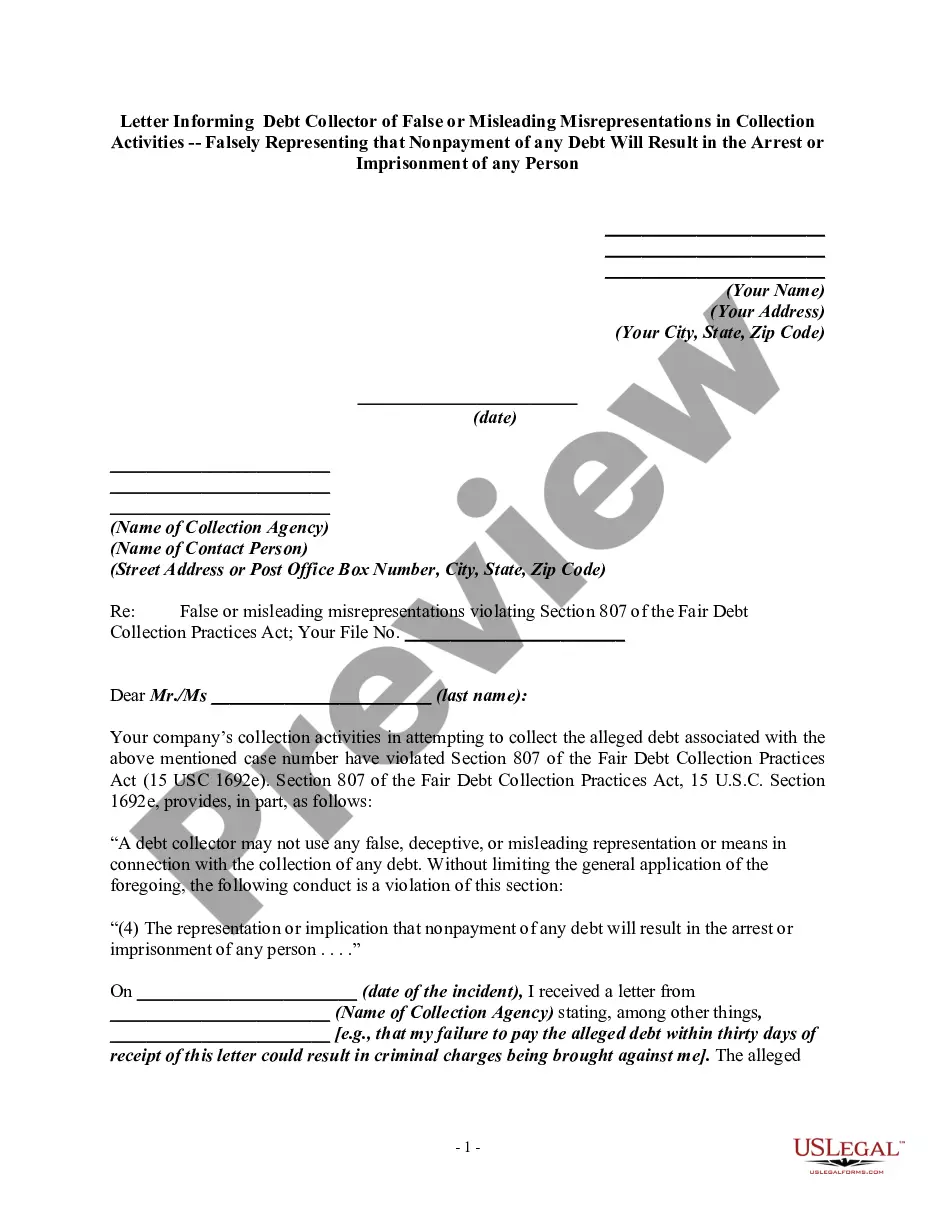
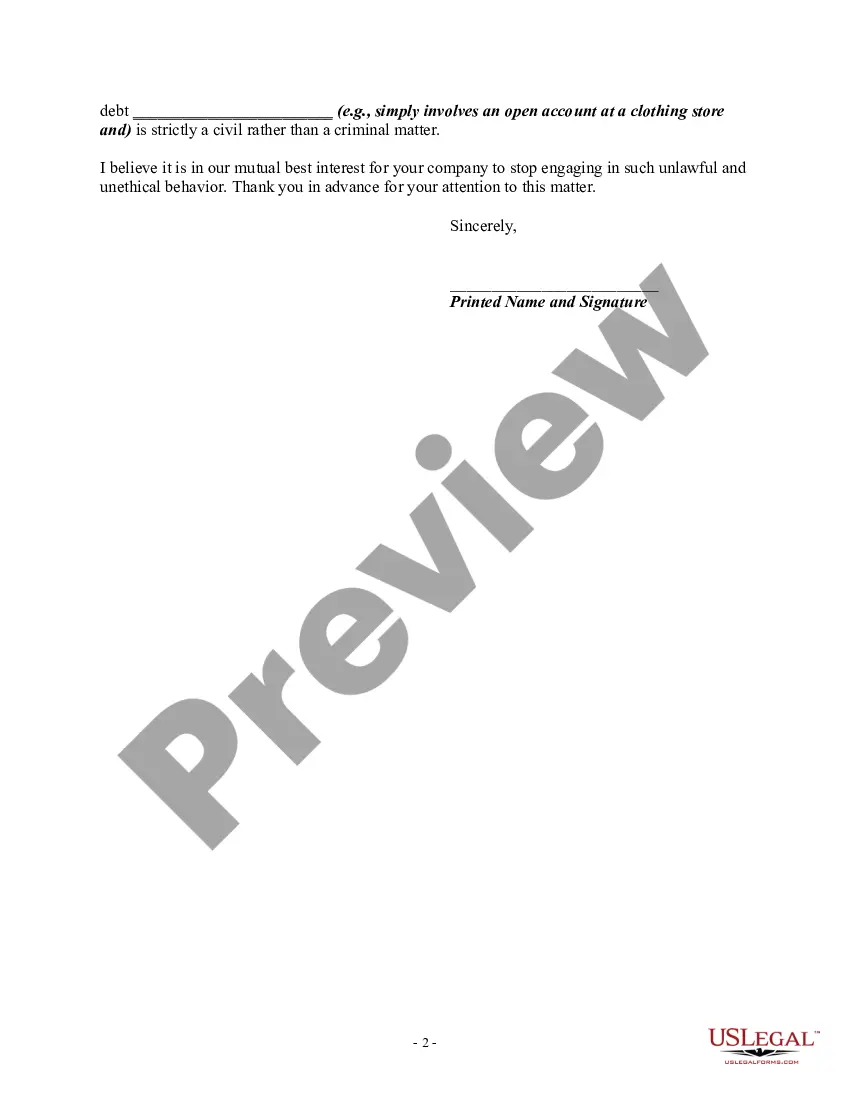
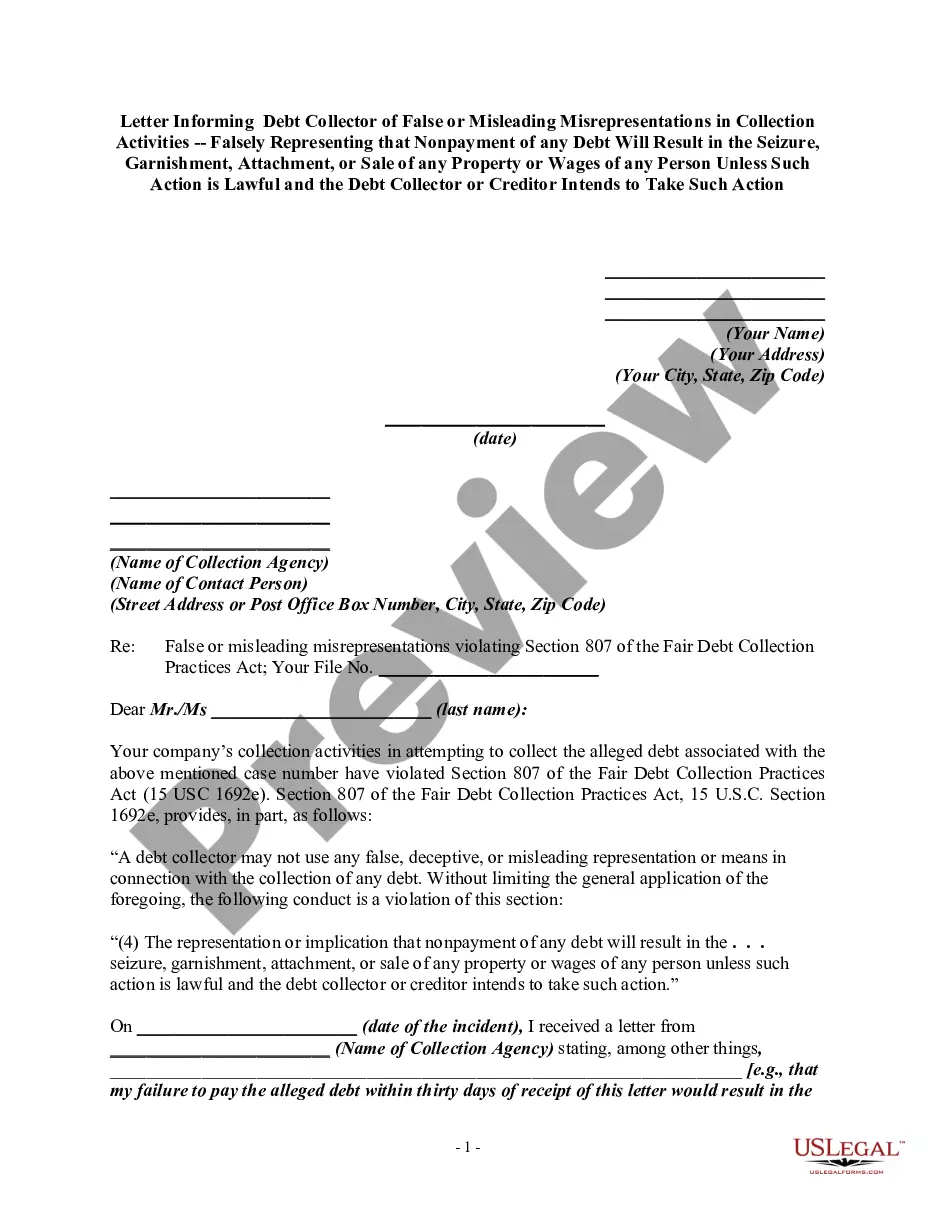
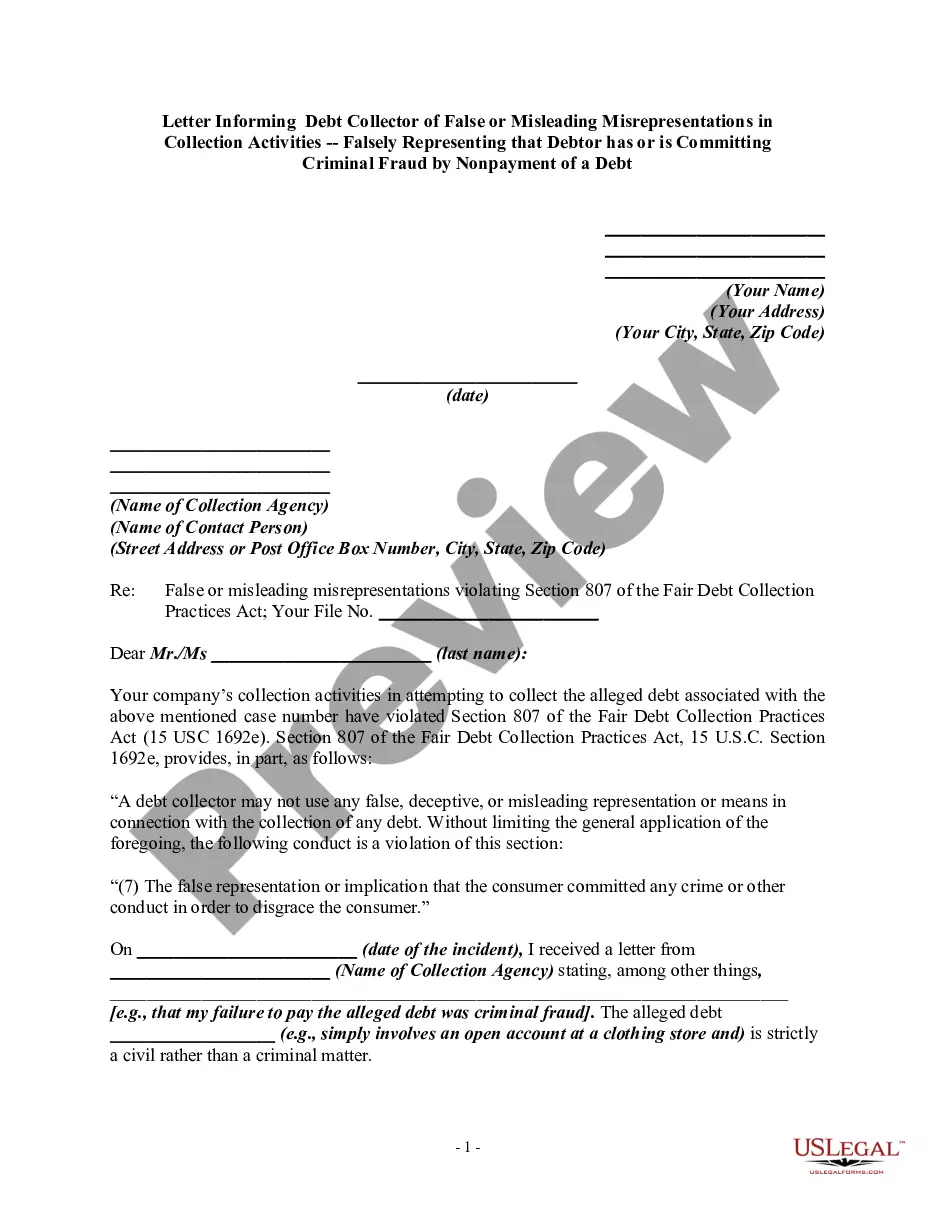
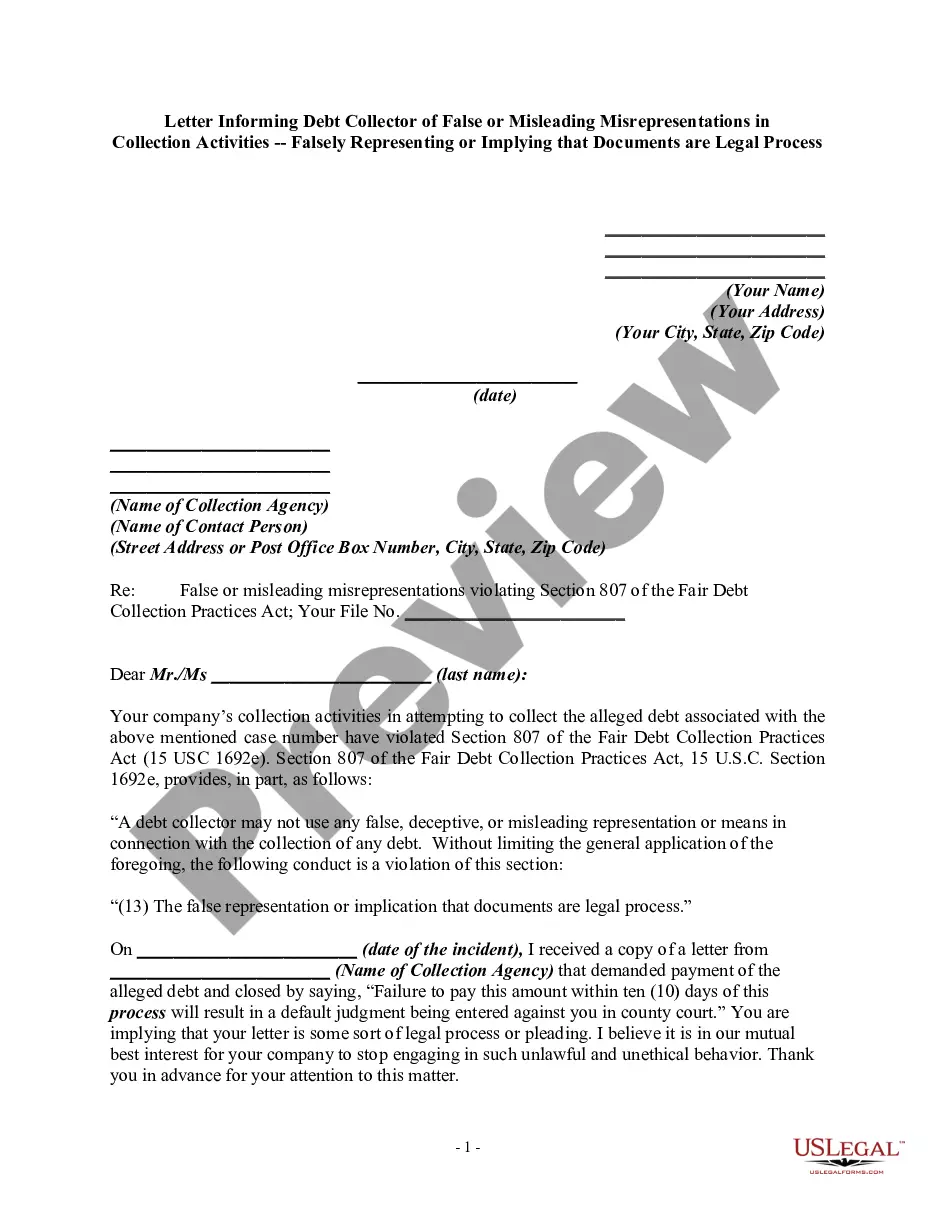
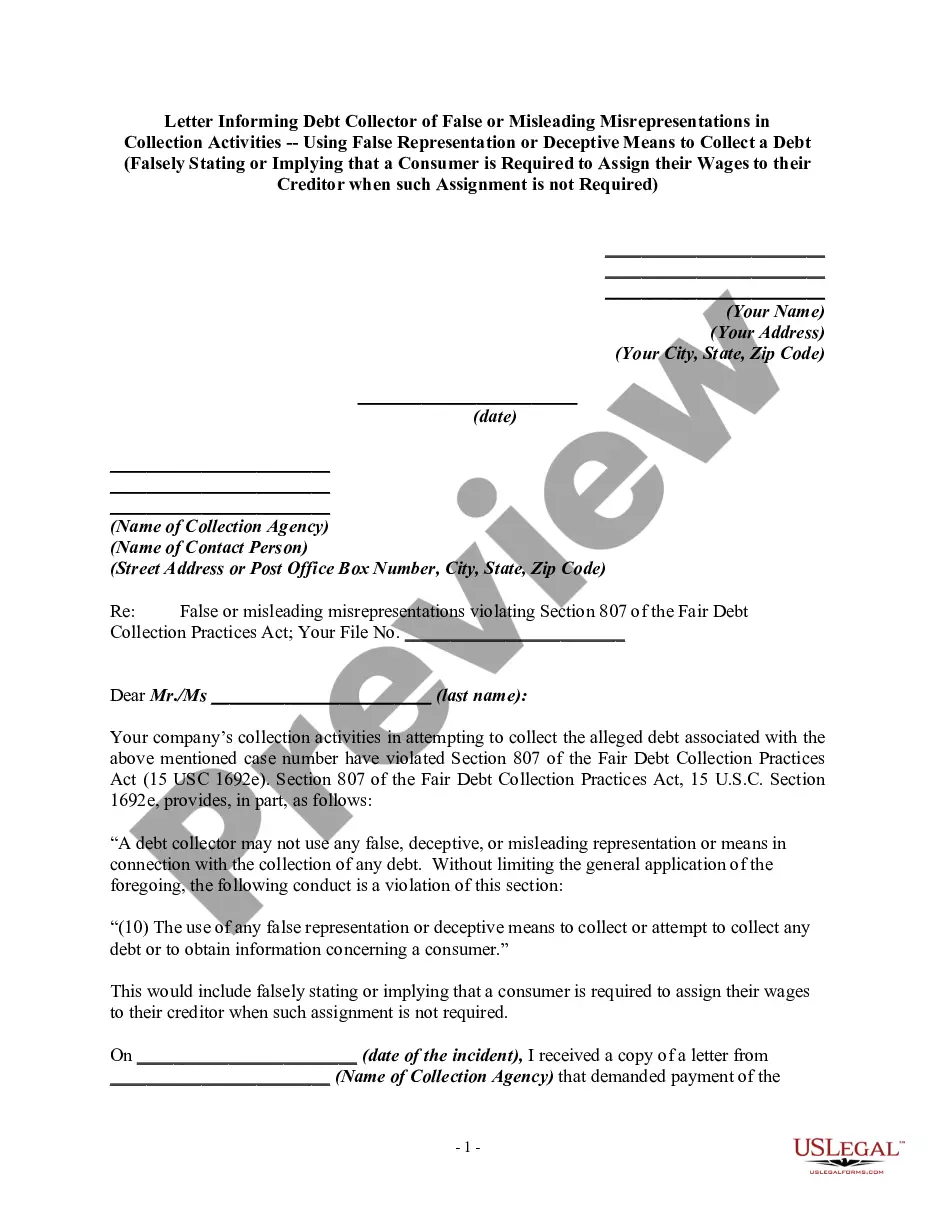
How to fill out Letter Informing Debt Collector Of False Or Misleading Misrepresentations In Collection Activities - Falsely Representing That Nonpayment Of Any Debt Will Result In The Arrest Or Imprisonment Of Any Person?
Managing legal documents can be exasperating, even for the most adept professionals.
When you are looking for a False Imprisonment With and lack the time to dedicate to finding the correct and current version, the tasks can be challenging.
US Legal Forms meets all your needs, whether personal or business-related, all in one place.
Leverage advanced tools to complete and manage your False Imprisonment With.
Here are the steps to follow after locating the form you need: Verify that it is the correct form by previewing it and reviewing its details, ensure that the sample is valid in your state or county, click Buy Now when you are prepared, select a monthly subscription plan, choose the format you desire, and Download, complete, sign, print, and send your documents. Take advantage of the US Legal Forms online directory, backed by 25 years of expertise and reliability. Transform your daily document management into a seamless and user-friendly experience today.
- Access a valuable resource library of articles, guides, handbooks, and materials pertinent to your situation and requirements.
- Save time and effort searching for the documents you require, and utilize US Legal Forms' advanced search and Preview tool to find False Imprisonment With and obtain it.
- If you have a subscription, Log In to your US Legal Forms account, search for the form, and retrieve it.
- Check your My documents tab to review the documents you've previously downloaded and to organize your folders as needed.
- If it's your first time using US Legal Forms, create a free account and enjoy unlimited access to all platform benefits.
- A robust online form directory could be transformative for anyone aiming to navigate these situations effectively.
- US Legal Forms stands as a frontrunner in digital legal documents, offering over 85,000 state-specific legal forms accessible to you at any time.
- With US Legal Forms, you can access state or county-specific legal and business forms.
Form popularity
FAQ
Pressing charges for false accusations involves filing a report with law enforcement, providing evidence to support your claim, and detailing the impact of the accusations on your life. It is important to gather documentation that demonstrates the harm caused by the false claims. Consulting a legal professional can enhance your chances of success. UsLegalForms can help you access the necessary documents and legal information to support your case.
The three elements of false imprisonment include the unlawful confinement of a person, the awareness of the individual regarding their confinement, and the absence of legal authority for the confinement. When these elements are present, it typically constitutes a valid claim. Understanding these components is crucial for anyone seeking clarity on their rights. UsLegalForms offers templates and guides that can assist you in asserting your rights effectively.
To prove a case of false imprisonment, it is essential to establish that a person was confined against their will. This confinement must occur without legal justification. If you find yourself in a situation involving false imprisonment, you can benefit from legal resources that clarify your options. UsLegalForms provides valuable information and tools to help navigate these challenging circumstances.
To prove a false imprisonment claim as a tort in a civil lawsuit, the following elements must be present: There was a willful detention; The detention was without consent; and. The detention was unlawful.
Examples from the Collins Corpus The police had a good defence to the claims in false imprisonment and unlawful detention. My client is seeking substantial damages for unlawful arrest and false imprisonment. They were arrested on suspicion of being involved in forced labour, domestic servitude and false imprisonment.
The civil law tort of false imprisonment arises when a person is held, physically, psychologically, or by other means, without the consent of the person. Said another way, a false imprisonment may arise when a person is fully deprived of freedom of movement as liberty, without consent and without justification.
Elements of the crime intentionally detained, restrained, or confined another person; the restraint made the victim stay or go somewhere for a period of time; victim did not give their consent and was harmed; the conduct was a significant factor in causing victim's harm.
In Canada, a person who is found guilty of false imprisonment can be liable for damages in a civil court. A defense against false imprisonment is the authority to arrest. For example, a police officer has the right to restrain someone based on their authority as an officer.