Letter Debt Collector Sample
Description
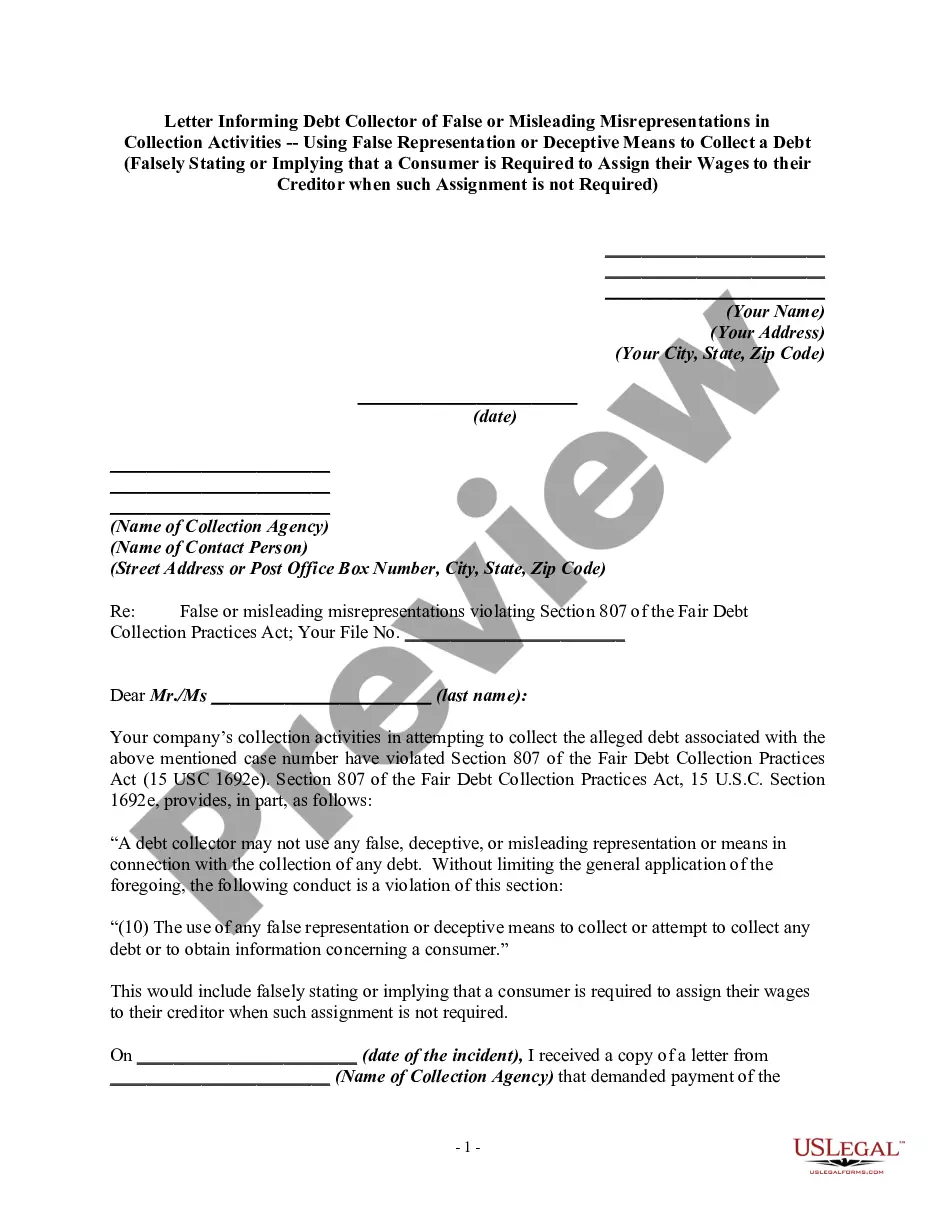
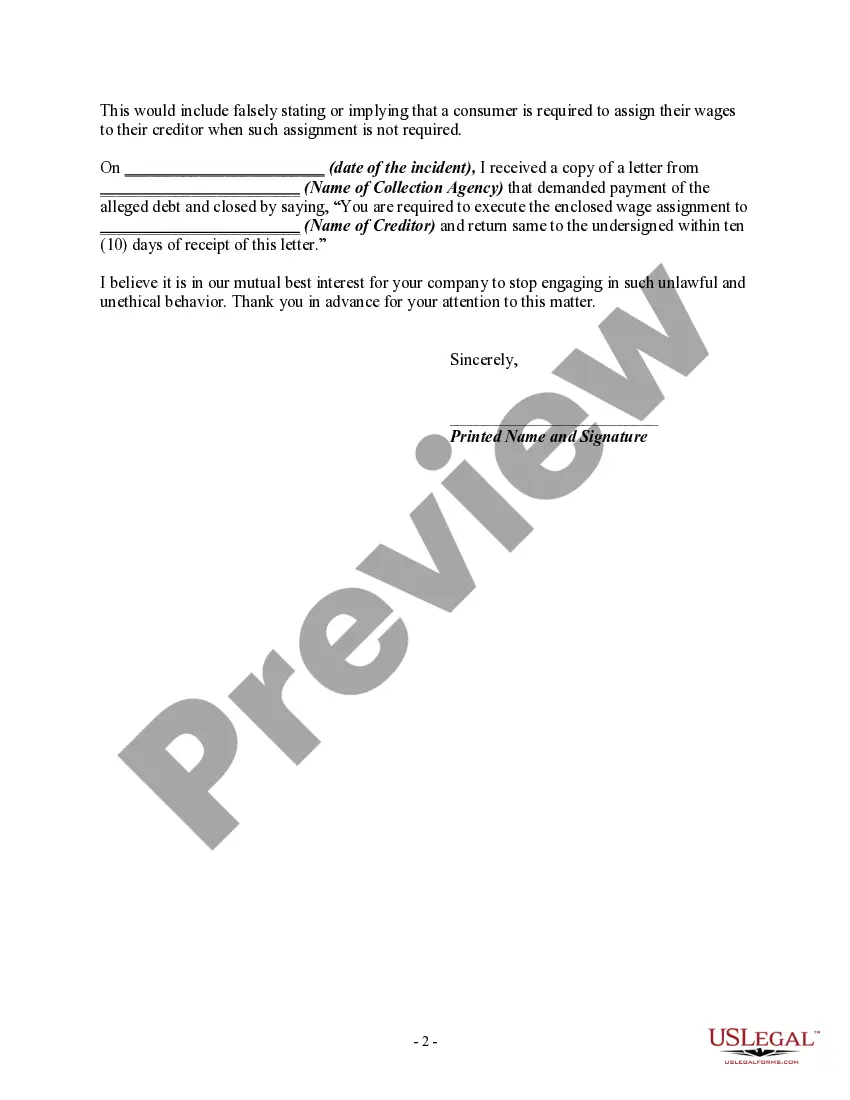
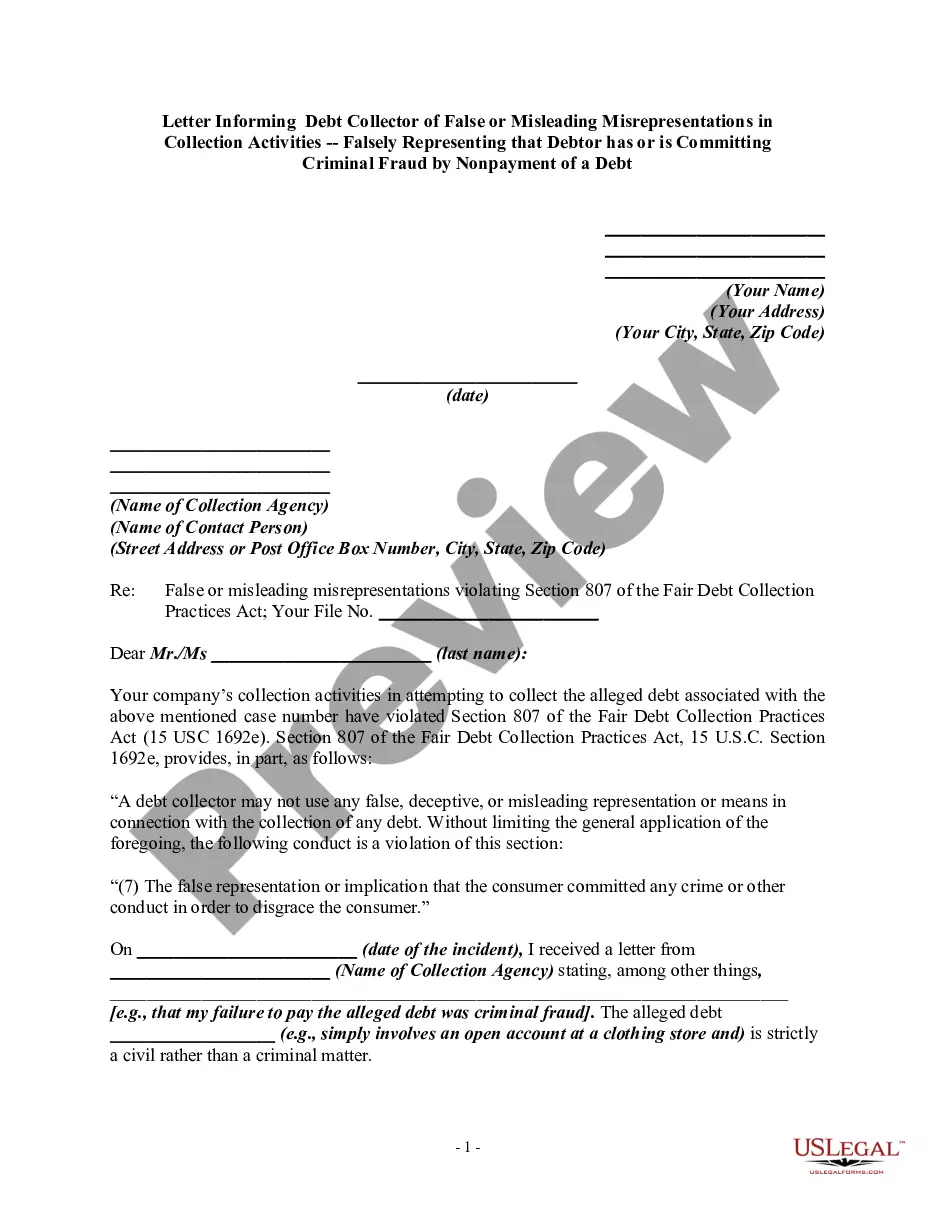
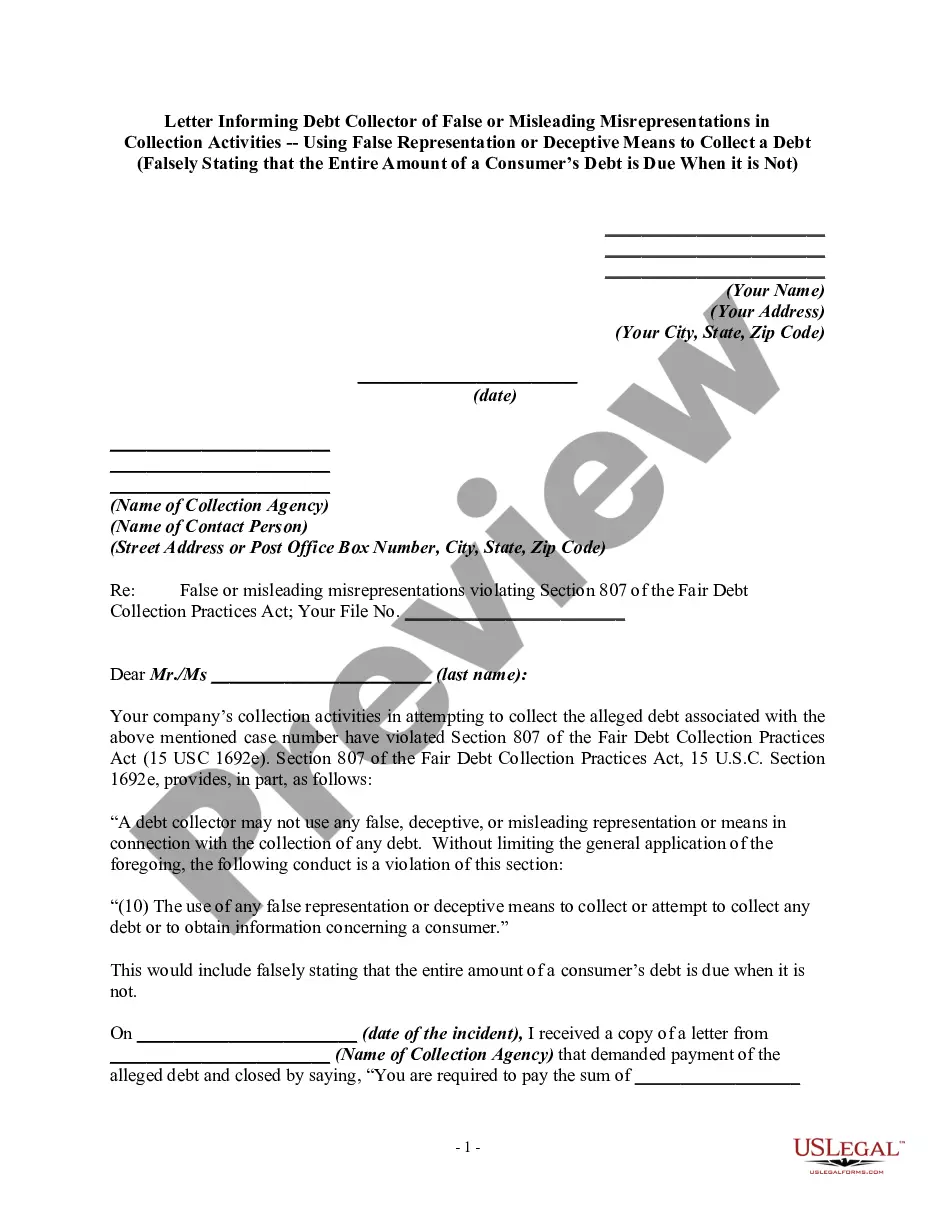
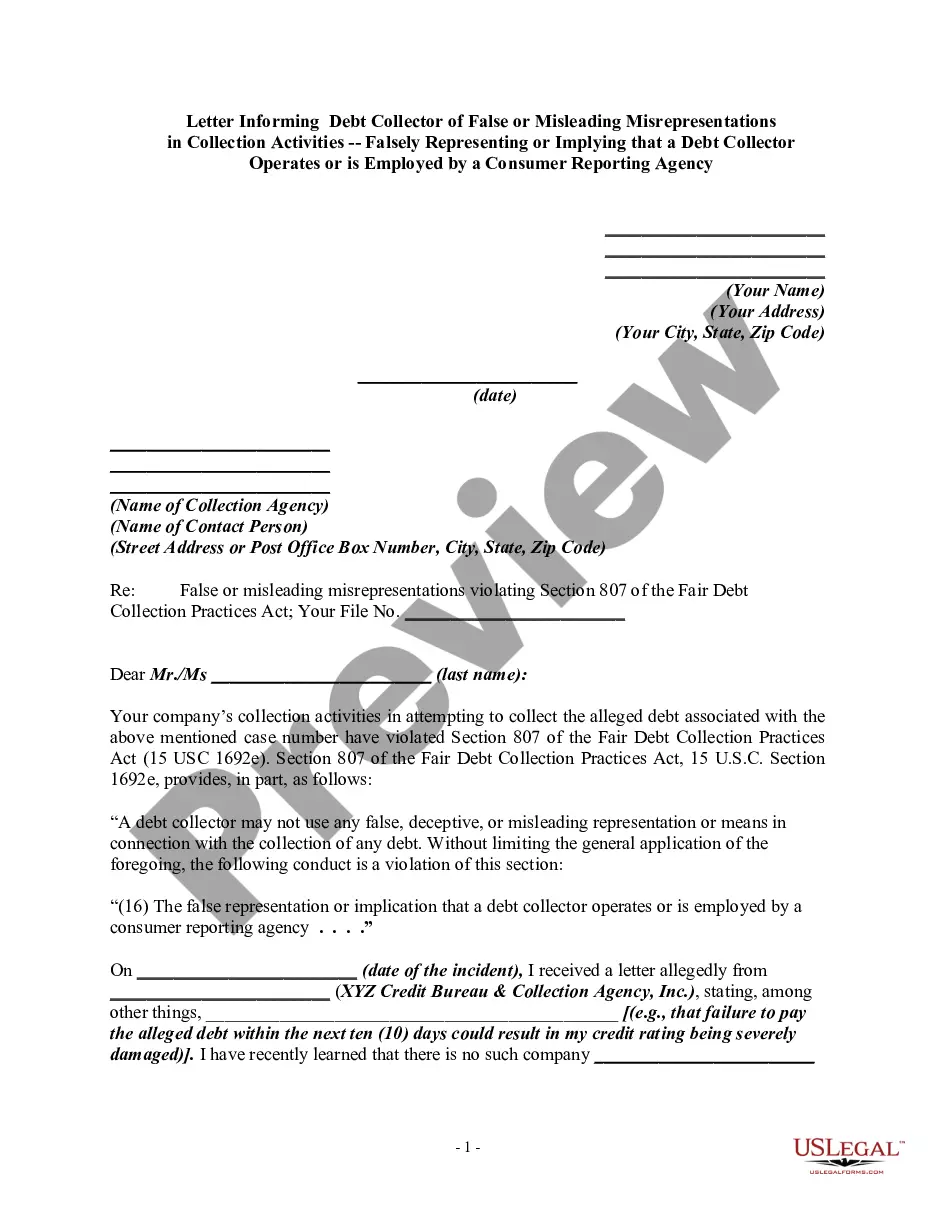
How to fill out Letter Informing Debt Collector Of False Or Misleading Misrepresentations In Collection Activities - Using False Representation Or Deceptive Means To Collect A Debt?
- Log in to your US Legal Forms account. If you're an existing user, access your account to download the necessary form template by clicking the Download button. Ensure your subscription is active to avoid any issues.
- Explore the form preview and description. This ensures you select the right letter debt collector sample that adheres to your local legal requirements.
- Utilize the search feature if required. If the template does not meet your expectations, search for another suitable option using the Search tab.
- Purchase the document. Hit the Buy Now button and choose a subscription plan that fits your needs. Registration is necessary to access our vast library of resources.
- Finalize your payment. Enter your credit card info or use your PayPal account to complete the subscription.
- Download your document. Save the letter debt collector sample to your device for easy access in the My Forms section of your account.
US Legal Forms empowers individuals and attorneys by providing an extensive library of over 85,000 editable legal forms. This resource not only saves time but also ensures that your documents are legally sound.
Don't let debt collectors overwhelm you; utilize our resources today! Start your journey towards effective communication by downloading your template now.
Form popularity
FAQ
The 7 and 7 rule in debt collection refers to the requirement that a collector must validate a debt within seven days of their first contact. They must provide a detailed notice that includes important information regarding the debt amount, creditor, and your rights. Adhering to this rule helps protect your rights. Utilizing a letter debt collector sample can ensure that you assert your rights effectively when dealing with debt collectors.
To write a good debt settlement letter, be clear and concise in your request. Start by stating your financial situation and reason for seeking a settlement. Include the amount you can offer and request a timeline for their response. Remember, having a letter debt collector sample can guide you in formatting and wording your letter correctly.
Debt collectors are not allowed to use threats or obscene language when communicating with you. They also cannot contact you at inconvenient times, such as early in the morning or late at night. It's crucial to understand your rights when facing a debt collector. Having a letter debt collector sample can help you effectively respond to any harassment.
Writing a letter for debt collection requires clarity and professionalism. Start with your contact information, include the date, and address it to the collector. You can formulate your letter using a letter debt collector sample as a guide. This ensures you articulate your concerns while adhering to proper etiquette.
The 7 7 7 rule involves responding to a debt collection notice within seven days, disputing it within seven days of receiving it, and ensuring the collector stops all contact for seven days. This approach provides consumers with strategic leverage. Using a letter debt collector sample can aid in drafting your communication to strengthen your position.
A 609 letter is a type of communication that requests validation of a debt under the Fair Debt Collection Practices Act. This letter cites your right to receive verification, compelling the collector to provide proof. Crafting this letter correctly is crucial; reviewing a letter debt collector sample can help structure your message effectively.
A collection dispute letter outlines your objections to a claimed debt. It typically includes your identification details, the account in question, and the reasons for disputing the debt. You can find a letter debt collector sample to guide your writing. Remember to express your concerns clearly and request a resolution.
To write a validation letter to a debt collector, start with your contact information and the date. Clearly state that you are requesting validation of the alleged debt and include specific details about the debt. Using a letter debt collector sample can help you format your letter correctly. Make sure to send it via certified mail for tracking.
A debt collector validation letter is a formal request asking the collector to verify the debt. It should include your personal information, the debt amount, and the request for proof. Referencing a letter debt collector sample can provide a clear format. Always remember to keep a copy of your correspondence for your records.
When responding to a debt collection letter, start by acknowledging the letter and its contents. You should include a request for validation, using a letter debt collector sample for guidance. Clearly state any discrepancies or concerns regarding the debt. This structured approach can help you communicate effectively with the collector.