Letter Collection Using Forensics
Description
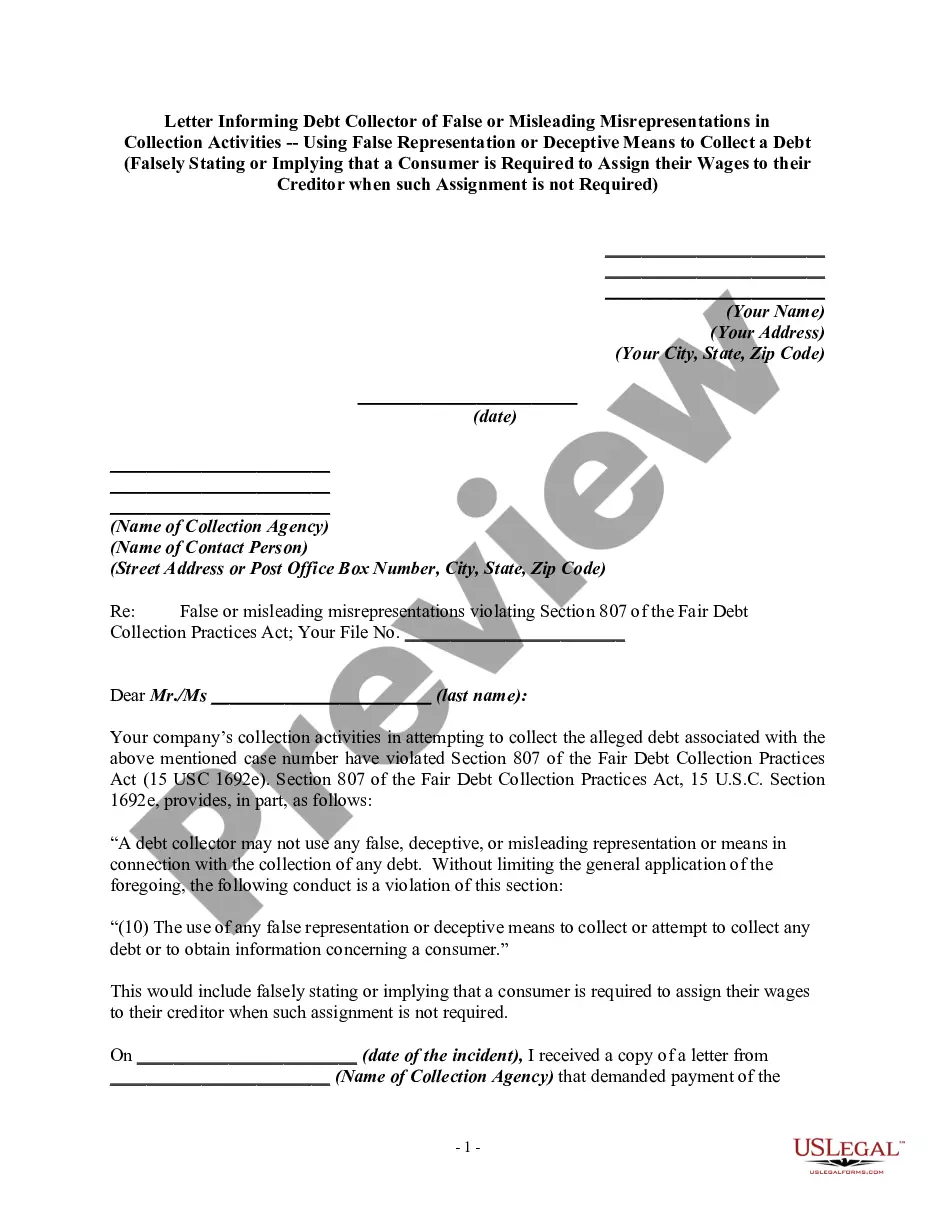
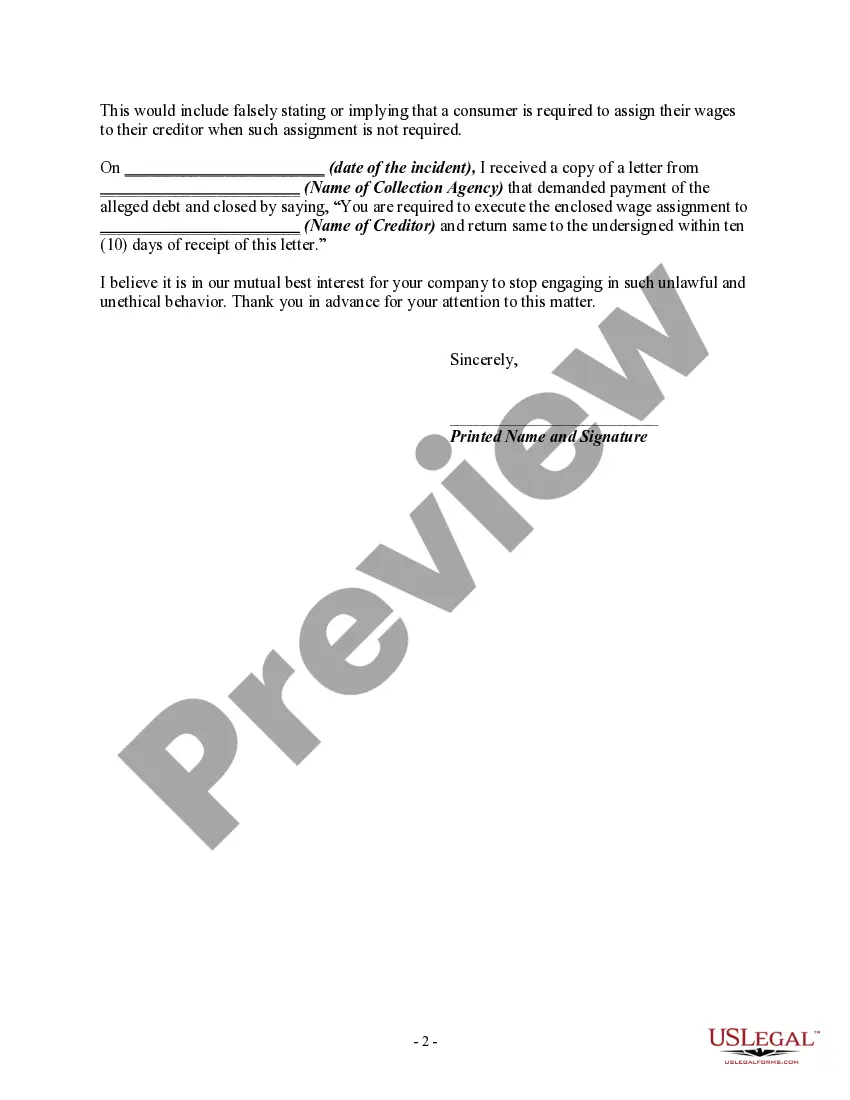
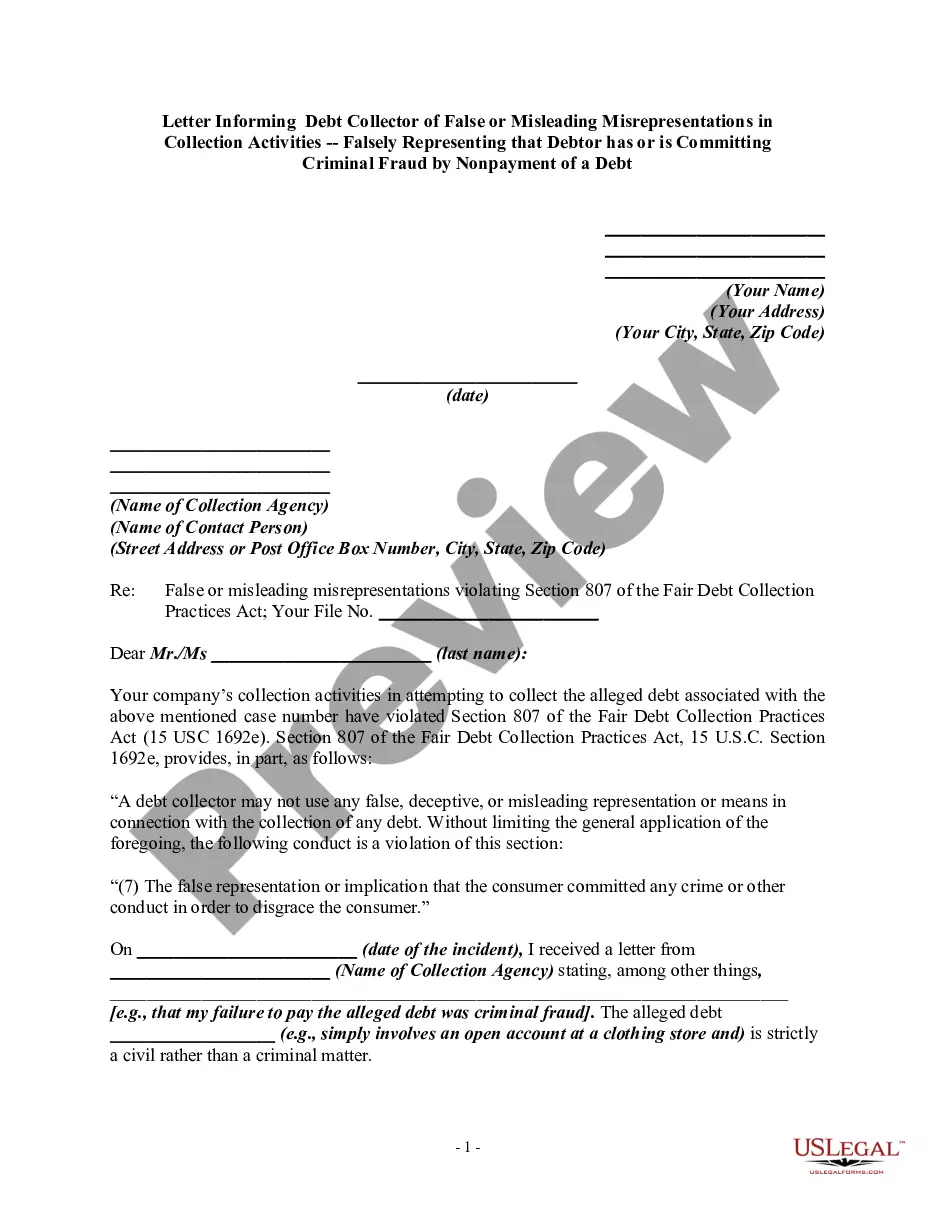
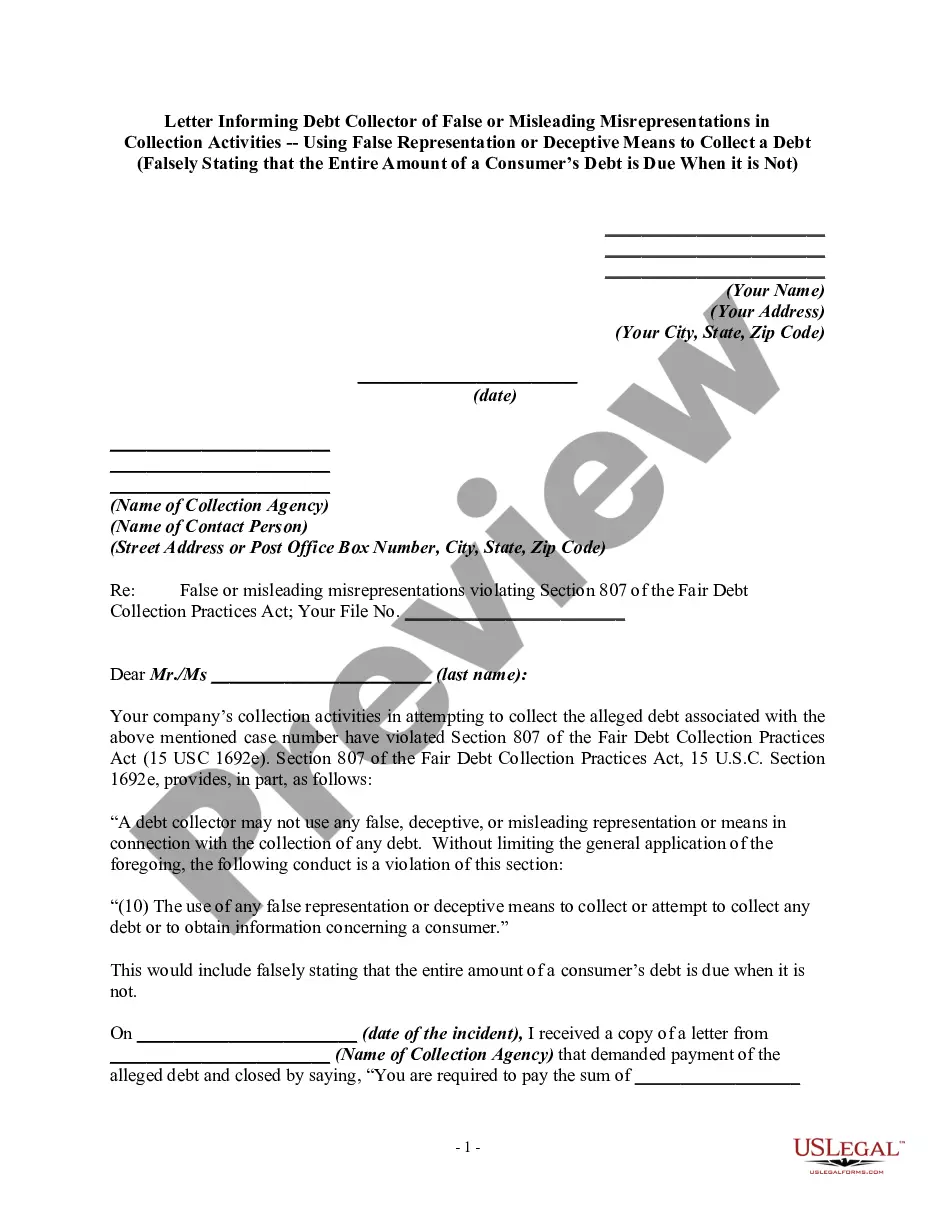
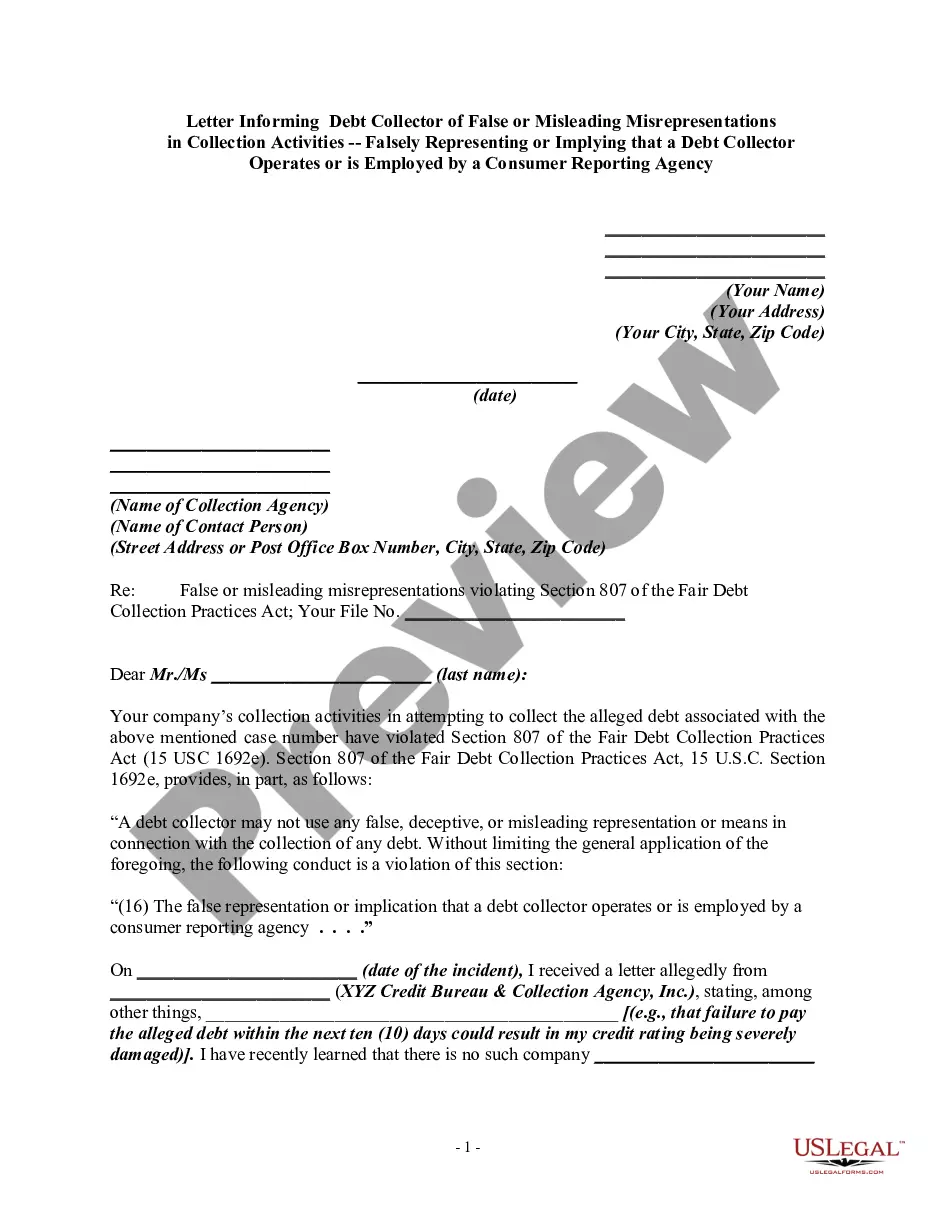



How to fill out Letter Informing Debt Collector Of False Or Misleading Misrepresentations In Collection Activities - Using False Representation Or Deceptive Means To Collect A Debt?
- Log in to your existing US Legal Forms account. Make sure your subscription is active to access and download documents.
- If you’re new, start by reviewing the available templates. Check the Preview mode and form descriptions to ensure they fit your needs.
- Use the Search tab to locate alternative documents if necessary, ensuring compliance with your local jurisdiction.
- Select the form you want and click on the Buy Now button. Choose a suitable subscription plan for access.
- Complete your purchase by entering your payment details, either through credit card or PayPal.
- Download the chosen form and save it on your device for easy access. You can find it later in the My Forms section of your profile.
By following these steps, you can leverage the extensive resources of US Legal Forms to ensure the preparation of your forensic letters is straightforward and effective.
Start your journey towards seamless document creation and take advantage of expert assistance to ensure your forms are precise and legally sound—visit US Legal Forms today!
Form popularity
FAQ
Filling out an evidence label requires clear, accurate information about the collected evidence. Ensure you include the date, time, location, case number, and description of the evidence. This information helps maintain the chain of custody and traceability of items. When using letter collection using forensics, proper labeling supports the legal validity of your findings.
Forensic DNA is collected through careful sampling techniques that minimize contamination risks. Professionals often use swabs or scraping tools to gather biological materials, such as blood or saliva. The process requires adherence to strict protocols to ensure the validity of findings. Letter collection using forensics integrates DNA evidence effectively, enhancing your case's strength.
The five procedures include securing the scene, documenting the environment, collecting the evidence, preserving it properly, and ensuring a chain of custody. These steps are crucial to maintain the quality of evidence collected, especially in letter collection using forensics. By adhering to these procedures, you uphold the credibility of your findings. Always remember to involve trained professionals for best practices.
To collect forensic evidence, follow systematic procedures and maintain the integrity of the evidence. Begin by securing the scene to prevent contamination. Use appropriate tools to gather samples, documenting each step carefully, as this ensures reliability. Letter collection using forensics becomes more effective when you follow strict protocols.
Collecting trace evidence requires careful attention to detail to ensure accuracy and reliability. Begin by wearing gloves and using clean tools to avoid contamination. Document the scene with photographs and notes, while securing the evidence in appropriate collection containers. When you use letter collection using forensics, you ensure that every piece of evidence is preserved effectively, leading to stronger legal outcomes.
Handwriting analysis plays a critical role in forensics by determining the authenticity of documents and identifying possible authors. Forensic experts examine unique characteristics, such as slant, pressure, and letter formation. By applying letter collection using forensics, professionals can effectively analyze handwriting to support legal findings.
Collecting forensic samples involves a strategic approach to identify, secure, and preserve evidence. Gather samples with clean tools, follow proper protocols, and document each step meticulously. Incorporating letter collection using forensics can significantly improve your collection strategies, leading to successful outcomes in legal investigations.
The picking method in forensics refers to a technique used to selectively collect small or delicate samples from a crime scene. This careful handling reduces the risk of contamination or damage. Utilizing letter collection using forensics can enhance the effectiveness of the picking method, ensuring the integrity of collected evidence remains intact.
Collecting trace evidence requires careful techniques to avoid loss. Methods include using adhesive tape, tweezers, and vacuum collection tools. By employing letter collection using forensics, professionals can increase the likelihood of capturing vital trace evidence that supports investigations.
The five procedures for collecting evidence include prevention of contamination, documentation of the scene, careful collection using appropriate tools, proper labeling, and secure storage. Following these steps ensures that evidence remains viable for examination. Leveraging letter collection using forensics can streamline these processes for legal purposes.