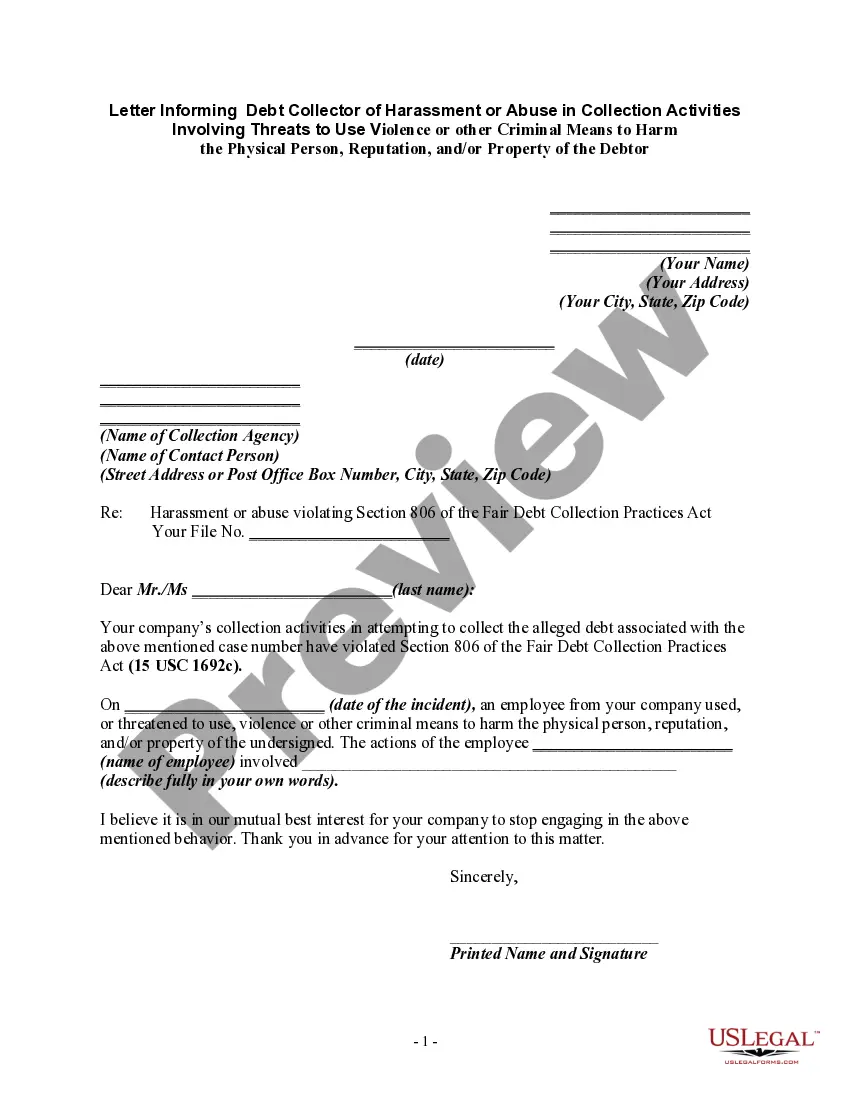
Harassment Criminal Means Without
Description
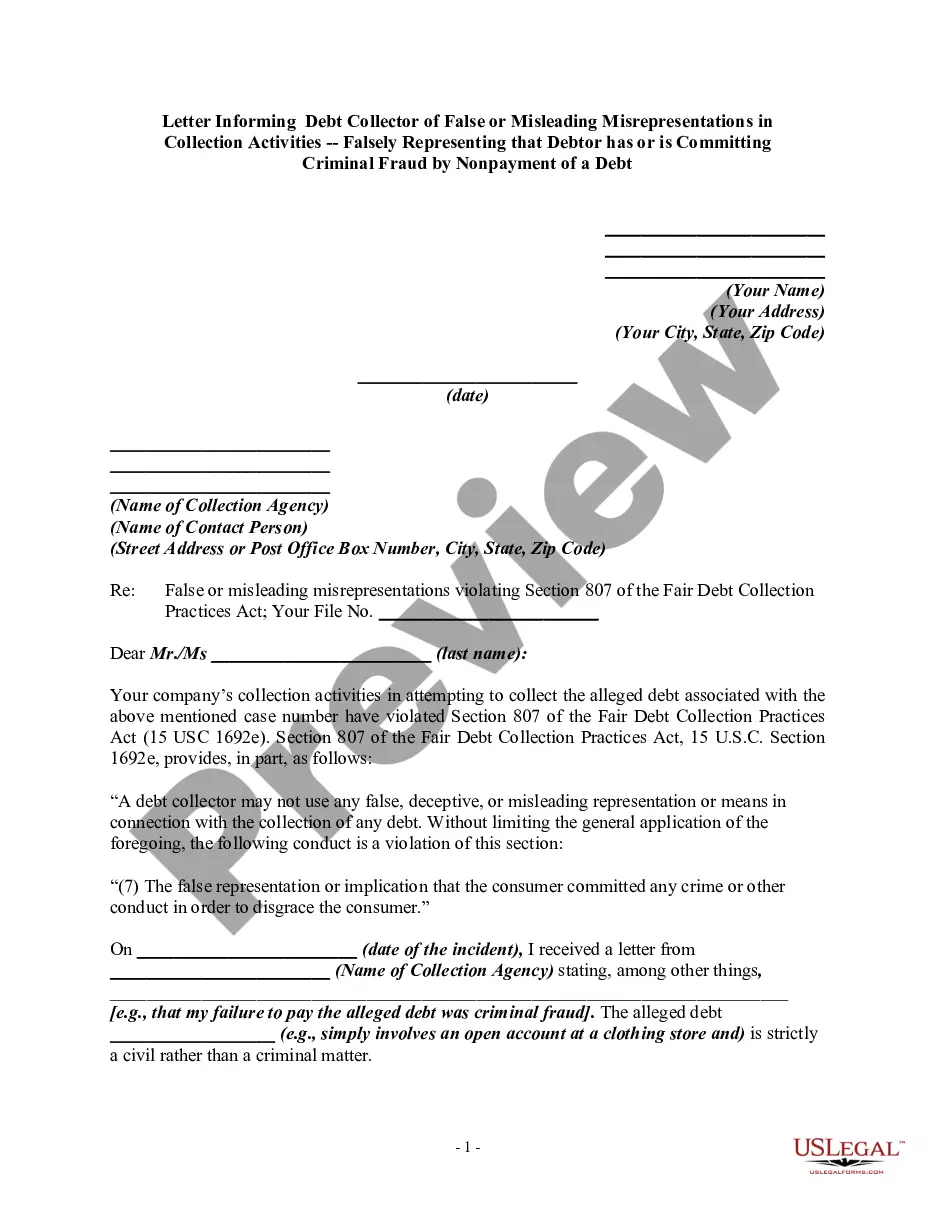
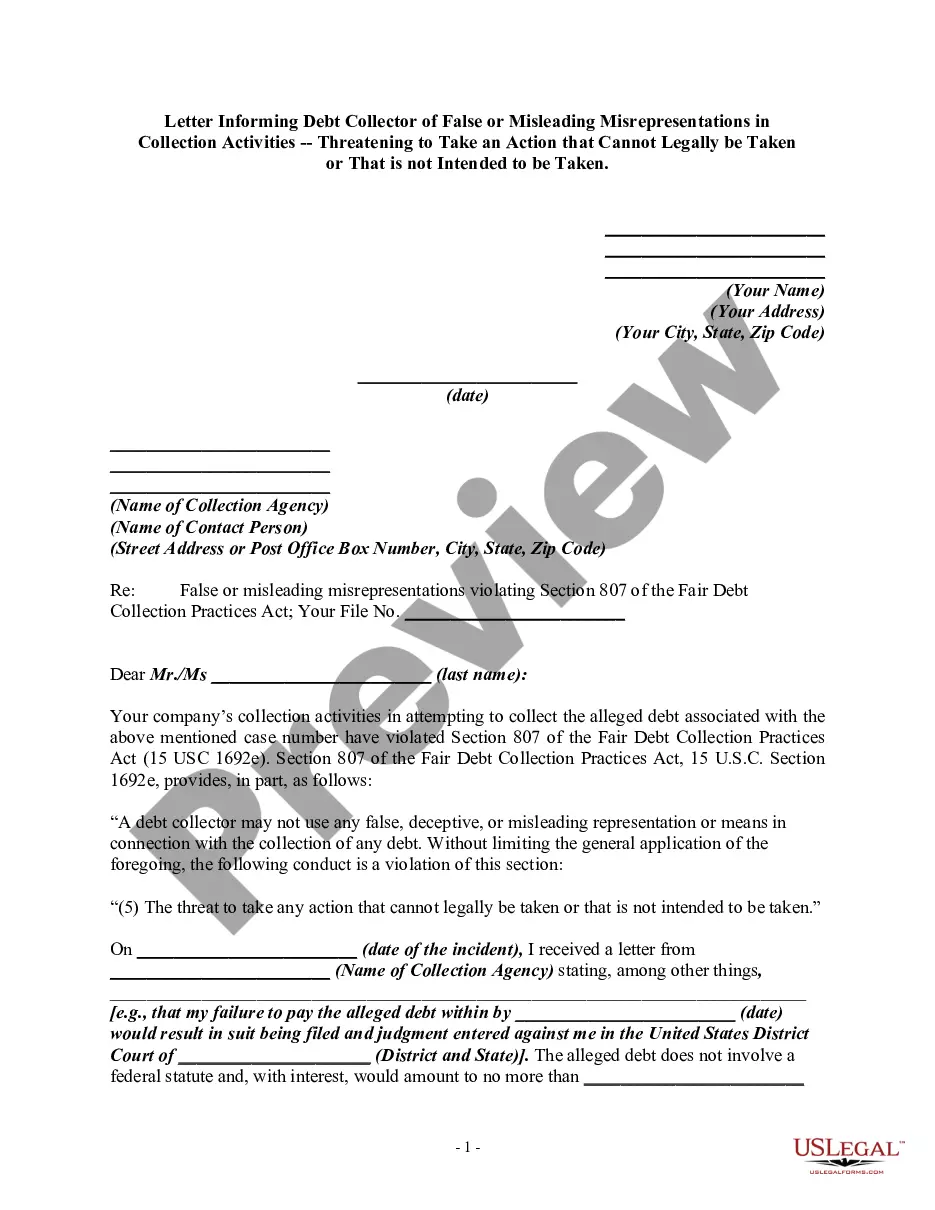
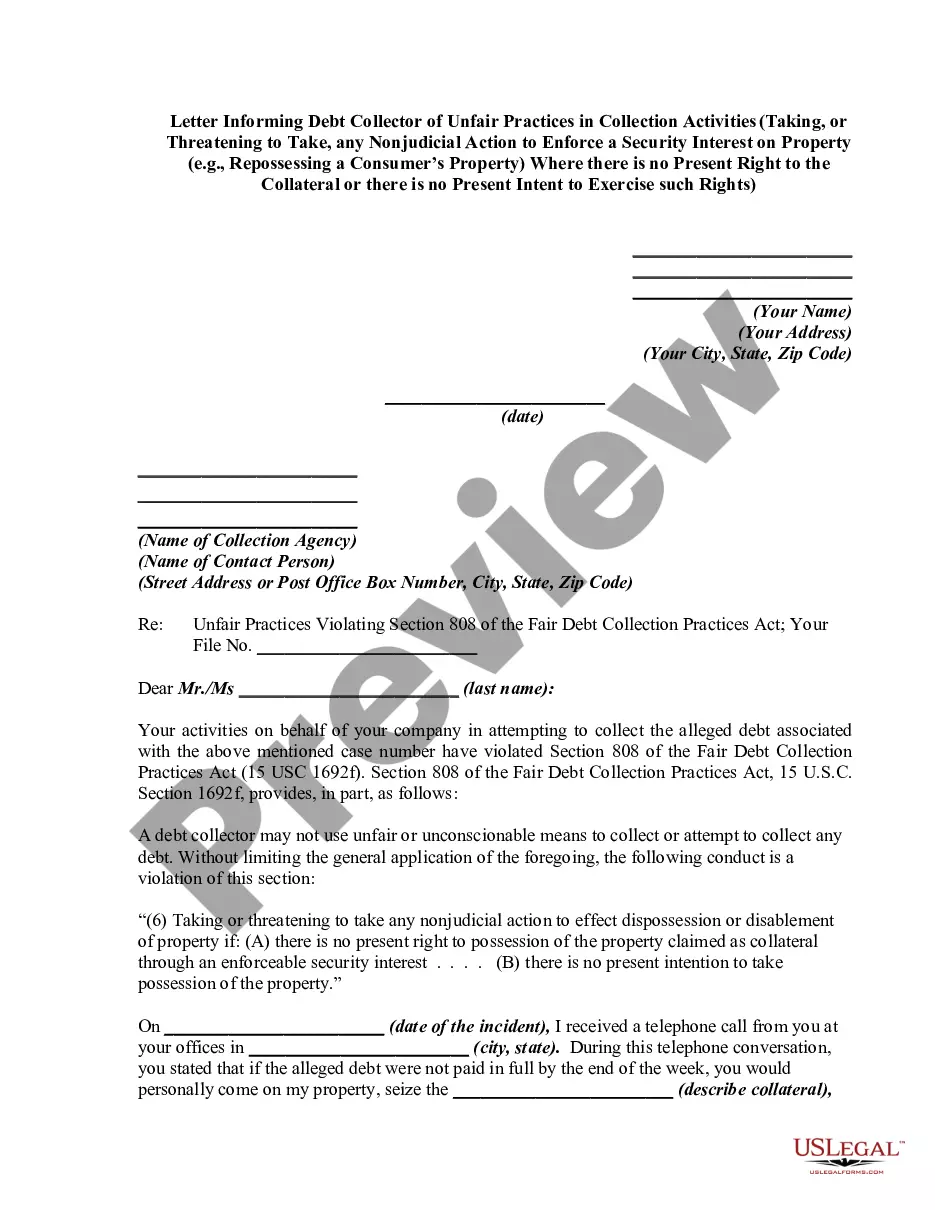
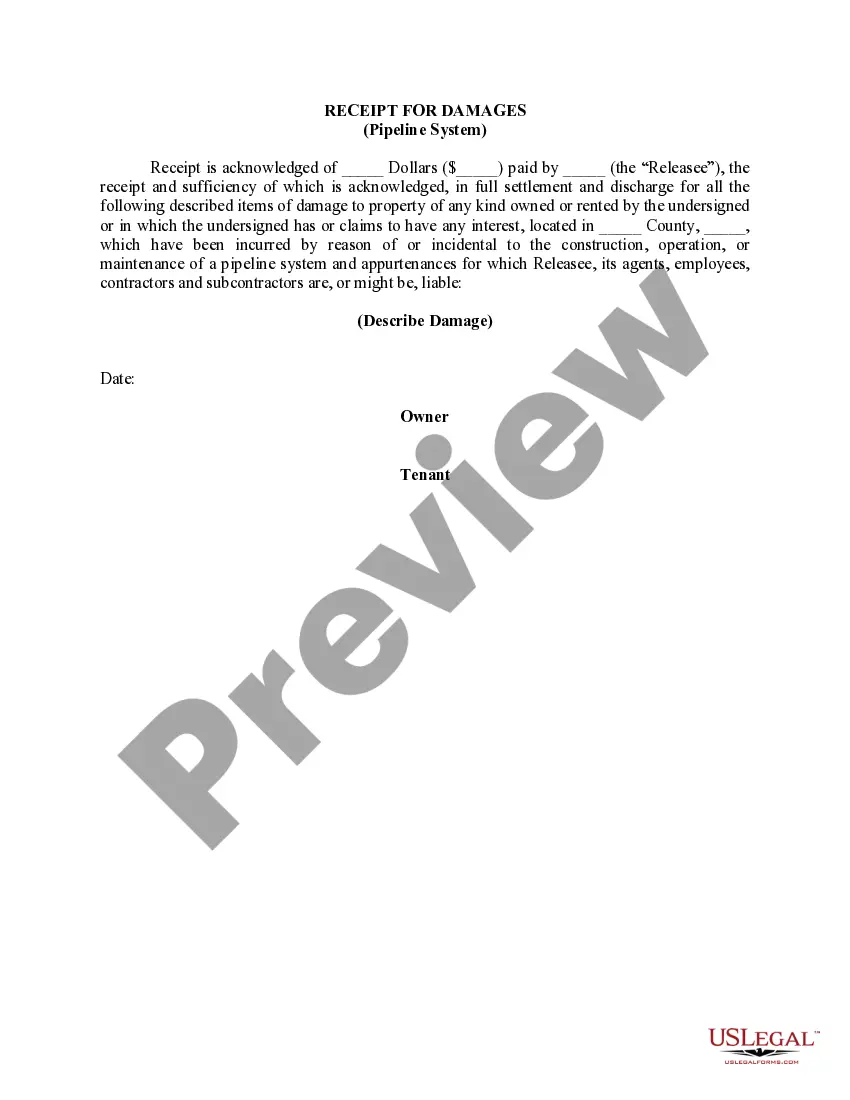
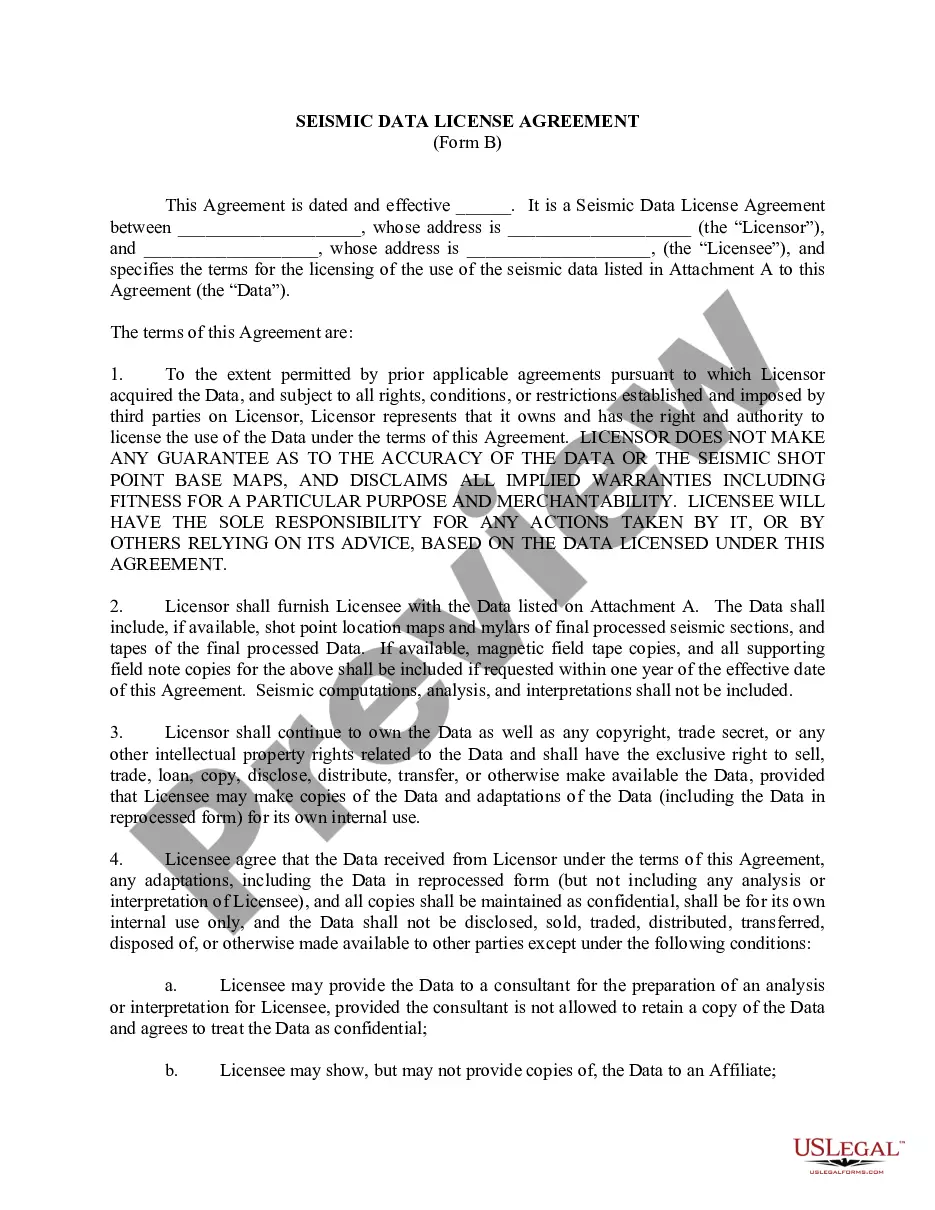
How to fill out Letter Informing Debt Collector Of Harassment Or Abuse In Collection Activities Involving Threats To Use Violence Or Other Criminal Means To Harm The Physical Person, Reputation, And/or Property Of The Debtor?
Legal administration can be perplexing, even for the most proficient professionals.
When you are seeking a Harassment Criminal Means Without and lack the time to search for the appropriate and current version, the procedures can be overwhelming.
US Legal Forms addresses any requirements you may have, from personal to corporate paperwork, all in a single location.
Utilize cutting-edge tools to complete and oversee your Harassment Criminal Means Without.
Here are the actions to take after obtaining the form you desire: Validate that it is the correct form by previewing it and reviewing its description. Ensure that the template is sanctioned in your state or county. Click Buy Now when you are ready. Choose a subscription option. Select the file format you prefer, and Download, complete, eSign, print, and send your documents. Take advantage of the US Legal Forms online directory, supported by 25 years of expertise and reliability. Streamline your routine document management into a seamless and user-friendly process today.
- Access a database of articles, guides, handbooks, and materials pertinent to your circumstances and requirements.
- Save time and effort searching for the documents you need, and leverage US Legal Forms’ advanced search and Review tool to find Harassment Criminal Means Without and download it.
- If you possess a subscription, Log In to your US Legal Forms account, search for the document, and download it.
- Check out the My documents tab to view the documents you previously saved and manage your folders as you prefer.
- If it’s your first time with US Legal Forms, create an account and gain unlimited access to all platform benefits.
- A robust online form directory could be a transformative solution for anyone wishing to manage these issues effectively.
- US Legal Forms is a leading provider in online legal documents, with over 85,000 state-specific legal forms accessible at any time.
- With US Legal Forms, you can access tailored legal and business documents specific to your state or county.
Form popularity
FAQ
If someone is abusing, insulting, or otherwise harming you on a regular basis, it's called harassment. Cruel and usually really annoying, harassment is also illegal in some cases. Harassment is a word that describes any kind of ongoing torment. At school, harassment is often known as bullying.
What is Not workplace harassment? Legitimate and reasonable management actions such as actions taken to transfer demote, and discipline an employee provided these actions are conducted in a reasonable way are not considered workplace harassment.
Ing to Texas Penal Code, harassment is any ?act meant to annoy, torment, embarrass, abuse, alarm, or harass another person?. This means that criminal harassment is seen as an offense in which the perpetrator's behavior is not only seen as bothersome and annoying, but also causes alarm or fear for the victim.
Here are three types of workplace harassment, examples, and solutions to help you educate your employees for preventing workplace harassment. Verbal/Written. Physical. Visual.
To charge you with harassment or stalking, the police have to show that you were the person making the calls or sending the messages, and establish that you acted with criminal intent. The most common forms of evidence they use are phone records, copies of voice mail messages, e-mails and Internet addresses.