Collections Harassment Laws
Description
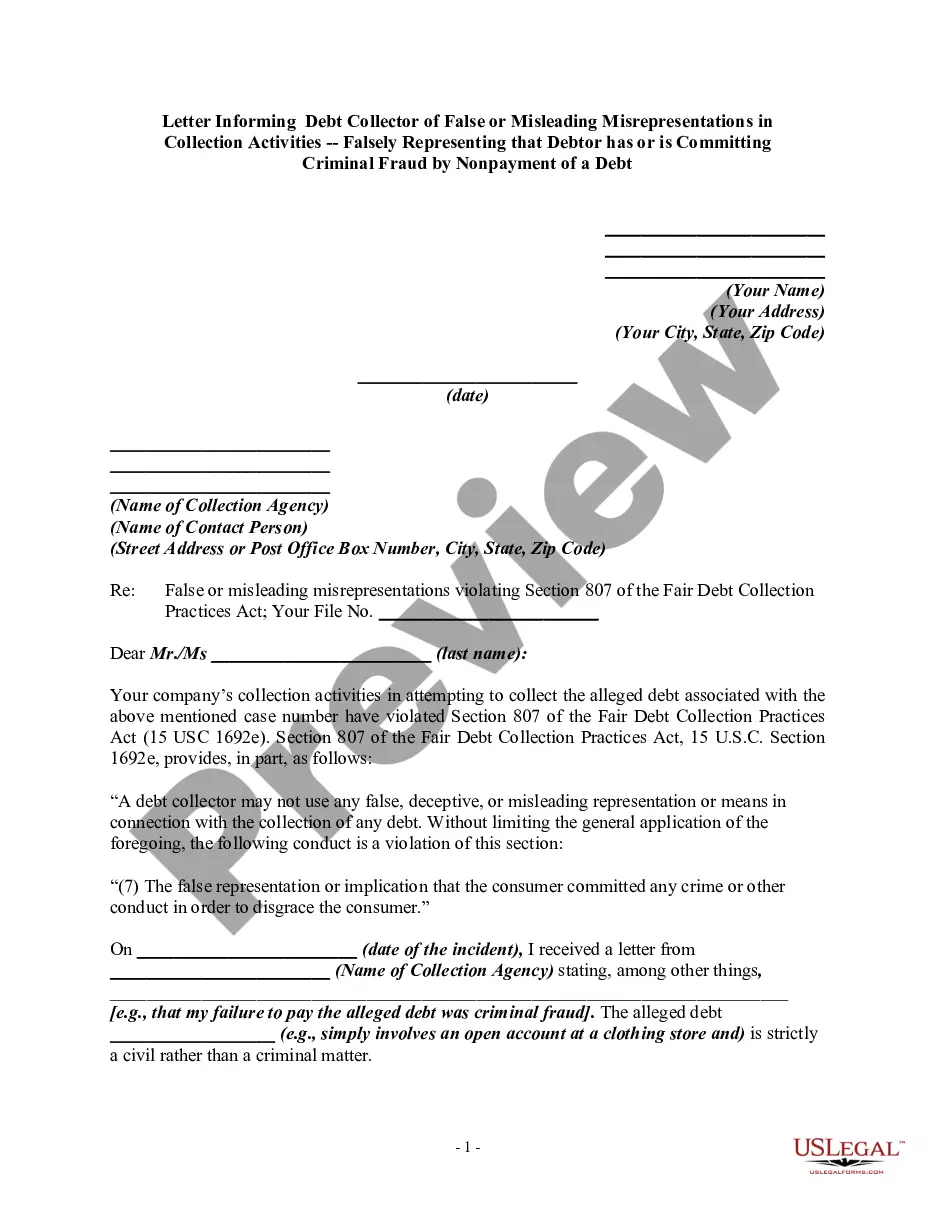
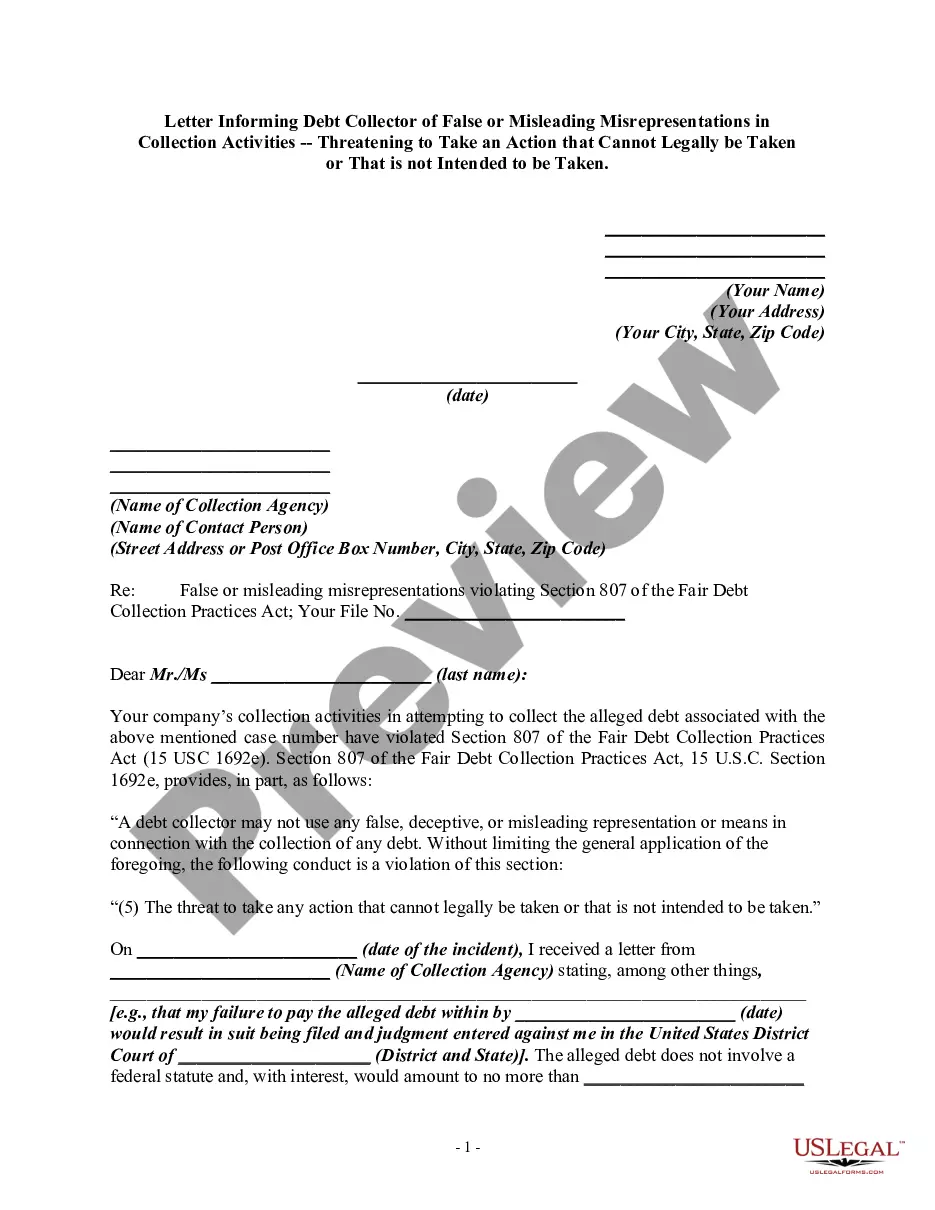
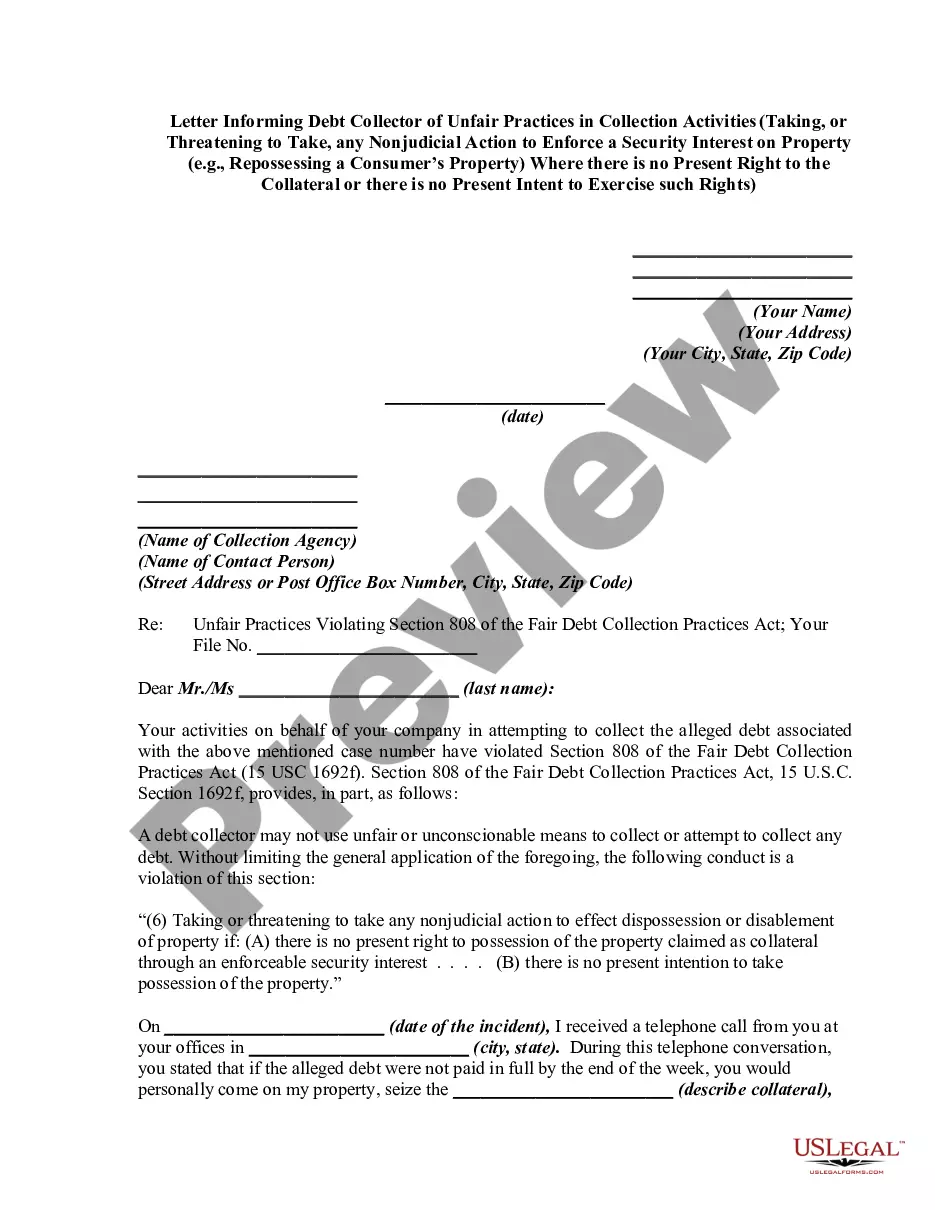





How to fill out Letter Informing Debt Collector Of Harassment Or Abuse In Collection Activities Involving Threats To Use Violence Or Other Criminal Means To Harm The Physical Person, Reputation, And/or Property Of The Debtor?
Obtaining legal document examples that adhere to federal and local regulations is crucial, and the web provides numerous alternatives to choose from.
However, why spend time searching for the accurately crafted Collections Harassment Laws example online when the US Legal Forms virtual library already compiles such templates in one location.
US Legal Forms is the largest online legal repository with more than 85,000 editable templates created by lawyers for any professional and personal situation.
Review the template using the Preview feature or through the text outline to confirm it suits your requirements.
- They are easy to navigate with all documents categorized by state and intended use.
- Our experts keep up with legal updates, ensuring your documents are current and compliant when obtaining a Collections Harassment Laws from our site.
- Acquiring a Collections Harassment Laws is straightforward and fast for both existing and new users.
- If you already possess an account with an active subscription, Log In and download the document example you require in the appropriate format.
- If you are new to our platform, follow these steps.
Form popularity
FAQ
There are laws to prohibit debt collectors from placing repeated or continuous telephone calls to annoy, abuse, or harass you or others who share your phone number. They're also prohibited from communicating with you at times or places that are inconvenient for you.
Ing to the Federal Trade Commission, a debt collector may almost certainly call you more than once, but six calls per day is probably too many. Between these extremes, it depends on the facts of your particular case.
Debt collectors cannot harass or abuse you. They cannot swear, threaten to illegally harm you or your property, threaten you with illegal actions, or falsely threaten you with actions they do not intend to take. They also cannot make repeated calls over a short period to annoy or harass you.
This is where we get our "7-in-7" concept. You can attempt to contact a consumer about 1 debt 7 times in 7 days. And it's the "1 debt" that's key here. Phone numbers do not matter; how many debts your agency has for the consumer does.
However, the Federal Trade Commission recently clarified the rules regarding collections, now clarifying that collectors cannot call you more than seven times within a seven-day period or within seven days of speaking to you about a debt.