Veterinarian Malpractice For Human Rights
Description
Get your form ready online
Our built-in tools help you complete, sign, share, and store your documents in one place.
Make edits, fill in missing information, and update formatting in US Legal Forms—just like you would in MS Word.
Download a copy, print it, send it by email, or mail it via USPS—whatever works best for your next step.
Sign and collect signatures with our SignNow integration. Send to multiple recipients, set reminders, and more. Go Premium to unlock E-Sign.
If this form requires notarization, complete it online through a secure video call—no need to meet a notary in person or wait for an appointment.
We protect your documents and personal data by following strict security and privacy standards.

Make edits, fill in missing information, and update formatting in US Legal Forms—just like you would in MS Word.

Download a copy, print it, send it by email, or mail it via USPS—whatever works best for your next step.

Sign and collect signatures with our SignNow integration. Send to multiple recipients, set reminders, and more. Go Premium to unlock E-Sign.

If this form requires notarization, complete it online through a secure video call—no need to meet a notary in person or wait for an appointment.

We protect your documents and personal data by following strict security and privacy standards.
Looking for another form?

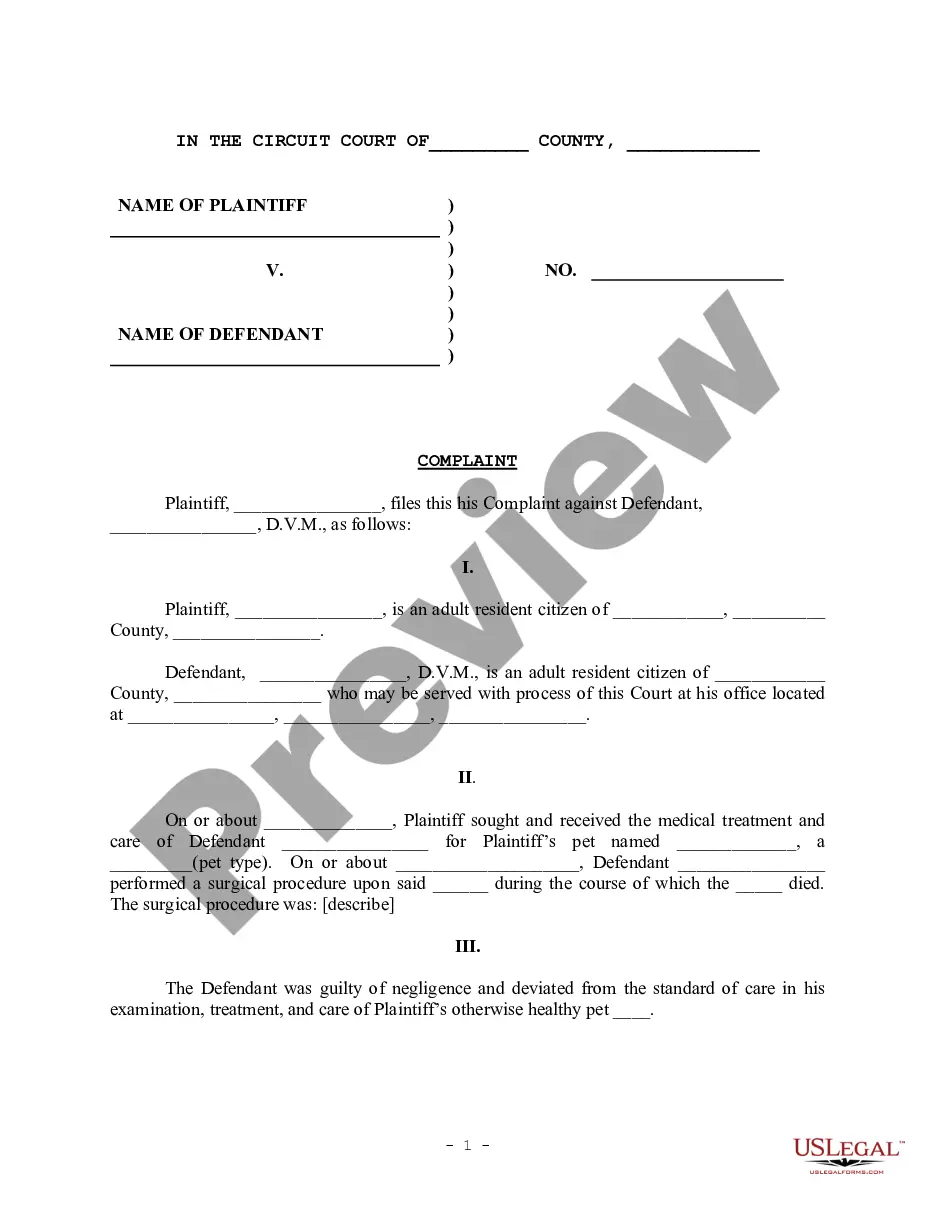
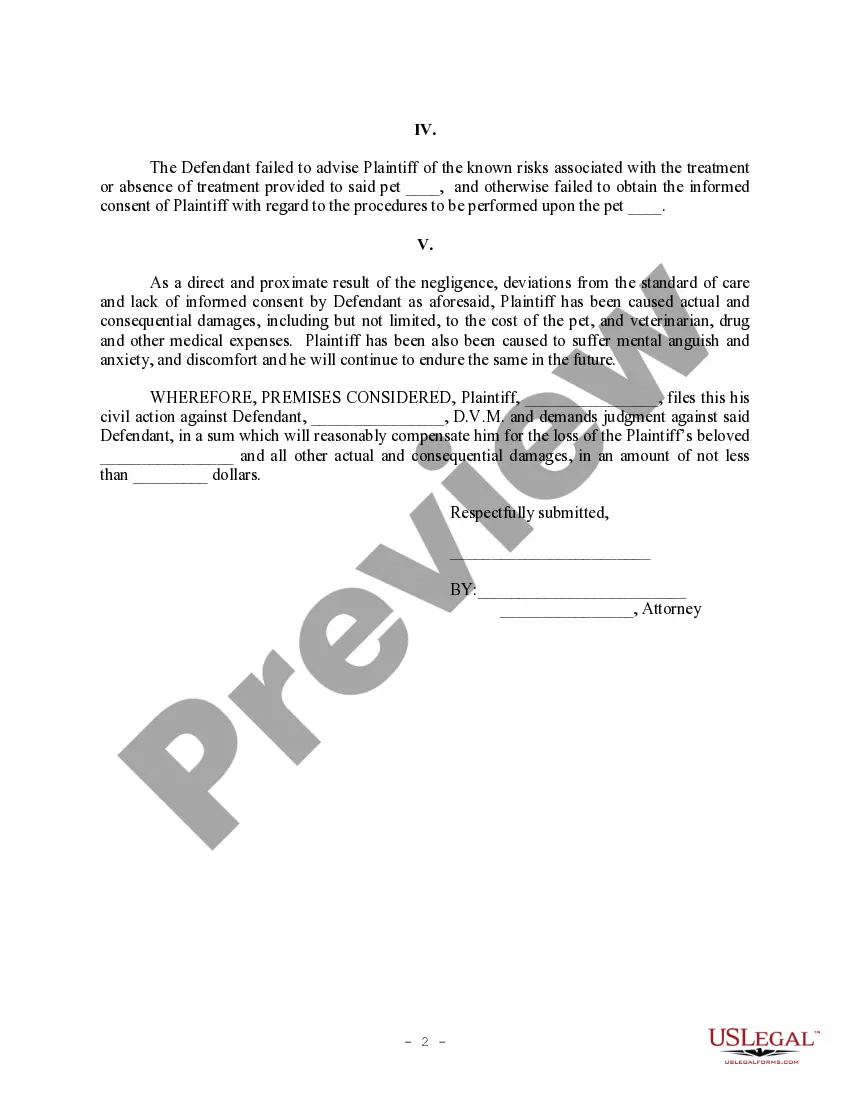
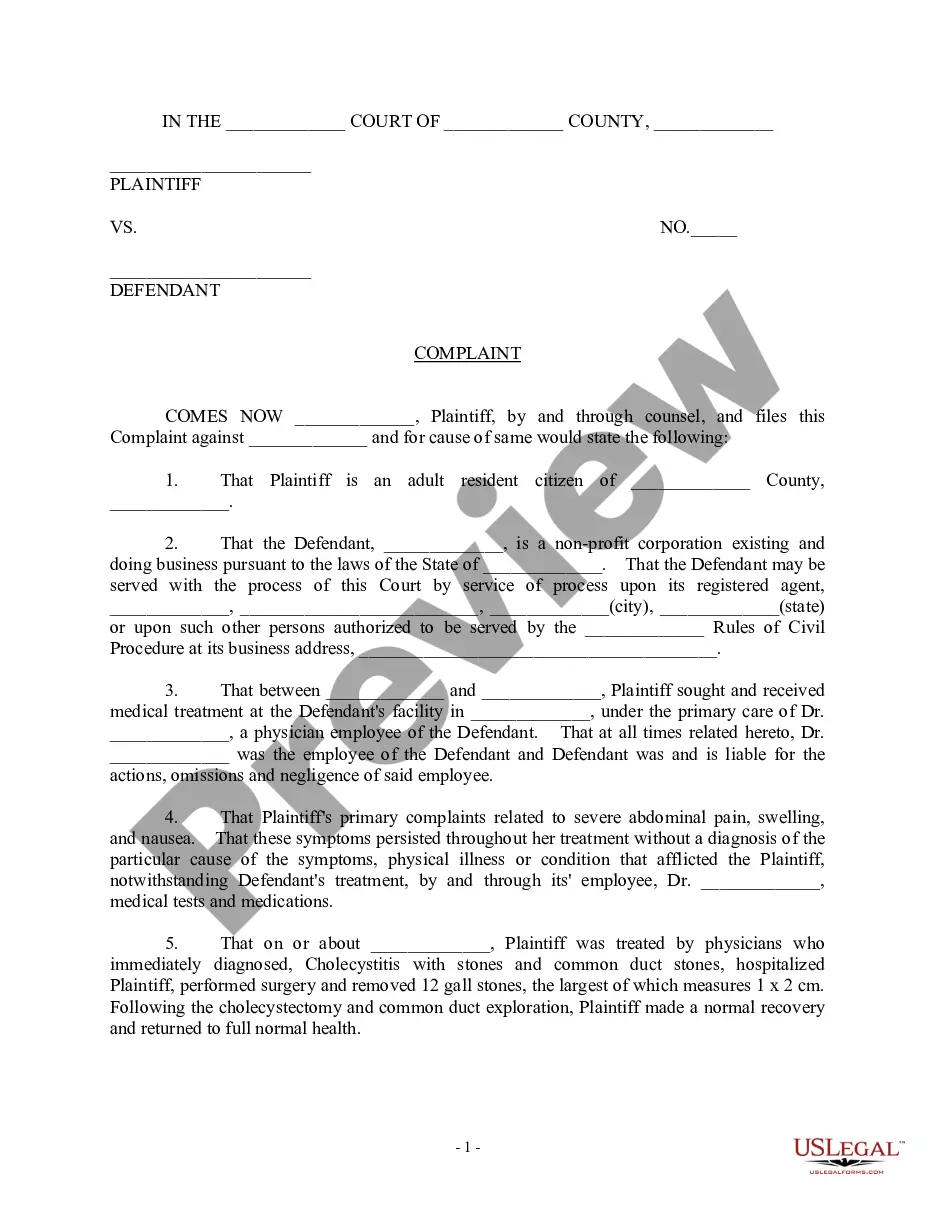
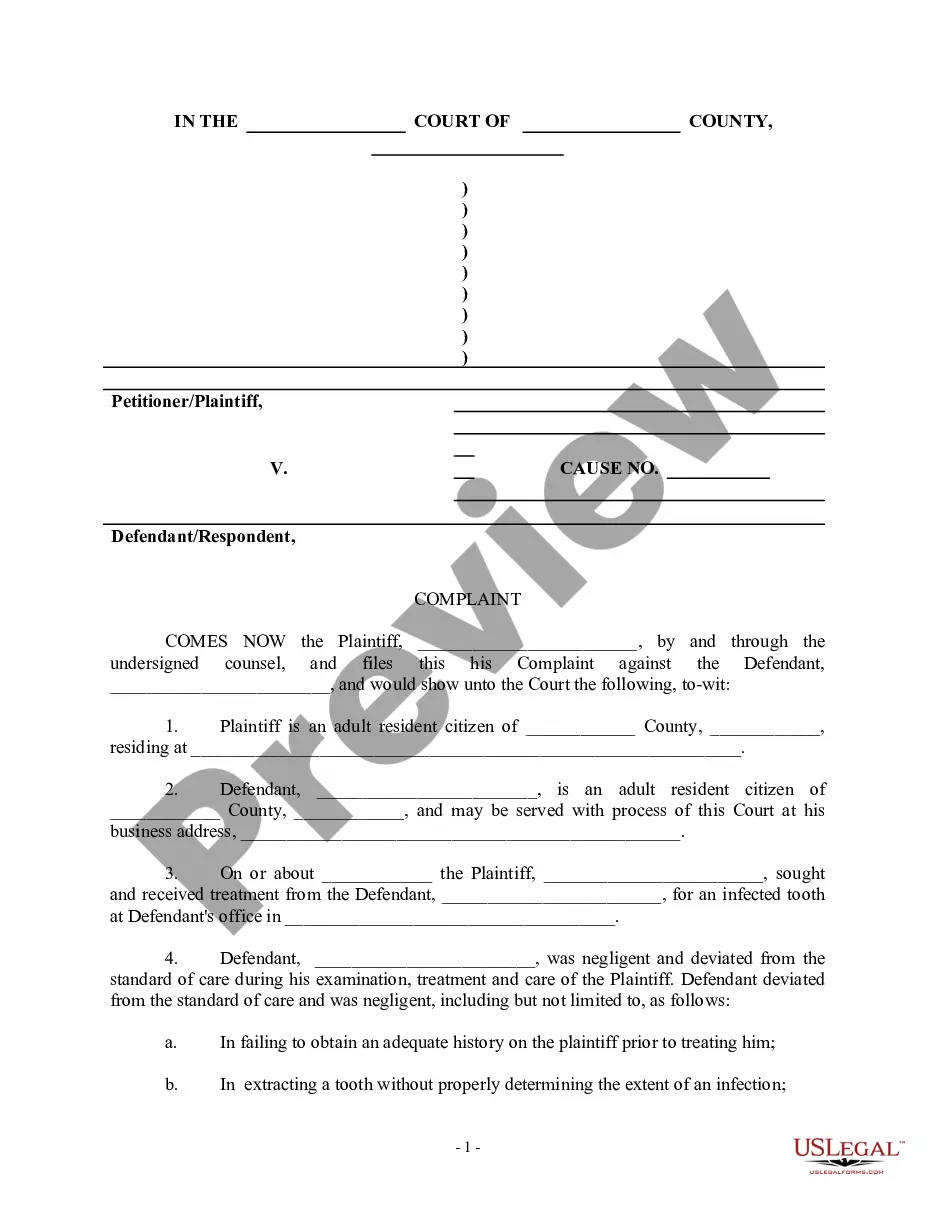
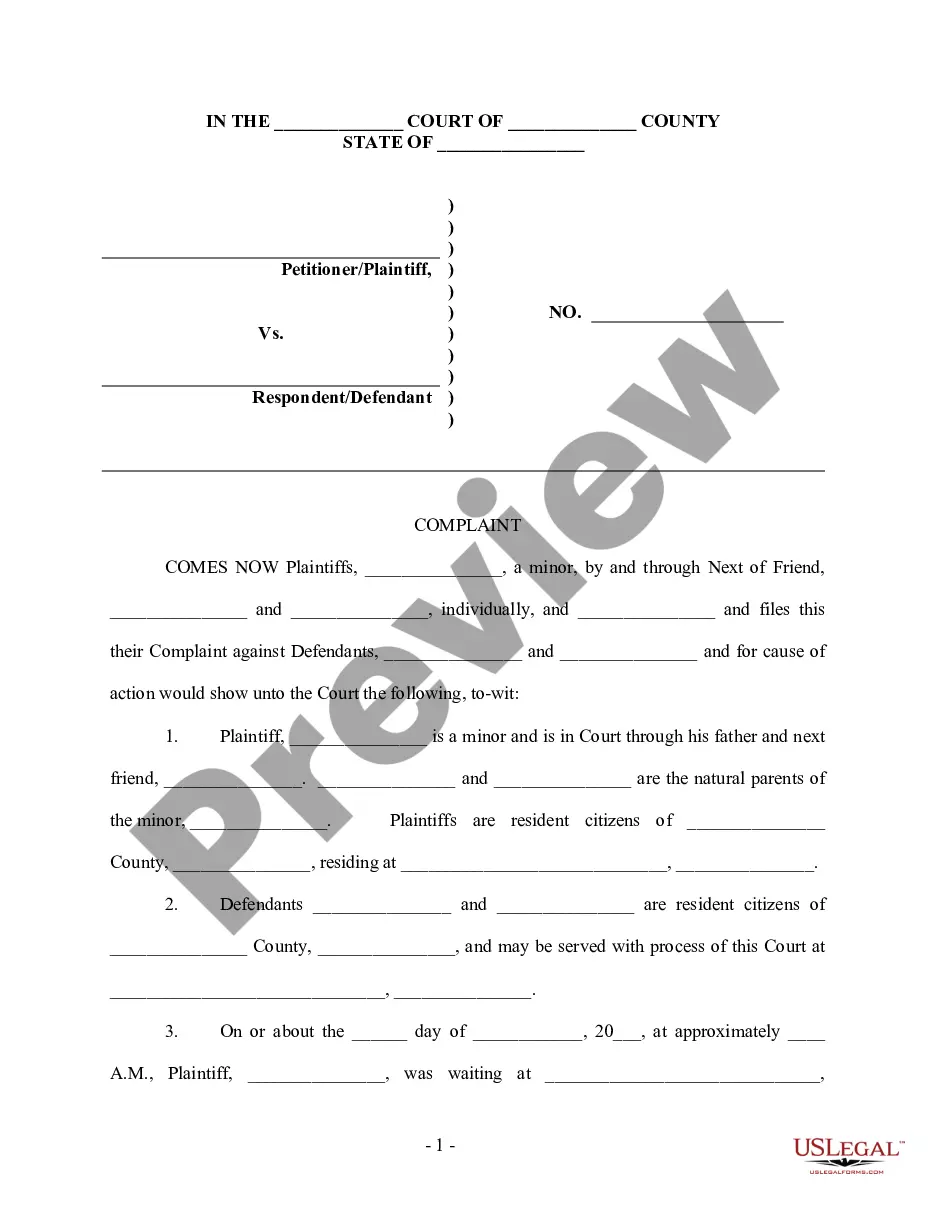
How to fill out Complaint Regarding Veterinarian Malpractice For Surgical Procedure?
- Log in to your existing US Legal Forms account and ensure your subscription is active. If you need to renew, select the appropriate payment plan.
- Browse the extensive library of templates. Use the Preview mode to assess the chosen form to ensure it aligns with your specific jurisdiction's requirements.
- If necessary, utilize the Search feature to find a different template that better meets your legal needs.
- Once you've identified the correct document, click on the 'Buy Now' button and select a subscription plan that suits your requirements.
- Complete your purchase by entering your payment information, either via credit card or PayPal account.
- Finally, download the form to your device and access it anytime through the 'My Forms' section of your profile.
Utilizing US Legal Forms allows you to efficiently navigate the document creation process with ease and precision. With over 85,000 legal forms and templates at your fingertips, you can ensure that your documents are not only accessible but also legally sound.
Take charge of your legal documentation today. Start your journey with US Legal Forms to ensure you're well-prepared to handle veterinarian malpractice for human rights.
Form popularity
FAQ
Veterinarians encounter various ethical dilemmas, including the decision to euthanize animals and the allocation of limited resources. They must navigate complex situations where human emotions and animal needs intersect, often leading to tough choices. The potential for veterinarian malpractice for human rights remains a significant concern in these contexts, as veterinarians strive to uphold their ethical responsibilities while meeting the needs of their clients. Being informed about these dilemmas can help clients make better decisions regarding their pets.
Veterinary malpractice occurs when a veterinarian fails to provide a standard level of care, resulting in harm to the animal or the owner. Malpractice can involve negligence, a lack of proper consent, or misdiagnosis. It is vital for pet owners to understand their rights and the responsibilities of veterinary professionals to recognize when they might face situations involving veterinarian malpractice for human rights. Knowing these definitions can empower owners to advocate for their pets effectively.
Unethical practices in the veterinary industry can include situations where veterinarians provide unnecessary treatments or fail to disclose the risks associated with certain procedures. For instance, performing surgeries that are not justified by a patient’s condition can be detrimental to both the animal and the owner. Such actions not only compromise animal welfare but may also infringe on human rights, leading to cases of veterinarian malpractice for human rights. Awareness of these issues is crucial for pet owners.
Veterinary practice often raises important ethical issues, particularly concerning animal welfare and the responsibilities of veterinarians. For example, veterinarians must balance the needs of the animals with the desires of their owners, which can lead to challenging decisions. Additionally, the issue of consent, particularly when human rights intersect with animal care, plays a crucial role in these ethical discussions. Addressing these concerns is essential to prevent veterinarian malpractice for human rights.
Veterinarians do not directly fall under HIPAA regulations as human healthcare providers do; however, they must still protect client confidentiality. The idea of veterinarian malpractice for human rights emphasizes the ethical obligation veterinarians have toward their clients. It’s essential for vets to ensure that any personal information about pet owners and their animals remains secure and private. If you have concerns, consider discussing them directly with your veterinary practice.
Yes, you can sue a vet for wrongful death of a pet under the concept of veterinarian malpractice for human rights. This process typically involves proving that the veterinarian's actions deviated from accepted standards of care and directly caused the death of your pet. It's important to gather relevant evidence and documentation to support your claim. Consulting an attorney who specializes in this area can help you navigate the legal process effectively.
Lawsuits against veterinarians often revolve around issues like negligence, breach of duty, or failure to provide adequate care. A case claiming veterinarian malpractice for human rights would typically involve proving that a veterinarian’s actions resulted in harm to your pet or did not meet the accepted standards of care. Successful lawsuits may require clear evidence and strong legal representation. By using resources from platforms like USLegalForms, you can prepare your case effectively and navigate the complexities of veterinary law.
Unethical veterinary practice refers to actions by veterinarians that breach professional standards or fail to act in your pet's best interests. This may include misdiagnosing conditions, overcharging for services, or failing to obtain proper consent for treatments. Such behaviors can fall under the umbrella of veterinarian malpractice for human rights, as they can lead to harm for both pets and their owners. If you suspect your veterinarian is acting unethically, consulting with legal experts can help you take appropriate action.
Yes, you can sue your veterinarian if you believe they have committed malpractice. When it comes to veterinarian malpractice for human rights, your case would revolve around proving negligence or misconduct that harmed your pet and possibly violated ethical standards. To pursue legal action, you may need to gather evidence, such as medical records and witness statements. Platforms like USLegalForms can help you understand the legal process and provide the necessary documents to file a case.
Deciding whether to sue for malpractice depends on the circumstances surrounding your case and the potential for a successful outcome. Weighing the emotional and financial costs against the likelihood of a favorable resolution is essential. Consulting with professionals who understand veterinarian malpractice for human rights can provide clarity on the best course of action.