Veterinarian Malpractice For Dogs And Cats
Description
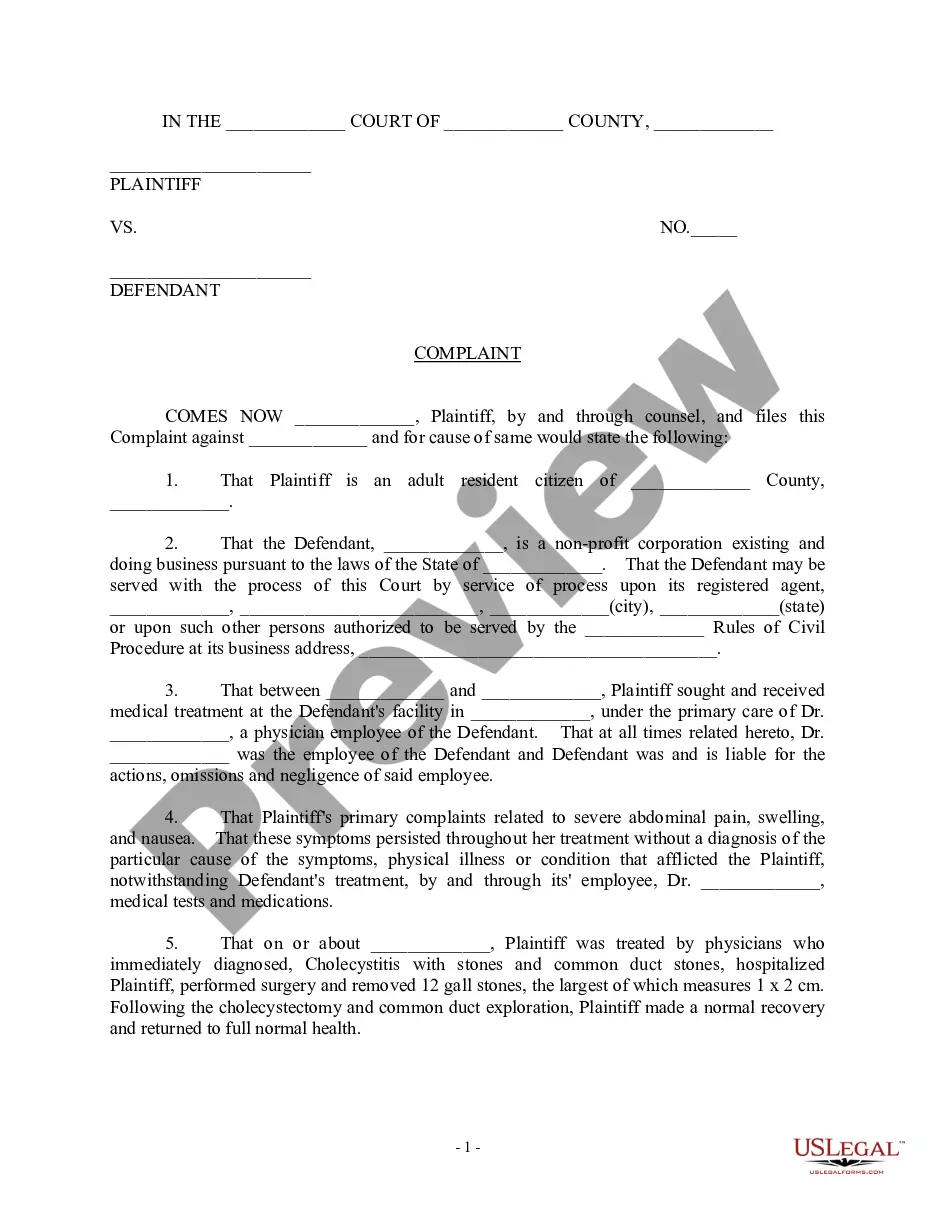
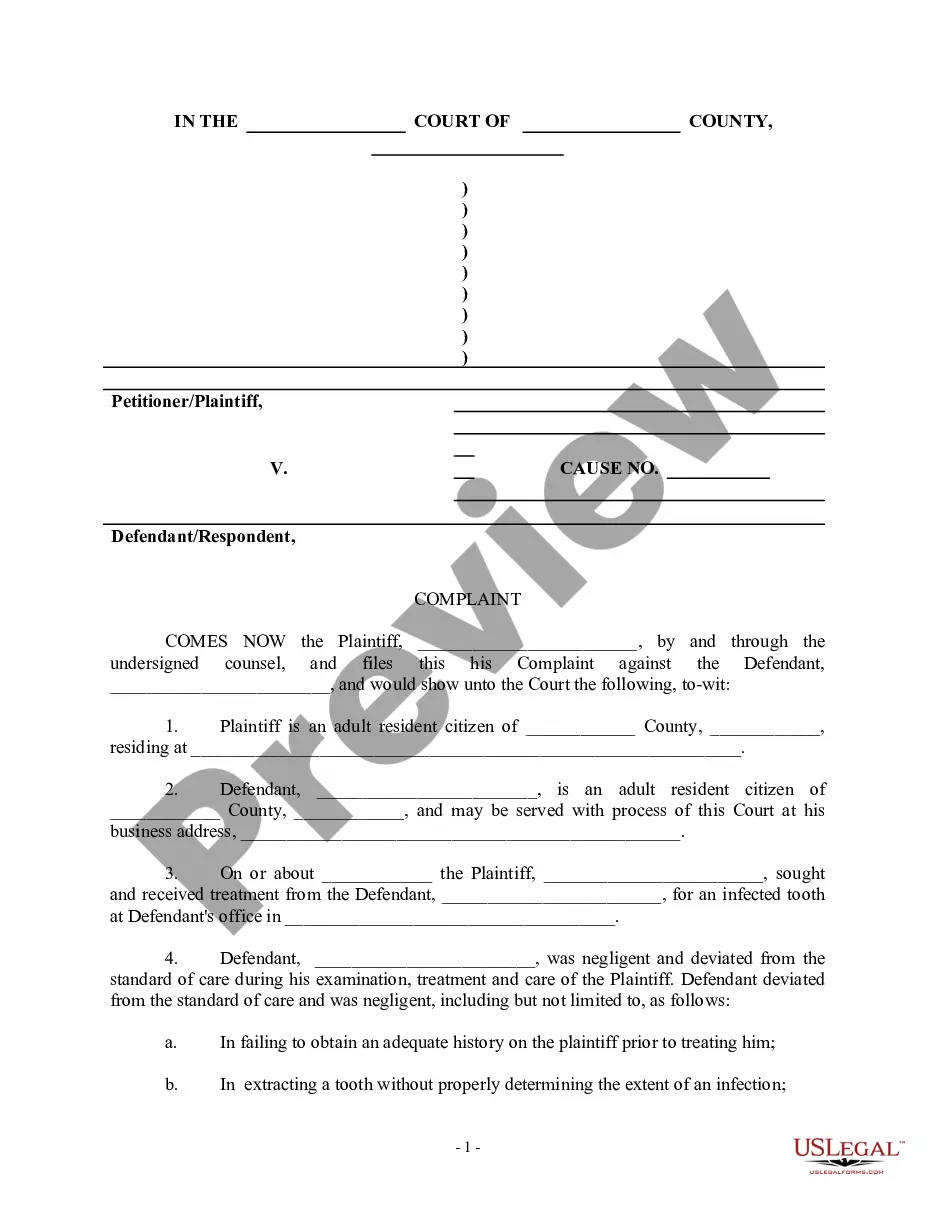
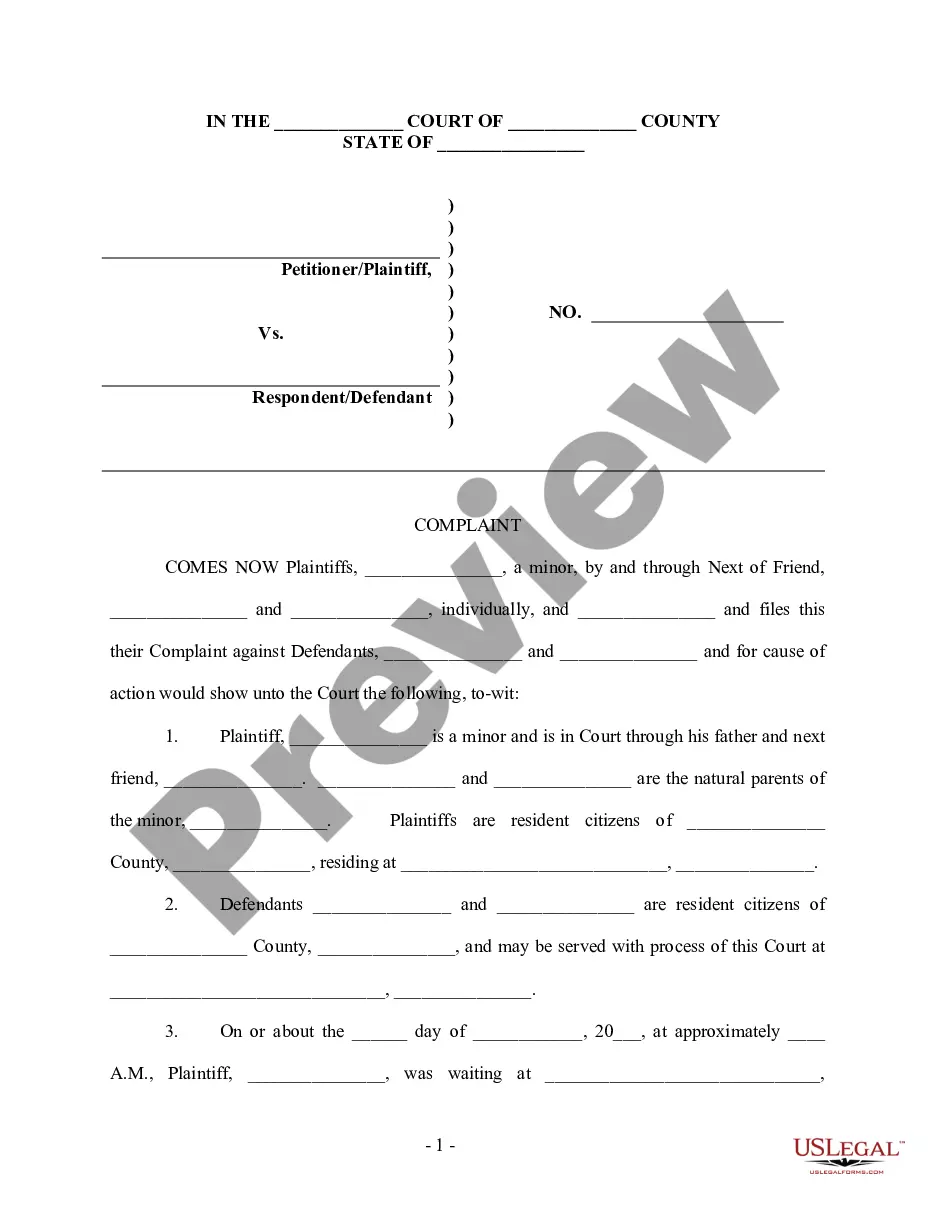
Get your form ready online
Our built-in tools help you complete, sign, share, and store your documents in one place.
Make edits, fill in missing information, and update formatting in US Legal Forms—just like you would in MS Word.
Download a copy, print it, send it by email, or mail it via USPS—whatever works best for your next step.
Sign and collect signatures with our SignNow integration. Send to multiple recipients, set reminders, and more. Go Premium to unlock E-Sign.
If this form requires notarization, complete it online through a secure video call—no need to meet a notary in person or wait for an appointment.
We protect your documents and personal data by following strict security and privacy standards.

Make edits, fill in missing information, and update formatting in US Legal Forms—just like you would in MS Word.

Download a copy, print it, send it by email, or mail it via USPS—whatever works best for your next step.

Sign and collect signatures with our SignNow integration. Send to multiple recipients, set reminders, and more. Go Premium to unlock E-Sign.

If this form requires notarization, complete it online through a secure video call—no need to meet a notary in person or wait for an appointment.

We protect your documents and personal data by following strict security and privacy standards.
Looking for another form?

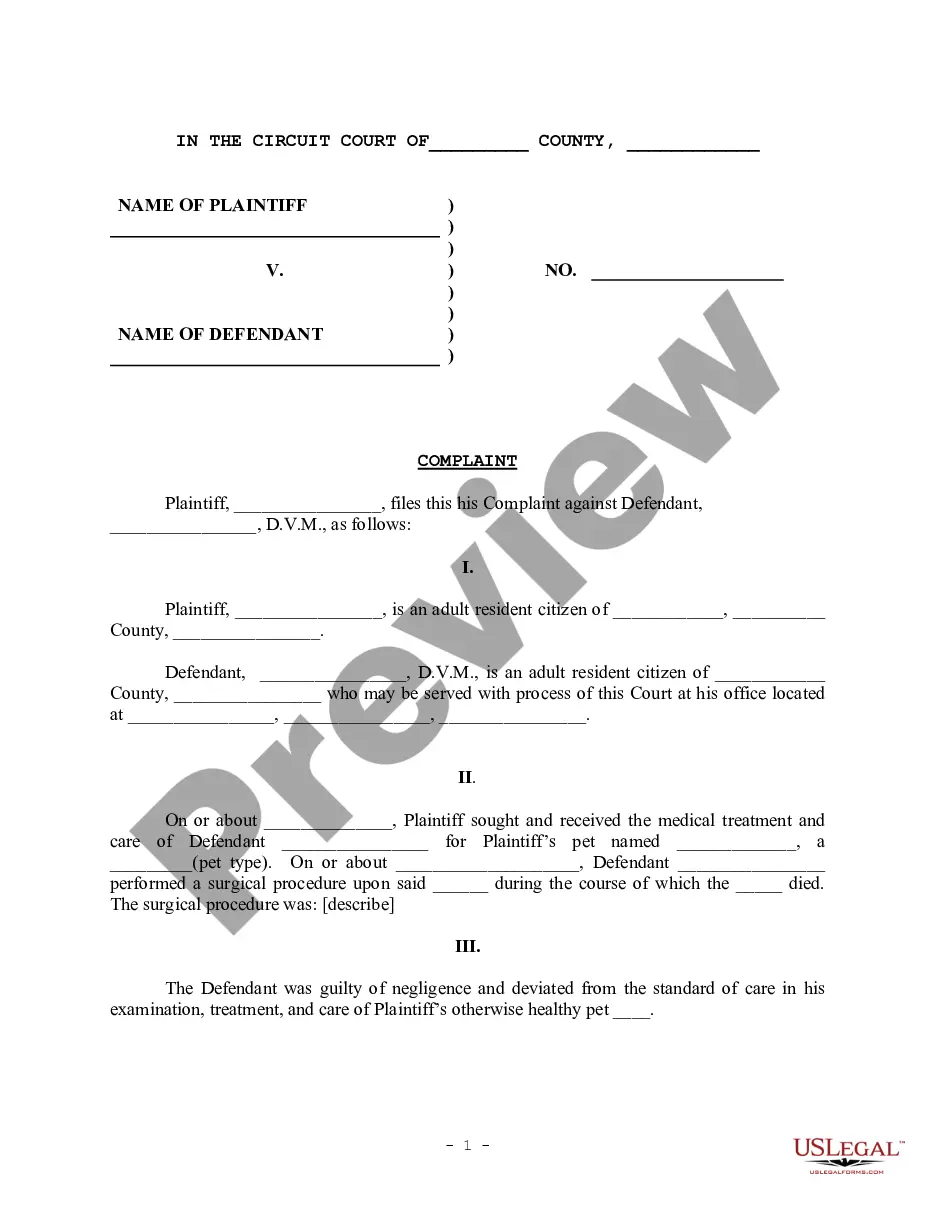
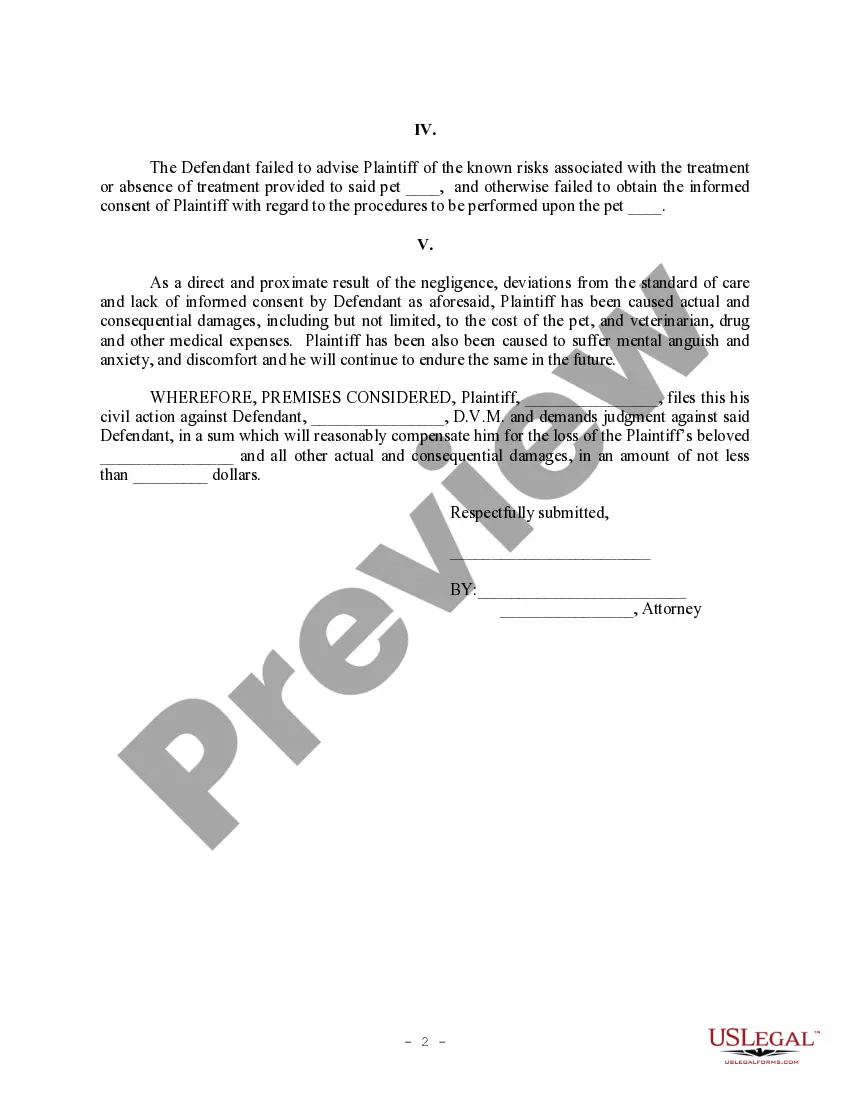
How to fill out Complaint Regarding Veterinarian Malpractice For Surgical Procedure?
- Log into your US Legal Forms account if you're a returning user and download the desired form template by clicking the Download button. Ensure your subscription is active; if not, renew it as per your plan.
- For first-time users, start by previewing the form descriptions to confirm you select the correct template that aligns with your specific needs and local jurisdiction.
- If you find that the current template doesn’t meet your requirements, utilize the Search tab to find an alternative that better suits your needs.
- When you find the right document, click the Buy Now button and choose your preferred subscription plan. You will need to register for an account to access the library’s resources.
- Complete your purchase by entering your credit card information or using your PayPal account to finalize your subscription.
- Finally, download the completed form to your device, making it accessible in your account’s My Forms section for future use.
By utilizing US Legal Forms, you gain access to an extensive library of over 85,000 customizable legal templates, ensuring you have the right tools for your legal needs.
Don't hesitate to take advantage of premium expert assistance for form completion, ensuring your legal documents are precise and compliant. Start your legal journey today!
Form popularity
FAQ
Pursuing a suit for veterinarian malpractice for dogs and cats comes with its challenges. Common disadvantages include high legal fees, the stress of the courtroom experience, and the potential for lengthy proceedings. Additionally, these cases often require substantial evidence to prove negligence, which can be time-consuming to gather. Taking these factors into account will help you prepare for the path ahead.
To initiate a lawsuit for veterinarian malpractice for dogs and cats, start by documenting everything related to your pet's care. Gather all medical records, bills, and evidence of negligence. It is advisable to consult with a legal expert who specializes in animal law; they can guide you through the process, including filing the claim and addressing any legal requirements. The uslegalforms platform offers resources that can help simplify the paperwork needed for your case.
While winning a lawsuit for veterinarian malpractice for dogs and cats is never guaranteed, understanding the odds can help you make informed choices. Generally, winning odds can fluctuate from 20% to 40%, depending on the details of your case. Factors such as the veterinarian's actions, the evidence you can present, and your legal team's expertise play critical roles. To improve your chances, gather relevant documentation and consult a knowledgeable attorney.
The success rate for lawsuits involving veterinarian malpractice for dogs and cats varies widely. Although specific statistics can change, research suggests that around 30% of malpractice suits result in a favorable outcome for the plaintiff. Factors influencing this outcome include available evidence and the quality of legal representation. Engaging a skilled attorney familiar with animal law may increase your chances of success.
Considering a lawsuit for veterinarian malpractice for dogs and cats can be a significant decision. It's essential to evaluate the specific circumstances surrounding your case, such as the extent of the harm caused and the potential costs involved. While some cases can yield compensation for veterinary negligence, it's crucial to consider the emotional and financial stresses of pursuing legal action. We recommend consulting legal experts to assess your situation effectively.
Yes, you can sue a veterinarian if they misdiagnosed your dog and this led to harm or a worsening condition. In such cases, you would need to prove that the misdiagnosis was a result of negligence and not just an honest mistake. Consulting with professionals who understand veterinarian malpractice for dogs and cats can be vital in assessing the viability of your case. They can guide you in gathering evidence and taking the appropriate steps.
Yes, you can sue your veterinarian if you believe they have committed malpractice. To pursue a lawsuit, you need to establish that the veterinarian's actions directly caused harm to your pet. This can involve consulting with legal experts who specialize in veterinarian malpractice for dogs and cats. Proper guidance can help you build a strong case and understand your options moving forward.
An example of malpractice in veterinary practice might involve a veterinarian failing to recognize signs of serious illness in a dog, leading to delayed treatment and worsening health. Another scenario could be providing the wrong medication or dosage, causing harm to the animal. Such cases clearly illustrate the importance of adhering to the standard of care expected in treating pets, especially in cases of veterinarian malpractice for dogs and cats.
Lawsuits against veterinarians often stem from allegations of negligence, which can include failure to diagnose or treat a condition properly. They may also involve situations where veterinarians overlook important medical histories. Ultimately, these claims center on whether the veterinarian did not meet their duty of care. Recognizing these common bases can help you navigate potential veterinarian malpractice for dogs and cats.
Veterinary malpractice occurs when a veterinarian fails to provide the appropriate standard of care, resulting in harm to an animal. This can include misdiagnosis, inadequate treatment, or failure to obtain informed consent. It is essential to establish that the veterinarian did not act as a competent professional would have in a similar situation. Thus, understanding these elements is crucial in cases of veterinarian malpractice for dogs and cats.