Defective Construction Lawsuit
Description
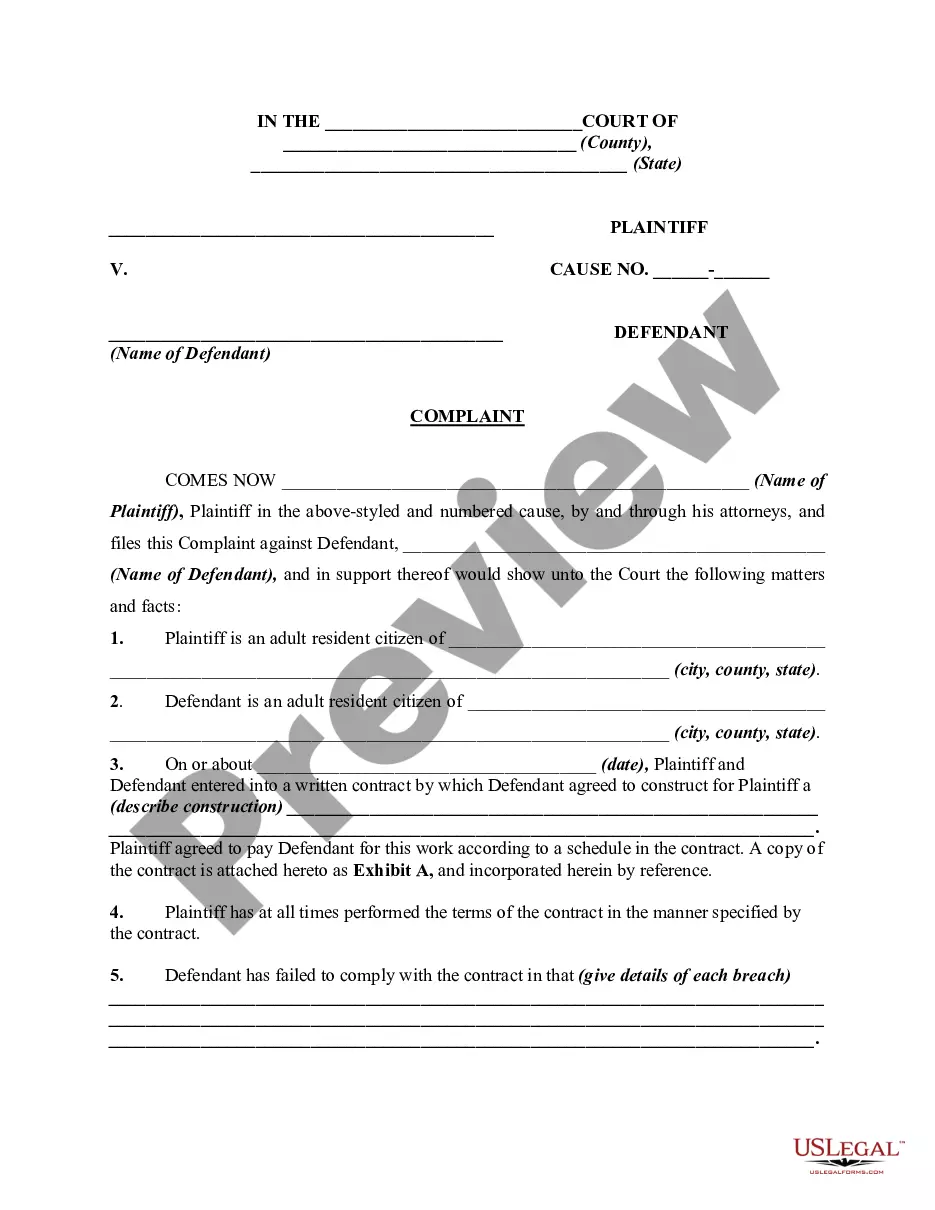
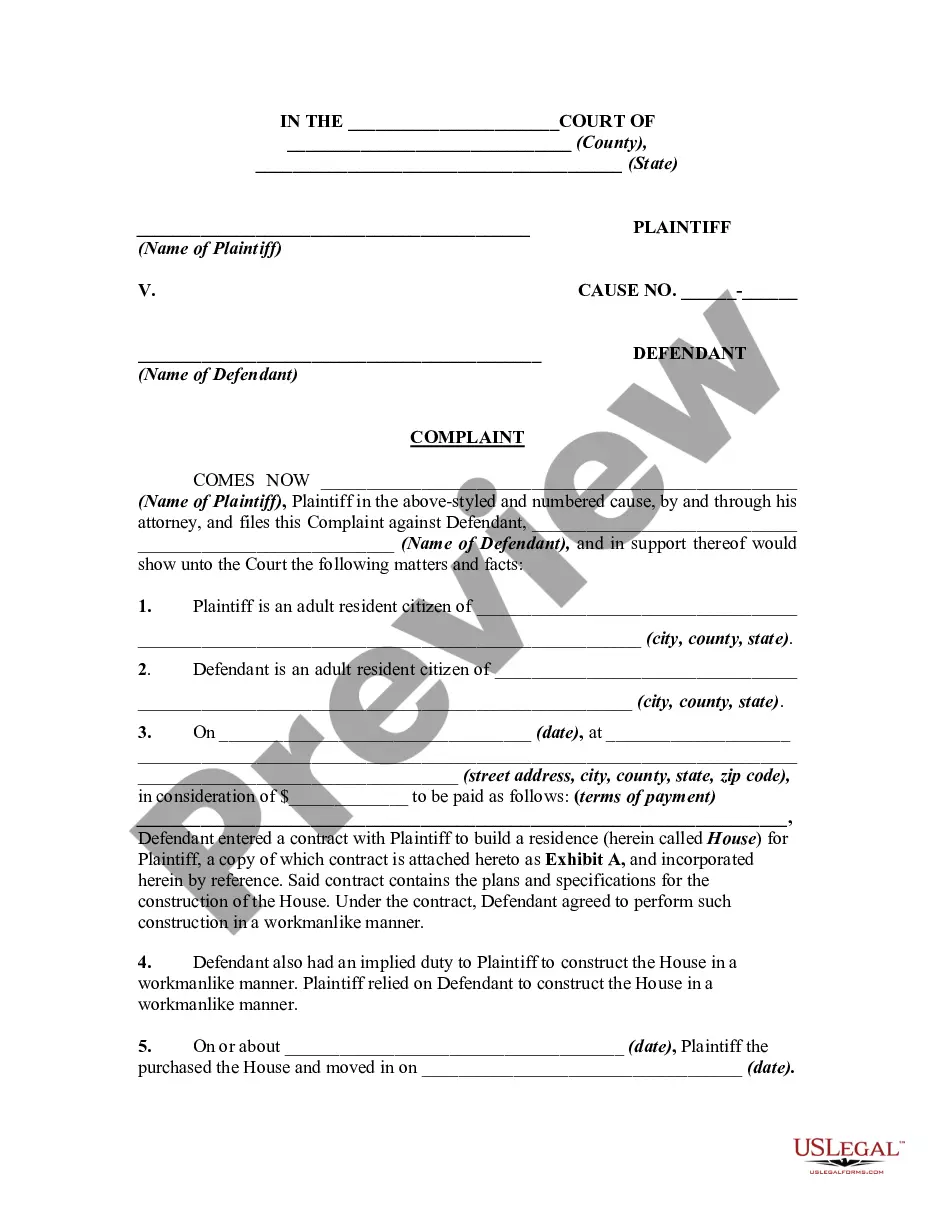
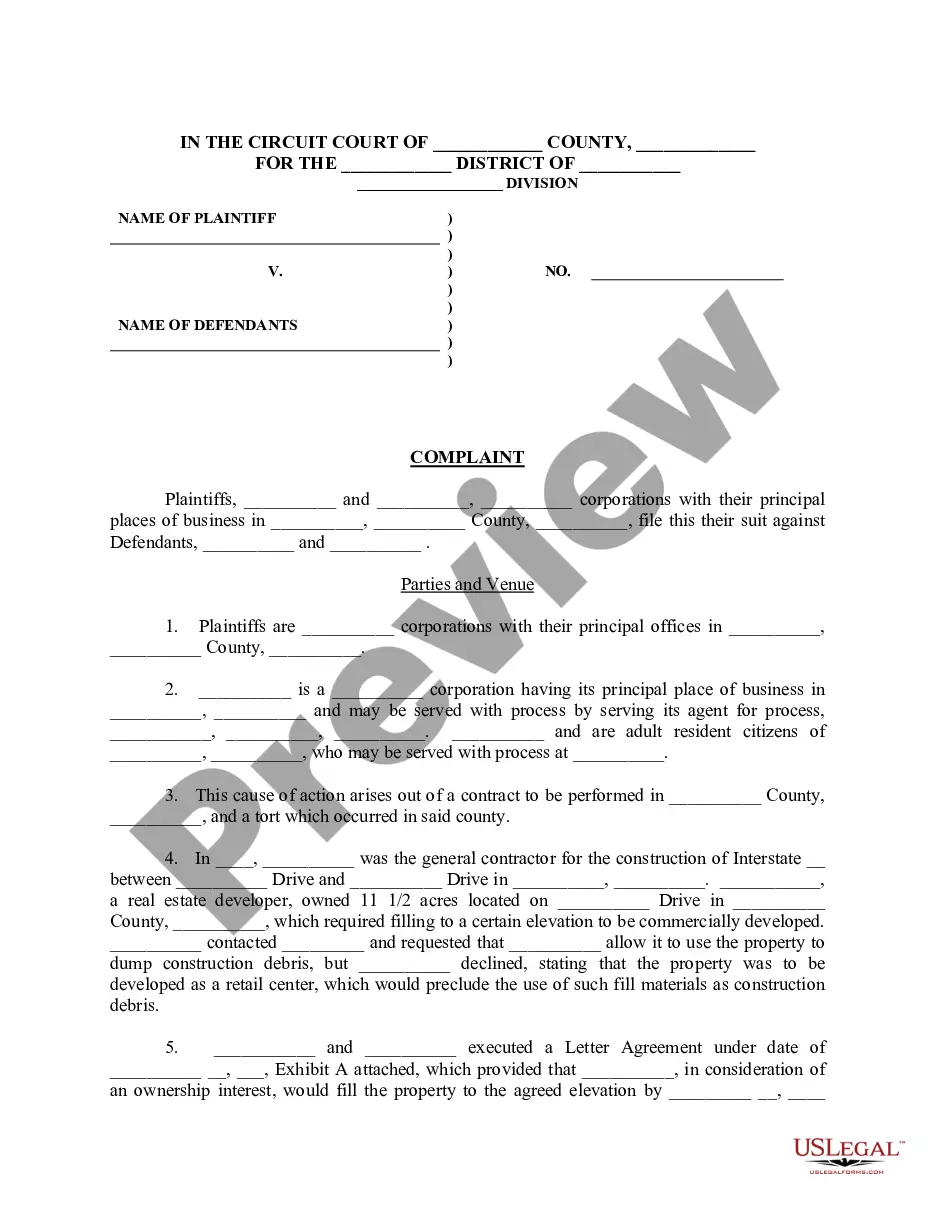
Get your form ready online
Our built-in tools help you complete, sign, share, and store your documents in one place.
Make edits, fill in missing information, and update formatting in US Legal Forms—just like you would in MS Word.
Download a copy, print it, send it by email, or mail it via USPS—whatever works best for your next step.
Sign and collect signatures with our SignNow integration. Send to multiple recipients, set reminders, and more. Go Premium to unlock E-Sign.
If this form requires notarization, complete it online through a secure video call—no need to meet a notary in person or wait for an appointment.
We protect your documents and personal data by following strict security and privacy standards.

Make edits, fill in missing information, and update formatting in US Legal Forms—just like you would in MS Word.

Download a copy, print it, send it by email, or mail it via USPS—whatever works best for your next step.

Sign and collect signatures with our SignNow integration. Send to multiple recipients, set reminders, and more. Go Premium to unlock E-Sign.

If this form requires notarization, complete it online through a secure video call—no need to meet a notary in person or wait for an appointment.

We protect your documents and personal data by following strict security and privacy standards.
Looking for another form?
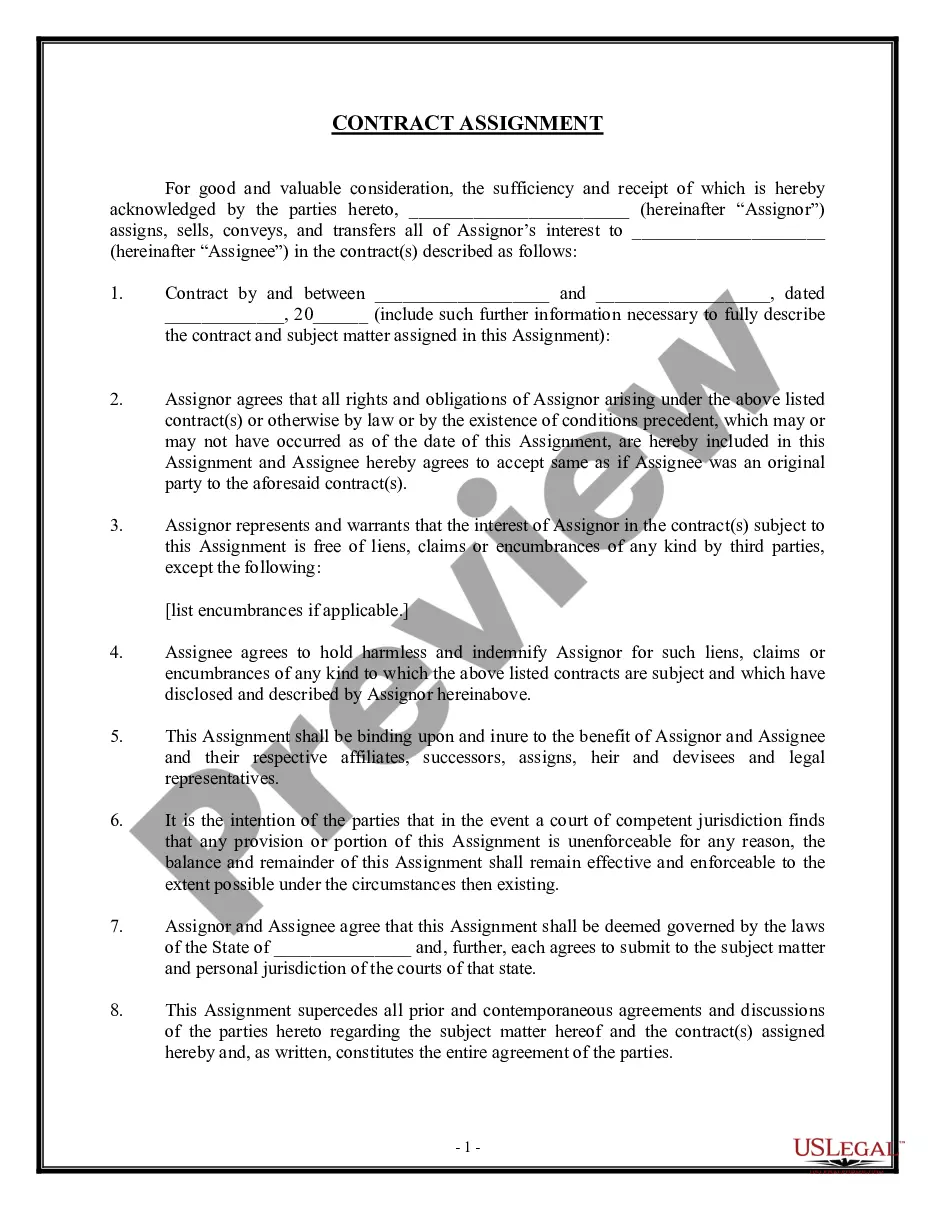
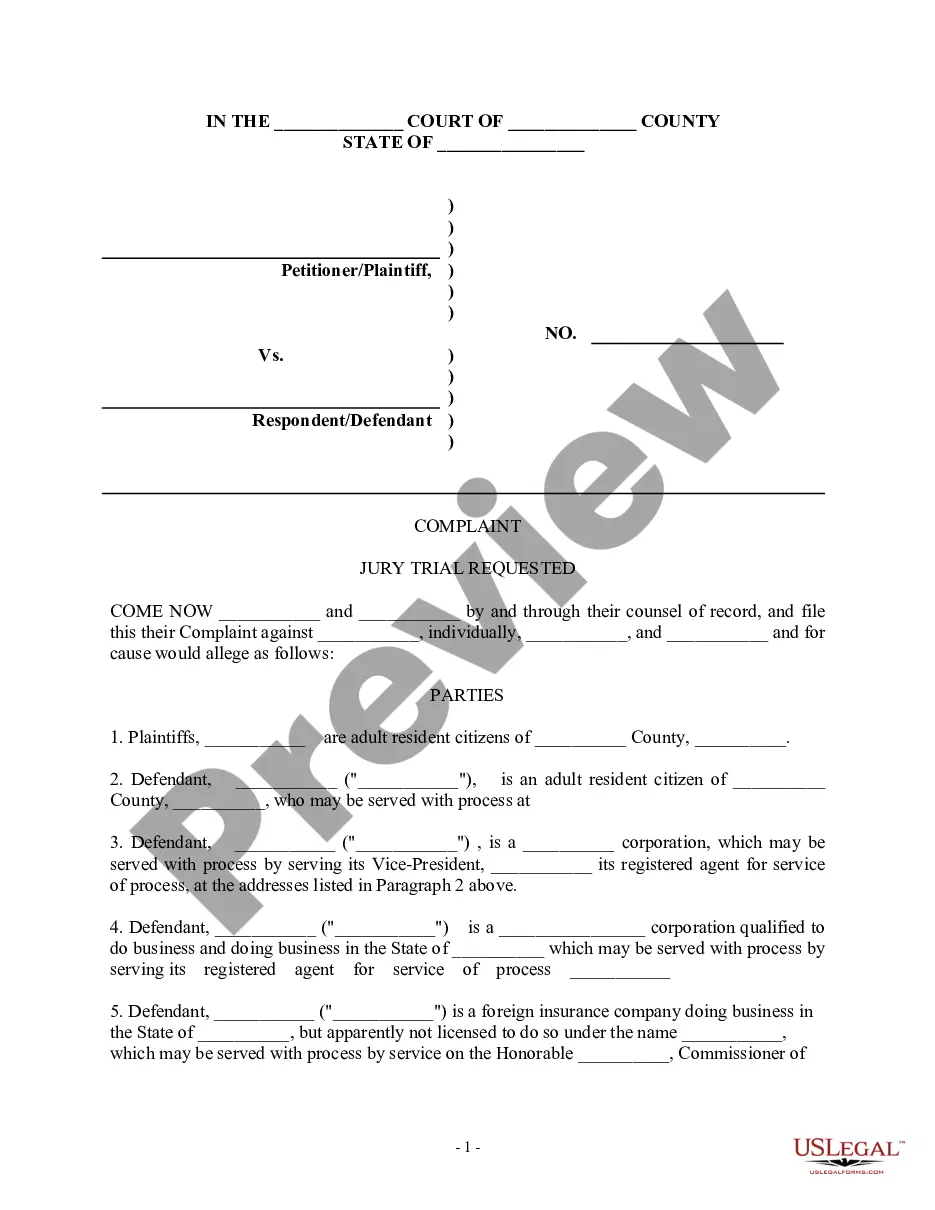
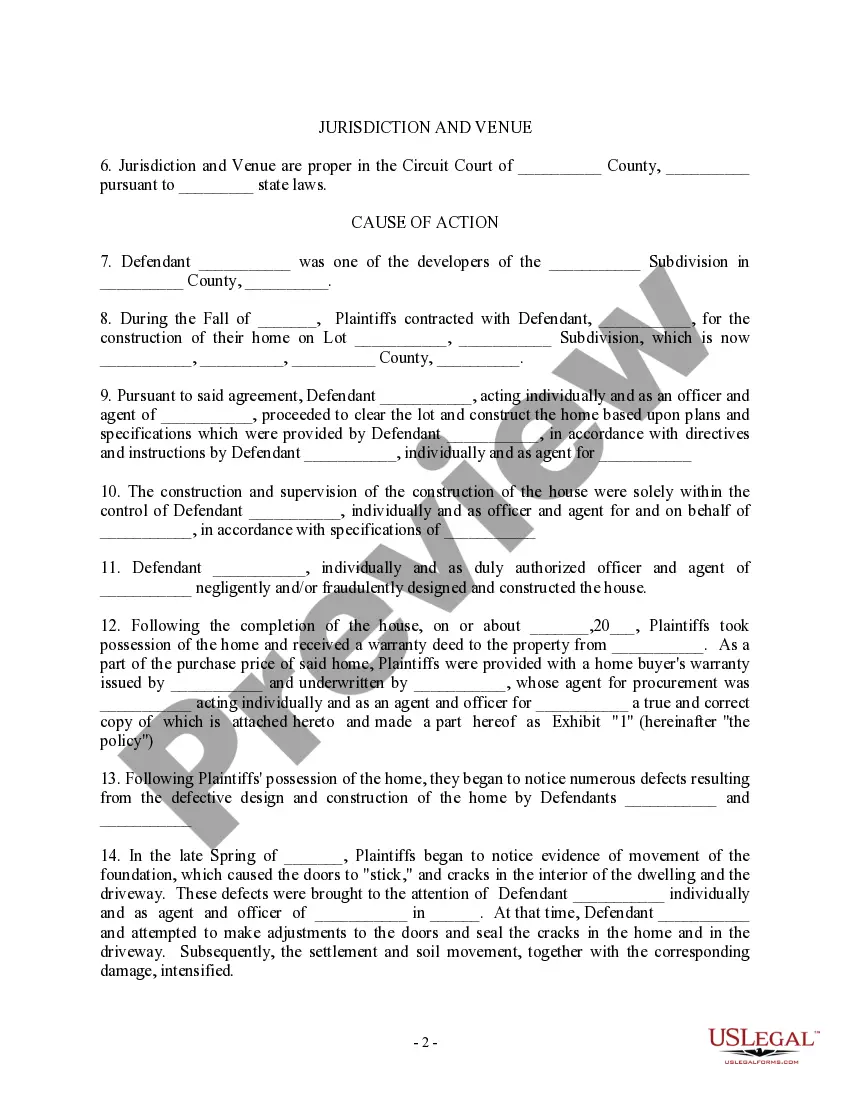
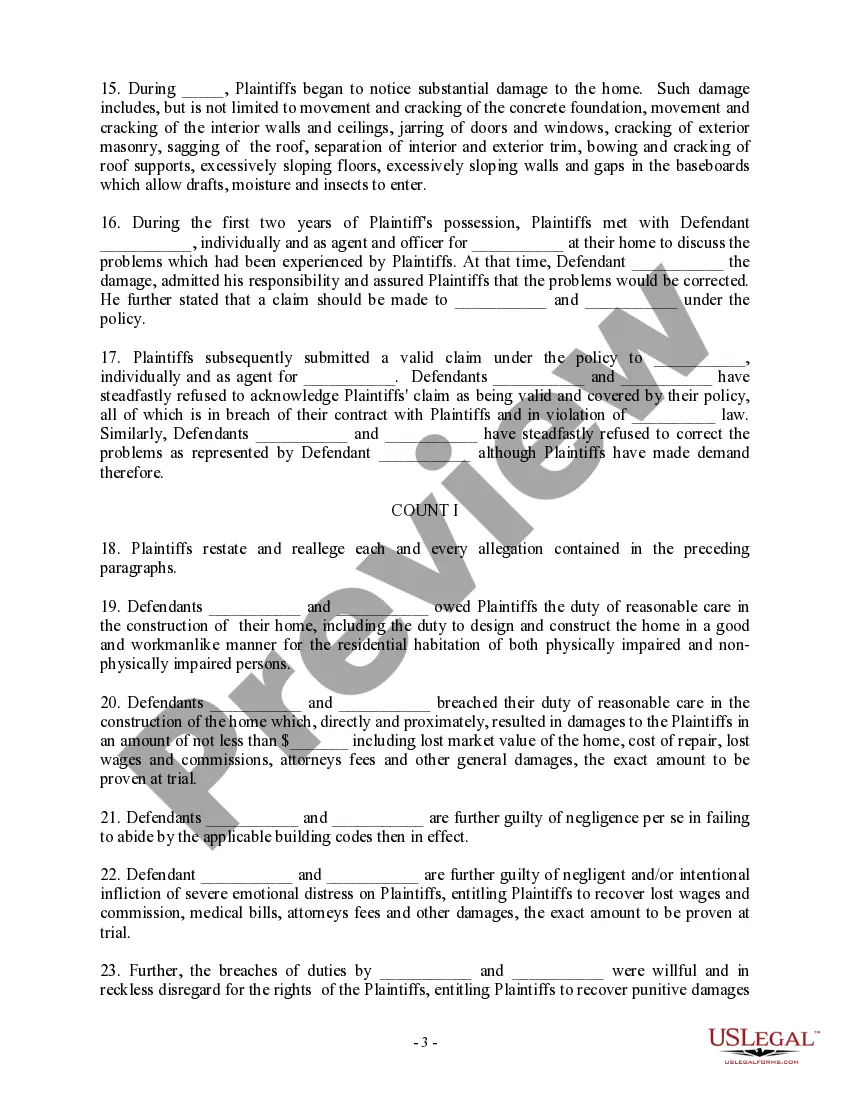
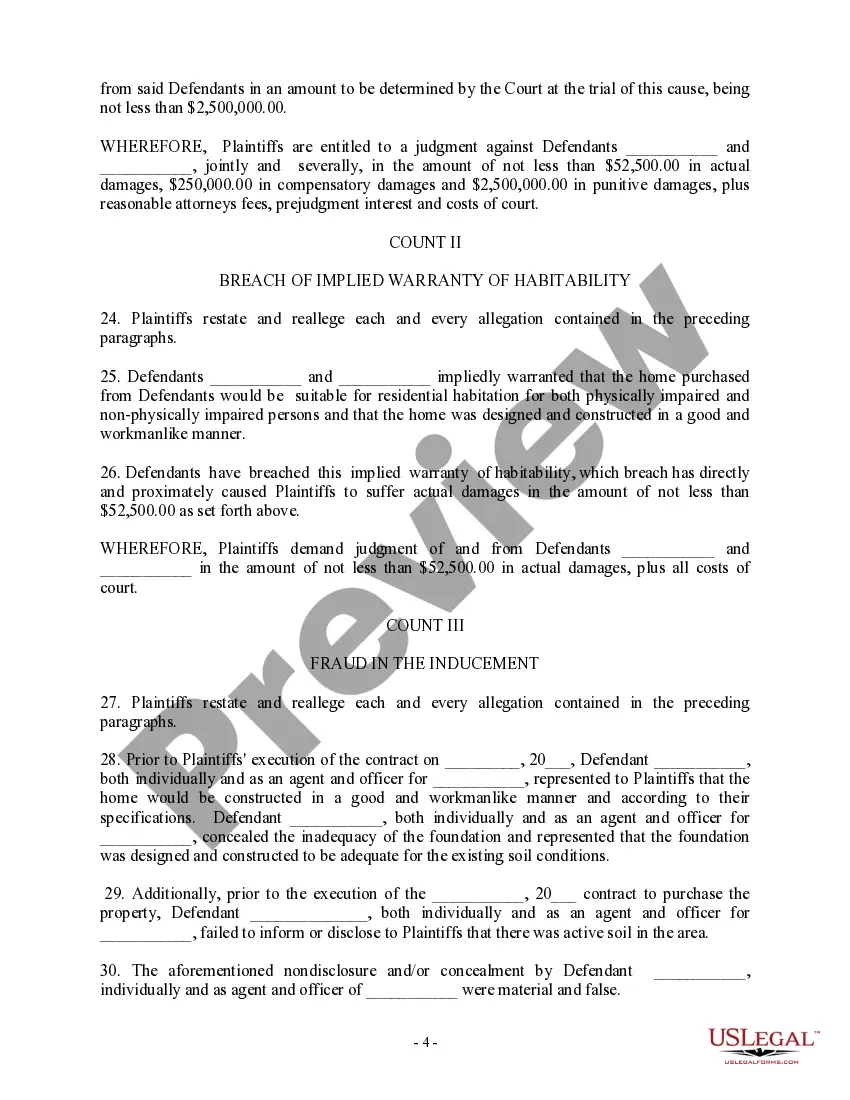
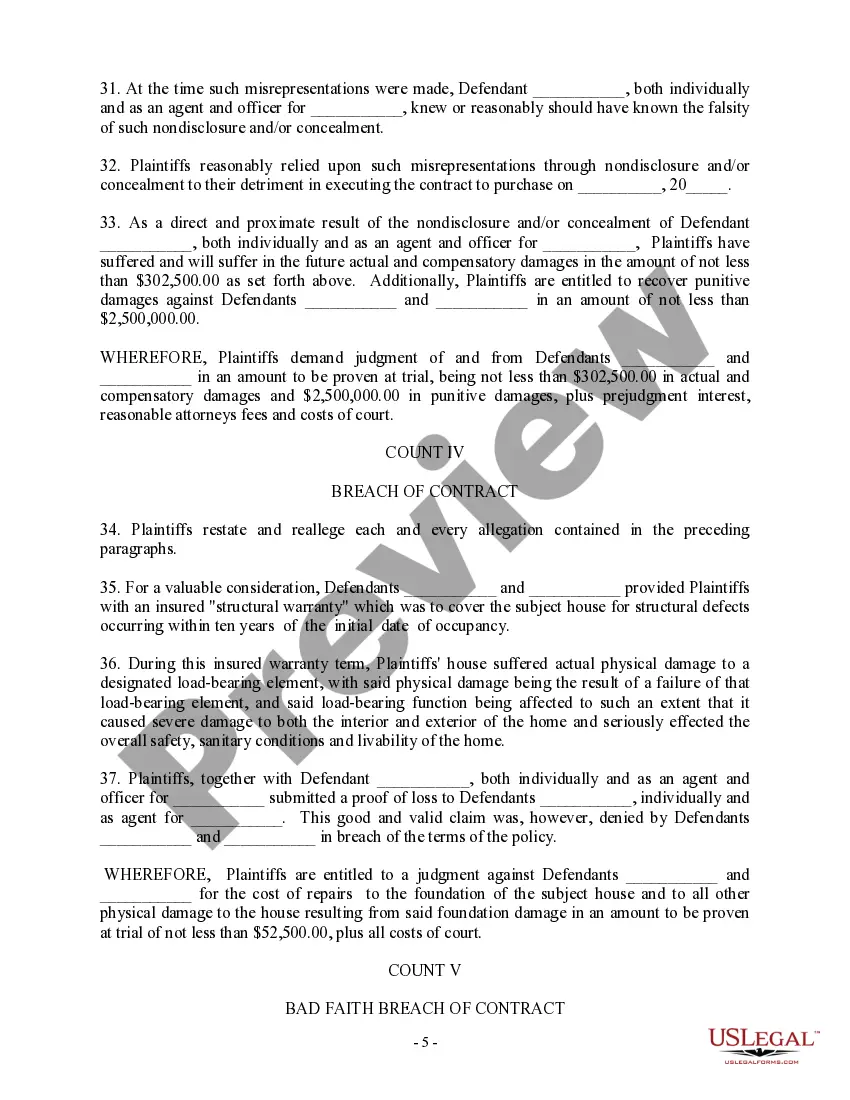
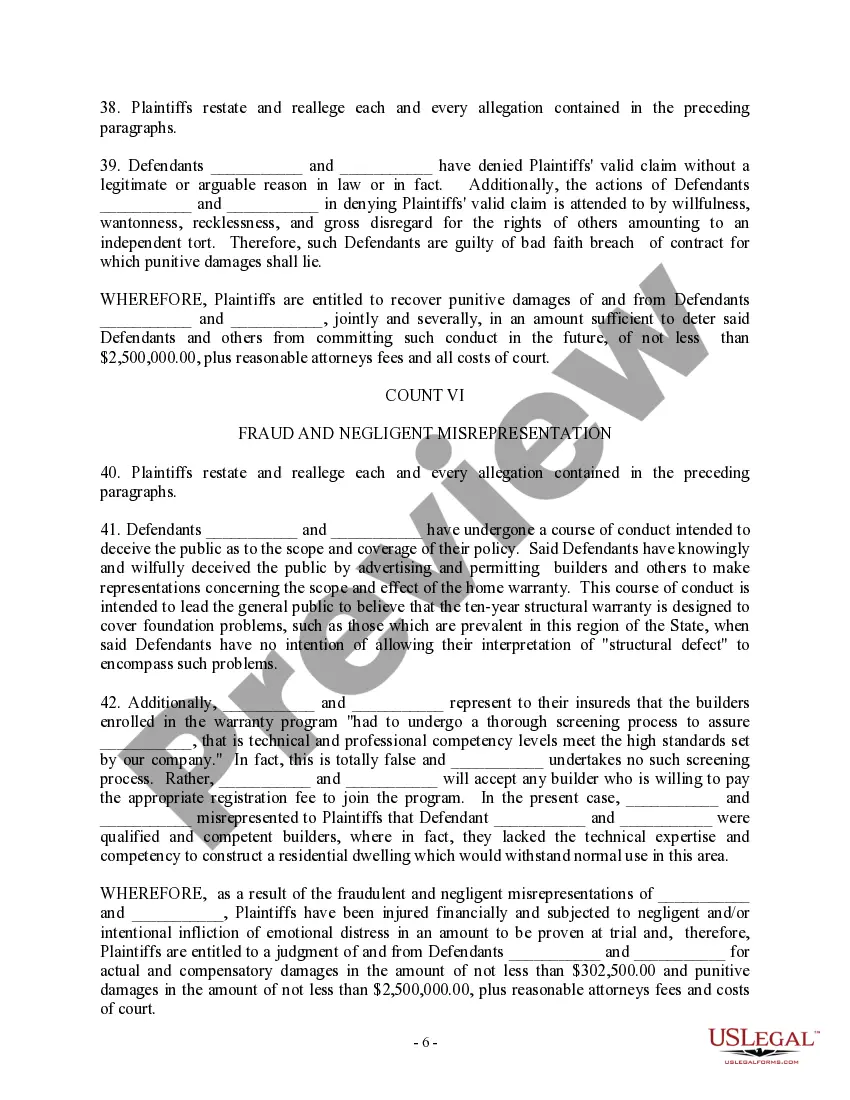
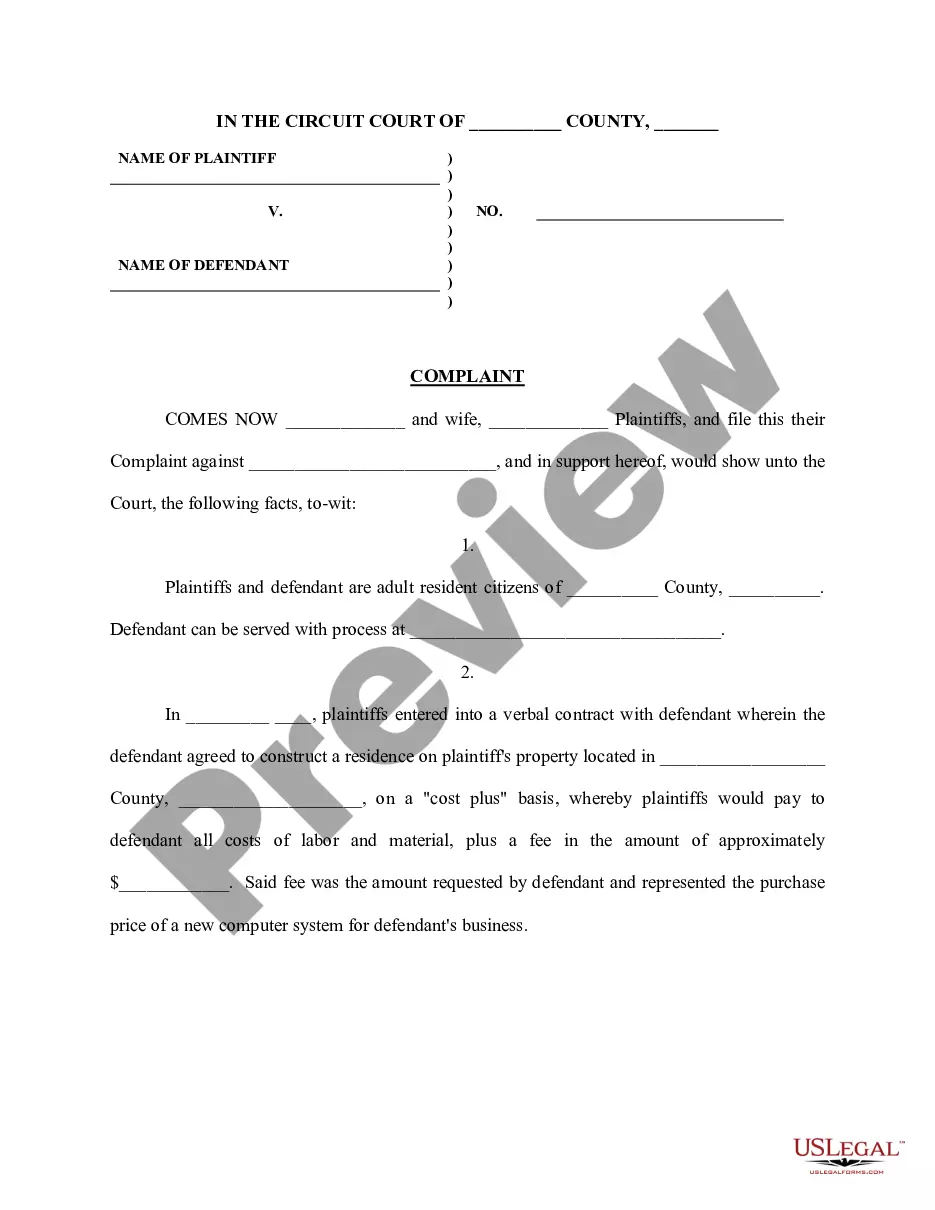
How to fill out Complaint For Defective Home Construction, Defective Design?
It’s clear that you cannot become a legal expert instantly, nor can you swiftly master the creation of a Defective Construction Lawsuit without a specific set of skills. Producing legal documents is a labor-intensive undertaking that necessitates specialized training and abilities.
So why not entrust the preparation of the Defective Construction Lawsuit to the experts.
With US Legal Forms, one of the most extensive legal document repositories, you can obtain anything from court documents to templates for office communication.
You can retrieve your documents from the My documents section at any time. If you are an existing client, simply Log In, and find and download the template from the same section.
Regardless of the purpose of your forms—whether they are financial, legal, or personal—our website has you covered. Try US Legal Forms today!
- Discover the document you require with the search feature at the top of the page.
- Preview it (if this option is available) and review the accompanying description to determine if the Defective Construction Lawsuit is what you’re looking for.
- Restart your search if a different form is needed.
- Create a free account and choose a subscription plan to purchase the template.
- Click Buy now. Once the payment is completed, you can access the Defective Construction Lawsuit, fill it out, print it, and deliver it by mail to the necessary individuals or organizations.
Form popularity
FAQ
Construction defect coverage is a type of insurance that protects builders and contractors against claims related to construction defects. This coverage can help manage the financial impact of repairs or legal fees associated with defective construction lawsuits. Having this insurance is essential for both builders and homeowners to ensure peace of mind. If defects arise, this coverage can be a critical safety net.
In Idaho, the statute of limitations for construction defects generally falls within a 10-year period from the date of discovery of the defect. This means you have a considerable amount of time to file a defective construction lawsuit if issues emerge after construction. However, the specific circumstances of your case could affect this timeline. Consulting with a legal expert can help clarify your options and the steps you need to take.
The seven quality issues that typically arise in construction are structural integrity, water intrusion, poor workmanship, incompatible materials, insufficient design, safety hazards, and code violations. Each of these defects can have serious implications for the building's functionality and safety. Addressing them early can save you from escalating costs and stress. If you are facing any of these issues, a defective construction lawsuit could provide a pathway to remedy.
Common defects in construction often include structural issues, water damage, and faulty electrical work. These problems can lead to costly repairs and dissatisfaction for homeowners. Often, these issues arise from poor workmanship or the use of substandard materials. If you experience any of these defects, considering a defective construction lawsuit may help you seek the compensation you deserve.
A construction defect refers to flaws in the construction process, materials, or design that lead to property damage or safety issues. On the other hand, negligence involves a failure to act with reasonable care, resulting in harm to others. In a defective construction lawsuit, you may need to demonstrate either a construction defect or negligence to seek compensation for damages. Understanding these differences is essential, and platforms like US Legal Forms can help you navigate your legal options effectively.
The defects liability period in construction usually lasts for about one to two years after project completion, depending on the contract. This period allows builders to address any defects that arise without additional costs to the property owner. If defects occur during this timeframe, homeowners may pursue a defective construction lawsuit if the builder fails to rectify the issues. Awareness of these timelines is crucial for property owners.
The most common type of construction defect includes water intrusion, which often leads to mold growth and structural damage. This issue frequently arises from inadequate waterproofing or poor drainage systems. Homeowners facing such issues may opt for a defective construction lawsuit to recover costs associated with repairs and damages. Understanding these defects can aid in prevention and resolution.
The most common accident in construction is typically falls from heights, which pose serious risks to workers. These incidents can occur due to inadequate safety measures or faulty scaffolding. If such accidents result from defective construction practices, victims may have grounds for a defective construction lawsuit. Ensuring proper safety protocols is essential in mitigating these risks.
The biggest issue in construction is often the lack of effective communication among all parties involved in the project. Miscommunication can lead to errors in the construction process, resulting in defects and disputes. Addressing these communication challenges early on can prevent the need for a defective construction lawsuit down the line. Therefore, having clear contracts and regular updates helps manage expectations.
The most common construction defect often stems from improper design or poor workmanship. These issues can lead to problems such as water intrusion, structural integrity failures, or faulty electrical systems. If you encounter a defect, you may consider a defective construction lawsuit to seek compensation for the damages caused. Consulting with experts can help identify these defects and guide your legal options.