Preemptive Rights Example
Description
Get your form ready online
Our built-in tools help you complete, sign, share, and store your documents in one place.
Make edits, fill in missing information, and update formatting in US Legal Forms—just like you would in MS Word.
Download a copy, print it, send it by email, or mail it via USPS—whatever works best for your next step.
Sign and collect signatures with our SignNow integration. Send to multiple recipients, set reminders, and more. Go Premium to unlock E-Sign.
If this form requires notarization, complete it online through a secure video call—no need to meet a notary in person or wait for an appointment.
We protect your documents and personal data by following strict security and privacy standards.

Make edits, fill in missing information, and update formatting in US Legal Forms—just like you would in MS Word.

Download a copy, print it, send it by email, or mail it via USPS—whatever works best for your next step.

Sign and collect signatures with our SignNow integration. Send to multiple recipients, set reminders, and more. Go Premium to unlock E-Sign.

If this form requires notarization, complete it online through a secure video call—no need to meet a notary in person or wait for an appointment.

We protect your documents and personal data by following strict security and privacy standards.
Looking for another form?


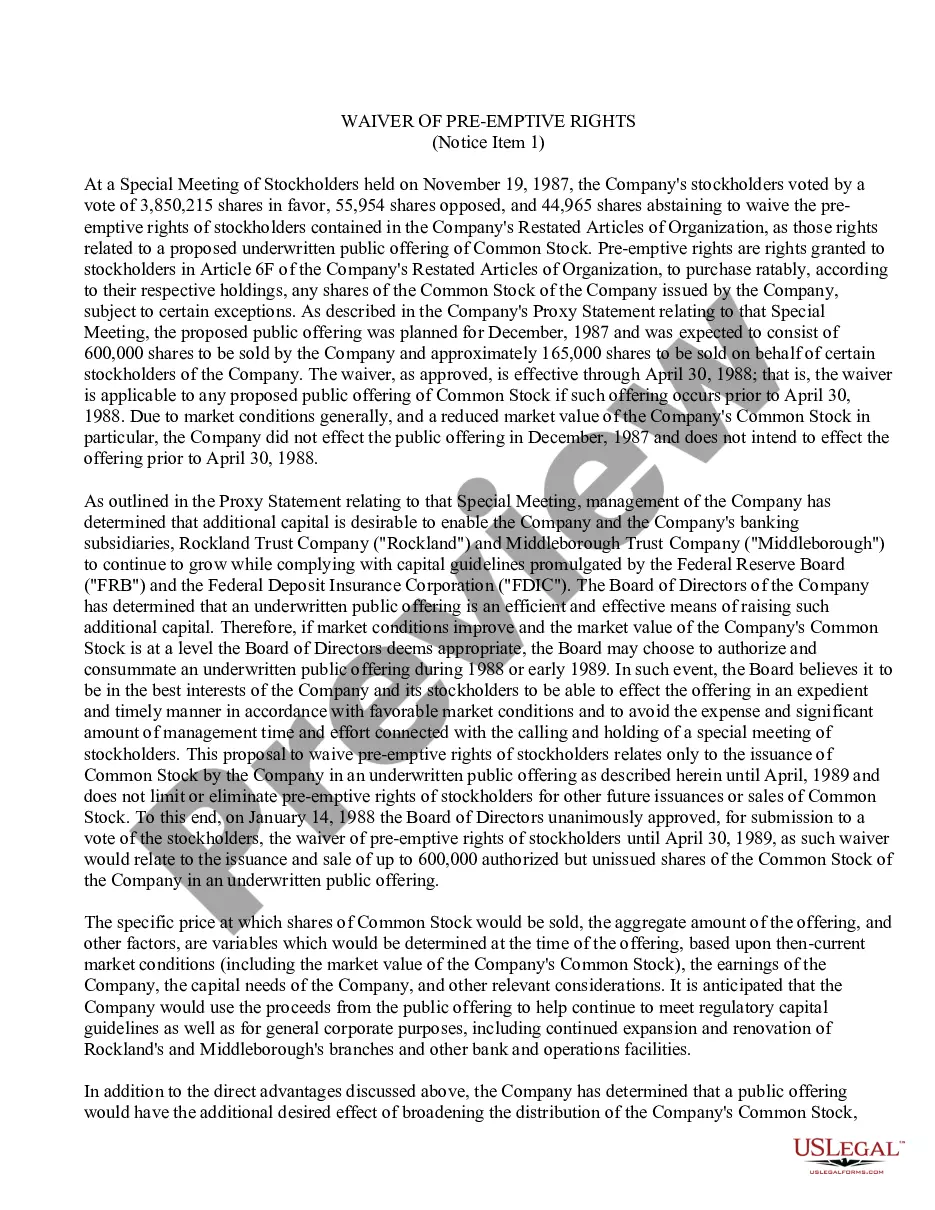
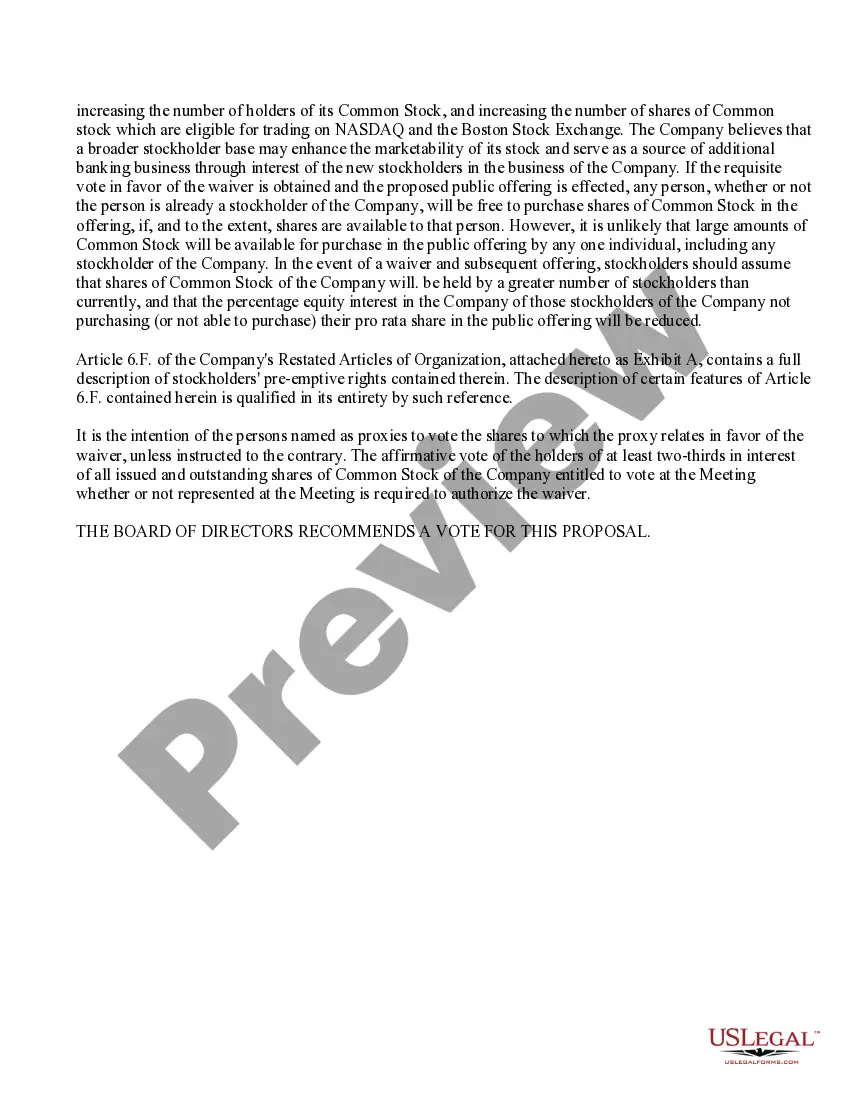
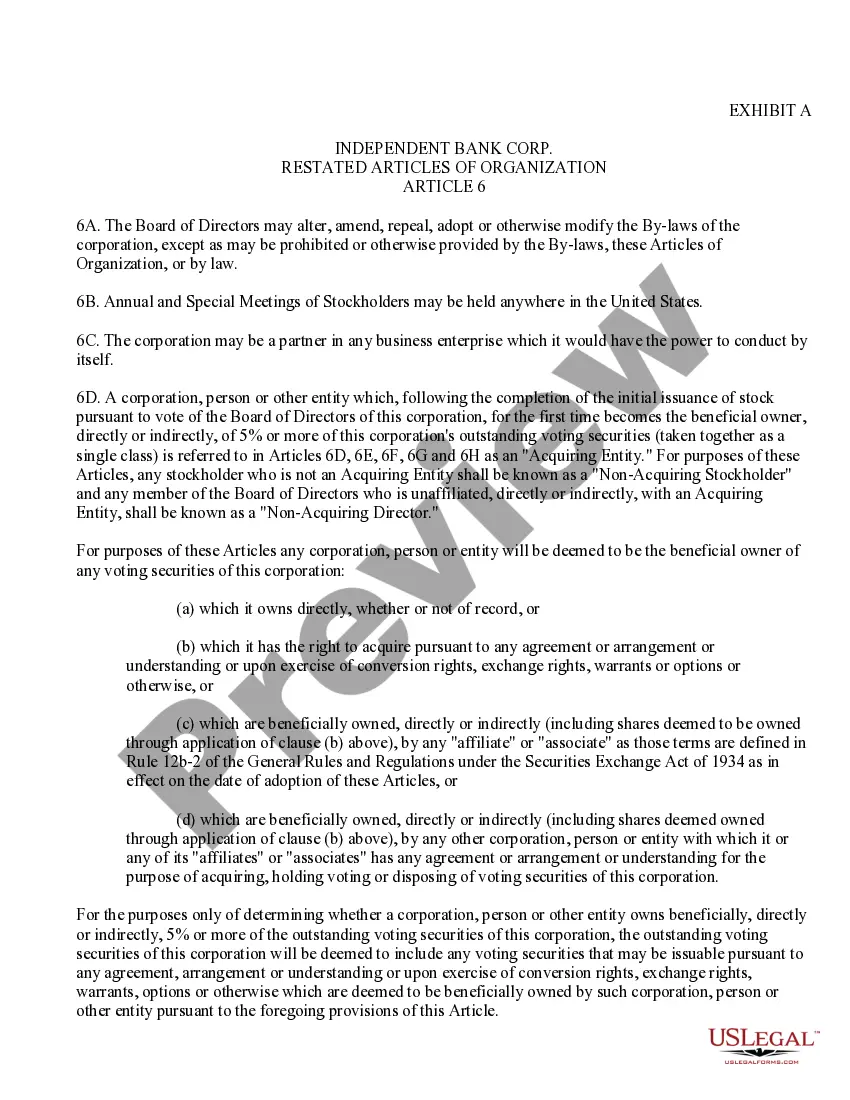
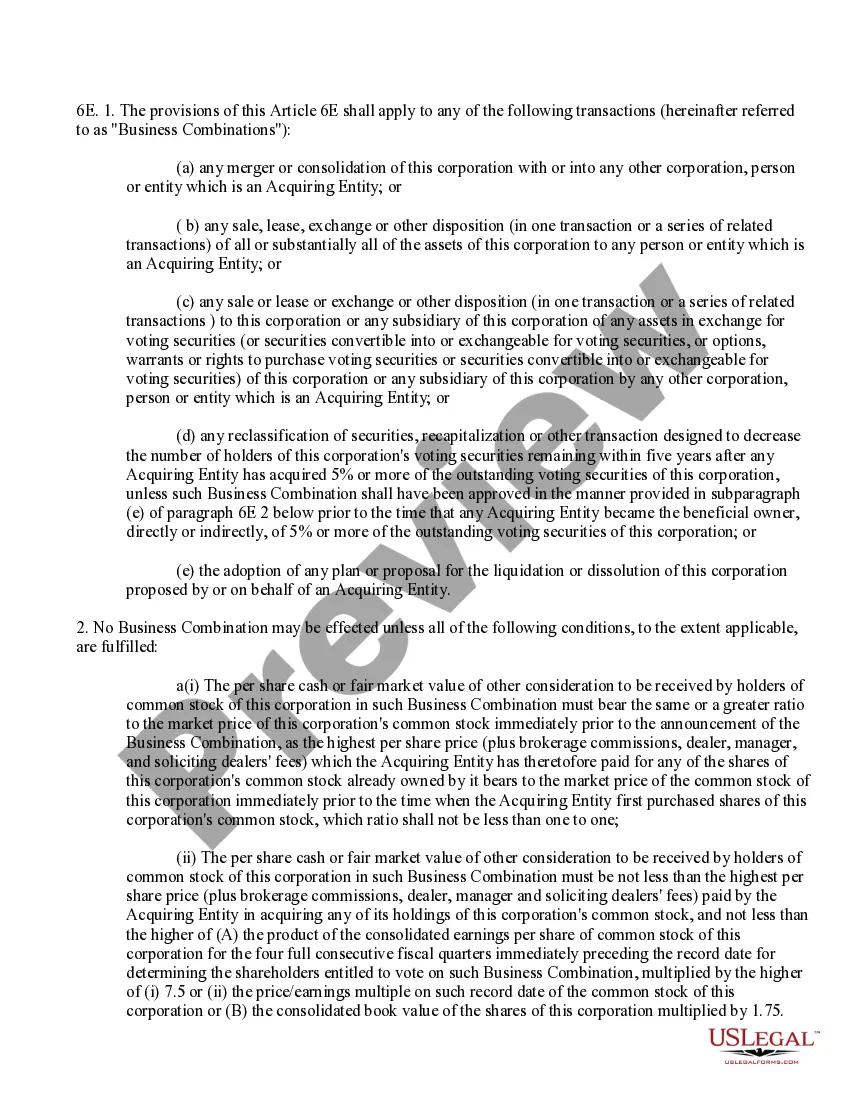
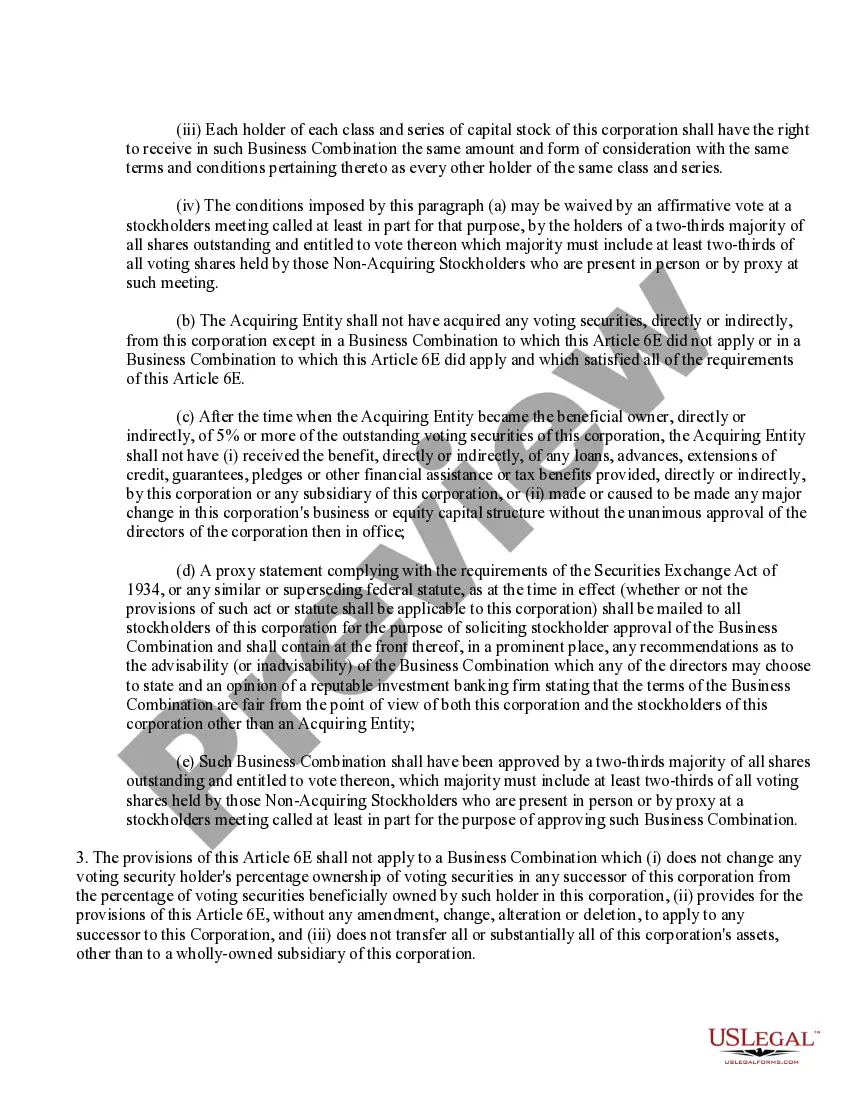
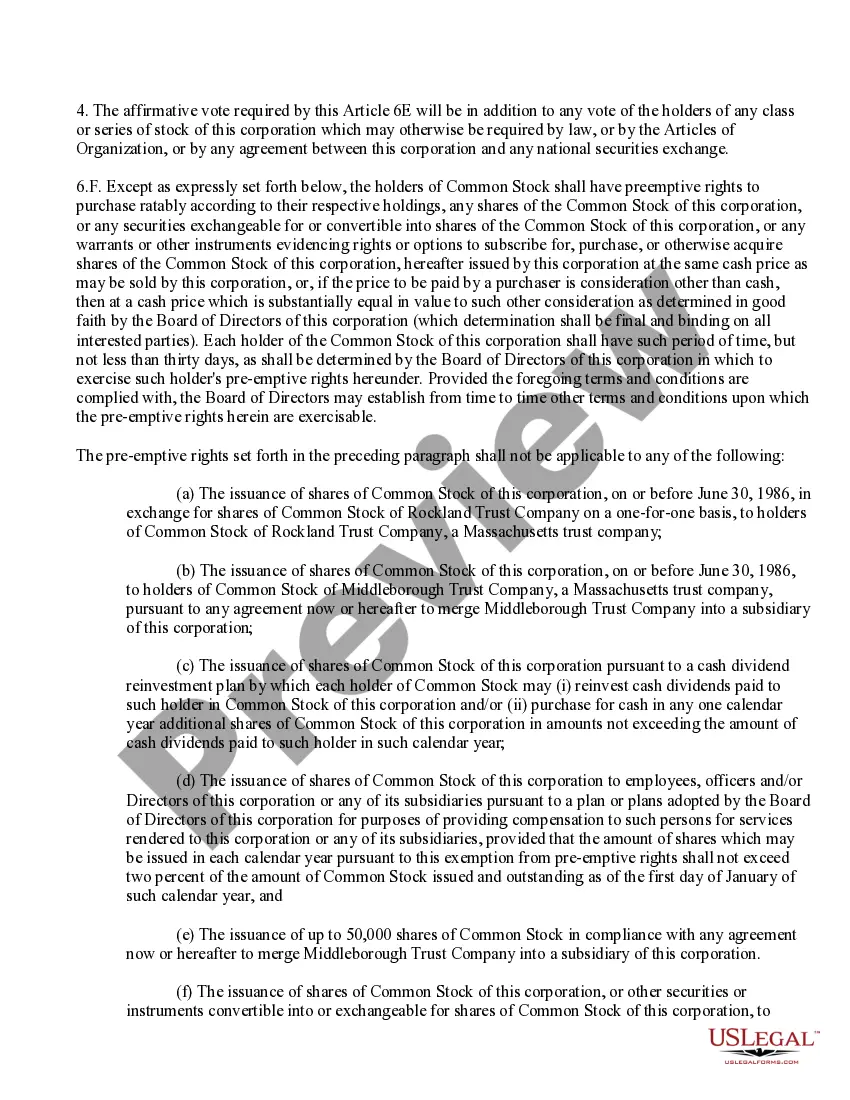
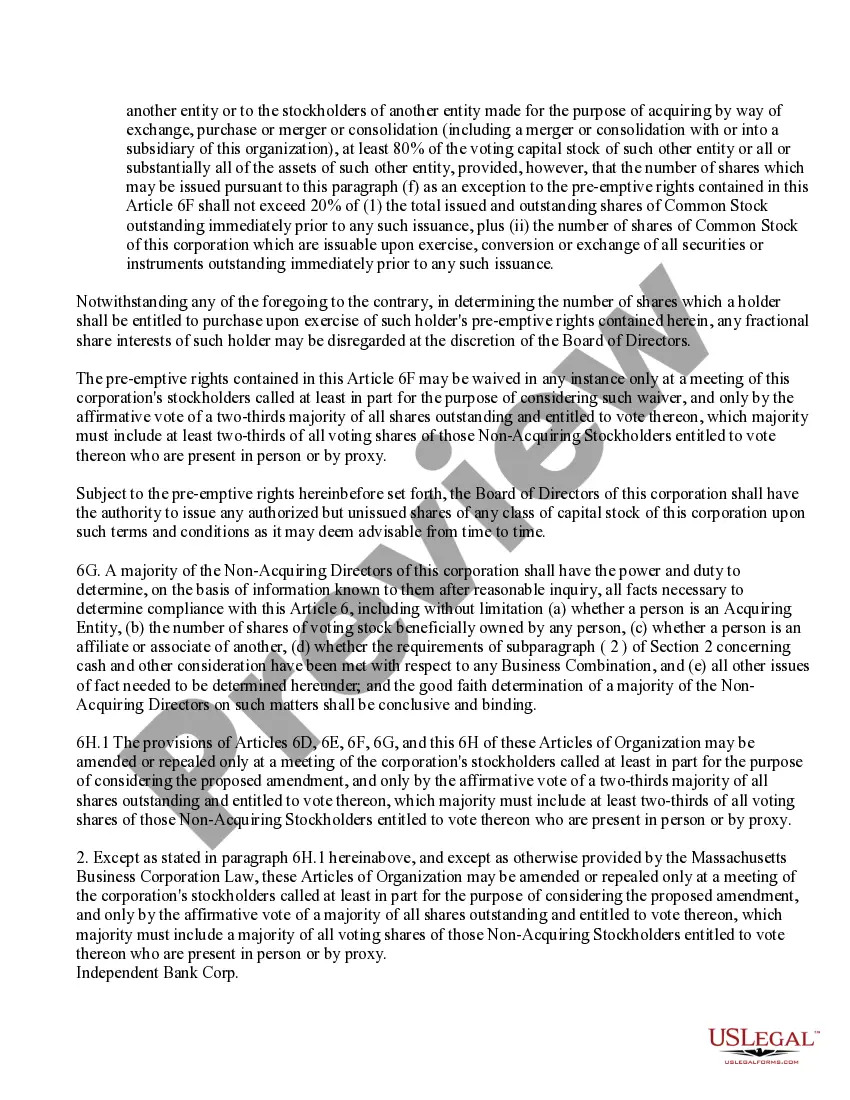
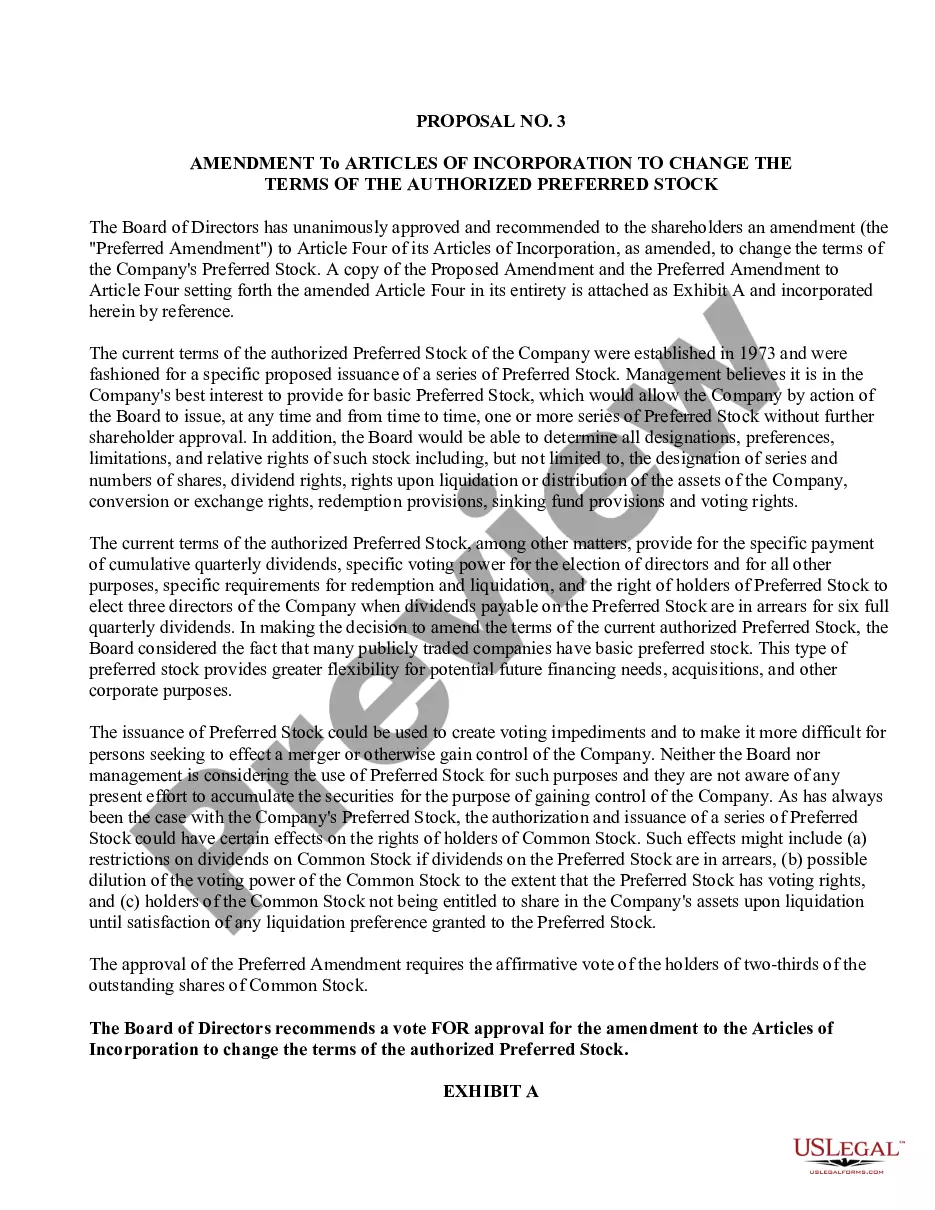
How to fill out Waiver Of Preemptive Rights With Copy Of Restated Articles Of Organization?
The Preemptive Rights Sample presented on this webpage is a versatile official template created by expert attorneys in accordance with national and local laws.
For over 25 years, US Legal Forms has supplied individuals, entities, and legal experts with more than 85,000 verified, state-specific documents for every business and personal situation. It is the fastest, simplest, and most reliable method to acquire the paperwork you require, as the service ensures the highest level of data protection and anti-malware safeguards.
- Search for the document you require and examine it.
- Browse through the example you looked for and preview it or review the form description to confirm it meets your needs. If it does not, utilize the search function to locate the appropriate one. Click Buy Now once you have discovered the template you seek.
- Choose and Log In.
- Select the pricing plan that fits your needs and sign up for an account. Use PayPal or a credit card for a swift payment. If you already possess an account, Log In and verify your subscription to proceed.
- Obtain the editable template.
- Select the format you prefer for your Preemptive Rights Sample (PDF, Word, RTF) and save the example on your device.
- Fill out and sign the document.
- Print out the template to complete it manually. Alternatively, use an online versatile PDF editor to quickly and accurately fill out and sign your form with a legally binding electronic signature.
Form popularity
FAQ
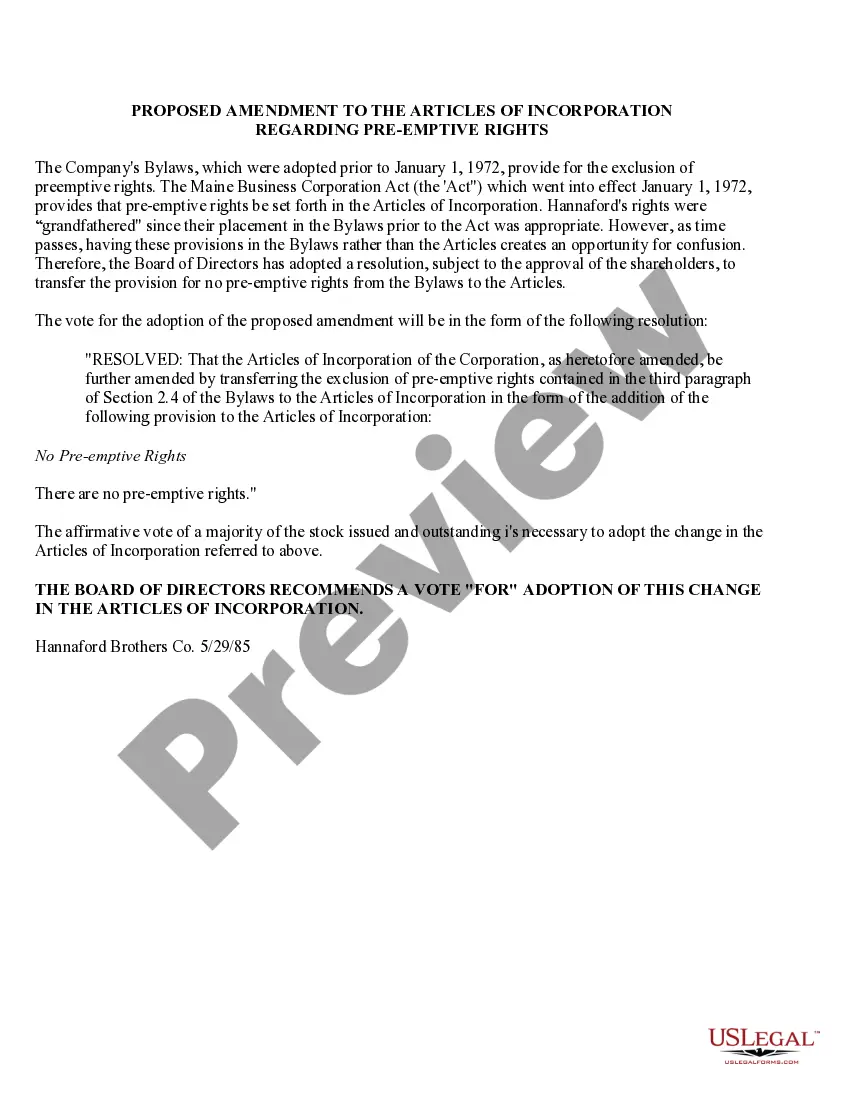
Preemptive rights grant existing shareholders the opportunity to acquire additional shares in a company prior to any public offering. This right is typically outlined in a company’s bylaws or articles of incorporation. The purpose of these rights is to allow existing investors to maintain their ownership percentage and avoid dilution when new shares are issued. An excellent preemptive rights example illustrates how these rights effectively safeguard shareholder interests during corporate transactions.
When writing a postnuptial agreement, you must provide the following information about both parties: The first party's name. The second party's name. Marriage date. The city and state where you were married. Your joint address. Information about existing children. ... Acknowledgment of full financial disclosure.
In a postnuptial agreement in California, spouses cannot contract or limit child support and child custody. All terms that set or restrict child support or child custody will make the entire postnup unenforceable.
Postnuptial agreements are invalid if it is determined that one of the parties exercised fraud, duress, or undue influence over the other. Fraud generally exists when one party deceived or concealed an important fact that would impact whether or not the other party executed the agreement.
As long as your agreement fulfills California's legal requirements, the courts will consider it valid no matter how long you have been married. In fact, postnuptial agreements are most common among couples who have been married for years, as they understand better how much each party has to gain or lose.
While it is entirely possible to construct your own postnuptial agreement, it is not typically recommended. There are pros and cons to writing your own postnup and why you might benefit from an attorney's input.
It is created after a couple is married to define the rights and obligations of both partners if they were to separate or divorce. While it is entirely possible to construct your own postnuptial agreement, it is not typically recommended.
How to Create a Postnuptial Agreement That's Enforceable The document must be in writing and notarized. The document must be signed voluntarily and intentionally by both parties. Both parties must make a full and fair disclosure of all their assets, debts, property, and income.