Stock Par Value On Balance Sheet
Description
Get your form ready online
Our built-in tools help you complete, sign, share, and store your documents in one place.
Make edits, fill in missing information, and update formatting in US Legal Forms—just like you would in MS Word.
Download a copy, print it, send it by email, or mail it via USPS—whatever works best for your next step.
Sign and collect signatures with our SignNow integration. Send to multiple recipients, set reminders, and more. Go Premium to unlock E-Sign.
If this form requires notarization, complete it online through a secure video call—no need to meet a notary in person or wait for an appointment.
We protect your documents and personal data by following strict security and privacy standards.

Make edits, fill in missing information, and update formatting in US Legal Forms—just like you would in MS Word.

Download a copy, print it, send it by email, or mail it via USPS—whatever works best for your next step.

Sign and collect signatures with our SignNow integration. Send to multiple recipients, set reminders, and more. Go Premium to unlock E-Sign.

If this form requires notarization, complete it online through a secure video call—no need to meet a notary in person or wait for an appointment.

We protect your documents and personal data by following strict security and privacy standards.
Looking for another form?

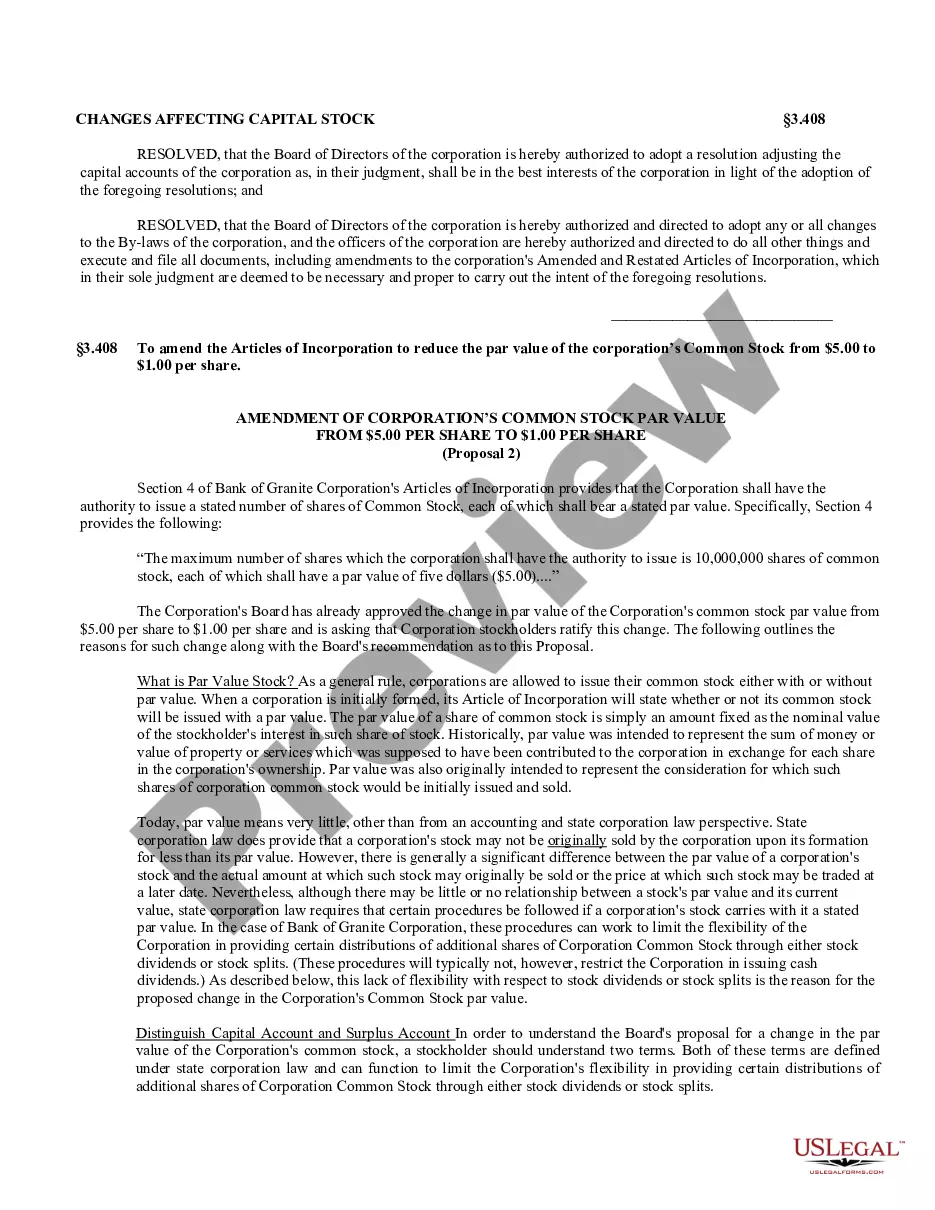
How to fill out Amendment Of Common Stock Par Value?
It is clear that you cannot become a legal specialist instantly, nor can you quickly master how to prepare Stock Par Value On Balance Sheet without possessing a unique skill set.
Generating legal documents is a lengthy undertaking that necessitates specific education and abilities. So why not entrust the development of the Stock Par Value On Balance Sheet to the experts.
With US Legal Forms, one of the most extensive libraries of legal templates, you can locate anything from court documents to templates for internal communication. We understand how vital compliance and adherence to federal and local regulations are. Therefore, on our platform, all forms are location-specific and current.
You can access your documents again from the My documents tab whenever you wish. If you are an existing user, you can simply Log In and find and download the template from the same tab.
Regardless of the intent of your documents—whether financial and legal, or personal—our website has you taken care of. Give US Legal Forms a try now!
- Locate the document you require using the search bar at the top of the page.
- Preview it (if this option is available) and review the accompanying description to determine if Stock Par Value On Balance Sheet is what you need.
- Initiate your search again if you require any other document.
- Sign up for a free account and select a subscription plan to purchase the template.
- Click Buy now. Once the payment has been processed, you can download the Stock Par Value On Balance Sheet, fill it out, print it, and send or mail it to the intended recipients or organizations.
Form popularity
FAQ
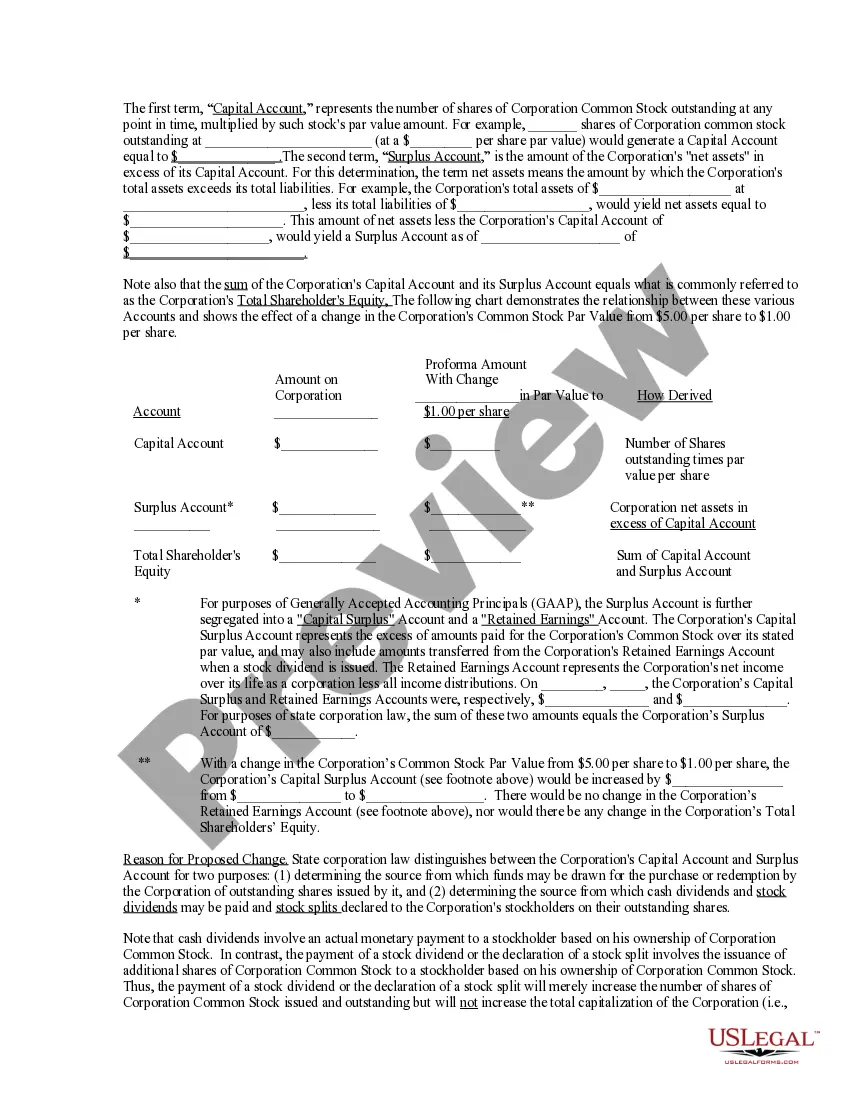
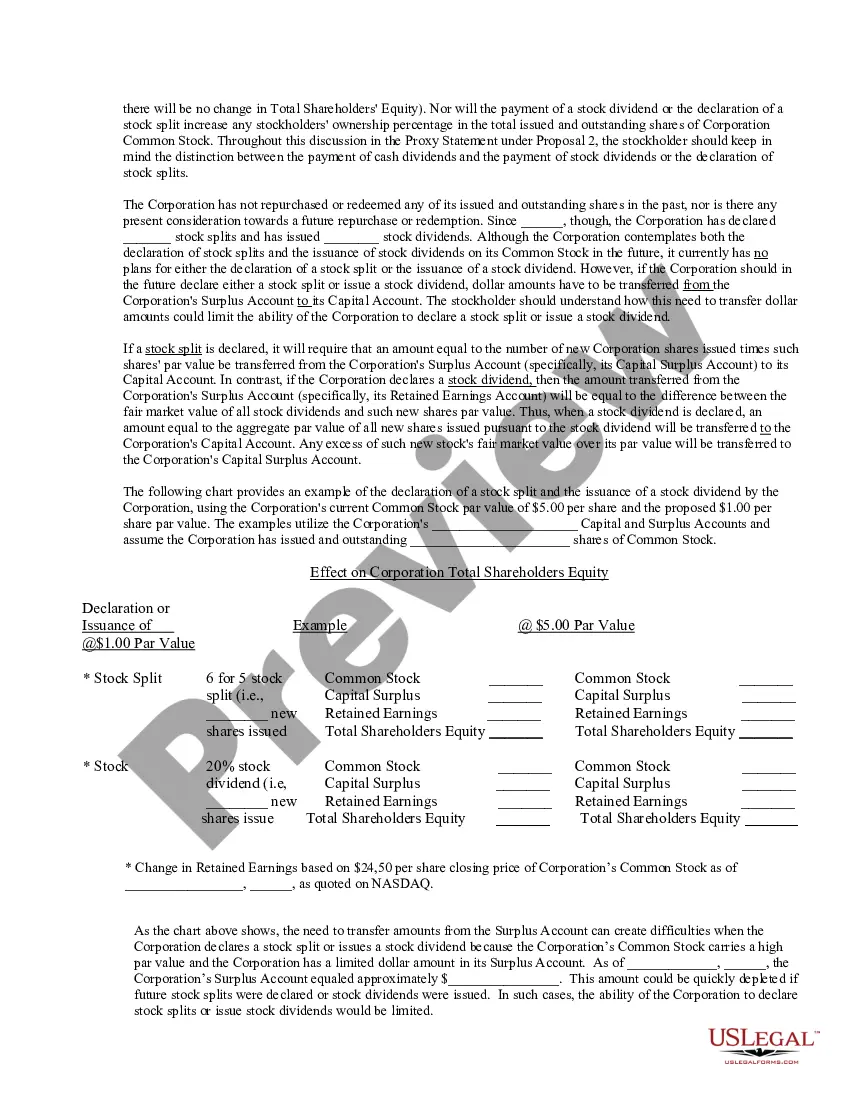
On the balance sheet, the par value of outstanding shares is recorded to common stock, and the excess (that is, the amount the market price adds to par value) is recorded to additional paid-in capital. The sum of common stock and additional paid-in capital represents the paid-in capital.
Par value, also known as nominal or original value, is the face value of a bond or the value of a stock certificate, as stated in the corporate charter. Stock certificates issued for purchased shares show the par value.
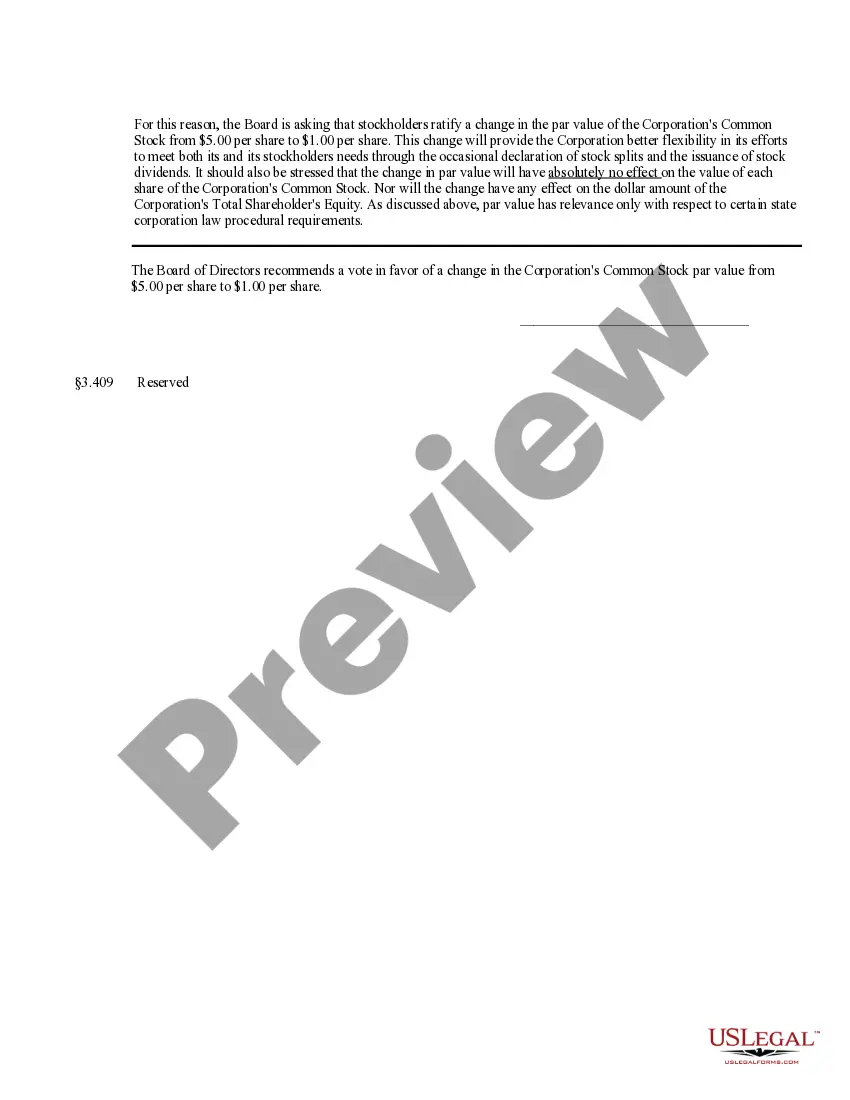
Par value is the value of a single common share as set by a corporation's charter. It is not typically related to the actual value of the shares. In fact it is often lower. Any stock certificate issued for shares purchased shows the par value. When authorizing shares, a company can choose to assign a par value or not.
The par value is the minimum price at which a corporation can legally sell its shares, and most are priced below $0.01. As a real-life example, Apple (NASDAQ: AAPL) has set its common stock's par value at $0.00001 per share.
You can find the par value of a company's stock by examining the shareholder's equity section of the business's balance sheet. There you'll also find additional paid-in capital. Paid-in capital increases when the company issues shares to investors who pay more than par value, like in an initial public offering (IPO).