Par Value Formula Bond
Description
Get your form ready online
Our built-in tools help you complete, sign, share, and store your documents in one place.
Make edits, fill in missing information, and update formatting in US Legal Forms—just like you would in MS Word.
Download a copy, print it, send it by email, or mail it via USPS—whatever works best for your next step.
Sign and collect signatures with our SignNow integration. Send to multiple recipients, set reminders, and more. Go Premium to unlock E-Sign.
If this form requires notarization, complete it online through a secure video call—no need to meet a notary in person or wait for an appointment.
We protect your documents and personal data by following strict security and privacy standards.

Make edits, fill in missing information, and update formatting in US Legal Forms—just like you would in MS Word.

Download a copy, print it, send it by email, or mail it via USPS—whatever works best for your next step.

Sign and collect signatures with our SignNow integration. Send to multiple recipients, set reminders, and more. Go Premium to unlock E-Sign.

If this form requires notarization, complete it online through a secure video call—no need to meet a notary in person or wait for an appointment.

We protect your documents and personal data by following strict security and privacy standards.
Looking for another form?




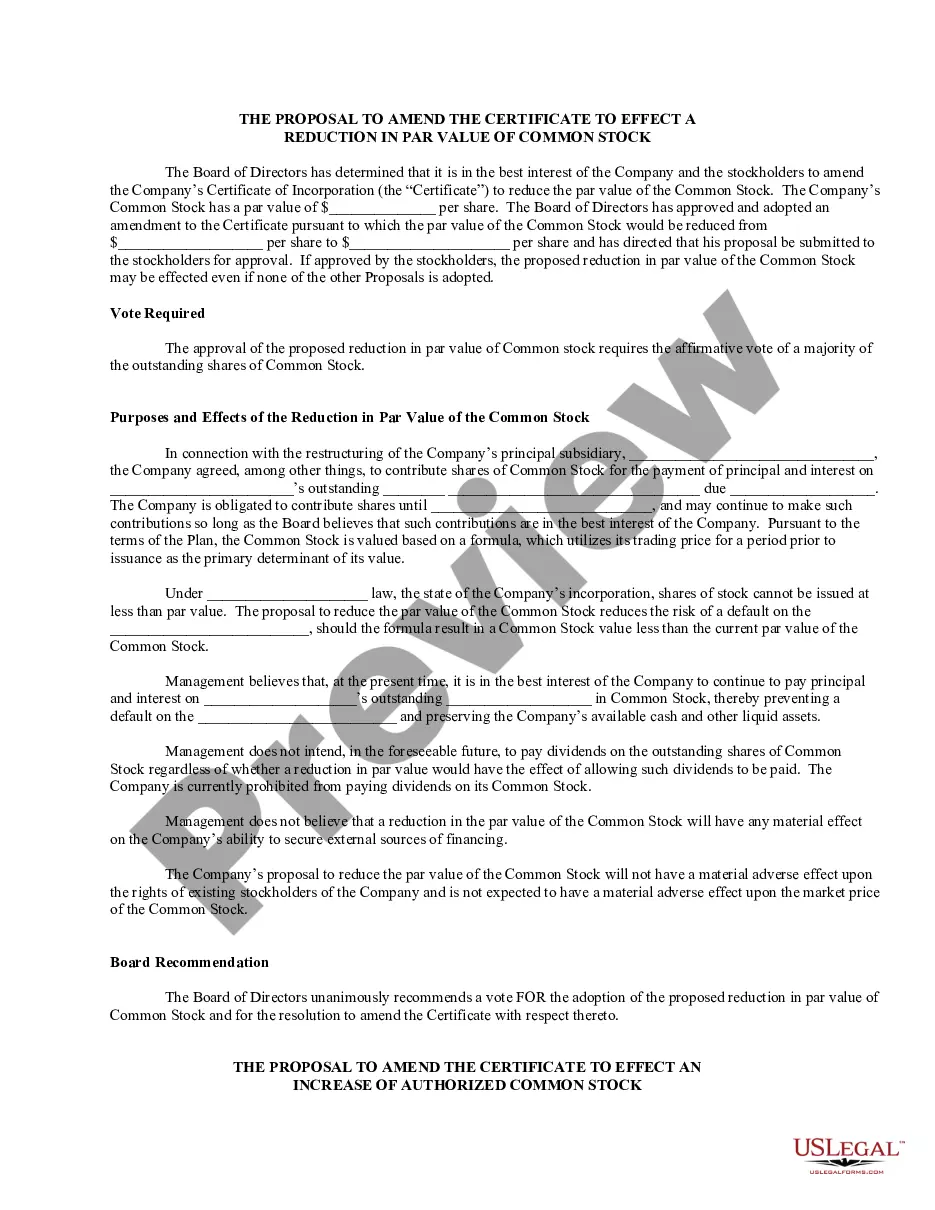
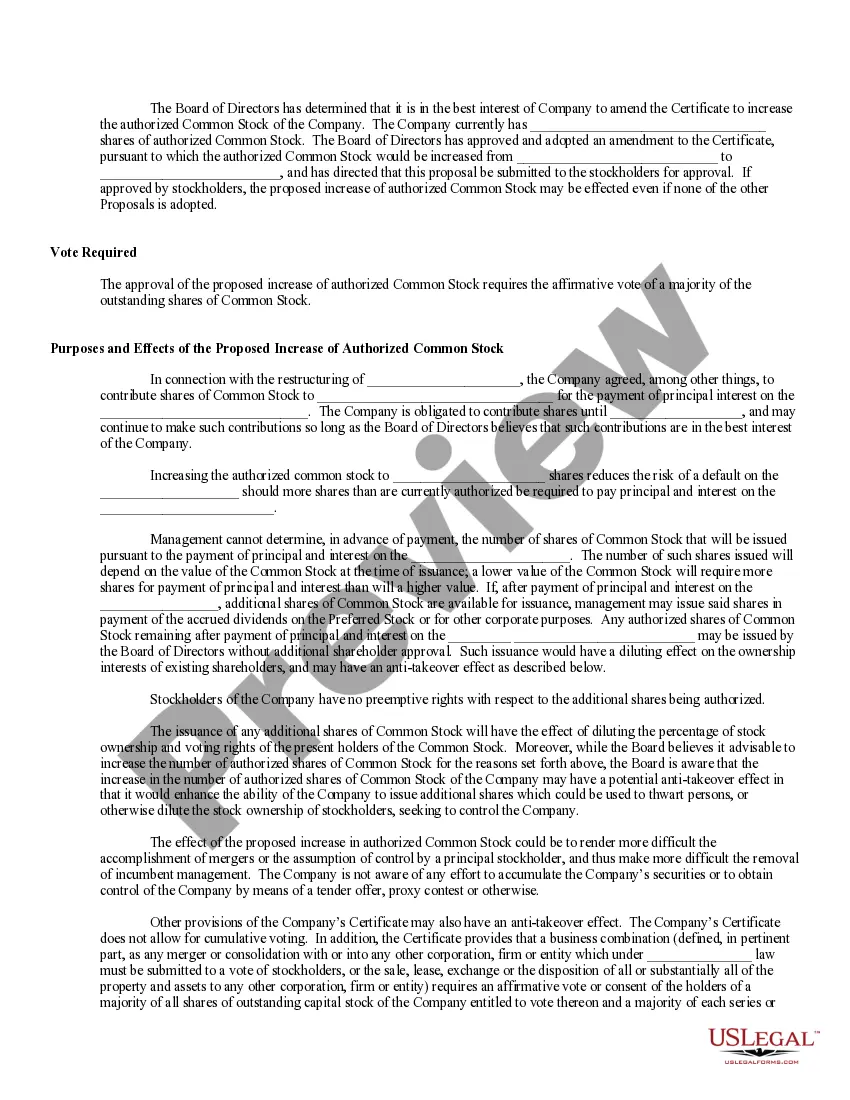
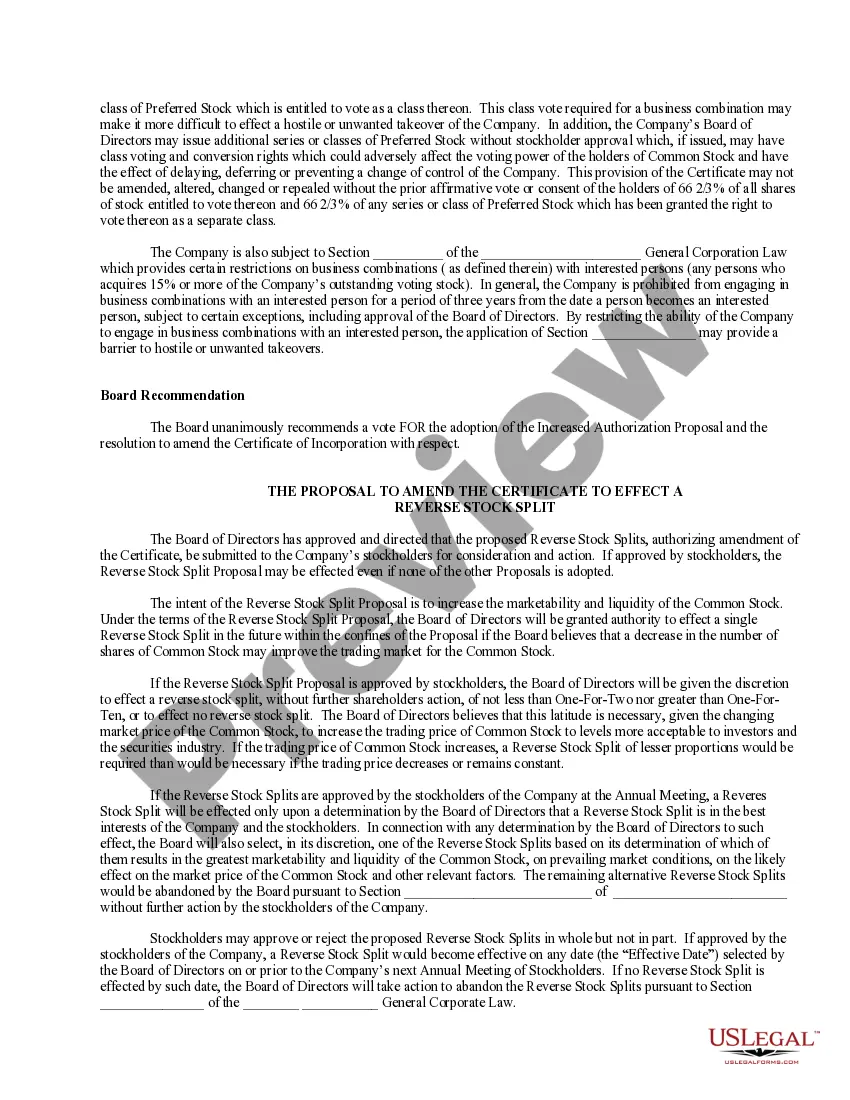
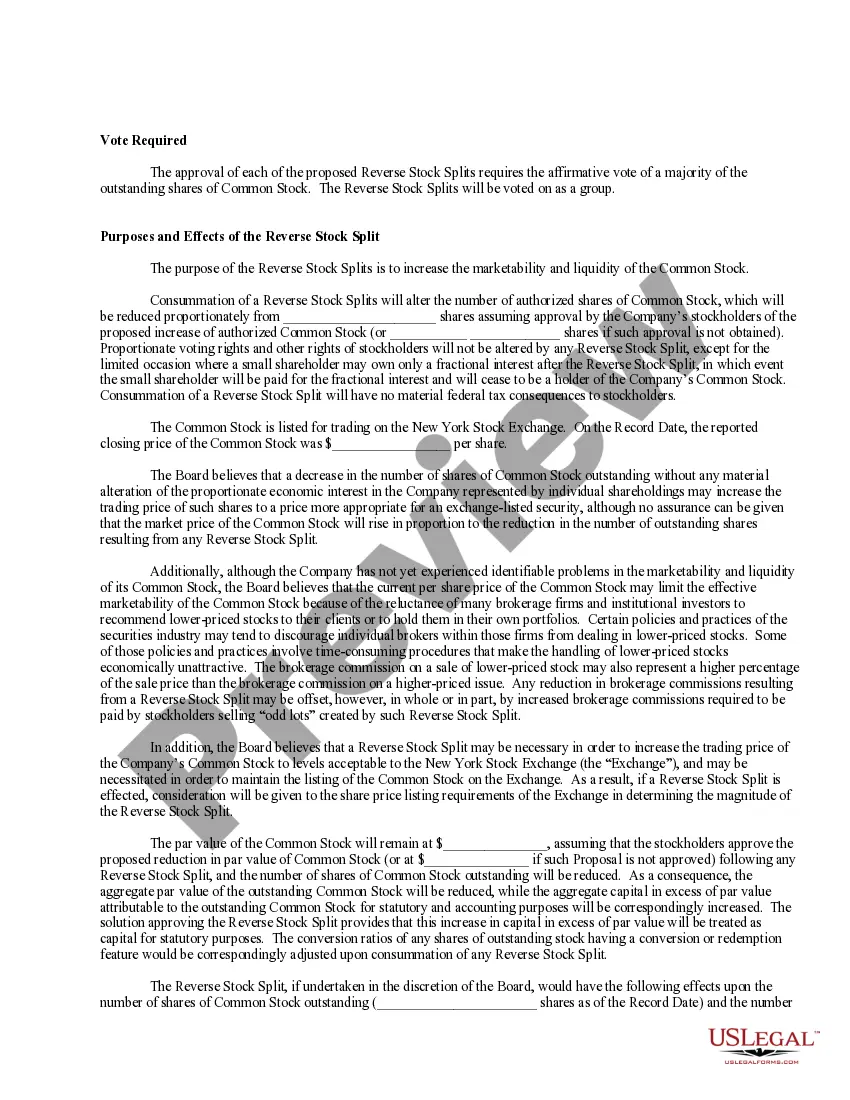
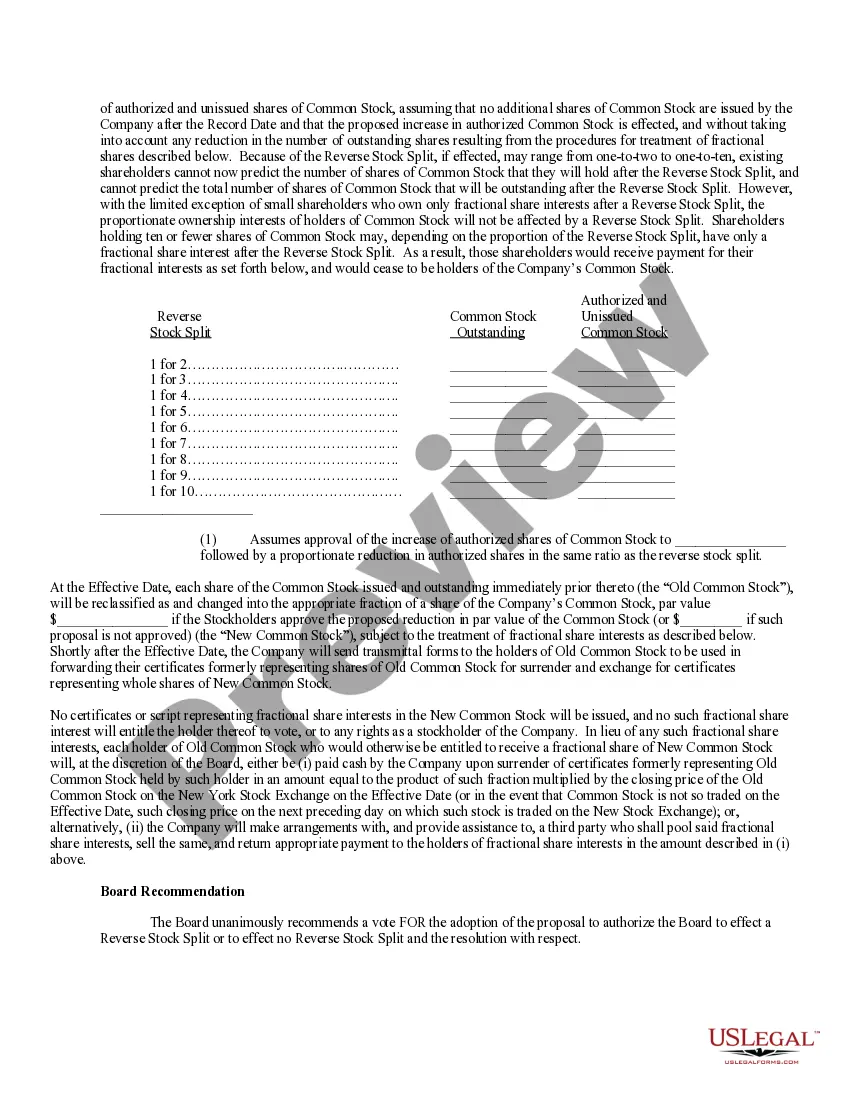
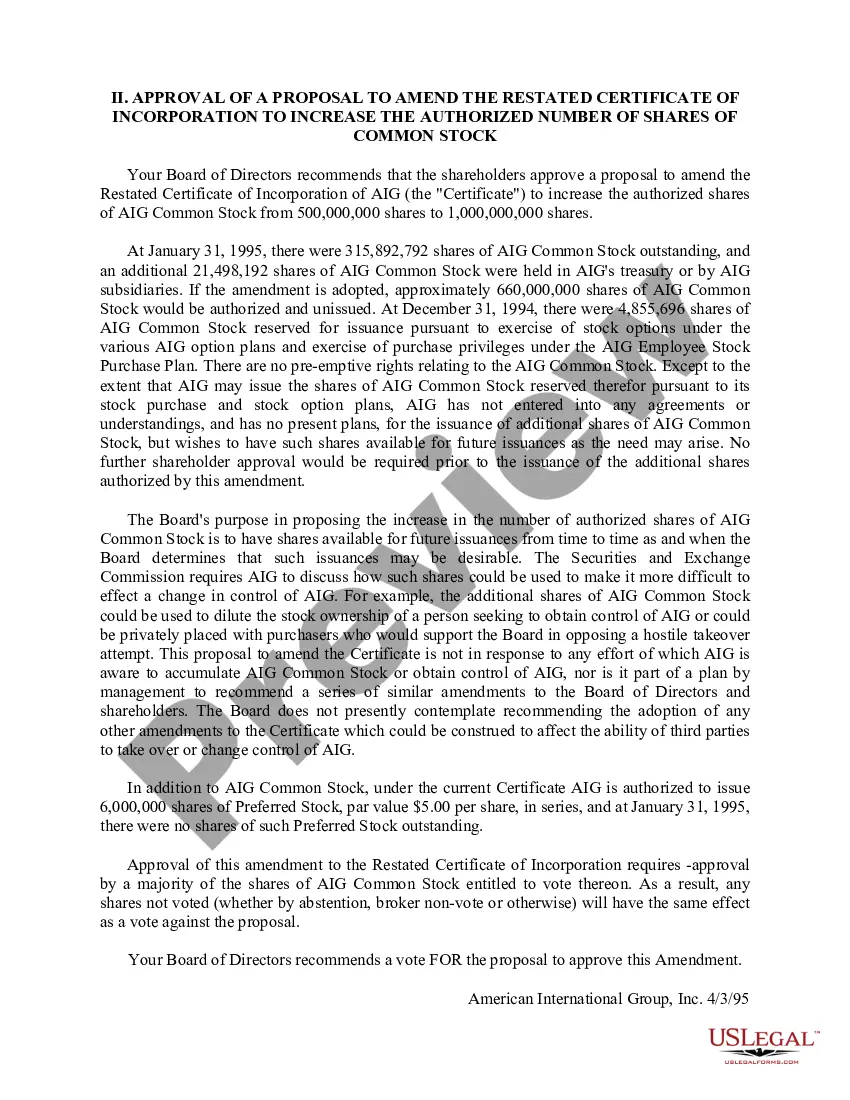
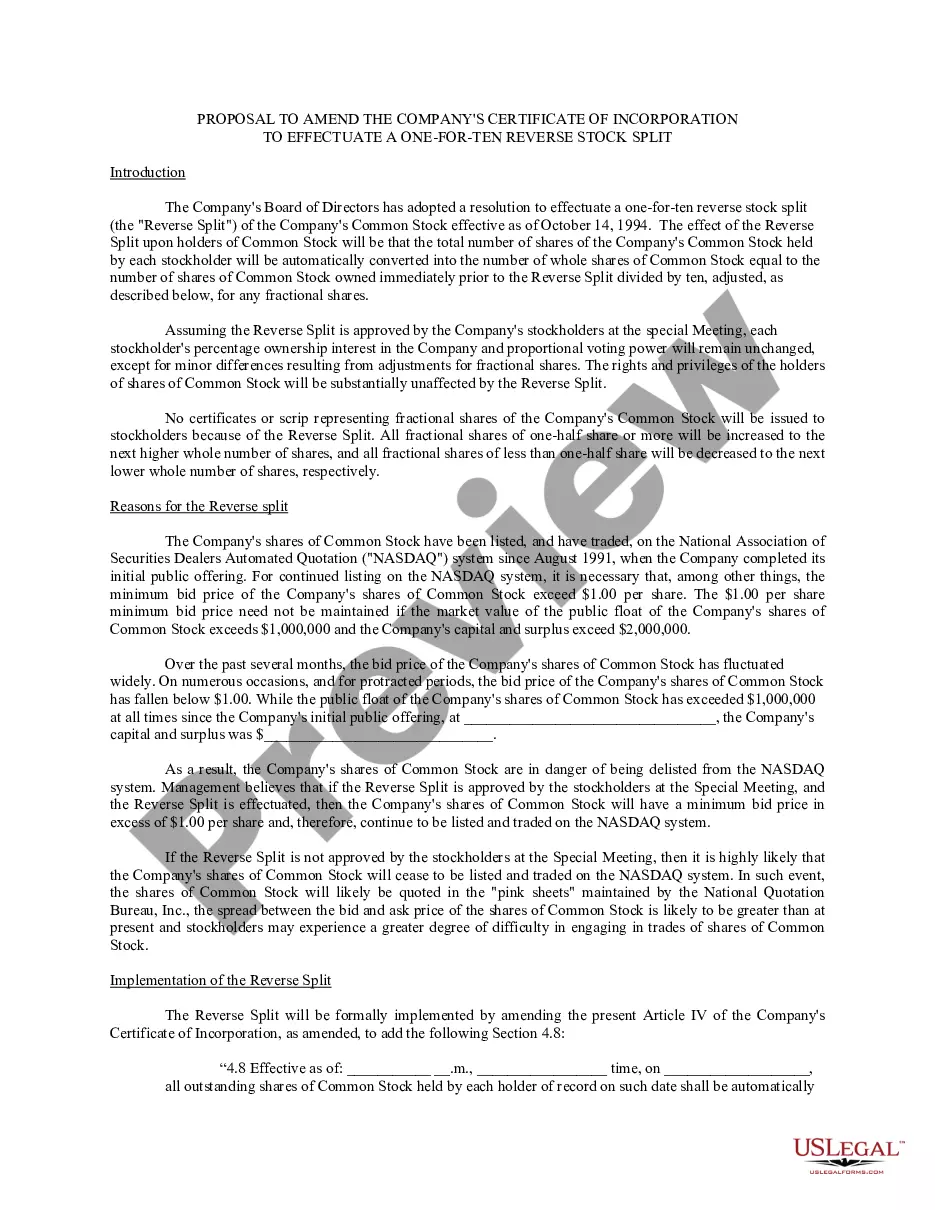
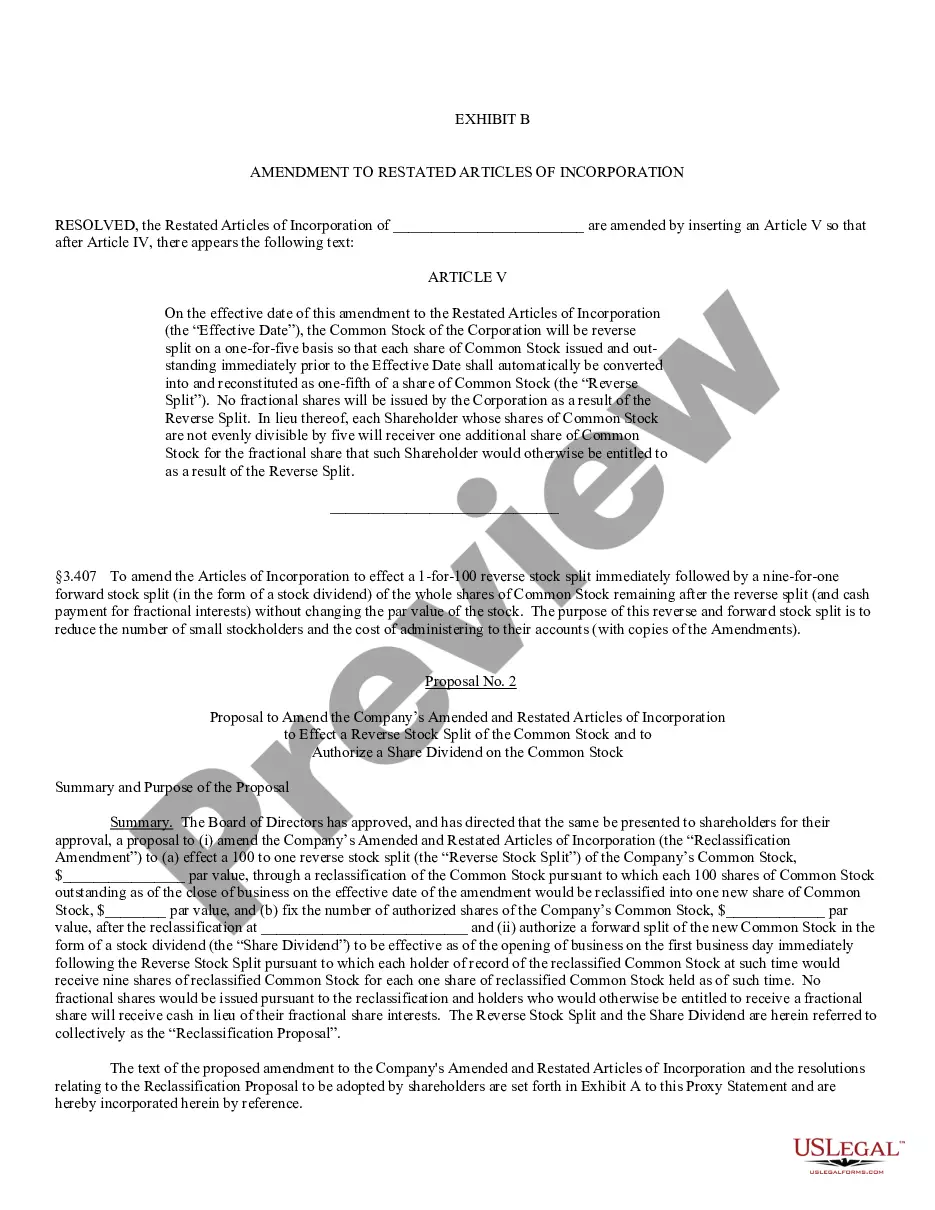
How to fill out Proposal To Amend Certificate To Reduce Par Value, Increase Authorized Common Stock And Reverse Stock Split With Exhibit?
Creating legal documents from the ground up can frequently be daunting.
Certain situations may require extensive research and considerable financial investment.
If you seek a more direct and economical method of preparing the Par Value Formula Bond or any other documentation without unnecessary hurdles, US Legal Forms is always readily available.
Our digital library of over 85,000 current legal documents addresses nearly every aspect of your financial, legal, and personal matters.
- With just a few clicks, you can swiftly access state- and county-specific templates meticulously crafted for you by our legal professionals.
- Utilize our platform whenever you need a dependable service through which you can effortlessly find and retrieve the Par Value Formula Bond.
- If you’re familiar with our services and have set up an account previously, simply Log In to your profile, select the form and download it, or re-download it later from the My documents section.
- Not registered yet? No problem. It requires minimal time to sign up and explore the library.
Form popularity
FAQ
To calculate the par value of a bond, simply refer to the bond's issuance details, as the par value is typically stated on the bond certificate itself. This value represents the initial amount invested, not how the bond might trade in the market. Knowing how to use the par value formula bond can help you assess your investment's worth over time. For more in-depth assistance, you can rely on uslegalforms platform for guidance on bond valuation and related documents.
Finding the par value of a bond is straightforward. Start by checking the bond details in your investment records or on financial platforms where the bond is listed. The par value is pivotal in bond evaluations and is usually evident in the bond’s offering documents. For a clearer understanding of bonds, including the par value formula bond, consider using uslegalforms; it can simplify your bond-related inquiries with user-friendly resources and templates.
The company's par value is calculated by multiplying the par value per share by the total number of shares issued. That means you'll just need to grab your calculator and key in the math.
The par value is traditionally set at 100, representing 100% of a bond's $1,000 face value. Bond quotes may also be expressed as fractions.
Calculating Par Value A bond's par value is the face value of the bond plus coupon payments, annually or sem-annually, owed to the bondholders by the issuer of the debt. A bond with a par value of $1,000 and a coupon rate of 4% will have annual interest payments of 4% x $1,000 = $40.
A bond's par value is its face value, the price that it was issued at. Most bonds are issued with a par value of $1,000 or $100. Over time, the bond's price will change, due to changes in interest rates, credit ratings, and time to maturity.
What Is a Bond's Par Value? A bond's par value is its face value, the price that it was issued at. Most bonds are issued with a par value of $1,000 or $100. Over time, the bond's price will change, due to changes in interest rates, credit ratings, and time to maturity.