Par Value For Common Stock
Description
Get your form ready online
Our built-in tools help you complete, sign, share, and store your documents in one place.
Make edits, fill in missing information, and update formatting in US Legal Forms—just like you would in MS Word.
Download a copy, print it, send it by email, or mail it via USPS—whatever works best for your next step.
Sign and collect signatures with our SignNow integration. Send to multiple recipients, set reminders, and more. Go Premium to unlock E-Sign.
If this form requires notarization, complete it online through a secure video call—no need to meet a notary in person or wait for an appointment.
We protect your documents and personal data by following strict security and privacy standards.

Make edits, fill in missing information, and update formatting in US Legal Forms—just like you would in MS Word.

Download a copy, print it, send it by email, or mail it via USPS—whatever works best for your next step.

Sign and collect signatures with our SignNow integration. Send to multiple recipients, set reminders, and more. Go Premium to unlock E-Sign.

If this form requires notarization, complete it online through a secure video call—no need to meet a notary in person or wait for an appointment.

We protect your documents and personal data by following strict security and privacy standards.
Looking for another form?









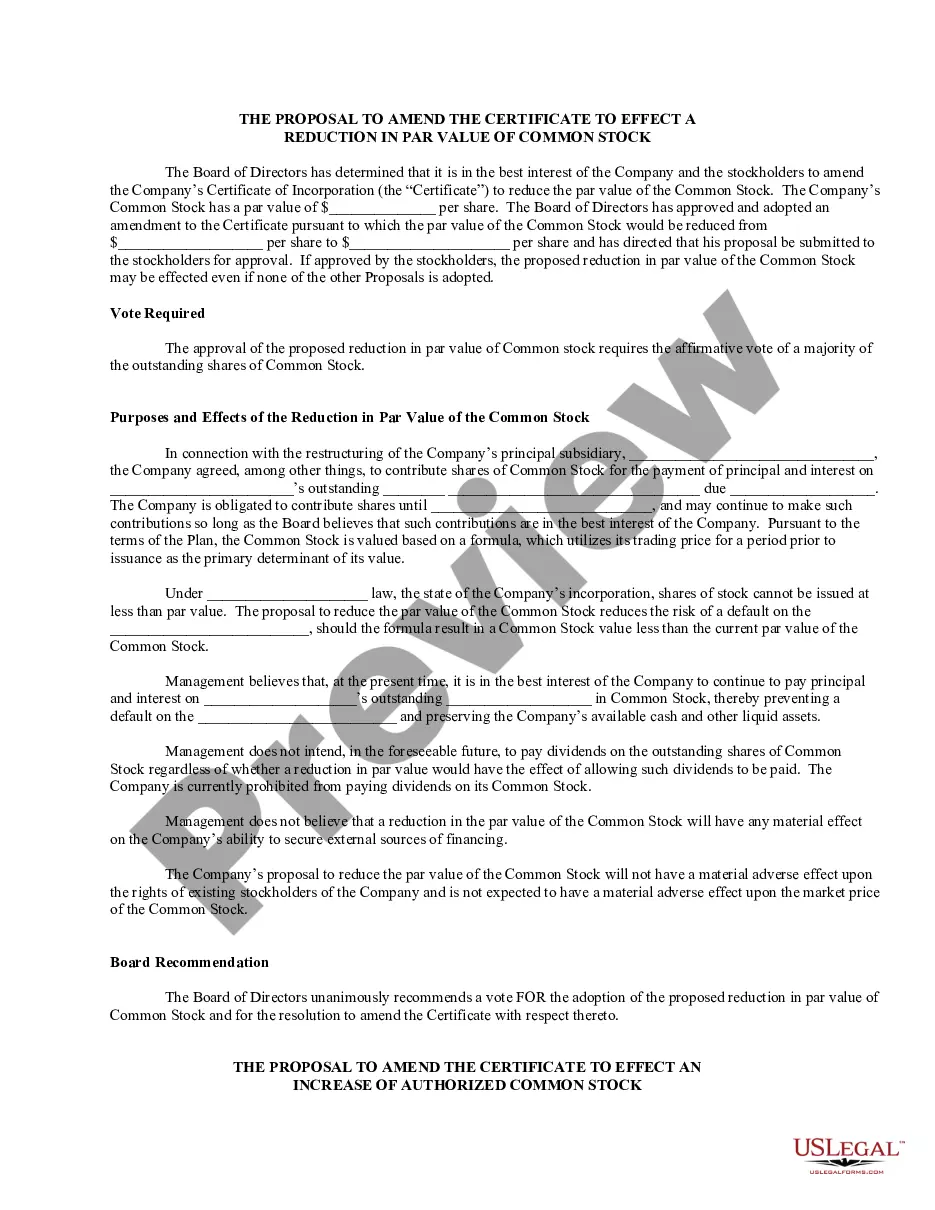
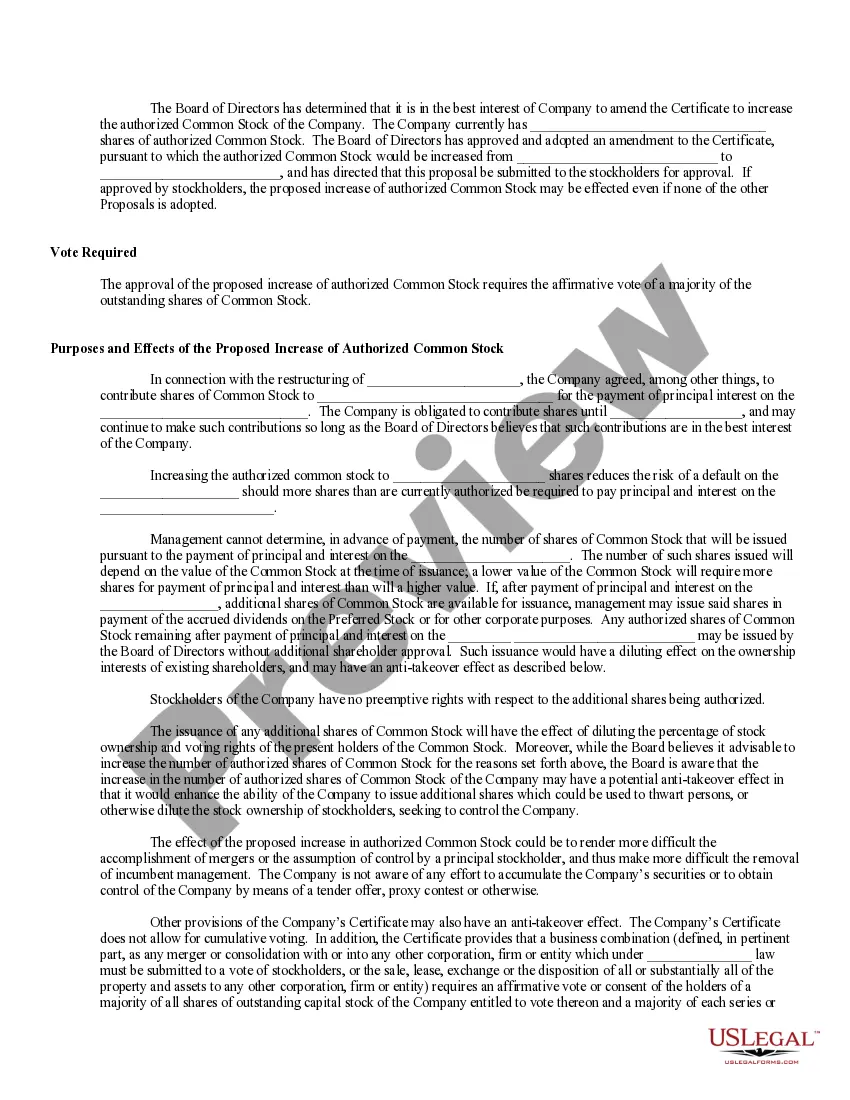
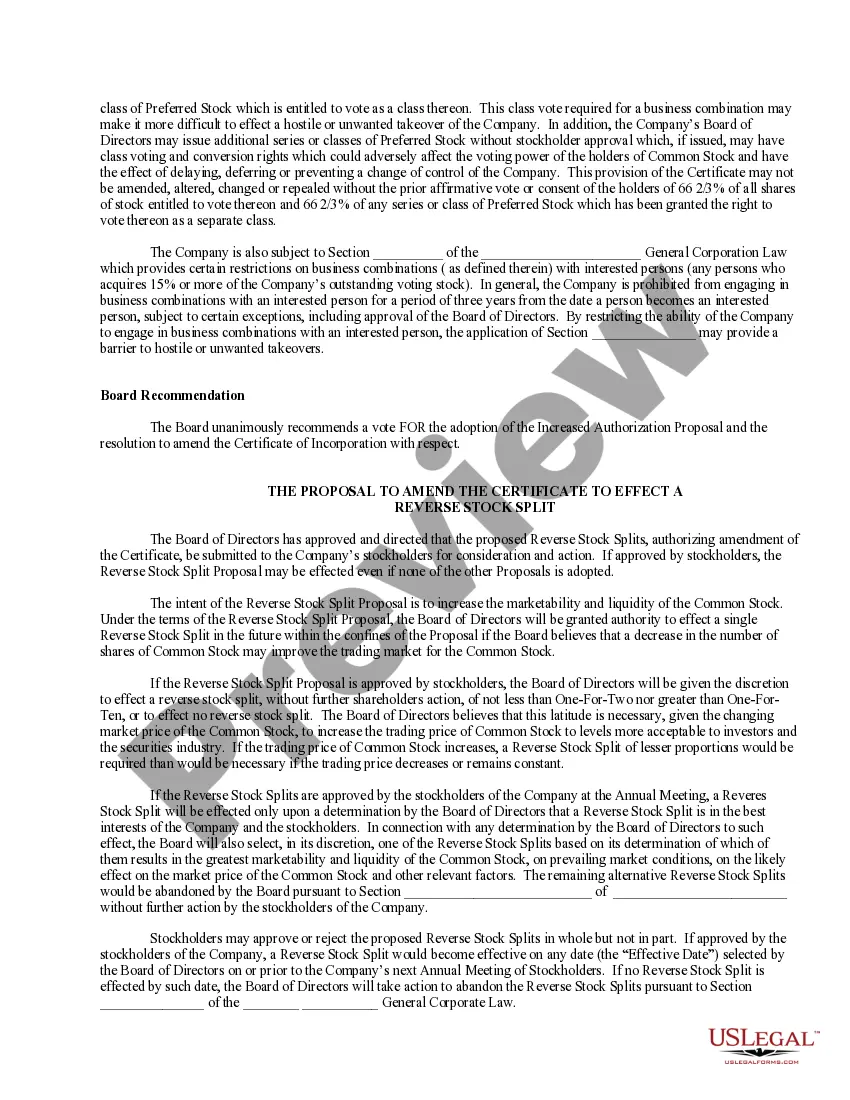
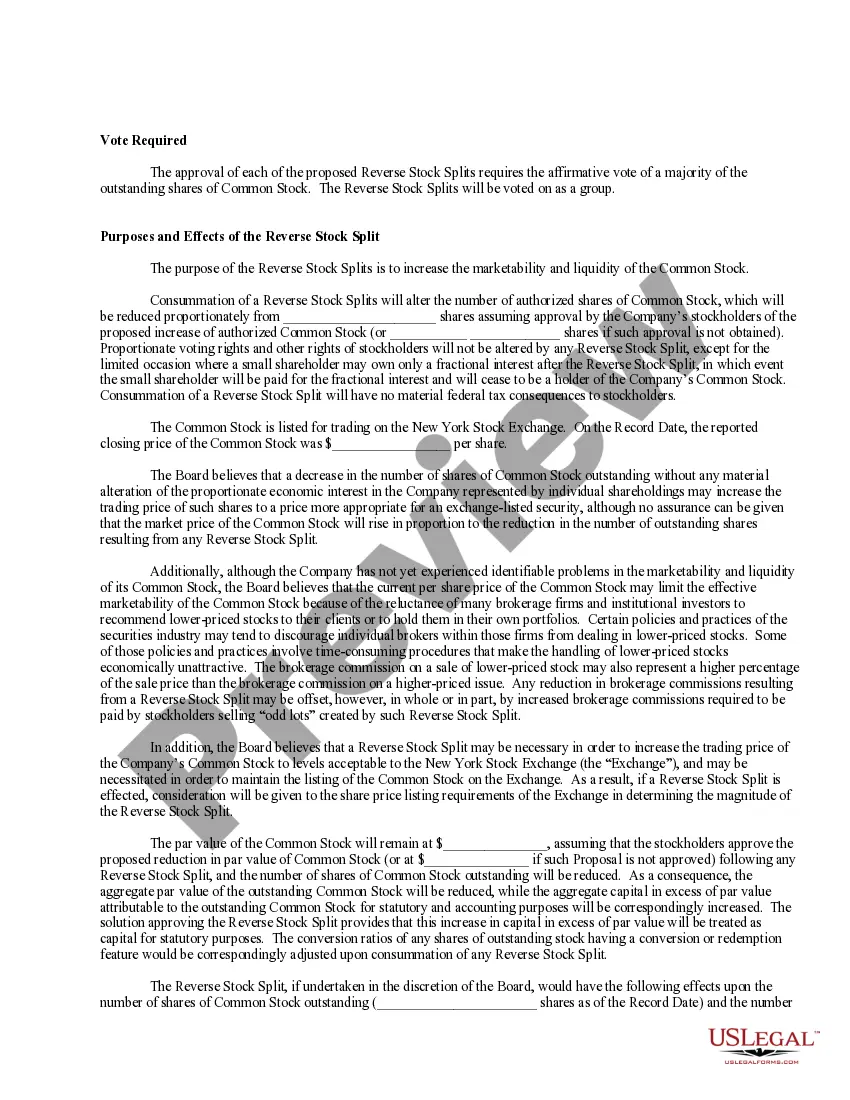
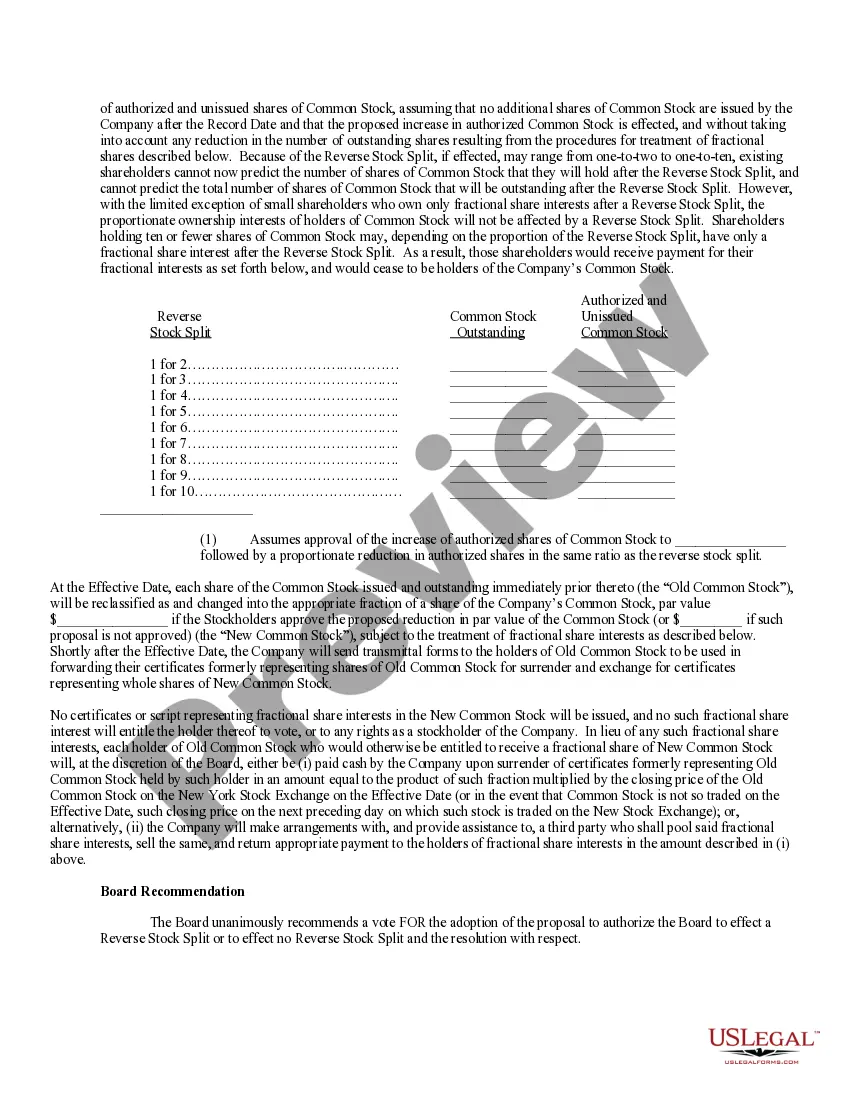
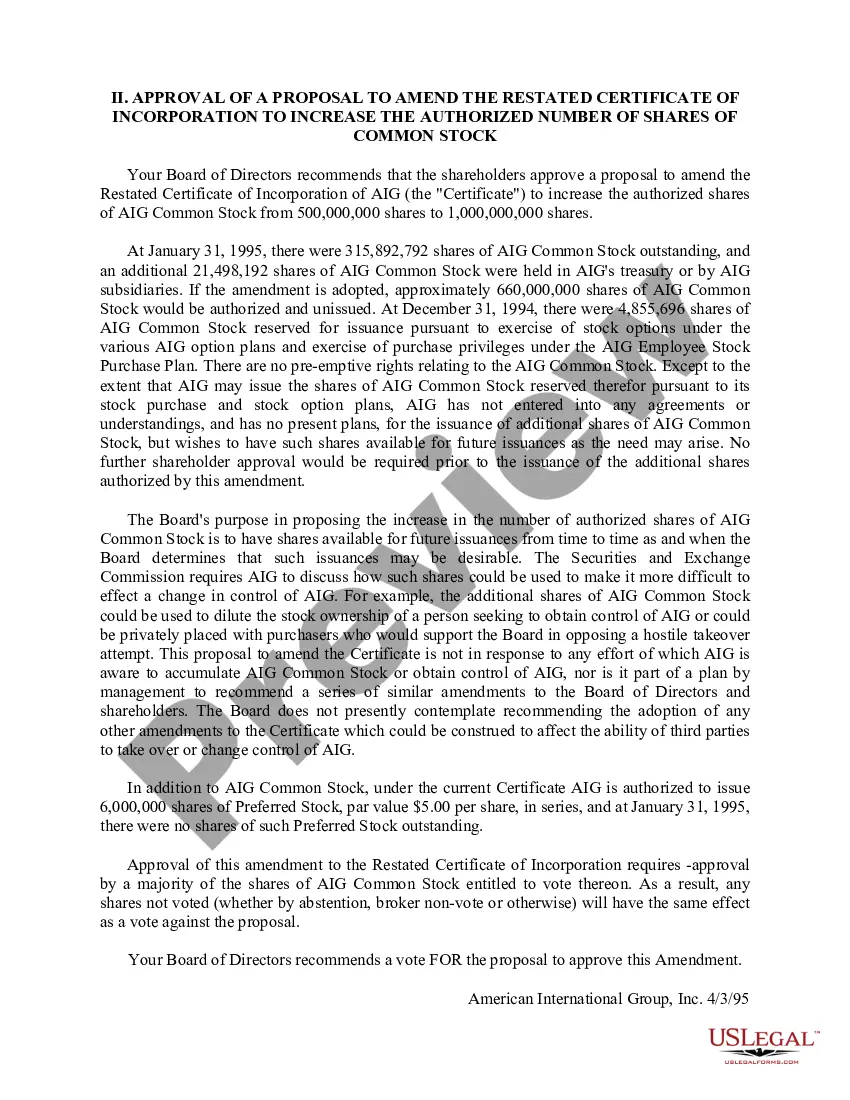
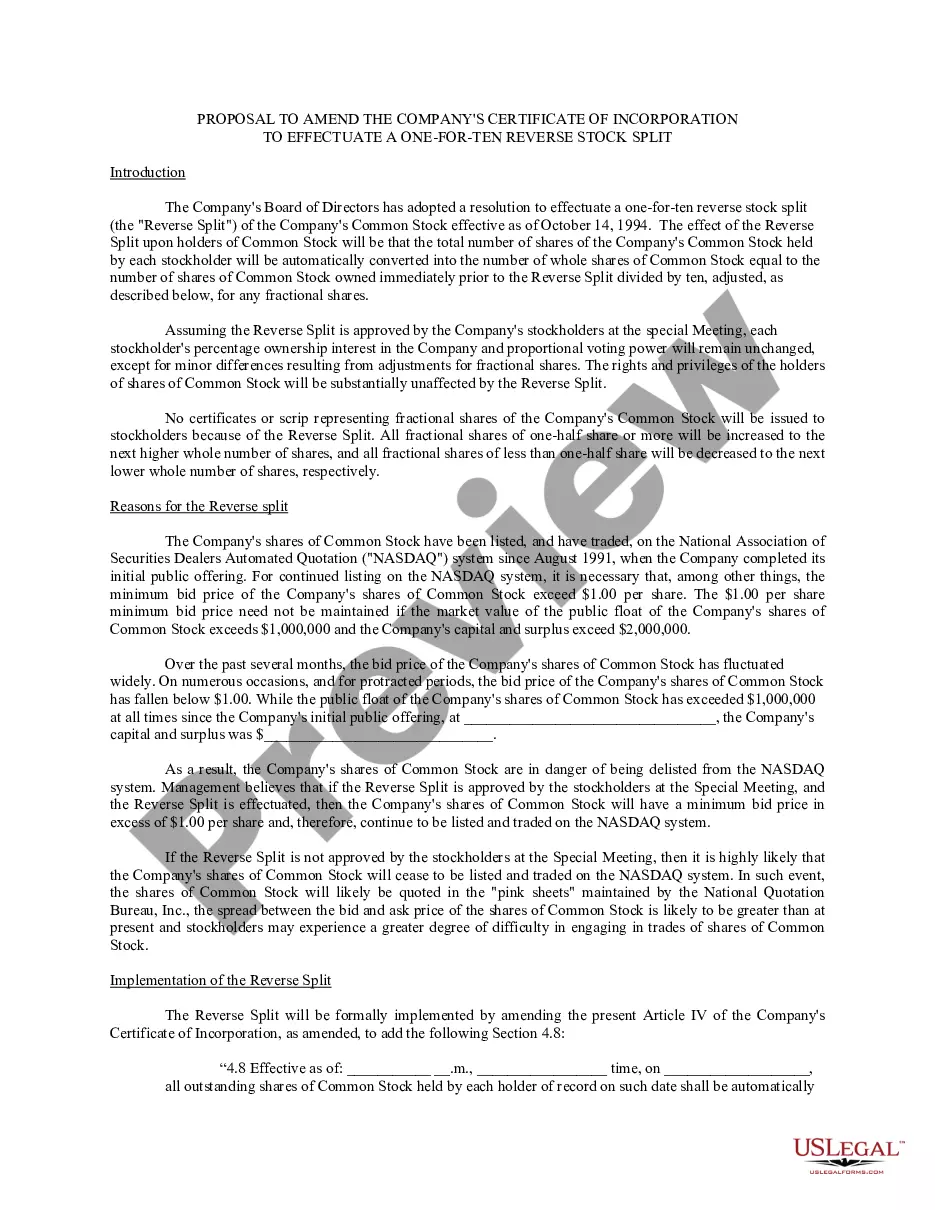
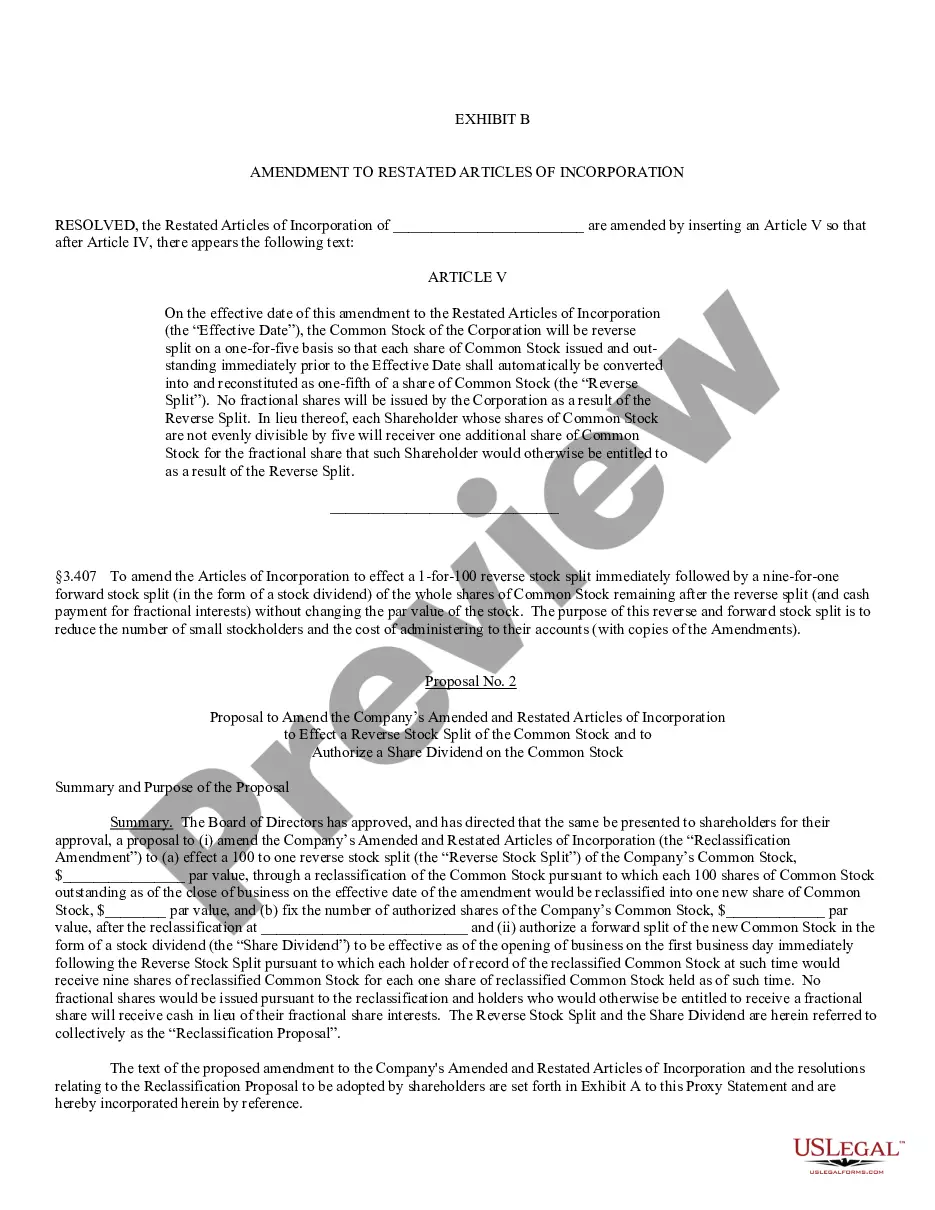
How to fill out Proposal To Amend Certificate To Reduce Par Value, Increase Authorized Common Stock And Reverse Stock Split With Exhibit?
Legal documentation handling can be daunting, even for experienced professionals.
When you seek a Par Value For Common Stock but lack the opportunity to invest time in finding the right and up-to-date version, the processes can be challenging.
Tap into a wealth of articles, guides, and resources relevant to your circumstances and needs.
Conserve time and effort in locating the necessary documents, and leverage US Legal Forms’ advanced search and Preview feature to find Par Value For Common Stock and acquire it.
Enjoy the US Legal Forms online library, backed by 25 years of experience and reliability. Improve your daily document management with a simple and user-friendly process today.
- If you possess a monthly subscription, Log In to the US Legal Forms account, search for the form, and acquire it.
- Check your My documents section to review the documents you have previously downloaded and manage your folders as you prefer.
- If it’s your first experience with US Legal Forms, create a free account and get unrestricted access to all the benefits of the library.
- Below are the steps to follow after accessing the form you need.
- Confirm this is the right form by previewing it and examining its details.
- Make sure that the template is valid in your state or county.
- Click Buy Now when you are ready.
- Choose a subscription plan.
- Select the format you prefer, and Download, complete, eSign, print, and send your documents.
- Access local or region-specific legal and business documents.
- US Legal Forms meets any needs you may have, from personal to business paperwork, all in one place.
- Utilize sophisticated tools to manage and complete your Par Value For Common Stock.
Form popularity
FAQ
Par value for common stock refers to the nominal value assigned to a share when it is issued. For example, if a company issues shares with a par value of $1, then each share represents that amount on the company's balance sheet. This value is important for legal purposes and can affect the company's ability to raise capital. However, it is not necessarily indicative of the stock's market value, which can fluctuate based on demand and other factors.
To find the par value of common stock, review the company’s articles of incorporation or consult its annual reports. These documents typically outline share allocations and associated par values. You could also utilize platforms like USLegalForms, which provide concise information on corporate disclosures. This approach ensures you have the most accurate data to evaluate your investment orientation.
Common stocks may or may not have par value, depending on the company's structure and state laws. While many modern companies opt for no-par stock, the designation of par value can still play a role in legal and financial contexts. If you are exploring a company's common stock, checking its par value is essential for understanding its regulatory commitments. This knowledge is critical to making informed investment choices.
You can find the par value for common stock in the company's articles of incorporation, annual reports, or through their investor relations website. Additionally, financial databases and platforms like USLegalForms can offer insights into corporate filings that include par value information. Exploring these resources can help you understand the stock's structure better and guide effective investment decisions.
Yes, common stock can have a par value, though it’s not always required. Many companies set a nominal par value for legal compliance, while some choose to issue no-par stock. The presence of par value for common stock can affect regulations regarding shareholder equity and corporate shares. Awareness of par value can provide clarity on a company’s financial obligations.
To calculate par value for common stock, you need to refer to the company's articles of incorporation. Typically, the par value is the nominal value assigned to each share, which is often set at a very low amount, like $0.01. By dividing the total value of the stock issued by the number of shares, you can arrive at the per-share par value. This value holds importance for accounting and legal purposes.
Yes, common stock is typically recorded at its par value in the company's financial records. This value represents the legal capital that shareholders must contribute to the corporation. By recording common stock at par value, your financial statements maintain transparency and comply with regulations.
To calculate the par value for common stock, divide the total amount of capital contributed for stock issuance by the total number of shares issued. This method gives you a straightforward way to express the minimum value of each share. Calculating par value accurately is essential for proper accounting and compliance with state laws.
To set the par value for common stock, you should determine a specific dollar amount that reflects the minimal legal value of the shares. This figure can be set during the incorporation process or later when your corporation undergoes restructuring. By deciding on a par value, you help establish a baseline for the stock's legal standing and financial reporting.
The par value for common stock plays a crucial role in a company's capital structure and financing strategies. When a company issues shares, it can set the par value to determine the minimum legal capital, which provides a safety net for creditors. By grasping the implications of par value for common stock, investors gain insights into the company's financial health. Utilizing USLegalForms can assist you in understanding how par value impacts business operations and investment decisions.