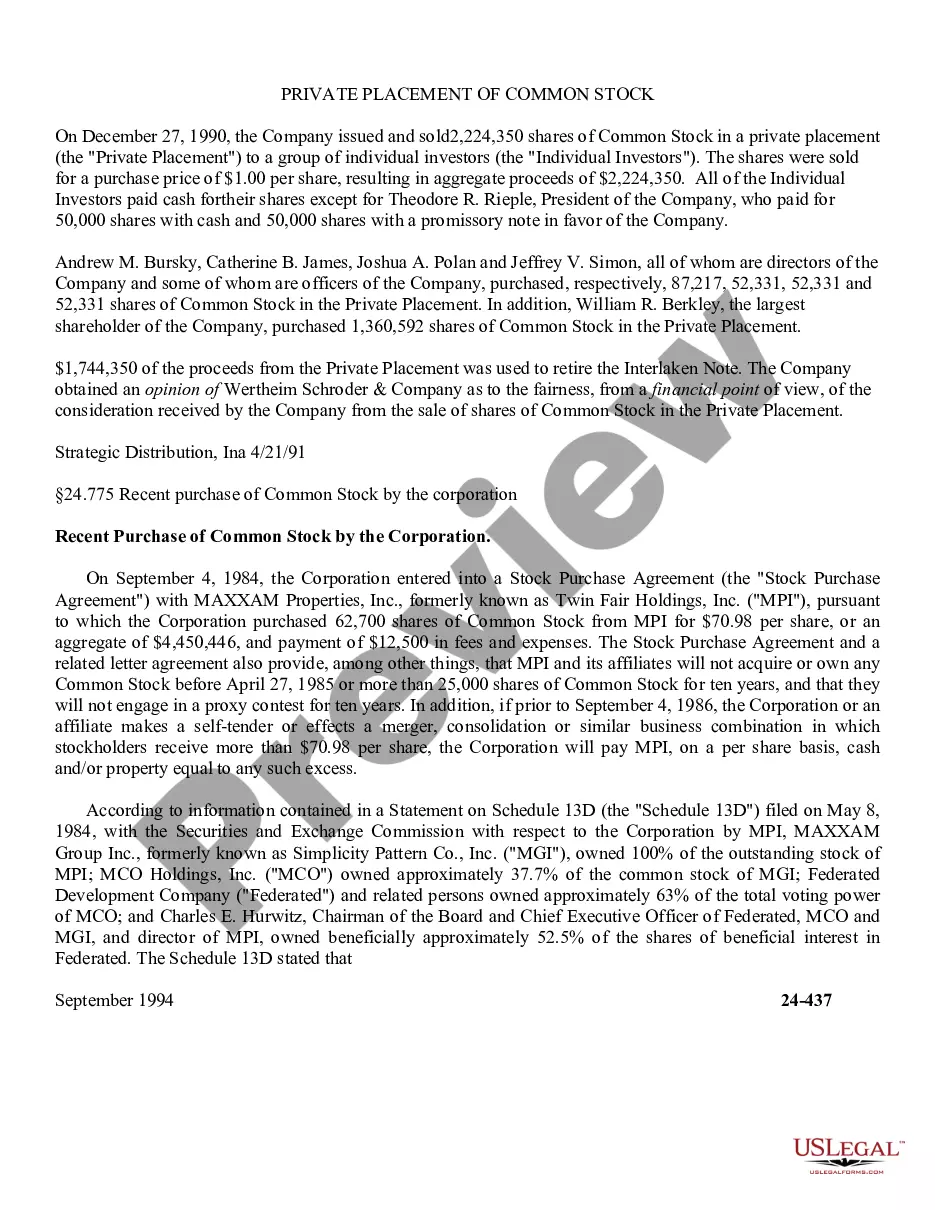
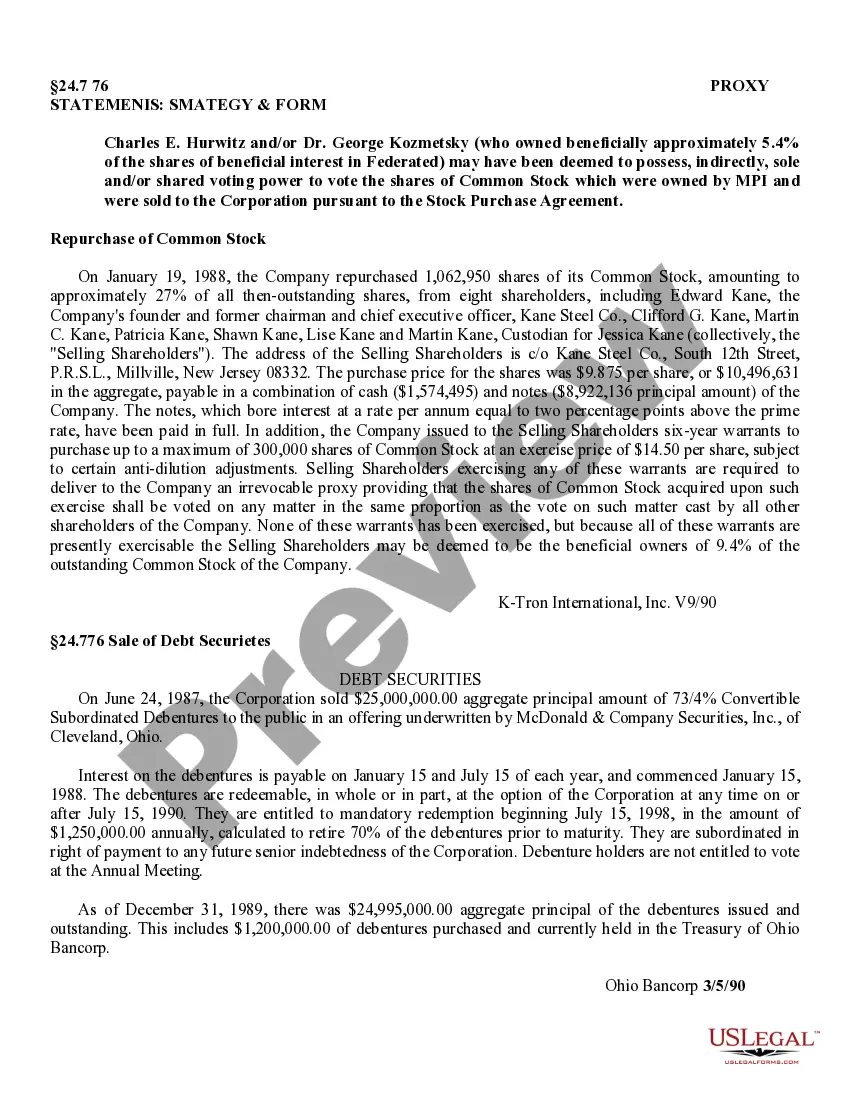
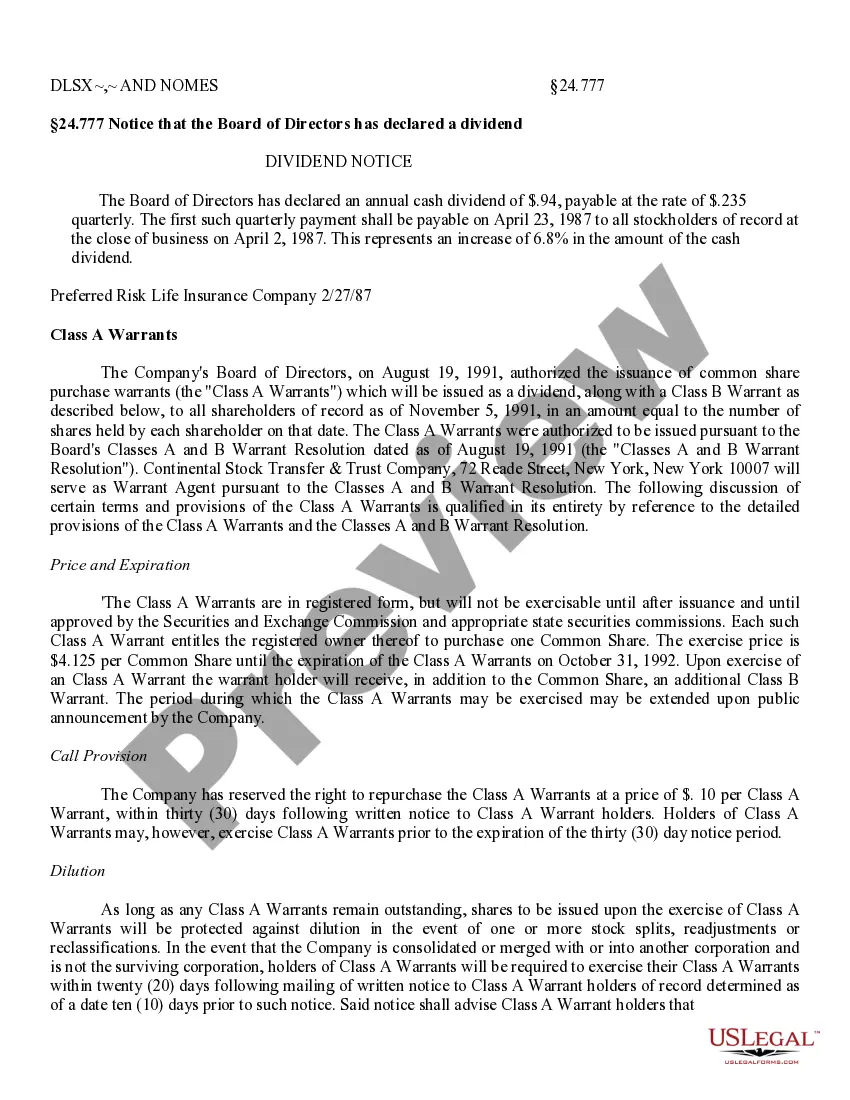
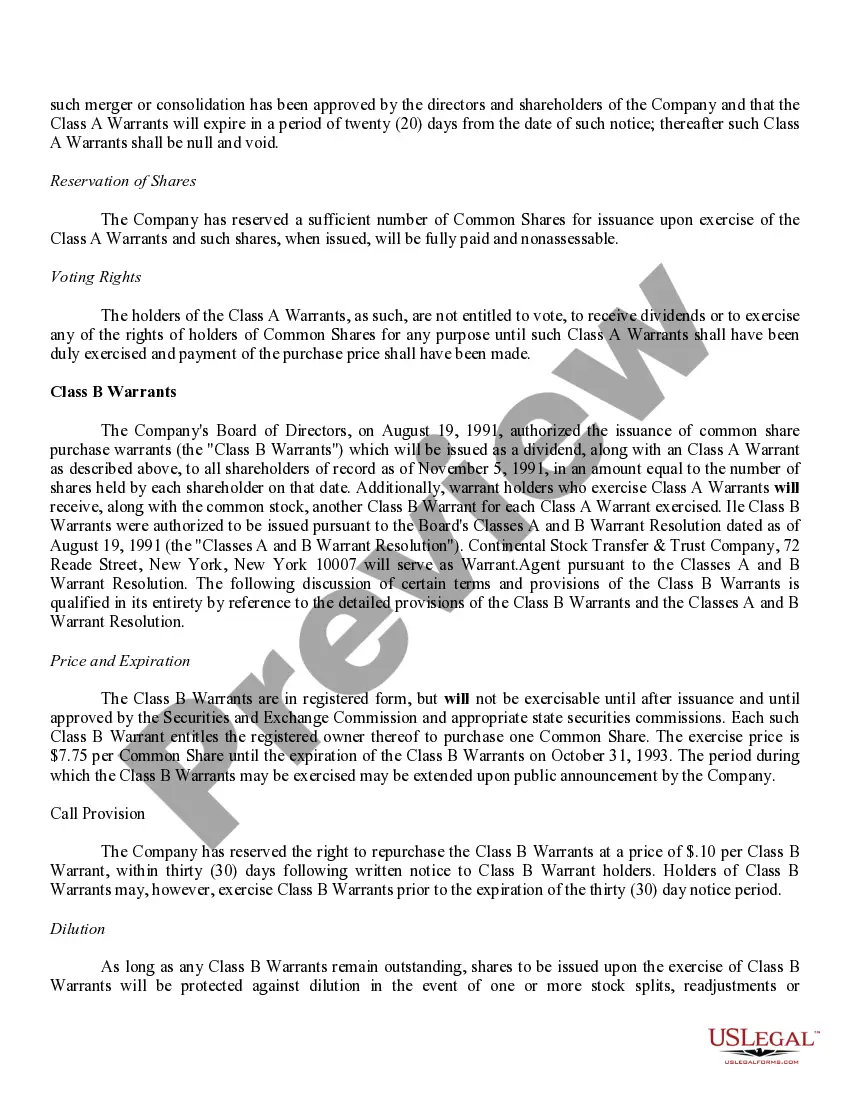
Private Placement Common Stock For $75 000
Description




Get your form ready online
Our built-in tools help you complete, sign, share, and store your documents in one place.
Make edits, fill in missing information, and update formatting in US Legal Forms—just like you would in MS Word.
Download a copy, print it, send it by email, or mail it via USPS—whatever works best for your next step.
Sign and collect signatures with our SignNow integration. Send to multiple recipients, set reminders, and more. Go Premium to unlock E-Sign.
If this form requires notarization, complete it online through a secure video call—no need to meet a notary in person or wait for an appointment.
We protect your documents and personal data by following strict security and privacy standards.

Make edits, fill in missing information, and update formatting in US Legal Forms—just like you would in MS Word.

Download a copy, print it, send it by email, or mail it via USPS—whatever works best for your next step.

Sign and collect signatures with our SignNow integration. Send to multiple recipients, set reminders, and more. Go Premium to unlock E-Sign.

If this form requires notarization, complete it online through a secure video call—no need to meet a notary in person or wait for an appointment.

We protect your documents and personal data by following strict security and privacy standards.
Looking for another form?








How to fill out Private Placement Of Common Stock?
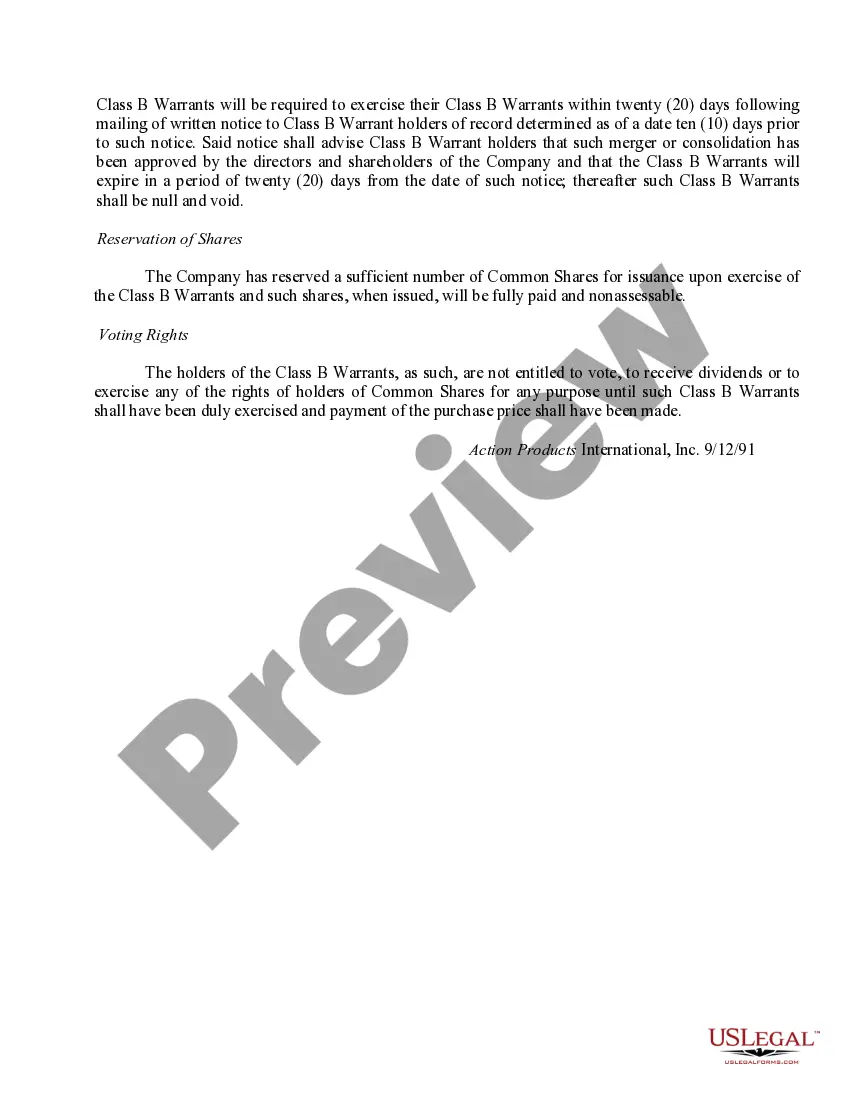
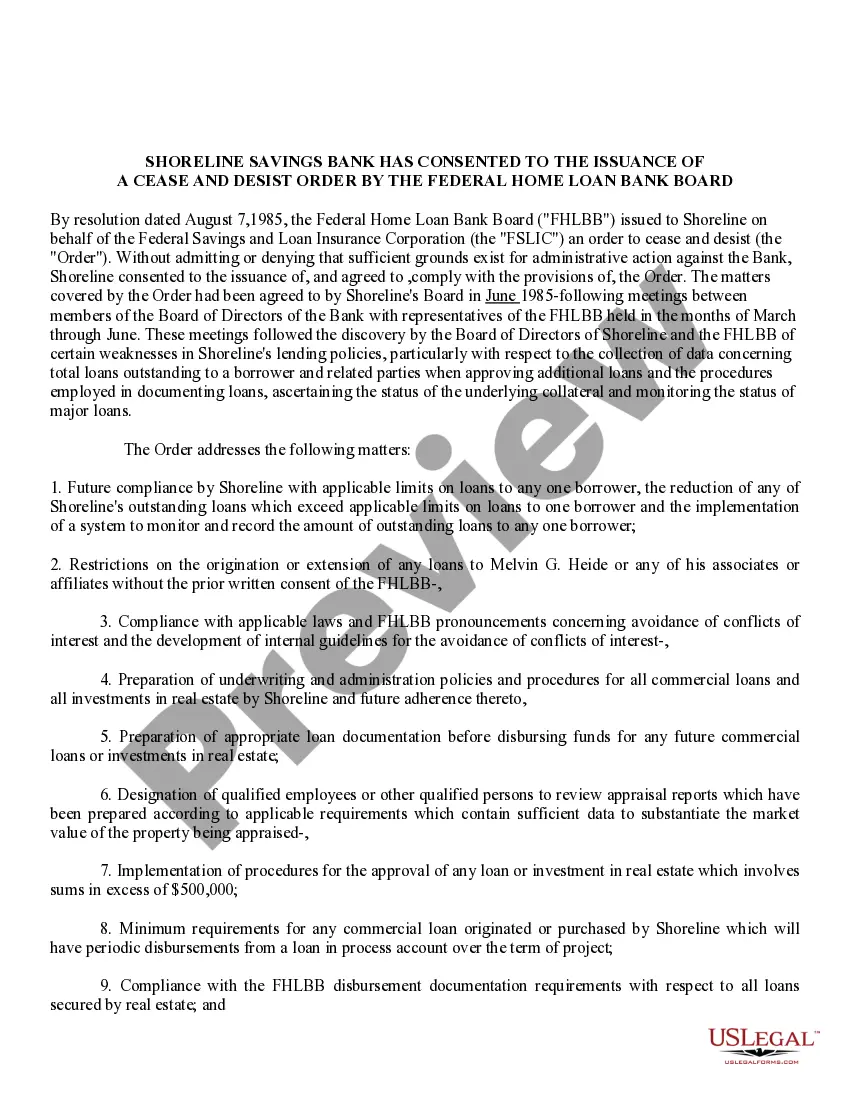
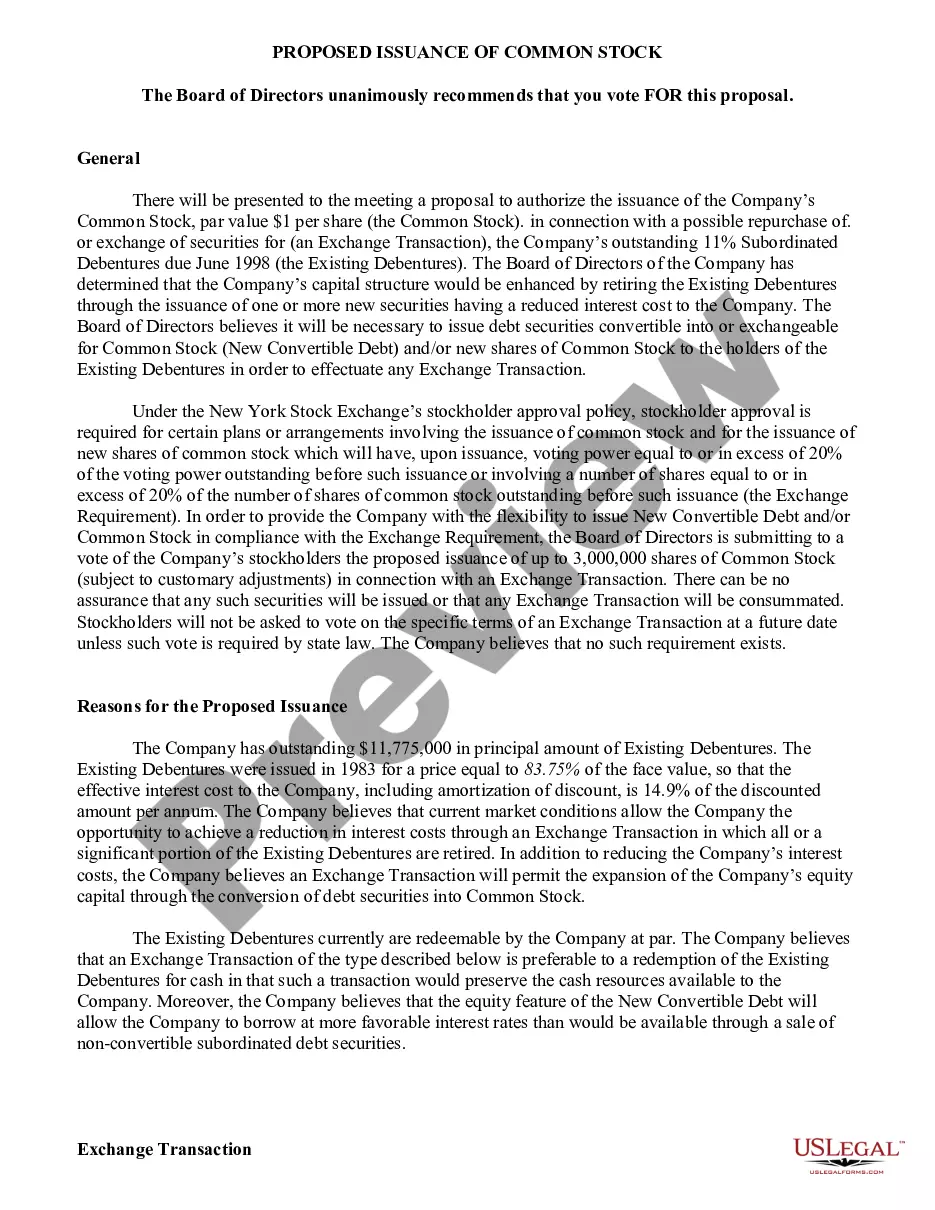
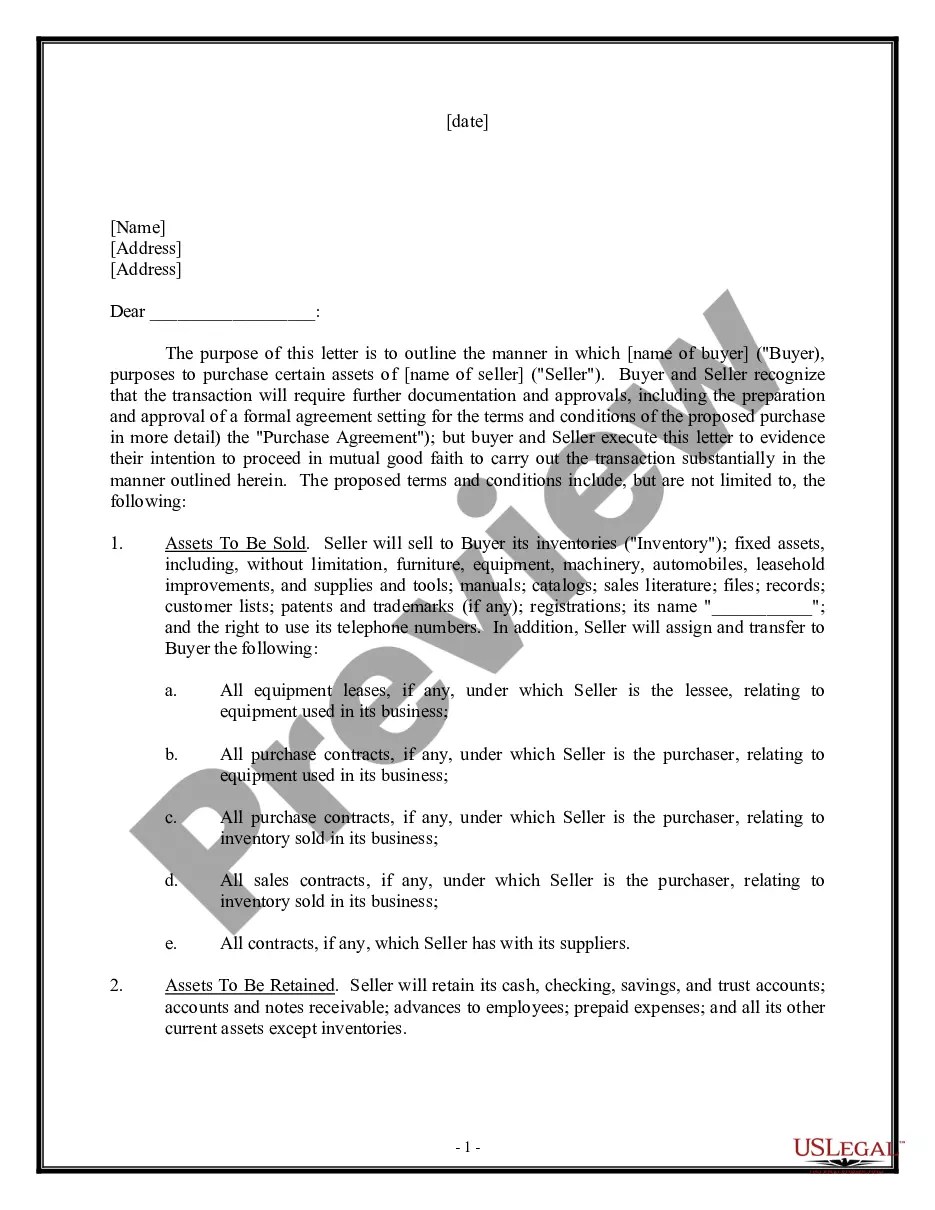
Dealing with legal documents and procedures can be a time-consuming addition to the day. Private Placement Common Stock For $75 000 and forms like it often need you to search for them and navigate the best way to complete them properly. Therefore, regardless if you are taking care of economic, legal, or personal matters, using a thorough and practical web catalogue of forms when you need it will significantly help.
US Legal Forms is the top web platform of legal templates, featuring over 85,000 state-specific forms and a variety of resources to assist you to complete your documents quickly. Explore the catalogue of pertinent documents available with just one click.
US Legal Forms gives you state- and county-specific forms offered by any moment for downloading. Safeguard your papers managing processes by using a high quality service that lets you prepare any form in minutes with no additional or hidden cost. Simply log in to your account, find Private Placement Common Stock For $75 000 and download it immediately in the My Forms tab. You can also access previously downloaded forms.
Would it be the first time making use of US Legal Forms? Register and set up up an account in a few minutes and you will get access to the form catalogue and Private Placement Common Stock For $75 000. Then, follow the steps listed below to complete your form:
- Be sure you have found the correct form using the Preview feature and looking at the form information.
- Choose Buy Now when all set, and select the subscription plan that fits your needs.
- Press Download then complete, eSign, and print out the form.
US Legal Forms has 25 years of experience helping users handle their legal documents. Obtain the form you need right now and streamline any process without breaking a sweat.
Form popularity
FAQ
The common stock balance is calculated as the nominal or par value of the common stock multiplied by the number of common stock shares outstanding. The nominal value of a company's stock is an arbitrary value assigned for balance sheet purposes when the company is issuing shares?and is generally $1 or less.
Example #1 Company A has been suffering from a financial crisis for a few months. However, it plans to sell some of its shares to raise funds quickly to pay its debts. It decides not to invite all investors as it will likely consume more time.
The common stock formula is Outstanding Shares = Number of Issued Shares ? Treasury Stocks. Outstanding shares are the number of shares available to the company owners; treasury shares are shares bought back by the company, and issued shares are the total number of shares issued by the company.
What Is Private Placement? Private placement is a common method of raising business capital by offering equity shares. Private placements can be done by either private companies wishing to acquire a few select investors or by publicly traded companies as a secondary stock offering.
Upon issuance, common stock is generally recorded at its fair value, which is typically the amount of proceeds received. Those proceeds are allocated first to the par value of the shares (if any), with any excess over par value allocated to additional paid-in capital.