Phantom Stock Plan Document
Description
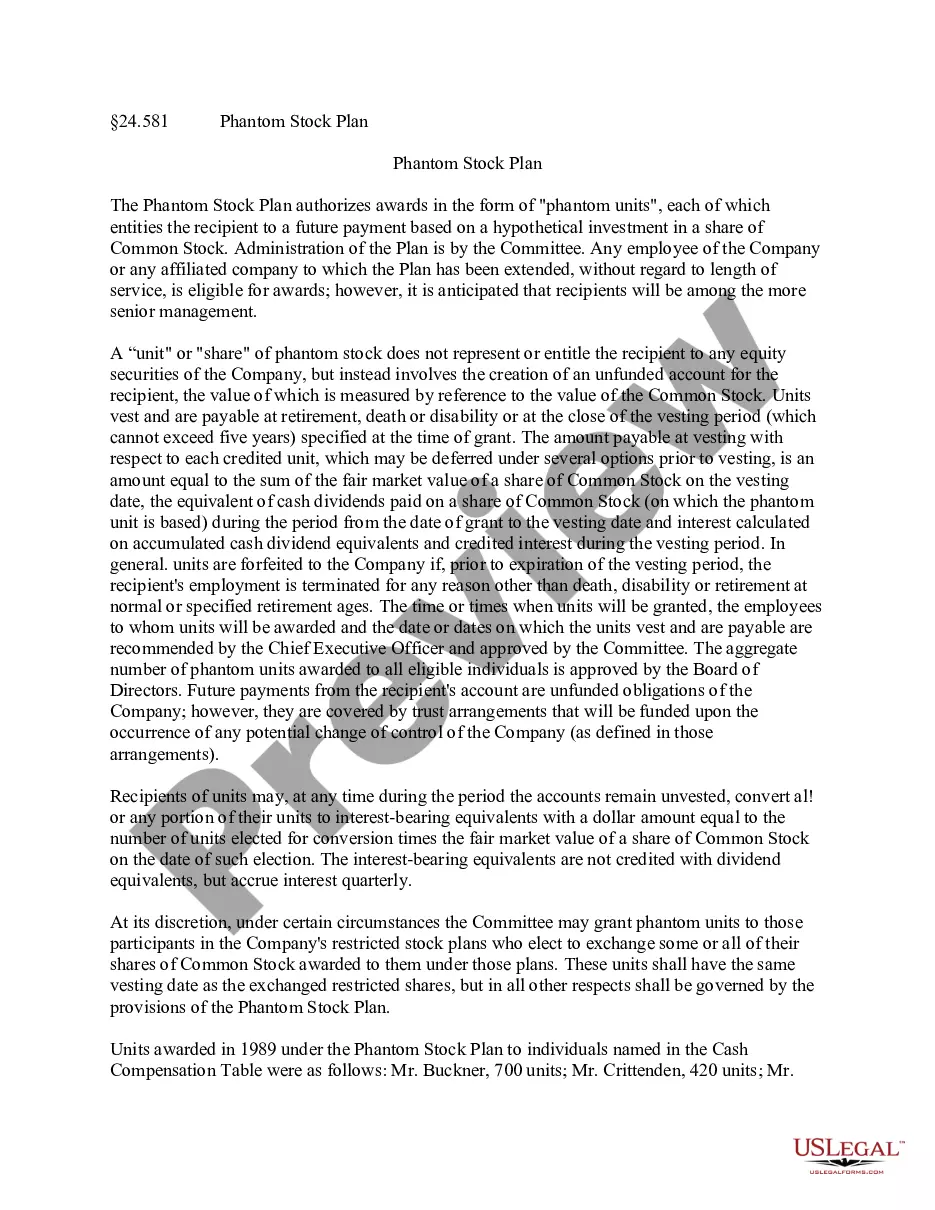

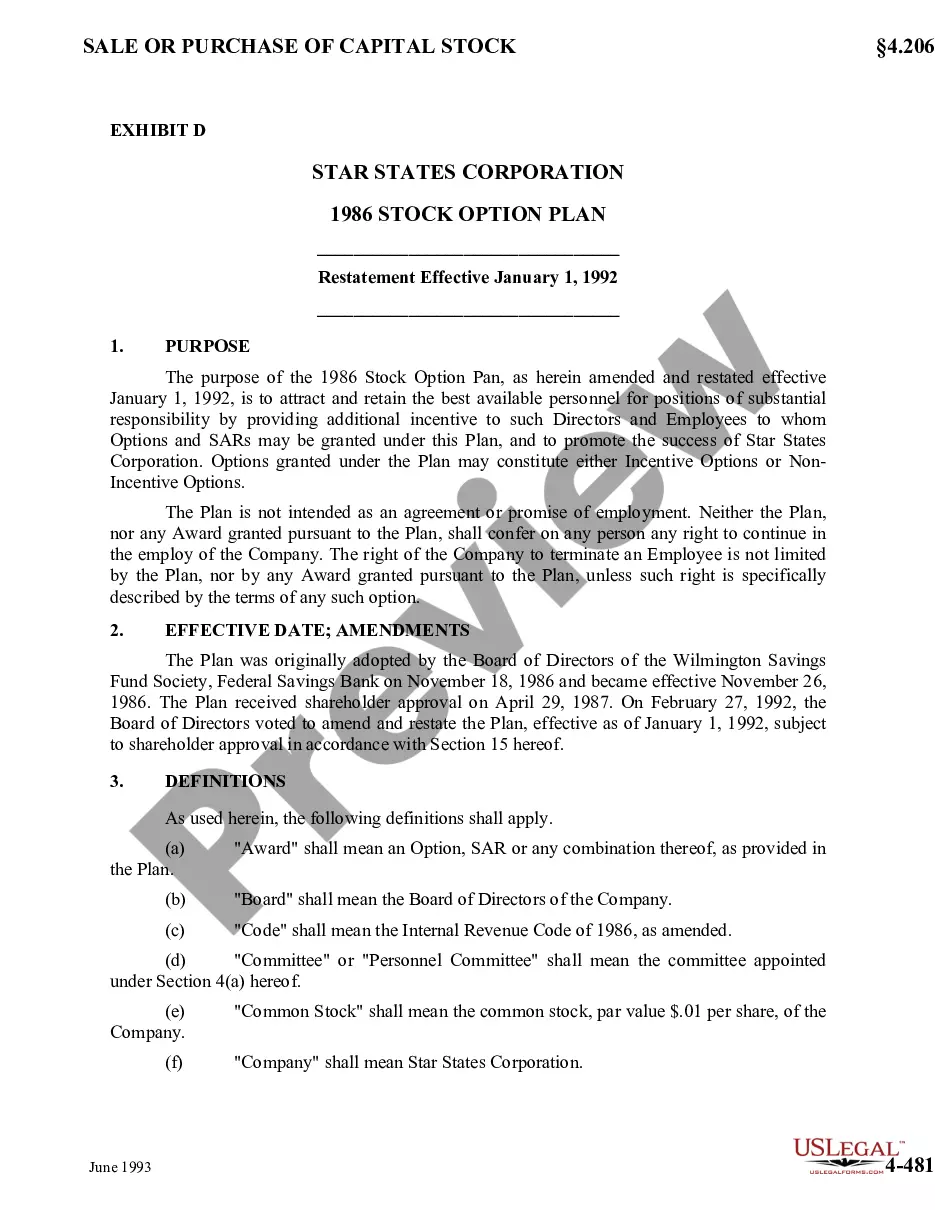
How to fill out Phantom Stock Plan Of Hercules, Inc.?
- If you've used US Legal Forms before, simply log in to your account and download the document you need by clicking the Download button. Confirm your subscription is active; renew if necessary.
- If you’re new to US Legal Forms, start by examining the Preview mode to understand the form's description. Ensure it's suitable for your needs and meets local jurisdiction requirements.
- If necessary, use the Search tab to find an alternate template that better aligns with your requirements.
- Once you locate the right document, click the Buy Now button to select your preferred subscription plan and create an account to access the form library.
- Proceed to complete your purchase by entering your credit card information or utilizing your PayPal account for payment.
- Finally, download the form and save it on your device, allowing you easy access anytime through the My Forms section of your profile.
In conclusion, US Legal Forms enables individuals and attorneys to efficiently create legal documents with a user-friendly interface and a vast selection of forms. Their commitment to quality and precision ensures that you have the right tools at your disposal.
Explore US Legal Forms today to get started with your phantom stock plan document and other essential legal forms!
Form popularity
FAQ
Yes, phantom stock can be worth significant value depending on your company's performance and the terms of the phantom stock plan document. Unlike actual stock, phantom stock does not represent ownership but rather a promise of future payment based on the company's equity. Therefore, when the company performs well, the phantom stock can lead to financial benefits for employees. To properly understand your potential gains, reviewing the details in the phantom stock plan document is essential.
Phantom stock payout is taxable as income at the time it is received by the employee. This payout is typically subject to ordinary income tax rates, which means employees should prepare for potential tax liabilities when they redeem their phantom shares. Companies may also be responsible for withholding taxes at the payout time. Using a clear phantom stock plan document can help both parties understand the tax implications upfront.
Phantom income refers to the income that employees recognize from phantom stock plans, and it is taxed as ordinary income. This means that employees will report the income during the tax year they receive payment, which may impact their overall tax situation. Since this income does not involve actual stock ownership, it’s essential to prepare accordingly. A well-structured phantom stock plan document can provide guidance on income recognition and tax implications.
To set up a phantom stock plan, begin by defining the objectives of your plan, such as employee retention or performance incentives. You will need to create a clear phantom stock plan document that outlines the terms, eligibility criteria, and payout methods. After drafting, consult with legal professionals to ensure compliance with regulations. Once finalized, communicate the plan effectively to your employees to maximize its impact.
Phantom stock can be a beneficial strategy for companies looking to motivate and retain employees without giving away equity. It allows businesses to offer tangible rewards that reflect employee contributions toward company success. When implemented correctly, and supported by a clear phantom stock plan document, this approach can effectively align employee goals with company objectives. However, it's important to evaluate whether it fits your organization's long-term strategy.
A phantom stock plan serves as a compensation tool, rewarding employees with rights to receive payouts based on the company's stock performance. This plan aligns employee interests with the company's success and avoids the complexities of real stock issuance. By documenting these rights and responsibilities in a phantom stock plan document, businesses can create a fair and motivating structure for their workforce.
Yes, an LLC can establish a phantom stock plan to incentivize employees without offering actual ownership. This approach helps LLCs to provide similar benefits to those offered by corporations, enhancing employee retention and motivation. By using a phantom stock plan document, LLCs can define the terms and conditions clearly, ensuring that employees comprehend their potential rewards and obligations.
Yes, a phantom stock plan document can specify conditions under which phantom stock can be forfeited or taken away. Employers may include terms that require employees to meet performance goals or remain with the company for a certain period. If these conditions are not met, the phantom stock may indeed be lost. It’s essential for employees to understand the terms outlined in the phantom stock plan document.
One potential downside of a phantom stock plan is the lack of real ownership, as employees do not hold actual shares. This might affect motivation compared to traditional stock options. Additionally, tax implications can be complex, so it's crucial to understand the financial responsibilities involved in the payout process.
Setting up a phantom stock plan involves several key steps. Begin by determining the number of phantom shares to allocate based on your company's goals. Then, create a phantom stock plan document that specifies the conditions for payout, investment metrics, and eligibility criteria for employees.