Plurality Voting For Directors
Description
Get your form ready online
Our built-in tools help you complete, sign, share, and store your documents in one place.
Make edits, fill in missing information, and update formatting in US Legal Forms—just like you would in MS Word.
Download a copy, print it, send it by email, or mail it via USPS—whatever works best for your next step.
Sign and collect signatures with our SignNow integration. Send to multiple recipients, set reminders, and more. Go Premium to unlock E-Sign.
If this form requires notarization, complete it online through a secure video call—no need to meet a notary in person or wait for an appointment.
We protect your documents and personal data by following strict security and privacy standards.

Make edits, fill in missing information, and update formatting in US Legal Forms—just like you would in MS Word.

Download a copy, print it, send it by email, or mail it via USPS—whatever works best for your next step.

Sign and collect signatures with our SignNow integration. Send to multiple recipients, set reminders, and more. Go Premium to unlock E-Sign.

If this form requires notarization, complete it online through a secure video call—no need to meet a notary in person or wait for an appointment.

We protect your documents and personal data by following strict security and privacy standards.
Looking for another form?







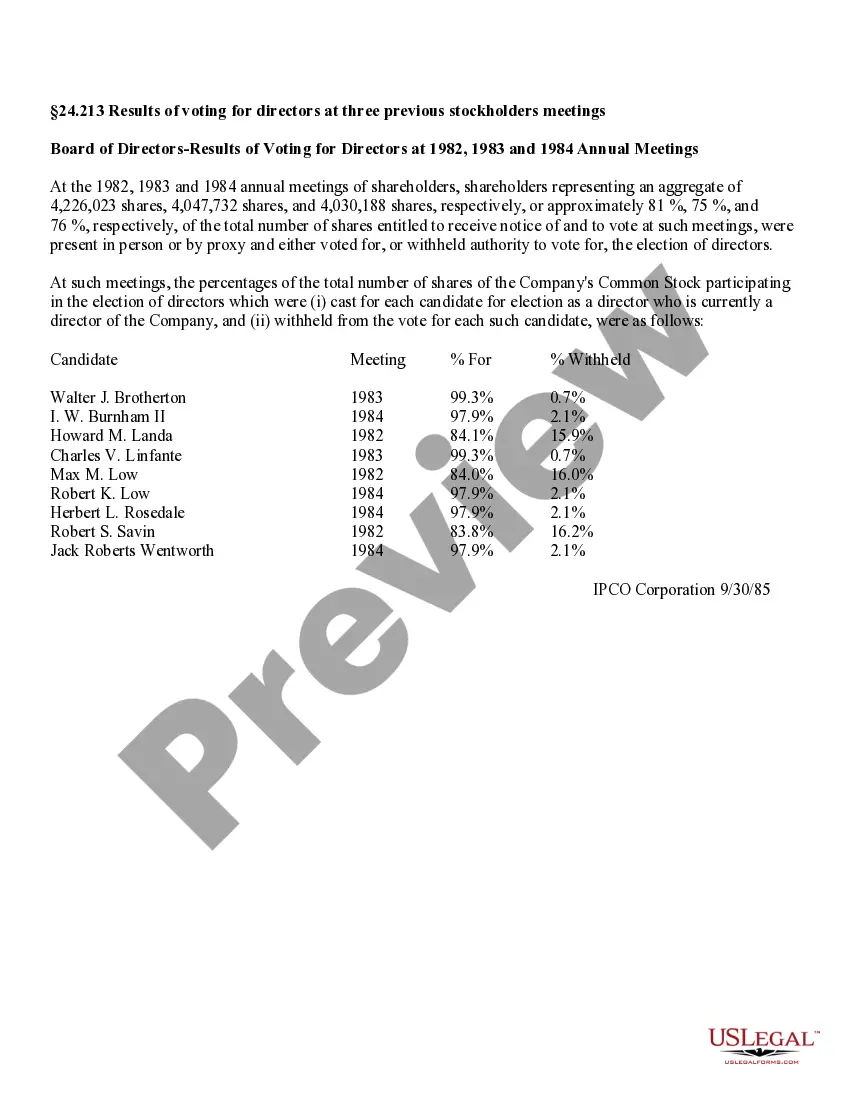
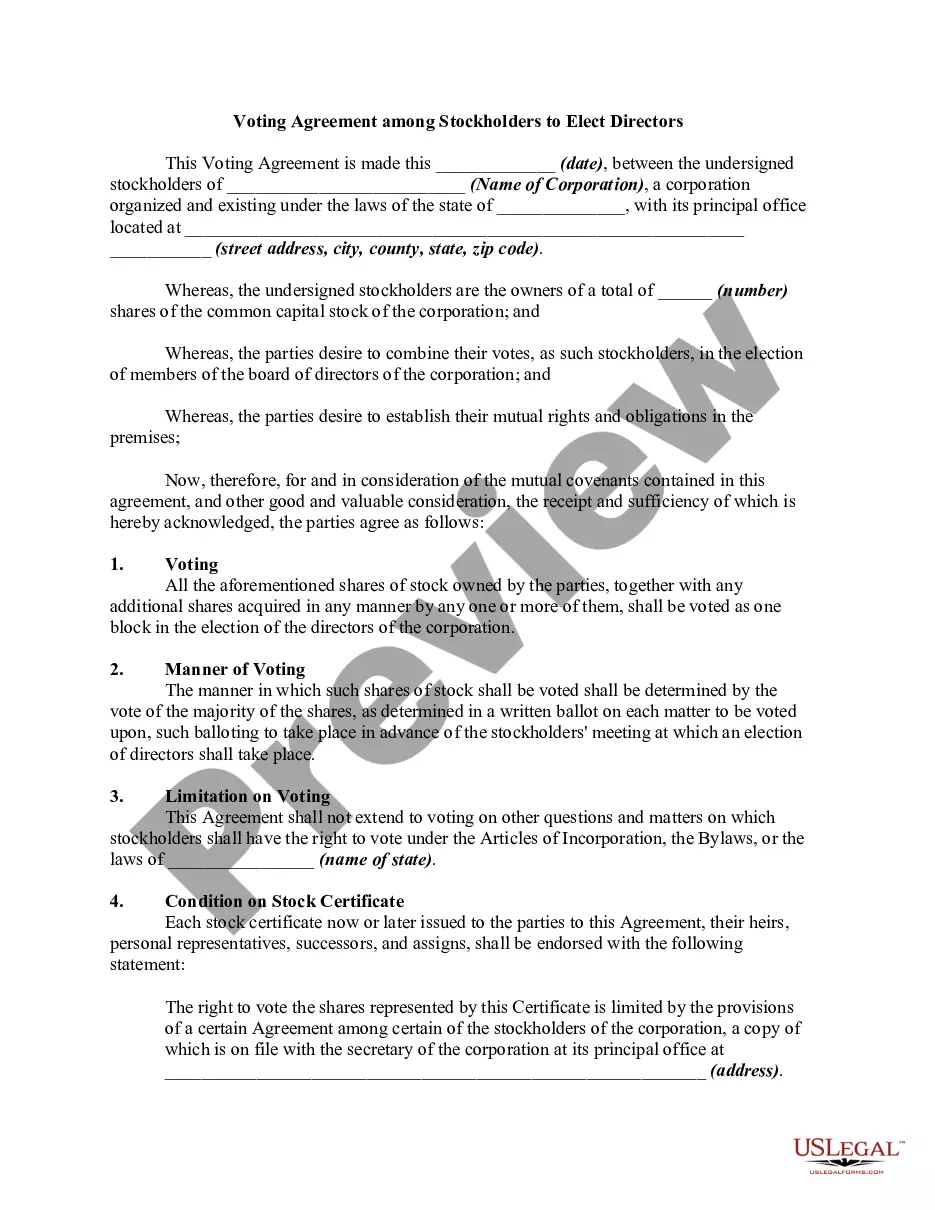
How to fill out Results Of Voting For Directors At Three Previous Stockholders Meetings?
Creating legal documents from the ground up can frequently be daunting.
Certain cases may require extensive research and substantial financial resources.
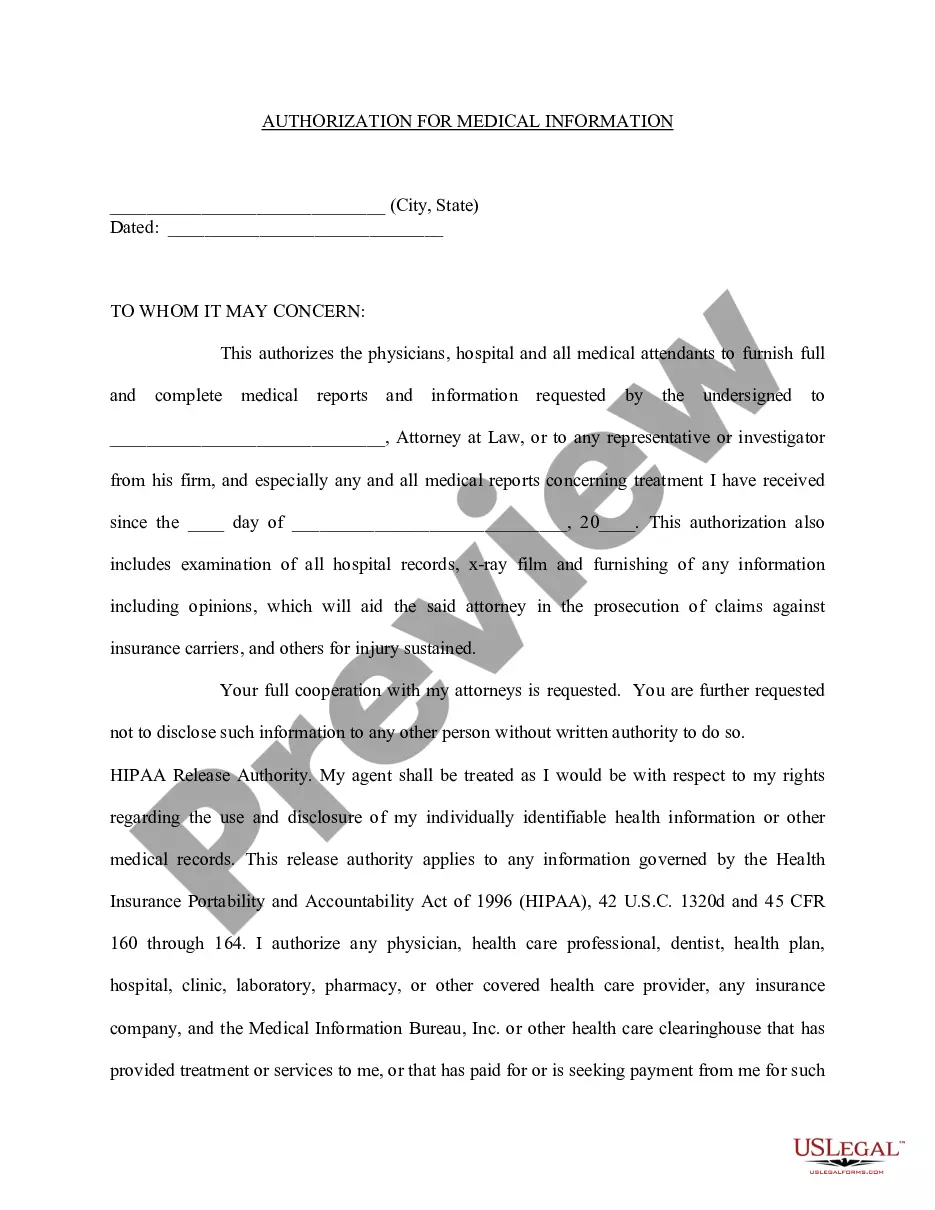
If you're looking for a more straightforward and economical method of generating Plurality Voting For Directors or other similar forms without unnecessary complications, US Legal Forms is readily available for your assistance.
Our online repository of over 85,000 current legal documents covers nearly every aspect of your financial, legal, and personal matters.
Before diving into the download of Plurality Voting For Directors, consider these suggestions: Review the form preview and descriptions to ensure you have located the document you need. Verify that the form you choose adheres to the rules and regulations of your state and county. Select the optimal subscription plan to purchase the Plurality Voting For Directors. Download the form, then complete, certify, and print it. US Legal Forms boasts an impeccable reputation and over 25 years of experience. Join us now and make form completion a straightforward and efficient process!
- With just a few clicks, you'll gain immediate access to state- and county-specific templates carefully prepared for you by our legal experts.
- Utilize our platform whenever you require a dependable and trustworthy service from which you can swiftly find and download the Plurality Voting For Directors.
- If you're familiar with our website and have previously created an account, simply Log In, find the form, and download it or re-download it later in the My documents section.
- Don't possess an account? No problem. Registering takes minimal time, and browsing the catalog is easy.
Form popularity
FAQ
A check or check mark (American English), checkmark (Philippine English), tickmark (Indian English) or tick (Australian, New Zealand and British English) is a mark (?, ?, etc.) used, primarily in the English-speaking world, to indicate the concept "yes" (e.g. "yes; this has been verified", "yes; that is the correct ...
Go to Insert > Advanced Symbol > Symbols. Choose the checkmark symbol that you want. Select Insert. Select Close.
While holding the ?Alt? key on your keyboard, type in 251 and release the ?Alt? button to enter the check symbol in the place where you have the cursor. In some word processing and spreadsheet applications, the checkmark uses the same character as the square root symbol.
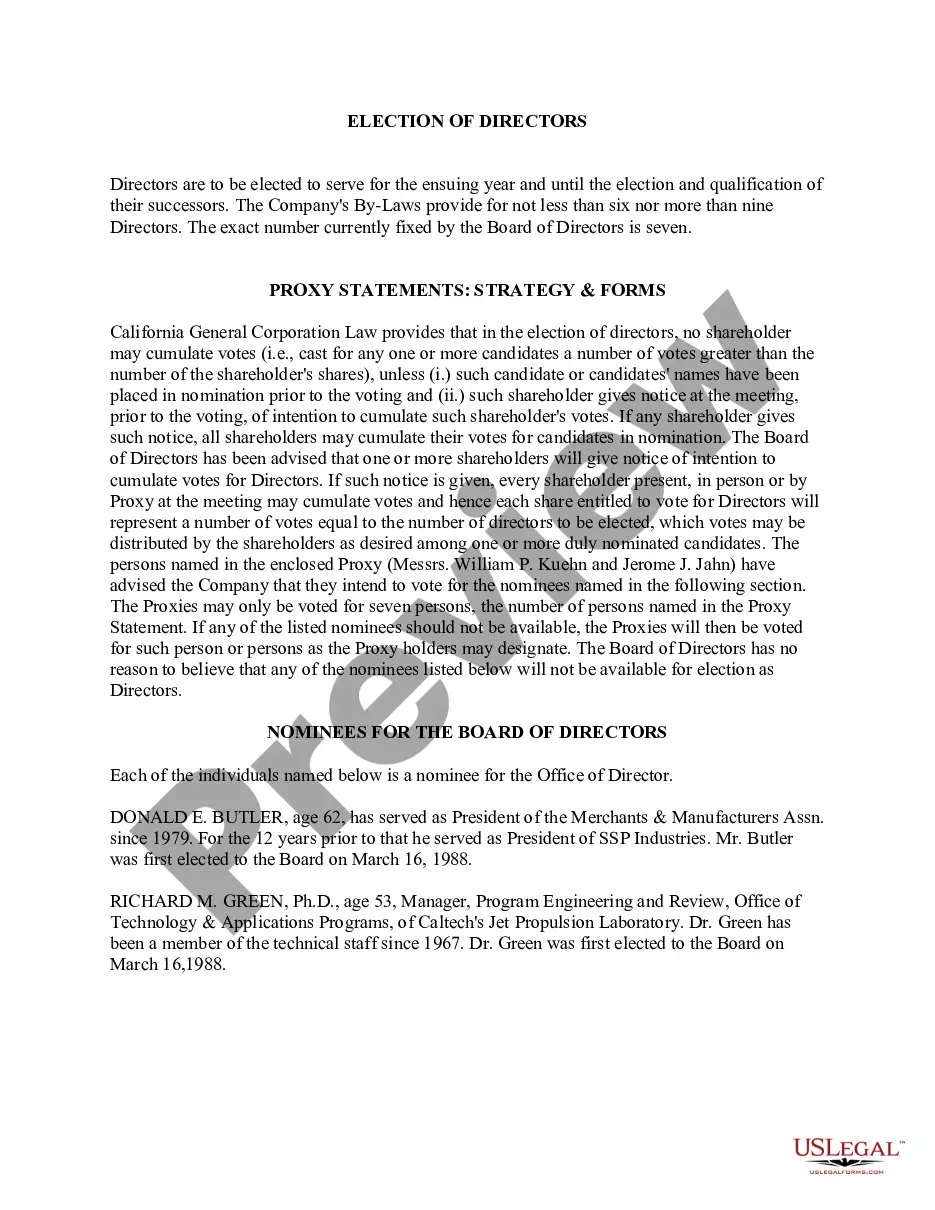
There are two main ways to elect directors: by plurality vote or majority vote. A "plurality vote" means that the winning candidate only needs to get more votes than a competing candidate. If a director runs unopposed, he or she only needs one vote to be elected, so an "against" vote is meaningless.
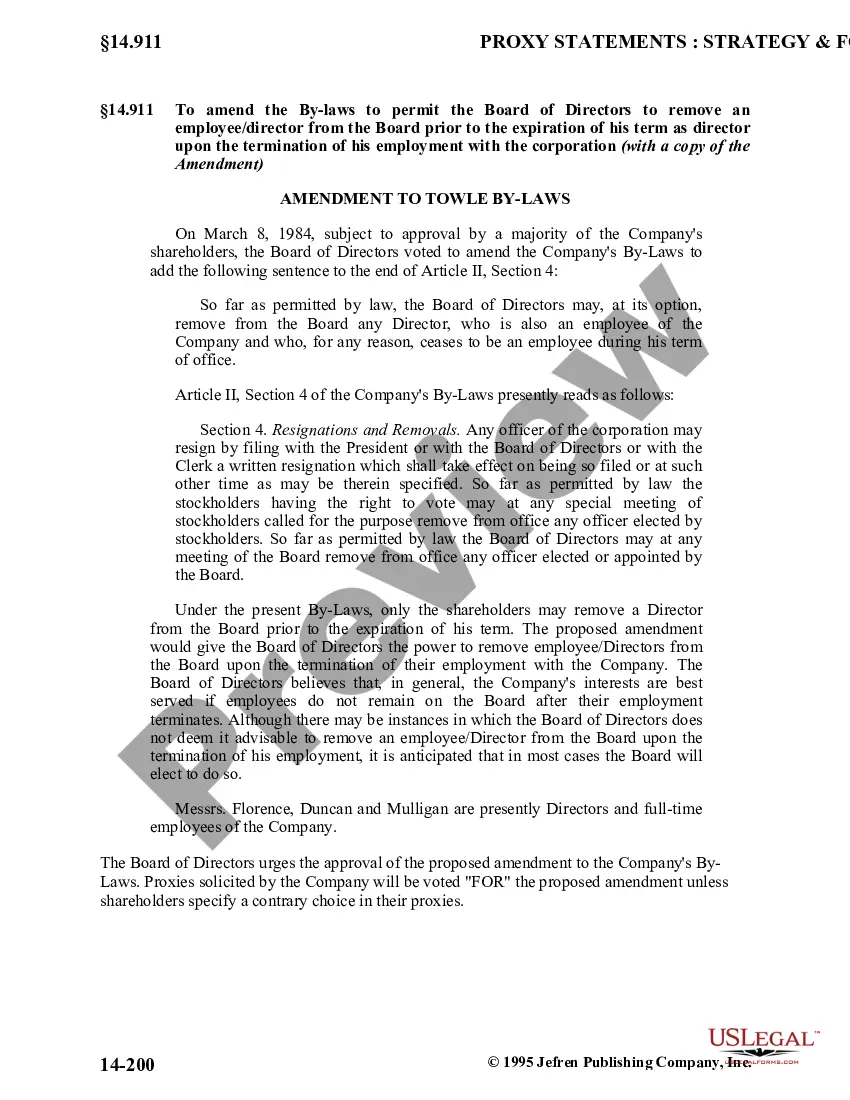
Election and removal In most legal systems, the appointment and removal of directors is voted upon by the shareholders in general meeting or through a proxy statement.
In single-winner plurality voting, each voter is allowed to vote for only one candidate, and the winner of the election is the candidate who represents a plurality of voters or, in other words, received more votes than any other candidate.
By statute, ?Each director present and voting at a meeting shall have one vote on each matter presented to the board of directors for action at that meeting.? (Corp. Code § 7211(c).) This principle is also reflected in Robert's Rules of Order (11th ed., p.