Stock Purchase Plan And Taxes
Description

Get your form ready online
Our built-in tools help you complete, sign, share, and store your documents in one place.
Make edits, fill in missing information, and update formatting in US Legal Forms—just like you would in MS Word.
Download a copy, print it, send it by email, or mail it via USPS—whatever works best for your next step.
Sign and collect signatures with our SignNow integration. Send to multiple recipients, set reminders, and more. Go Premium to unlock E-Sign.
If this form requires notarization, complete it online through a secure video call—no need to meet a notary in person or wait for an appointment.
We protect your documents and personal data by following strict security and privacy standards.

Make edits, fill in missing information, and update formatting in US Legal Forms—just like you would in MS Word.

Download a copy, print it, send it by email, or mail it via USPS—whatever works best for your next step.

Sign and collect signatures with our SignNow integration. Send to multiple recipients, set reminders, and more. Go Premium to unlock E-Sign.

If this form requires notarization, complete it online through a secure video call—no need to meet a notary in person or wait for an appointment.

We protect your documents and personal data by following strict security and privacy standards.
Looking for another form?





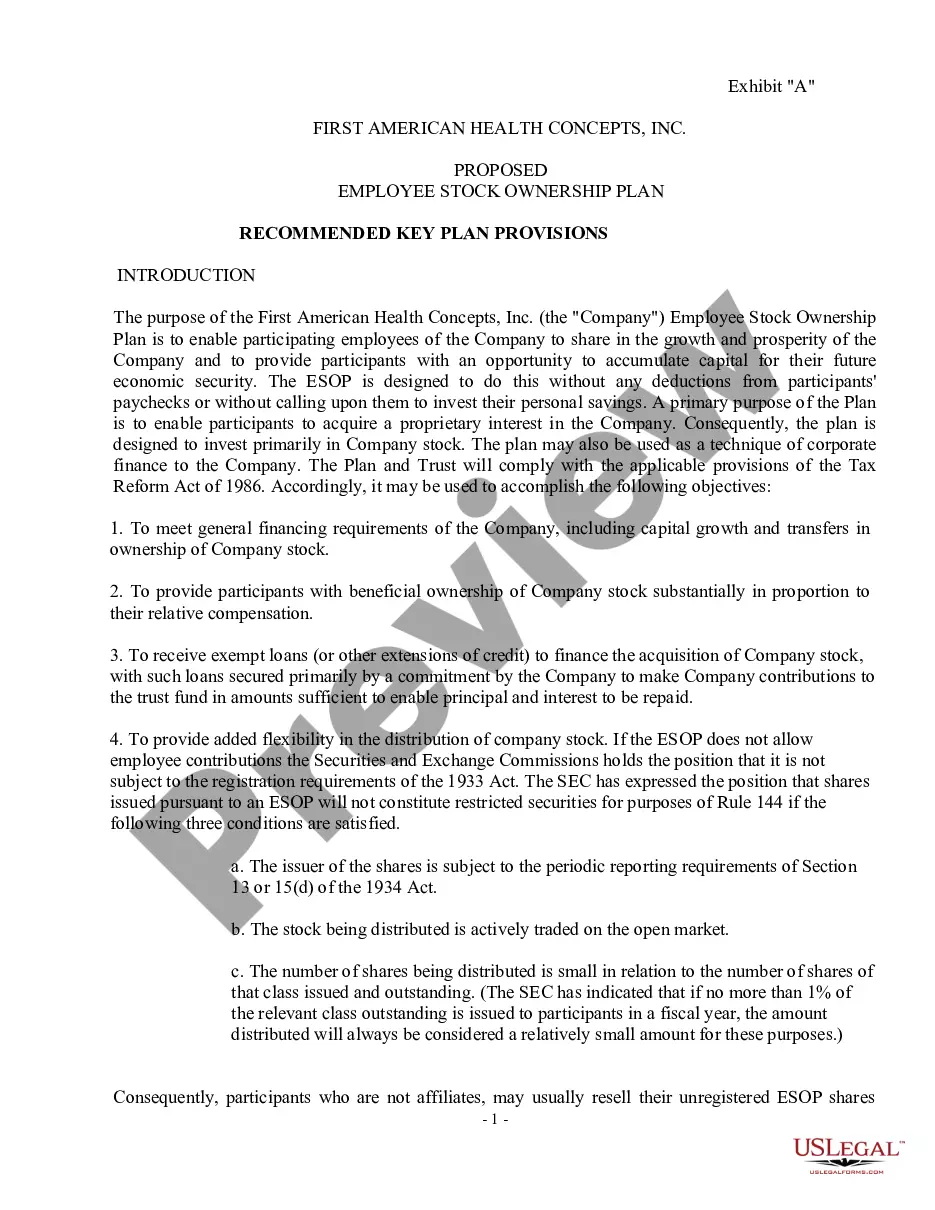
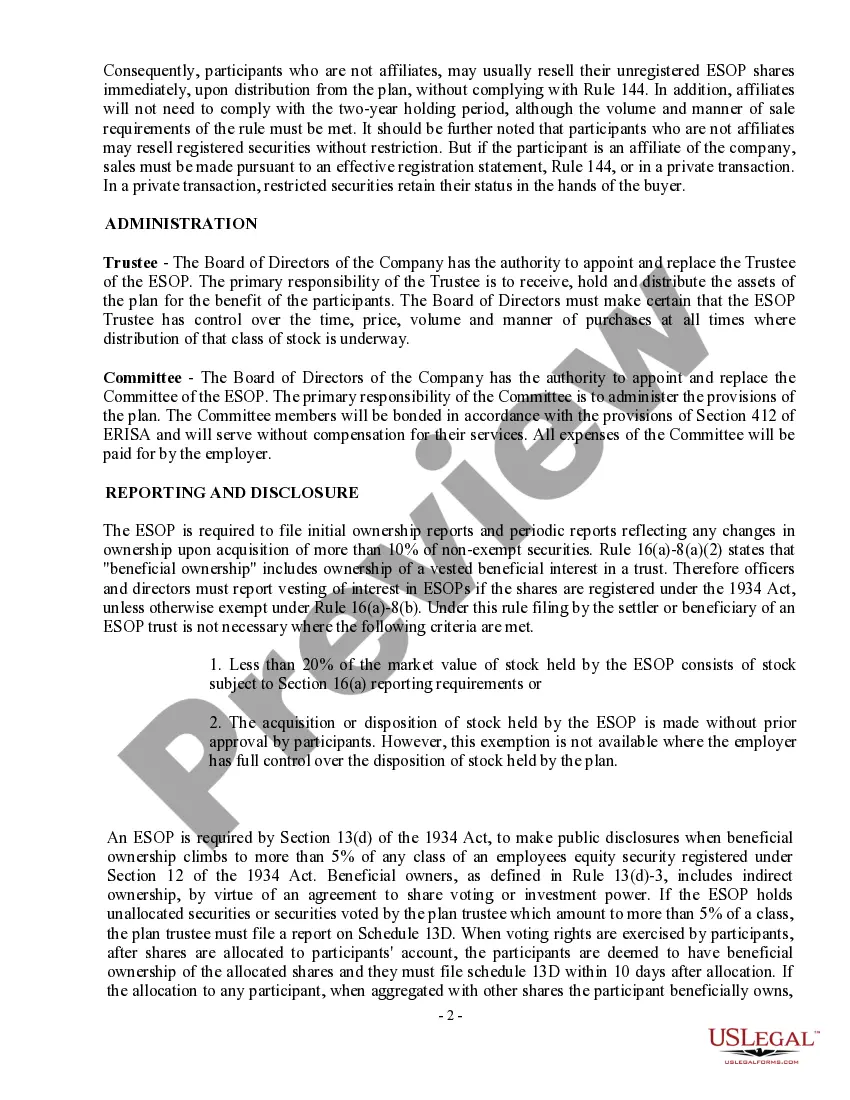
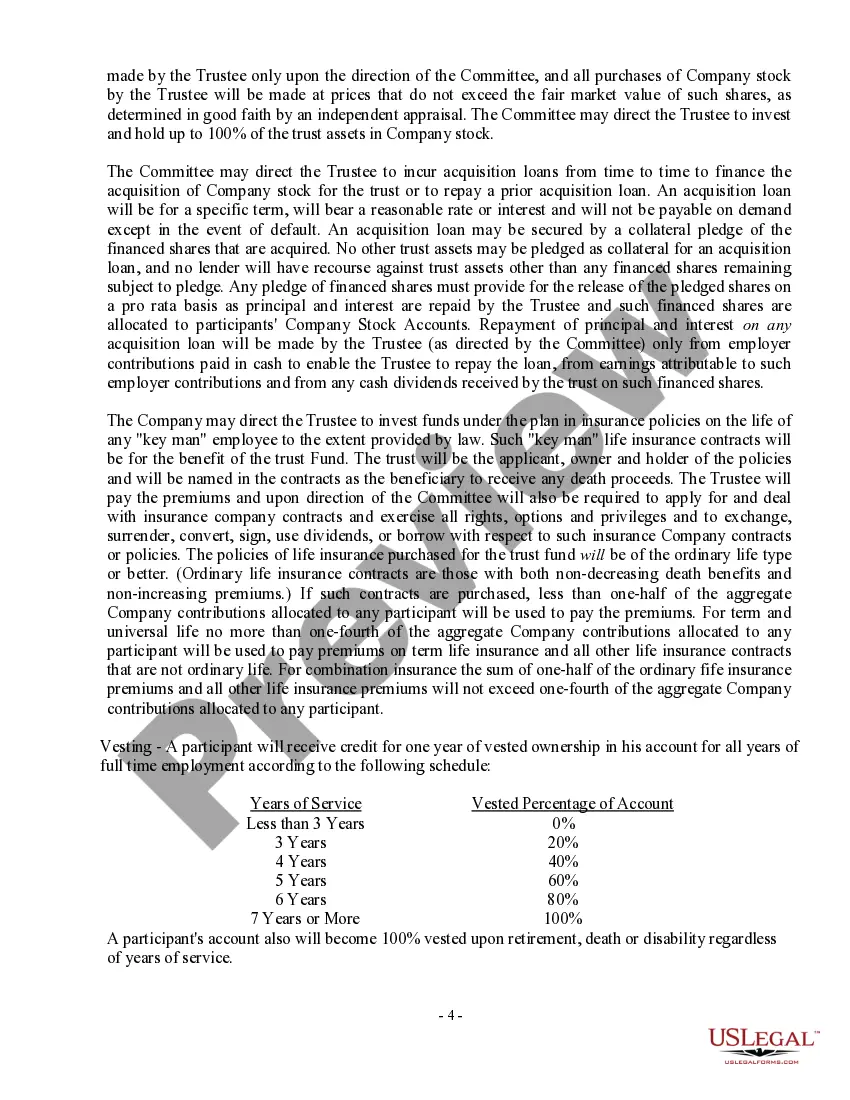
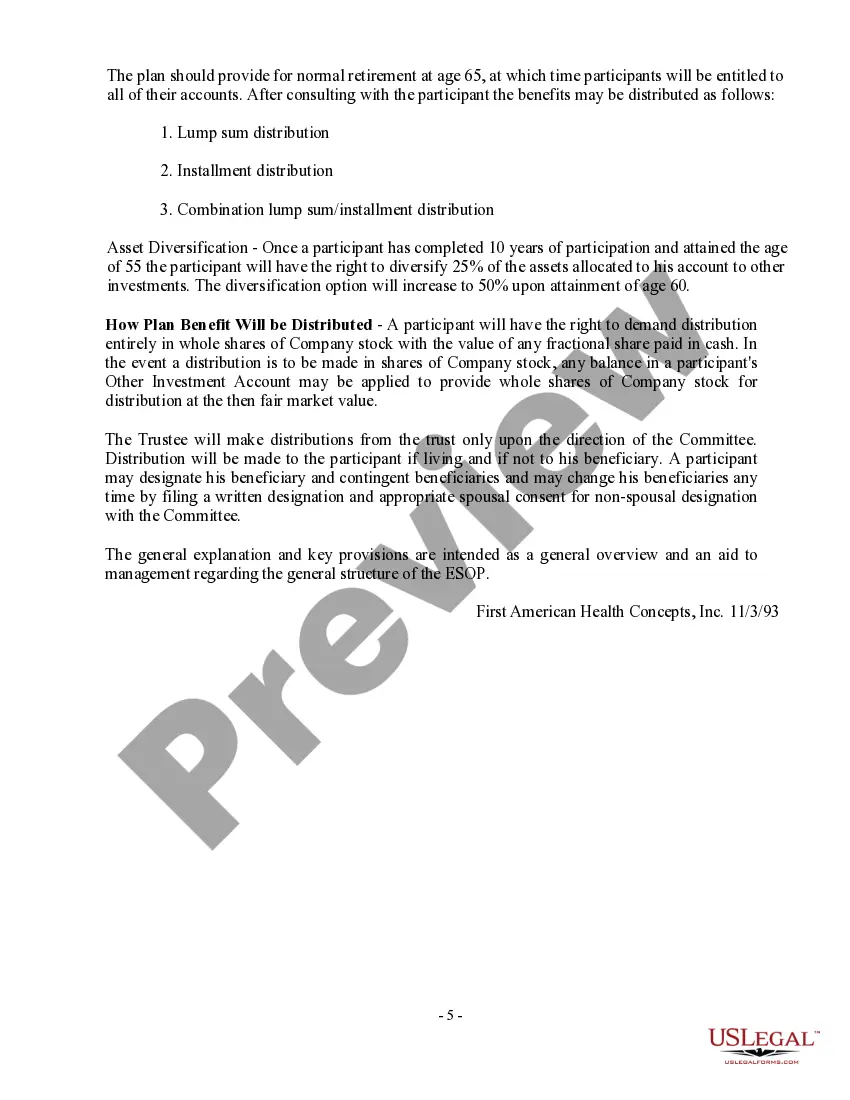
How to fill out Employee Stock Ownership Plan Of First American Health Concepts, Inc.?
Creating legal documents from the ground up can occasionally be overwhelming.
Some situations may require extensive research and significant financial investment.
If you’re looking for a simpler and more economical method of generating Stock Purchase Plan And Taxes or other documents without unnecessary complications, US Legal Forms is readily available to assist you.
Our online repository of over 85,000 current legal documents covers almost all facets of your financial, legal, and personal needs. With just a few clicks, you can promptly access state- and county-specific forms meticulously prepared for you by our legal experts.
1. Review the document preview and descriptions to confirm that it is the document you need. 2. Ensure the template you choose adheres to your state and county regulations and laws. 3. Select the appropriate subscription option for acquiring the Stock Purchase Plan And Taxes. 4. Download the form, then fill it out, sign it, and print it. US Legal Forms has an impeccable reputation and over 25 years of experience. Join us today to make form completion a straightforward and efficient process!
- Utilize our platform whenever you need trustworthy and efficient services to quickly find and download the Stock Purchase Plan And Taxes.
- If you are already familiar with our website and have previously created an account, simply Log In, choose the form, and download it or re-download it anytime from the My documents section.
- Not registered yet? No problem. Setting up is quick and straightforward, allowing you to browse the catalog.
- Before downloading the Stock Purchase Plan And Taxes, remember to.
Form popularity
FAQ
You do not report stock purchases directly on your tax return; however, you need to report any sales, gains, or losses associated with those stocks. This includes transactions made through a stock purchase plan and taxes may apply to any profits you realize. Keep accurate records of your stock purchases to help when you file your taxes. The US Legal Forms platform can assist you in understanding all legal obligations regarding stock purchases and taxes.
When filing your tax return for stocks, you must report capital gains or losses from your stock transactions. Start by gathering documents that detail your stock purchases, sales, and any dividends received. Use IRS Form 8949 to report the sale of stocks and summarize this information on Schedule D. Remember, understanding the relationship between a stock purchase plan and taxes is crucial in ensuring you report accurately.
Form 3922 is essential for reporting stock purchased through an Employee Stock Purchase Plan (ESPP). When dealing with stock purchase plans and taxes, you should use this form to report the acquisition of stock through the plan to the IRS. Ensure you follow the instructions accurately to provide necessary details, which will ultimately aid in determining your tax obligations related to the ESPP.
Yes, it is important to report stock purchases on your taxes, particularly when participating in a stock purchase plan. The IRS requires you to disclose any realized gains or losses from stock transactions, which can affect your overall tax return. By accurately reporting these transactions, you can maintain compliance and avoid potential penalties, so take the time to document your purchases properly.
Yes, dividends received from an Employee Stock Purchase Plan (ESPP) are generally taxable as income. When you participate in a stock purchase plan and taxes comes into play, remember that these dividends are subject to federal income tax in the year received. Additionally, your state may also tax these dividends, so be sure to factor that into your overall tax strategy to avoid surprises.
When it comes to stock purchase plans and taxes, understanding the taxation of stock option plans is crucial. Generally, the tax implications depend on the type of stock options you hold. Non-qualified stock options are taxed as ordinary income upon exercise, while incentive stock options might qualify for more favorable long-term capital gains treatment if specific conditions are met. Therefore, it’s wise to consult a tax professional to ensure proper handling.
Yes, when you buy or sell stocks, you usually receive a tax form that reflects your transactions. This form, commonly known as a 1099-B, details your gains and losses, which are necessary for filing your taxes accurately. Understanding these forms is crucial for managing stock purchase plan and taxes effectively. If you prefer assistance, platforms like uslegalforms can help you navigate these documents and requirements.
Yes, reporting stock purchases on your taxes is essential. When you participate in a stock purchase plan, you may need to report the income you earn through gains or dividends. This process helps the IRS understand your financial activity and ensures you comply with stock purchase plan and taxes regulations. Keeping accurate records will simplify this task during tax season.