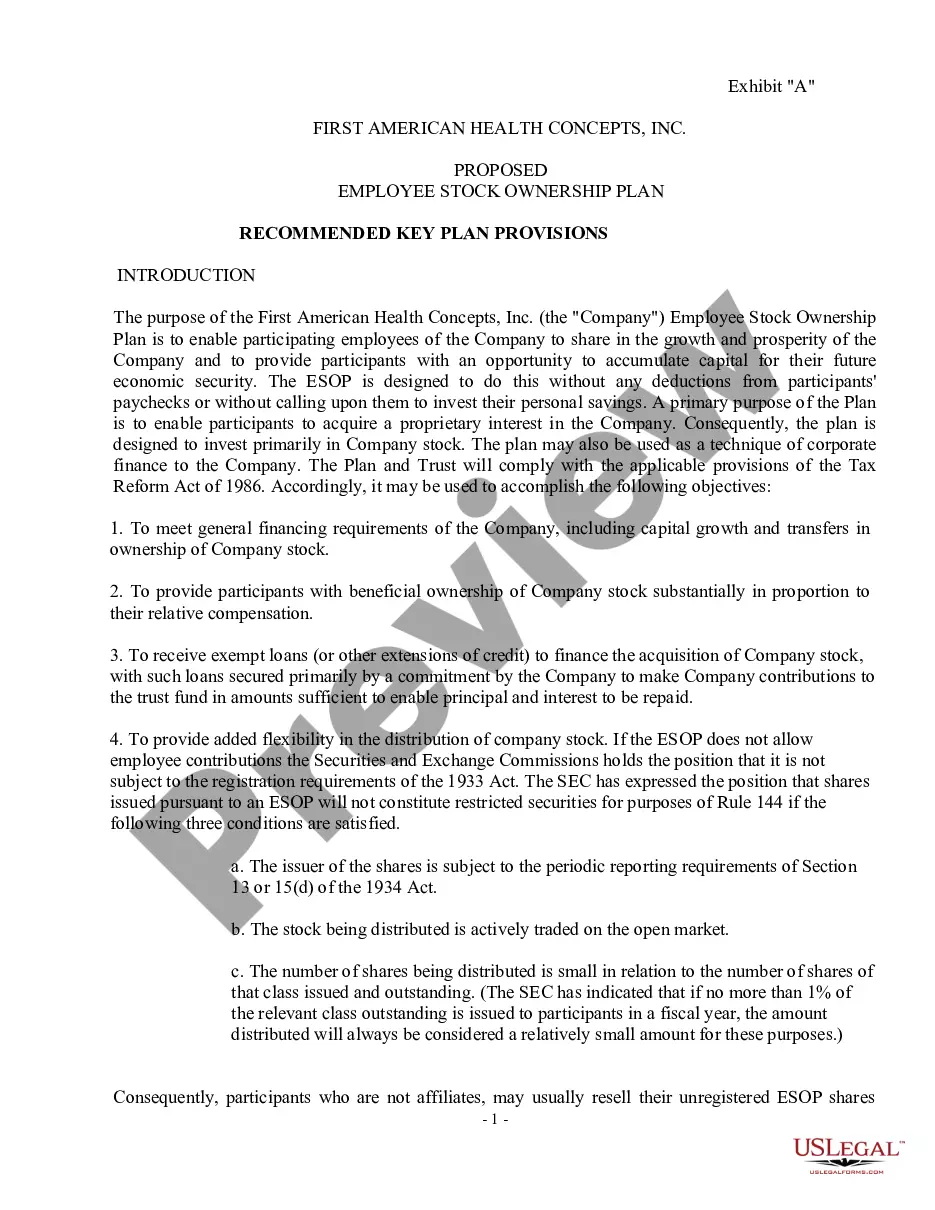
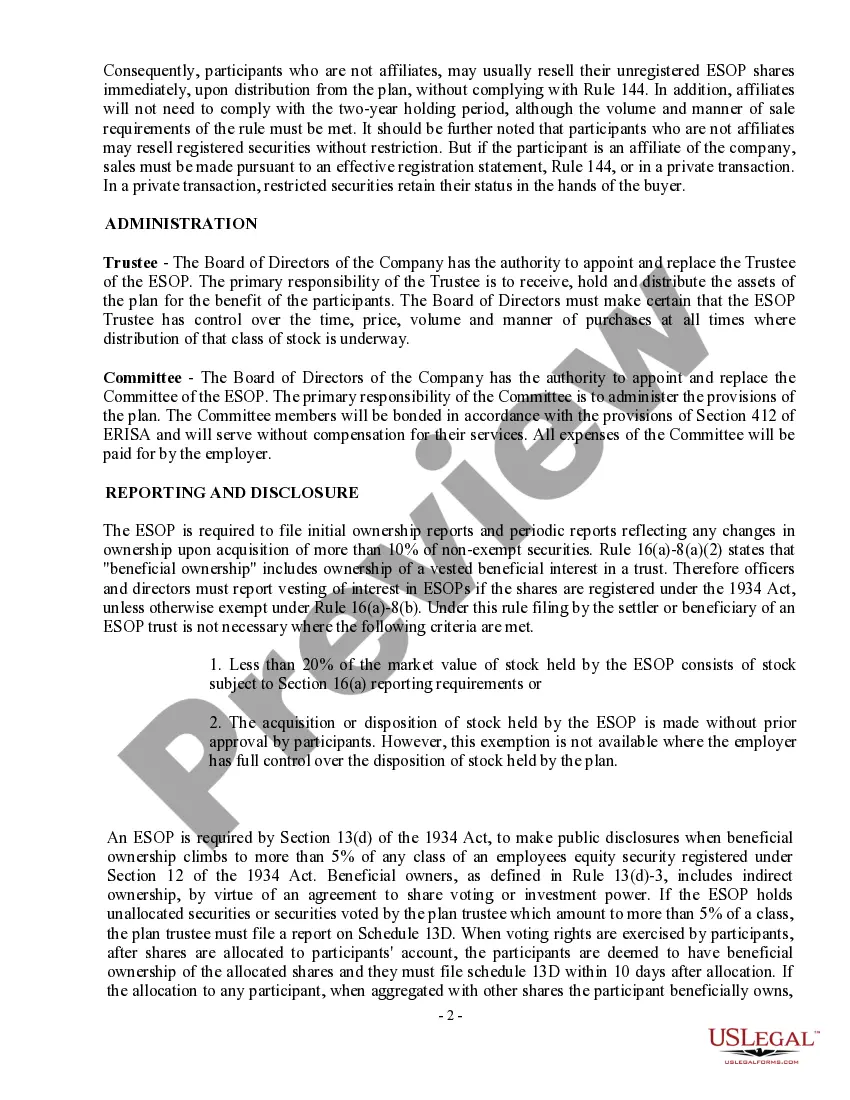
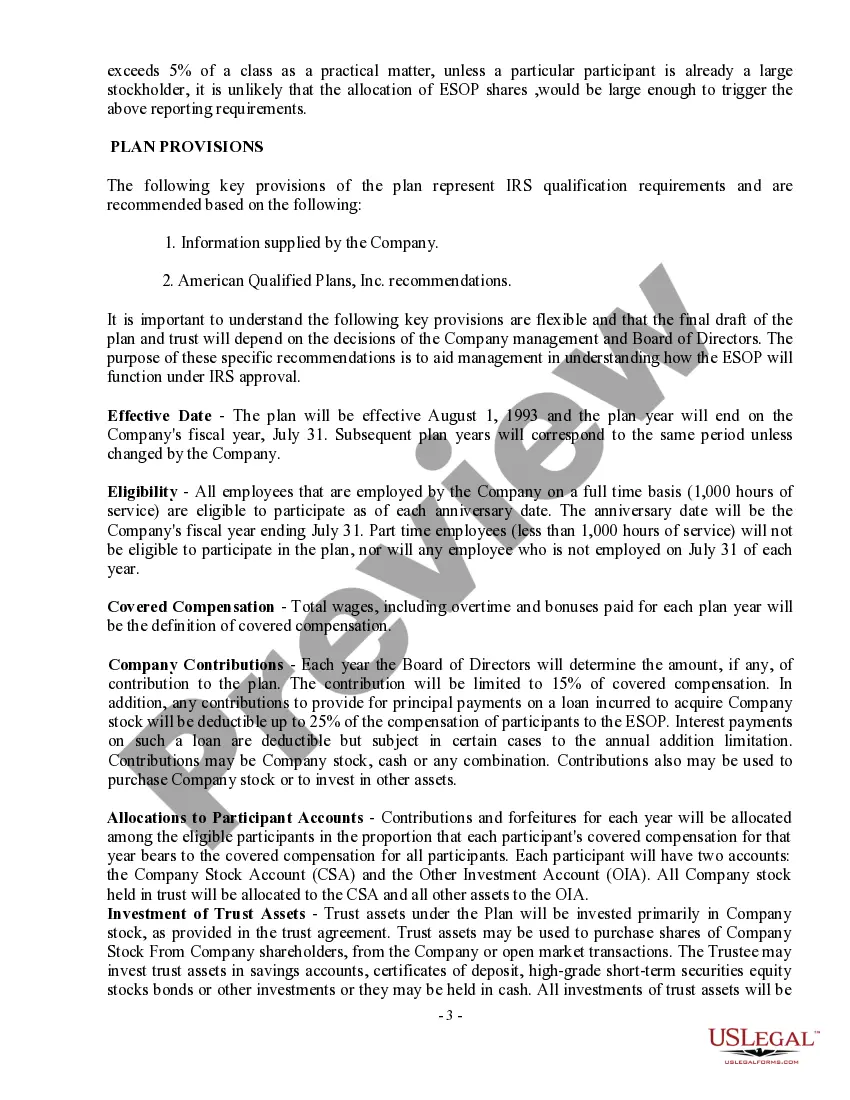
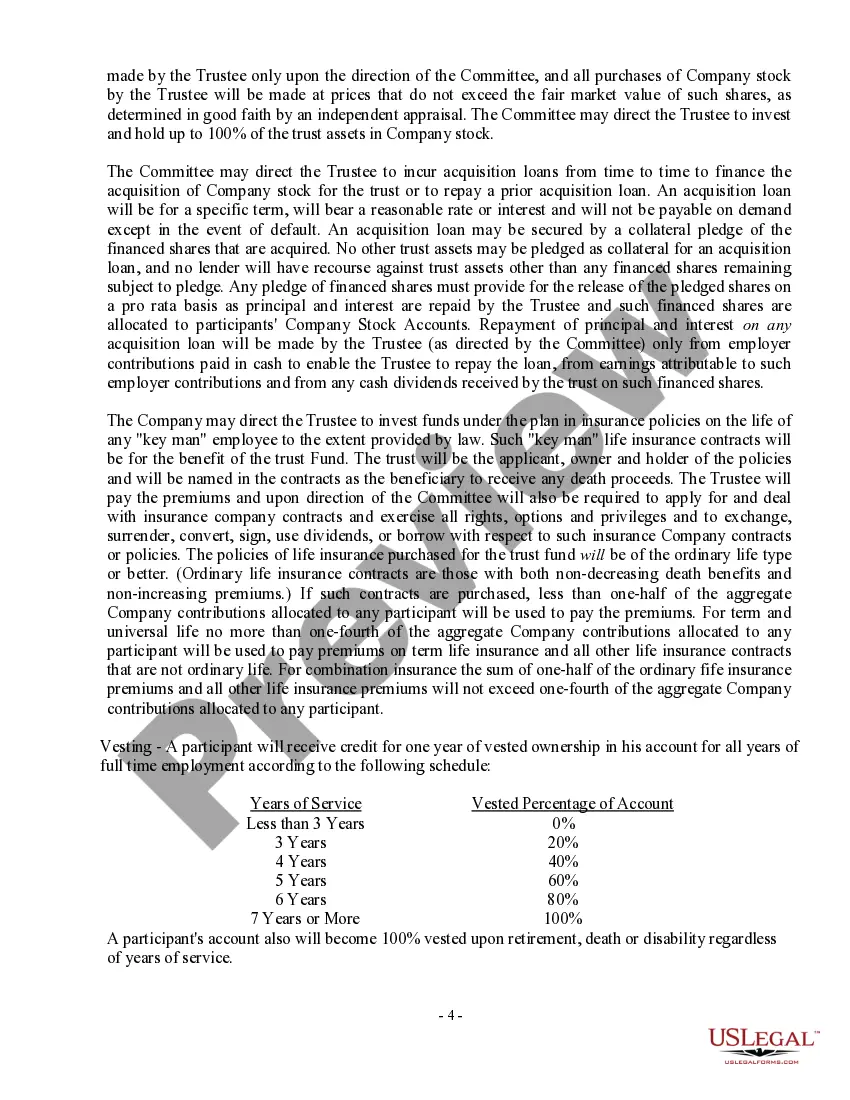
Employee Stock Ownership Plan Example
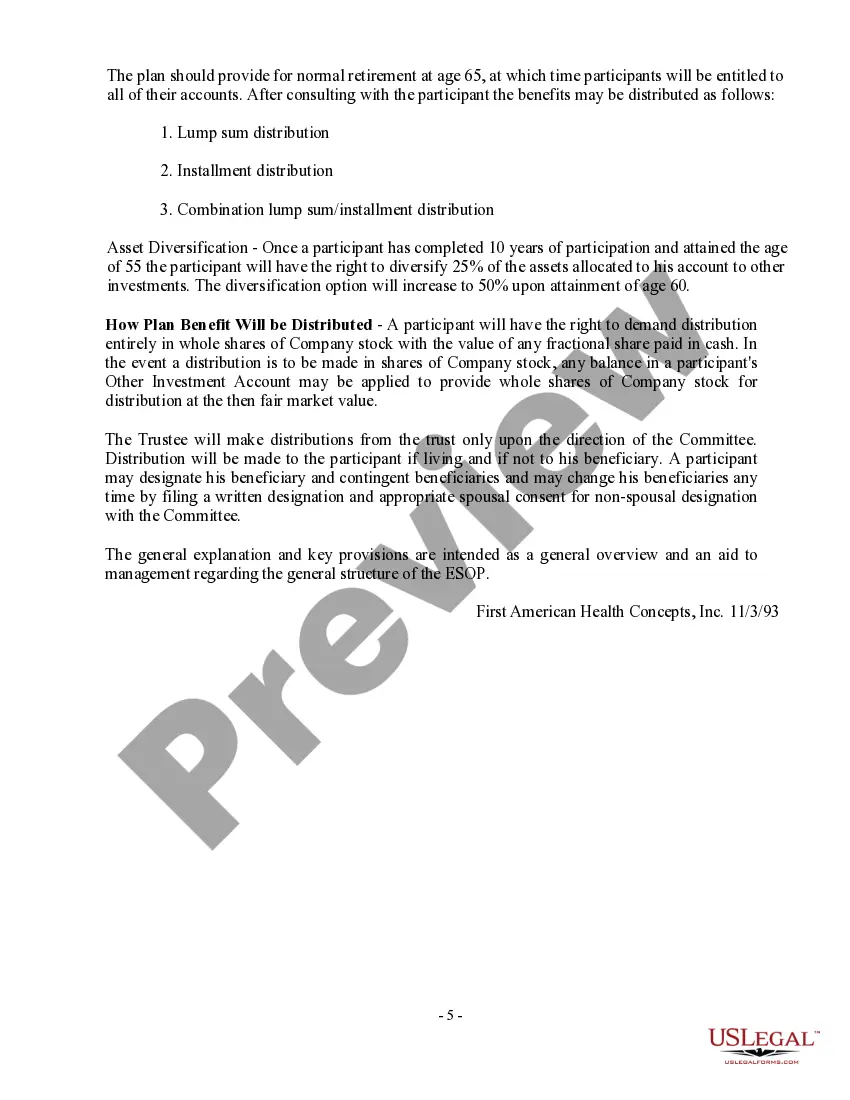
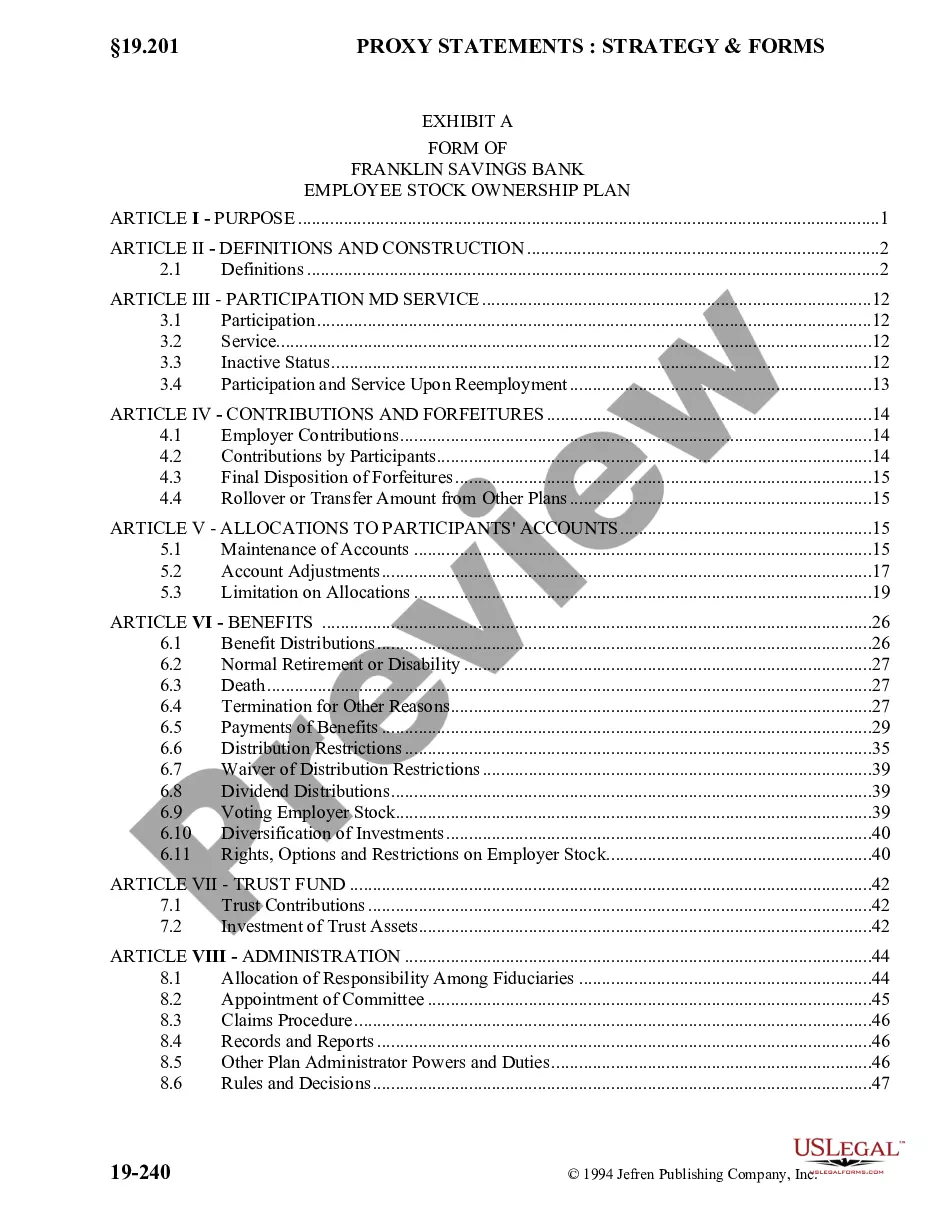
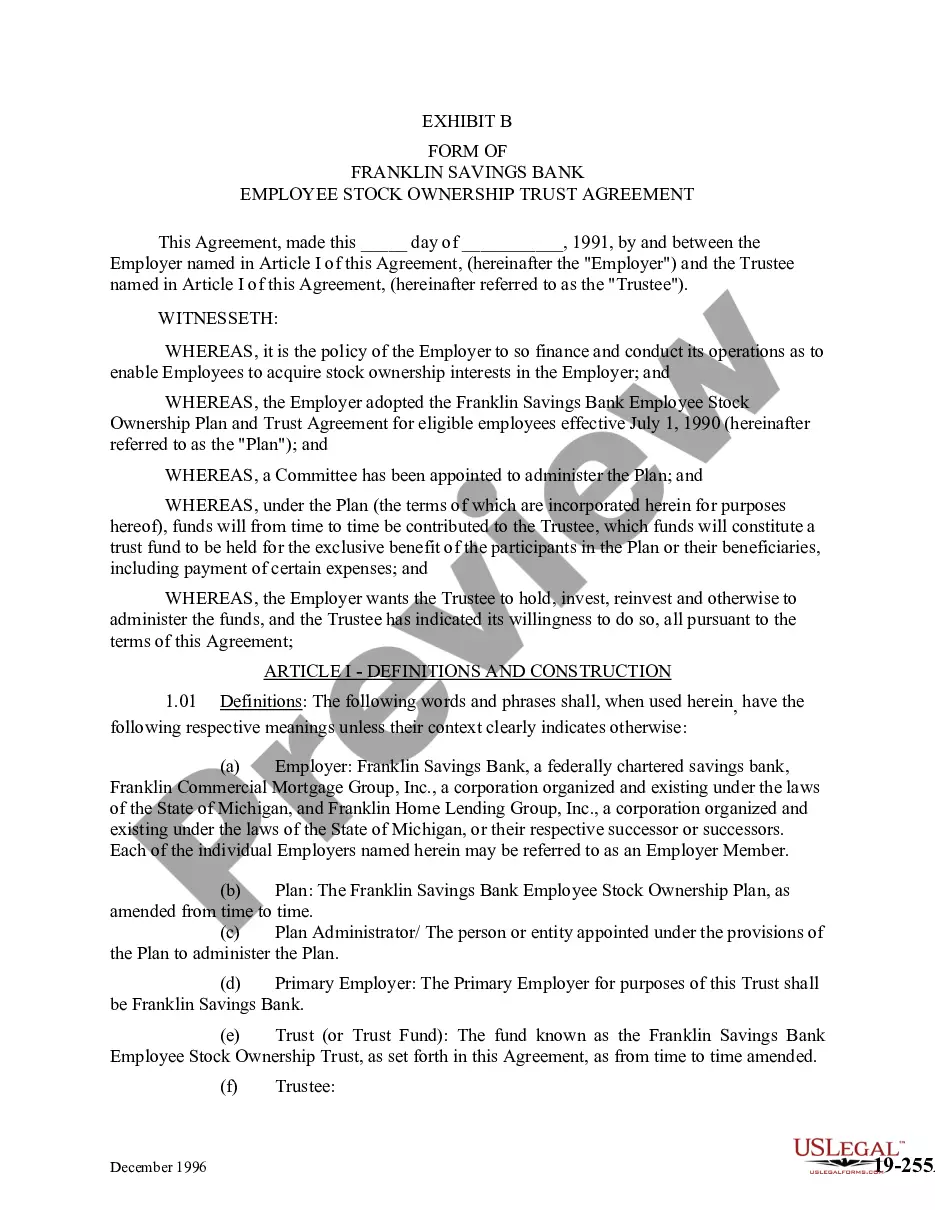
Description
Get your form ready online
Our built-in tools help you complete, sign, share, and store your documents in one place.
Make edits, fill in missing information, and update formatting in US Legal Forms—just like you would in MS Word.
Download a copy, print it, send it by email, or mail it via USPS—whatever works best for your next step.
Sign and collect signatures with our SignNow integration. Send to multiple recipients, set reminders, and more. Go Premium to unlock E-Sign.
If this form requires notarization, complete it online through a secure video call—no need to meet a notary in person or wait for an appointment.
We protect your documents and personal data by following strict security and privacy standards.

Make edits, fill in missing information, and update formatting in US Legal Forms—just like you would in MS Word.

Download a copy, print it, send it by email, or mail it via USPS—whatever works best for your next step.

Sign and collect signatures with our SignNow integration. Send to multiple recipients, set reminders, and more. Go Premium to unlock E-Sign.

If this form requires notarization, complete it online through a secure video call—no need to meet a notary in person or wait for an appointment.

We protect your documents and personal data by following strict security and privacy standards.
Looking for another form?


How to fill out Employee Stock Ownership Plan Of First American Health Concepts, Inc.?
- Log in to your existing US Legal Forms account to access your downloaded templates. Make sure your subscription is up-to-date.
- If you're new to the service, start by exploring the Preview mode and detailed form descriptions. Choose the document that aligns with your requirements.
- Should you need a different template, utilize the Search tab to locate alternatives that better suit your legal needs.
- Purchase the correct document by clicking on the Buy Now button and selecting your preferred subscription plan. Creating an account is necessary for accessing the library.
- Finalize your transaction by entering your payment details. You can choose between credit card or PayPal options.
- After your purchase, download the template to your device for completion and access it anytime from the My Forms section of your profile.
With US Legal Forms, the process of obtaining legal documents becomes efficient and straightforward. Their robust collection of forms and expert support ensures that you produce precise, legally sound documents tailored to your needs.
Take the hassle out of legal document creation—visit US Legal Forms and access their unmatched library today!
Form popularity
FAQ
An employee stock ownership plan, or ESOP, allows employees to own shares in the company they work for. Simply put, when a company sets up an ESOP, it essentially puts aside a portion of its stock for employees over time. Employees often benefit from this program as they can increase their retirement savings through stock ownership. To learn more about this process, platforms such as US Legal Forms can provide detailed examples and simple explanations to help you understand the nuances of employee stock ownership plans.
When you leave a company that has an employee stock ownership plan, your shares typically go through a distribution process. This means you will receive the value of your shares, often based on the company's stock performance, as part of your final settlement. It’s important to review your ESOP plan document to understand the specific terms and how it relates to your situation. For clarity and guidance, you can check resources like US Legal Forms to better navigate your options.
The ESOP 25 rule essentially limits the amount of stock that can be allocated to employee owners, ensuring that no more than 25% of the company's stock is owned by one individual. This rule promotes a diverse ownership structure, contributing to collective employee motivation and stability. For a clearer understanding of an employee stock ownership plan example, businesses can consult uslegalforms for tailored guidance.
The vesting period for an ESOP usually ranges from three to six years, depending on company policy. Full vesting means that employees gain complete ownership of the shares allocated to them. Consideration of the vesting schedule is essential when analyzing an employee stock ownership plan example within a company to ensure employees appreciate their benefits over time.
Employees typically receive shares in an ESOP as part of their benefits package, often based on tenure or salary levels. The allocation of shares can vary significantly, making it vital for employees to understand how these shares are distributed. For companies wishing to establish a successful employee stock ownership plan example, engaging professional resources can enhance the implementation process.
To avoid paying tax on your ESOP distribution, you should consider rolling over the distribution into an IRA or another qualified retirement plan. This rollover allows you to defer taxes until you withdraw funds in the future. Seeking advice on employee stock ownership plan examples can help navigate the complexities of tax implications effectively and ensure you're making informed decisions.
An example of an employee stock ownership plan includes a structure where employees receive shares of the company's stock as part of their compensation. This setup not only aligns the interests of employees and the company but also encourages a sense of ownership among staff. For businesses exploring how to implement an employee stock ownership plan example, consulting with platforms like uslegalforms can simplify the process.
The ESOP 30% rule stipulates that a company cannot allocate more than 30% of its annual income to fund its employee stock ownership plan. This rule helps maintain a balance between rewarding employees and sustaining the company's financial health. For those considering an employee stock ownership plan example, it is important to be aware of how this rule impacts overall contributions.
Recording an Employee Stock Ownership Plan involves maintaining accurate records of stock allocations and participant accounts. You need to document all contributions, distributions, and changes in participant status carefully. Consider using US Legal Forms for templates and guidelines on how to effectively record your Employee Stock Ownership Plan example in compliance with the required regulations. Proper record-keeping ensures transparency and helps you manage your plan more efficiently.
Claiming your benefits from an Employee Stock Ownership Plan requires you to follow the plan’s distribution rules. Typically, you will need to provide documentation that verifies your identity and employment status. If you seek support, US Legal Forms offers valuable resources to help guide you through the claim process for your Employee Stock Ownership Plan example. After submitting your claim, monitor its status and communicate with your plan administrator for any updates.