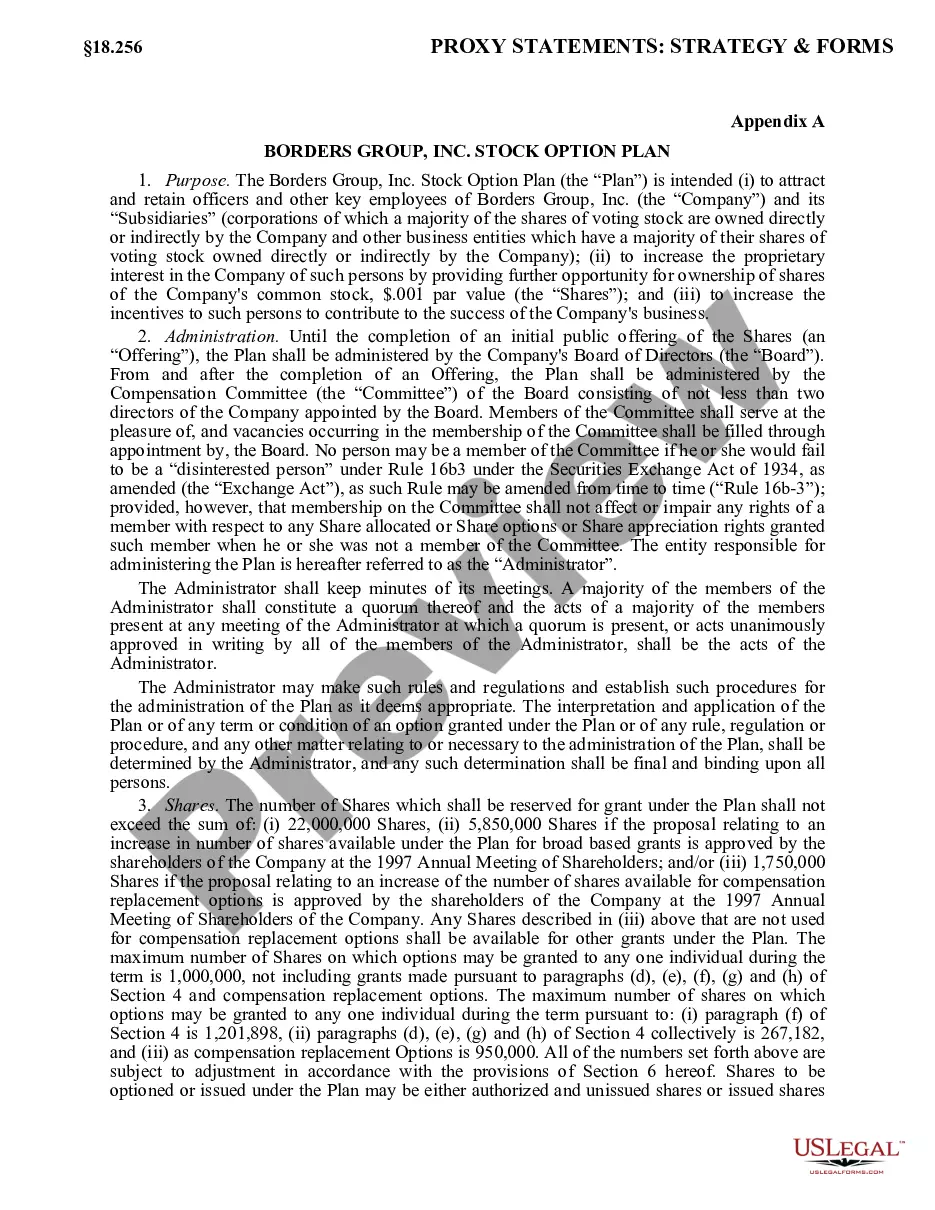
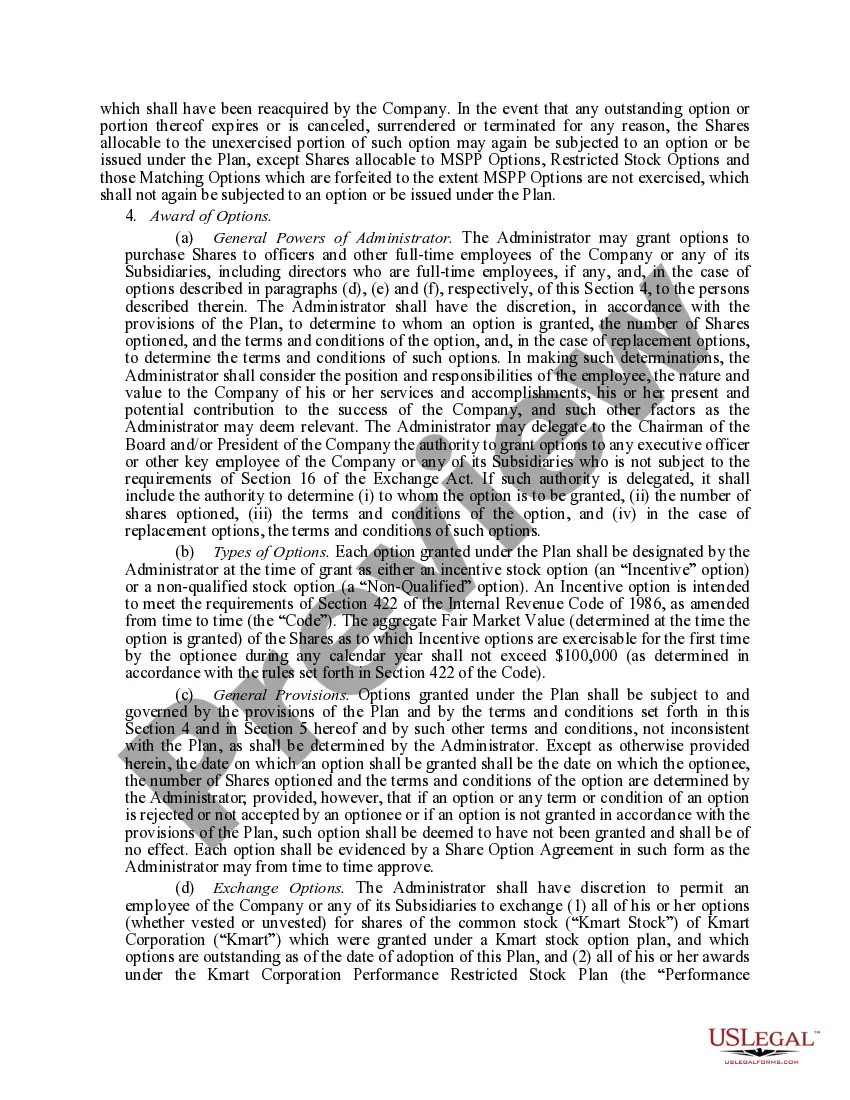
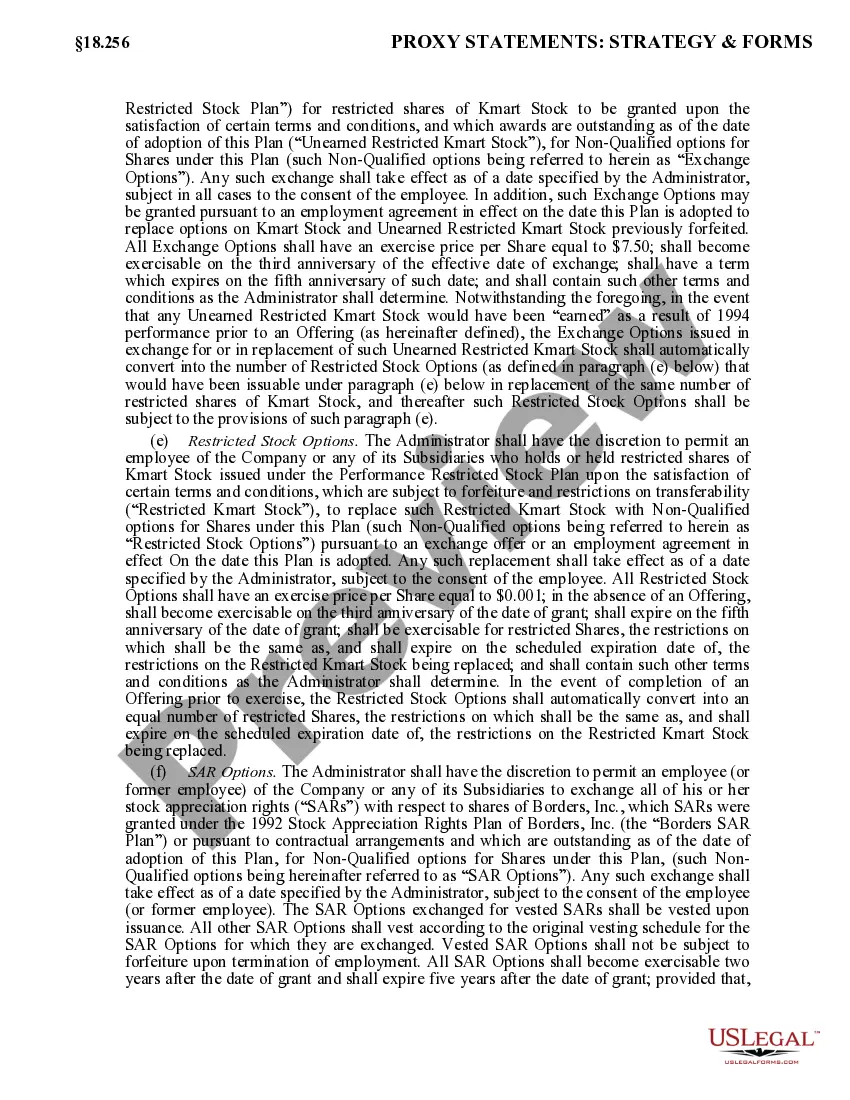
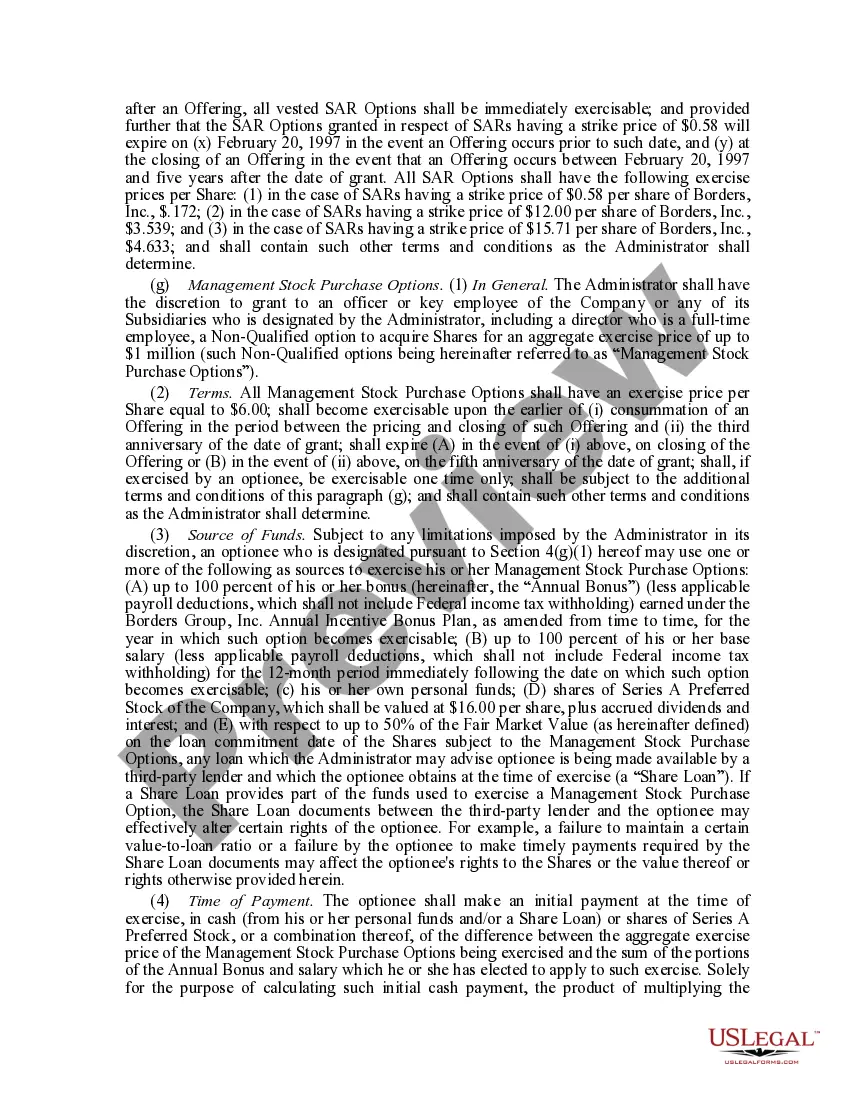
Stock Option Exchange For 10 Years
Description
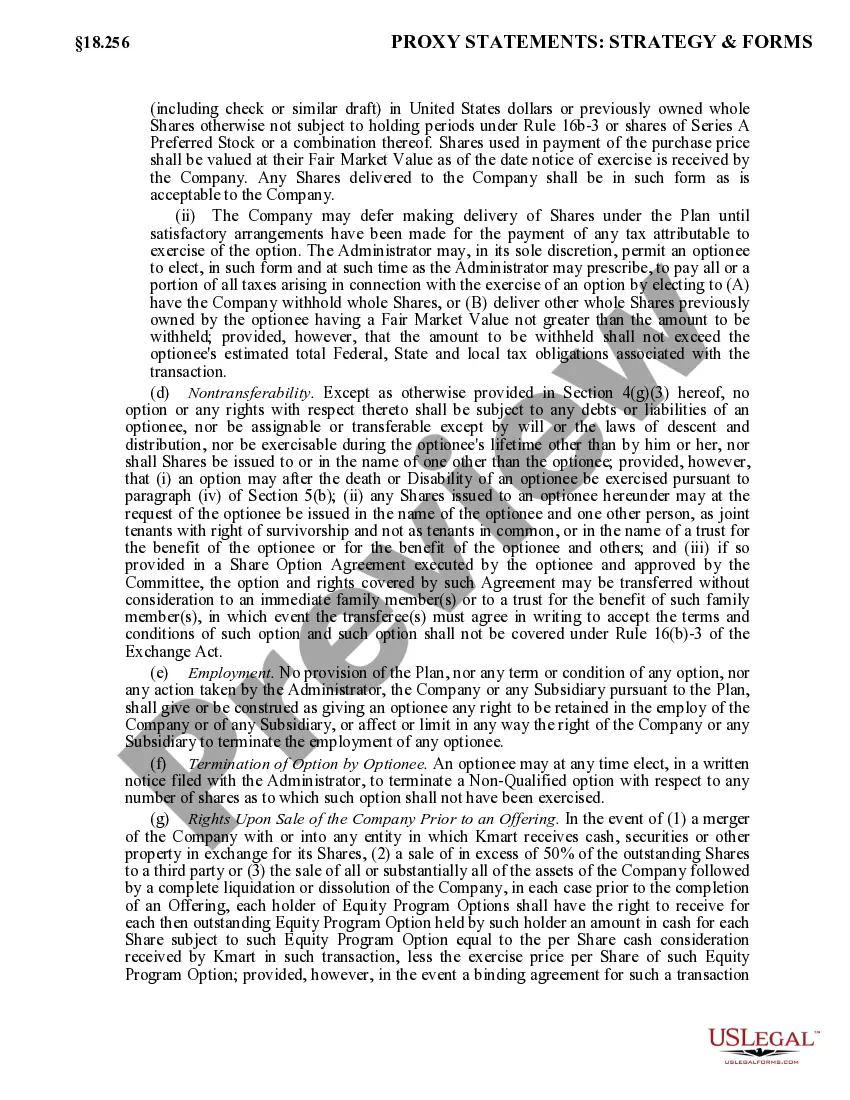
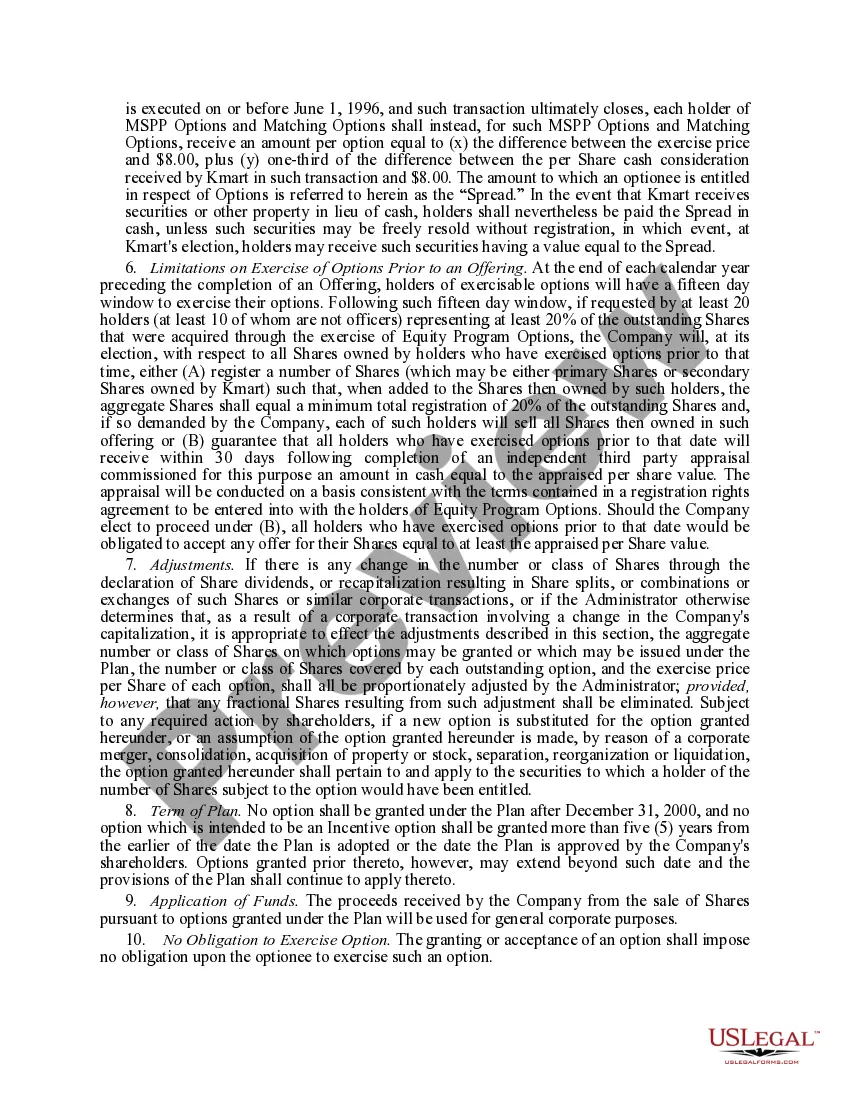

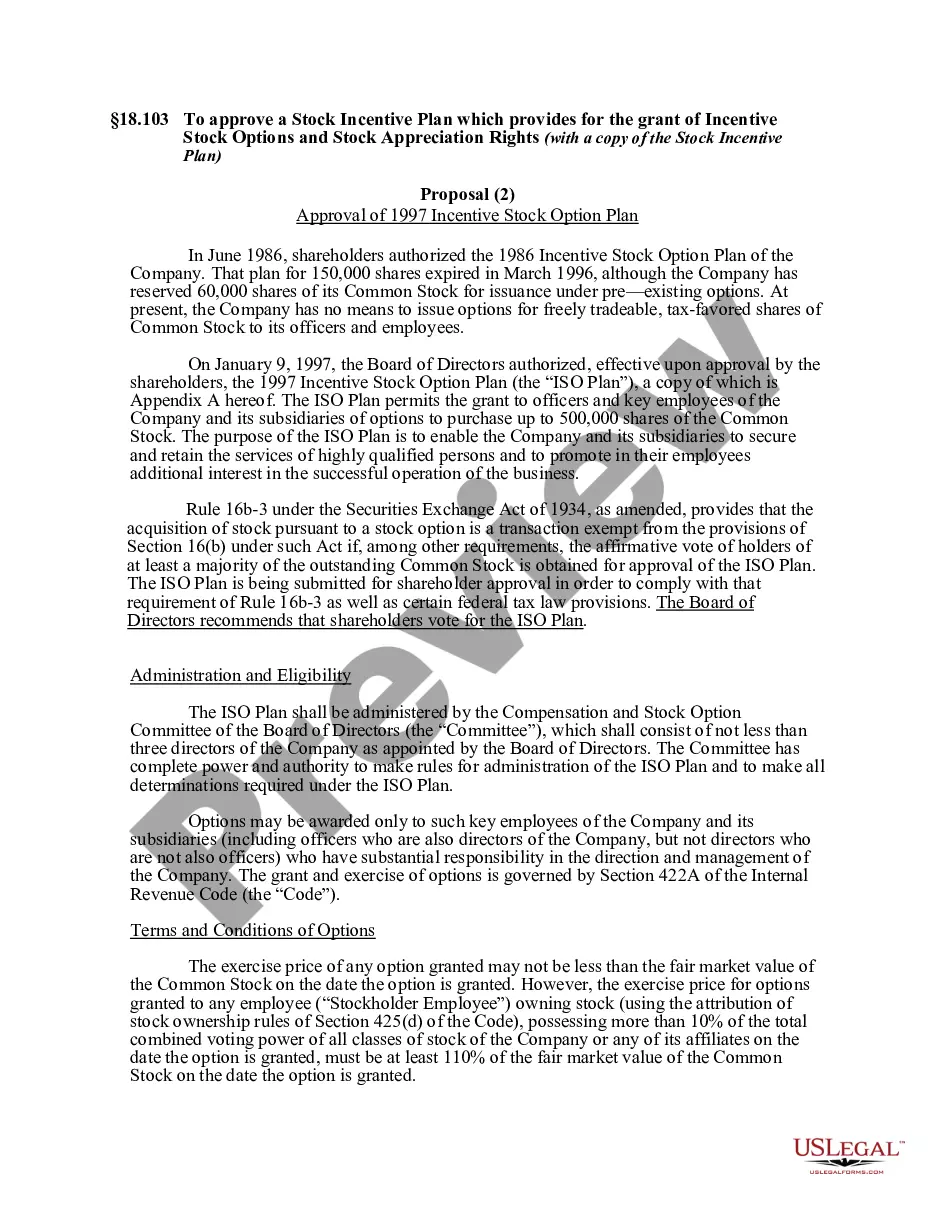
Get your form ready online
Our built-in tools help you complete, sign, share, and store your documents in one place.
Make edits, fill in missing information, and update formatting in US Legal Forms—just like you would in MS Word.
Download a copy, print it, send it by email, or mail it via USPS—whatever works best for your next step.
Sign and collect signatures with our SignNow integration. Send to multiple recipients, set reminders, and more. Go Premium to unlock E-Sign.
If this form requires notarization, complete it online through a secure video call—no need to meet a notary in person or wait for an appointment.
We protect your documents and personal data by following strict security and privacy standards.

Make edits, fill in missing information, and update formatting in US Legal Forms—just like you would in MS Word.

Download a copy, print it, send it by email, or mail it via USPS—whatever works best for your next step.

Sign and collect signatures with our SignNow integration. Send to multiple recipients, set reminders, and more. Go Premium to unlock E-Sign.

If this form requires notarization, complete it online through a secure video call—no need to meet a notary in person or wait for an appointment.

We protect your documents and personal data by following strict security and privacy standards.
Looking for another form?



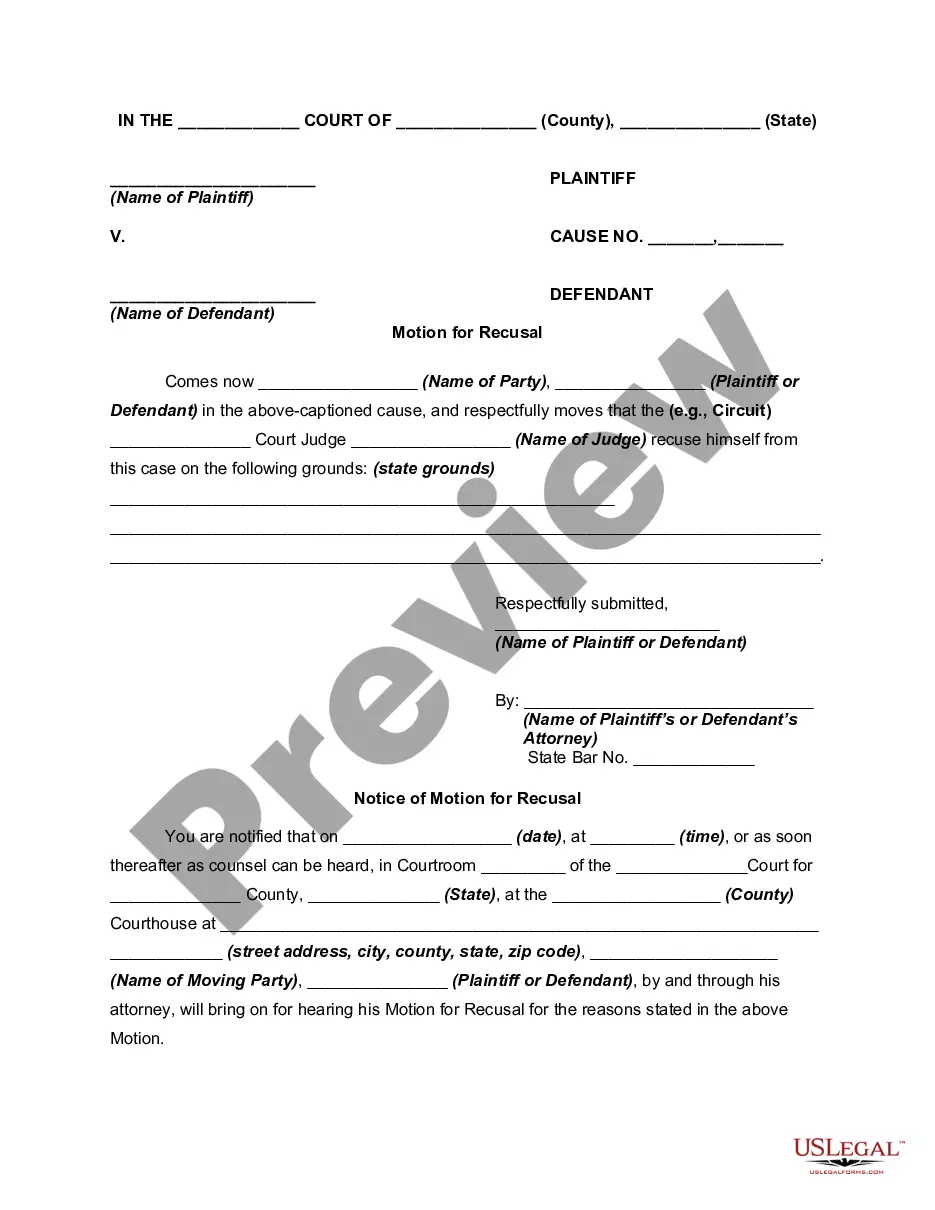




How to fill out Stock Option Plan Stock Option Plan Which Provides For Grant Of Incentive Stock Options, Nonqualified Stock Options, And Exchange Options?
- Login to your US Legal Forms account if you have used the service before. Ensure your subscription is active to access forms effortlessly.
- If you are new to our platform, start by exploring the Preview mode and form descriptions to identify the appropriate stock option exchange template that fits your requirements.
- Utilize the Search function if you do not find what you need initially. It helps you locate the exact document tailored to your local jurisdiction.
- Once you have selected the correct form, click on the Buy Now button to choose your desired subscription plan. Account registration is required to gain access to our extensive library.
- Complete your purchase by entering your payment details or opting for PayPal to finalize your transaction.
- Download your completed form directly to your device, allowing you to fill it out as needed. You can also revisit it anytime in the My Documents section of your profile.
By using US Legal Forms, individuals and attorneys can easily execute their legal documents with confidence, knowing they have access to over 85,000 customizable legal forms.
Get started today and simplify your legal document needs with US Legal Forms. If you have any questions, reach out to our premium experts for assistance!
Form popularity
FAQ
Yes, holding stocks for the long-term is often recommended by financial experts. Long-term investments generally have a higher chance of delivering strong returns and can help you meet future financial goals. This approach allows you to benefit from the power of compounding and market recovery. Consider using a stock option exchange for 10 years to optimize long-term investment opportunities.
Keeping stocks for 10 years can be a wise strategy for enhancing your investment portfolio. A longer holding period typically allows your investments to weather market ups and downs, yielding potential growth. Moreover, this approach helps in capitalizing on the overall upward trend of the market over time. Engaging with a stock option exchange for 10 years can help you make informed decisions while maximizing benefits.
The 10 year rule in stocks refers to the idea that long-term investments often yield better results than short-term trading. Historically, market downturns tend to recover over a decade. By following this rule, investors can minimize the impact of short-term fluctuations and increase their chances of achieving favorable returns. Utilizing a stock option exchange for 10 years aligns with this principle.
Holding stock for 10 years can provide significant growth potential. Over a decade, you may benefit from compounding returns and dividends, which enhance your investment. Additionally, a long-term perspective may help you ride out market volatility, increasing the likelihood of positive returns. Consider a stock option exchange for 10 years to maximize your investment strategy.
Yes, stock options typically expire within 10 years from the date they are granted. This means you must exercise or sell your options before they reach their expiration date. Understanding the implications of this timeframe is crucial for your investment planning. For additional insights and forms related to stock options, you can explore resources available on the US Legal Forms website.
Filing taxes for options trading can be straightforward if you understand the basics. You need to report your gains or losses on your tax return, categorizing them based on short-term or long-term holdings. If you've utilized a stock option exchange for 10 years, be aware that the rules might differ for options exercised versus those sold. The US Legal Forms platform offers tools and guides to help you comply with tax laws efficiently.
The $100,000 rule of Code 422(d) specifies that the maximum value of ISOs that can be exercised in one calendar year is $100,000 based on the grant date. This limit is crucial for anyone managing their stock options to avoid tax complications. If you're considering a stock option exchange for 10 years, understanding this rule can help you navigate your financial landscape effectively.
The $100,000 rule for stock options dictates that the total value of incentive stock options exercisable in a single year cannot exceed $100,000. This limit serves to maintain the special tax treatment these options receive. For those interested in a stock option exchange for 10 years, being aware of this rule is paramount to optimizing your benefits.
The duration for which you can keep stock options varies, depending on the type of option and your company's policy. Generally, options might be valid for up to ten years, provided they adhere to regulations and are exercised within that timeframe. During a stock option exchange for 10 years, knowing how long you can hold onto options helps you make informed financial decisions.
The rule of $100,000 pertains to the allowance of $100,000 worth of ISOs that may vest in any one year for favorable tax treatment. Should you exceed this limit, the excess will be considered as non-qualified options, attracting different tax implications. This rule can impact your financial strategy, especially during a stock option exchange for 10 years.