Stock Option Plan O Que é
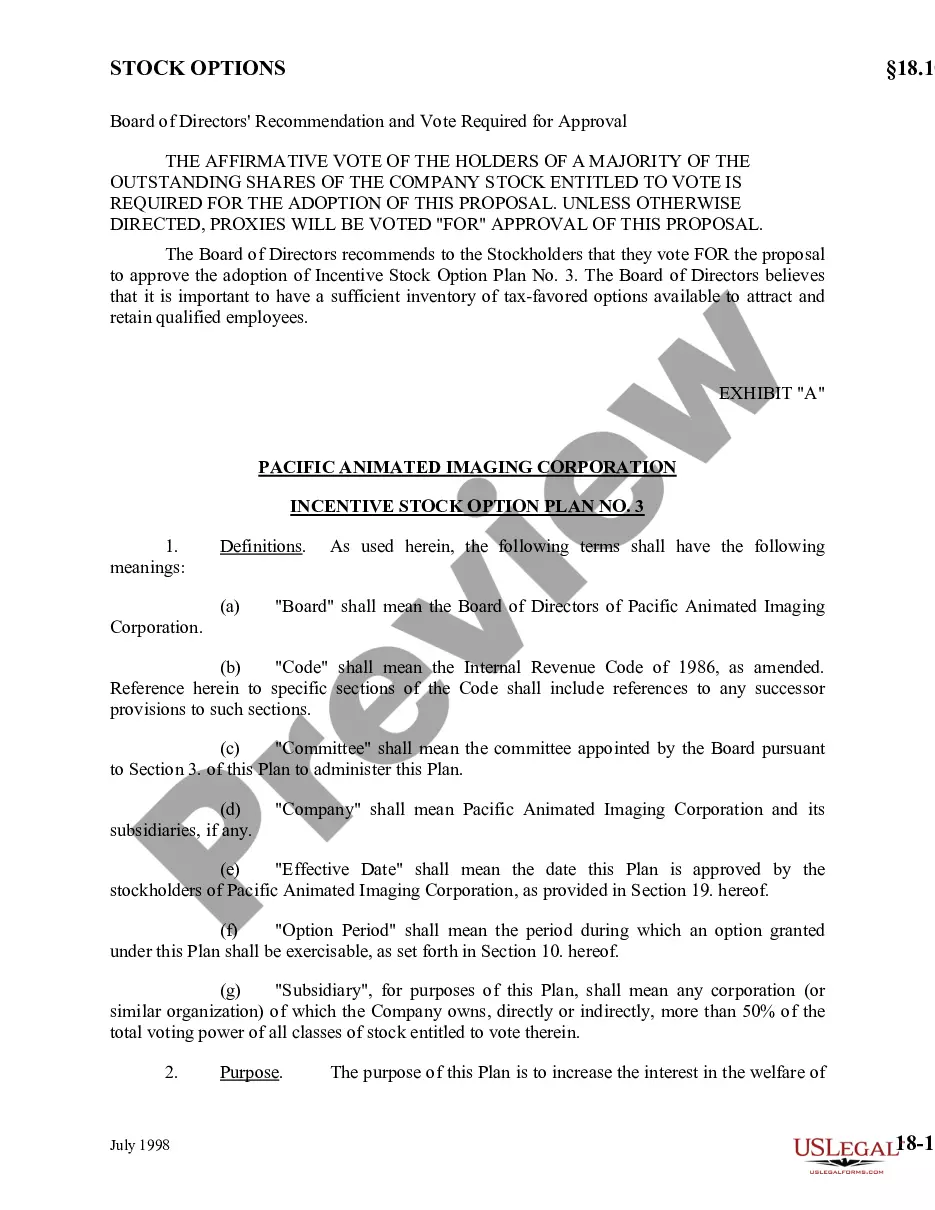
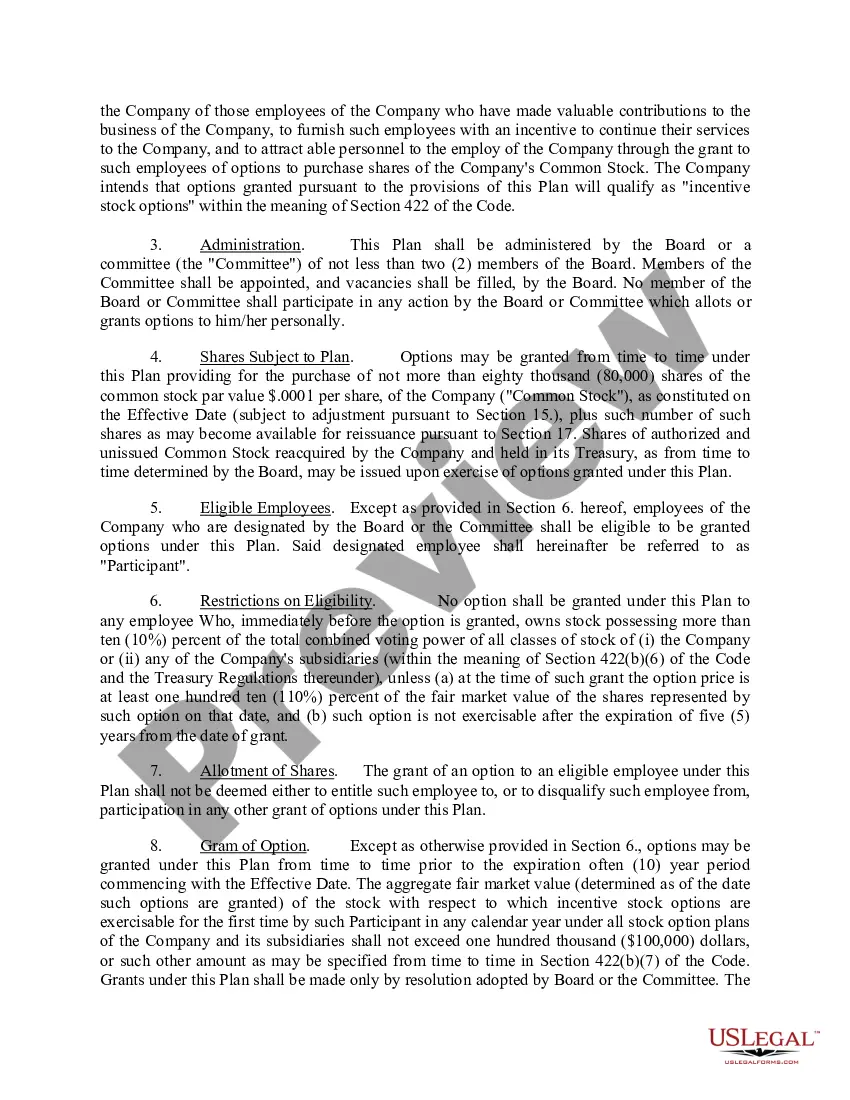
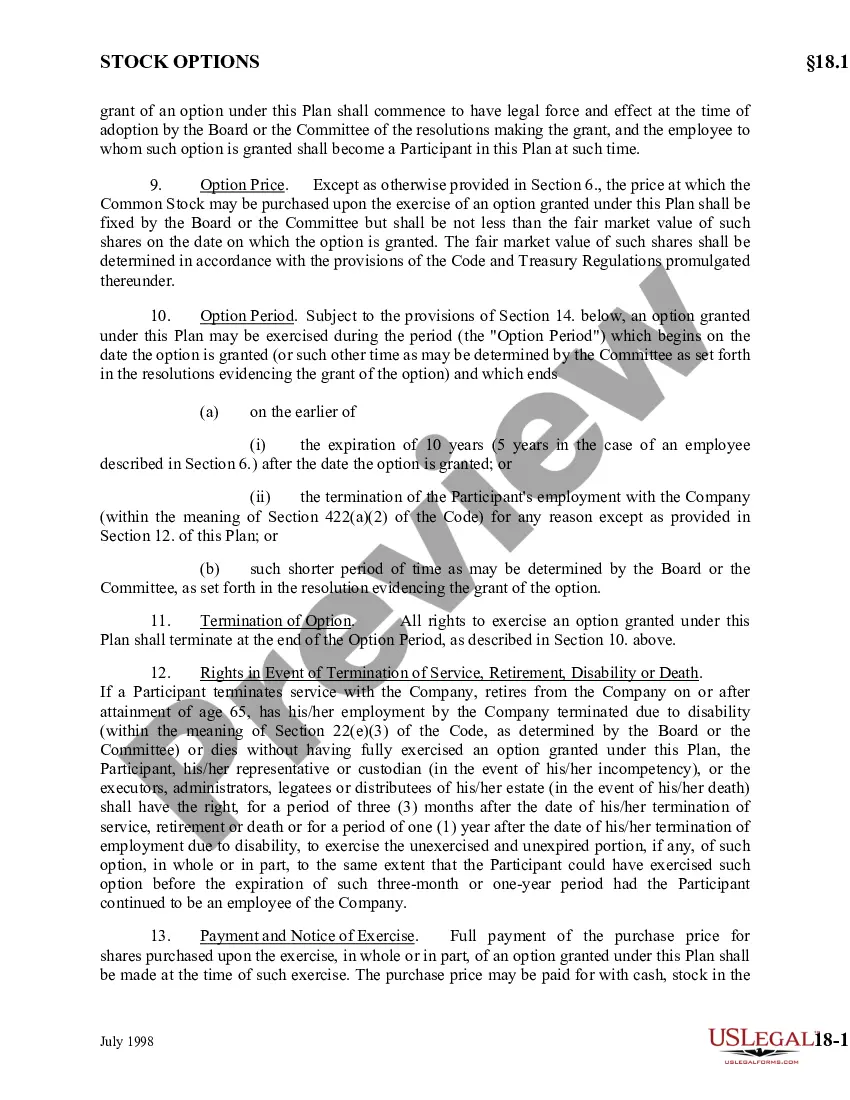
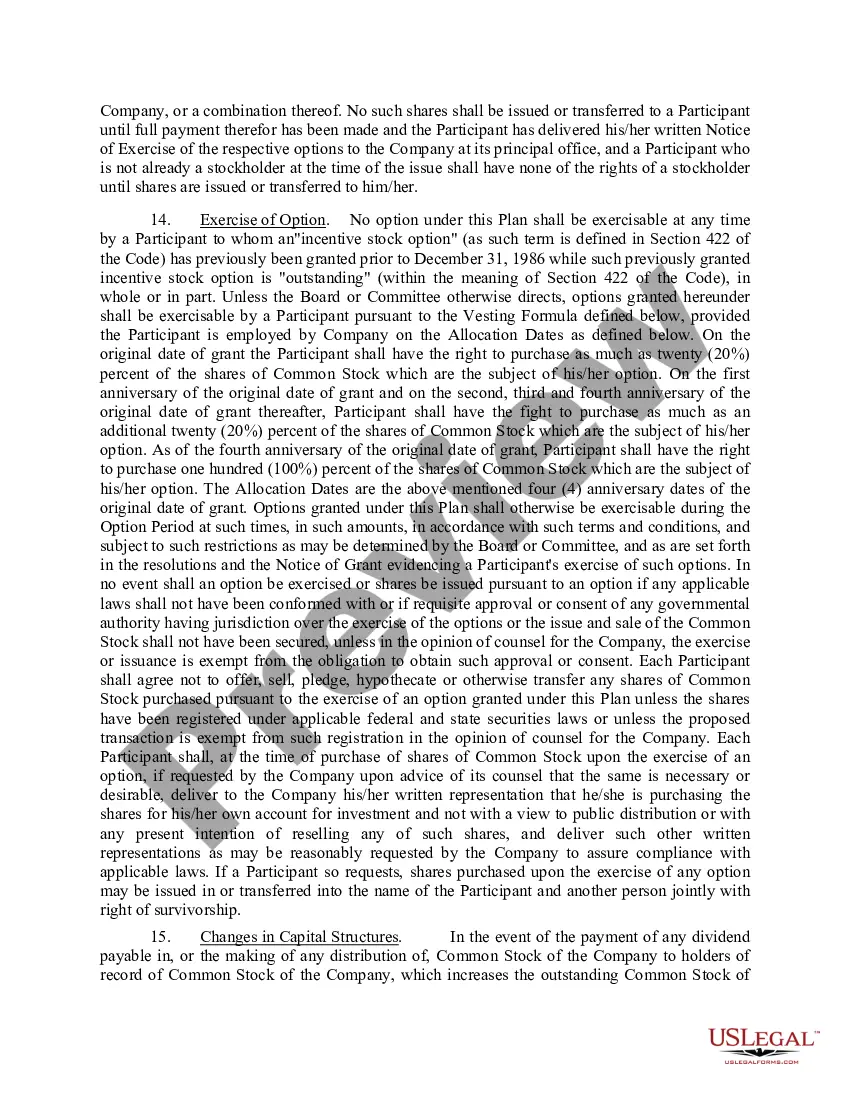
Description
Get your form ready online
Our built-in tools help you complete, sign, share, and store your documents in one place.
Make edits, fill in missing information, and update formatting in US Legal Forms—just like you would in MS Word.
Download a copy, print it, send it by email, or mail it via USPS—whatever works best for your next step.
Sign and collect signatures with our SignNow integration. Send to multiple recipients, set reminders, and more. Go Premium to unlock E-Sign.
If this form requires notarization, complete it online through a secure video call—no need to meet a notary in person or wait for an appointment.
We protect your documents and personal data by following strict security and privacy standards.

Make edits, fill in missing information, and update formatting in US Legal Forms—just like you would in MS Word.

Download a copy, print it, send it by email, or mail it via USPS—whatever works best for your next step.

Sign and collect signatures with our SignNow integration. Send to multiple recipients, set reminders, and more. Go Premium to unlock E-Sign.

If this form requires notarization, complete it online through a secure video call—no need to meet a notary in person or wait for an appointment.

We protect your documents and personal data by following strict security and privacy standards.
Looking for another form?
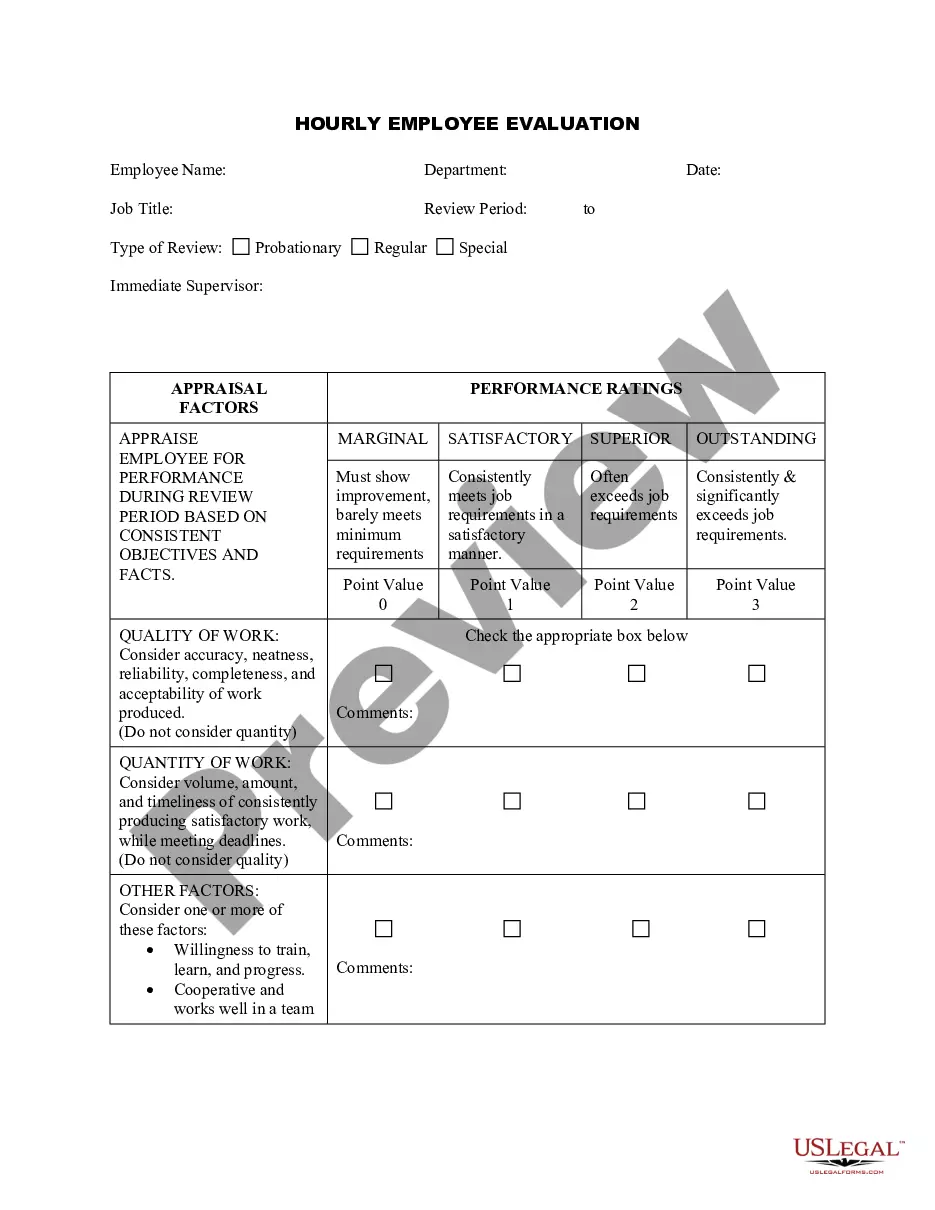
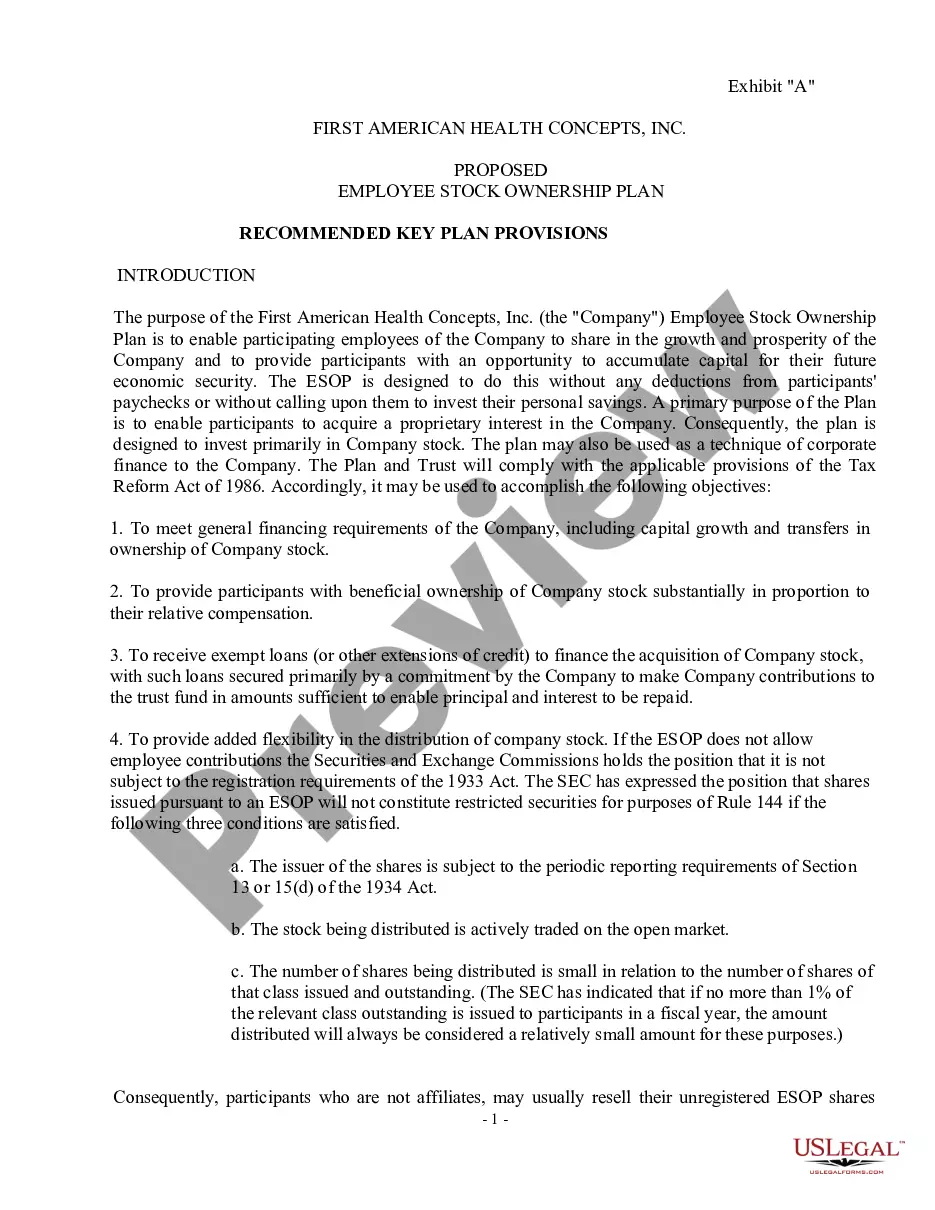
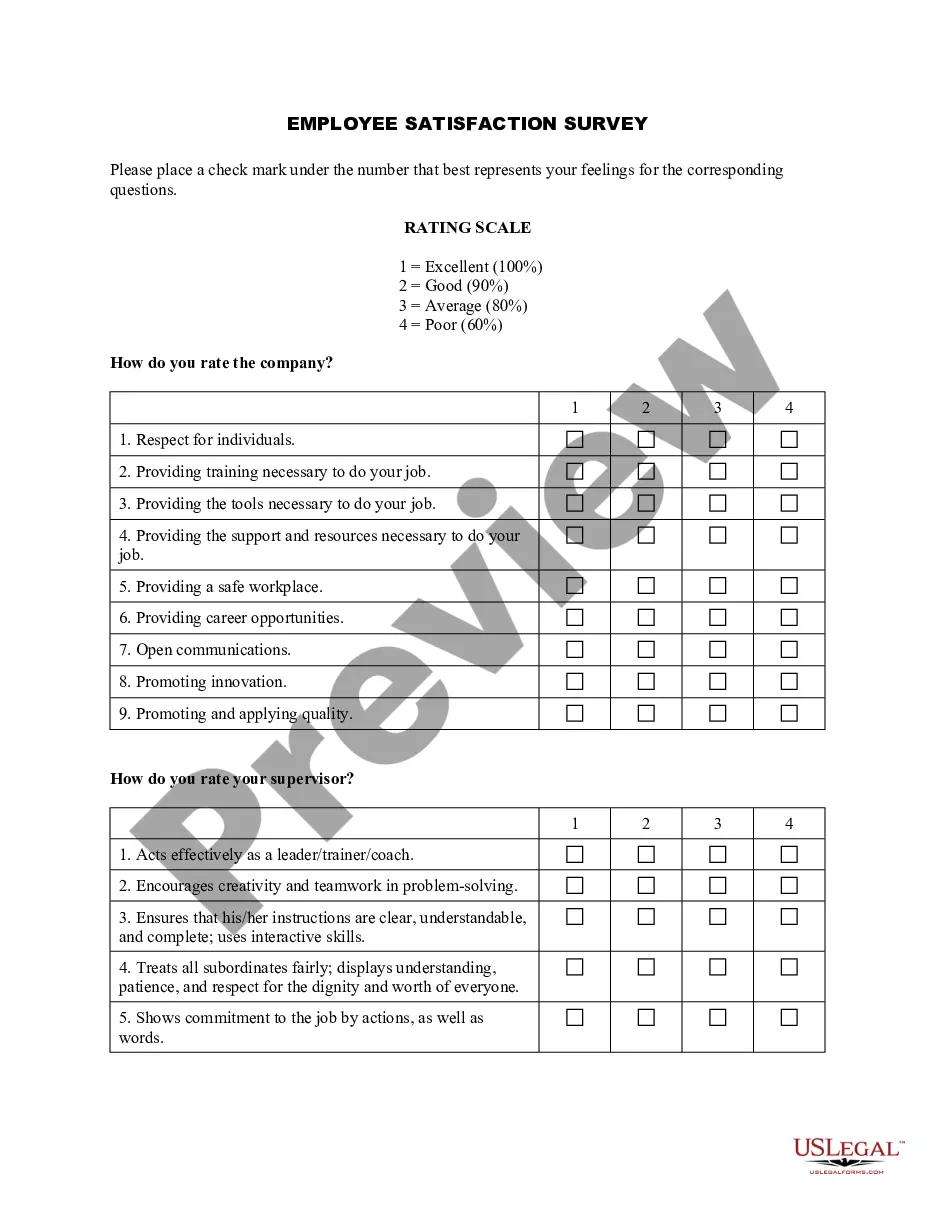
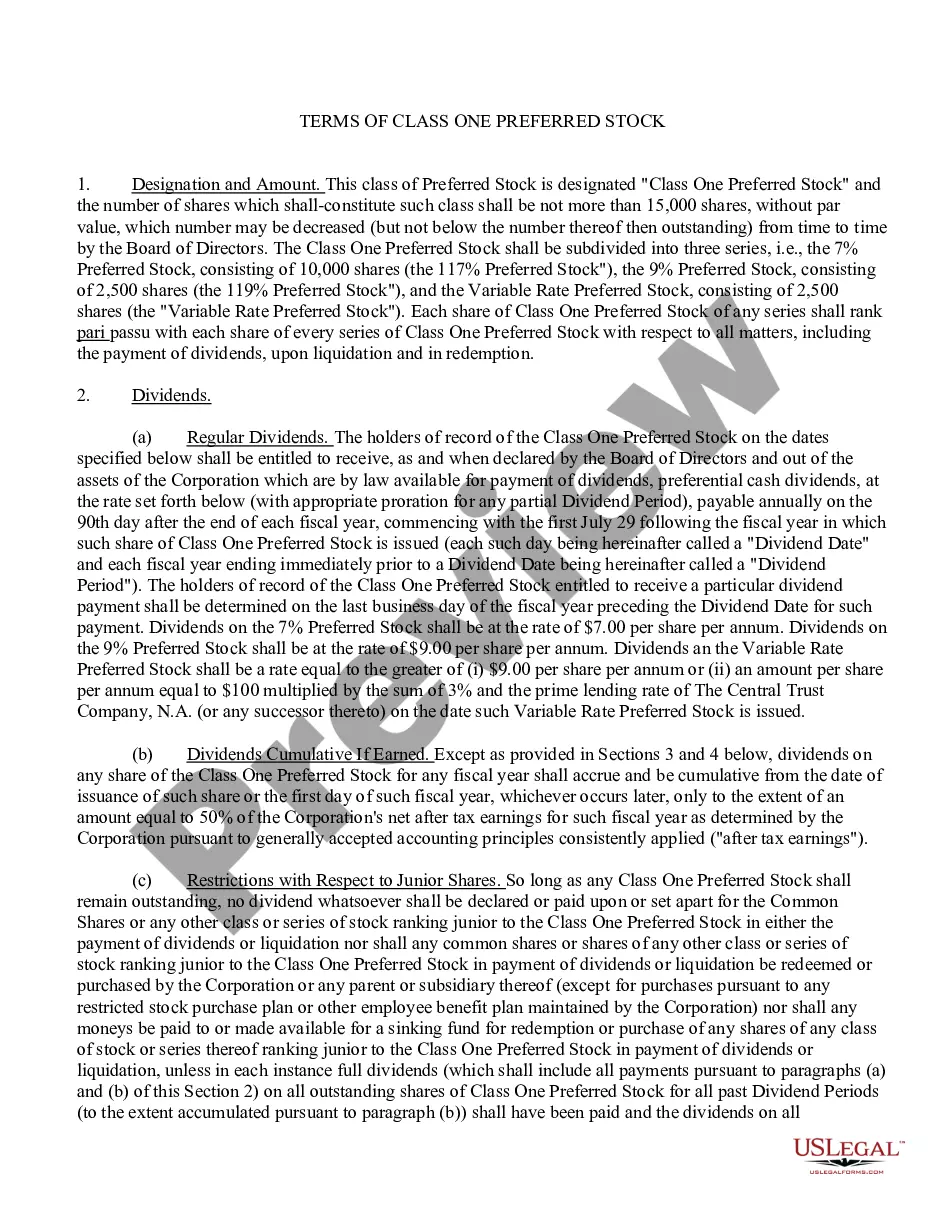

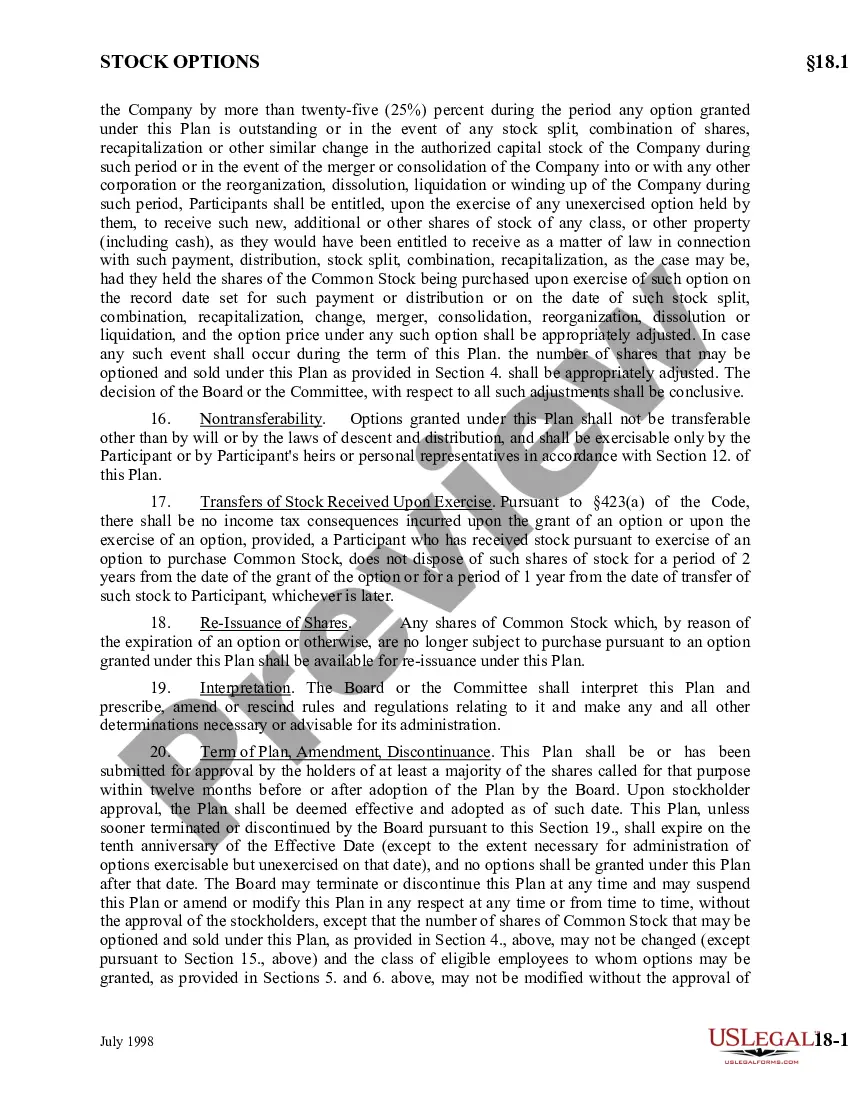
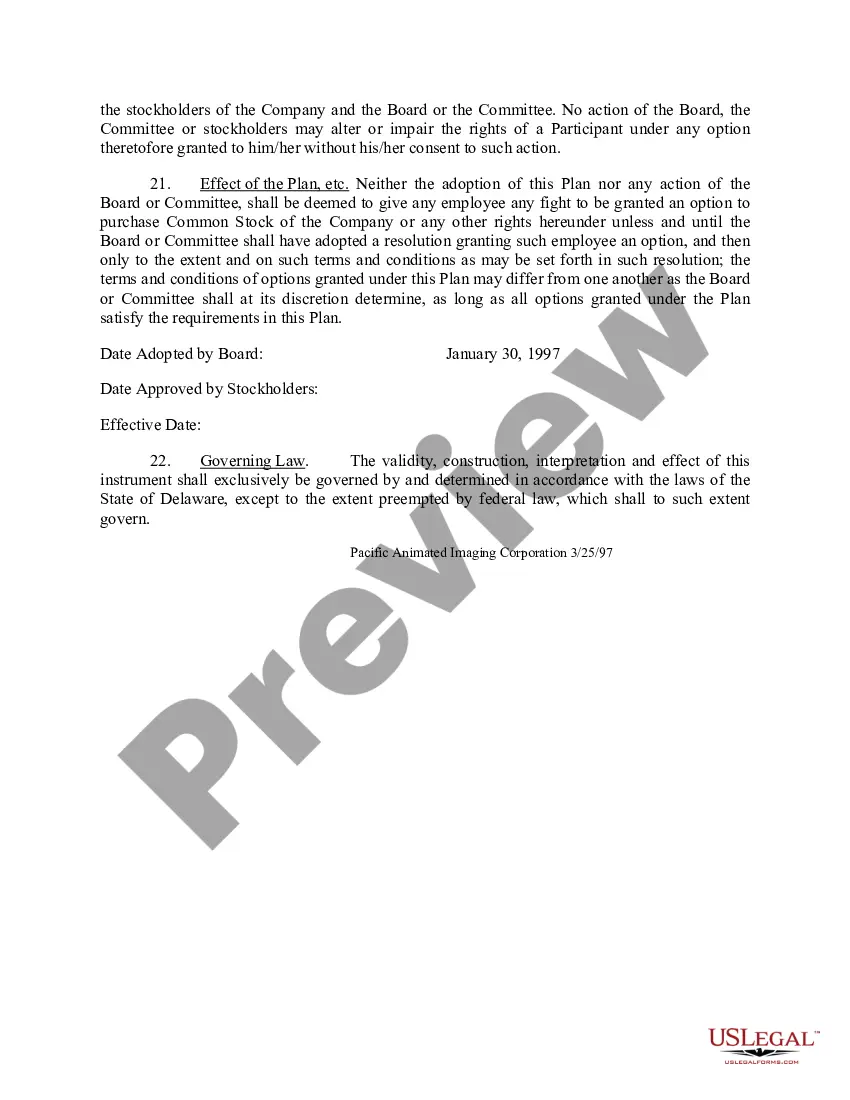
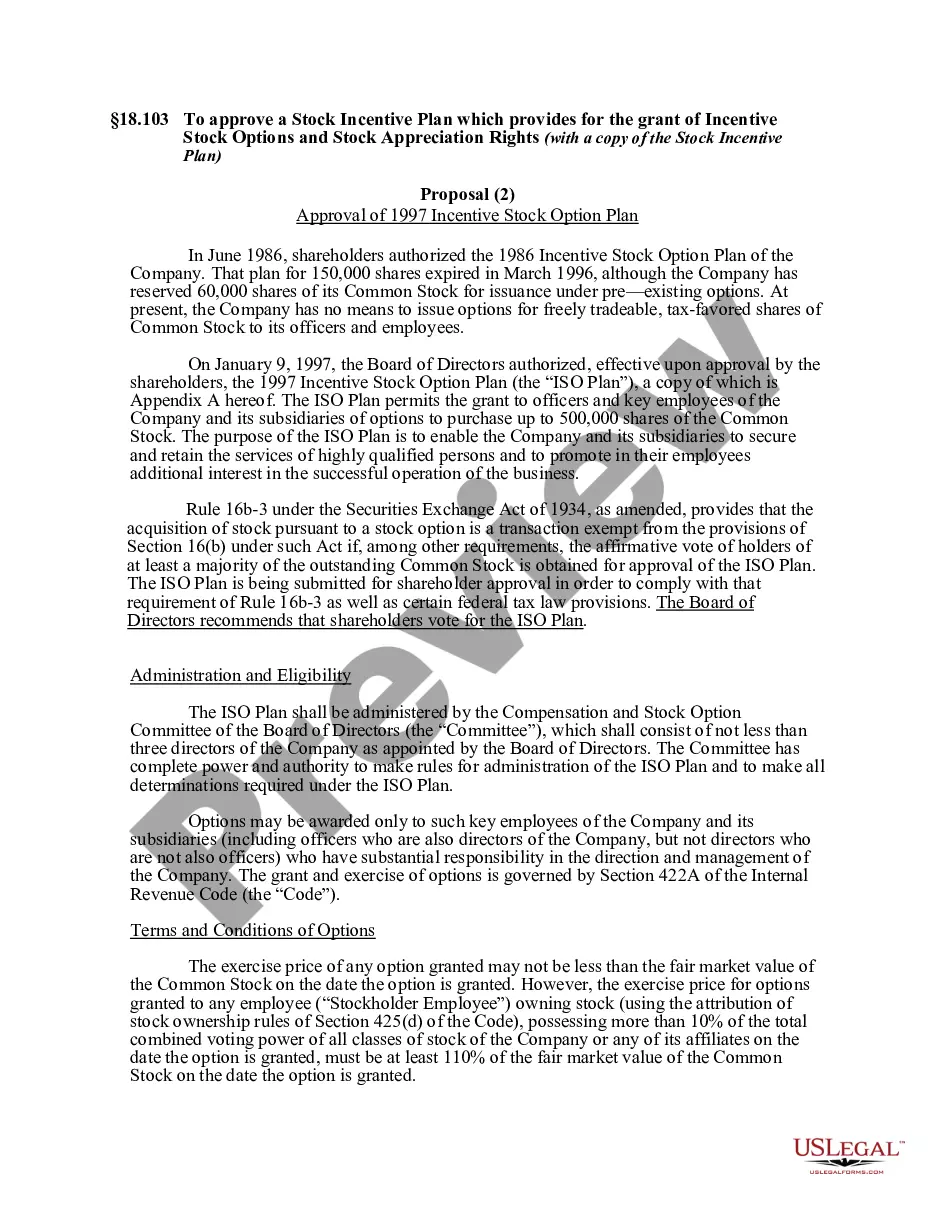
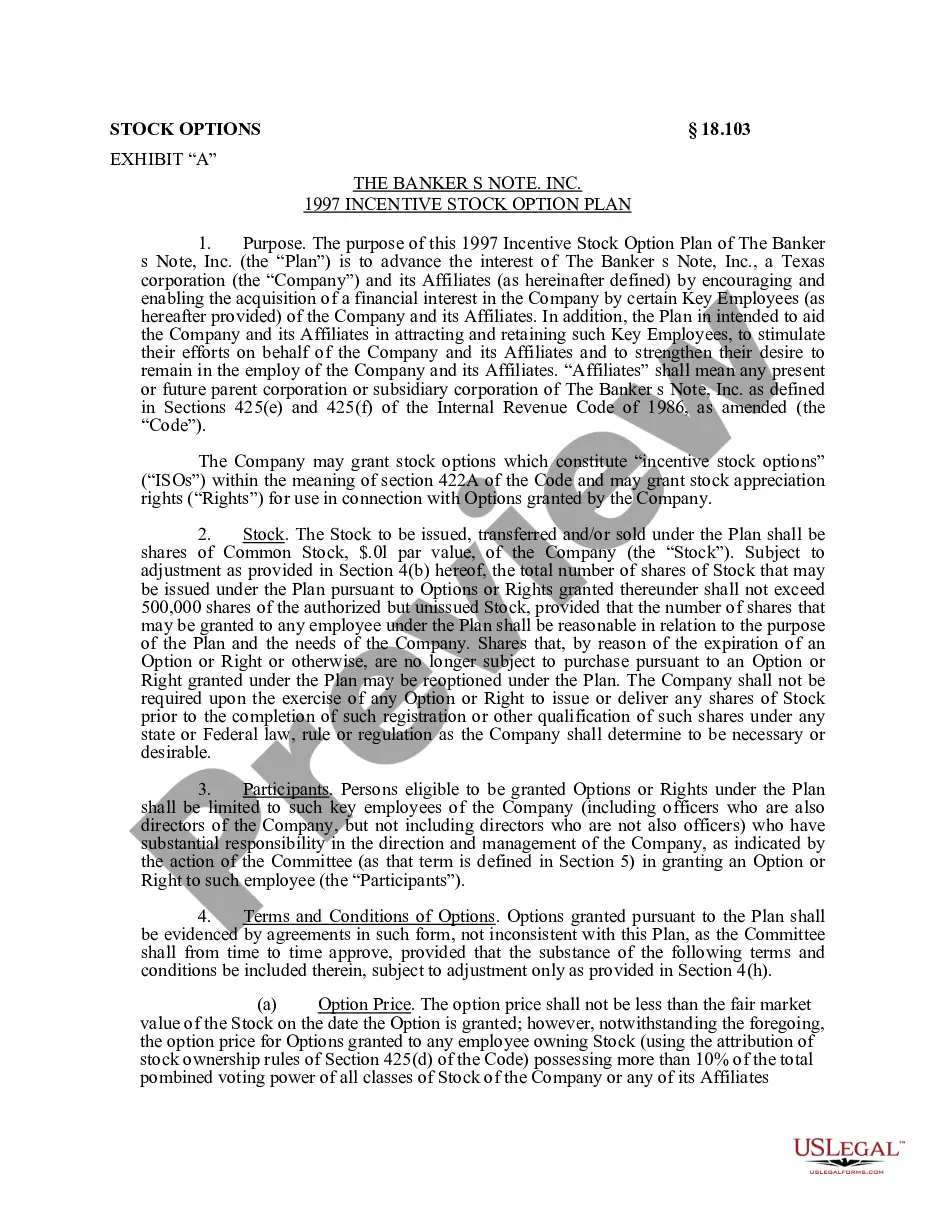
How to fill out Stock Option Plan To Approve Incentive Stock Option Plan Of Pacific Animated Imaging Corp.?
- If you have previously utilized US Legal Forms, simply log in to your account and locate your desired form template. Ensure your subscription is active; if not, renew it as per your plan.
- For first-time users, start by browsing the preview mode and reading the form description. This will help you verify that you’ve selected the appropriate document tailored to your needs and local jurisdiction.
- If your search is yielding inconsistencies, utilize the search bar above to locate the correct template that meets your requirements.
- Click the Buy Now button to purchase your chosen document and select a subscription plan that suits you. Registration for an account is required to access the library.
- Complete your purchase by entering your payment details, either through credit card or PayPal.
- Finally, download your completed form. You can find and manage all your documents in the My Forms section of your profile.
In conclusion, US Legal Forms provides individuals with an extensive range of legal documents, enabling them to navigate stock option plans and other legal needs confidently. With access to over 85,000 fillable and editable forms and premium expert assistance, ensuring the accuracy of your documents is just a click away.
Start your journey with US Legal Forms today and explore the benefits of having the right legal documentation at your fingertips.
Form popularity
FAQ
Generally, stock options themselves are not tax-deductible; however, the costs related to these options may be. For example, if a company grants stock options that lead to taxable income for employees, it can deduct the expense related to those options. Understanding this can help you better plan your tax strategy. To gain deeper insights, explore the resources offered by USLegalForms.
Stock options are typically reported in Box 1 of your W-2 form as they represent income for that tax year. If your employer withheld any taxes during the exercise, those amounts should also reflect on the W-2. Make sure to review this information for accuracy, as incorrect reporting can cause issues with your tax filing. For full assistance, USLegalForms can provide tailored resources.
Reporting stock options on your tax return involves including your earnings from these options in your taxable income. You must report any gains earned through exercising the options based on the market value at the time. It’s essential to keep detailed records of your transactions. Using resources from USLegalForms can help you navigate this process smoothly and accurately.
To correctly include stock options on your tax return, you first need to determine if they are qualified or non-qualified options. Qualified options usually do not incur taxes upon exercising but may be taxed when sold. Non-qualified options typically require taxes at exercise. For clarity, consider using platforms like USLegalForms for guidance on reporting.
Filing stock options involves reporting your transactions accurately on your tax return. You will typically use IRS forms such as 8949 and Schedule D to detail your stock option activities. Ensuring precision in this process helps clarify your financial standing and provides insight into your stock option plan o que é, allowing you to manage your finances effectively.
The $100,000 rule refers to the limit on the value of stock options you can exercise at once without triggering immediate tax implications. This rule is especially relevant for Incentive Stock Options (ISOs) and is measured at the time of grant. Exceeding this limit can lead to significant tax liabilities, so it’s essential to keep track of how it relates to your stock option plan o que é.
Stock options are reported on a 1099 form through the transaction details when you exercise and sell them. The income generated from these options typically appears in Box 1 of Form 1099-MISC or 1099-NEC. These reports help ensure that you accurately reflect your earnings, which is essential for understanding your stock option plan o que é and fulfilling your tax obligations.
Setting up a stock option plan involves several steps. First, define your objectives and who will benefit from the plan. Next, establish the structure, including the number of options and the vesting schedule. You can leverage resources like USLegalForms to draft the necessary documents, ensuring compliance and clarity in understanding your stock option plan o que é.
Yes, you typically receive a 1099 form if you exercise stock options and sell the shares within the same tax year. This form provides essential information regarding your income from stock options, which is crucial for your tax filings. Remember, understanding your stock option plan o que é helps you anticipate these documents and how they impact your finances.
An example of a stock option would be an employee being granted the option to buy 1,000 shares at $10 per share within a specific timeframe. If the company's stock rises to $20, the employee can exercise their option, gaining a profit of $10 per share. This practical scenario highlights the essence of stock option plan o que é.