Trust Agreement Form With A Client
Description
Get your form ready online
Our built-in tools help you complete, sign, share, and store your documents in one place.
Make edits, fill in missing information, and update formatting in US Legal Forms—just like you would in MS Word.
Download a copy, print it, send it by email, or mail it via USPS—whatever works best for your next step.
Sign and collect signatures with our SignNow integration. Send to multiple recipients, set reminders, and more. Go Premium to unlock E-Sign.
If this form requires notarization, complete it online through a secure video call—no need to meet a notary in person or wait for an appointment.
We protect your documents and personal data by following strict security and privacy standards.

Make edits, fill in missing information, and update formatting in US Legal Forms—just like you would in MS Word.

Download a copy, print it, send it by email, or mail it via USPS—whatever works best for your next step.

Sign and collect signatures with our SignNow integration. Send to multiple recipients, set reminders, and more. Go Premium to unlock E-Sign.

If this form requires notarization, complete it online through a secure video call—no need to meet a notary in person or wait for an appointment.

We protect your documents and personal data by following strict security and privacy standards.
Looking for another form?







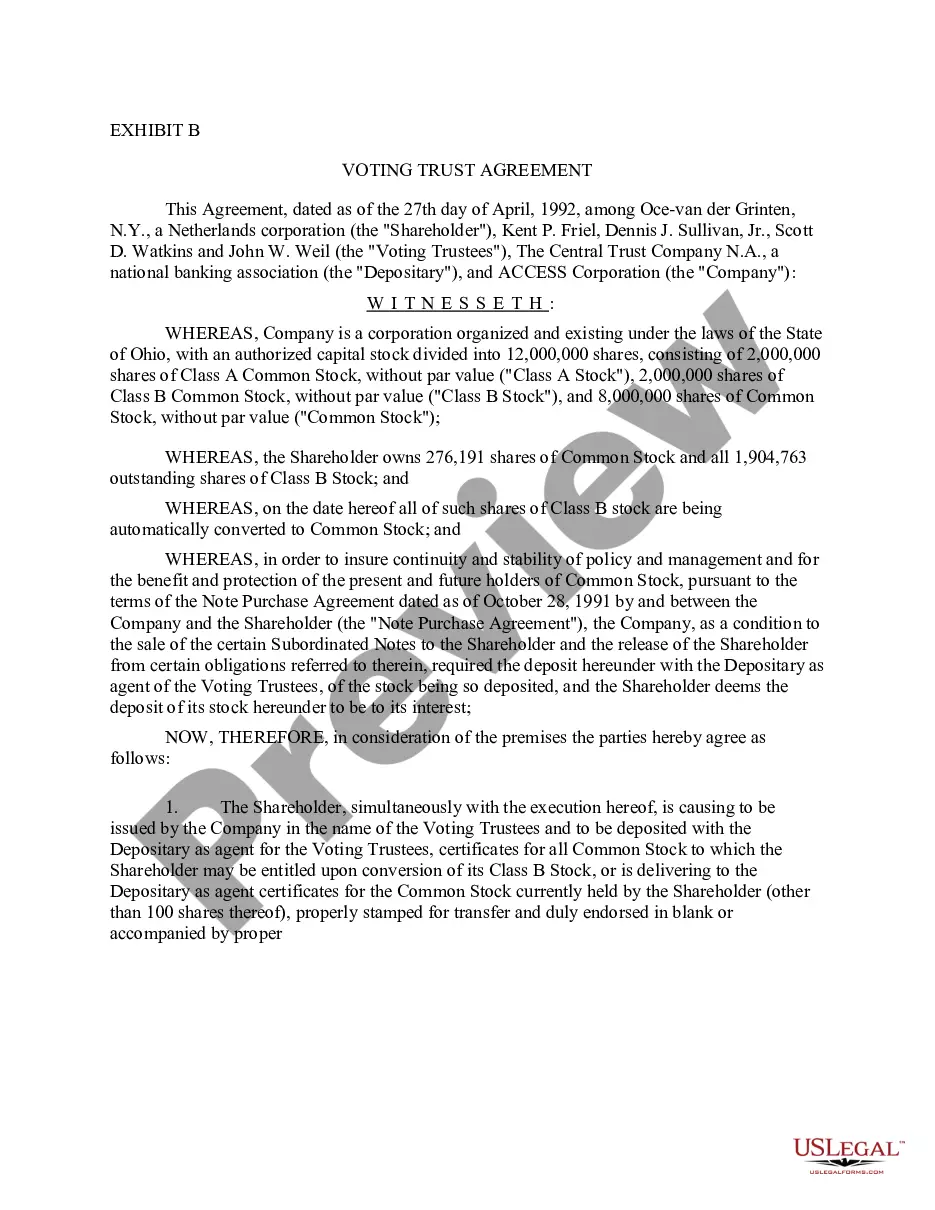
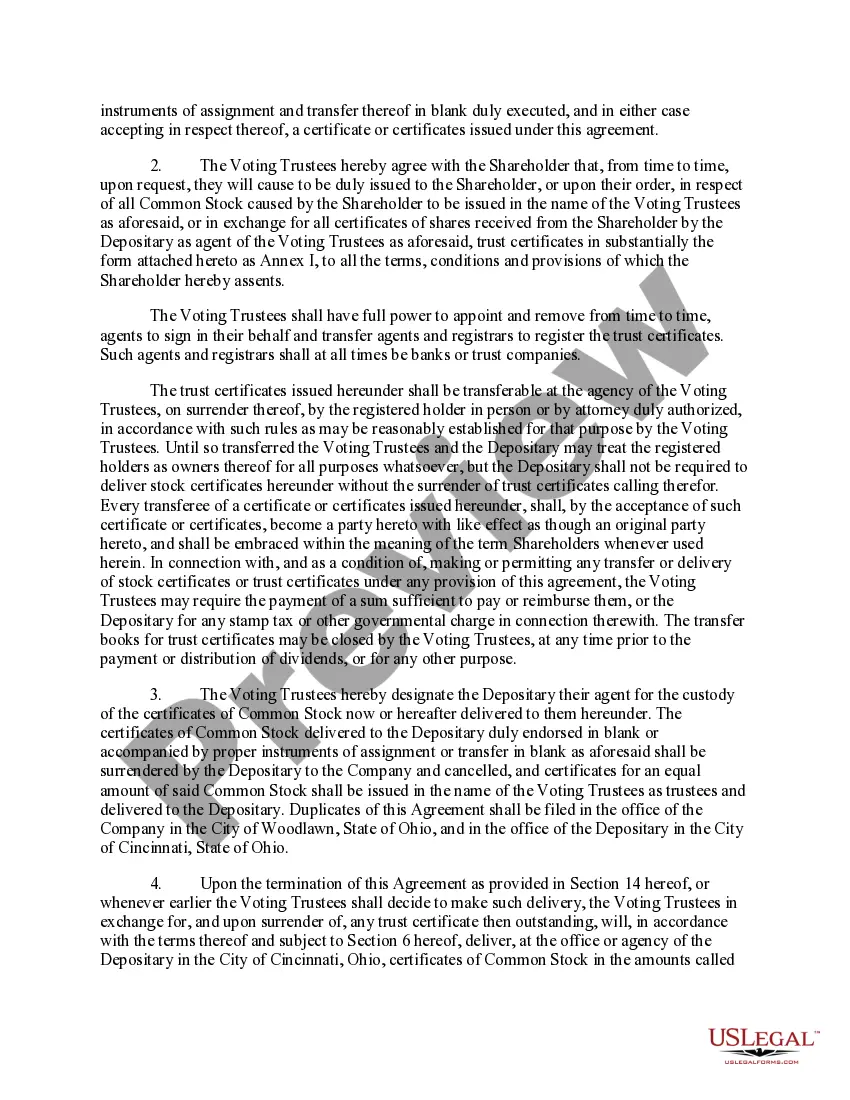
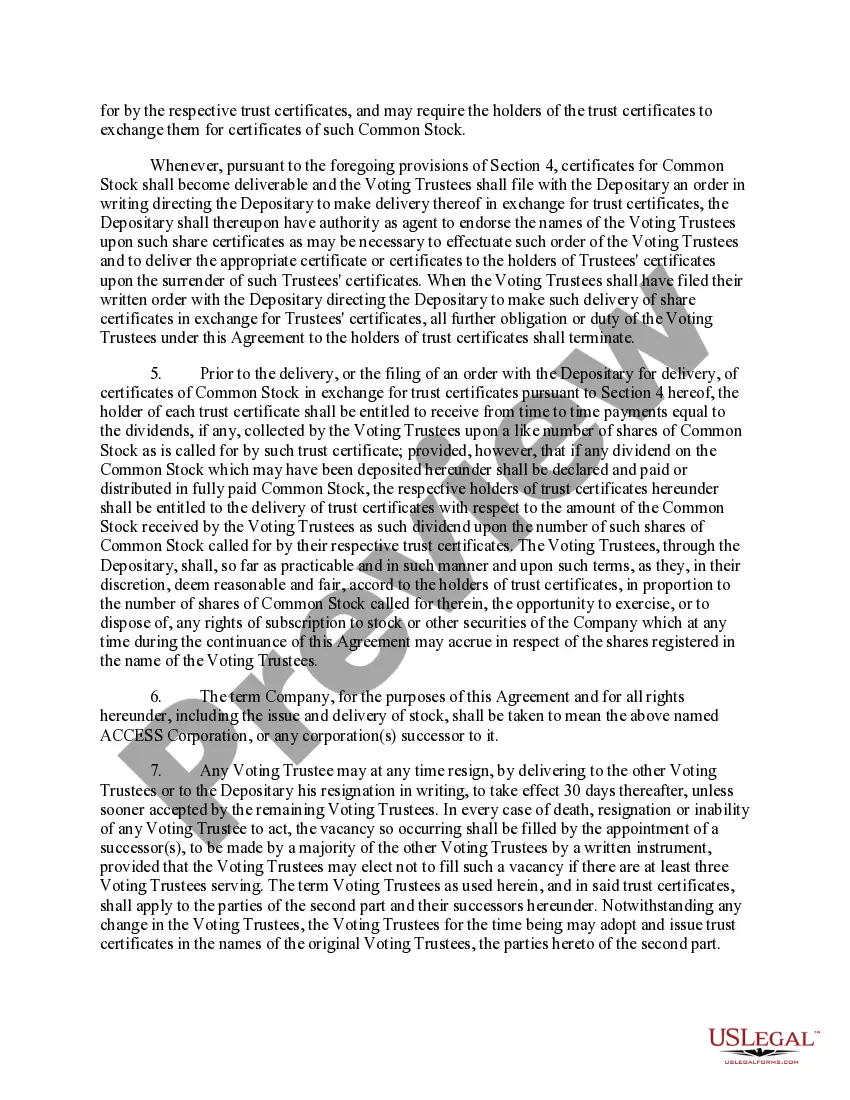
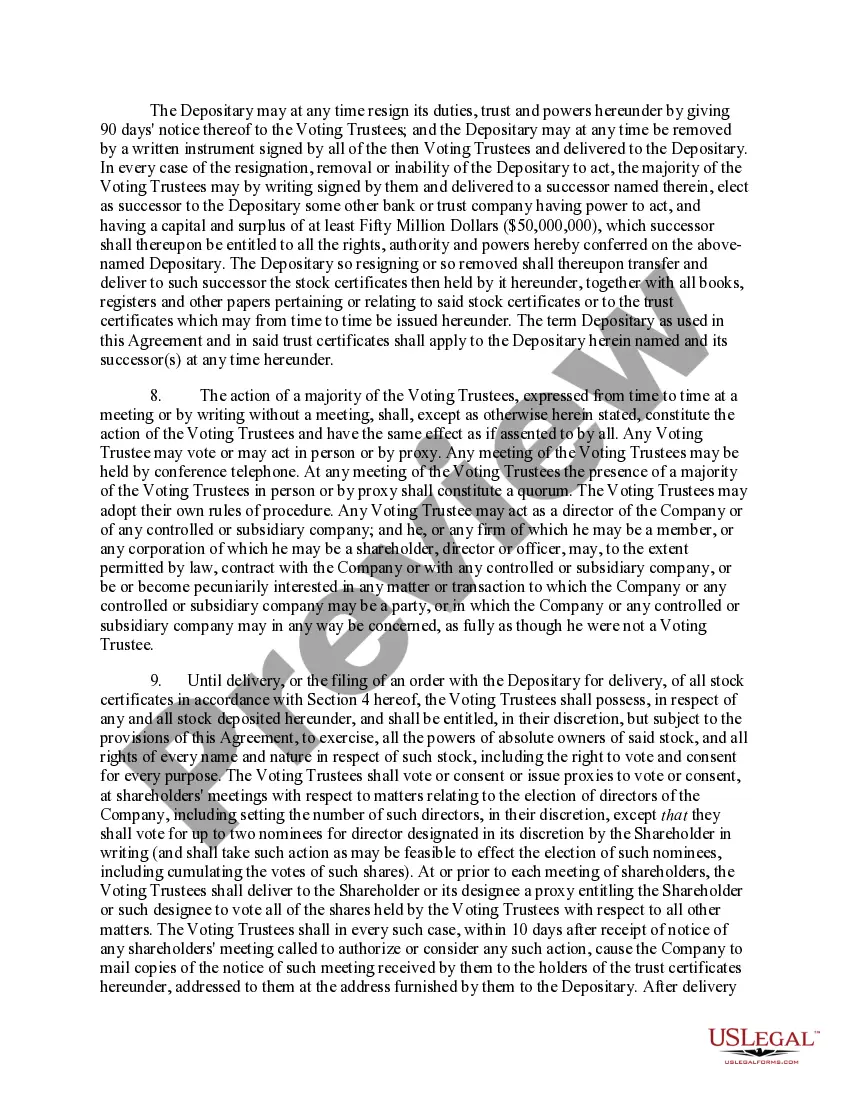
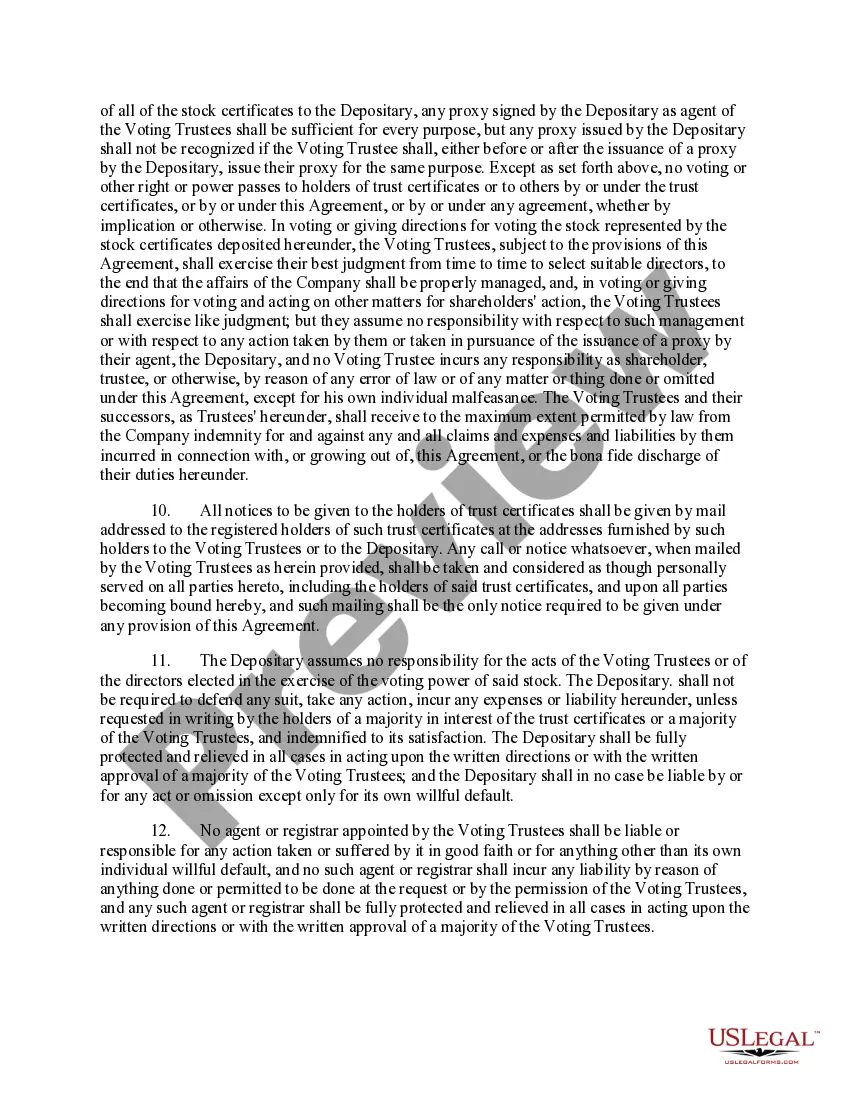
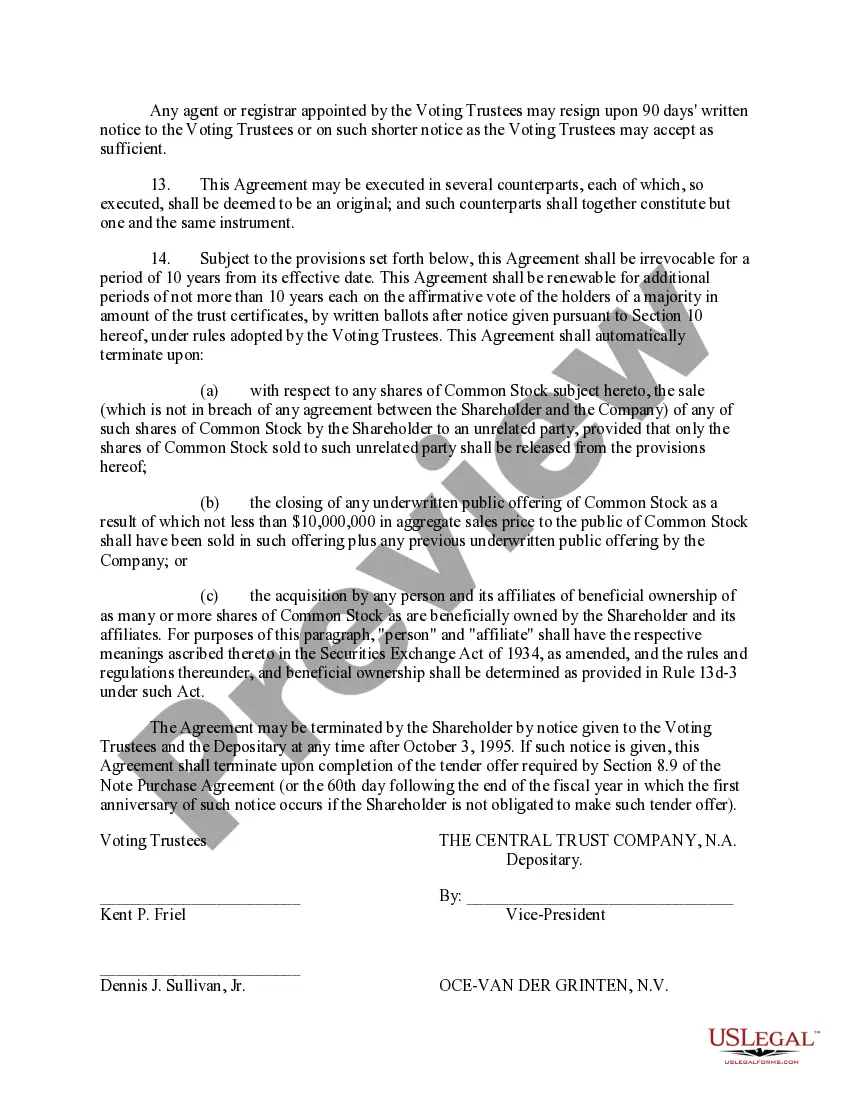
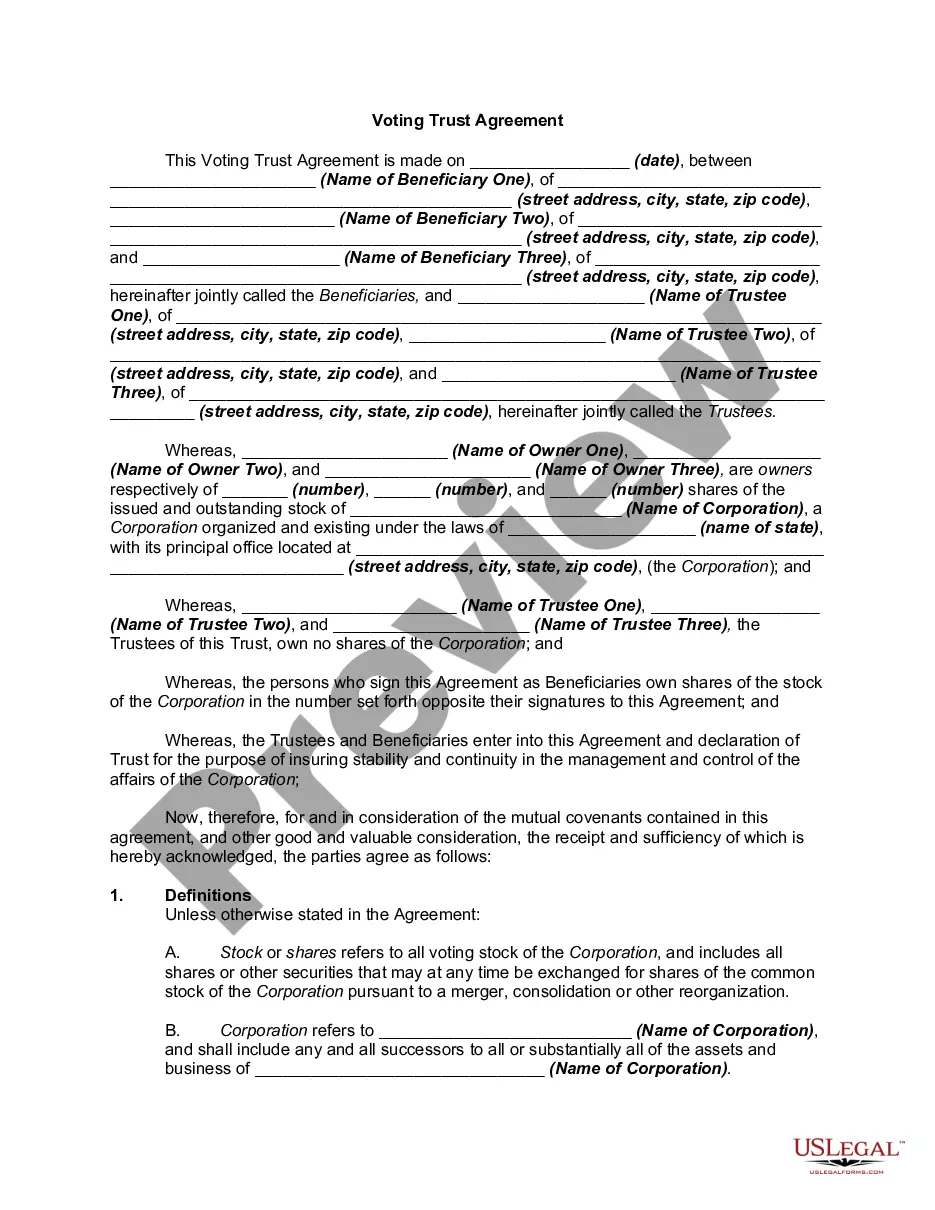
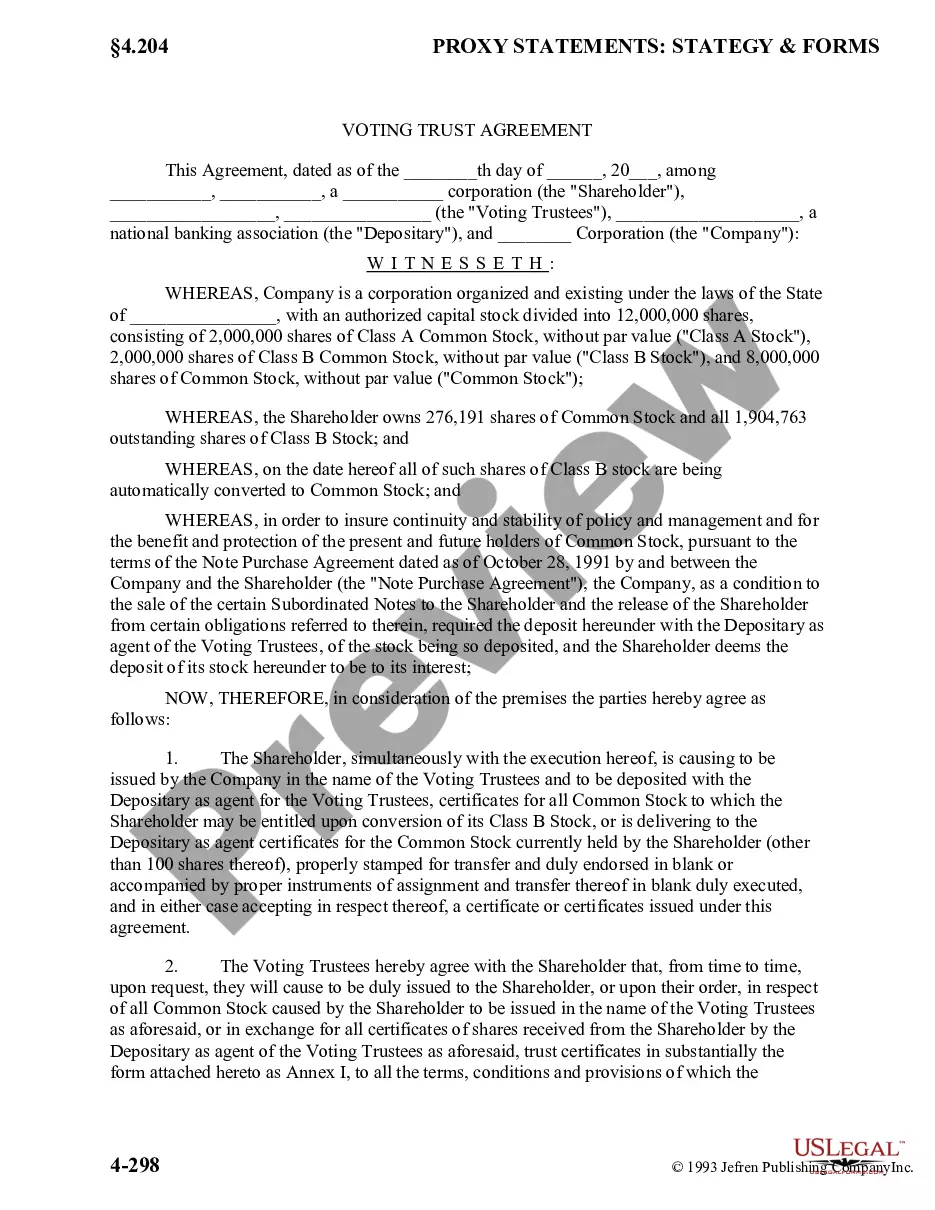
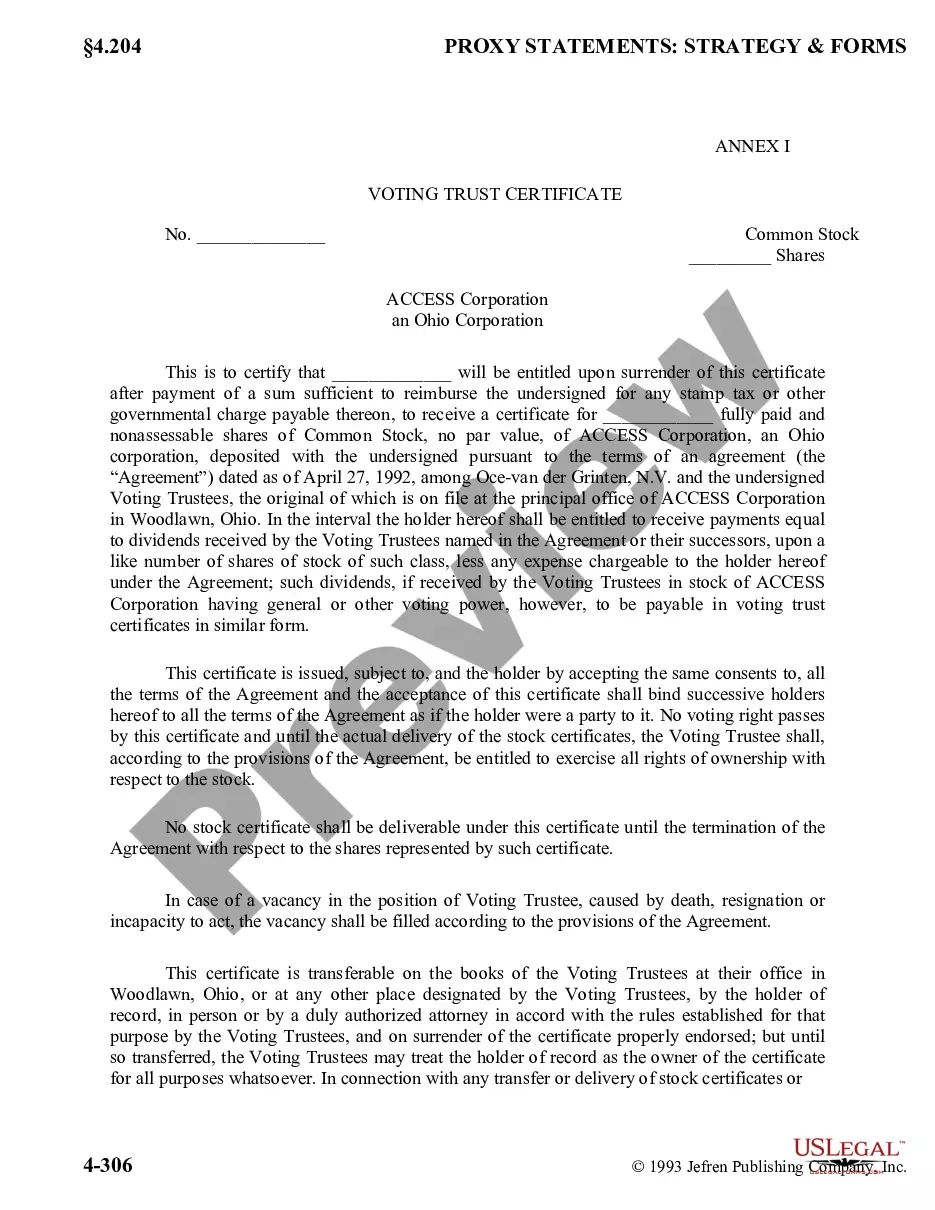
How to fill out Voting Trust Agreement Between Oce-van Der Grinten, N.Y., Voting Trustees, The Central Trust Company N.A., And ACCESS Corp.?
- Log in to your US Legal Forms account if you're a returning user and download the required form template by clicking the Download button. Ensure your subscription is active or renew it if necessary.
- For first-time users, start by exploring the Preview mode to inspect the form’s details, making sure it aligns with your requirements and adheres to local regulations.
- If the initial form isn't suitable, use the Search function to discover a template that better fits your needs.
- Once you have the desired form, click the 'Buy Now' button and select your preferred subscription plan, creating an account to access the comprehensive library.
- Complete your purchase by entering your payment details, either through a credit card or PayPal.
- After purchase, download your trust agreement form and save it on your device. Access it anytime through the 'My Forms' section in your profile.
Completing your trust agreement form with a client is straightforward with US Legal Forms. This service not only provides a robust collection of over 85,000 easily fillable forms but also allows users to consult legal experts for guidance.
Take the first step in securing your client relationships by utilizing the US Legal Forms library today!
Form popularity
FAQ
Certain assets should generally be excluded from a trust, such as retirement accounts and life insurance policies, which may require specific beneficiary designations. Additionally, personal property that may need immediate management, like vehicles, may be better handled outside the trust. Identifying these assets early when discussing a trust agreement form with a client can streamline the estate planning process.
A trust agreement consists of various sections detailing how the trust will operate, including definitions, grantor intentions, trustee duties, and beneficiary rights. It provides a framework for asset management and distribution. Drafting this document accurately with a trust agreement form with a client helps to prevent disputes in the future.
A trust document typically includes the names of the grantor, trustee, and beneficiaries, descriptions of the trust property, and instructions for managing and distributing the assets. Additionally, terms for modifying or terminating the trust may be outlined. Utilizing a trust agreement form with a client ensures all critical information is clearly articulated.
To draft a trust document, begin by defining the trust’s purpose, appointing a trustee, and identifying the beneficiaries. Include specific details about the assets the trust will manage. Using a comprehensive trust agreement form with a client can simplify this process, ensuring that all necessary elements are included and legally sound.
The simplest form of trust is the revocable living trust. It allows the grantor to make changes or revoke the trust during their lifetime. This flexibility makes it a popular choice for estate planning. You can easily create a trust agreement form with a client to establish this straightforward trust type.
A trust generally consists of four elements: a grantor, a trustee, beneficiaries, and property. The grantor establishes the trust and contributes assets, while the trustee manages those assets in line with the grantor's wishes. The beneficiaries receive benefits from the trust. Understanding these components helps when you prepare a trust agreement form with a client.
The downside of putting assets in a trust can include loss of control over those assets once they are transferred. This can be particularly concerning if the trust allows the trustee to manage assets independently. Therefore, careful planning and consideration are necessary when engaging a trust agreement form with a client.
Certain assets, such as retirement accounts and life insurance policies, may not be suitable for a trust due to tax implications. Additionally, assets that have little value or are highly personal should generally be excluded. It's wise to discuss these considerations with a professional when completing a trust agreement form with a client.
The primary downfall of having a trust is the complexity it can introduce to estate planning. Trusts require ongoing management, and the terms must be followed meticulously. Therefore, it's essential to consider these factors when deciding to use a trust agreement form with a client.
Drafting a trust document involves identifying the assets to be included, listing the beneficiaries, and stating the responsibilities of the trustee. It’s vital to ensure that the language is clear and legally binding. Utilizing a trust agreement form with a client can guide you through this process and ensure you cover all necessary details.