Order Relief In With Meaning
Description
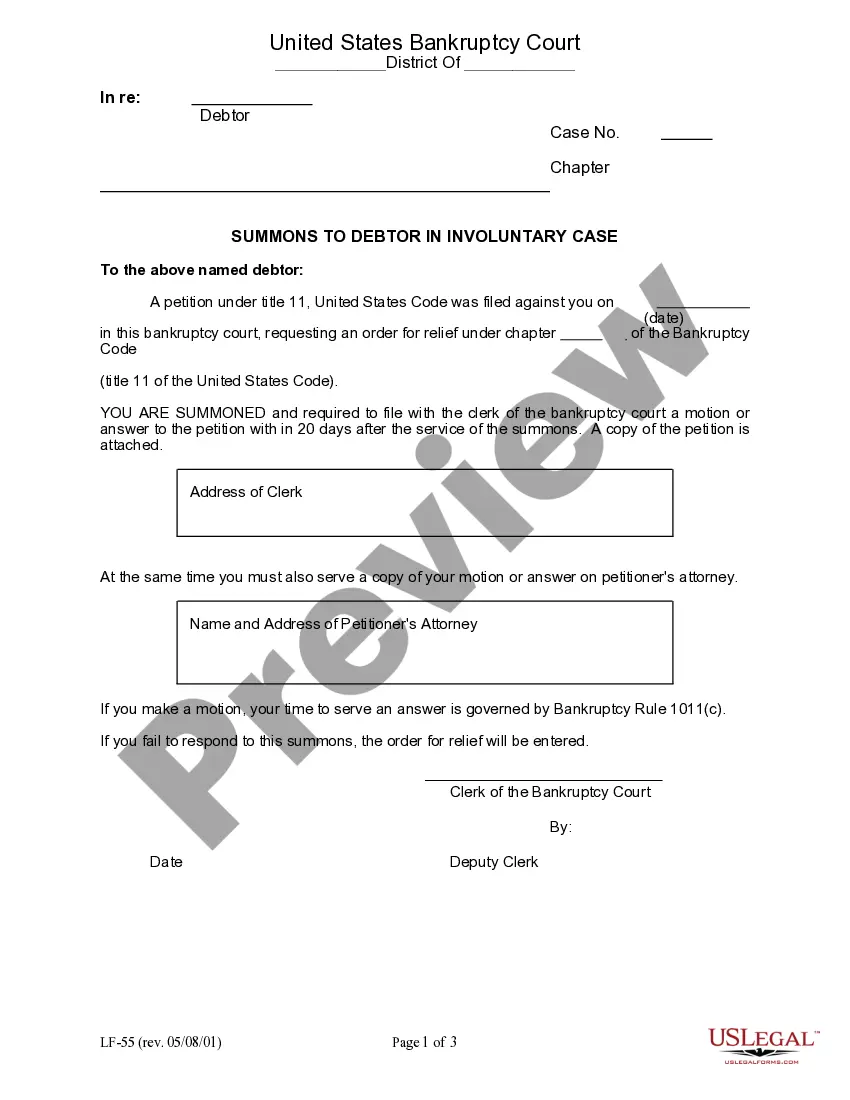







How to fill out Order For Relief In An Involuntary Case - B 253?
Finding a go-to place to access the most recent and relevant legal samples is half the struggle of handling bureaucracy. Finding the right legal files needs accuracy and attention to detail, which is the reason it is vital to take samples of Order Relief In With Meaning only from reliable sources, like US Legal Forms. An improper template will waste your time and hold off the situation you are in. With US Legal Forms, you have very little to be concerned about. You may access and see all the details regarding the document’s use and relevance for your circumstances and in your state or region.
Consider the listed steps to complete your Order Relief In With Meaning:
- Utilize the catalog navigation or search field to find your sample.
- Open the form’s information to see if it fits the requirements of your state and area.
- Open the form preview, if available, to make sure the template is definitely the one you are looking for.
- Go back to the search and find the proper document if the Order Relief In With Meaning does not match your requirements.
- When you are positive regarding the form’s relevance, download it.
- If you are a registered user, click Log in to authenticate and access your selected forms in My Forms.
- If you do not have an account yet, click Buy now to get the template.
- Choose the pricing plan that fits your preferences.
- Proceed to the registration to complete your purchase.
- Finalize your purchase by selecting a payment method (bank card or PayPal).
- Choose the document format for downloading Order Relief In With Meaning.
- Once you have the form on your gadget, you may change it using the editor or print it and complete it manually.
Eliminate the hassle that accompanies your legal paperwork. Discover the extensive US Legal Forms catalog to find legal samples, check their relevance to your circumstances, and download them on the spot.
Form popularity
FAQ
What relief is available? The Court may set aside the default if you provide evidence showing that the default was entered by inadvertence, mistake, surprise, or excusable neglect. The evidence must establish that the inadvertence or neglect was excusable.
2023 California Rules of Court. (1) Any return must be served and filed within 45 days after the court issues the order to show cause, or a later date if the court so orders.
In order to properly write a cause of action, several things must be included. The names of the Plaintiff and Defendant. The legal means by which the Plaintiff is bringing the lawsuit. Be sure to only include the facts, not opinions. ... Offer expert opinions and lay out the evidence. ... Request of relief.
There are several different types of post-judgment motions, but the most common are motions for new trial, motions to vacate, and motions to set-aside. Motions for new trial, motions to vacate, and motions to set-aside are the three most common post-judgment motions.
Your Response must show a good reason (?cause?) for not following the Court's rules, directions or deadlines. You must also do anything else the Order tells you to do. file a Response and/or other document. It is very important to follow the deadline ? missing the deadline could cause you to loose your case.