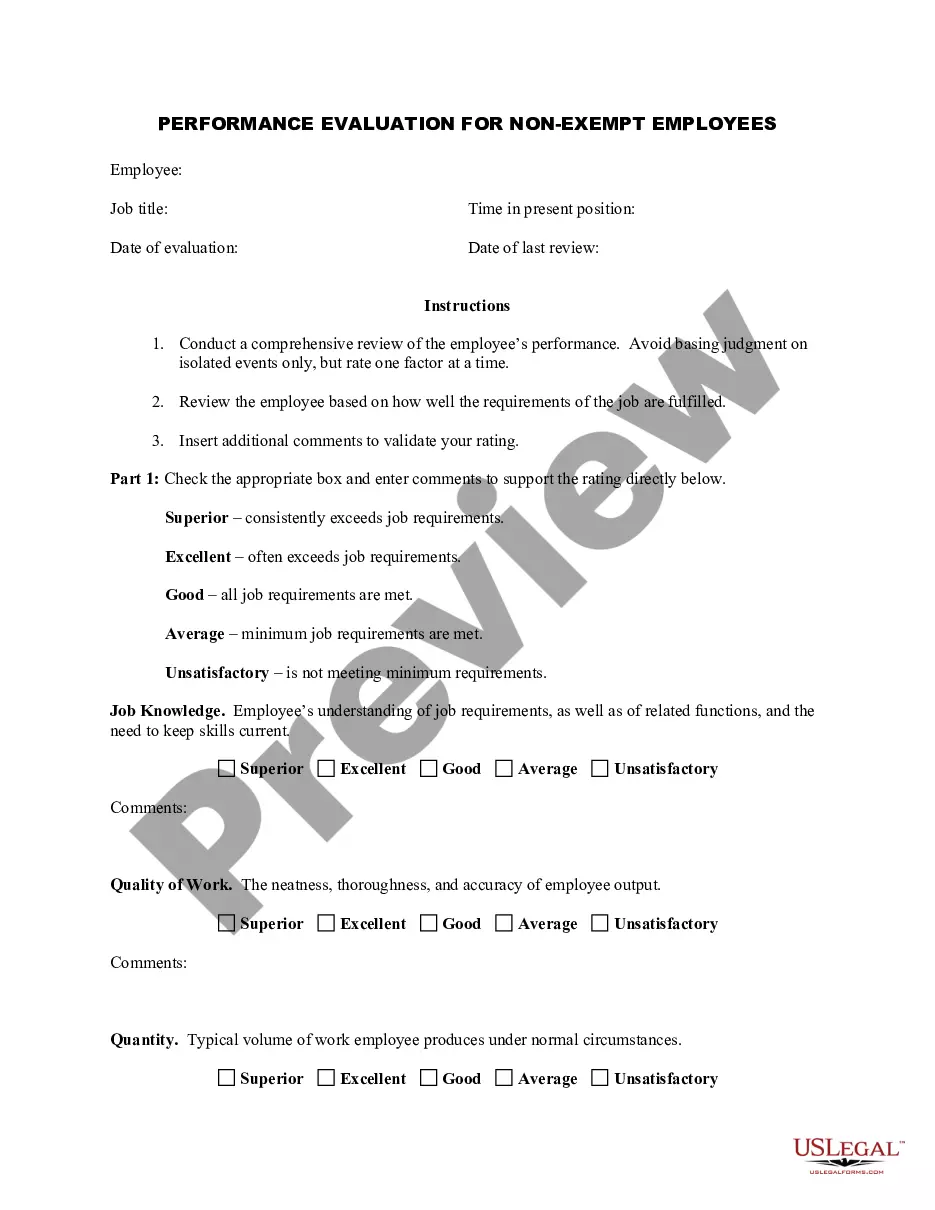
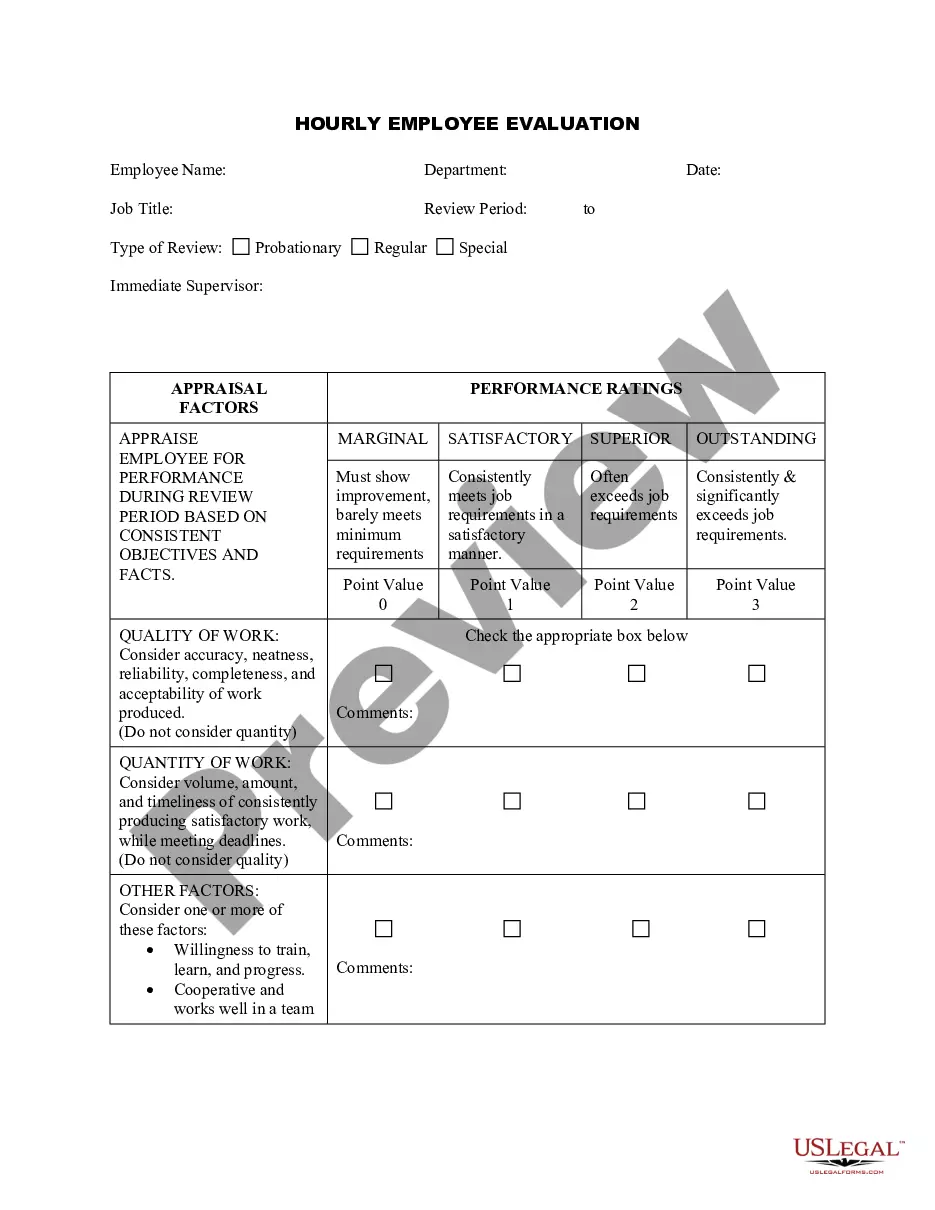
Self Evaluation Examples For Quality Of Work
Description
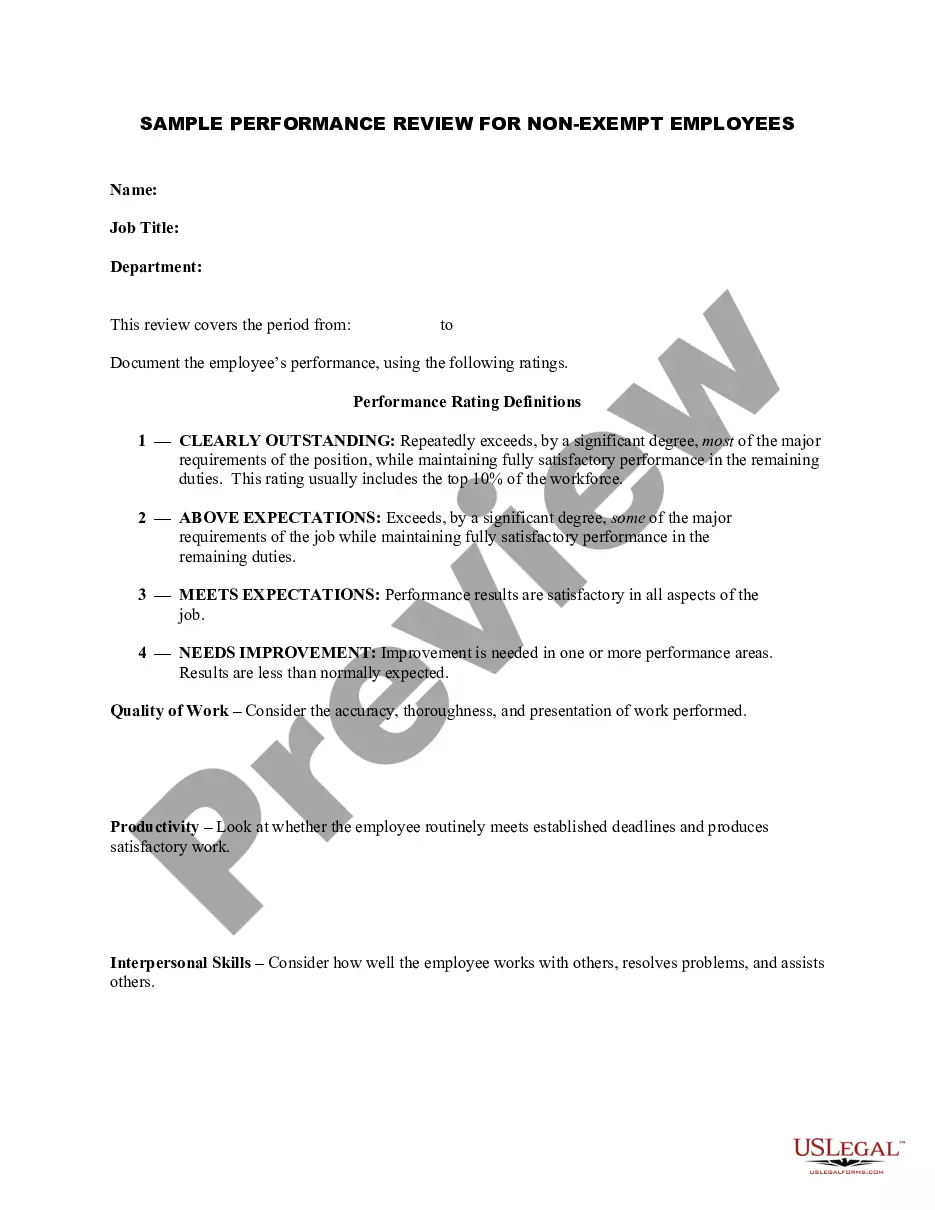
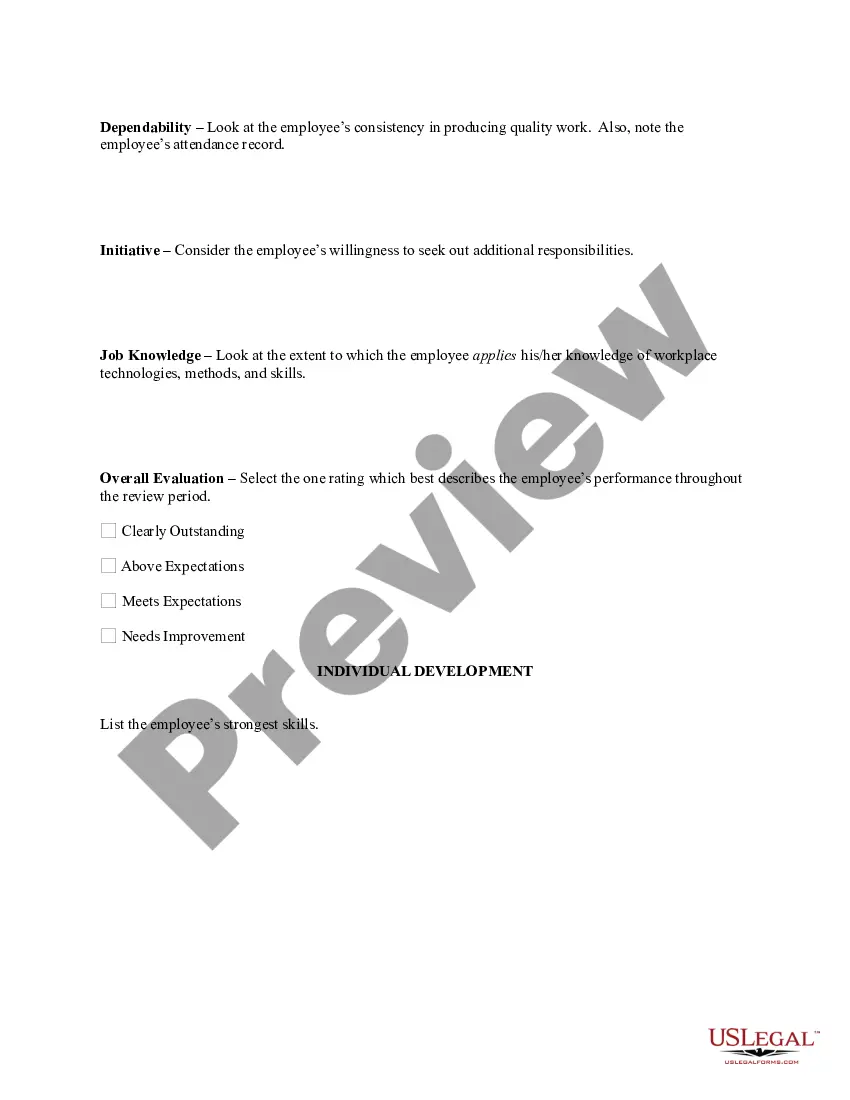
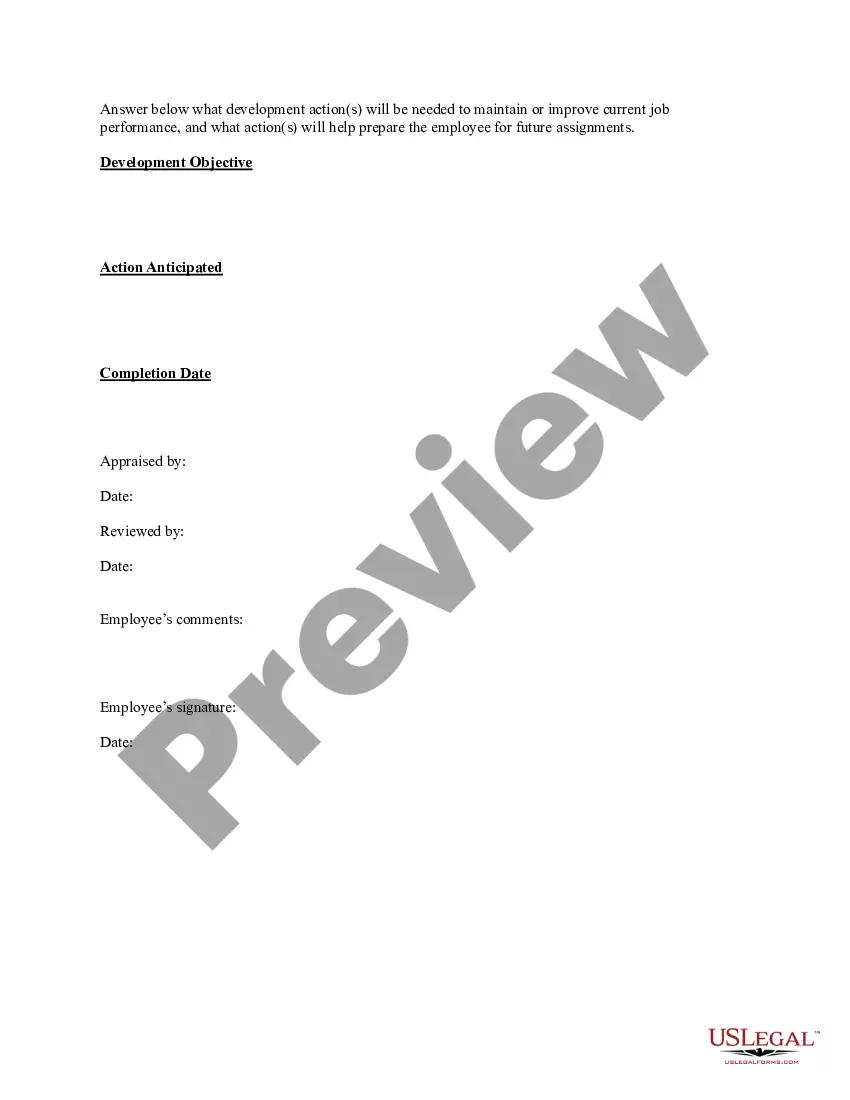
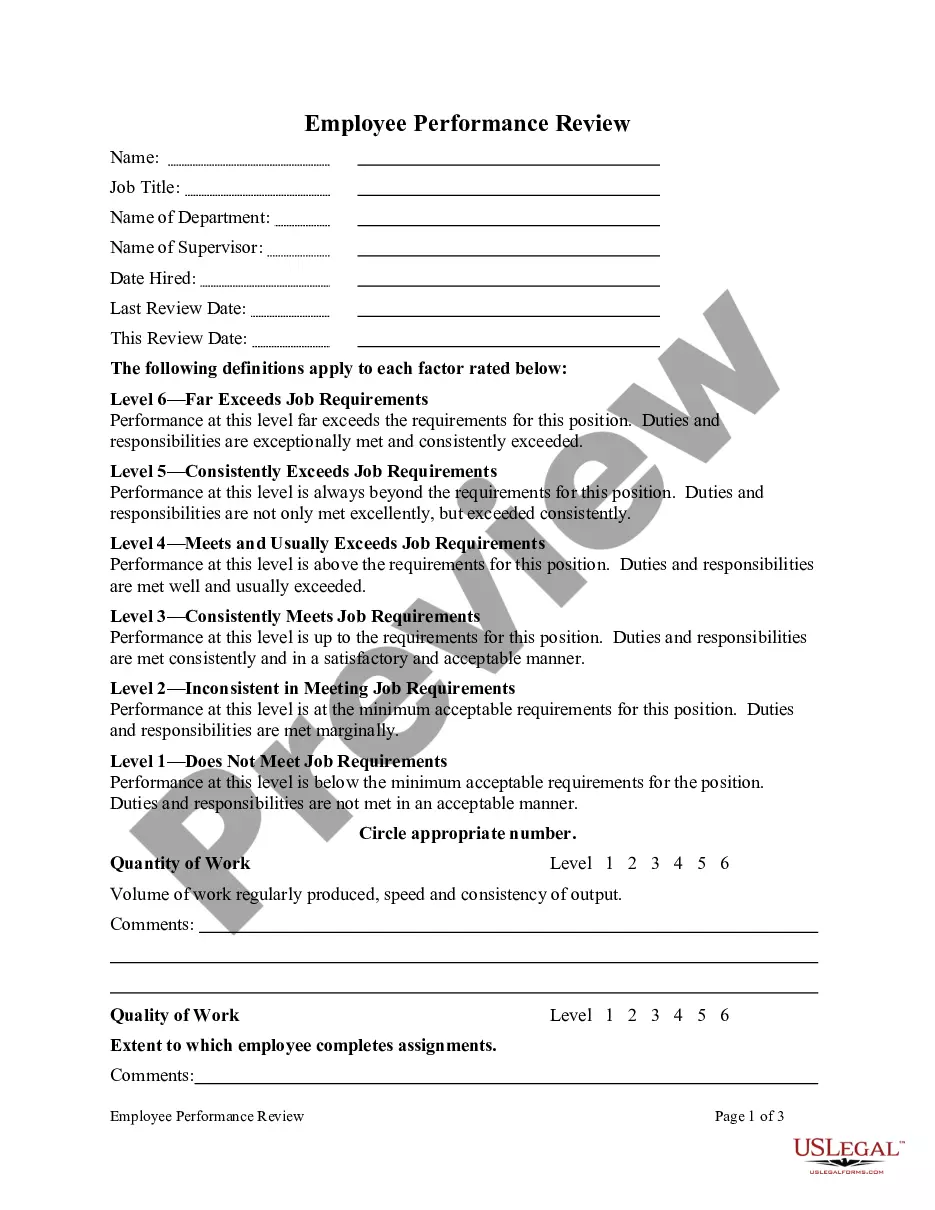
Get your form ready online
Our built-in tools help you complete, sign, share, and store your documents in one place.
Make edits, fill in missing information, and update formatting in US Legal Forms—just like you would in MS Word.
Download a copy, print it, send it by email, or mail it via USPS—whatever works best for your next step.
Sign and collect signatures with our SignNow integration. Send to multiple recipients, set reminders, and more. Go Premium to unlock E-Sign.
If this form requires notarization, complete it online through a secure video call—no need to meet a notary in person or wait for an appointment.
We protect your documents and personal data by following strict security and privacy standards.

Make edits, fill in missing information, and update formatting in US Legal Forms—just like you would in MS Word.

Download a copy, print it, send it by email, or mail it via USPS—whatever works best for your next step.

Sign and collect signatures with our SignNow integration. Send to multiple recipients, set reminders, and more. Go Premium to unlock E-Sign.

If this form requires notarization, complete it online through a secure video call—no need to meet a notary in person or wait for an appointment.

We protect your documents and personal data by following strict security and privacy standards.
Looking for another form?






How to fill out Sample Performance Review For Nonexempt Employees?
- Log in to your account if you're an existing user. Ensure your subscription is active before accessing any forms.
- Browse the library by checking the form preview and description to find the right document that complies with local laws.
- If the desired form isn't available, use the Search feature to locate alternatives.
- Select the 'Buy Now' option and choose a subscription plan that fits your requirements. You’ll need to create an account for full access.
- Complete your purchase using your credit card or PayPal account.
- Download the chosen form, saving it to your device. You can revisit it anytime through the My Forms section in your profile.
Using US Legal Forms streamlines the process of obtaining legal documentation by providing easy access to a robust collection of forms. With over 85,000 customizable templates available, you’re sure to find what you need without hassle.
Get started today and make your legal document preparation straightforward and efficient! Explore US Legal Forms now.
Form popularity
FAQ
To write a compelling self-evaluation example, focus on concrete results and the impact of your actions. Start with a clear statement of your contribution, then provide quantifiable outcomes to support your claims. By doing this, you create strong self-evaluation examples for quality of work that effectively convey your value.
An example of a self-evaluation for quality of work could involve saying, 'I prioritized attention to detail, which resulted in fewer errors in project documents this quarter.' This statement reflects both awareness and accountability for your output. Using precise examples strengthens your case when discussing self-evaluation examples for quality of work.
A positive self-evaluation might state, 'I successfully completed several high-impact projects, leading to a 20% increase in team productivity.' Focusing on specific achievements shows your commitment to quality work. Moreover, these examples highlight your ability to deliver self-evaluation examples for quality of work that resonate well with stakeholders.
Writing a good self-evaluation involves reflection and honesty about your strengths and areas for growth. Begin by listing your accomplishments, then examine any challenges you faced and how you overcame them. This approach leads to solid self-evaluation examples for quality of work that provide a well-rounded view of your performance.
To write a summary for your performance review, start by outlining your key achievements over the evaluation period. Highlight specific projects or tasks that showcase your skills and contributions. Make sure to incorporate self-evaluation examples for quality of work to illustrate your performance effectively.
When writing your self-evaluation, you can use sentence starters like, 'I believe I excelled in...' or 'One area where I showed improvement is...'. These phrases help you frame your thoughts clearly and demonstrate your contributions. By using effective sentence starters, you enhance your ability to present self-evaluation examples for quality of work.
An example of quantity of work might be, 'I completed five major projects within the last quarter, each contributing significantly to our overall goals.' This showcases your ability to manage workloads effectively. Additionally, use self evaluation examples for quality of work to illustrate how your output also maintained high standards. Balancing quantity with quality demonstrates your thoroughness and dedication in your role.
To effectively write about the quality of work in your self appraisal, incorporate both qualitative and quantitative metrics. Describe significant projects, your role, and the results achieved, backing up your claims with self evaluation examples for quality of work. By giving specific instances where you upheld quality standards, you provide a comprehensive view of your professional abilities. Always tie your results back to the goals of your team or organization.
In your self-evaluation for work, focus on outlining your contributions to projects, any challenges you overcame, and how you have grown in your role. Share concrete self evaluation examples for quality of work to make your points compelling. Highlight specific achievements that reflect your commitment to quality and effectiveness. This narrative gives decision-makers a clearer picture of your performance.
An example of a self-evaluation regarding quality of work could state, 'I successfully led the marketing campaign that increased our client engagement by 30%. I focused on providing high-quality deliverables and collaborated effectively with my team.' Using self evaluation examples for quality of work like this helps illustrate your impact clearly. This not only reinforces your successes but also aligns your efforts with organizational objectives.