Performance Review Summary Examples
Description
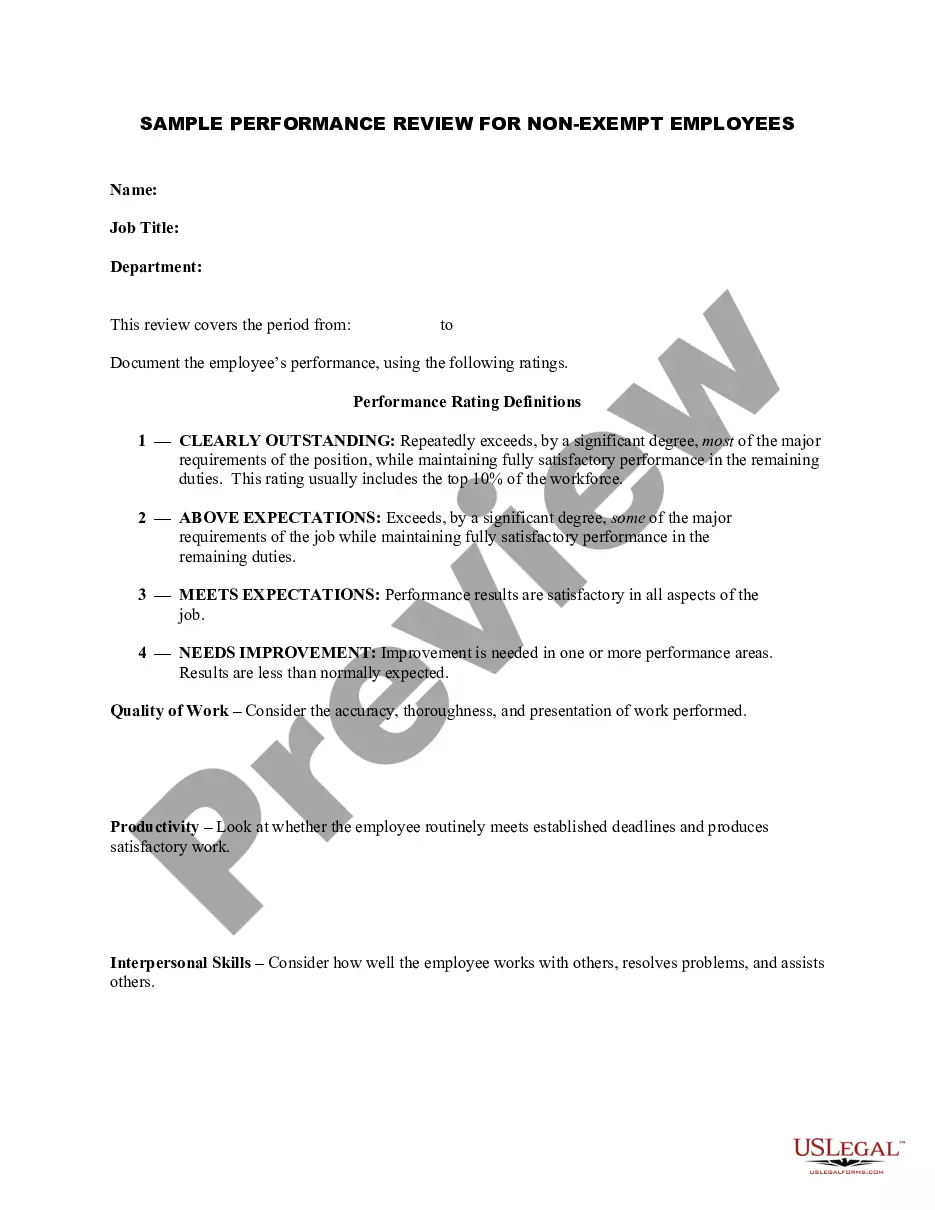
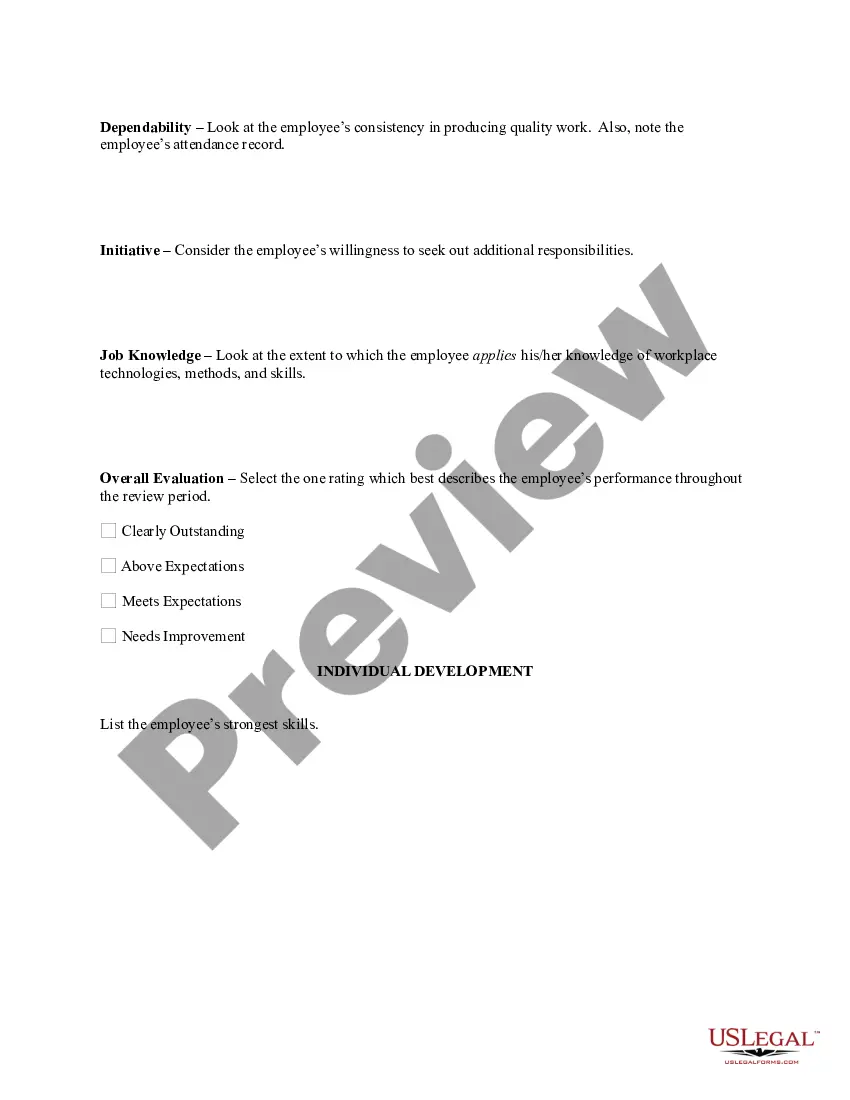
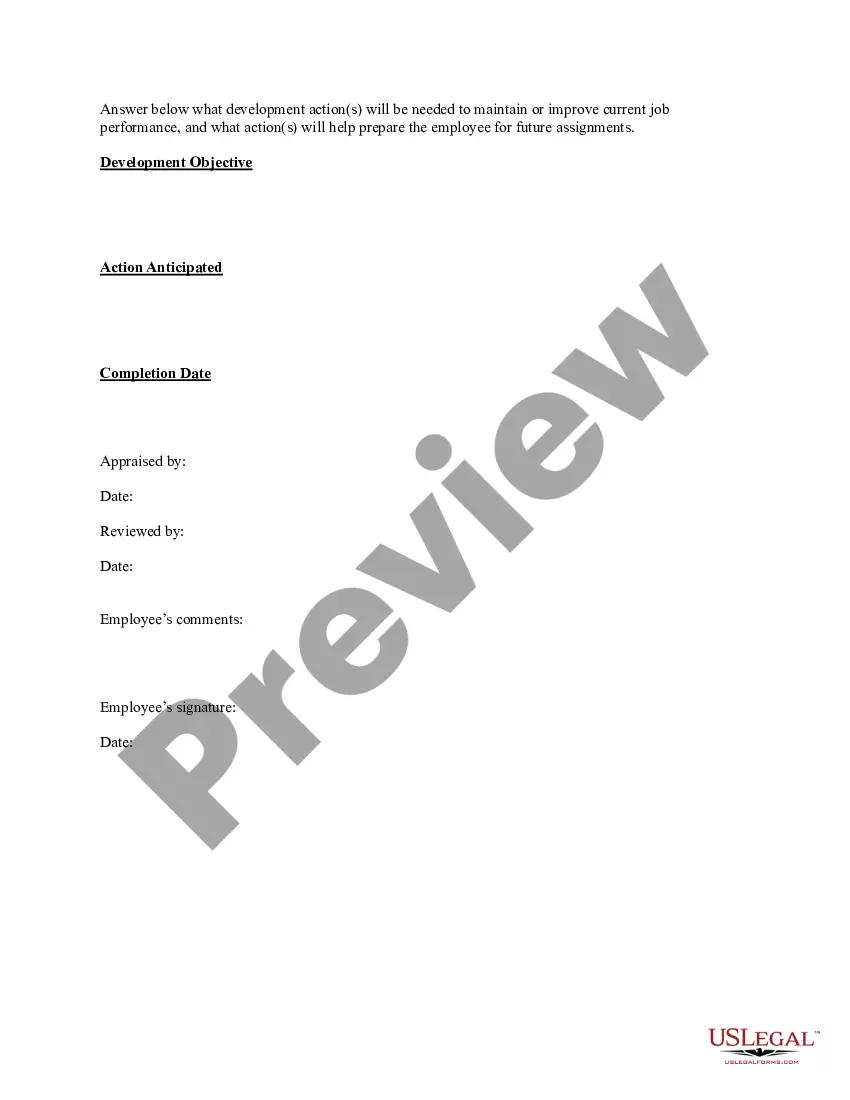
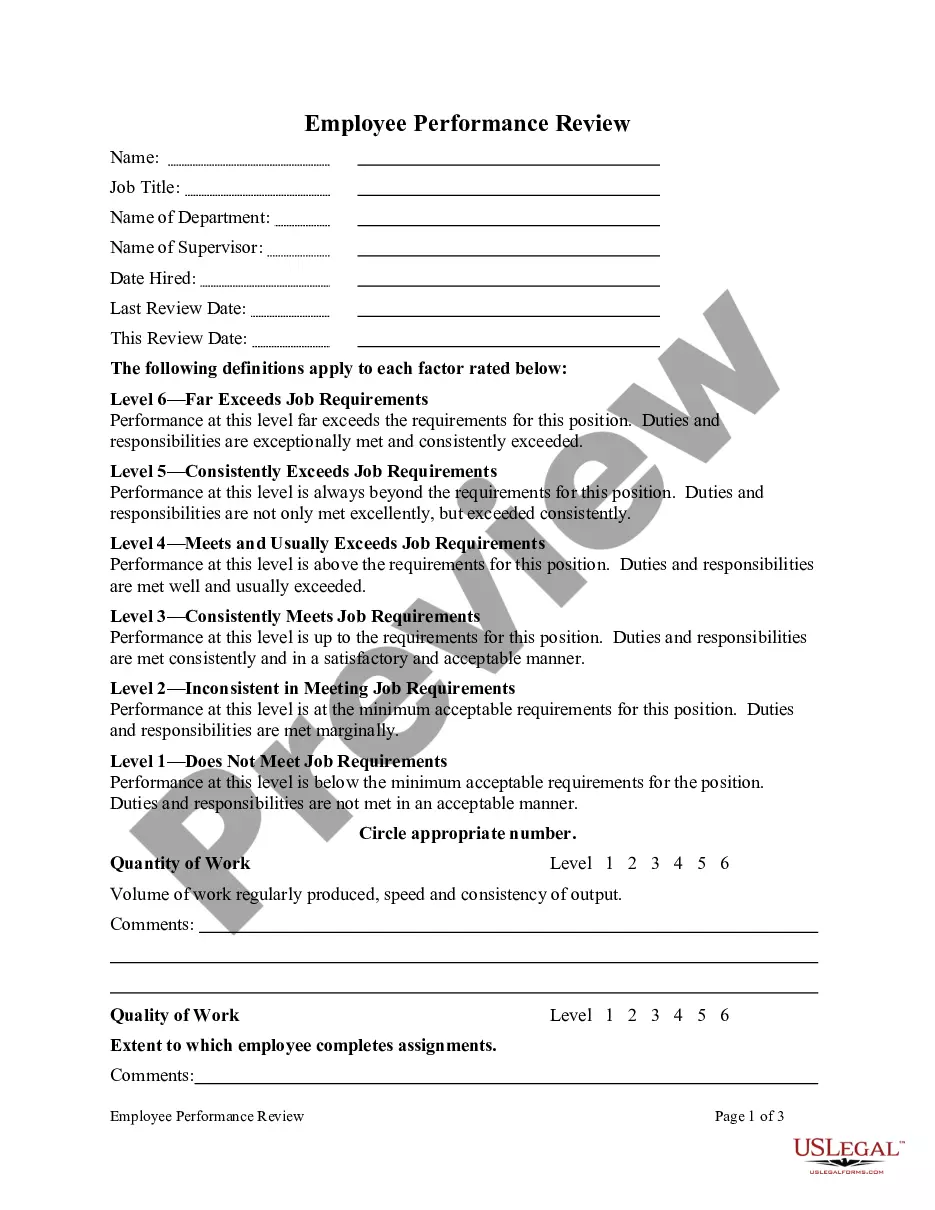
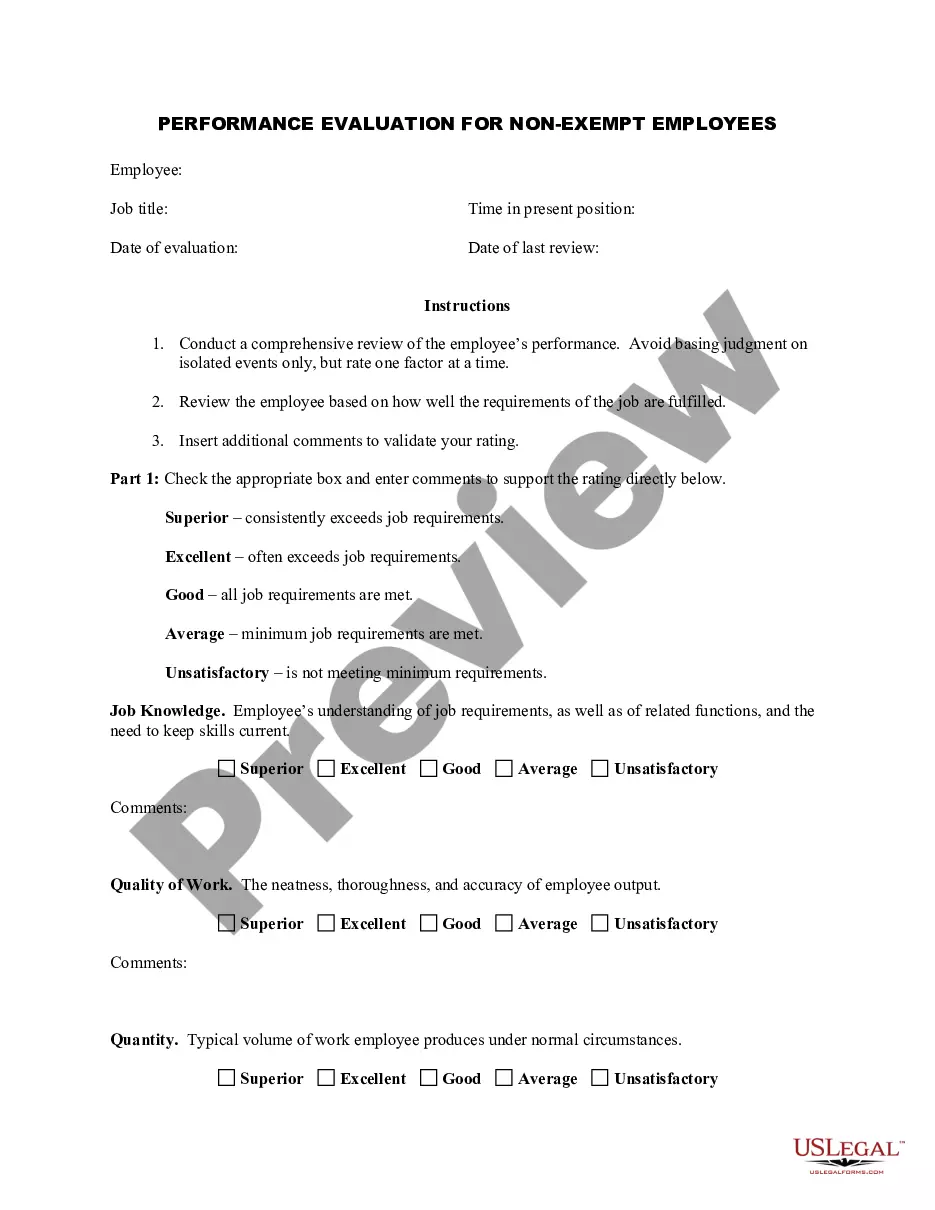
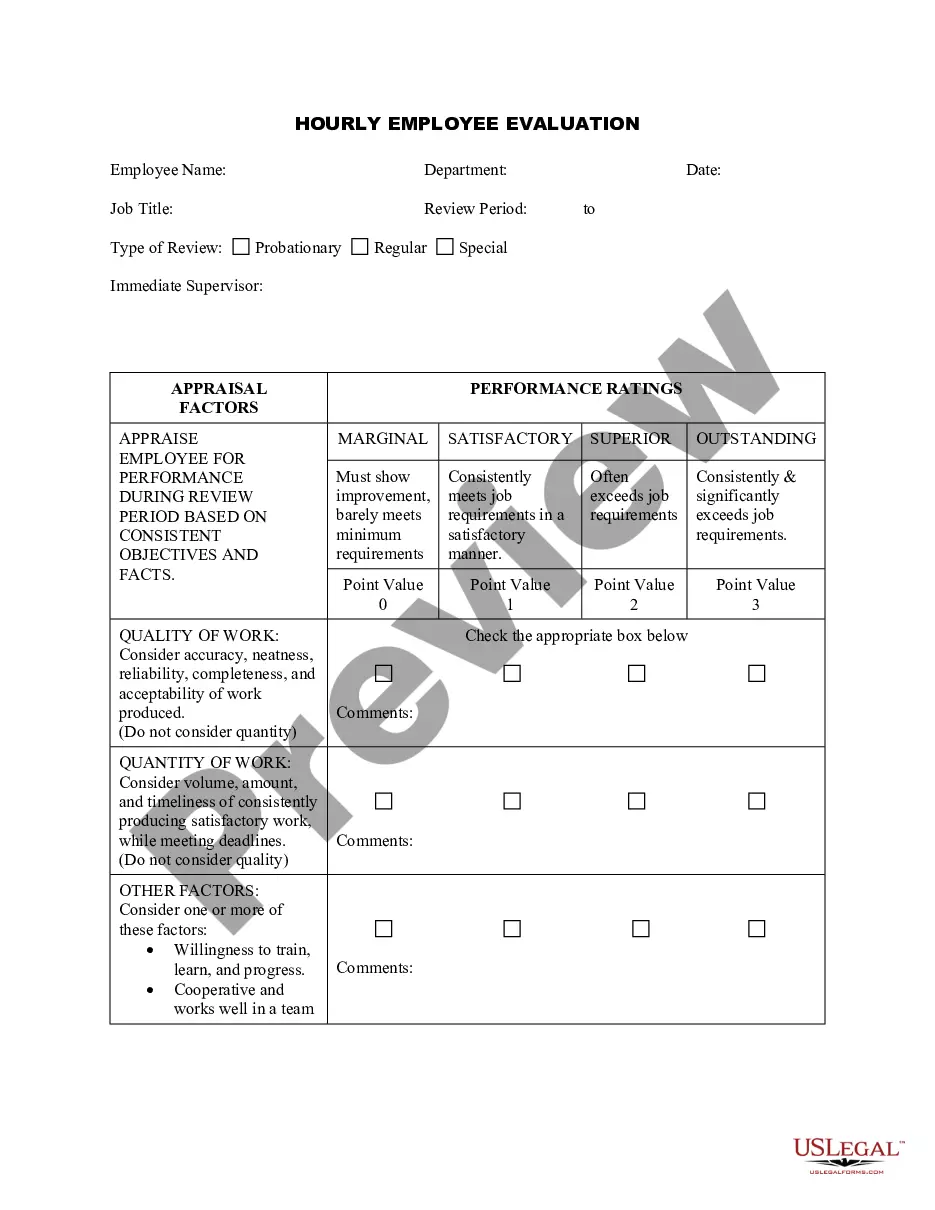

How to fill out Sample Performance Review For Nonexempt Employees?
- If you're an existing user, log into your account and download the relevant template by clicking the Download button. Ensure that your subscription is active; renew it if necessary based on your payment plan.
- For new users, start by checking the Preview mode and form description to confirm that you have selected the appropriate document that meets your specific requirements and local jurisdiction.
- If you need a different template, don’t hesitate to use the Search tab to find the right option. Once you find a suitable form, proceed to the next step.
- Purchase the document by clicking on the Buy Now button and selecting your preferred subscription plan. You will need to create an account for full access to the library.
- Complete your transaction by entering your credit card details or using your PayPal account to finalize your subscription.
- Download your chosen form and save it on your device. Access it any time through the My Forms section of your profile.
By following these straightforward steps, you can efficiently access and utilize a variety of performance review summary examples that cater to your legal needs.
US Legal Forms is dedicated to empowering individuals and attorneys with a robust library of over 85,000 editable legal documents, ensuring you have the tools necessary for legal success. Don't hesitate; explore your options today!
Form popularity
FAQ
An example of a self-performance summary could be: 'Over the past year, I successfully led a team project that increased sales by 20%, demonstrating my ability to drive results. I have embraced new challenges in learning new software, enhancing my productivity. Additionally, I recognize the need to improve my public speaking skills and plan to attend a workshop. This performance review summary example reflects my commitment to both personal and company growth.'
To write a summary of yourself for a performance review, start by reflecting on your contributions and achievements. Organize your thoughts by addressing key projects and skills you utilized to meet objectives. Clearly state your development areas and express your commitment to improvement. You can look at various performance review summary examples to structure your writing and make your points more impactful.
In your overall self review, focus on reflecting on your accomplishments and challenges over the review period. Discuss your strengths, how you've grown, and areas where you seek improvement. It is also beneficial to outline your goals and aspirations for the next review cycle. Performance review summary examples can guide you in structuring your self-review effectively.
A good overall summary for a performance review should highlight key achievements, areas for improvement, and goals moving forward. For instance, you might mention specific projects where you excelled and the skills you developed. Including metrics can add credibility to your summary. Performance review summary examples often showcase how your contributions align with company objectives.
To write a summary for a performance review, start by gathering all relevant feedback and accomplishments from the employee's evaluation period. Highlight key strengths and areas for improvement, ensuring you are clear and specific. Incorporate performance review summary examples to illustrate points effectively. Finally, maintain a positive tone while encouraging growth and development to motivate the employee moving forward.
In your performance review summary, focus on summarizing your key accomplishments and areas for improvement. Use clear examples that illustrate your contributions to the team and organization. Highlight any challenges you faced and how you overcame them to demonstrate resilience. For guidance, check out various performance review summary examples to ensure your summary resonates with your audience.
An example of an employee performance summary could detail specific projects, goals met, and skills developed over the review period. It might include measurable outcomes, such as increased sales or improved team efficiency. Such summaries paint a clear picture of the employee's impact on the organization. To guide you, refer to curated performance review summary examples that highlight effective practices.
A strong summary statement should include your primary achievements, skills, and contributions to the team. It must clearly communicate your value to the organization and highlight any areas for development. Effective performance review summary examples often incorporate specific metrics or results that showcase success in your role. Aim to engage the reader and leave a lasting impression.
Writing a good overall performance summary requires a holistic view of your contributions. Begin by reflecting on your accomplishments and challenges faced throughout the review period. Identify key themes and patterns in your performance, and use them to build your summary. Exploring various performance review summary examples can provide valuable insights into effective approaches.
A strong professional summary showcases your unique skills and experiences. Start by identifying your career goals and align them with your achievements. Include specific examples of how you contributed to your previous roles, demonstrating your value. Review performance review summary examples for inspiration on structure and content to craft a compelling narrative.