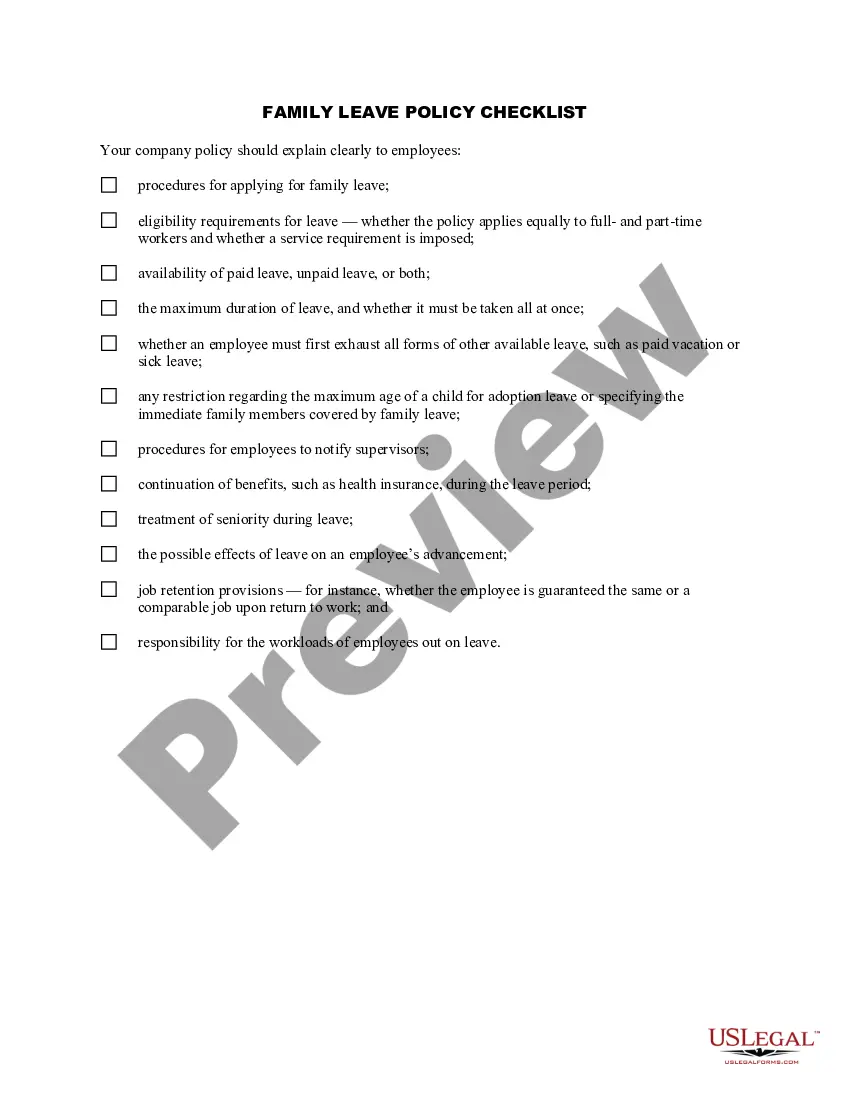
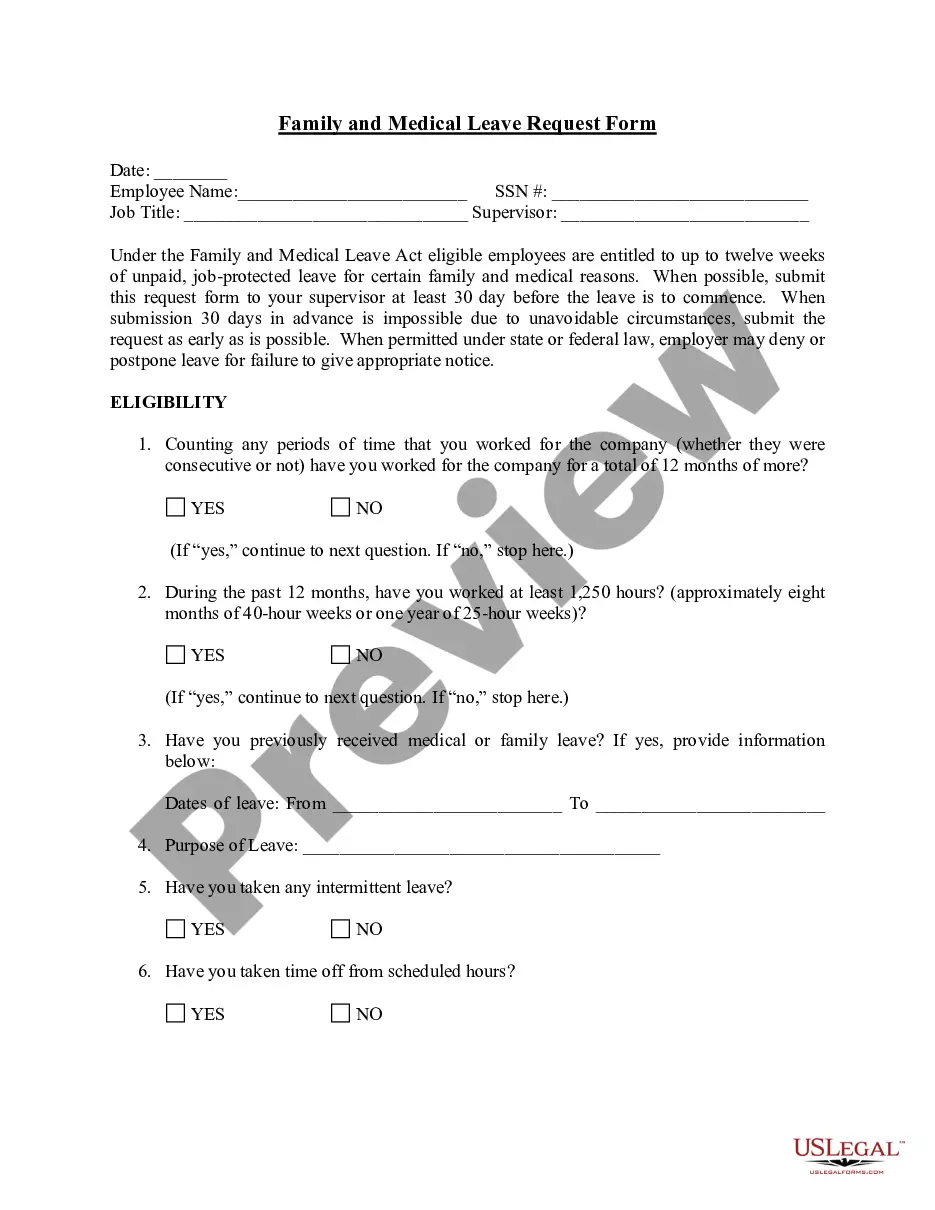
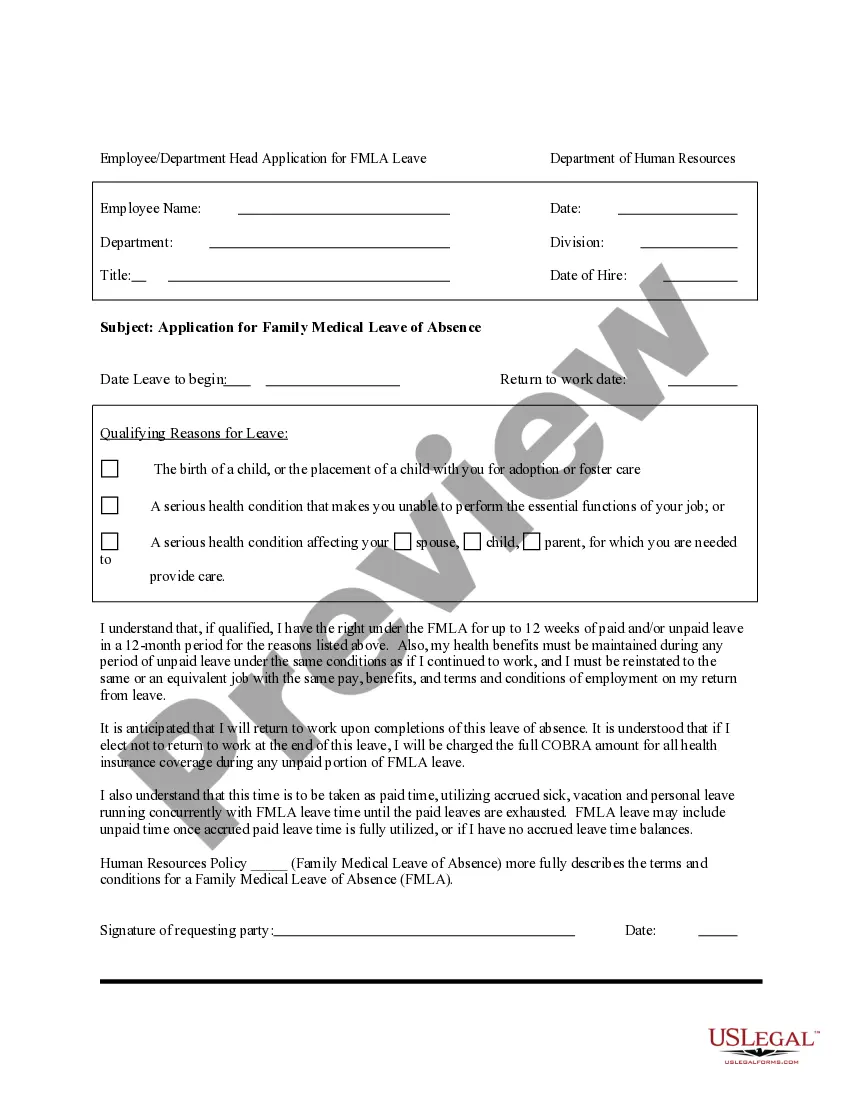
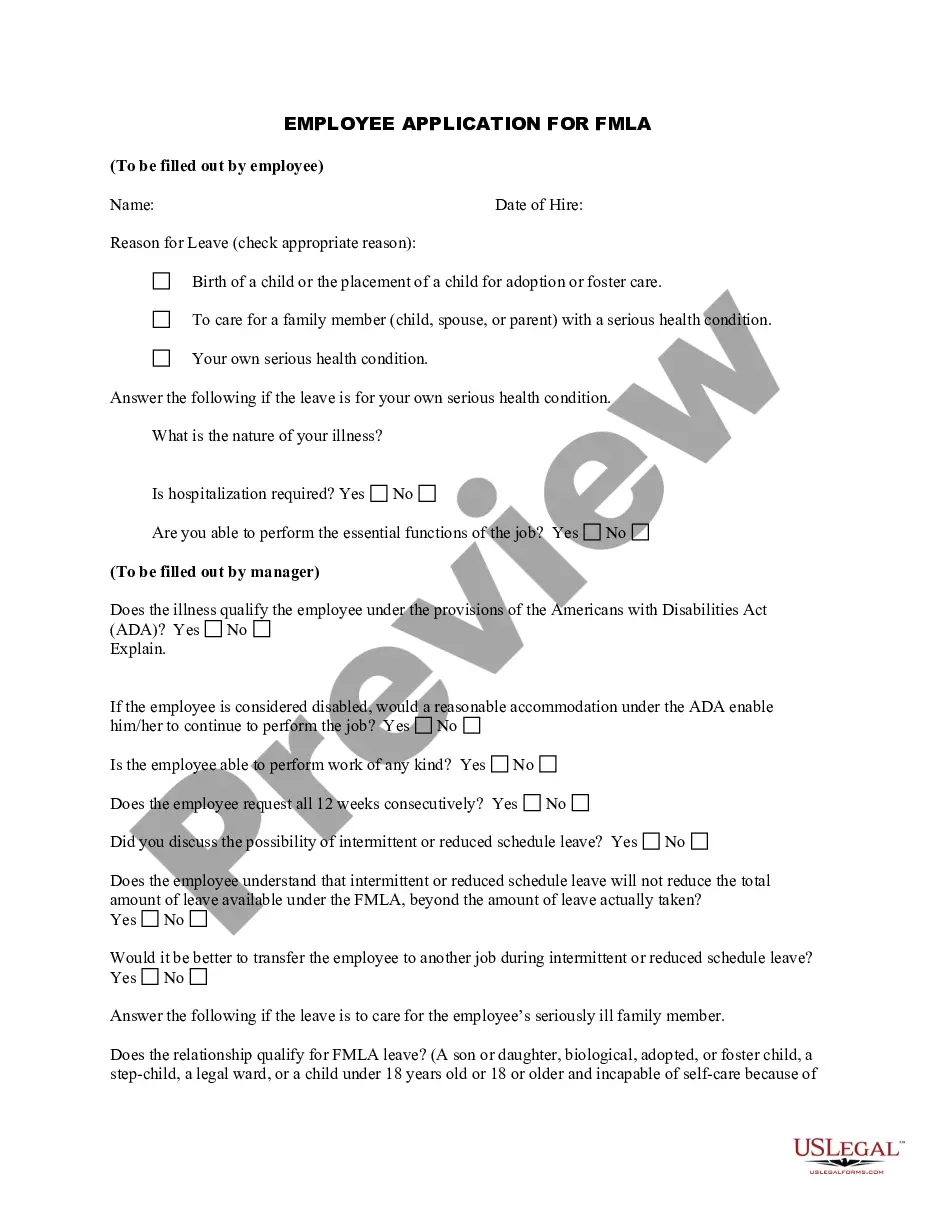
Leave Policy For Private Company
Description
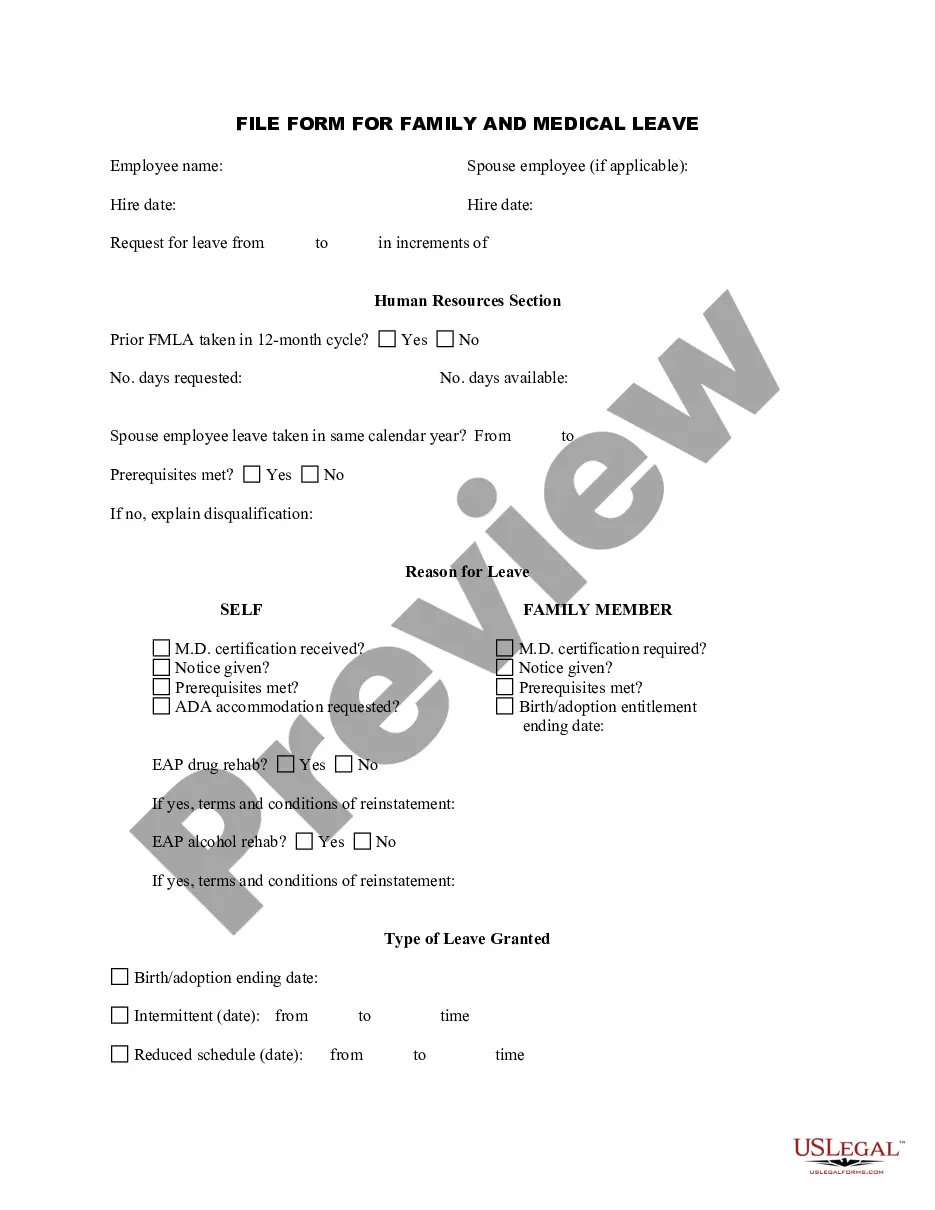
Get your form ready online
Our built-in tools help you complete, sign, share, and store your documents in one place.
Make edits, fill in missing information, and update formatting in US Legal Forms—just like you would in MS Word.
Download a copy, print it, send it by email, or mail it via USPS—whatever works best for your next step.
Sign and collect signatures with our SignNow integration. Send to multiple recipients, set reminders, and more. Go Premium to unlock E-Sign.
If this form requires notarization, complete it online through a secure video call—no need to meet a notary in person or wait for an appointment.
We protect your documents and personal data by following strict security and privacy standards.

Make edits, fill in missing information, and update formatting in US Legal Forms—just like you would in MS Word.

Download a copy, print it, send it by email, or mail it via USPS—whatever works best for your next step.

Sign and collect signatures with our SignNow integration. Send to multiple recipients, set reminders, and more. Go Premium to unlock E-Sign.

If this form requires notarization, complete it online through a secure video call—no need to meet a notary in person or wait for an appointment.

We protect your documents and personal data by following strict security and privacy standards.
Looking for another form?

How to fill out Family Leave Policy Checklist?
Whether for professional reasons or for personal affairs, everyone must deal with legal matters at some time in their life.
Filling out legal documents necessitates meticulous attention, beginning with selecting the right form template.
After it is downloaded, you can fill out the form with the assistance of editing software or print it and complete it by hand. With a comprehensive US Legal Forms catalog available, you do not need to waste time searching for the right template online. Utilize the library's user-friendly navigation to discover the suitable form for any situation.
- Locate the template you require using the search bar or catalog browsing.
- Review the form's description to confirm it suits your situation, state, and locality.
- Click on the form's preview to examine it.
- If it is the incorrect document, return to the search feature to find the Leave Policy For Private Company sample you need.
- Obtain the file when it aligns with your requirements.
- If you possess a US Legal Forms account, simply click Log in to reach previously saved files in My documents.
- If you have not created an account yet, you can acquire the form by clicking Buy now.
- Select the suitable pricing option.
- Complete the account registration form.
- Choose your payment method: you may use a credit card or PayPal account.
- Select the desired file format and download the Leave Policy For Private Company.
Form popularity
FAQ
In most cases, the statute of limitations for a debt will have passed after 10 years. This means a debt collector may still attempt to pursue it (and you technically do still owe it), but they can't typically take legal action against you.
Taking action means they send you court papers telling you they're going to take you to court. The time limit is sometimes called the limitation period. For most debts, the time limit is 6 years since you last wrote to them or made a payment.
Canadian law states that, after six years of making a payment or acknowledging a debt, debt collectors cannot take legal action. In some Canadian provinces, this Statute of Limitations period is shorter. What is The Statute of Limitations of Debt on Credit Cards?
Ignore the debt If your debt is past your state's statute of limitations, the creditor can no longer sue you to recover the debt, though they can still take steps to try and collect it. While creditors may still reach out to collect the debt, it's against the law for them to mislead, harass or abuse you.
For closed installment accounts, the statute of limitations runs 6 years after the final payment date. For open accounts, such as credit cards, the statute of limitations begins 6 years from the first uncured missed payment, whether or not there is an acceleration clause.
You will normally have to convince a creditor that writing off the debt is in their best interest as well as in yours. Usually, this means showing them why there is no likelihood of them getting enough money back to make it worth pursuing you for the debt any longer.
Most negative items should automatically fall off your credit reports seven years from the date of your first missed payment, at which point your credit scores may start rising. But if you are otherwise using credit responsibly, your score may rebound to its starting point within three months to six years.