Maternity Leave Act In India
Description
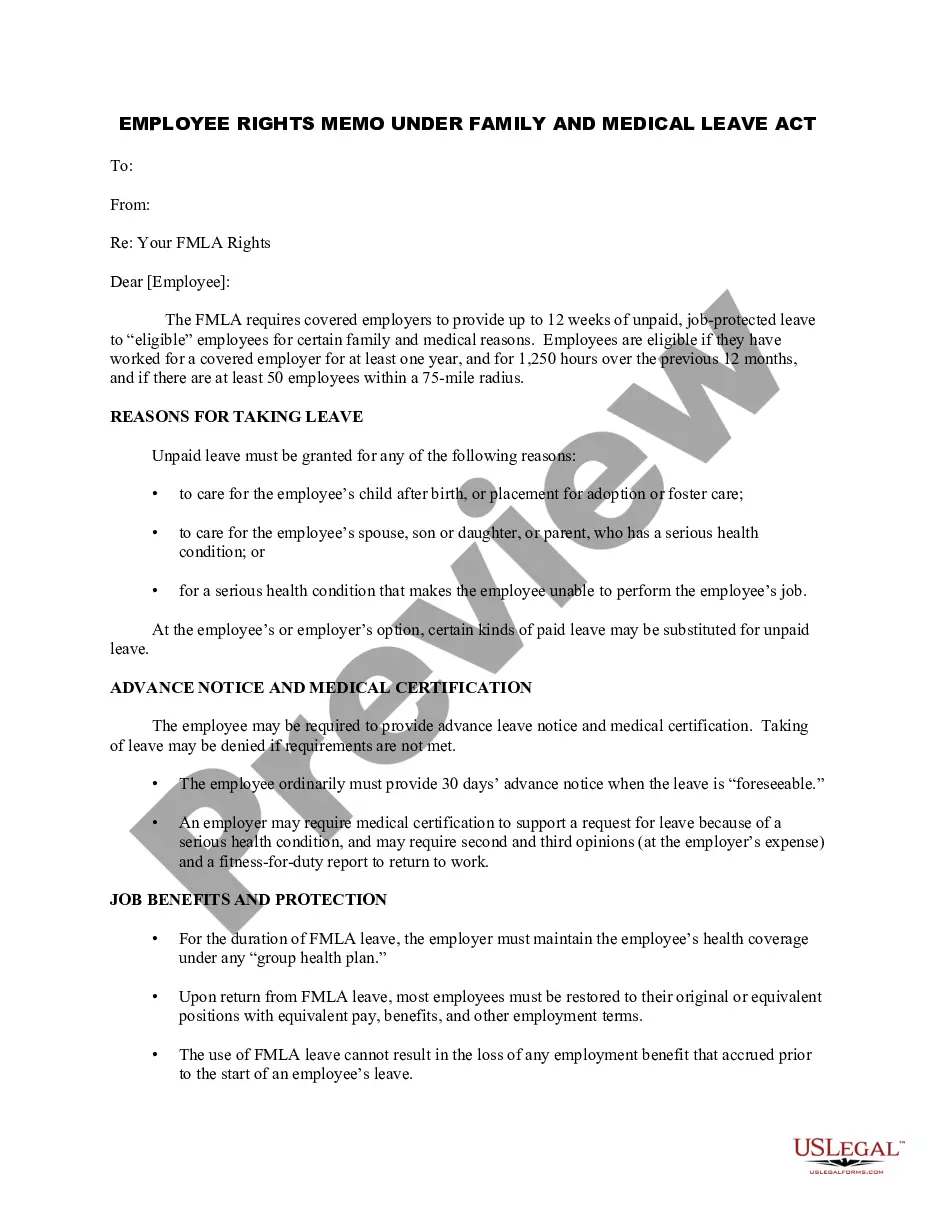
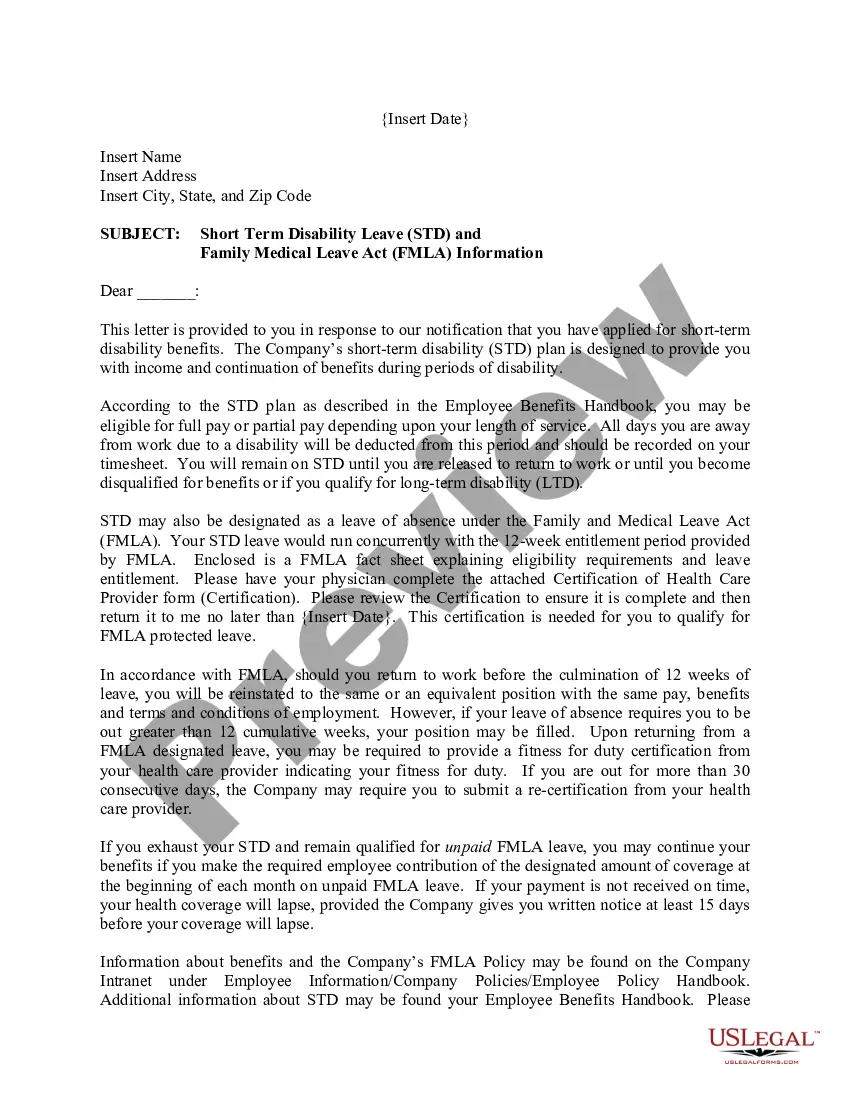
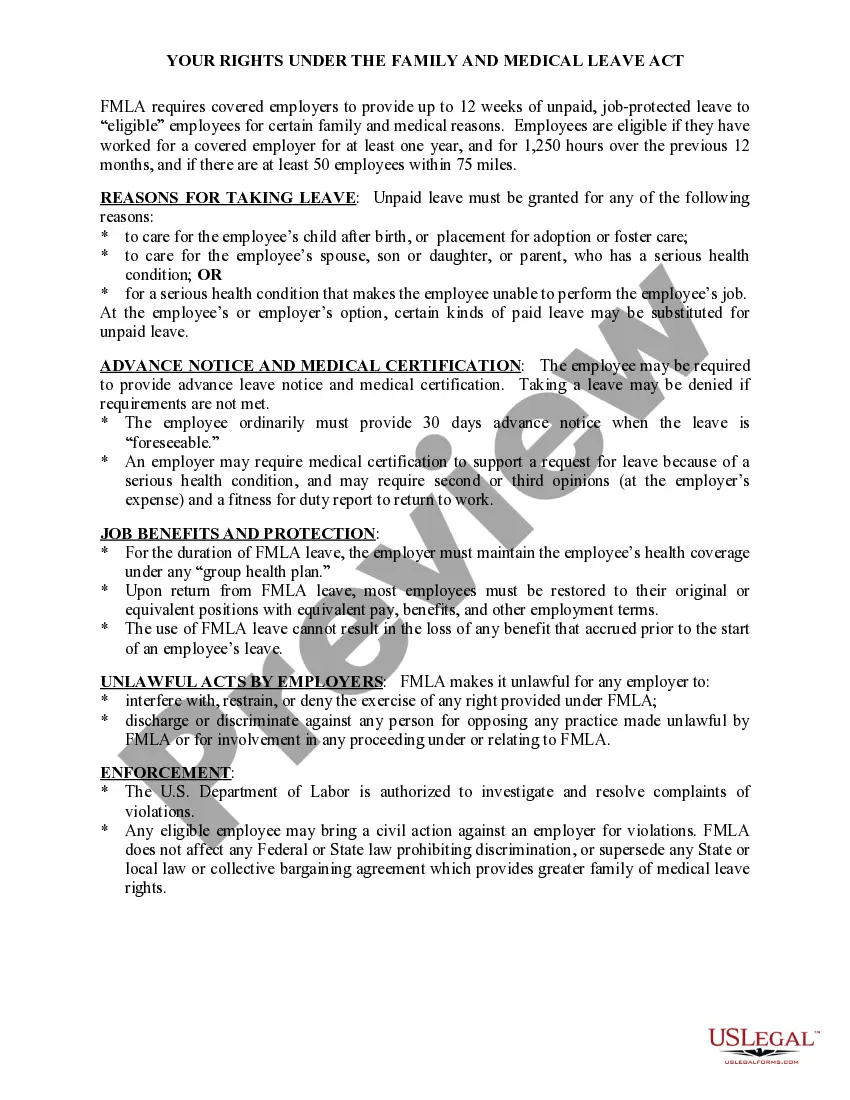
How to fill out Employee Rights Memo Under The Family And Medical Leave Act?
Identifying a reliable location to obtain the latest and suitable legal templates is part of the challenge when navigating bureaucracy.
Selecting the correct legal documents demands accuracy and careful attention to detail, which is why it is crucial to obtain samples of the Maternity Leave Act In India only from reputable sources, such as US Legal Forms. An incorrect template can squander your time and prolong the issues at hand.
Eliminate the stress associated with your legal paperwork. Explore the extensive US Legal Forms library to find legal samples, evaluate their relevance to your needs, and download them immediately.
- Utilize the catalog navigation or search bar to find your template.
- Examine the form's description to ensure it aligns with the requirements of your state and locality.
- View the form preview, if available, to confirm that it is indeed the document you seek.
- If the Maternity Leave Act In India does not suit your requirements, continue your search for the accurate document.
- If you are confident about the form's relevance, proceed to download it.
- As a registered user, click Log in to verify your identity and access your chosen templates in My documents.
- If you do not yet have an account, click Buy now to acquire the form.
- Select the pricing option that meets your requirements.
- Continue to the registration process to finalize your purchase.
- Complete your purchase by choosing a payment method (credit card or PayPal).
- Select the file format for downloading the Maternity Leave Act In India.
- Once you have the form on your device, you can edit it using the editor or print it out to complete manually.
Form popularity
FAQ
An employee who desires to avail maternity leave and its benefits either for childbirth or child adoption must adhere to the following procedure: She must give formal written notice to her reporting manager with a copy to HR requesting for maternity leaves at least 12 weeks prior to the date of delivery or adoption.
The amendment in the maternity rules increased the maternity leave days in India from 12 weeks earlier, to 26 weeks or 6 months for the first two deliveries. However, for every subsequent delivery, maternity leave will come down to 3 months or 12 weeks.
Template of a parental leave letter Dear [Manager's name], This letter is to inform you that I plan to take maternity leave. My due date is [date] and I plan to continue working until [date or suggest working from home until your due date or delivery]. I plan to take [number] weeks of maternity leave.
How To Write A Maternity Leave Application? Review your company's maternity leave rules. ... Add the date and your address at the top. ... Include the recipient's name and address. ... Add a subject line. ... Greet the recipient. ... State the purpose of the letter in the first paragraph. ... Provide an alternative work plan in your absence.
2. Is maternity leave fully paid in India? In India, as per the Indian Maternity Benefit Act 1961, employers must pay their female employees their full salary during maternity leave. This Act prohibits any form of discrimination or hiring practices based on an employee's pregnancy or childbirth status.