Intermittent Fmla For Anxiety
Description
Get your form ready online
Our built-in tools help you complete, sign, share, and store your documents in one place.
Make edits, fill in missing information, and update formatting in US Legal Forms—just like you would in MS Word.
Download a copy, print it, send it by email, or mail it via USPS—whatever works best for your next step.
Sign and collect signatures with our SignNow integration. Send to multiple recipients, set reminders, and more. Go Premium to unlock E-Sign.
If this form requires notarization, complete it online through a secure video call—no need to meet a notary in person or wait for an appointment.
We protect your documents and personal data by following strict security and privacy standards.

Make edits, fill in missing information, and update formatting in US Legal Forms—just like you would in MS Word.

Download a copy, print it, send it by email, or mail it via USPS—whatever works best for your next step.

Sign and collect signatures with our SignNow integration. Send to multiple recipients, set reminders, and more. Go Premium to unlock E-Sign.

If this form requires notarization, complete it online through a secure video call—no need to meet a notary in person or wait for an appointment.

We protect your documents and personal data by following strict security and privacy standards.
Looking for another form?
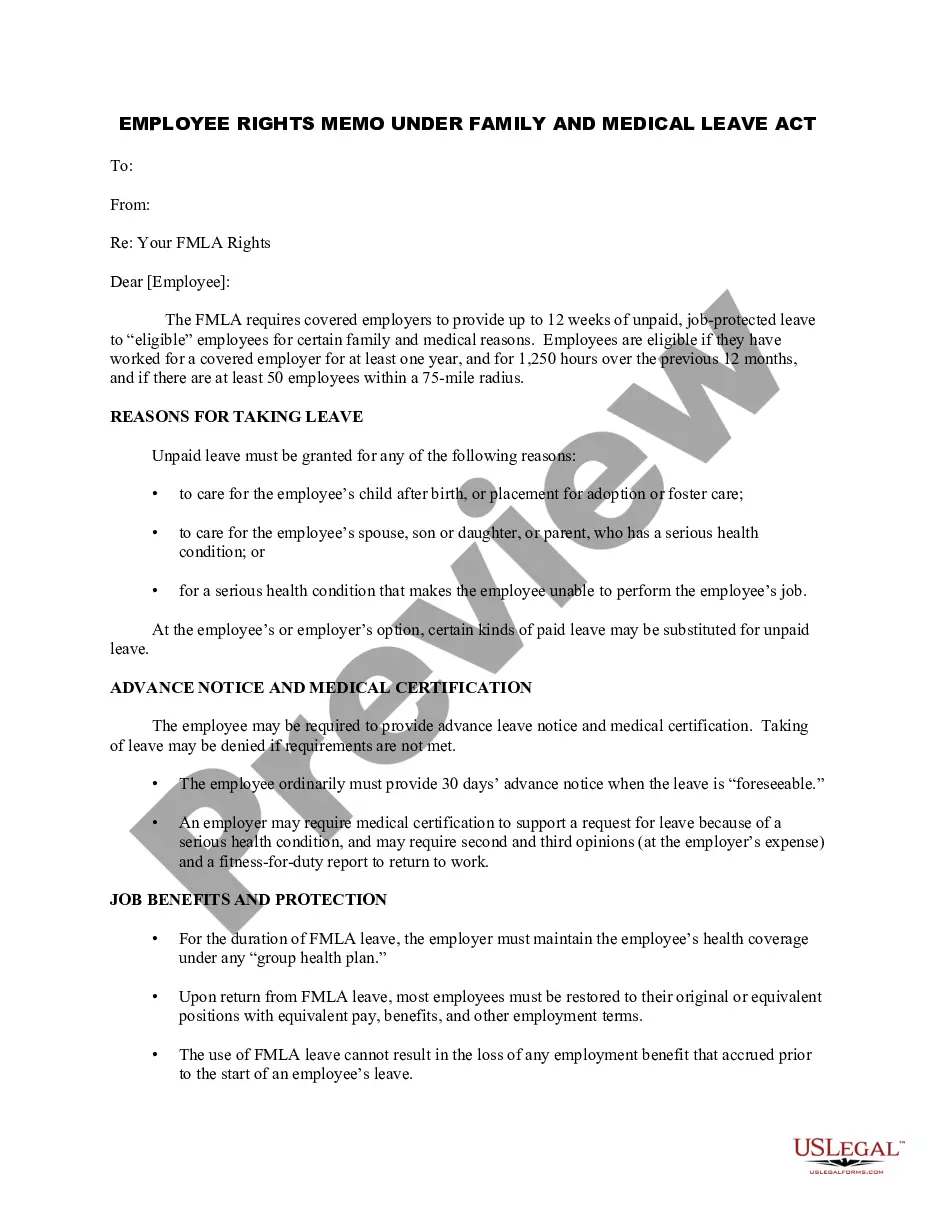
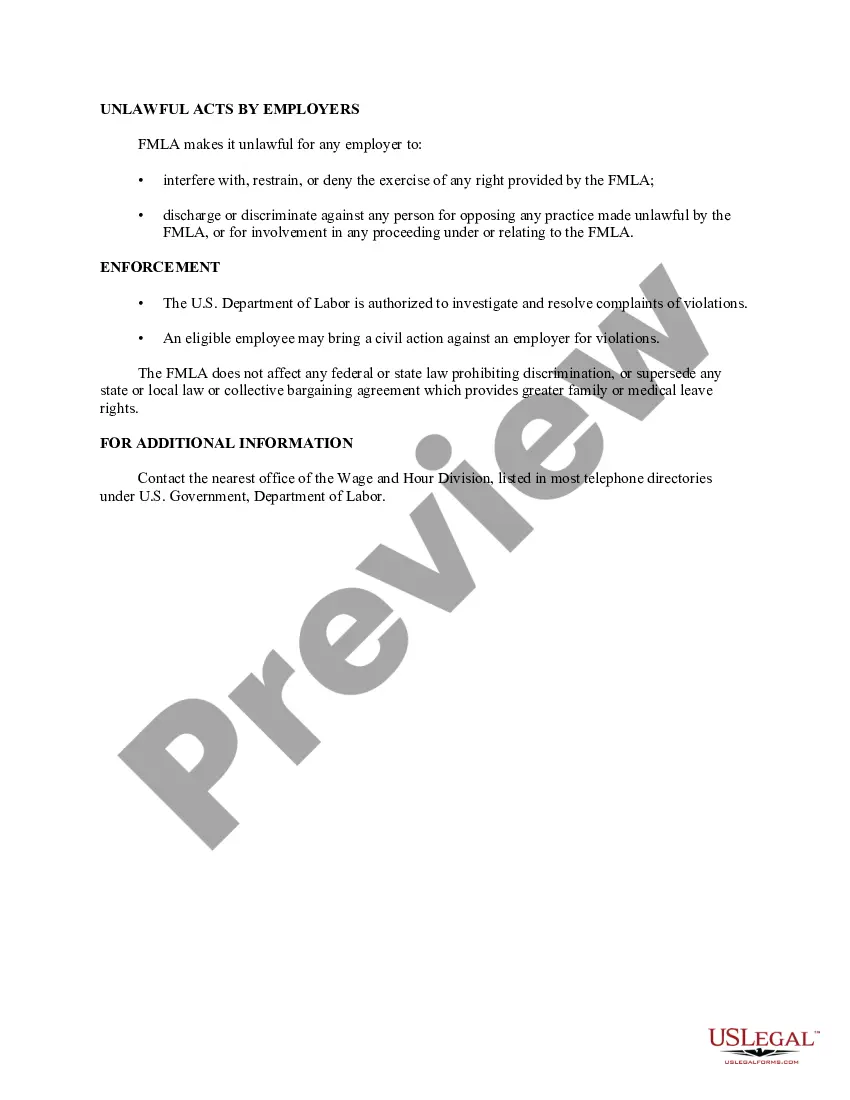
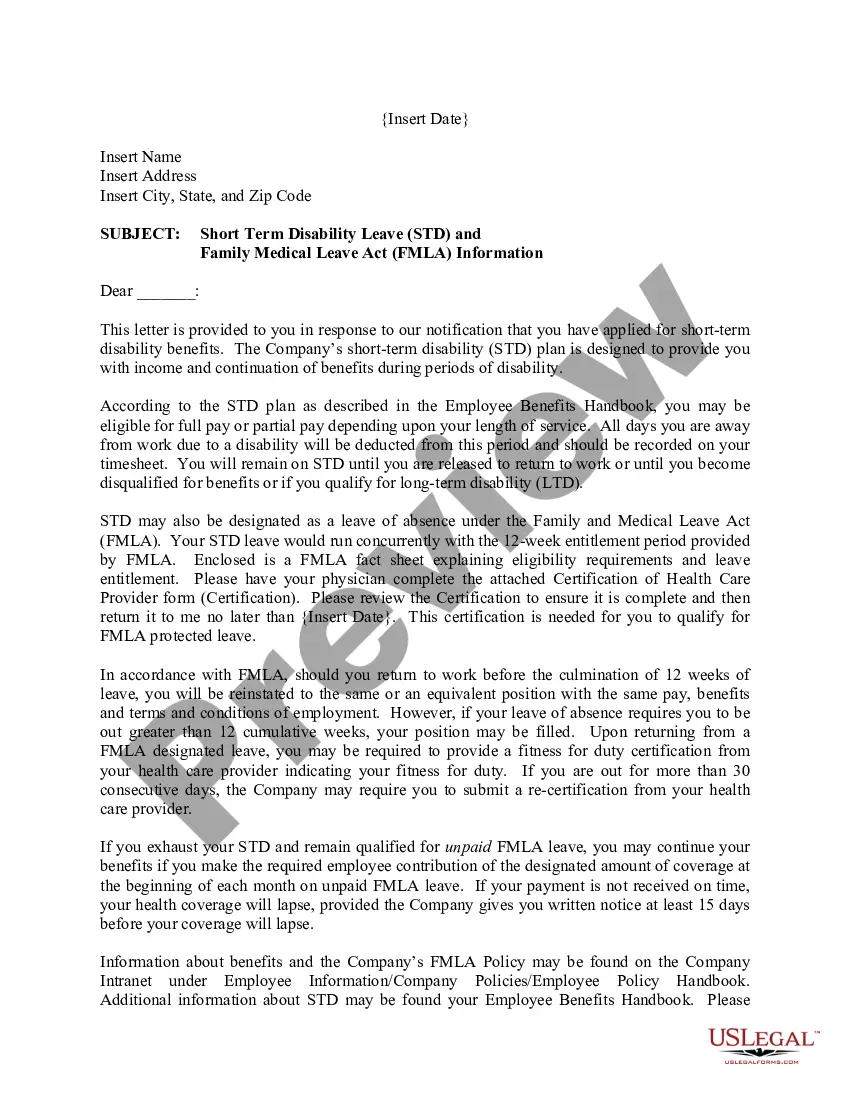
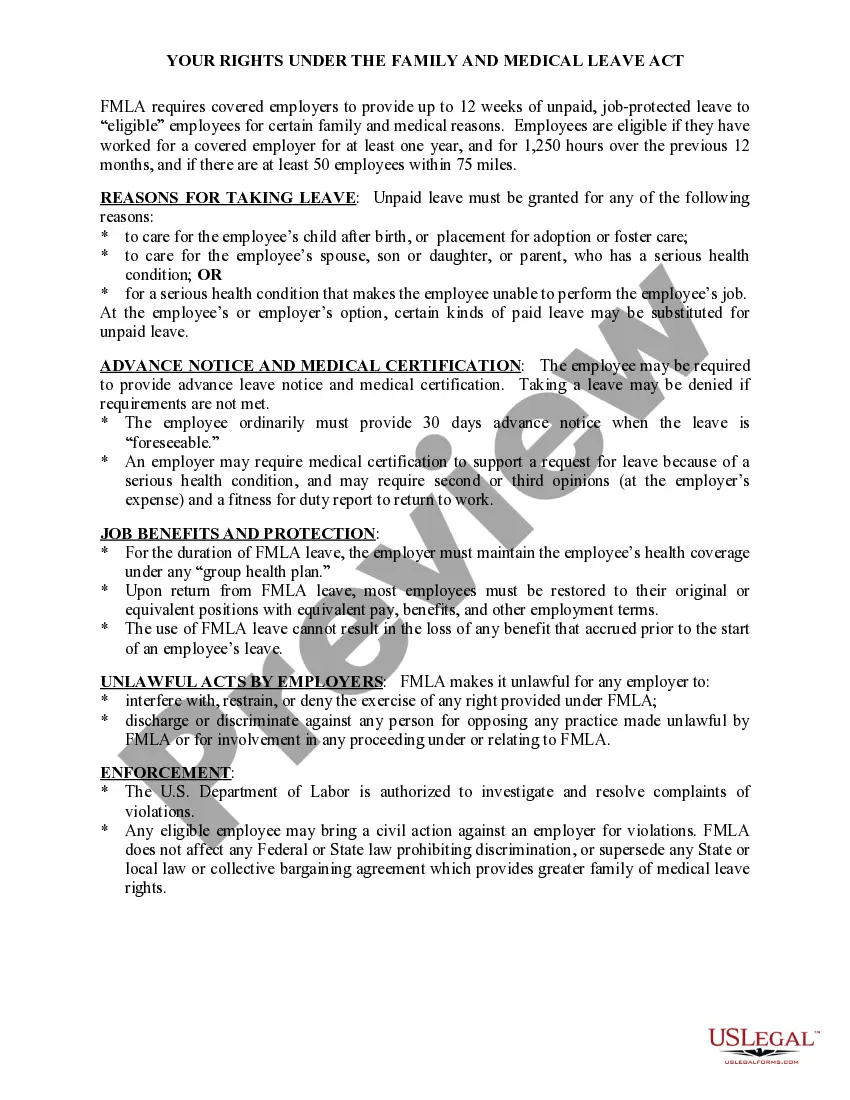
How to fill out Employee Rights Memo Under The Family And Medical Leave Act?
Handling legal documents can be exasperating, even for the most seasoned professionals.
If you're seeking an Intermittent Fmla For Anxiety but lack the time to find the right and current version, the process can be overwhelming.
Gain access to a valuable resource repository of articles, guides, and tools pertinent to your circumstances and needs.
Save time and energy finding the documents you require, and use US Legal Forms' advanced search and Review tool to locate Intermittent Fmla For Anxiety and obtain it.
Leverage the US Legal Forms online catalog, backed by 25 years of experience and reliability. Transform your daily document management into a seamless and user-friendly experience today.
- If you're a member, Log In to your US Legal Forms account, search for the form, and get it.
- Visit the My documents tab to view the documents you've previously saved and to manage your folders as desired.
- If it's your first experience with US Legal Forms, create a free account and gain unlimited access to all the benefits of the library.
- Upon accessing the form you desire, ensure this is the correct form by previewing it and reviewing its details.
- Confirm that the template is recognized in your state or county.
- Click Buy Now when you're ready.
- Choose a subscription plan.
- Select the file format you prefer, and Download, fill out, sign, print, and send your document.
- Access state- or county-specific legal and business documents.
- US Legal Forms fulfills all your needs, from personal to business forms, all in one location.
- Utilize advanced tools to complete and manage your Intermittent Fmla For Anxiety.
Form popularity
FAQ
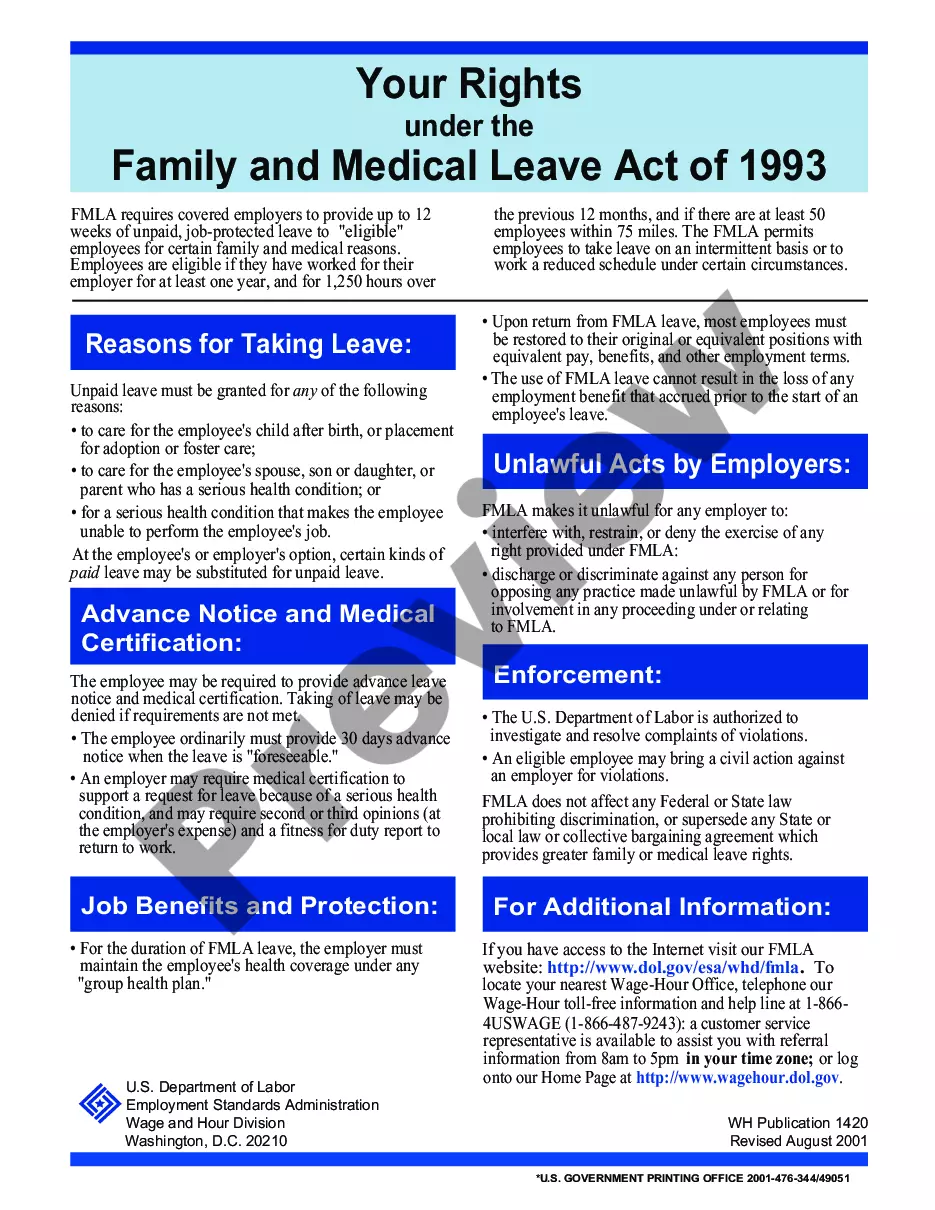
Intermittent FMLA itself is not considered undue hardship, as it is a legal right under the FMLA. Employers must accommodate an employee’s need for intermittent leave as long as it is justifiable and necessary for their health. However, it's important to communicate your needs effectively with your employer. For assistance with FMLA applications or understanding your rights, consider using uslegalforms as a helpful resource.
Yes, you can take FMLA for anxiety. This benefit allows eligible employees to take unpaid leave for various health issues, including those related to mental health. To qualify, you must meet specific criteria and provide your employer with the required documentation. Utilizing intermittent FMLA for anxiety can help manage your condition while balancing your work commitments.
To get time off work for stress and anxiety, you should first speak with your healthcare provider about your condition. They can recommend whether you need intermittent FMLA for anxiety. Once you have the necessary documentation, inform your employer about your situation, and submit a formal request for leave. It is essential to follow your company's procedures for such requests.
Yes, anxiety can qualify for FMLA. The Family and Medical Leave Act allows employees to take leave for serious health conditions, including mental health issues such as anxiety. You should provide documentation from a healthcare provider to support your request for intermittent FMLA for anxiety. This documentation helps ensure that your employer understands the need for your time off.
Conditions that qualify for FMLA leave regarding mental health include severe anxiety, depression, and other disorders that impact your daily functioning. Intermittent FMLA for anxiety can be a valid option if the condition disrupts your work schedule. Always consult with a healthcare provider to ensure proper documentation that meets FMLA requirements.
To ask for FMLA for anxiety, start by reviewing your company’s specific policies on family and medical leave. Prepare a written request that outlines your situation, indicating that you seek intermittent FMLA for anxiety. It is helpful to provide relevant information from a healthcare provider to strengthen your case.
Approaching your boss about needing FMLA for mental health involves clear communication and preparation. Schedule a private meeting where you can discuss your need for intermittent FMLA for anxiety. Present any necessary documentation to support your request, and explain how your condition affects your work responsibilities.
When explaining your absence due to mental health, it's important to be honest yet discreet. You can mention that you are dealing with a medical condition, such as anxiety, for which you are applying intermittent FMLA. Keeping the explanation simple and clear helps your employer understand without disclosing too many personal details.
The Family and Medical Leave Act (FMLA) covers a variety of health issues, including mental health conditions such as depression, anxiety, and stress-related disorders. Employees can take intermittent FMLA for anxiety when it directly impacts their ability to perform work duties. It's crucial to provide appropriate documentation and ensure the condition qualifies under FMLA guidelines.
Yes, you can take FMLA intermittently for anxiety depending on your specific situation and medical guidance. This allows you to use short periods of leave as needed, which can greatly benefit your mental health. To navigate this process smoothly, consider using platforms like US Legal Forms to help with the necessary documentation and protocols.