What Is The Law For Harassment
Description
Get your form ready online
Our built-in tools help you complete, sign, share, and store your documents in one place.
Make edits, fill in missing information, and update formatting in US Legal Forms—just like you would in MS Word.
Download a copy, print it, send it by email, or mail it via USPS—whatever works best for your next step.
Sign and collect signatures with our SignNow integration. Send to multiple recipients, set reminders, and more. Go Premium to unlock E-Sign.
If this form requires notarization, complete it online through a secure video call—no need to meet a notary in person or wait for an appointment.
We protect your documents and personal data by following strict security and privacy standards.

Make edits, fill in missing information, and update formatting in US Legal Forms—just like you would in MS Word.

Download a copy, print it, send it by email, or mail it via USPS—whatever works best for your next step.

Sign and collect signatures with our SignNow integration. Send to multiple recipients, set reminders, and more. Go Premium to unlock E-Sign.

If this form requires notarization, complete it online through a secure video call—no need to meet a notary in person or wait for an appointment.

We protect your documents and personal data by following strict security and privacy standards.
Looking for another form?








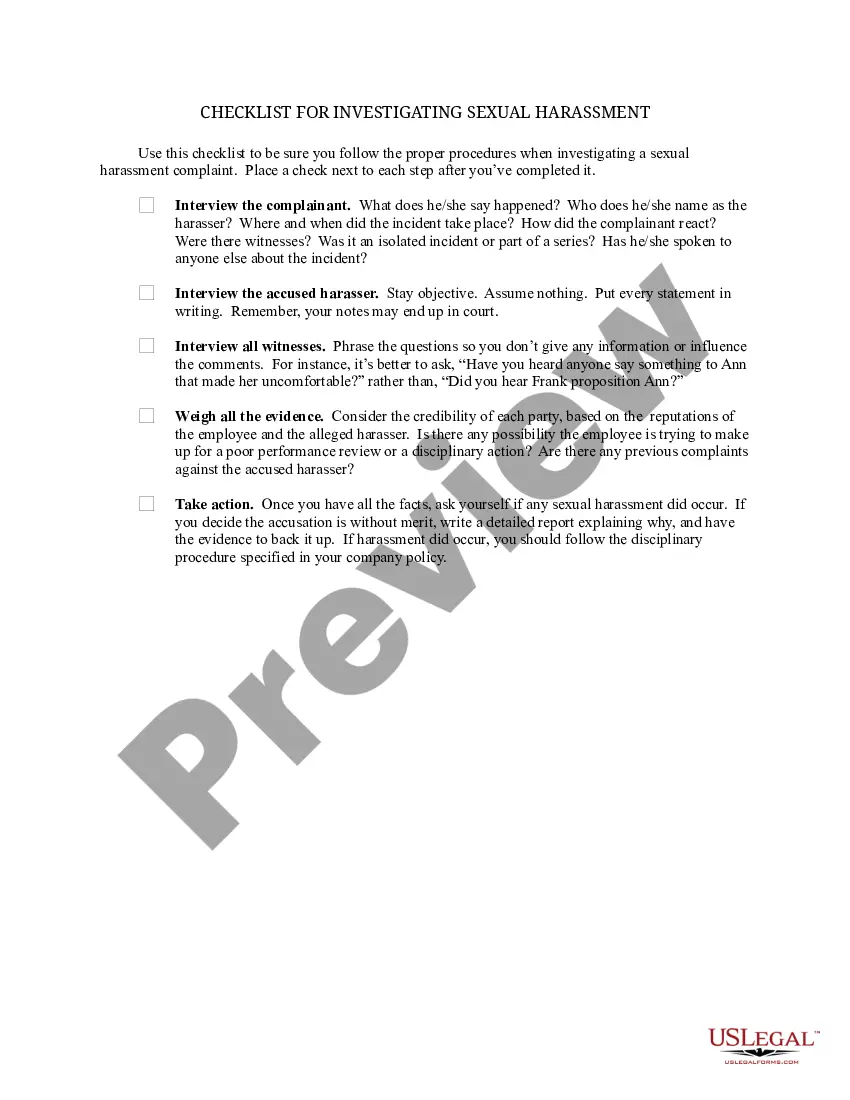
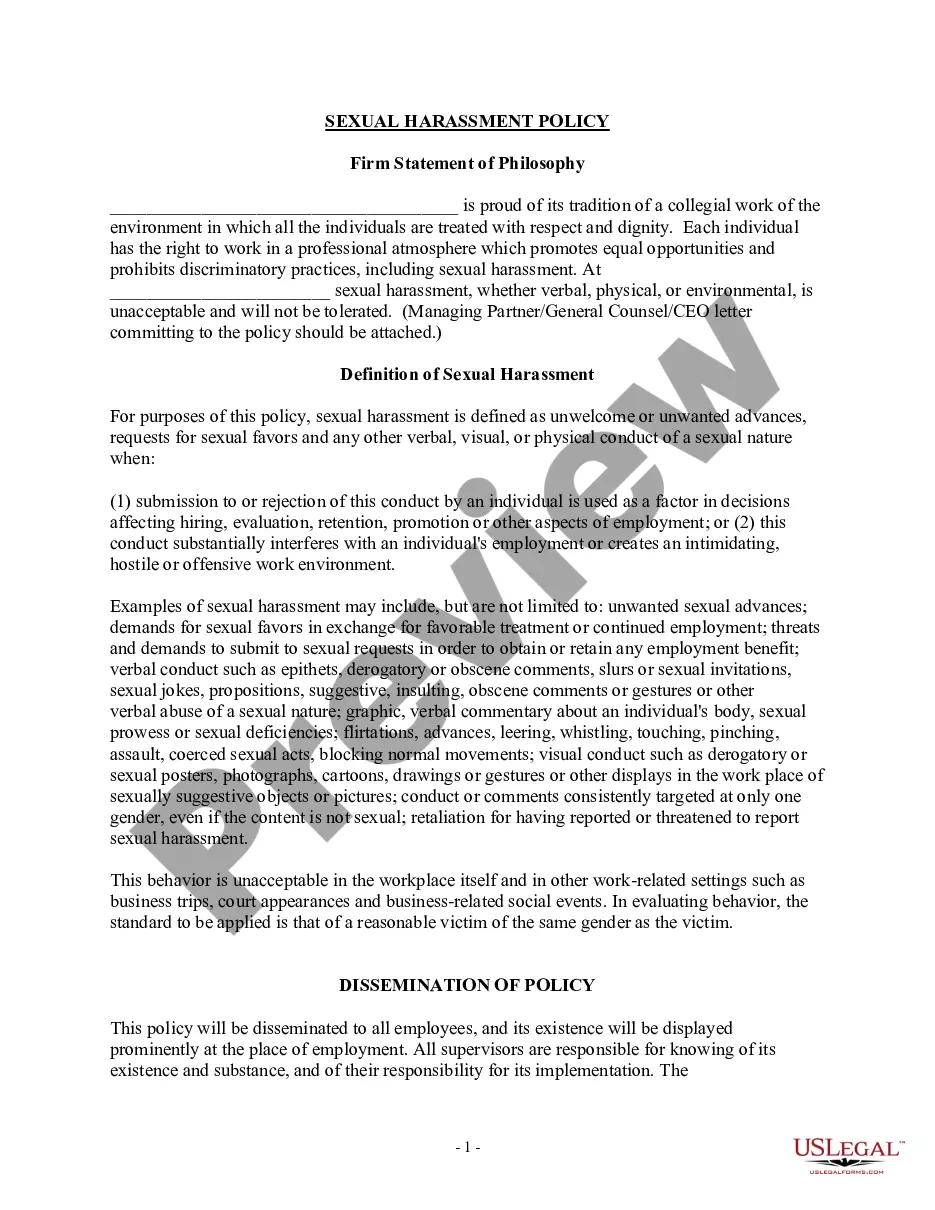
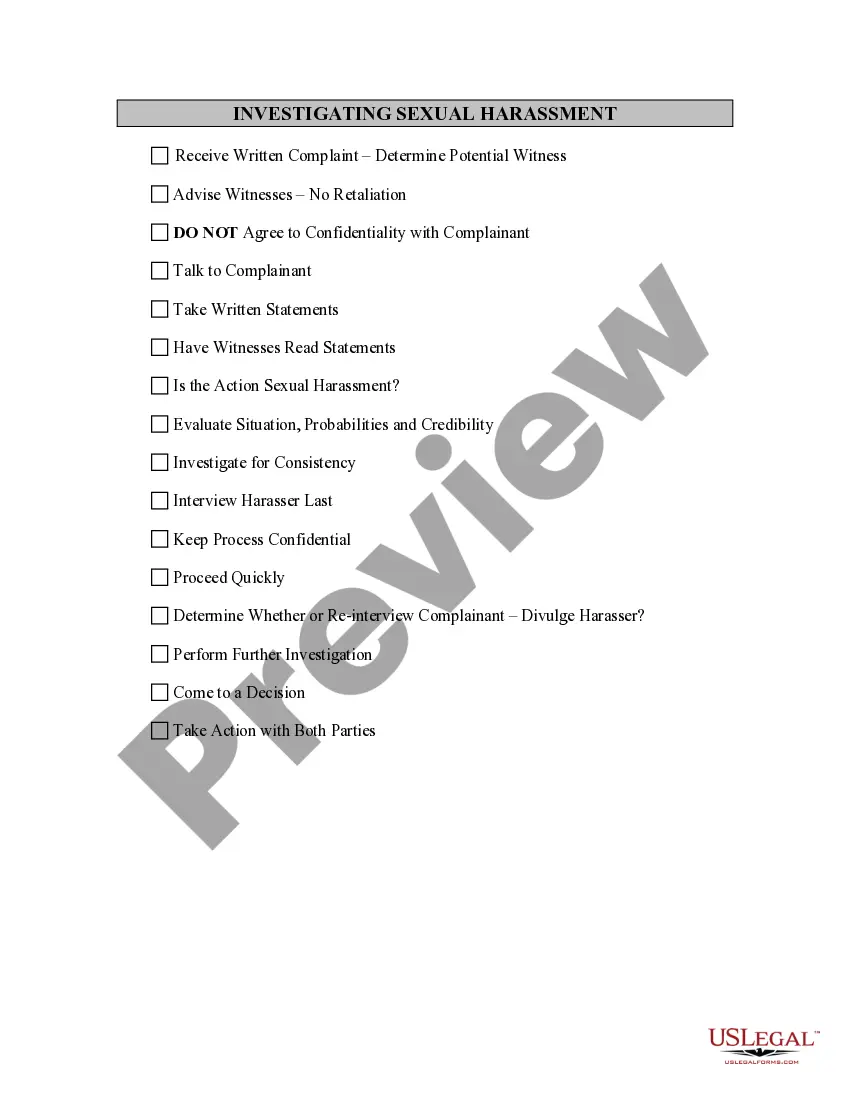
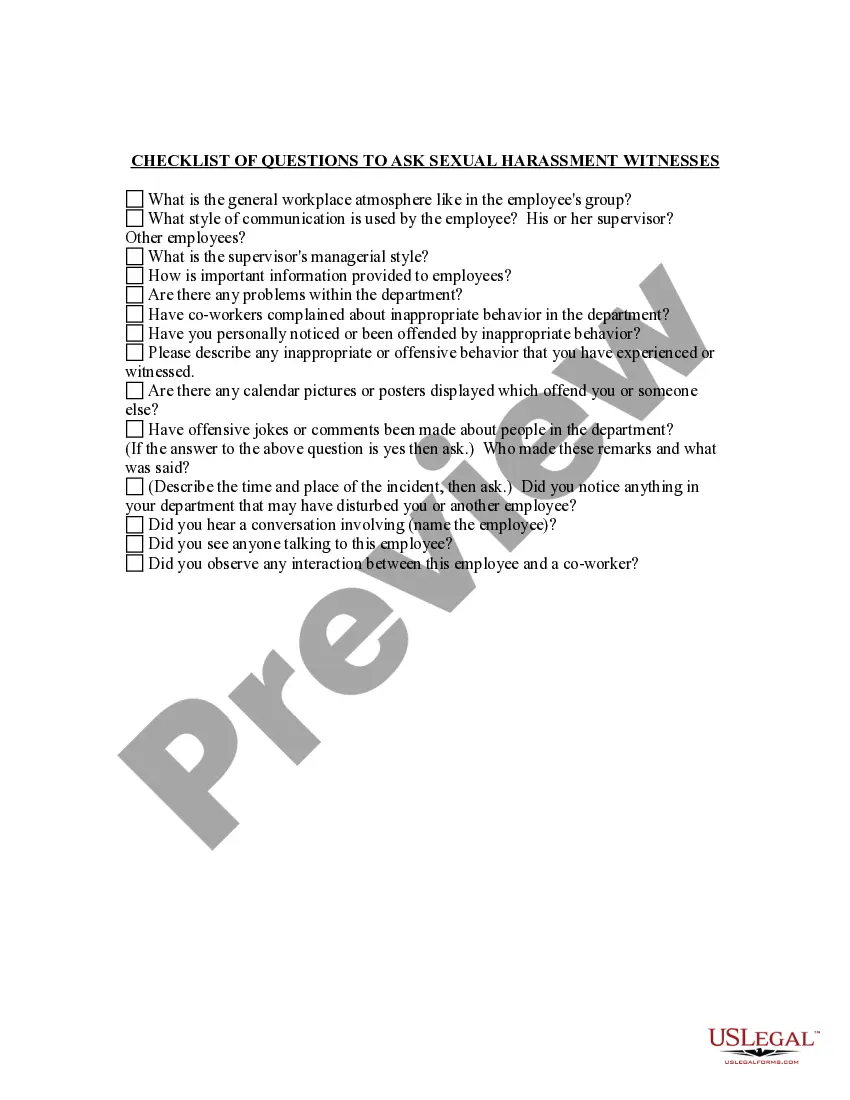
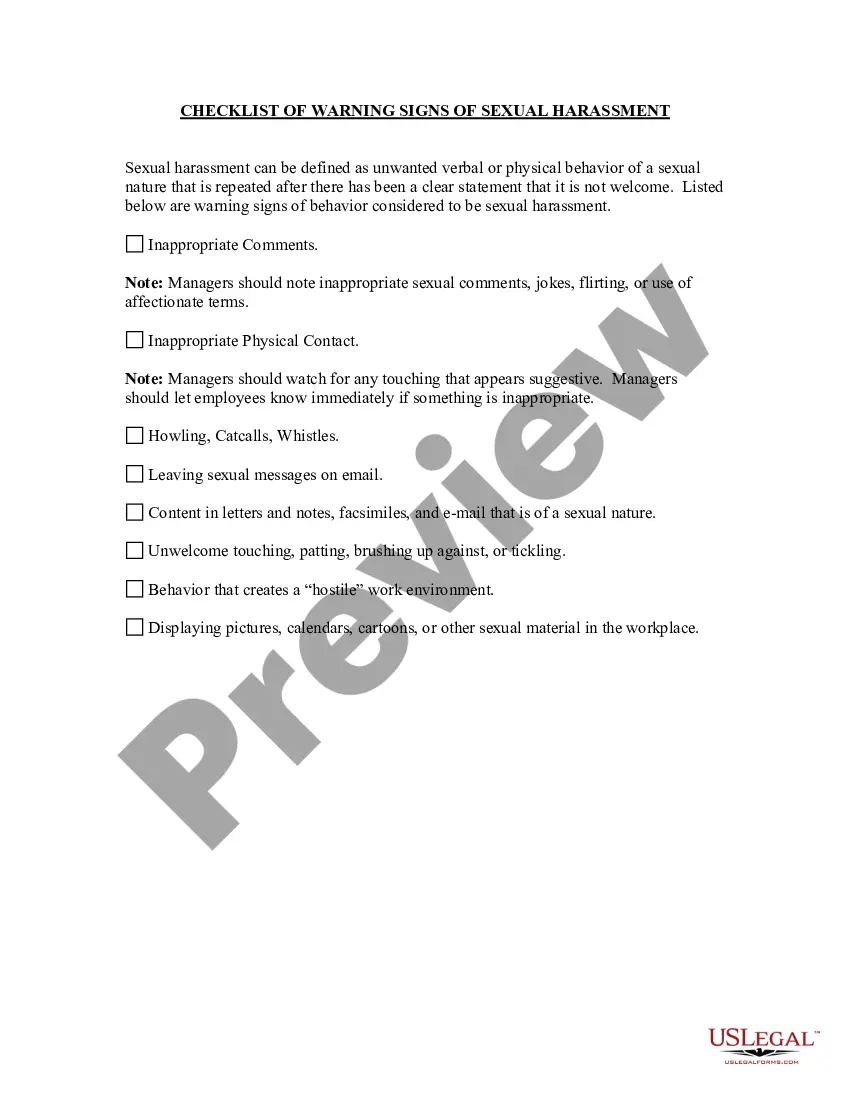
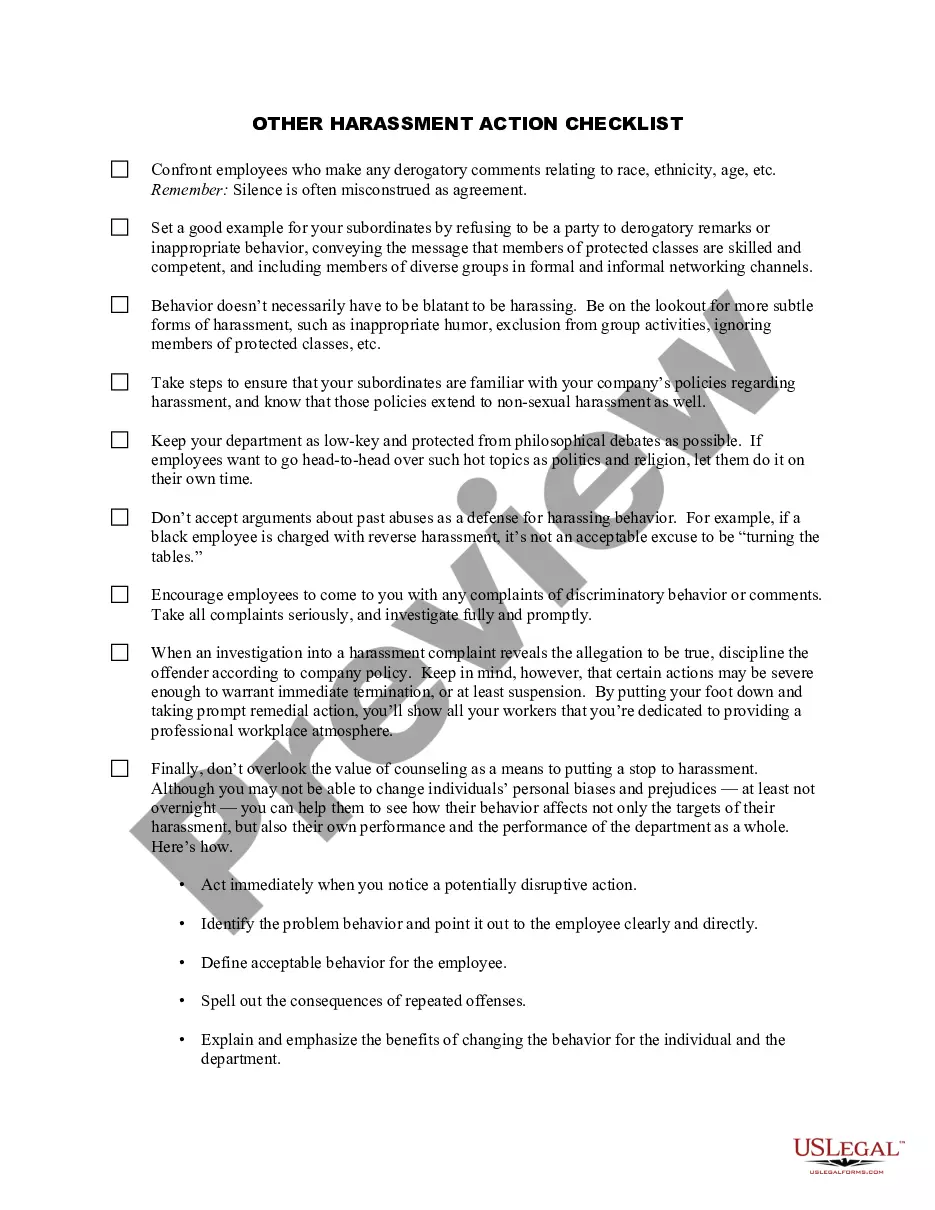
How to fill out Checklist For Investigation Sexual Harassment - Workplace?
- Begin by logging into your account on the US Legal Forms site if you’ve used it previously, ensuring your subscription is current.
- If you're new to the service, start by reviewing the Preview mode to confirm you select the form that matches your legal needs and jurisdiction.
- Should you require a different template, utilize the Search function to locate the appropriate document.
- Proceed to purchase the selected form by clicking on the Buy Now button and opt for your preferred subscription plan, ensuring you create an account.
- Complete your purchase by entering your payment details or using PayPal for convenience.
- Finally, download your form to your device and access it anytime from the My Forms section of your profile for future use.
By utilizing US Legal Forms, you not only save time but also ensure that your legal documents are comprehensive and accurate. The platform's extensive resources empower both individuals and legal professionals to tackle legal challenges effectively.
Don’t wait—take control of your legal needs today by visiting US Legal Forms and start your journey towards legally sound documentation.
Form popularity
FAQ
To write a harassment statement, start by introducing the context of the harassment and the involved parties. Be clear and specific about each incident, mentioning any witnesses or evidence. Following a coherent structure will make your statement more impactful. Familiarizing yourself with what is the law for harassment can greatly assist in asserting your rights in your statement.
The first step in case of harassment is to document every incident thoroughly. Keeping a record will help build your case should you choose to take further action. After documenting, consider discussing the issue with a trusted friend or legal advisor. Knowing what is the law for harassment can also assist in determining the best course of action.
An example of harassment in law includes unwanted advances or threats that create a hostile environment. This can range from repeated inappropriate comments at work to online bullying. Understanding specific legal definitions of harassment will help you identify if your situation qualifies under what is the law for harassment, guiding your next steps.
When writing about harassment, focus on the facts without embellishing your emotions. Describe the incidents in a straightforward manner, addressing how they affected you and your daily life. It's important to remain objective to strengthen your case. Reflect on what is the law for harassment to effectively communicate the seriousness of the situation.
Harassment statements can include various forms of unwanted behavior, such as repeated unwanted phone calls, threatening messages, or violating personal boundaries. For instance, if someone sends you derogatory messages continuously, that can serve as a clear example. Listing specific incidents enhances your statement, ensuring that it is aligned with what is the law for harassment.
To write a formal complaint about harassment, begin with an introduction that outlines your purpose. Specify the incidents of harassment, ensuring you include dates, times, and descriptions. Additionally, explain how the harassment has affected you, which provides context for your complaint. Familiarizing yourself with what is the law for harassment can enhance the strength of your letter.
Proving harassment involves gathering evidence of the behavior. Document conversations, messages, or any incidents that demonstrate the unwanted actions you are facing. Keeping a detailed record will help you establish a pattern, which is essential in legal contexts. It’s vital to know what is the law for harassment to ensure your evidence aligns with legal standards.
To start a harassment statement, clearly identify the nature of the harassment and the individuals involved. Begin by stating the facts in chronological order, focusing on specific incidents that occurred. Remember, clarity is key, as you want to convey the point effectively. Understanding the law for harassment will guide your writing.
The three principal types of harassment include sexual harassment, workplace harassment, and cyber harassment. Sexual harassment involves unwelcome sexual advances or conduct, while workplace harassment can stem from peers or supervisors causing a hostile work environment. Cyber harassment, on the other hand, occurs online through harmful communications or threats. Understanding these categories is essential for victims seeking recourse under the law for harassment.
Not every uncomfortable situation qualifies as harassment. For example, expressing a differing opinion during a debate, accidentally brushing against someone in a crowded space, or an isolated comment that isn’t repeated or targeted does not typically meet harassment criteria. Understanding what does not constitute harassment is crucial to differentiate between conflict and illegal behavior. USLegalForms provides resources to help clarify these distinctions.