Sexual Harassment With Words
Description
Get your form ready online
Our built-in tools help you complete, sign, share, and store your documents in one place.
Make edits, fill in missing information, and update formatting in US Legal Forms—just like you would in MS Word.
Download a copy, print it, send it by email, or mail it via USPS—whatever works best for your next step.
Sign and collect signatures with our SignNow integration. Send to multiple recipients, set reminders, and more. Go Premium to unlock E-Sign.
If this form requires notarization, complete it online through a secure video call—no need to meet a notary in person or wait for an appointment.
We protect your documents and personal data by following strict security and privacy standards.

Make edits, fill in missing information, and update formatting in US Legal Forms—just like you would in MS Word.

Download a copy, print it, send it by email, or mail it via USPS—whatever works best for your next step.

Sign and collect signatures with our SignNow integration. Send to multiple recipients, set reminders, and more. Go Premium to unlock E-Sign.

If this form requires notarization, complete it online through a secure video call—no need to meet a notary in person or wait for an appointment.

We protect your documents and personal data by following strict security and privacy standards.
Looking for another form?









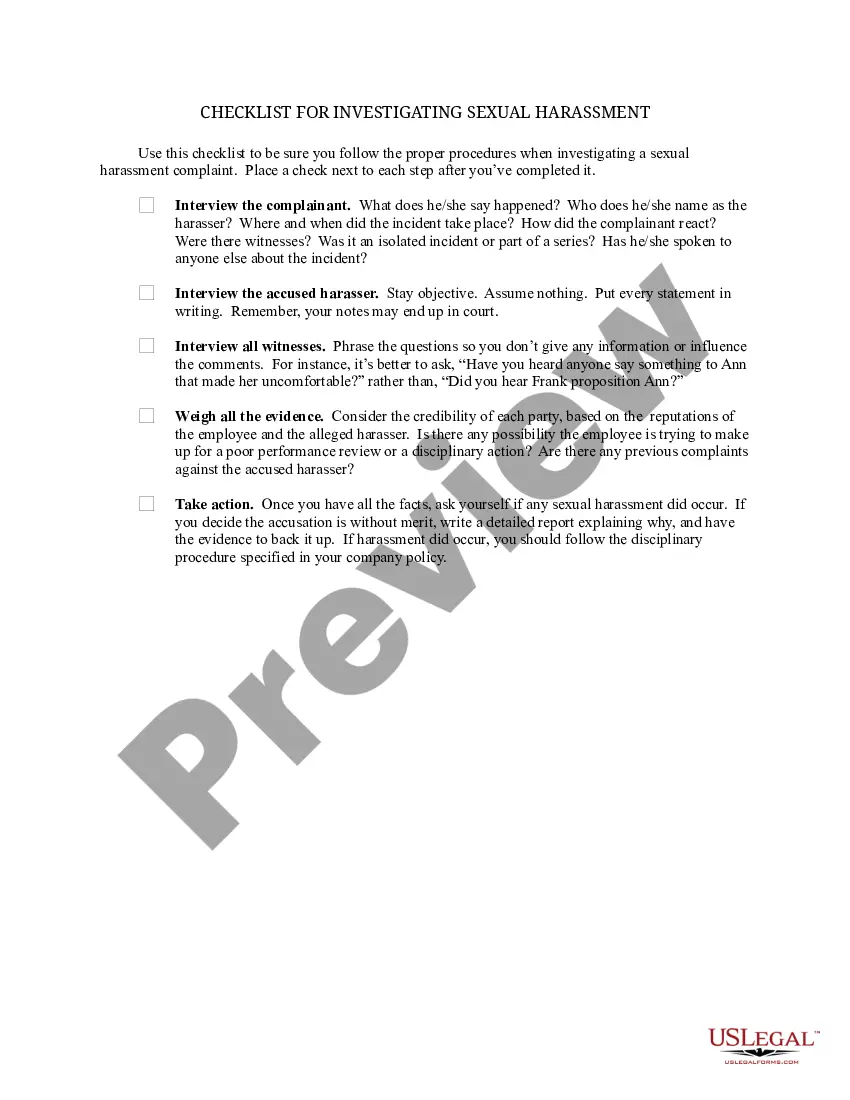
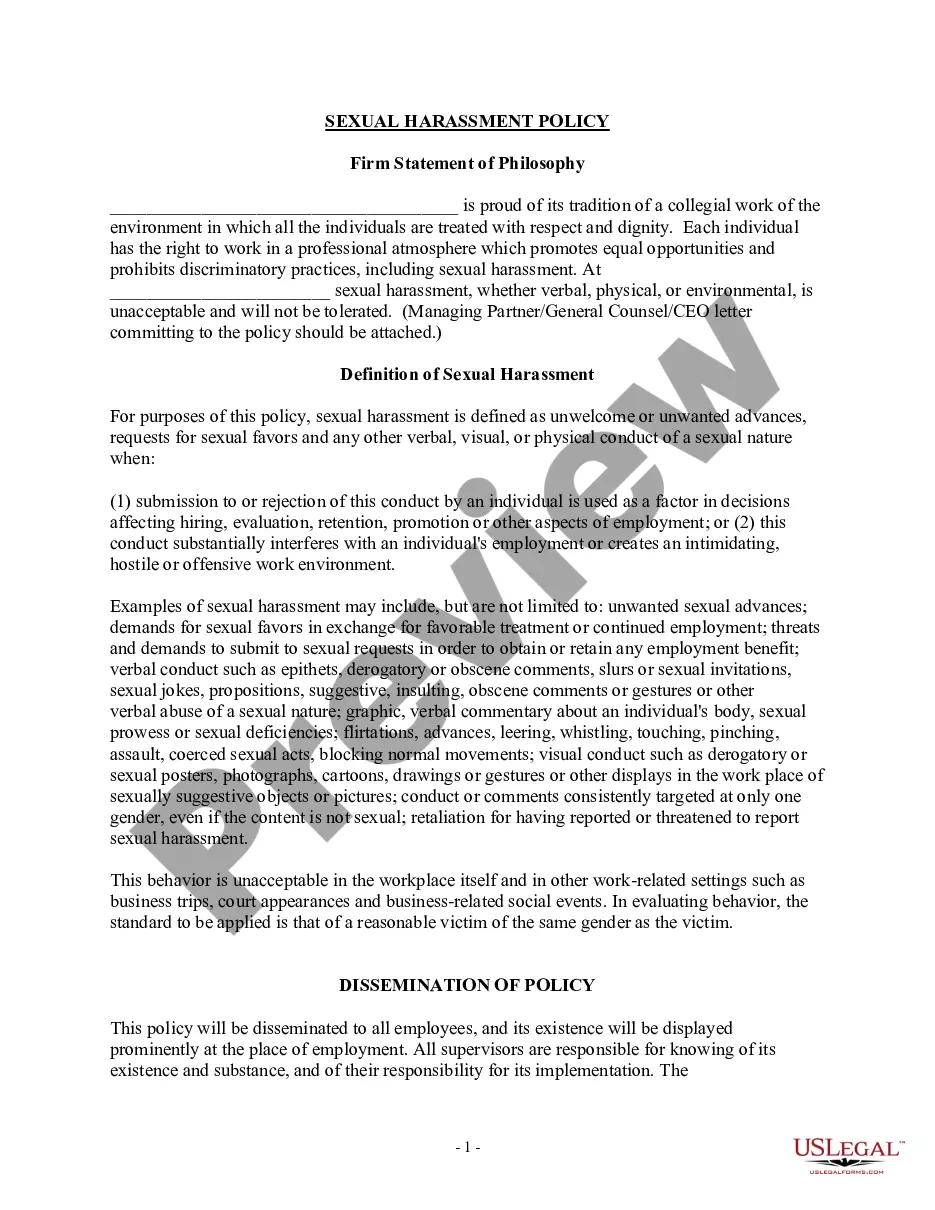
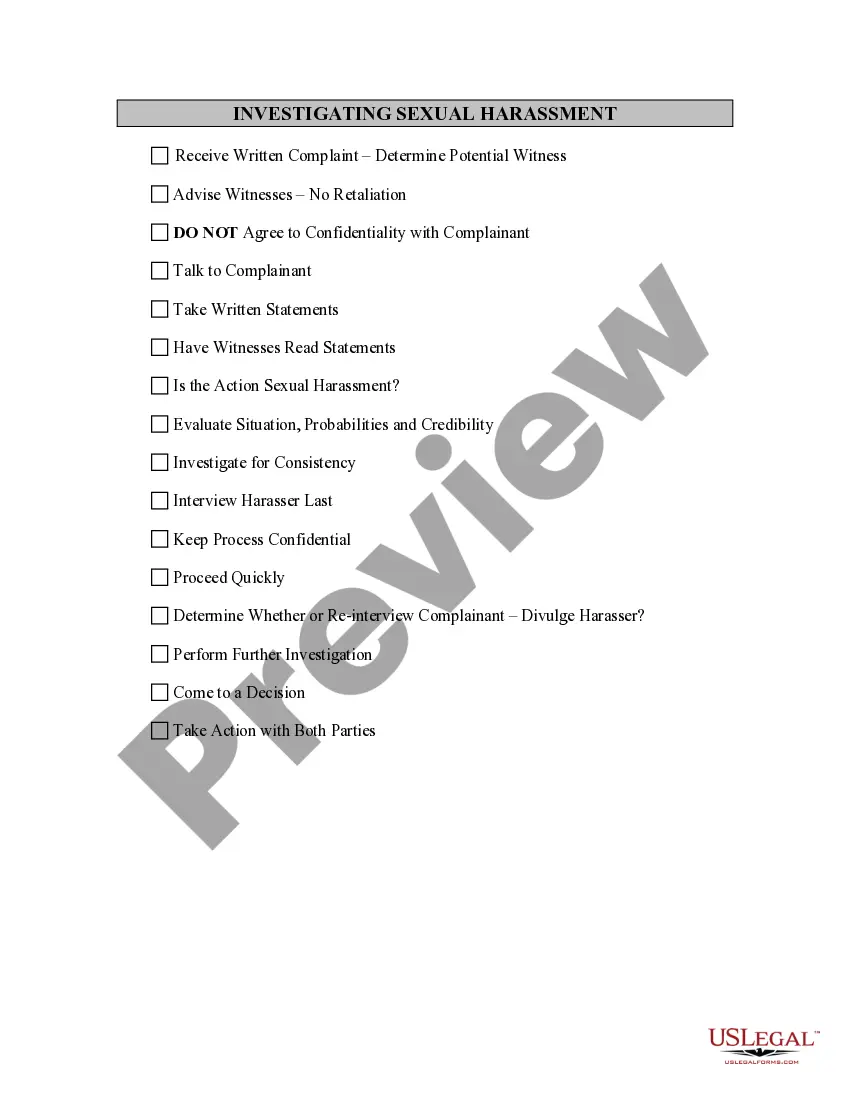
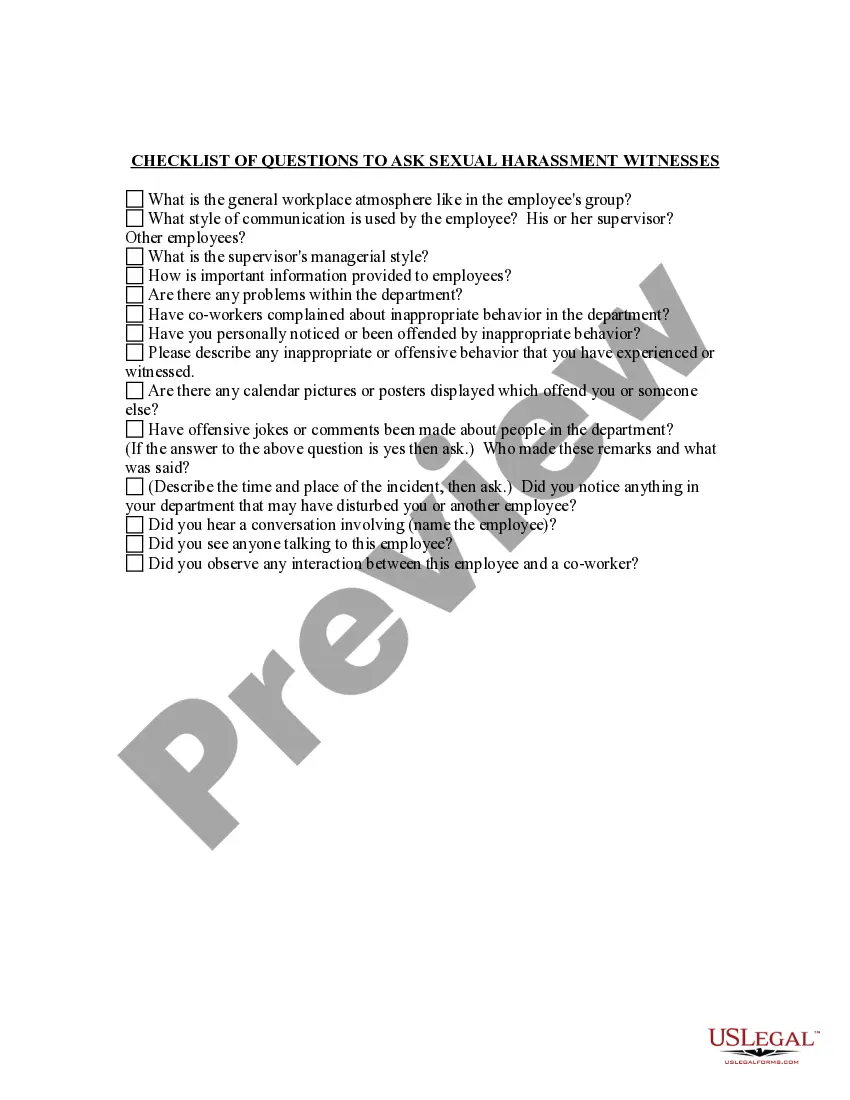
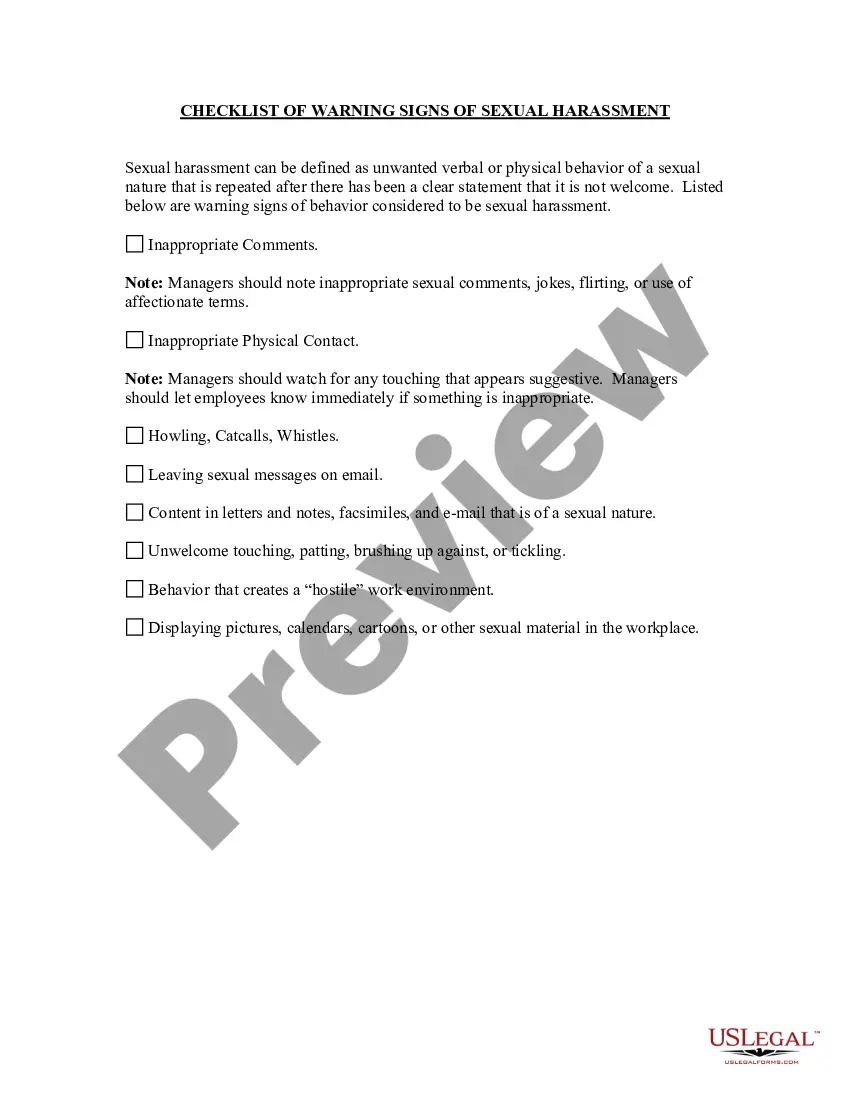
How to fill out Checklist For Investigation Sexual Harassment - Workplace?
- Log in to your US Legal Forms account if you've previously used the service, ensuring your subscription is still active.
- If this is your first time, start by checking the Preview mode for the form you need, ensuring it's relevant to your situation and complies with local laws.
- Utilize the Search tab to find alternative templates if your initial choice doesn't fit your requirements.
- Once you identify the correct document, click on the Buy Now button and select your preferred subscription plan.
- Complete the purchase by entering your payment details, either through credit card or PayPal.
- Finally, download the form to your device. You can access it anytime via the My Forms section of your profile.
US Legal Forms empowers both individuals and attorneys with a robust collection of legal documents. Their extensive library, featuring over 85,000 fillable forms, ensures you can find exactly what you need.
Take control of your legal concerns today. Explore US Legal Forms and access the documents required to address issues surrounding sexual harassment with words.
Form popularity
FAQ
Harassing language refers to any communication that demeans, belittles, or threatens someone based on their gender or sexual orientation. This type of language can derive from jokes, comments, or suggestive remarks that cross personal boundaries. By defining harassing language, we can recognize sexual harassment with words and work to eliminate it. Platforms like USLegalForms provide resources to help individuals understand their rights and resolve issues related to emotional distress from harassment.
Yes, words can absolutely be considered harassment when they convey unwanted sexual advances or create a hostile environment. Sexually harassing language can range from subtle comments to overtly suggestive remarks that make individuals uncomfortable. It is vital to recognize that sexual harassment with words impacts many people's experiences at work. Understanding this can empower individuals and organizations to take action against such behavior.
Examples of sexually harassing language include making inappropriate jokes, discussing sexual topics without consent, or using suggestive remarks about a person’s appearance. These behaviors not only violate workplace policies but also contribute to an unhealthy atmosphere. Considering such examples of sexual harassment with words can help you identify unacceptable behavior early and foster a more respectful environment. Addressing these actions promptly can prevent escalation.
Sexually harassing language includes any words or phrases that create an intimidating, hostile, or offensive environment based on sexual content. This can involve inappropriate jokes, comments about someone’s body, or suggestive language. Understanding what comprises sexual harassment with words is crucial for fostering a respectful workplace. A healthy environment relies on communication that respects personal boundaries.
Words that are considered harassment typically include threats, insults, and any language intended to intimidate or demean. This can also encompass repeated unwanted comments about your appearance or personal life that create a hostile environment. Understanding what falls under sexual harassment with words is crucial, as it empowers you to take appropriate action if you find yourself in such a situation.
You can prove verbal harassment by collecting evidence that supports your claim. Take notes of every incident, noting the words used and the impact on you. If applicable, gather testimonies from witnesses who can corroborate your accounts. Engaging legal resources, such as those available on US Legal Forms, can help you navigate the complexities surrounding sexual harassment with words.
To prove someone is harassing you, compile comprehensive documentation of each incident. This documentation should detail specific instances of harassment, including what was said, the context, and any witnesses present. If necessary, consult with a legal expert from US Legal Forms, who can guide you through the process of addressing sexual harassment with words effectively.
To prove verbal harassment, gather evidence that demonstrates the abusive nature of the words used. This might include recordings, text messages, or eyewitness accounts from those who witnessed the harassment. Additionally, keep a detailed record of dates, times, and the context in which the harassment occurred. Using this information can strengthen your case regarding sexual harassment with words.
To stop someone from verbally harassing you, first, remain calm and assertive. Clearly tell the person that their words are crossing a line and you find them unacceptable. Document each incident as it occurs, noting the time, place, and specific words used. If the behavior continues, consider seeking help from your workplace HR or legal resources, such as US Legal Forms, to understand your options regarding sexual harassment with words.
When writing about harassment, it's essential to capture the essence of your experience with clarity. Describe the incidents of sexual harassment with words and the emotional impact they had on you. Offering a detailed narrative helps convey the severity of the situation, and you may also want to highlight what steps you believe should be taken to address the issue.