Harassment With Intent
Description
Get your form ready online
Our built-in tools help you complete, sign, share, and store your documents in one place.
Make edits, fill in missing information, and update formatting in US Legal Forms—just like you would in MS Word.
Download a copy, print it, send it by email, or mail it via USPS—whatever works best for your next step.
Sign and collect signatures with our SignNow integration. Send to multiple recipients, set reminders, and more. Go Premium to unlock E-Sign.
If this form requires notarization, complete it online through a secure video call—no need to meet a notary in person or wait for an appointment.
We protect your documents and personal data by following strict security and privacy standards.

Make edits, fill in missing information, and update formatting in US Legal Forms—just like you would in MS Word.

Download a copy, print it, send it by email, or mail it via USPS—whatever works best for your next step.

Sign and collect signatures with our SignNow integration. Send to multiple recipients, set reminders, and more. Go Premium to unlock E-Sign.

If this form requires notarization, complete it online through a secure video call—no need to meet a notary in person or wait for an appointment.

We protect your documents and personal data by following strict security and privacy standards.
Looking for another form?

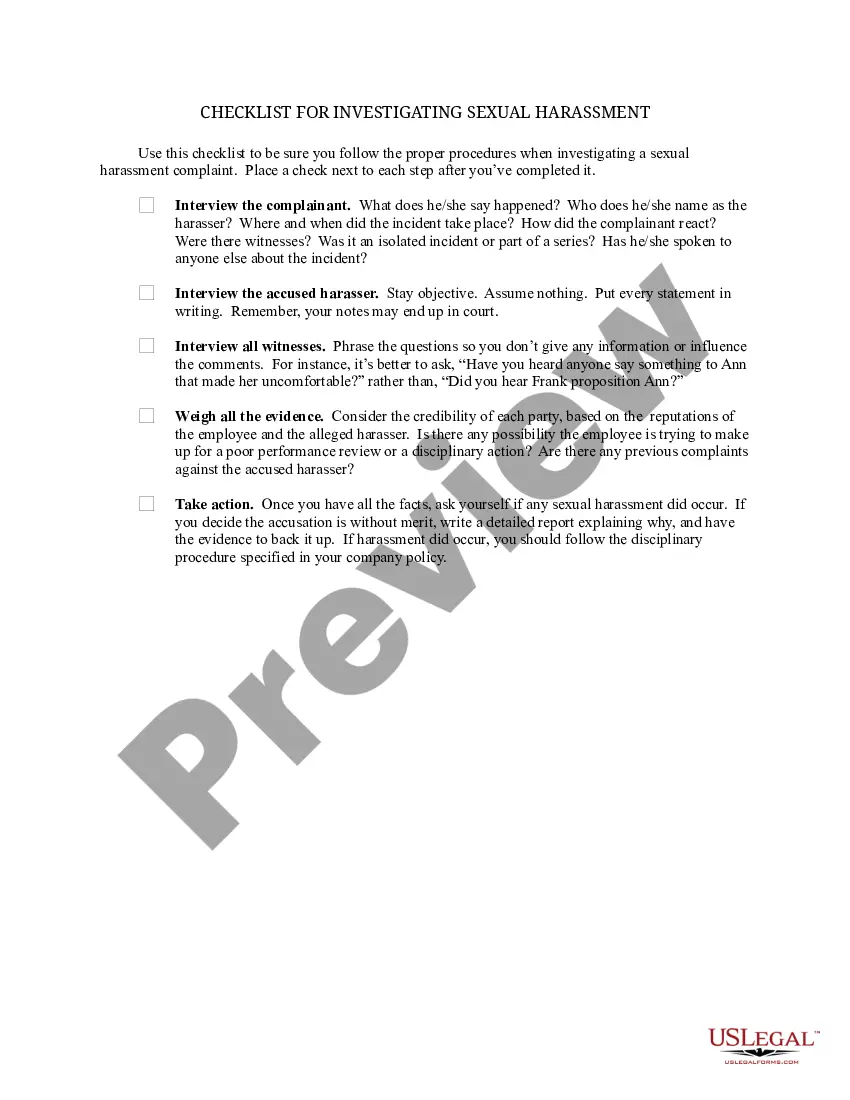
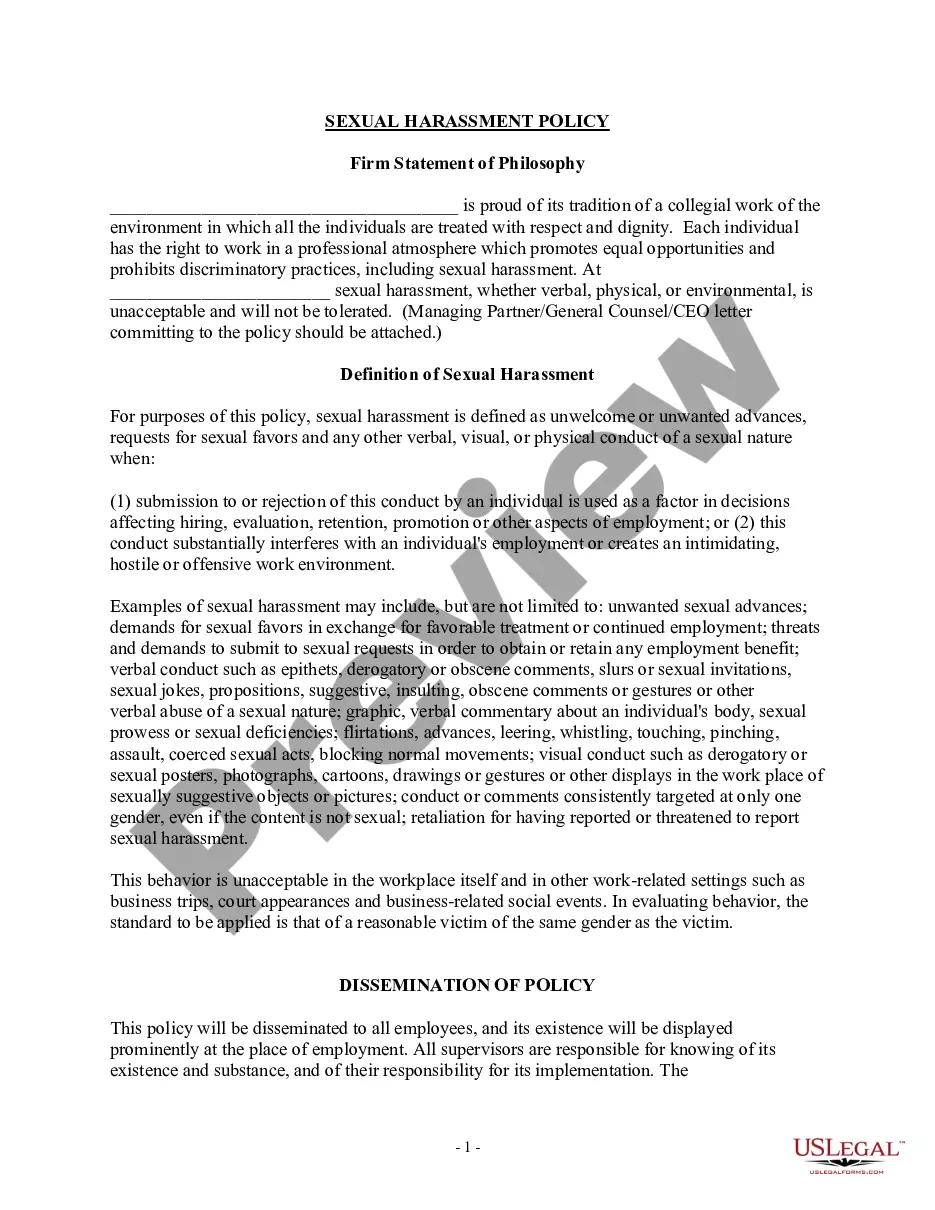
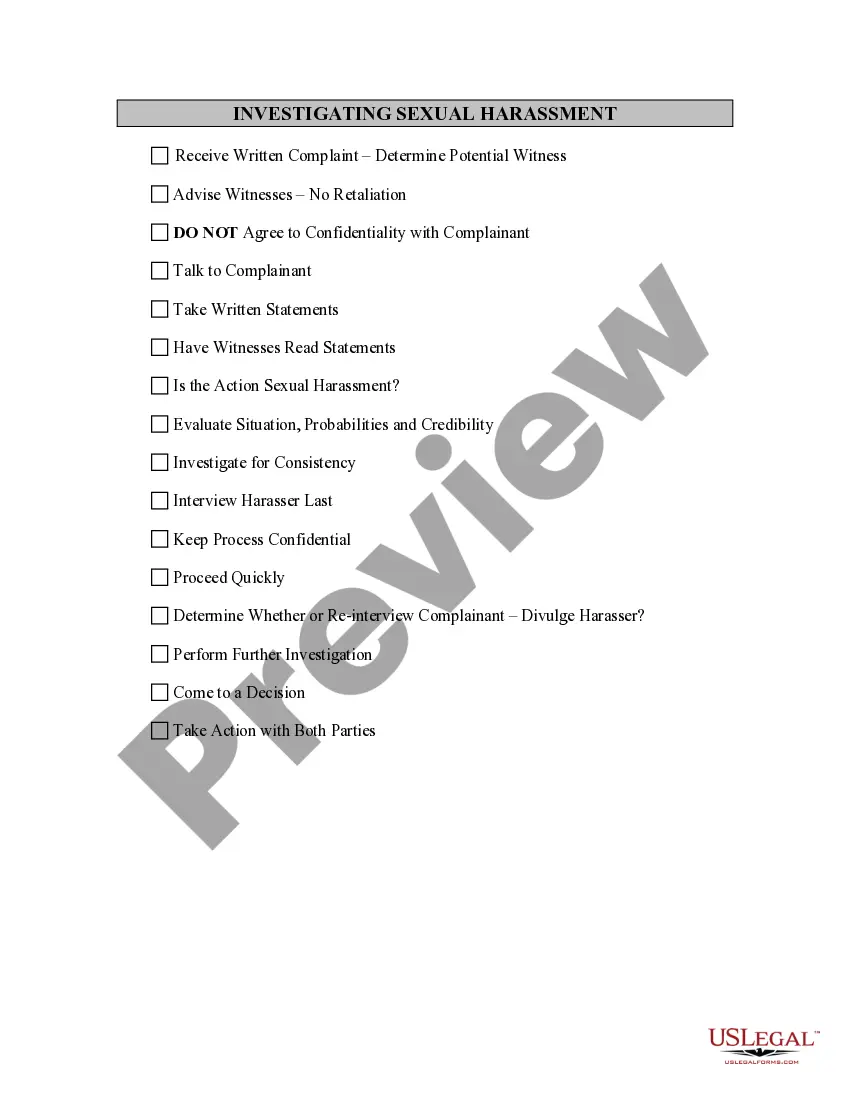
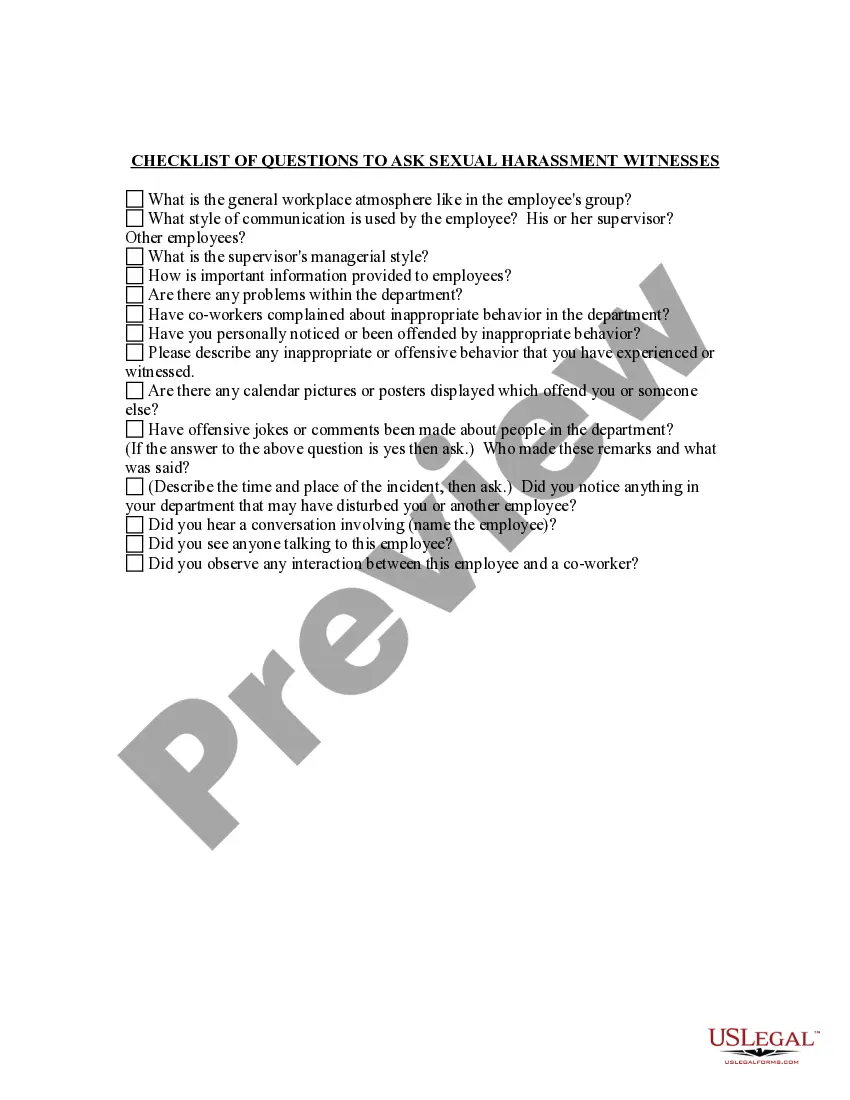
How to fill out Checklist For Investigation Sexual Harassment - Workplace?
- For returning users, log in to your account and check if your subscription is active. Click the Download button to obtain your desired form quickly.
- For new users, start by exploring the Preview mode and detailed descriptions of forms. Make sure to select one that aligns with your needs and local jurisdiction rules.
- If adjustments are needed, utilize the Search tab to find an alternative template that accurately addresses your legal requirements.
- Proceed to purchase the document by clicking the Buy Now button. Select a subscription plan and create an account to access the full library.
- Complete your purchase by entering your payment details, either by credit card or PayPal. Afterward, you'll have full access to your documents.
- Finally, download your form and save it to your device. You can find it later in the My Forms section of your profile.
Overall, US Legal Forms empowers users with a vast array of legal documents, ensuring accuracy and compliance.
Take action today and ensure your legal documents are just a few clicks away!
Form popularity
FAQ
You should report harassment as soon as it happens or when you feel safe to do so. If you experience harassment with intent, timely reporting can help protect you and prevent further occurrences. Contacting authorities or a professional organization creates official records of the incidents. Additionally, using platforms like uslegalforms can assist you in understanding your rights and navigating the reporting process effectively.
In a harassment case, the burden of proof typically lies with the person bringing the claim. This means you must show that harassment with intent occurred, leading to perceived threats or emotional distress. It's essential to provide evidence supporting your claims, such as messages or witness testimonies. Gathering this information can strengthen your case and help demonstrate the severity of the harassment faced.
Writing about harassment with intent involves conveying factual, emotional, and contextual information about your experience. Structure your writing clearly, starting with an introduction of the issue, followed by detailed accounts of incidents. Emphasize your feelings and the impact of the behavior to enhance understanding and empathy.
When accused of harassment with intent, first approach the situation calmly and without defensiveness. Listen attentively to the concerns being raised. It may be beneficial to seek legal guidance to navigate the conversation while protecting your rights and ensuring a fair resolution.
To start a harassment statement, clearly outline the purpose of your writing. For example, begin with, 'I am writing to report harassment with intent that I experienced on date.' Establishing the context from the beginning sets the tone for the details that will follow.
A harassment statement should include specific phrases like, 'I felt threatened when...' or 'The comments made were inappropriate and unwelcome.' Statements should reflect the individual's experience and convey the impact of the harassment with intent on their emotional wellbeing. Being direct and clear is key.
Harassment can manifest in three primary forms: verbal, physical, and cyber. Verbal harassment includes comments and threats; physical harassment involves unwanted physical contact or intimidation; cyber harassment occurs through digital platforms, often causing distress in a virtual setting. Recognizing these forms is crucial for effective prevention.
If you face allegations of harassment with intent, it's important to take them seriously. Begin by gathering any evidence or statements that support your account of events. Show willingness to cooperate with investigations, and consider seeking legal advice to navigate the situation appropriately.
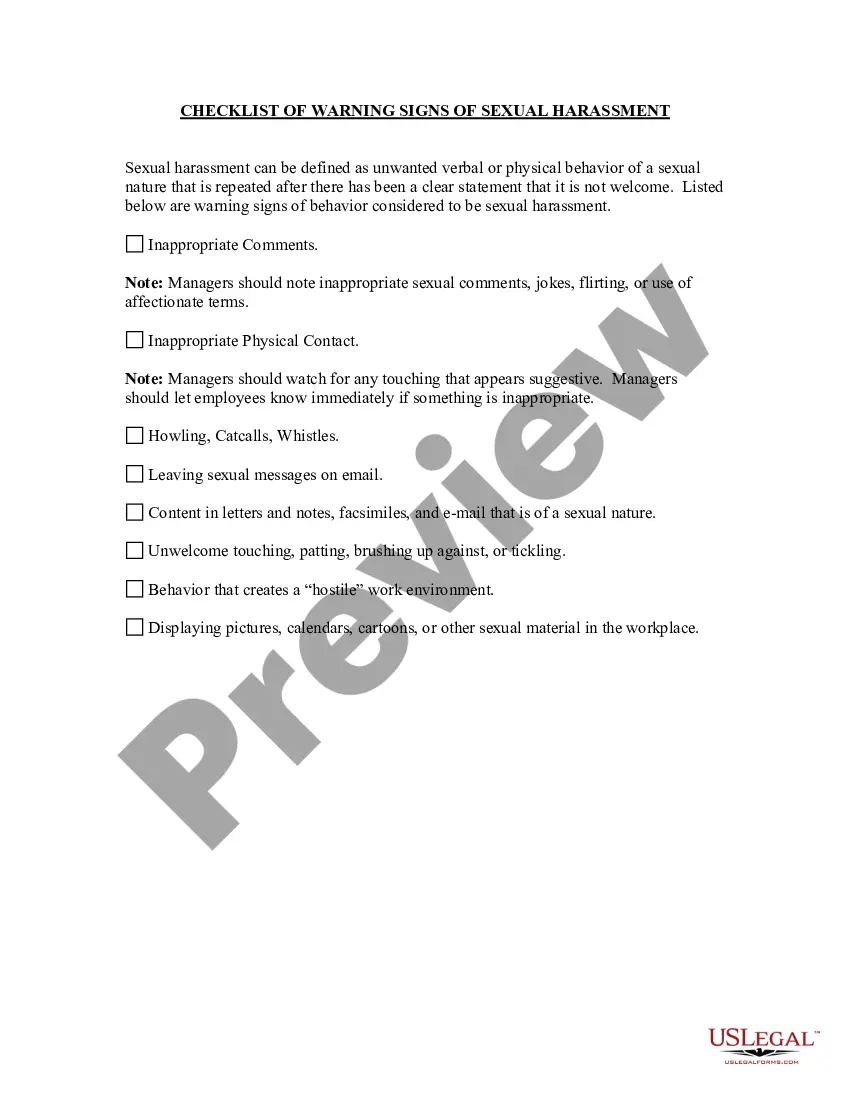
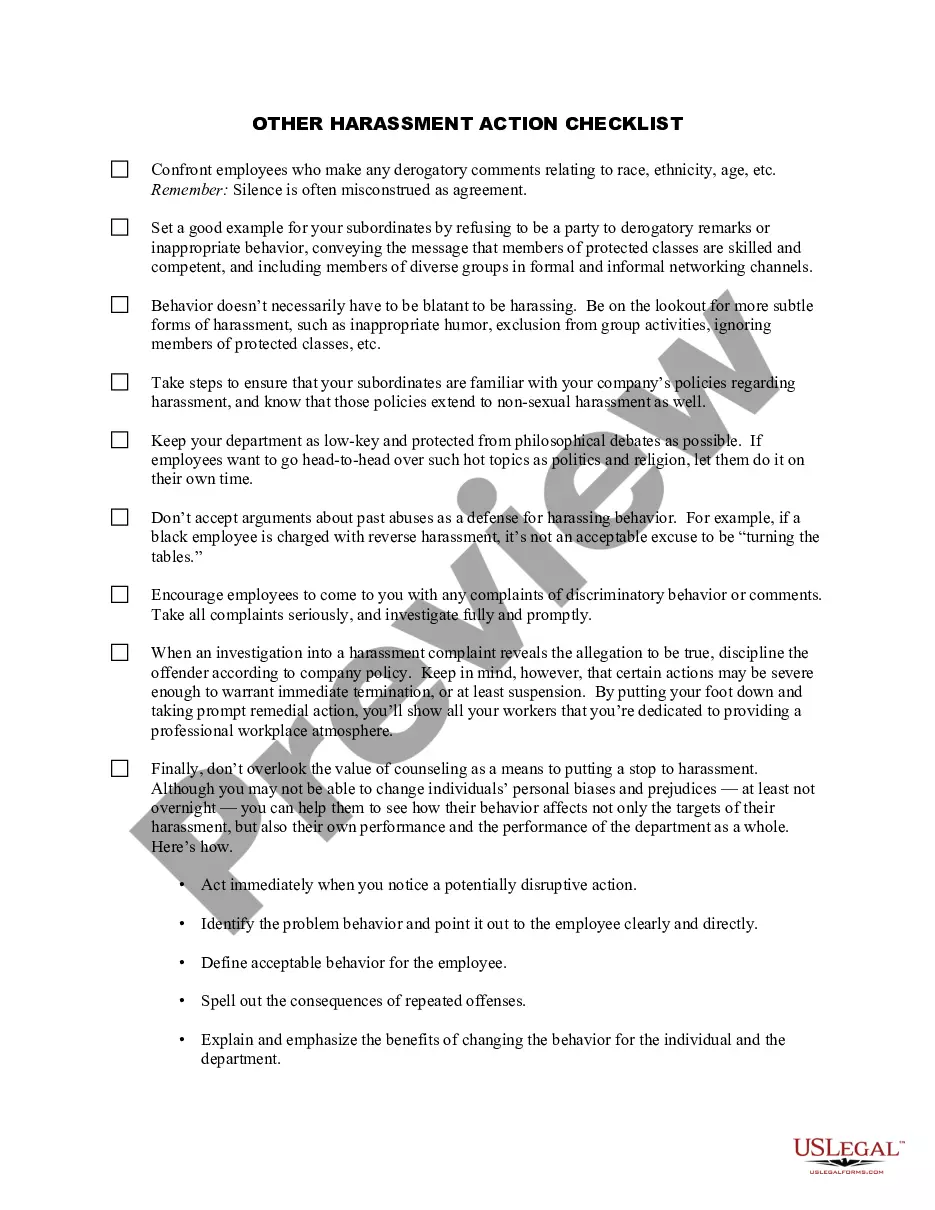
Behaviors considered harassment with intent can include unwanted advances, threats, or calls, visual or verbal conduct that is intimidating, and spreading false rumors. These actions create a hostile environment and can severely impact victims' wellbeing. It's essential to recognize these behaviors to address them effectively.
Writing a harassment statement requires clarity and detail. Begin with a chronological account of the incidents that contribute to the claim, including who was involved and their intent. Be honest about how these incidents made you feel, and be sure to keep your tone factual and respectful.