Harassment With Bodily Fluids
Description
Get your form ready online
Our built-in tools help you complete, sign, share, and store your documents in one place.
Make edits, fill in missing information, and update formatting in US Legal Forms—just like you would in MS Word.
Download a copy, print it, send it by email, or mail it via USPS—whatever works best for your next step.
Sign and collect signatures with our SignNow integration. Send to multiple recipients, set reminders, and more. Go Premium to unlock E-Sign.
If this form requires notarization, complete it online through a secure video call—no need to meet a notary in person or wait for an appointment.
We protect your documents and personal data by following strict security and privacy standards.

Make edits, fill in missing information, and update formatting in US Legal Forms—just like you would in MS Word.

Download a copy, print it, send it by email, or mail it via USPS—whatever works best for your next step.

Sign and collect signatures with our SignNow integration. Send to multiple recipients, set reminders, and more. Go Premium to unlock E-Sign.

If this form requires notarization, complete it online through a secure video call—no need to meet a notary in person or wait for an appointment.

We protect your documents and personal data by following strict security and privacy standards.
Looking for another form?








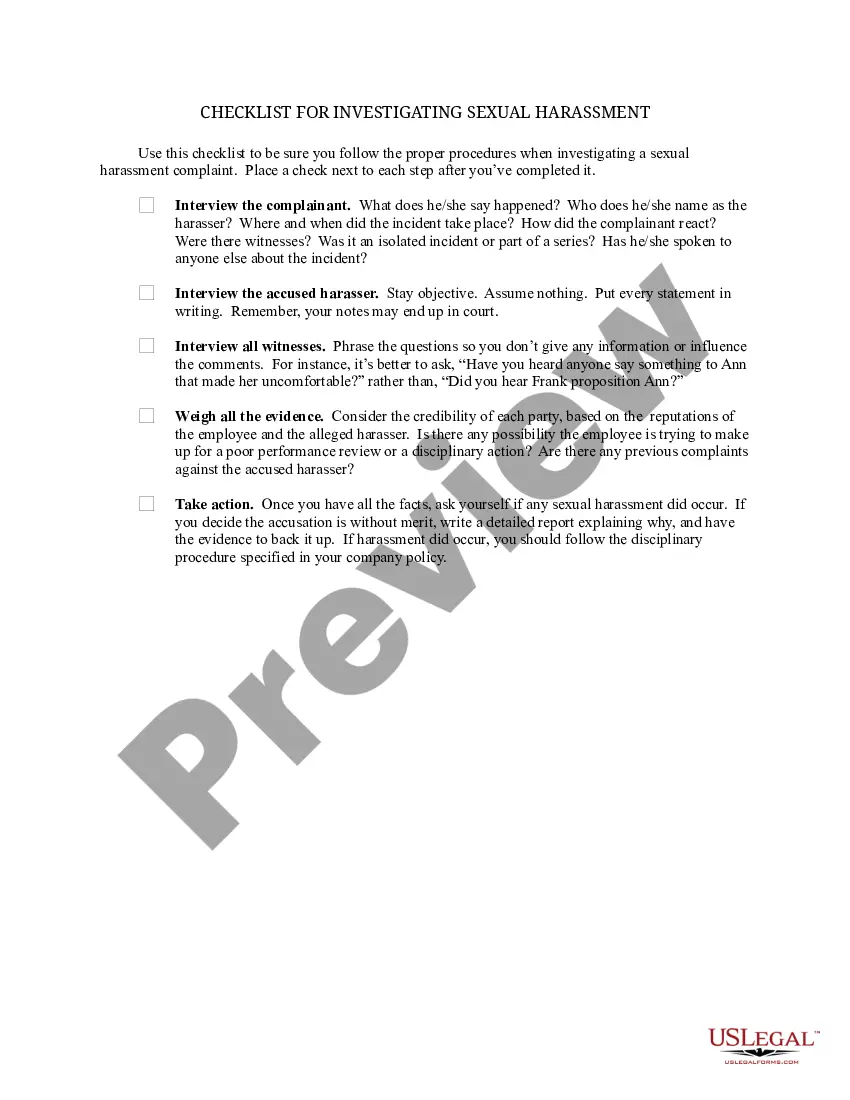
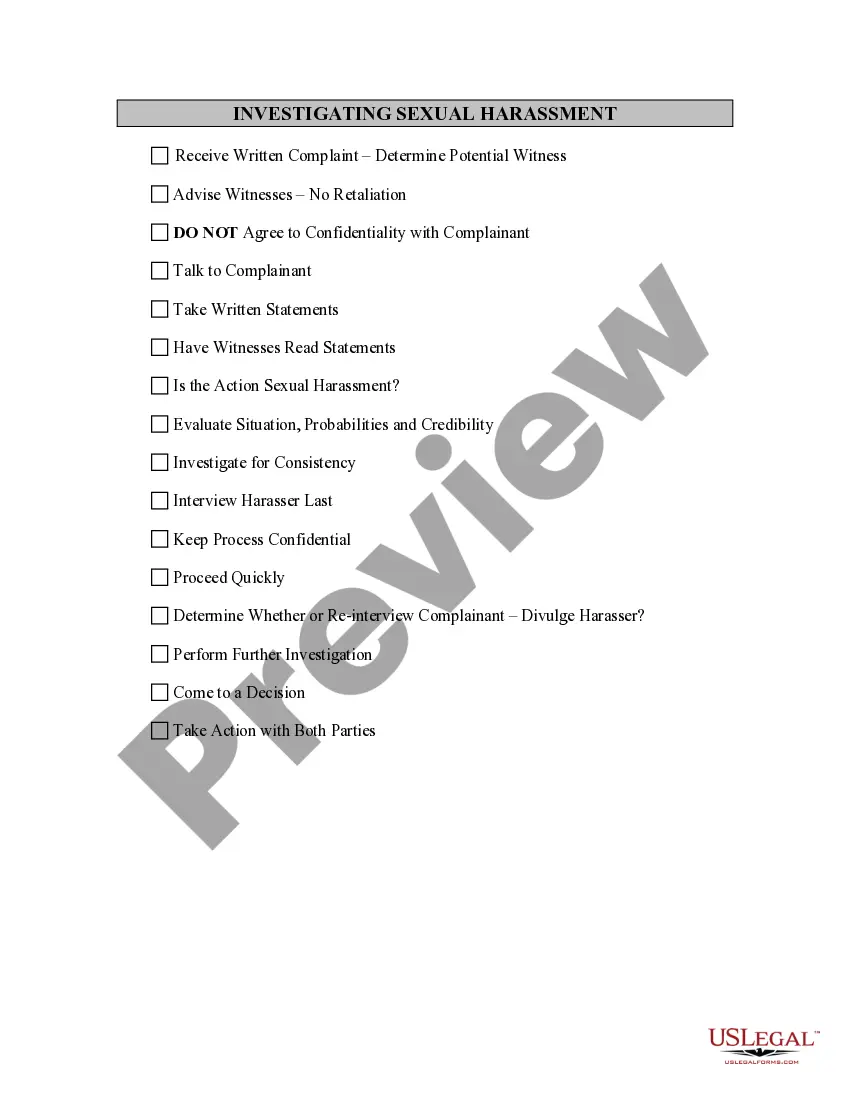
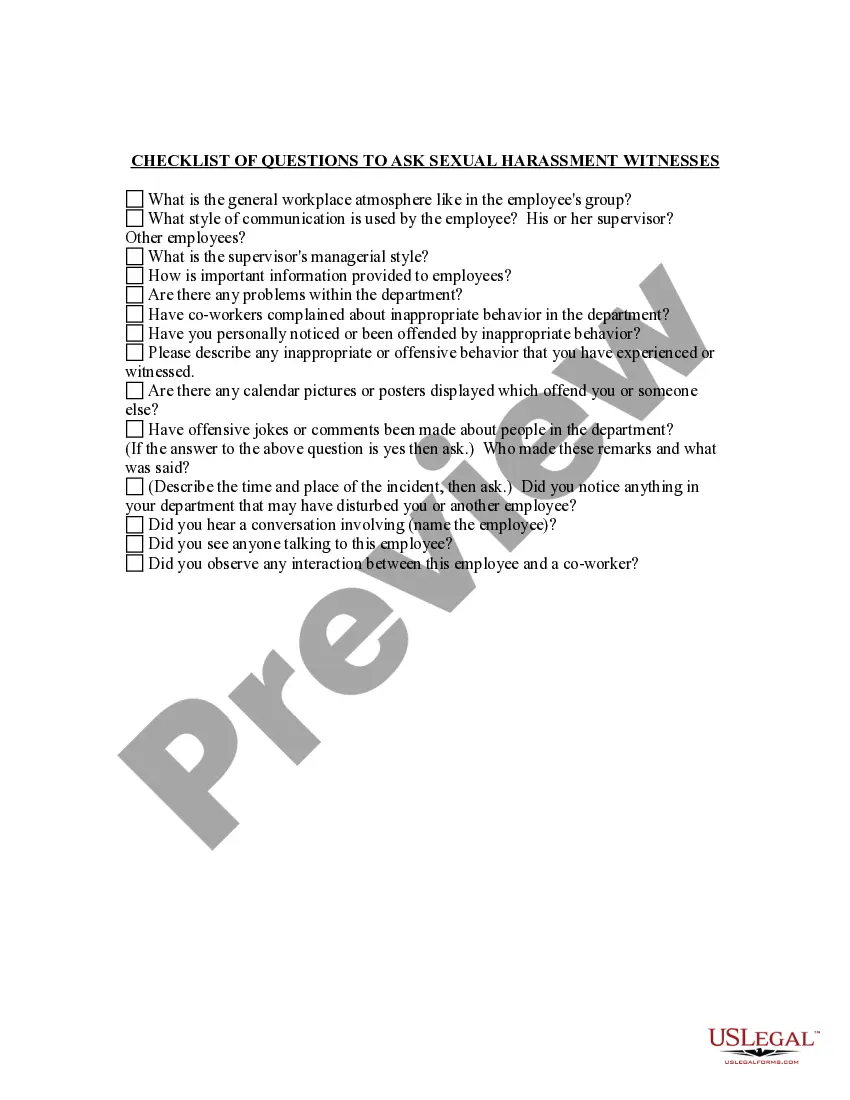
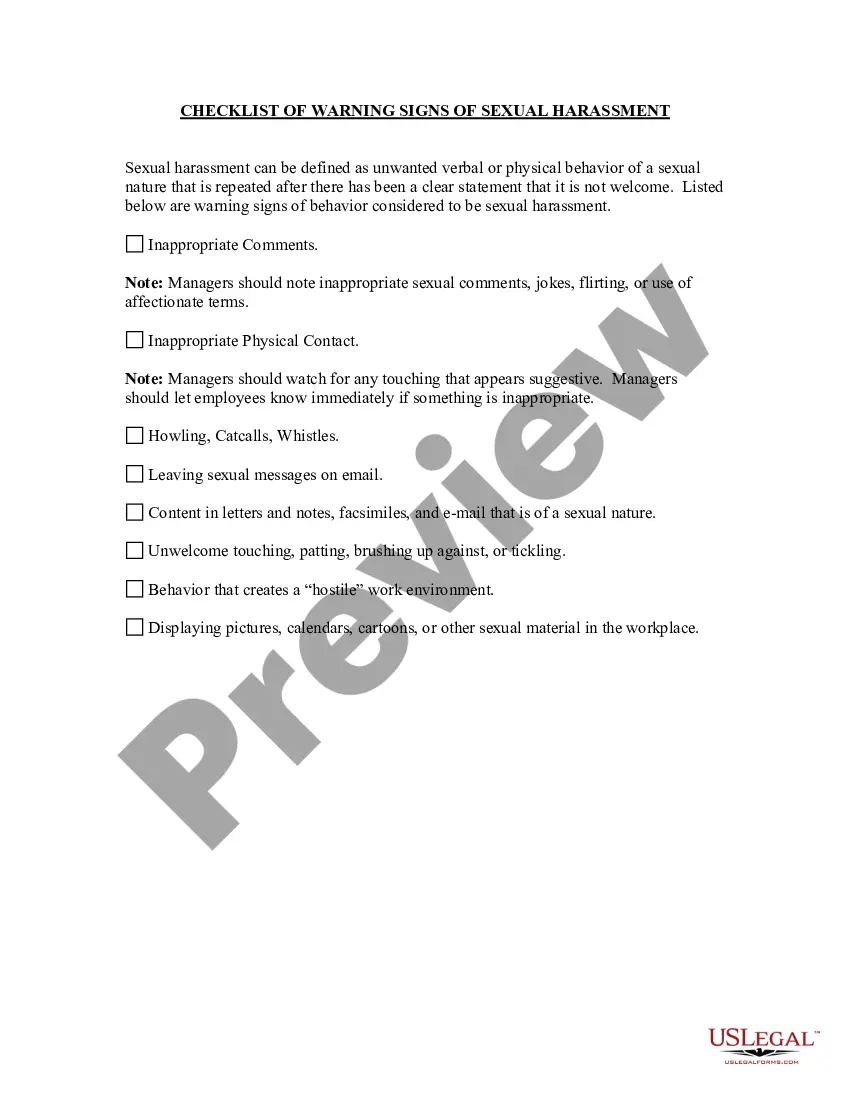
How to fill out Checklist For Investigation Sexual Harassment - Workplace?
- If you're an existing user, log into your account and download your desired form template by clicking the Download button. Ensure your subscription is active; if not, renew it per your payment terms.
- For new users, start by browsing the Preview mode and reviewing the form descriptions. Make sure you select a document that meets your specific requirements and adheres to your local jurisdiction's guidelines.
- Should you find any discrepancies, utilize the Search tab at the top of the page to locate an alternate template that better suits your needs. If you find a suitable option, proceed to the next step.
- Purchase the document by clicking the Buy Now button and selecting your preferred subscription plan. Remember to create an account to gain access to the comprehensive library of resources.
- Complete your payment by entering your credit card information or logging into your PayPal account to finalize the subscription.
- Download the form to your device, allowing you to complete it at your convenience. You can also access it in the My documents section whenever necessary.
US Legal Forms empowers both individuals and attorneys to swiftly generate legal documents through a diverse and user-friendly library filled with over 85,000 editable forms. This extensive collection means you can often find the specific documents you need without searching through countless templates.
In conclusion, obtaining necessary documentation for issues like harassment with bodily fluids is simplified with US Legal Forms. Whether you're a returning user or new to the platform, the process is straightforward and user-friendly. Start protecting your rights today!
Form popularity
FAQ
Assault can fall into different classes of felonies based on the severity and circumstances of the act. In many cases, assault is classified as a 'wobbler,' meaning it can be charged as either a misdemeanor or felony. However, offenses involving harassment with bodily fluids typically lead to felony charges due to their nature and impact on victims. Consulting legal resources like USLegalForms can help clarify these classifications and your options.
The penal code for gassing, which refers to harassment with bodily fluids, falls under California Penal Code Section 243.9. This law addresses actions where one person intentionally throws or otherwise exposes another person to bodily fluids. Offenders may face serious legal consequences, including fines and imprisonment. Understanding these laws is crucial, as a victim may seek justice through legal channels.
Assault with bodily fluids in Pennsylvania refers to the intentional throwing or discharging of bodily fluids at another individual. This act can be classified as a form of harassment with bodily fluids and carries serious legal consequences. Victims of such assaults have rights and legal recourse through the state's laws. If you find yourself facing such a situation, reaching out to a resource like US Legal Forms can assist you in understanding your options and protecting your rights.
In Pennsylvania, the crime code for harassment can be found under Title 18, Section 2709. Harassment includes intentional actions that alarm or annoy another person. It is important to note that harassment with bodily fluids can escalate to more serious charges. Understanding the crime code can help you navigate legal options effectively.
Assault with bodily fluids refers to the act of using bodily fluids to threaten or harm another person. It includes behaviors such as spitting or throwing contaminated fluids, which can increase the emotional and physical impact on the victim. If you are facing a situation involving harassment with bodily fluids, using a comprehensive resource like uslegalforms can provide the legal guidance you need.
Yes, throwing blood on someone qualifies as assault, especially when it occurs within the framework of harassment with bodily fluids. This act is considered intentional and can lead to legal consequences, reflecting the serious nature of the offense. If you experience or witness such behavior, it’s crucial to seek legal advice to understand your options.
In Alabama, assault with bodily fluids occurs when an individual intentionally uses bodily fluids to harm or threaten another person. This type of assault carries serious legal ramifications and can lead to felony charges. If you find yourself in a situation involving harassment with bodily fluids, understanding state laws can help in navigating your legal rights.
Yes, assault with bodily fluids is generally considered a felony in many jurisdictions, including various states. The act can lead to serious legal consequences depending on intent and the circumstances surrounding the action. Understanding the laws in your state is crucial, as penalties can vary significantly.
In Ohio, harassment by inmates often involves aggressive behavior where an inmate uses threats or physical means to intimidate others. When it includes harassment with bodily fluids, it escalates the seriousness of the act, potentially leading to criminal charges. It is essential for facilities to implement measures to prevent such behaviors and protect both inmates and staff.
Bodily fluids refer to any liquid produced by the body, including blood, saliva, urine, and other secretions. In the context of harassment with bodily fluids, it typically involves the intentional or reckless use of these fluids to cause distress. Understanding this term is crucial in identifying the severity of such actions within legal frameworks.