Harassment For Payment
Description
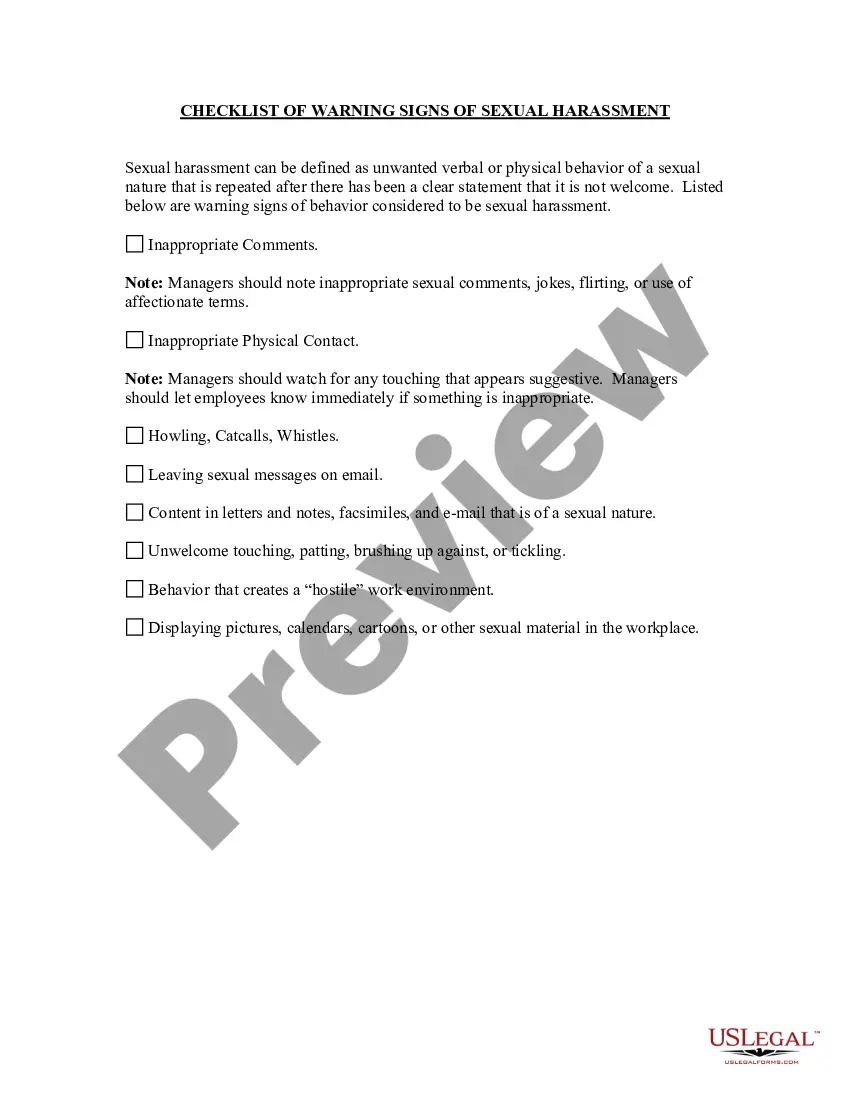
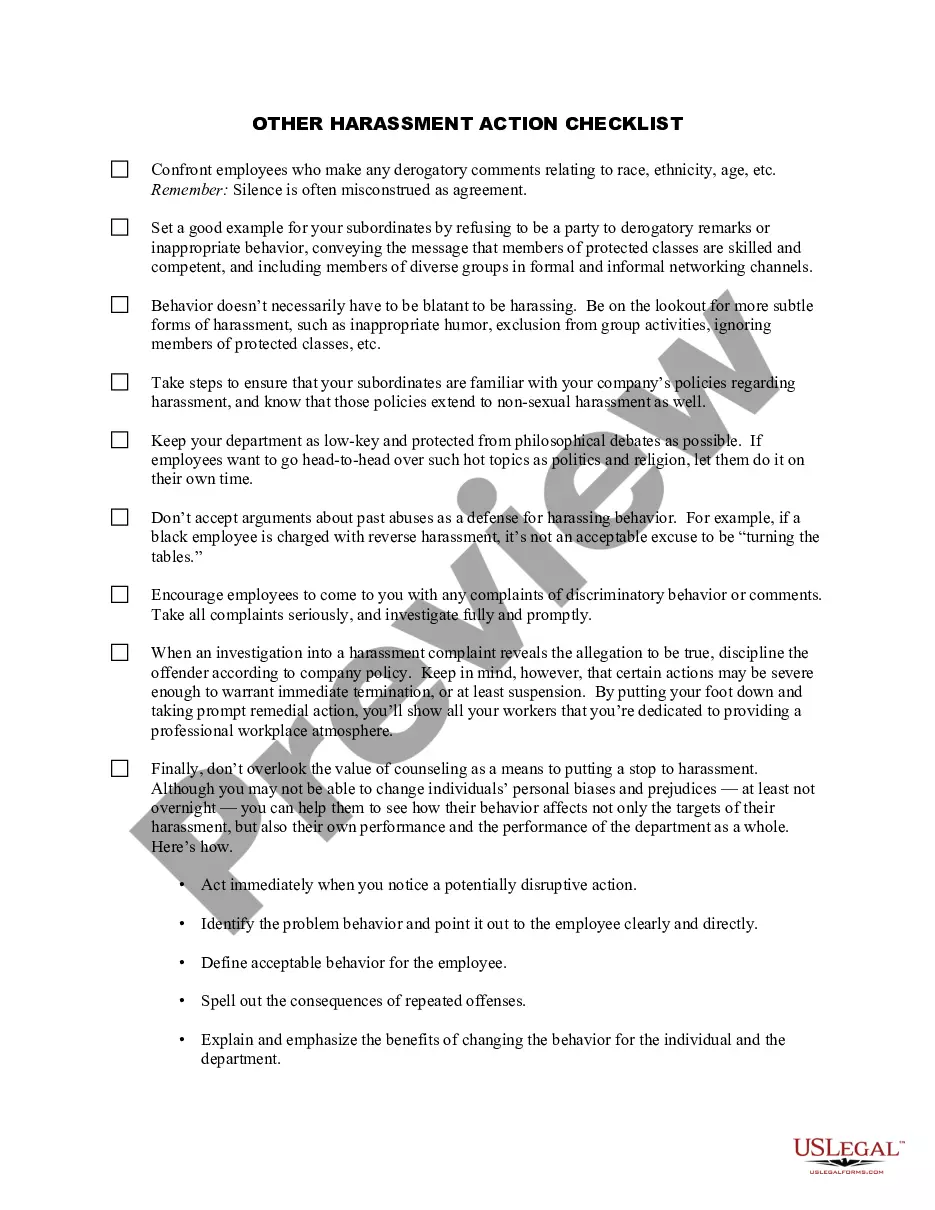
Get your form ready online
Our built-in tools help you complete, sign, share, and store your documents in one place.
Make edits, fill in missing information, and update formatting in US Legal Forms—just like you would in MS Word.
Download a copy, print it, send it by email, or mail it via USPS—whatever works best for your next step.
Sign and collect signatures with our SignNow integration. Send to multiple recipients, set reminders, and more. Go Premium to unlock E-Sign.
If this form requires notarization, complete it online through a secure video call—no need to meet a notary in person or wait for an appointment.
We protect your documents and personal data by following strict security and privacy standards.

Make edits, fill in missing information, and update formatting in US Legal Forms—just like you would in MS Word.

Download a copy, print it, send it by email, or mail it via USPS—whatever works best for your next step.

Sign and collect signatures with our SignNow integration. Send to multiple recipients, set reminders, and more. Go Premium to unlock E-Sign.

If this form requires notarization, complete it online through a secure video call—no need to meet a notary in person or wait for an appointment.

We protect your documents and personal data by following strict security and privacy standards.
Looking for another form?

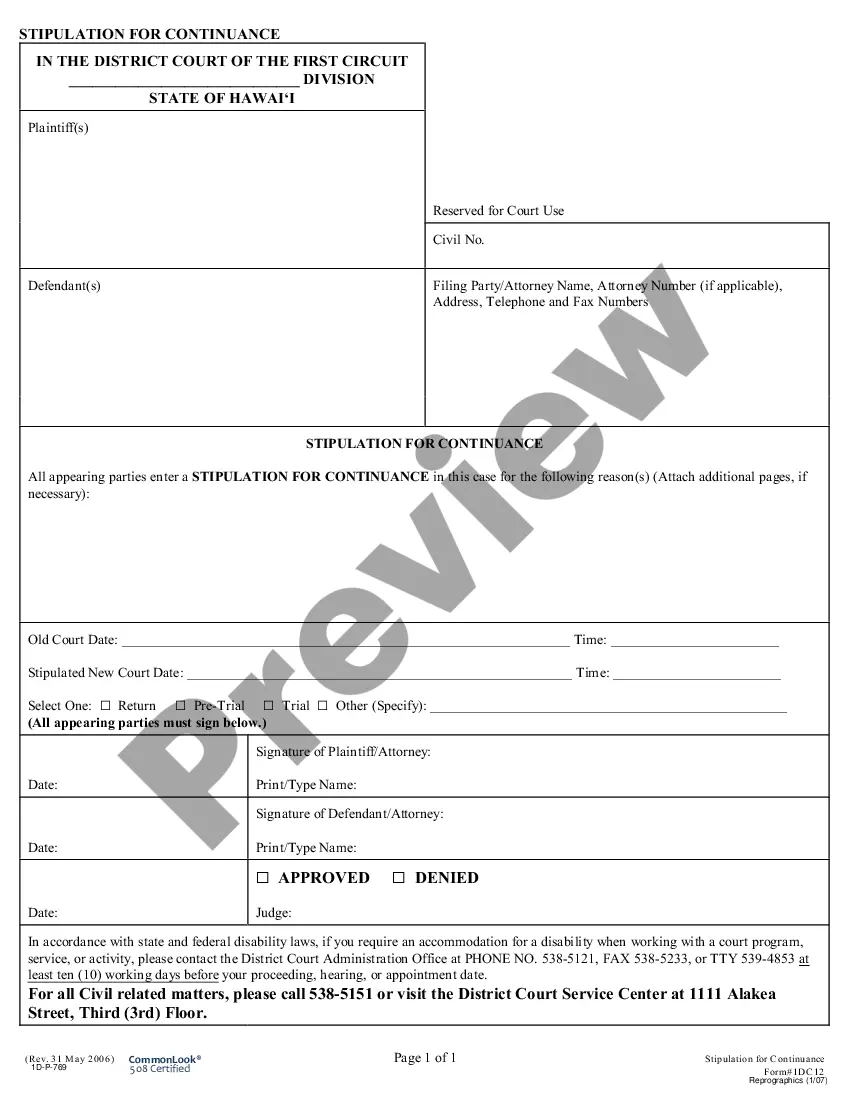




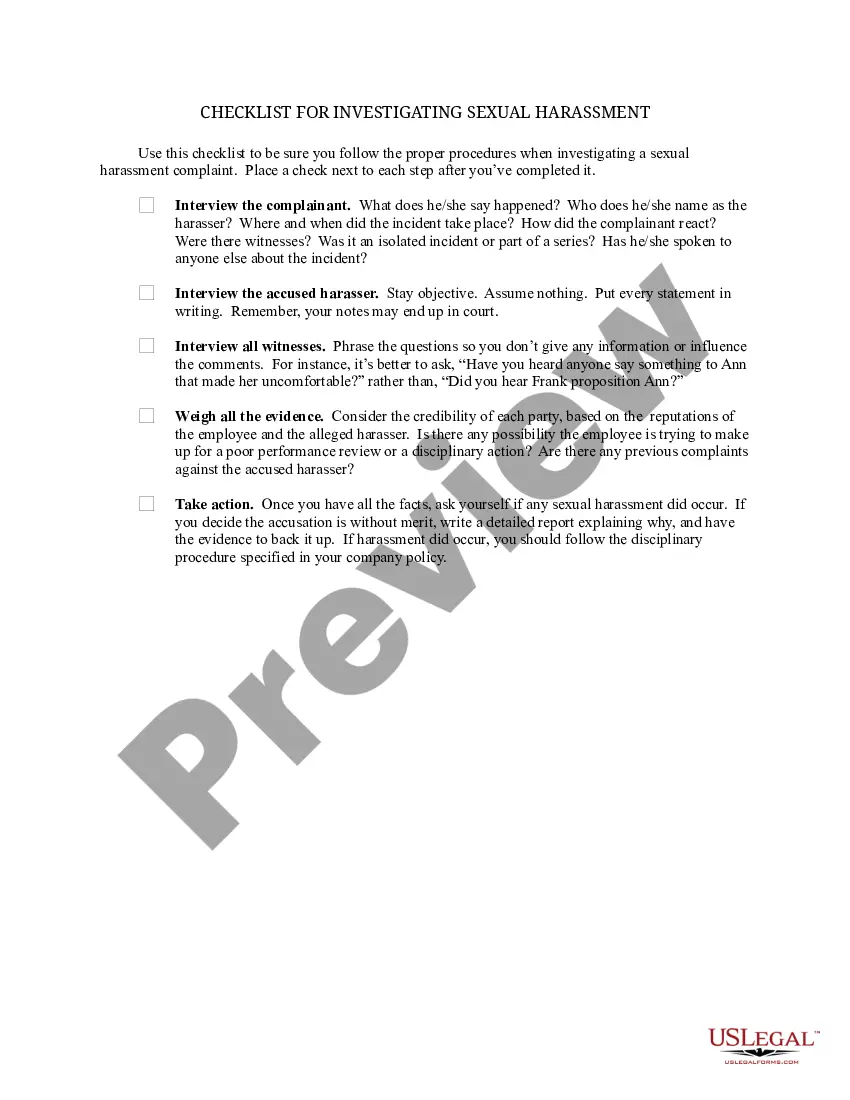
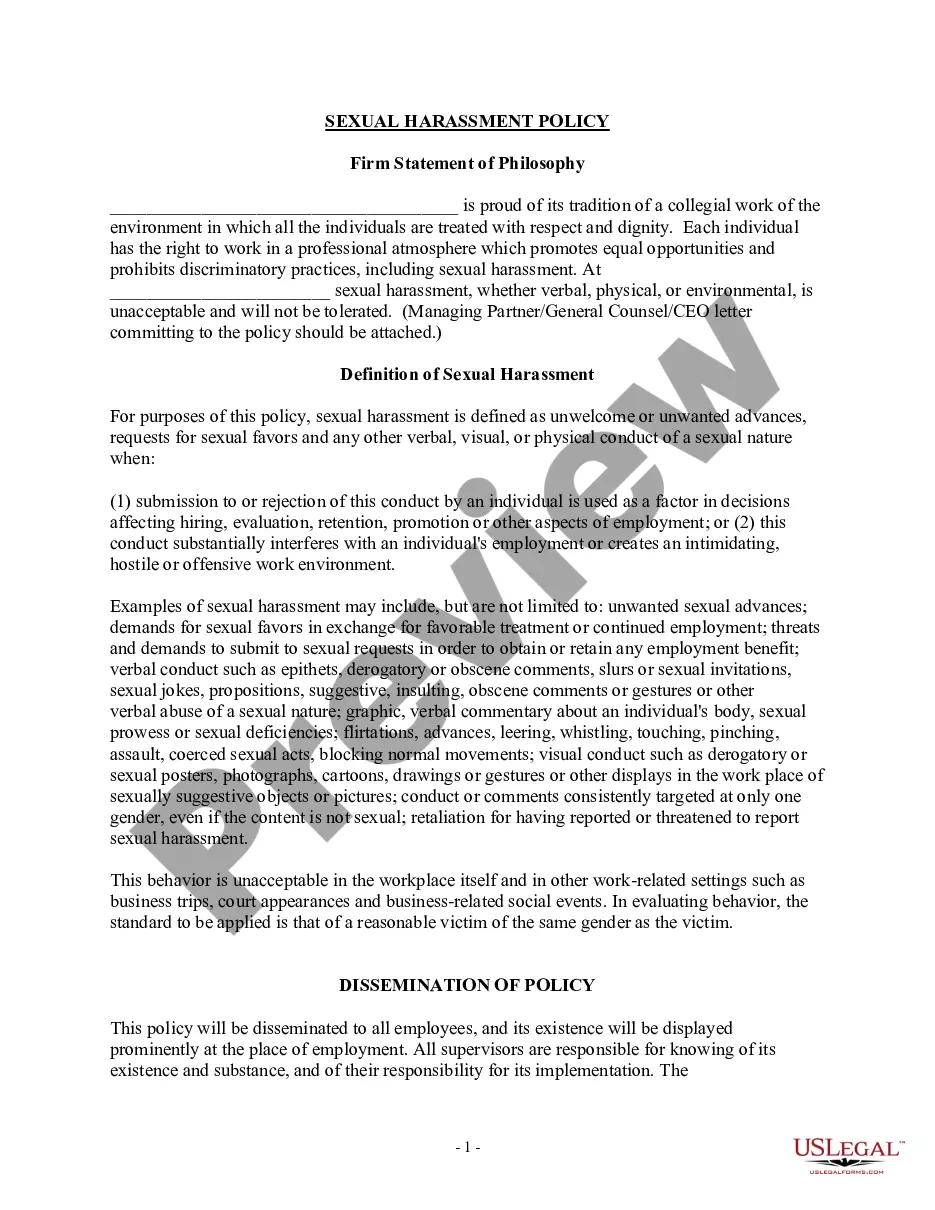
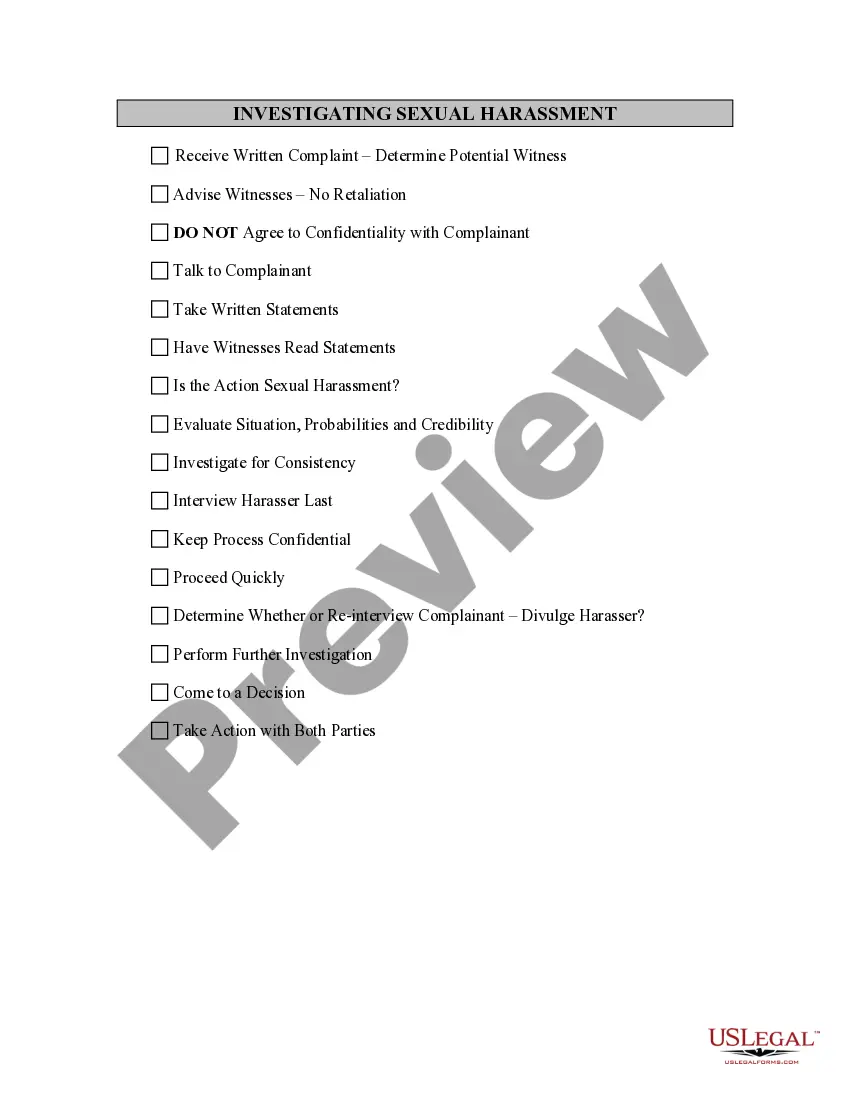
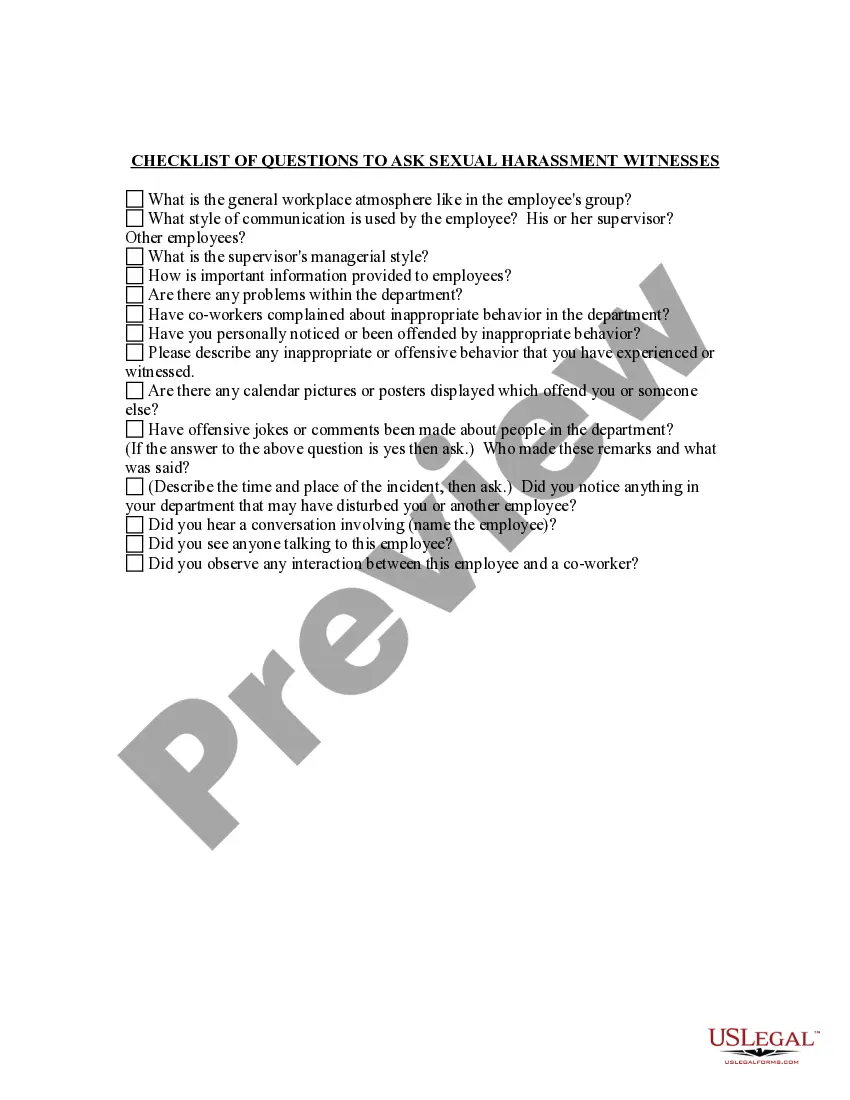
How to fill out Checklist For Investigation Sexual Harassment - Workplace?
- If you're a returning user, log in to your account, ensuring your subscription is active, and download your required form template by clicking the Download button.
- For first-time users, begin by reviewing the form description and Preview mode to ensure it is suitable and compliant with your local jurisdiction.
- If adjustments are needed or another template is preferred, utilize the Search tab to locate the appropriate form.
- Click on the Buy Now button to select your desired subscription plan and create an account for library access.
- Complete your purchase by entering your payment details through credit card or PayPal.
- Once purchased, download the form and save it for easy access under the My documents section in your profile.
Concluding, US Legal Forms democratizes access to legal resources, empowering individuals to take charge of their situations with confidence.
Explore our extensive library today and ensure your legal needs are met effortlessly!
Form popularity
FAQ
Harassment for payment by a debt collector typically includes aggressive practices such as repeated phone calls, threats of legal action, or using abusive language. It can also involve contacting your friends or family about your debt, which is certainly inappropriate. Importantly, any communication that violates the Fair Debt Collection Practices Act is considered harassment. Understanding these definitions helps you recognize your rights, and platforms like US Legal Forms can provide resources to help you address harassment for payment effectively.
Harassment by debt collectors includes actions that may intimidate you or cause you distress. This can involve calling multiple times a day, using abusive language, or contacting your friends or employer about your debt. Understanding your rights helps you identify harassment for payment and take appropriate action. Platforms like US Legal Forms can provide valuable support and guidance in addressing such issues.
Harassment for payment begins when debt collectors use aggressive tactics to collect debts. If they call you excessively, use threats, or contact you at odd hours, it crosses the line into harassment. It's essential to recognize that you have rights under the Fair Debt Collection Practices Act. Protect yourself by documenting any abusive encounters and consider consulting resources like US Legal Forms.
Behaviors qualify as harassment when they are unwanted, repeated, and create a hostile environment, often for payment-related issues. This can include threats, intimidation, or any form of communication that makes the victim feel unsafe or uncomfortable. It's essential to consider the context and the intent behind the actions. Understanding these factors will help you recognize when harassment is occurring.
Reporting harassment for payment can be a pivotal step in seeking justice and preventing future incidents. By taking action, you help establish accountability and may deter the harasser from continuing their behavior. Furthermore, reporting creates an official record that could benefit your case if legal action is needed. Ultimately, your peace of mind and well-being are paramount.
A good harassment case typically involves clear, documented incidents of behavior that qualify as harassment for payment. Consistency in evidence, such as time-stamped communications and witness support, enhances the case's strength. Additionally, showing a direct correlation between the harassment and the damages you incurred will further solidify your position. Comprehensive documentation is key to effectively conveying your experience.
The value of a harassment case can vary significantly based on several factors, such as the severity and frequency of the harassment for payment, financial damages, and emotional distress. Courts may award compensatory damages to cover lost wages, medical costs, and emotional suffering. It's vital to consult with legal professionals to determine the specific worth of your case based on personal circumstances.
A strong harassment case has solid evidence, clear patterns of behavior, and demonstrates the emotional and financial effects on the victim. Victims should gather all relevant documentation, such as emails or texts, and any witness testimonies. Additionally, showing that the harassment for payment interfered with your daily life will reinforce your case. All of this combined can create a compelling argument in your favor.
Writing a harassment statement requires clarity and detail. Start by outlining the events that took place, including dates, times, and the individuals involved. Be sure to describe how the harassment for payment impacted you emotionally and financially. A clear and concise statement will serve as an essential component in any potential legal proceedings.
In a harassment for payment case, the burden of proof typically lies with the victim. You must present evidence that demonstrates the harassment occurred and that it was serious enough to warrant legal action. This can include documents, witness statements, and any recorded communications. Establishing a clear link between the harassment and your damages is crucial.