Harassment For Men
Description
Get your form ready online
Our built-in tools help you complete, sign, share, and store your documents in one place.
Make edits, fill in missing information, and update formatting in US Legal Forms—just like you would in MS Word.
Download a copy, print it, send it by email, or mail it via USPS—whatever works best for your next step.
Sign and collect signatures with our SignNow integration. Send to multiple recipients, set reminders, and more. Go Premium to unlock E-Sign.
If this form requires notarization, complete it online through a secure video call—no need to meet a notary in person or wait for an appointment.
We protect your documents and personal data by following strict security and privacy standards.

Make edits, fill in missing information, and update formatting in US Legal Forms—just like you would in MS Word.

Download a copy, print it, send it by email, or mail it via USPS—whatever works best for your next step.

Sign and collect signatures with our SignNow integration. Send to multiple recipients, set reminders, and more. Go Premium to unlock E-Sign.

If this form requires notarization, complete it online through a secure video call—no need to meet a notary in person or wait for an appointment.

We protect your documents and personal data by following strict security and privacy standards.
Looking for another form?




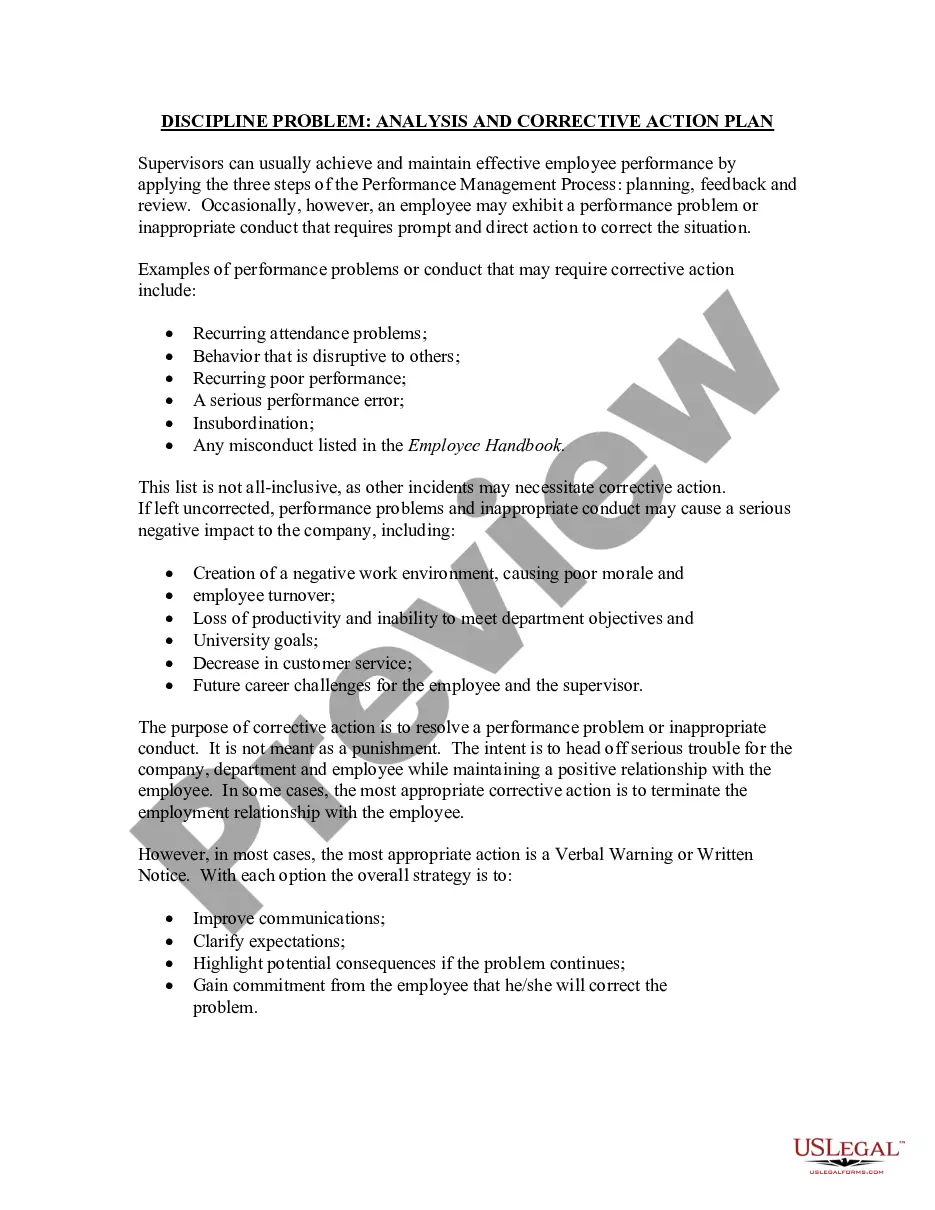


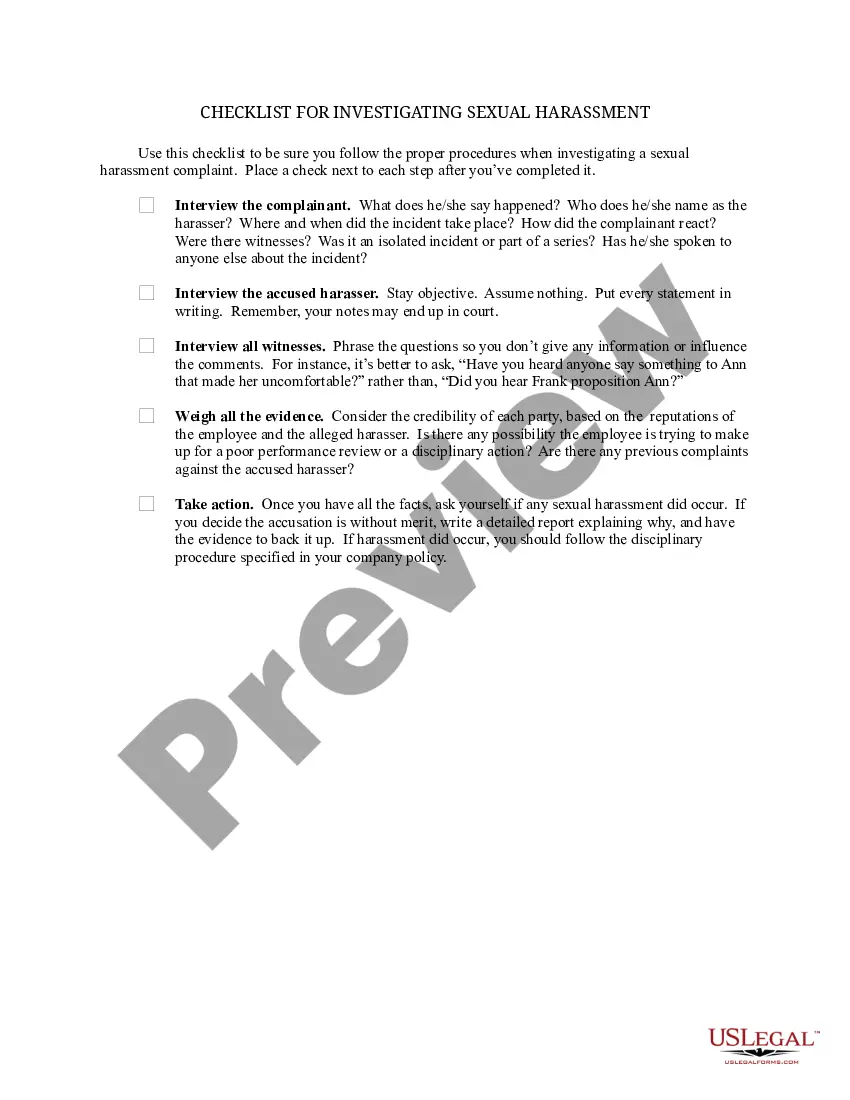
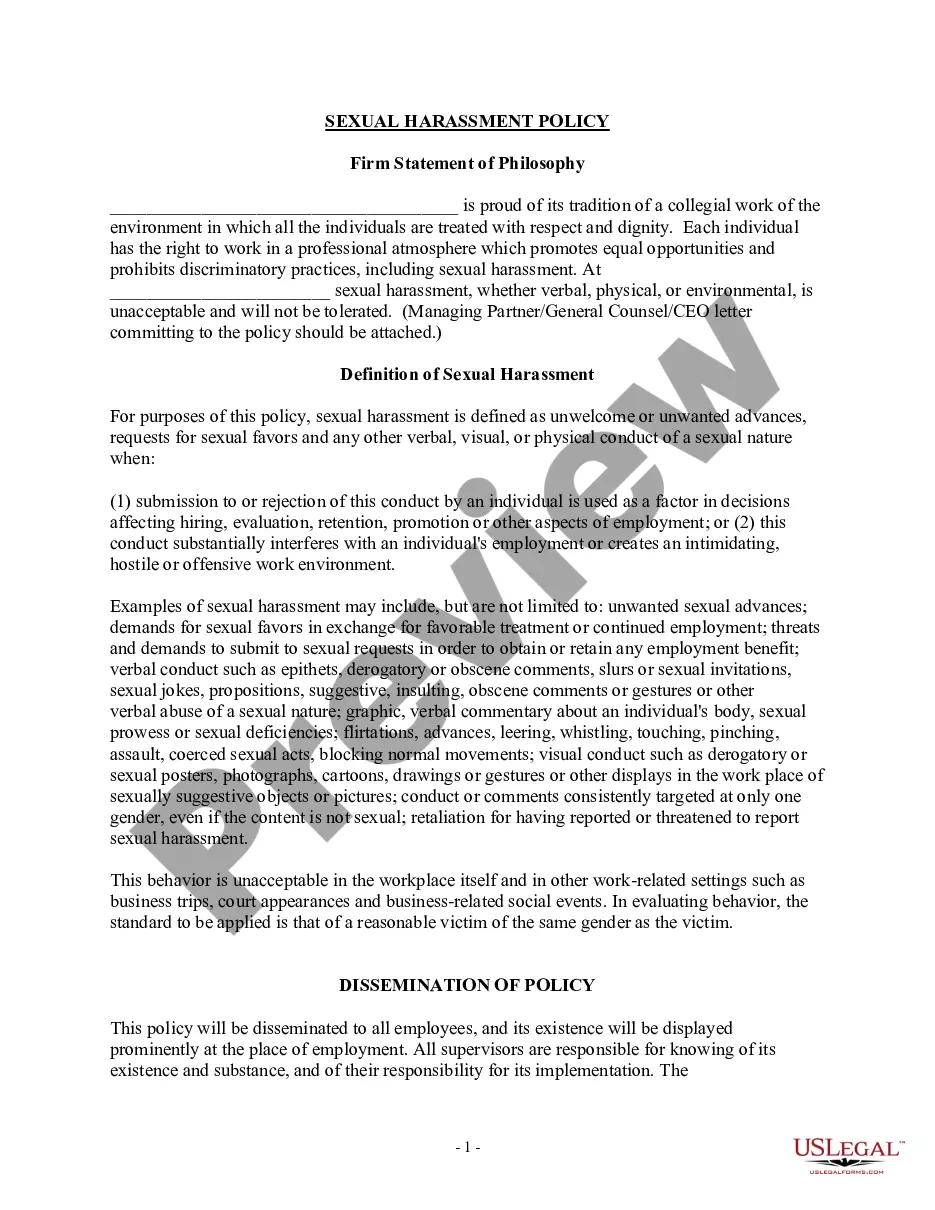
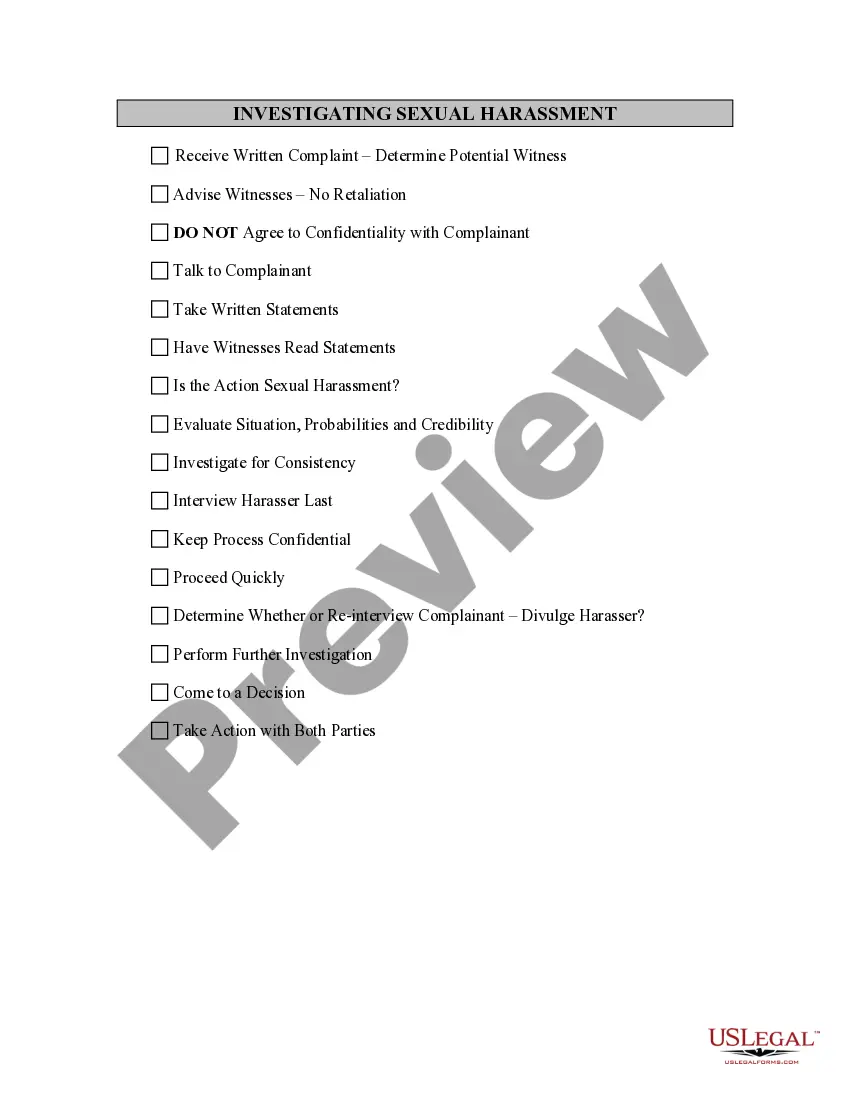
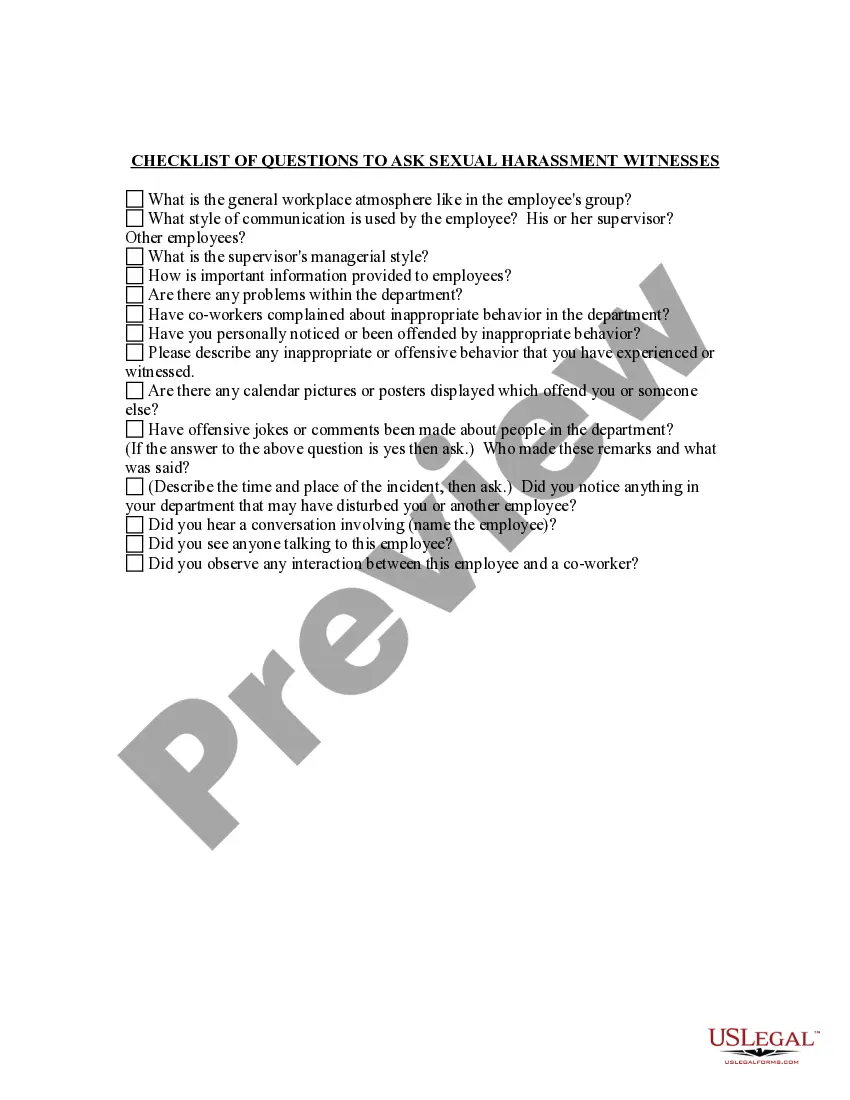
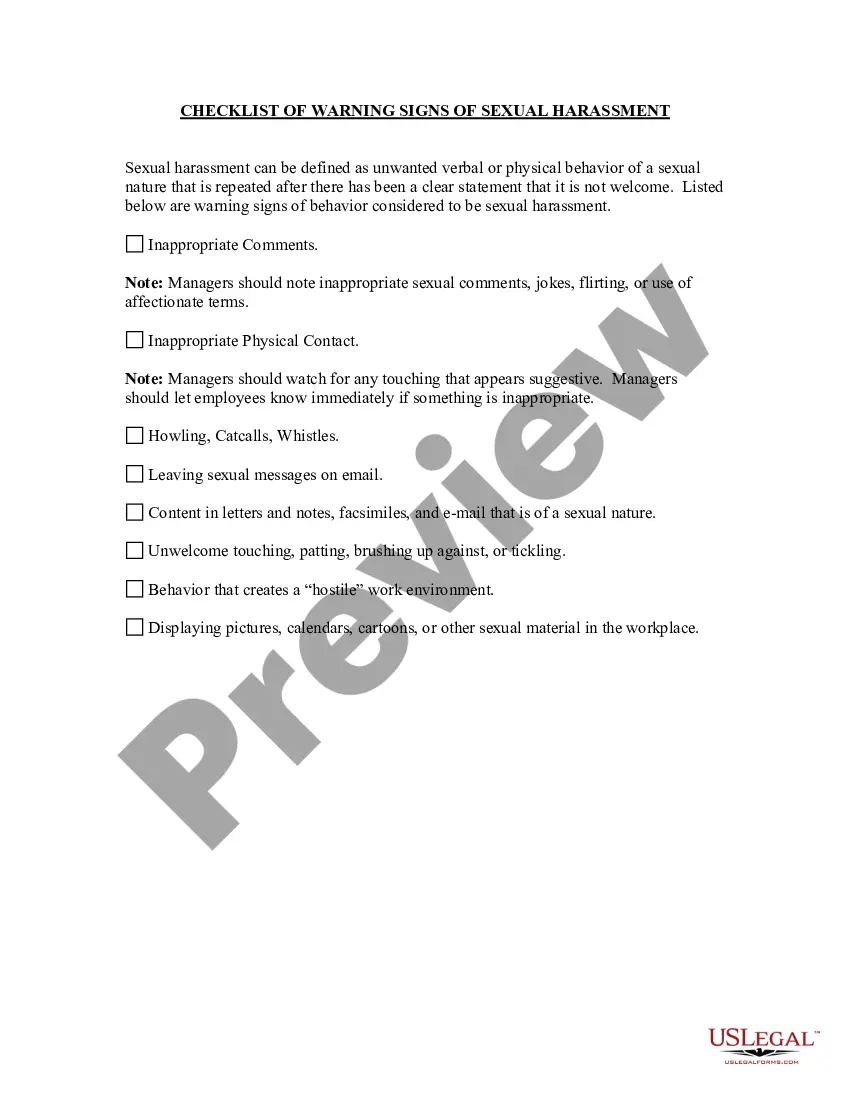
How to fill out Checklist For Investigation Sexual Harassment - Workplace?
- Log in to your account at US Legal Forms if you're a returning user. Ensure your subscription is valid; renew if necessary.
- Review the Preview mode and description of your desired form to ensure it aligns with your legal needs and jurisdiction.
- If you need a different template, utilize the Search function to find the appropriate form that meets your requirements.
- Select the form you wish to purchase by clicking the Buy Now button and choose your preferred subscription plan. Create an account if you’re new.
- Complete your purchase using your credit card or PayPal information to gain access to the document library.
- Download the form to your device and save it for easy access. You can also find it anytime in the My Forms section of your profile.
In conclusion, US Legal Forms simplifies the process of preparing legal documentation for harassment cases involving men by offering an extensive library of resources. Their robust collection and expert assistance ensure that you're equipped with the right tools to address your legal concerns.
Don't hesitate to take control of your legal situation today by visiting US Legal Forms and getting started.
Form popularity
FAQ
If you need to report someone for harassment for men, start by documenting the incidents as clearly as possible. Reach out to your organization's human resources department or designated officer, following their reporting procedures. If you feel uncomfortable doing so internally, consider speaking to a legal professional for advice on your options.
Examples of harassment statements may include declarations such as 'We do not tolerate any form of harassment for men; all reports will be taken seriously and investigated promptly.' Furthermore, companies might outline specific behaviors considered unacceptable, ensuring transparency in their policies. This helps in establishing a culture of safety.
To write a harassment statement, start with a clear declaration of your organization's stance against harassment for men. Include details on how such behavior undermines respect and dignity in the workplace. Make sure to outline the reporting process and the consequences for violating the policy.
A harassment policy statement should clearly define what constitutes harassment for men in the workplace. It typically includes a commitment to a safe environment, procedures for reporting incidents, and assurance of non-retaliation for those who report. This statement serves as a foundational document for organizations to promote respect and equality.
When you write about harassment for men, focus on clear, impactful language. Start by defining harassment, providing relevant examples, and discussing its implications on mental health. Be sure to highlight the importance of addressing this issue openly to encourage dialogue and support.
If you experience harassment from men, it’s important to take decisive action. Start by documenting the incidents, noting dates and specifics of what occurred, as this documentation can be crucial later. Speak to someone you trust or reach out to a professional who can help you navigate the situation. Additionally, consider using platforms like USLegalForms, which provide resources and templates for filing complaints, ensuring that your rights are protected.
Yes, men can indeed sexually harass other men. This type of harassment can occur in various forms, including unwanted advances, suggestive comments, or even inappropriate touching. It's vital to realize that harassment for men is a serious issue, regardless of the gender of the perpetrator or victim. Everyone deserves to feel safe and respected in all environments, and harassment must be addressed promptly.
Harassment from a guy involves unwanted behaviors that are offensive, derogatory, or intimidating, directed towards another person. It can manifest through taunts, inappropriate comments, or even physical advances. Unfortunately, harassment for men often goes unreported, making it essential to discuss openly and encourage supportive environments for those affected. Recognizing harassment is the first step toward resolution.
There are three primary types of harassment: verbal, physical, and emotional. Verbal harassment includes comments or threats that demean or intimidate, while physical harassment involves unwanted contact or aggression. Emotional harassment can be more subtle, such as manipulation or controlling behavior. Understanding these types is crucial in recognizing harassment for men and knowing when to take action.
Harassment is determined by assessing the impact of the behavior relative to the context and frequency of occurrences. Authorities typically look for patterns that demonstrate how the actions have created an intimidating or hostile environment. Understanding what constitutes harassment for men is important for both victims and bystanders. Using platforms like US Legal Forms can provide clarity on legal criteria and paths to resolution.