Questions To Ask Your Future Employer In An Interview
Description
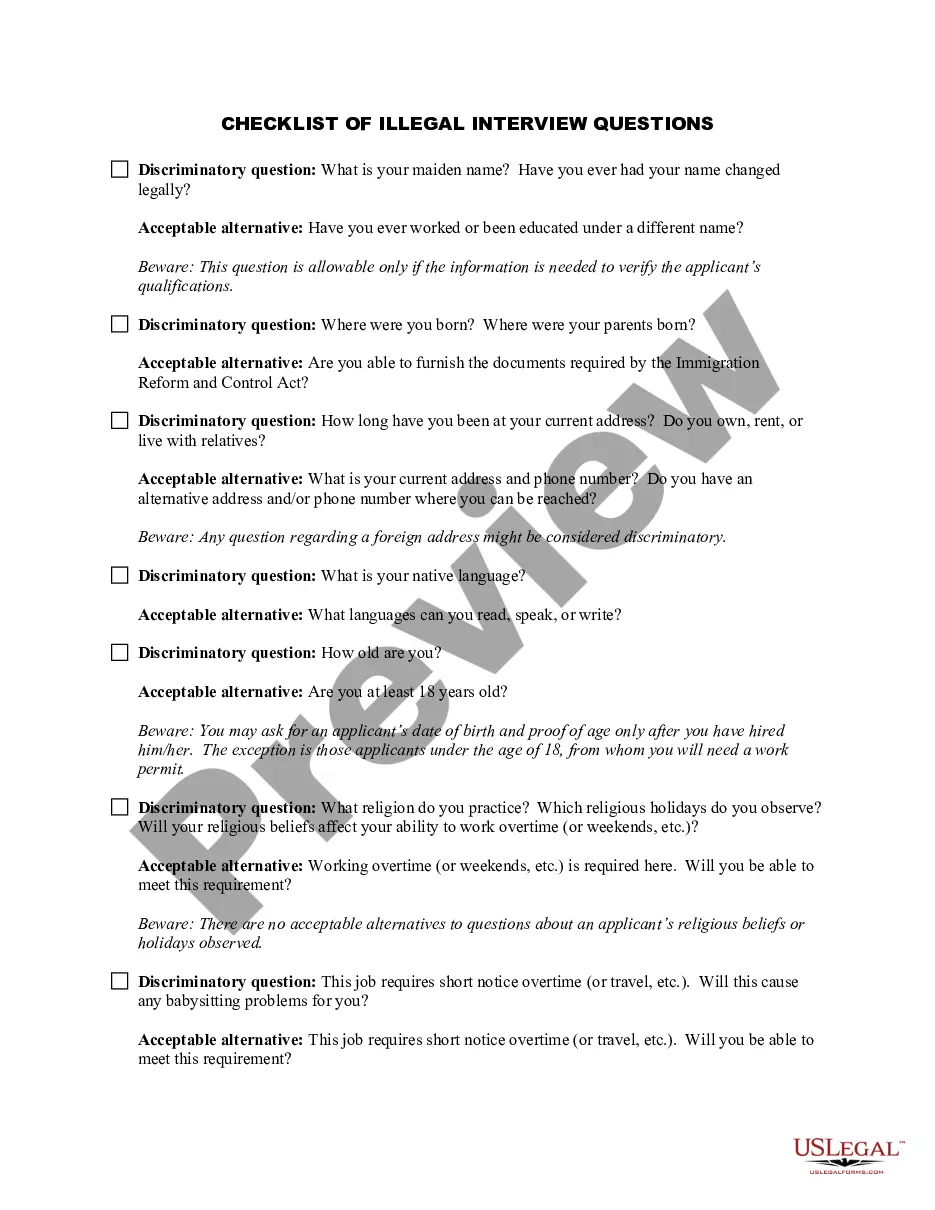
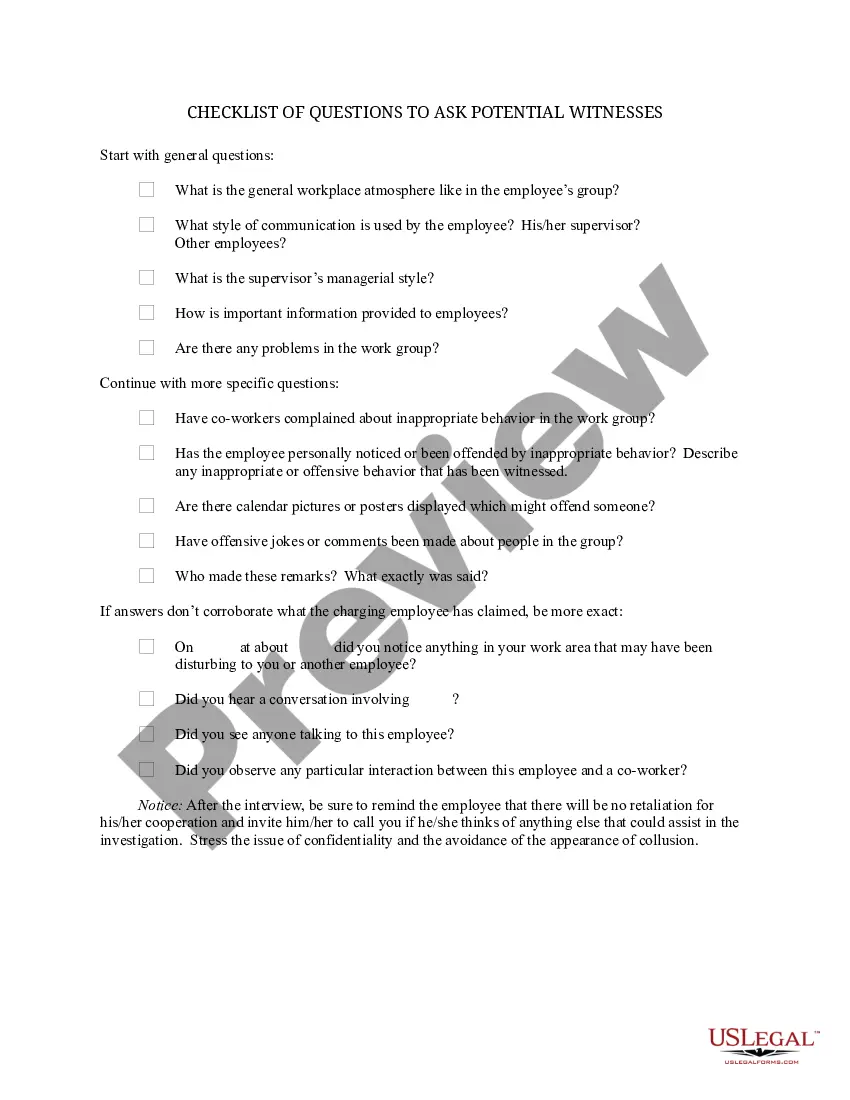
Get your form ready online
Our built-in tools help you complete, sign, share, and store your documents in one place.
Make edits, fill in missing information, and update formatting in US Legal Forms—just like you would in MS Word.
Download a copy, print it, send it by email, or mail it via USPS—whatever works best for your next step.
Sign and collect signatures with our SignNow integration. Send to multiple recipients, set reminders, and more. Go Premium to unlock E-Sign.
If this form requires notarization, complete it online through a secure video call—no need to meet a notary in person or wait for an appointment.
We protect your documents and personal data by following strict security and privacy standards.

Make edits, fill in missing information, and update formatting in US Legal Forms—just like you would in MS Word.

Download a copy, print it, send it by email, or mail it via USPS—whatever works best for your next step.

Sign and collect signatures with our SignNow integration. Send to multiple recipients, set reminders, and more. Go Premium to unlock E-Sign.

If this form requires notarization, complete it online through a secure video call—no need to meet a notary in person or wait for an appointment.

We protect your documents and personal data by following strict security and privacy standards.
Looking for another form?

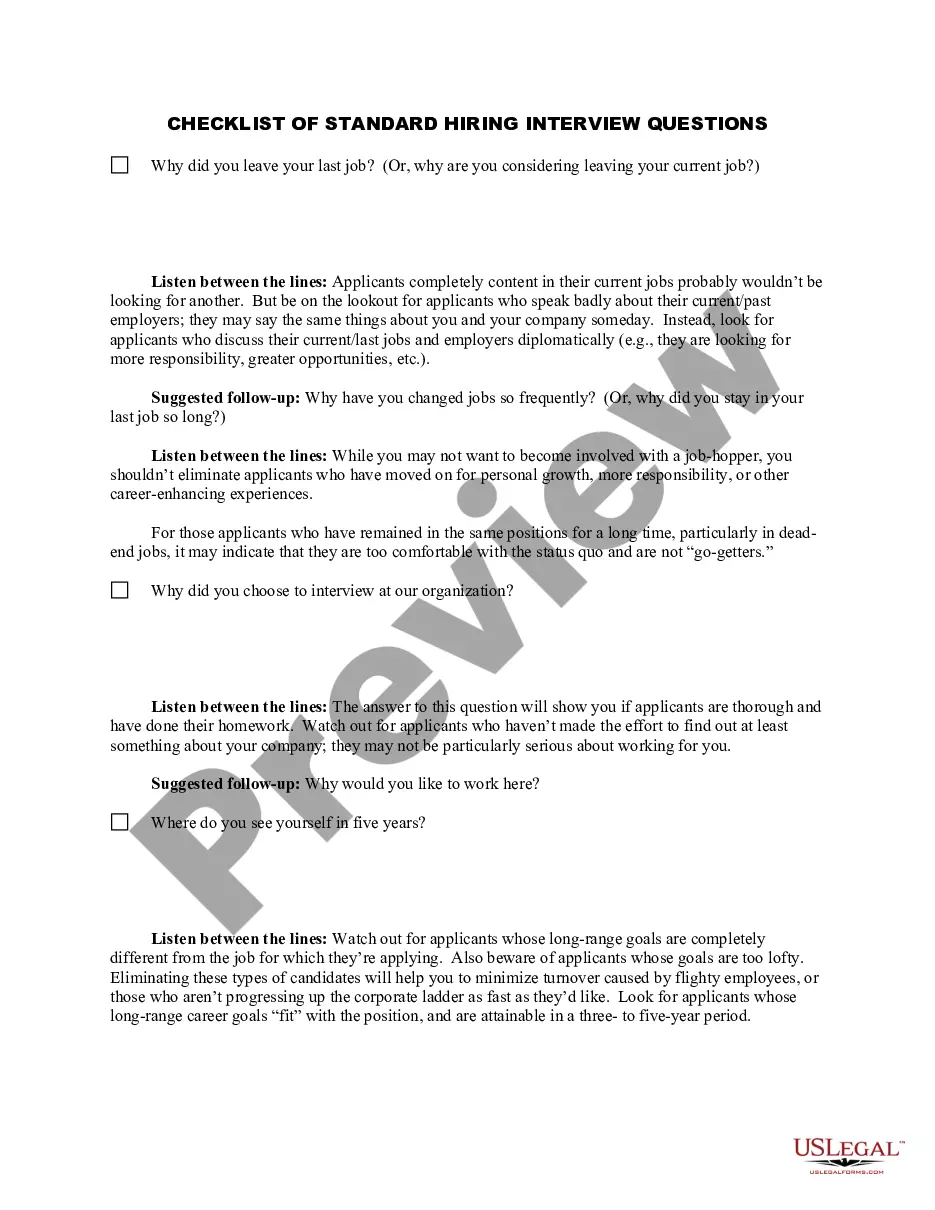
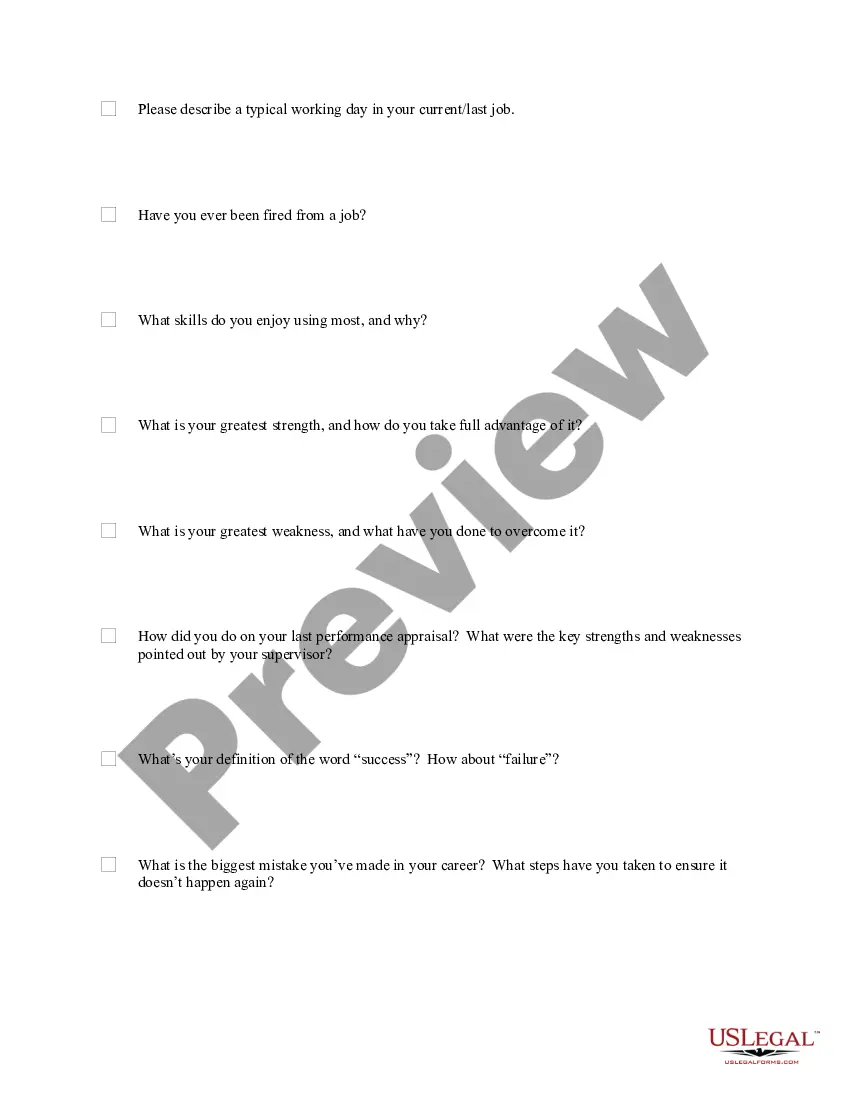
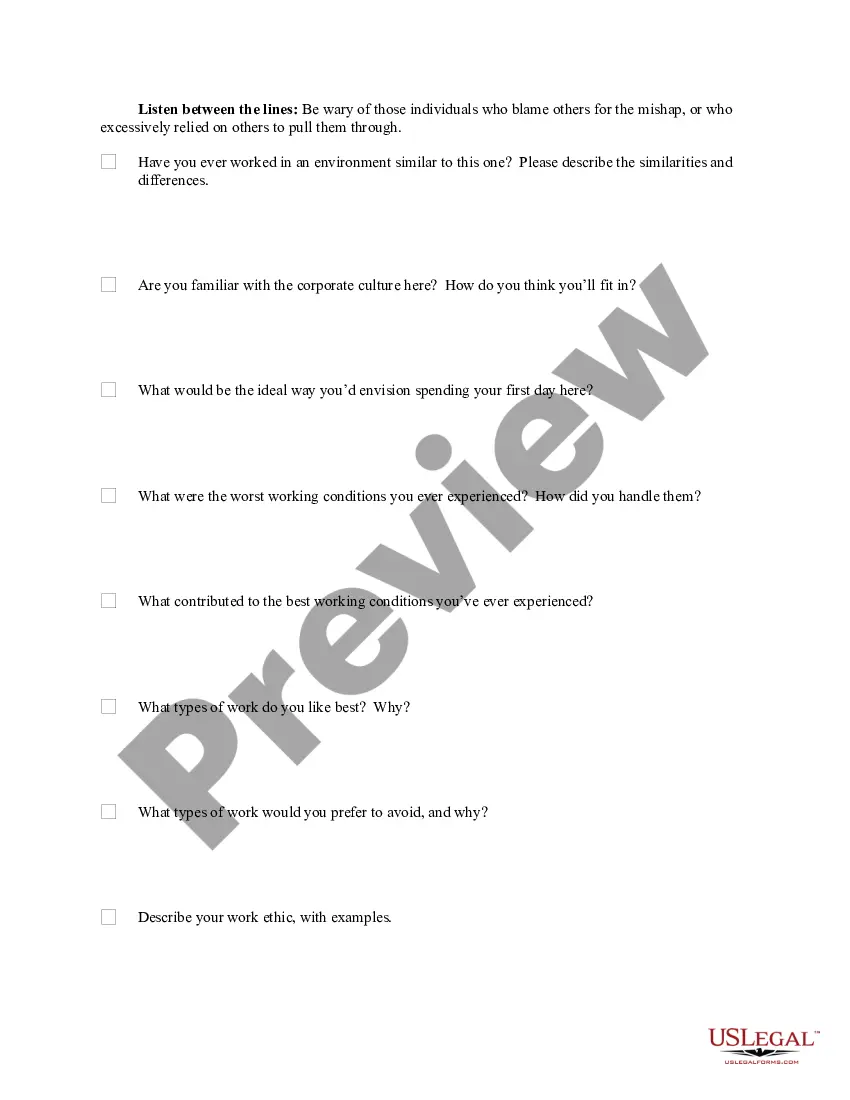
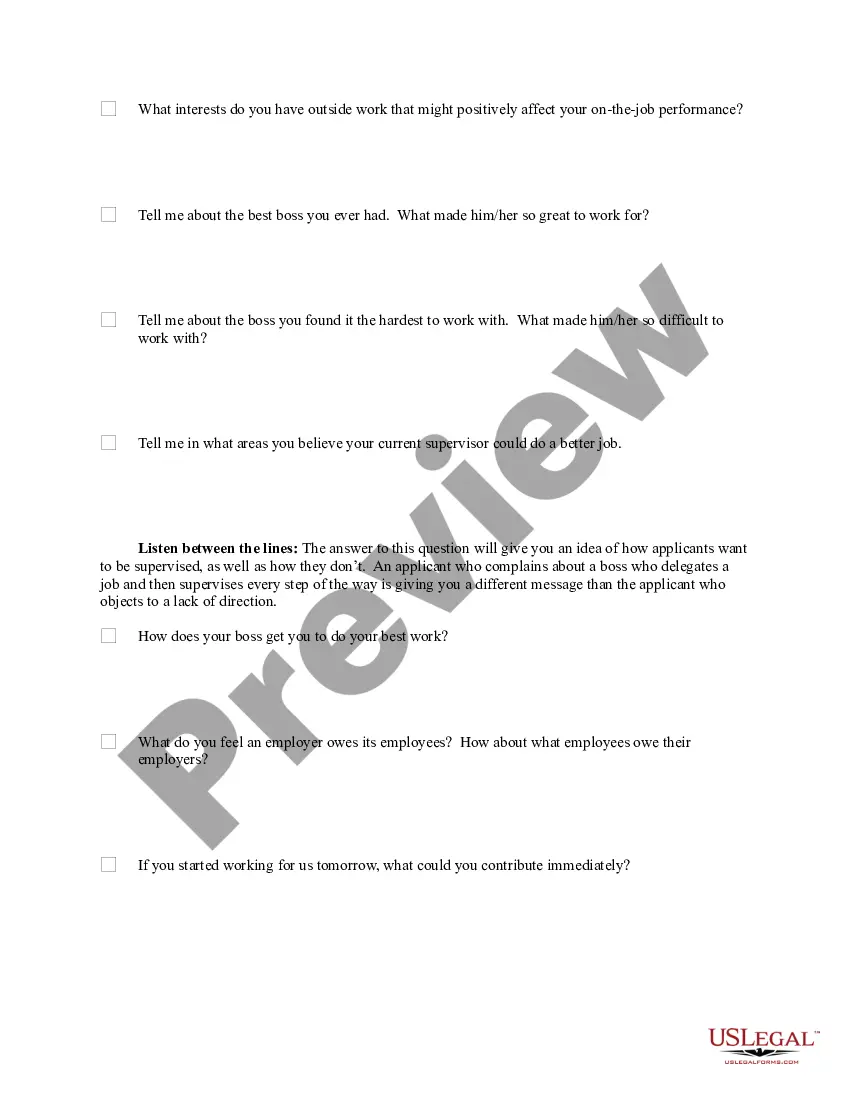
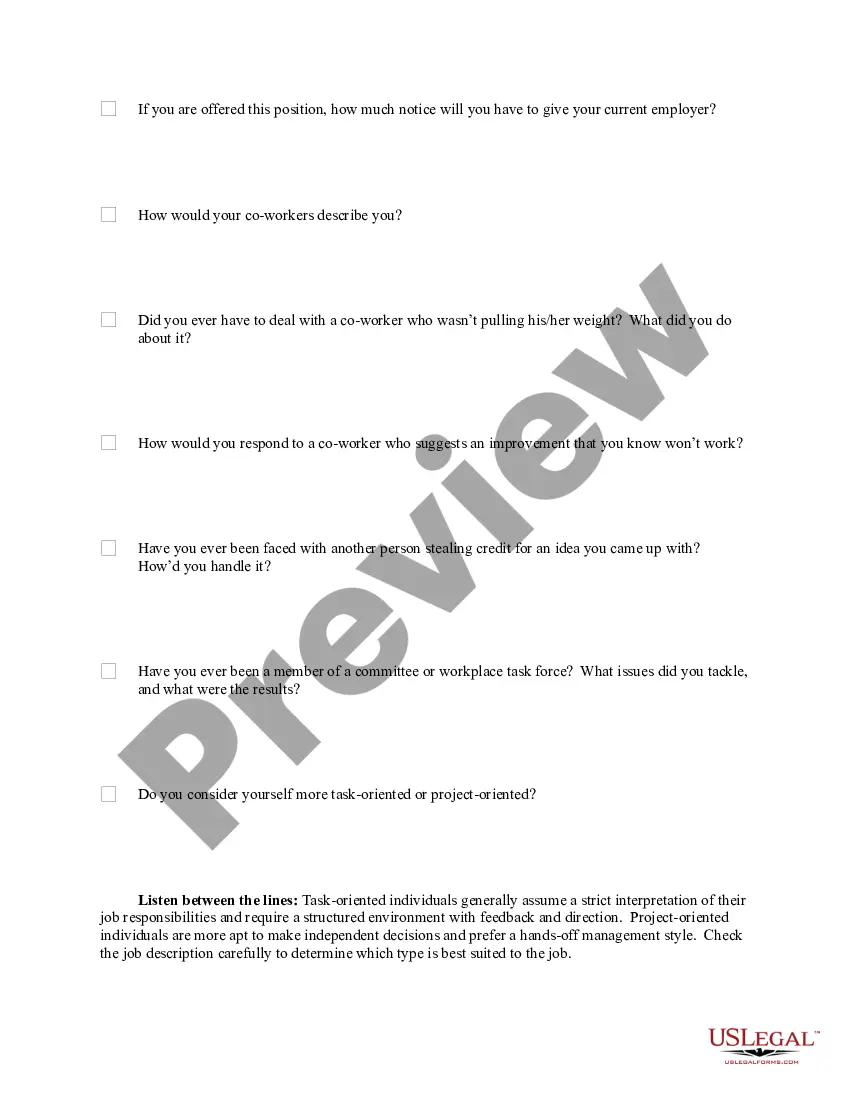
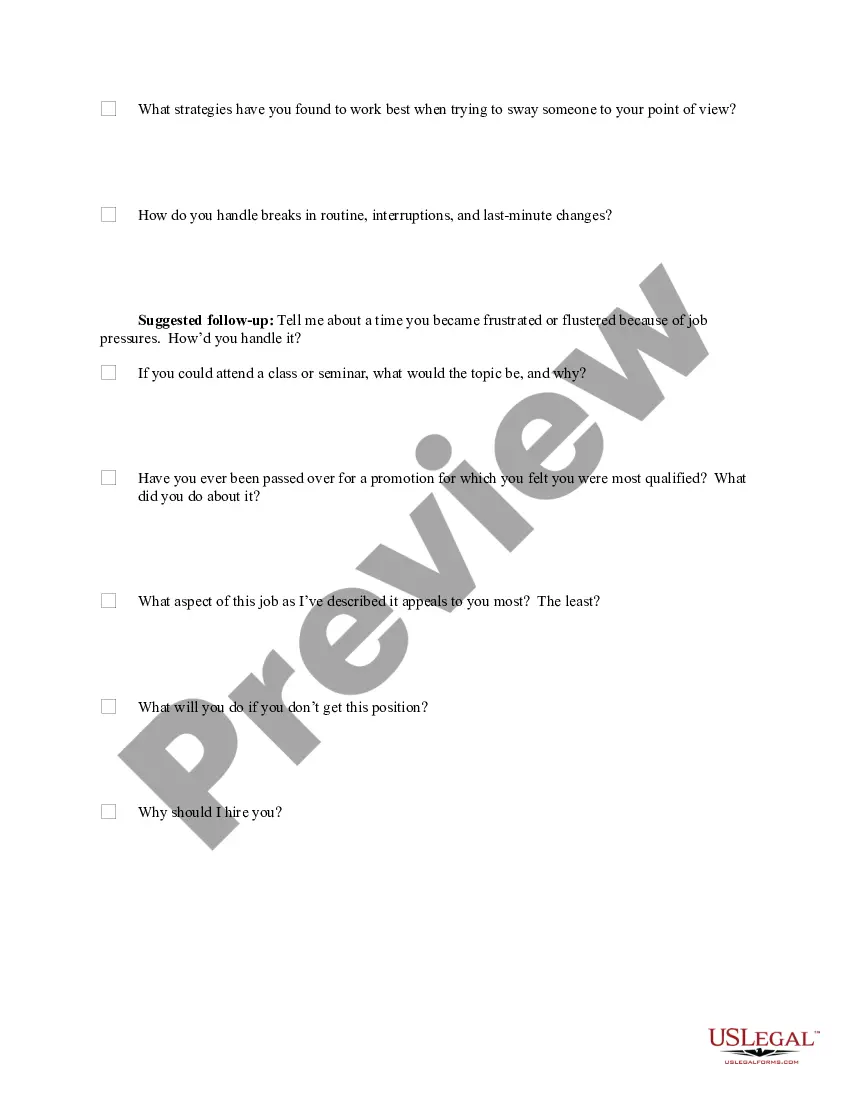
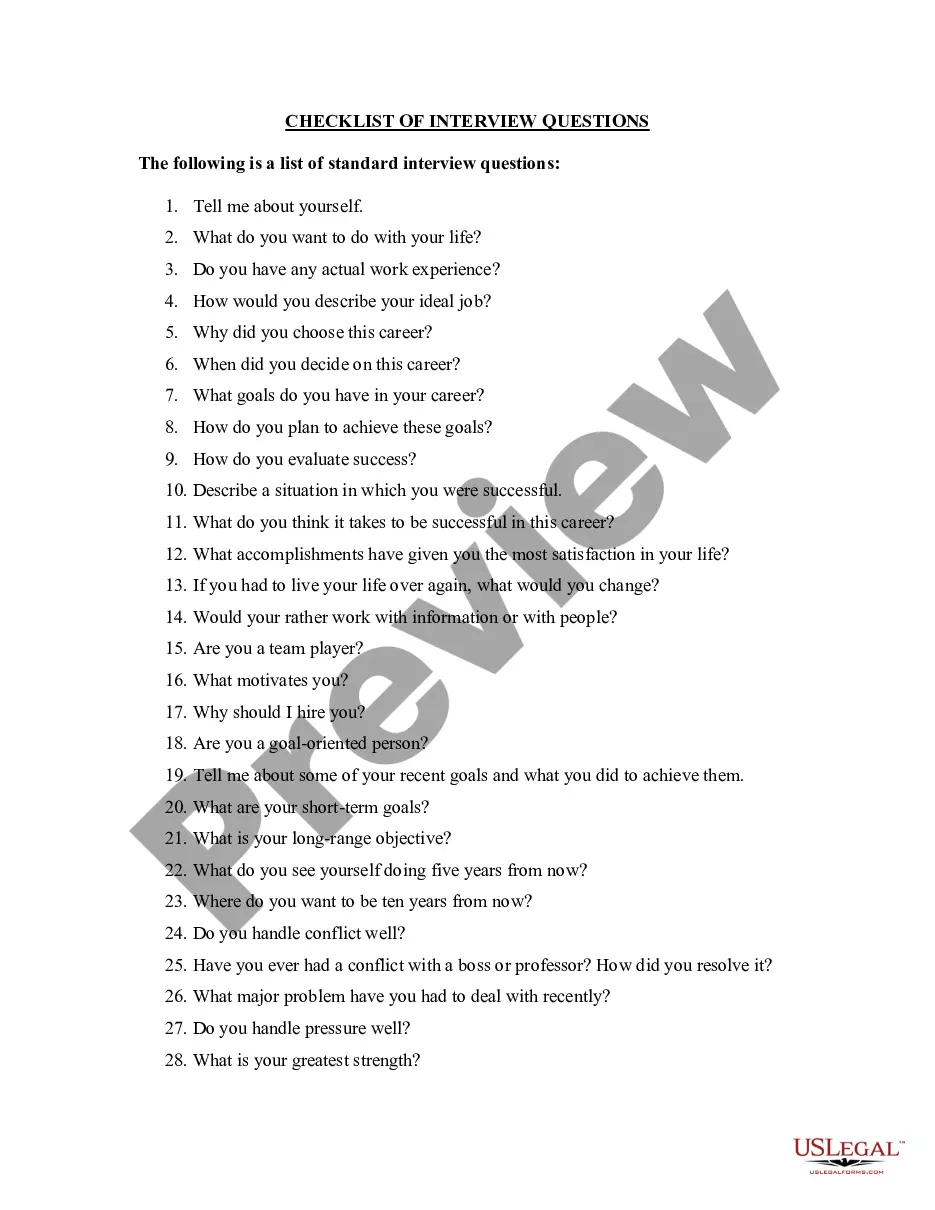
How to fill out Checklist Of Standard Hiring Interview Questions With Listening Tips And Suggested Follow-up Questions?
Acquiring legal templates that comply with federal and local regulations is essential, and the web provides a multitude of choices to choose from.
However, what’s the benefit of spending time looking for the appropriately crafted Questions To Ask Your Future Employer In An Interview example online when the US Legal Forms digital library already consolidates such templates in one location.
US Legal Forms is the most extensive online legal directory featuring over 85,000 fillable documents prepared by attorneys for various business and personal circumstances.
Review the template using the Preview feature or the text outline to ensure it satisfies your requirements.
- They are straightforward to navigate with all documents categorized by state and intended use.
- Our specialists remain informed about legislative changes, ensuring your documentation is current and compliant when obtaining a Questions To Ask Your Future Employer In An Interview from our site.
- Acquiring a Questions To Ask Your Future Employer In An Interview is quick and easy for both existing and new users.
- If you already possess an account with an active subscription, Log In and store the document sample you require in your chosen format.
- If you are new to our platform, follow the steps outlined below.
Form popularity
FAQ
One major red flag to listen for during an interview is a lack of clarity about the job role and expectations. If the interviewer struggles to provide specific details about the responsibilities, it may indicate disorganization or uncertainty within the company. Additionally, be cautious if they speak negatively about previous employees or the work environment, as this can reveal deeper issues. Always consider asking questions to your future employer in an interview that dive deeper into the company culture and management style to ensure a good fit.
It's beneficial to ask about professional development opportunities and the potential for advancement within the company. Understanding how an employer invests in employee growth can be crucial for your long-term career satisfaction. Additionally, exploring the company's approach to work-life balance can provide clarity on what to expect. Incorporating these considerations into your questions to ask your future employer in an interview can help ensure a mutually beneficial relationship.
One impactful question is, 'What does success look like in this role?' This inquiry can open a dialogue about the employer's expectations and the metrics used to evaluate performance. It signals your ambition to thrive within the company and shows that you are proactive in understanding your future responsibilities. Making this part of your questions to ask your future employer in an interview can lead to a deeper understanding of the position.
Consider asking about the team's dynamics, the company's growth plans, and the expectations for your role. These questions not only highlight your interest in the position but also demonstrate your desire to contribute effectively. Furthermore, engaging with your future employer through thoughtful inquiries can reveal invaluable insights about the workplace culture. This approach aligns perfectly with your preparation of questions to ask your future employer in an interview.
The three C's of interview questions are clarity, candidate, and context. Clarity refers to asking questions that are straightforward and easy to understand. Candidate focuses on the applicant's experiences and skills, while context concerns how the position fits within the company's goals and culture. When preparing your own questions to ask your future employer in an interview, keep these elements in mind to gauge both the role and your potential fit.
Best questions to ask about the job What does a typical day or week look like in this role? ... What are the most immediate projects that need to be addressed? Can you show me examples of projects I'd be working on? What are the skills and experiences you're looking for in an ideal candidate?
Here are a few steps to help you provide an impressive response when the interviewer asks about your future plans: Align your answer to the job description. ... Highlight your skills and achievements. ... Specify both short- and long-term goals. ... Make your goals SMART. ... Include an action plan. ... Specify the value you add to the employer.
What does a typical day look like? Asking this question enables you to learn as much about the role as possible. The interviewer's response will provide insight into what skills and experience are needed and will also help you decide if the role is right for you.