Generic Interview
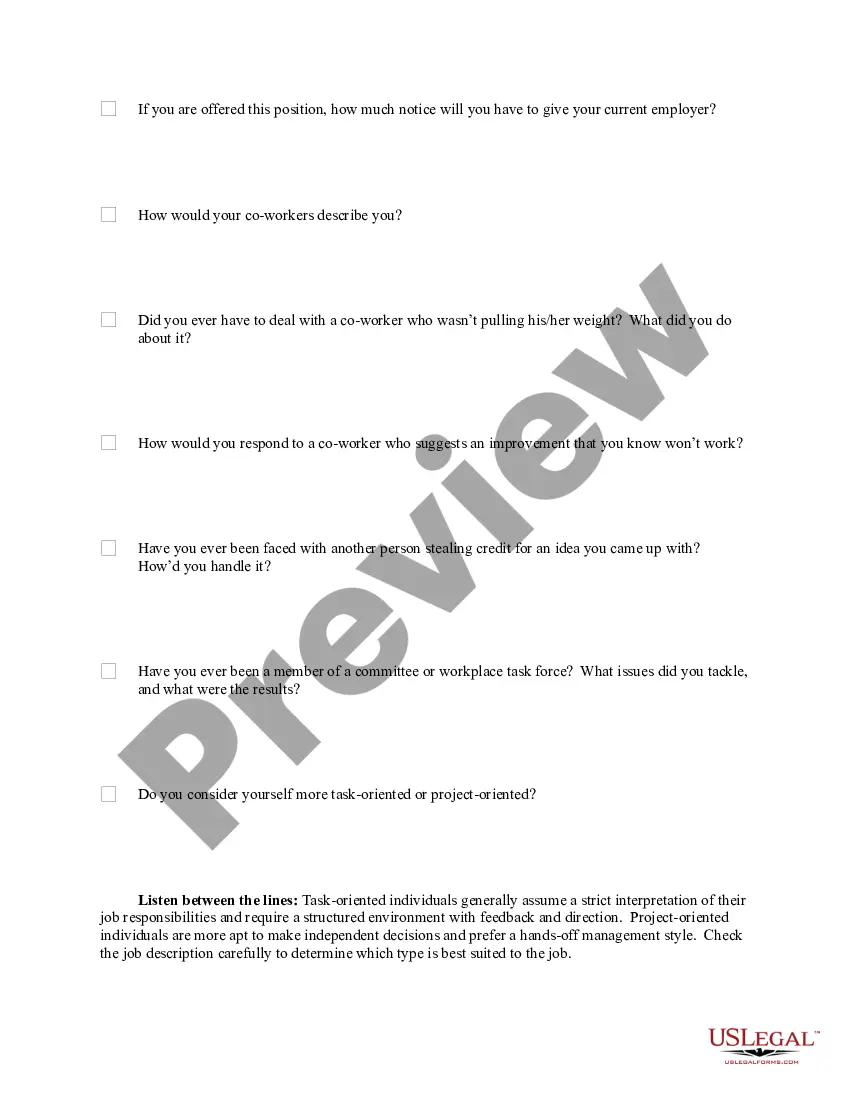
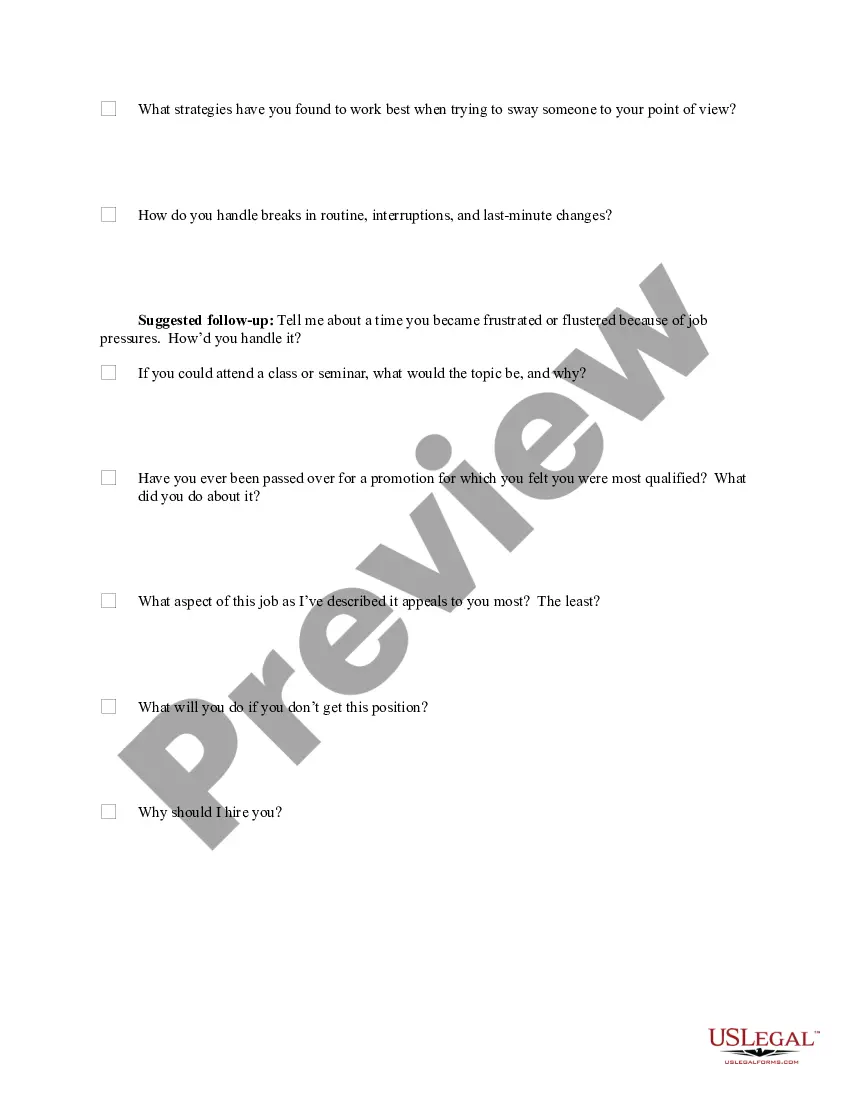
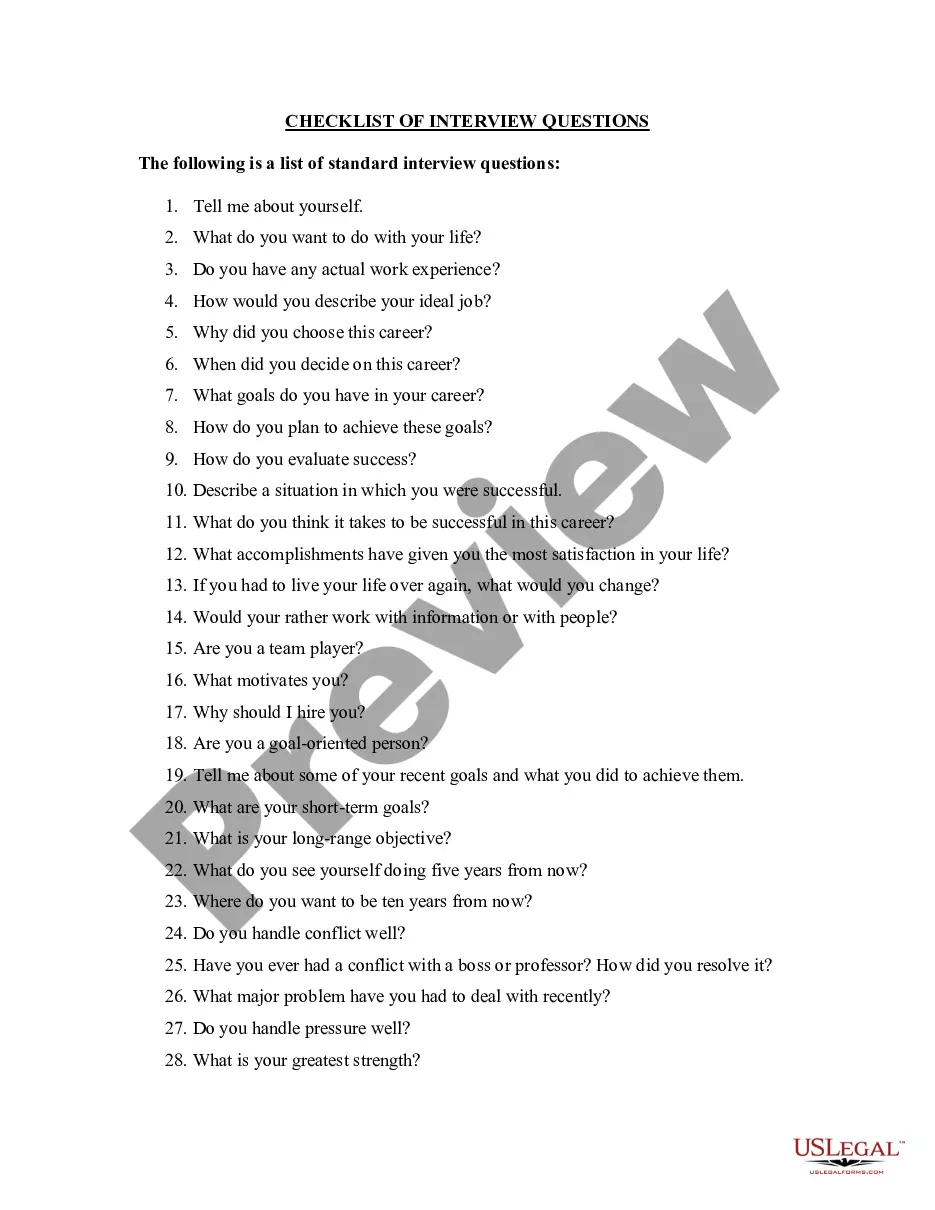
Description
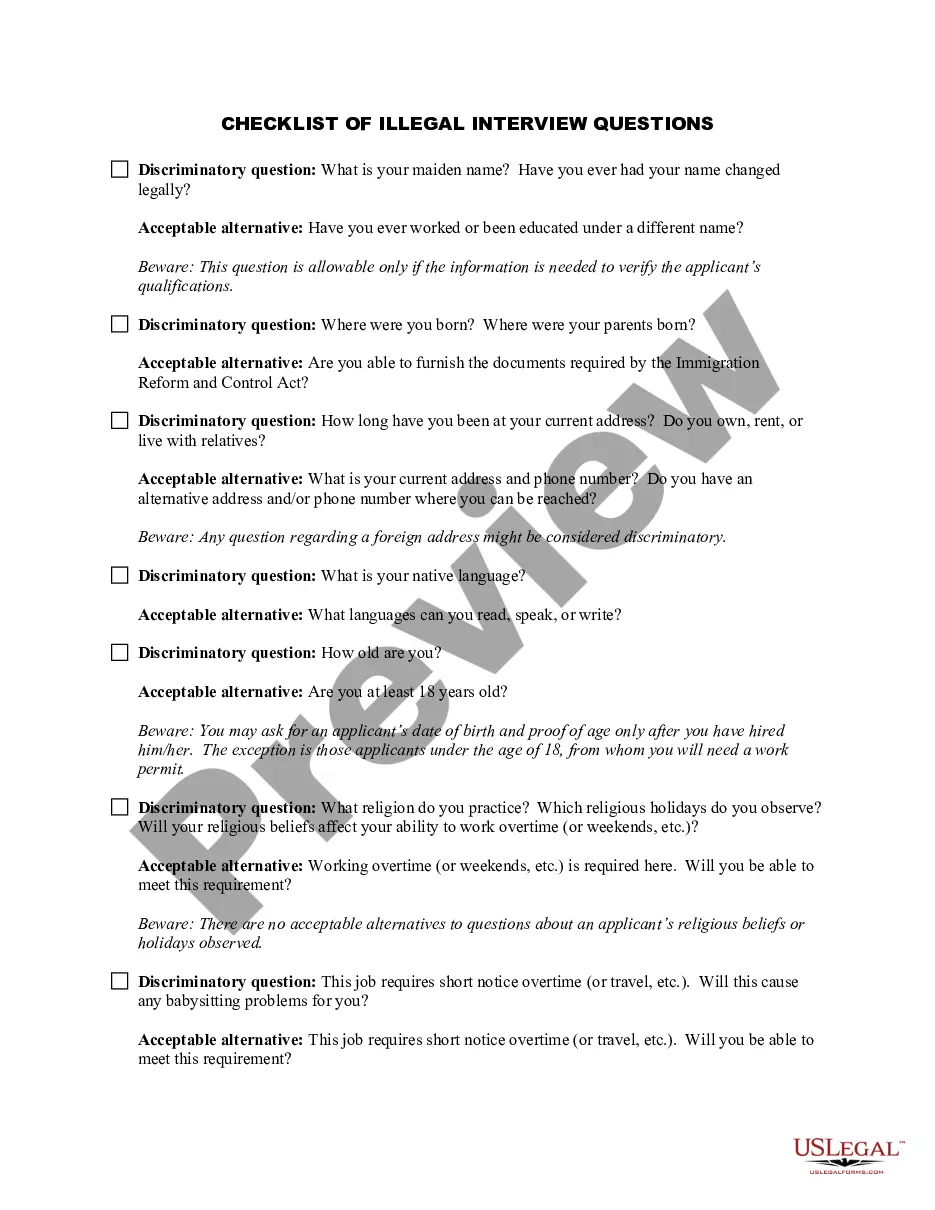
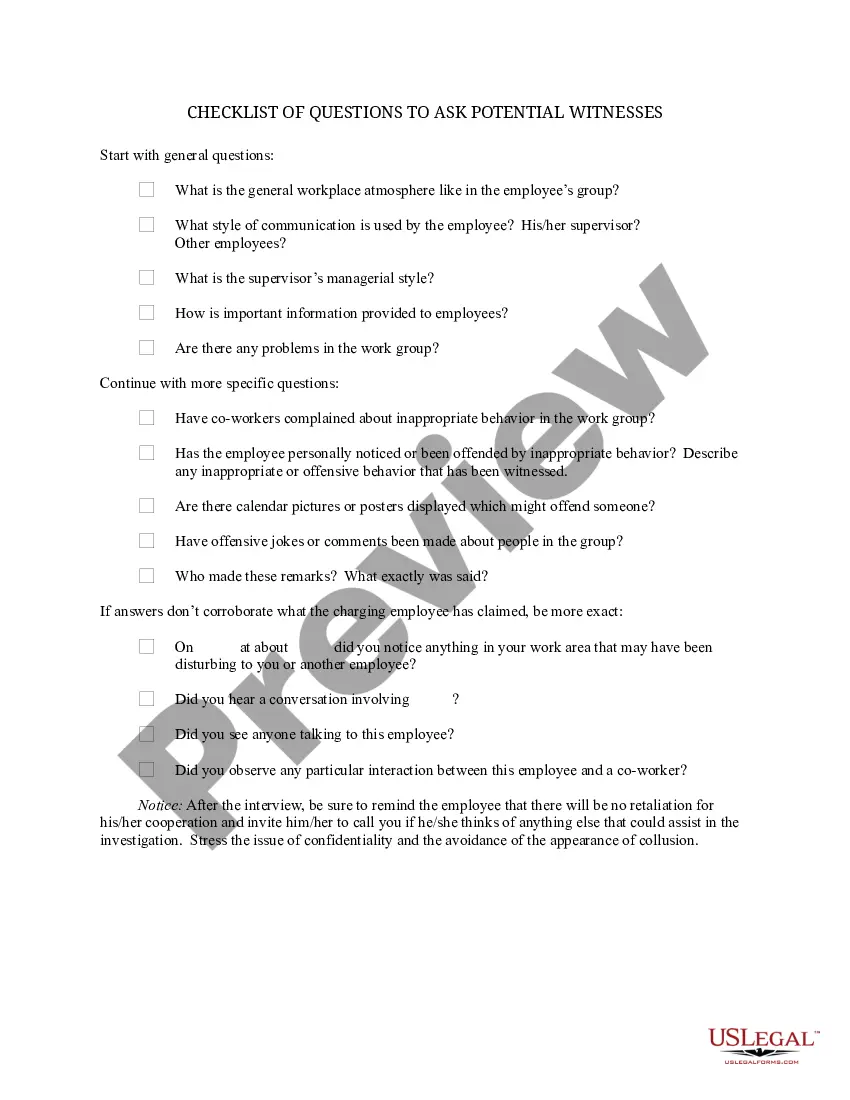
Get your form ready online
Our built-in tools help you complete, sign, share, and store your documents in one place.
Make edits, fill in missing information, and update formatting in US Legal Forms—just like you would in MS Word.
Download a copy, print it, send it by email, or mail it via USPS—whatever works best for your next step.
Sign and collect signatures with our SignNow integration. Send to multiple recipients, set reminders, and more. Go Premium to unlock E-Sign.
If this form requires notarization, complete it online through a secure video call—no need to meet a notary in person or wait for an appointment.
We protect your documents and personal data by following strict security and privacy standards.

Make edits, fill in missing information, and update formatting in US Legal Forms—just like you would in MS Word.

Download a copy, print it, send it by email, or mail it via USPS—whatever works best for your next step.

Sign and collect signatures with our SignNow integration. Send to multiple recipients, set reminders, and more. Go Premium to unlock E-Sign.

If this form requires notarization, complete it online through a secure video call—no need to meet a notary in person or wait for an appointment.

We protect your documents and personal data by following strict security and privacy standards.
Looking for another form?
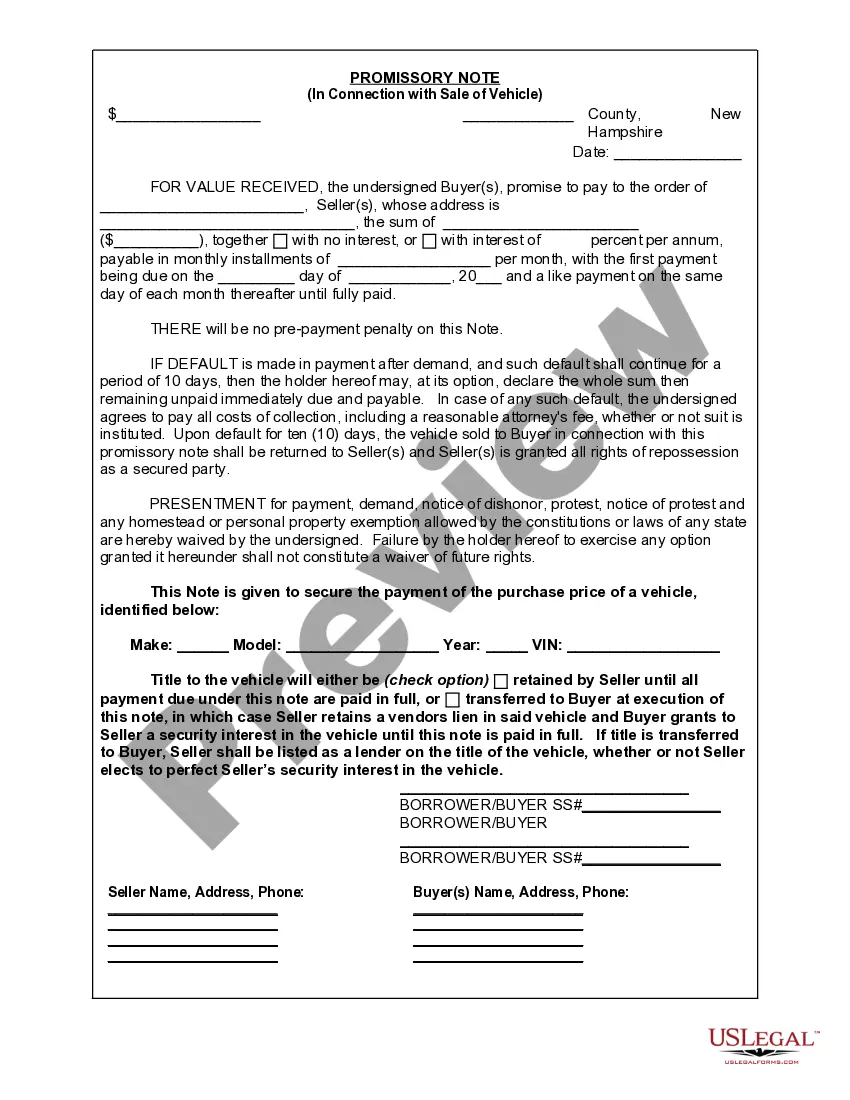
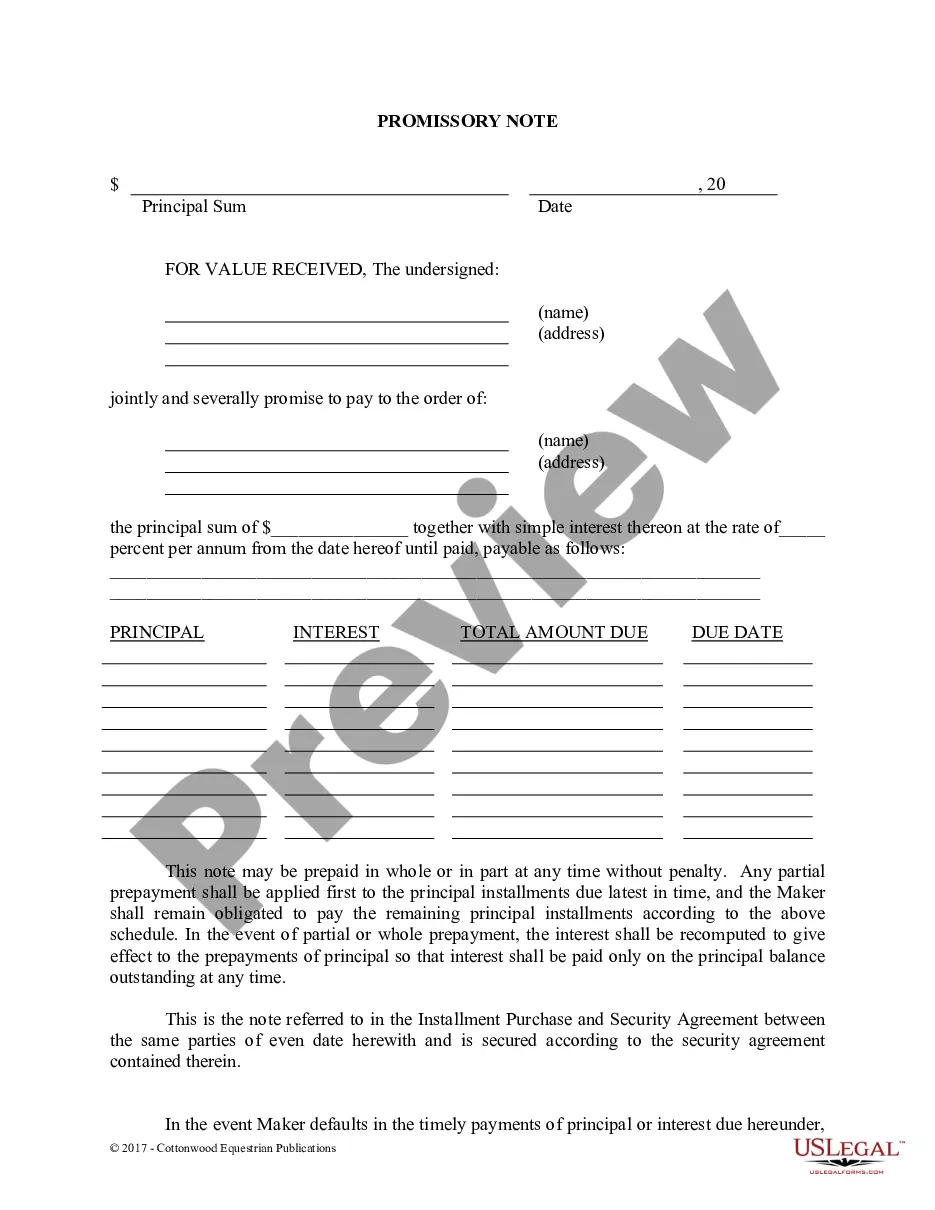
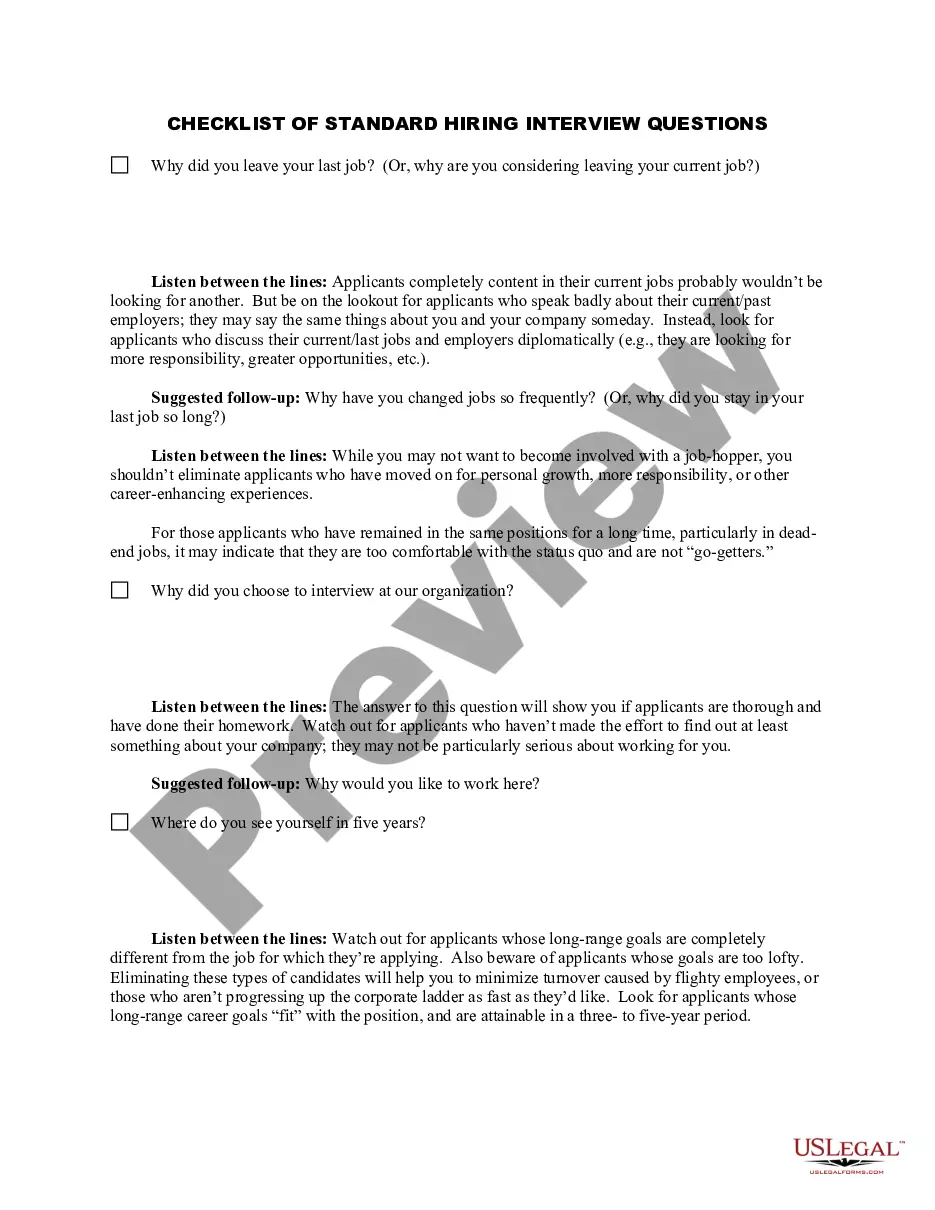
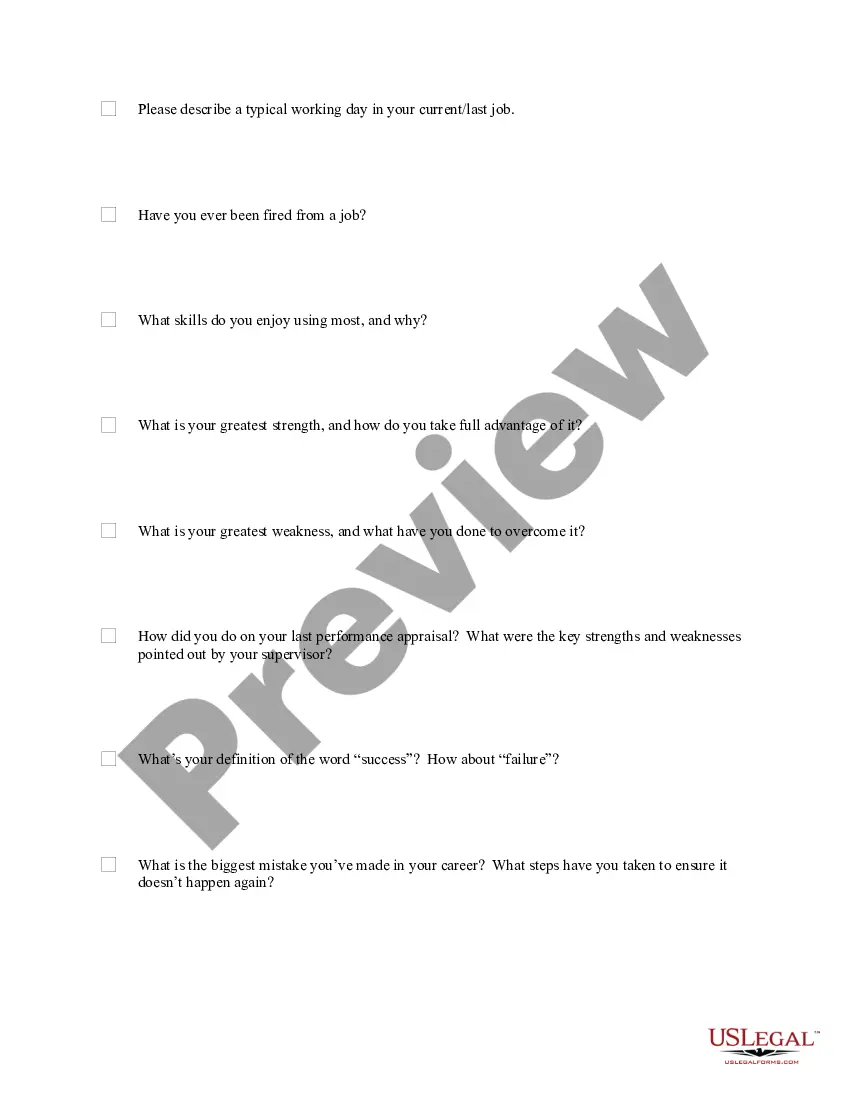
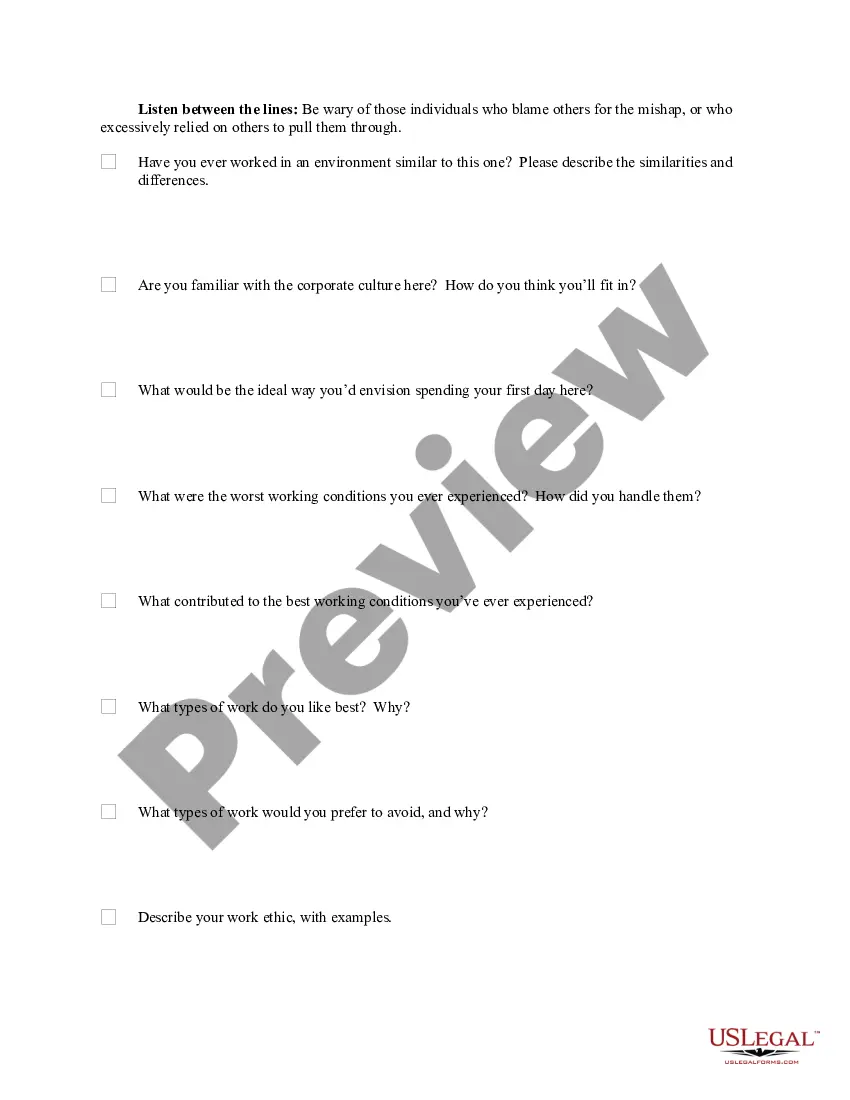
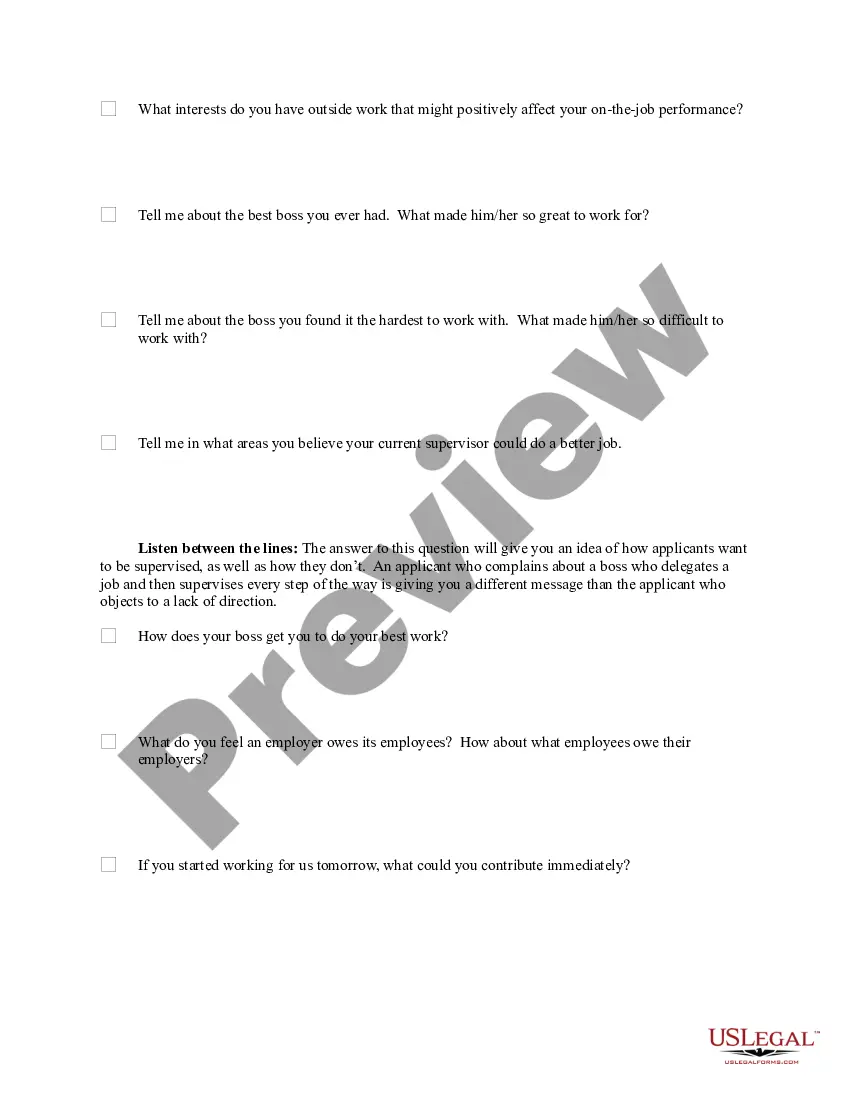
How to fill out Checklist Of Standard Hiring Interview Questions With Listening Tips And Suggested Follow-up Questions?
- Login to your US Legal Forms account if you’re a returning user. If not, create a new account before proceeding.
- Review the available forms in Preview mode, ensuring that the selected template aligns with your needs and adheres to local jurisdiction regulations.
- If the form doesn't meet your requirements, utilize the Search feature at the top to find a more suitable option.
- Select the document you wish to purchase by clicking on the Buy Now button and choose your desired subscription plan.
- Complete the purchase by entering your payment information, either via credit card or PayPal, to finalize your subscription.
- Download the form to your device and access it anytime in the My Forms section of your profile for completion.
By following these straightforward steps, you can efficiently navigate US Legal Forms to retrieve the documents you require. This platform not only provides a robust collection of forms but also connects you to premium experts for assistance, ensuring you have the support you need for precise and legally sound documentation.
Start streamlining your legal documentation process by using US Legal Forms today and experience the benefits for yourself!
Form popularity
FAQ
The generic clinical interview model provides a structured approach to gather important information from a client or patient. This model emphasizes building rapport, understanding the individual's history, and assessing their current situation. It moves through specific phases, including opening, exploring issues, and closing, ensuring that the interviewer addresses essential topics. For those navigating legal or clinical settings, this model can streamline the interview process and enhance data collection.
Some common generic questions you may encounter during a generic interview include, 'Tell me about yourself,' 'What are your greatest strengths?' and 'Why should we hire you?' These questions aim to give interviewers a sense of who you are and how you fit into their organization. Anticipating these questions allows you to craft thoughtful responses that highlight your unique skills.
A generic question is a broad inquiry that seeks to gather basic information without being too specific. In the context of a generic interview, these questions can help you express your thoughts and provide insight into your personality. They often cover fundamental topics like interests, motivations, and career goals. Understanding what a generic question entails prepares you to answer effectively during interviews.
When you're preparing for a generic interview, consider asking questions that delve into your skills and experiences. Good examples include inquiries about your strengths, teamwork experiences, and problem-solving situations. Such questions help you reflect on your past and demonstrate your capability to the interviewer. Use these opportunities to provide specific examples that showcase your qualifications.
A basic structure interview includes essential sections, such as an introduction, a questions segment, and closing remarks. In the introduction, you outline the interview's purpose, establishing a comfortable setting. The questions segment is where the interaction occurs, allowing for information exchange. Finally, closing remarks summarize the conversation and identify future steps, ensuring the interview is both effective and structured.
The generic structure of an interview usually follows a straightforward format: introduction, question segment, and conclusion. The introduction helps you connect with the interviewee and clarify the purpose of the generic interview. The question segment allows for in-depth exploration of topics while the conclusion wraps up discussions and highlights essential findings. This setup ensures clarity and enhances engagement.
To document a user interview effectively, create a structured note-taking system. Begin with the interview date, participant information, and context, followed by a list of questions asked. During the generic interview, capture participants' responses accurately, noting key insights and observations. After the interview, you can organize these notes into a comprehensive document for easy reference.
The structure of an interview often consists of several key components: an introduction, well-defined questions, and a wrap-up. The introduction provides context and sets expectations for the generic interview. Clear and concise questions lead to informative answers, while the wrap-up allows you to reflect on the main insights gained. This structure promotes a smooth and productive discussion.
The generic structure of an interview typically includes an introduction, a main discussion section, and a conclusion. In the introduction, you establish rapport and outline the interview's purpose. The main discussion contains questions and responses that drive the conversation. Finally, the conclusion summarizes key points and may invite final comments.
To make an interview file, start by gathering all relevant materials, such as interview questions, guidelines, and notes. Organize these documents in a clear manner to ensure easy access during the generic interview. It is also helpful to include a section for recording responses, insights, and observations. You can utilize the UsLegalForms platform to create templates that streamline this process.